India's grand strategy has evolved significantly since independence more than 70 years ago, but the country has had mixed success in achieving its objectives. The rise of China and a dangerous impasse with Pakistan pose new challenges to New Delhi and are pushing a reluctant India into a closer partnership with the United States. Despite key successes, India's economic problems are huge, and they remain the biggest barrier to rising to great power status. Asia, and more specifically India, has emerged as a critical theater in a new era of great power competition. The contest between a U.S.-led alliance on one side and Russia and China on the other is reshaping India's grand strategy for becoming a world power. The world's second most populous country, which sees itself as one of humankind's great civilization-states, hopes to be secure and prosperous and one day spread its influence into all corners of the world. But recent conflict with China in the disputed Doklam area of Bhutan and with Pakistan in Kashmir has brought New Delhi's choices into sharp focus. And these conflicts are raising questions about the evolution of India's game plan in this fast-changing world.The Profession of Arms: A Guide for Young Army Officers
It takes courage, especially for a young officer, to check a man met on the road for not saluting properly or for slovenly appearance, but, every time he does, it adds to his stock of moral courage, and whatever the soldier may say, he has respect for the officer who does pull him up.
Read Document →The Dragon's Teeth: Assessing China's Military Modernization
PLA has focused on modernising its capabilities across all warfare domains to achieve these goals. This includes land, air, and maritime operations, nuclear, space, counter-space, electronic warfare and cyberspace operations, aiming to become a fully integrated joint force.
Read Document →Transforming the PLA: A Decade of reorganisation from SSF to ISF
PRC has engaged in a sustained and broad effort to transform the PLA from an infantry-heavy, low-technology, ground forces-centric military into a high-technology, networked force with an increasing emphasis on joint operations and naval and air power projection.
Read Document →Eyes without Borders: Exploring the World of Open Source Intelligence (OSINT) in the Digital Age
Open Source Intelligence (OSINT) is gaining prominence with the rise of social media, the digital society and the vast growth of publicly and commercially available information (PAI and CAI).
Read Document →
The PLA’s Developing Cyber Warfare Capabilities and India's Options
Informationised warfare blurs the lines between peacetime and wartime. A nation in the information age cannot wait for the hostilities to break out to collect intelligence, carryout influence operations, develop antisatellite systems or design computer software weapons.
Read Document →
Galwan and After
Why did China did this when he is under tremendous pressure in all fronts, is this China's salami slice tactics being progressed rigorously, what will be new Rules of Engagement, what will be escalatory control mechanism, who has taken this decision, will there be some pressure put by China in India's North-East through insurgency.
Read Document →
India’s Joint Doctrine for Cyberspace Operations: A Critical Review
Chief of Defence Staff (CDS) General Anil Chauhan and Secretary, Department of Military Affairs, formally released declassified versions of the Joint Doctrines for Cyberspace Operations during the Chiefs of Staff Committee meeting in New Delhi.
Read Document →
Know your Enemy General(now Field Marshal) Syed Aseem Munir
Gen SA Munir's position in the hierarchy of Pakistan was not very comfortable. The state of economy, insurgency in Pakhtoonistan and Balochistan, attack on the Jaffar Express, constant protests by supporters of Imran Khan's supporters inside and outside of parliament.
Read Document →
Decoding Operation SINDOOR: Key Aspects and Implications
Precision strikes were carried out on nine sites—four in Pakistan and five in PoK—linked to anti-India terrorist groups such as the LeT, JeM and the Hizbul Mujahideen. The targeted sites included Muridke (LeT headquarters) and Bahawalpur (JeM headquarters).
Read Document →
Chinese Cyber Exploitation in India's Power Grid - Is There a linkage to Mumbai Power Outage?
The New York Times (NYT), based on analysis by a U.S. based private intelligence firm Recorded Future, reported that a Chinese entity penetrated India’s power grid at multiple load dispatch points. Chinese malware intruded into the control systems that manage electric supply across India, along with a high-voltage transmission substation and a coal-fired power plant
Read Document →12 September 2018
India Struggles With Its Strategy for Becoming a Great Power
India's grand strategy has evolved significantly since independence more than 70 years ago, but the country has had mixed success in achieving its objectives. The rise of China and a dangerous impasse with Pakistan pose new challenges to New Delhi and are pushing a reluctant India into a closer partnership with the United States. Despite key successes, India's economic problems are huge, and they remain the biggest barrier to rising to great power status. Asia, and more specifically India, has emerged as a critical theater in a new era of great power competition. The contest between a U.S.-led alliance on one side and Russia and China on the other is reshaping India's grand strategy for becoming a world power. The world's second most populous country, which sees itself as one of humankind's great civilization-states, hopes to be secure and prosperous and one day spread its influence into all corners of the world. But recent conflict with China in the disputed Doklam area of Bhutan and with Pakistan in Kashmir has brought New Delhi's choices into sharp focus. And these conflicts are raising questions about the evolution of India's game plan in this fast-changing world.What Next for U.S.-India Military Ties?
Despite major remaining hurdles on trade and Indian defense purchases from Russia, it’s a step forward for the U.S.-India security relationship. In New Delhi, the “two-plus-two” dialogue was at long last able to complete an agreement to enhance communications sharing on defense platforms—something called the Communications Compatibility and Security Agreement, or COMCASA. It will allow India access to more advanced communications technology for defense equipment purchased from the United States, and as a result will also make it easier for India and the United States, as well as U.S. allies with similar equipment, to coordinate more fully in real time (or, in defense speak, enhance interoperability). It’s been under negotiation for years, so this achievement deserves praise.India Inches Closer to the U.S.
Because New Delhi must compensate for its military imbalance against China, it will strengthen its defense partnership with the United States despite issues of contention such as India's reliance on Iranian oil and Russian arms. If New Delhi continues to deepen its defense partnership with the United States, it will need to reassess its adherence to strategic autonomy, possibly leading to a fundamental shift in the conduct of India's foreign policy.No End In Sight For The Afghan Conflict – Analysis
The leader of the Islamic State Khorasan in Afghanistan, Abu Saad Erhabi, along with 10 of his fighters, was killed in an air strike a few days back in a joint air and ground operation conducted by Afghan forces and US-led coalition forces. His predecessor, Abu Sayed, too was killed in a US strike on the group’s headquarters in Kunar province in July last year. A growing number of attacks in recent years in Afghanistan — including a suicide bombing at a Kabul education centre that killed dozens of people — could be traced to this violent group.Nepal’s Communist Government Tightens Its Grip on Civil Society
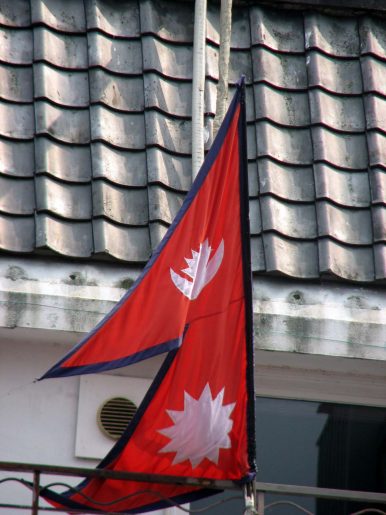
The 2015 constitution of Nepal ignited hope in ordinary Nepalis that a new era had finally dawned on the nation. That hope, however, didn’t last long after the rise of Communist Party of Nepal (CNP). Starting last month, not only is Nepal’s civil space shrinking, but the pillars of democracy, like freedom of the press, equality, and liberty, are facing the hammer of new draconian laws. The new National Integrity Policy proposed by the Ministry of Home Affairs (MoHA) is set to tighten the Nepal government’s grip on international governmental organizations (INGOs) and non-governmental organizations (NGOs). The proposed policy was first formulated on June 8, 2017, when Sher Bahadur Deuba was the prime minister. The proposed document has lays out 13 policies for NGOs and 25 for NGOs in a 23-page paper and aims to strictly monitor them. Moreover, its policies expand to diplomats, constitutional bodies, professors, teachers, doctors, private sector firms, and cooperatives. Also, legal and structural bodies will be activated to monitor the aforementioned sectors.China's new Silk Road OBOR (One Road One Belt) project
China’s Maritime Silk Road projects underway in the last two years emerges as a direct strategic and military challenge to the Indo Pacific Security Template adopted by the United States, India and Japan as it aims to establish a China-dominated maritime grid spanning the maritime global commons of the South China Sea and the Indian Ocean region. Security and stability in the South China Sea and the Indian Ocean Region are essential imperatives for the overall security and stability of the vast Indo Pacific Region spanning the Western Pacific and encompassing the Western Indian Ocean. China has already been successful in converting the South China Sea into a regional and global flashpoint and now by its attempts for an intrusive presence in the Indian Ocean is likely to generate similar ‘flashpoint contours’.China Is Detaining Muslims in Vast Numbers. The Goal: ‘Transformation.’
HOTAN, China — On the edge of a desert in far western China, an imposing building sits behind a fence topped with barbed wire. Large red characters on the facade urge people to learn Chinese, study law and acquire job skills. Guards make clear that visitors are not welcome. Inside, hundreds of ethnic Uighur Muslims spend their days in a high-pressure indoctrination program, where they are forced to listen to lectures, sing hymns praising the Chinese Communist Party and write “self-criticism” essays, according to detainees who have been released. The goal is to remove any devotion to Islam.China gets closer to its dream of a blue-water navy with rapid expansion of African base

China's Command Innovation
Russia and China’s Growing Military Interaction; Surprised?
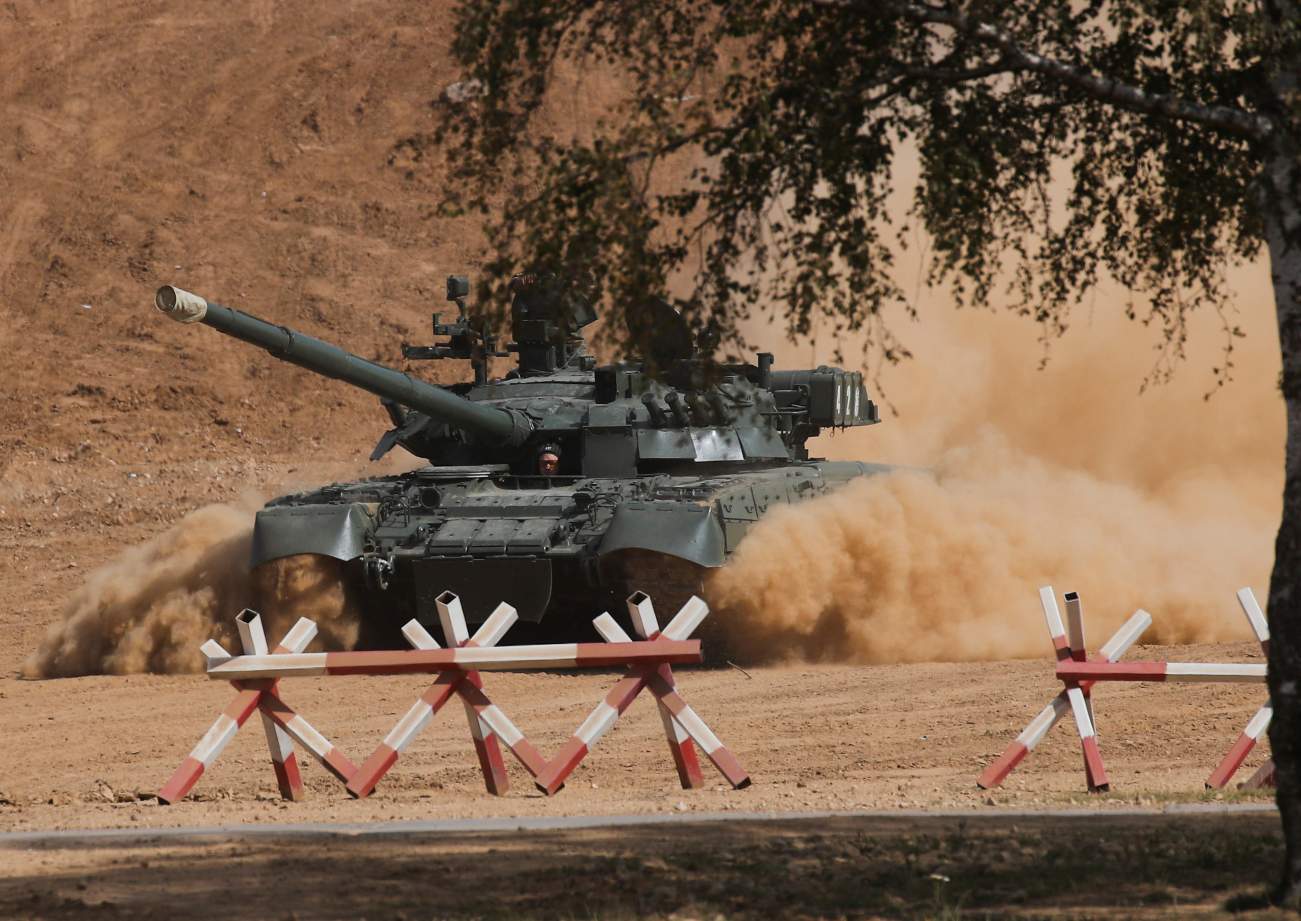
The drums are already rolling for the upcoming Russian “Vostok” (east) wargames commencing on September 11. With its focal point in the Trans-Baikal region of eastern Siberia adjoining Chinese Manchuria and Mongolia, this is a nationwide Russian military and societal event. Touted by Russian minister of defense Sergei Shoigu as “ unprecedented in scale, both in terms of area of operations and numbers of military command structure, troops, and forces involved,” Russian state press is declaring that up to three hundred thousand troops and one thousand aircraft will be involved, with the majority from the Eastern and Central Military Districts. This would be even larger than the near-legendary Zapad-81 maneuvers held in the western USSR during the depths of the Cold War.Russian Propaganda’s Western Enablers
Japan Gears up for Electronic Warfare
In December 2018, Japan will release its new National Defense Program Guidelines (NDPG), a defense policy document which also outlines the procurement plan entitled the Mid-Term Defense Program (MTDP) for the next five years. The current 2014 NDPGstates that the Self-Defense Forces (SDF) should become able to fulfill their roles effectively in the following two new fields of warfare: outer space and cyberspace. According to a recent media report, the upcoming NDPG will expand and build up the roles of SDF into the field of “electronic warfare.” What does it mean for Japanese security policy and the U.S. strategy toward the Indo-Pacific? Japan’s “going electromagnetic” will enhance the Japanese role in its own defense and also expand the bilateral defense cooperation in the context of the U.S. strategy toward the Indo-Pacific.Is the US Ready to Stand Up for Taiwan Against China?
The People’s Republic of China (hereafter referred to as China) has increasingly intensified its diplomatic squeeze on the Republic of China (Taiwan) since Taiwan’s President Tsai Ing-wen came into office in 2016. In less than three years, five countries — Sao Tome and Principe, Panama, the Dominican Republic, Burkina Faso, and El Salvador — have cut ties with Taiwan and established diplomatic relations with China. Taiwan is left with only 17 diplomatic allies now. Meanwhile, several of its remaining allies, such as eSwatini and the Vatican are also actively improving relations with China. Faced with China’s pressure, Tsai has repeatedly urged the rest of the world to unite with Taiwan in defending against China and to protect shared liberal values.American General In Syria Confirms US Forces Killed Hundreds Of Russians In Massive Battle
How America Beat Queen Victoria’s Britain without Fighting
Westerners make much of China’s obsession with “winning without fighting.” As though any sane statesman, Eastern or Western, relishes losing or longs to take up arms with all the dangers, hardships and perverse turnabouts of fortune that come with combat. Winning without fighting is what we call “diplomacy,” and it is a mode of interaction that spans all countries, civilizations and times. Now, Chinese Communist diplomacy does display distinctive characteristics. For one, it’s a 24/7/365 enterprise. Beijing wages “ three warfares ” in peacetime, shaping opinion constantly through legal media, and psychological means. For another, there’s a warlike edge to Chinese diplomacy seldom encountered among the pinstriped set. It is about winning, and it aims to deliver gains normally achieved on the battlefield without so many hazards.Rethinking Belt-and-Road Economics
Trump Needs New Monroe Doctrine
It wasn’t long ago that Venezuela, led by a fiery caudillo and dedicated to spreading its brand of populist super-socialism, boosted allies’ economies near and far with petrodollars. Hugo Chavez was spreading his Bolivarian revolution all over and times were good.America Can’t Be Trusted to Run the Global Economy
This August, Turkey’s economy became the main topic in global news coverage. The reason was a systematic attack on the Turkish economy by the biggest player in the global economic system, the United States. It was one of the most disappointing moments in the history of the alliance between Turkey and America. The administration of U.S. President Donald Trump overtly attacked the economy of a fellow NATO member through sanctions and tariffs. While the scale of the attack resulted in exchange rate fluctuations, the incident ultimately demonstrated the strong fundamentals of the Turkish economy. It also increased Turkey’s determination to strengthen our economy through structural reforms, new trade partnerships, and the attraction of foreign investments and to take steps to rebalance the structure of the international economy so that powerful countries like the United States no longer have the power to unilaterally disrupt the economic life of others.‘Freedom Of Navigation’: The US Is Undermining Its Own Position – Analysis
The U.S. has long maintained that freedom of navigation (FON) for warships in foreign 200 nautical mile Exclusive Economic Zones (EEZ) is essentially ‘absolute’. China and some other countries disagree and have placed some restrictions on the activities of foreign warships and aircraft in their EEZ. But the U.S. is undermining its own position by placing restrictions on its own military’s activities –and by extension those of foreign militaries—in its own EEZ. Military activities in the EEZ were a controversial issue during the negotiation of the text of the 1982 UN Convention on the Law of the Sea (UNCLOS) http://www.un.org/depts/los/convention_agreements/convention_overview_convention.htm and continue to be so in state practice. Some coastal states contend that other states cannot carry out military exercises or maneuvers in or over their EEZ without their consent. Indeed, Bangladesh, Brazil, Cape Verde, Pakistan, Malaysia, Myanmar, Uruguay, and most recently, US ally Thailand have declared that such military activities are not permitted in their EEZ without their consent. This is an extreme position that is protested and often tested by the U.S. and other maritime powers.2018 Fourth-Quarter Forecast
The White House's Enduring Gamble Over Trade Policy. As the White House finalizes a deal to preserve the North American Free Trade Agreement (NAFTA), the Trump administration will increase trade risks elsewhere. China will have to weather an even bigger squall of tariffs this quarter as trade negotiations stall out. European efforts to neutralize the U.S. auto tariff threat will drag beyond the quarter, but ultimately fail.In U.S. Open Victory, Naomi Osaka Pushes Japan to Redefine Japanese
TOKYO — When the Ohno family watched Naomi Osaka beat Serena Williams at the United States Open early Sunday morning from Tokyo, there was no question in their minds that Ms. Osaka was a true Japanese champion. “Her face looks Japanese,” said Ryutaro Ohno, 14, shortly after playing a few tennis matches with his younger brother and parents at a court near the base of Tokyo Tower. His mother, Naoko, 49, showed a snapshot on her cellphone of her sons posing with Ms. Osaka, the daughter of a Haitian-American father and Japanese mother, when the tennis star played in the Pan Pacific Open in the Japanese capital last year.Can Mark Zuckerberg Fix Facebook Before It Breaks Democracy?
At ten o’clock on a weekday morning in August, Mark Zuckerberg, the chairman and C.E.O. of Facebook, opened the front door of his house in Palo Alto, California, wearing the tight smile of obligation. He does not enjoy interviews, especially after two years of ceaseless controversy. Having got his start as a programmer with a nocturnal bent, he is also not a morning person. Walking toward the kitchen, which has a long farmhouse table and cabinets painted forest green, he said, “I haven’t eaten breakfast yet. Have you?”The surprising test ground for DoD information operations
The Department of Defense’s cyber community has found an unexpected proving ground to cut its teeth on operations: the Middle East. Lt. Gen. Stephen Fogarty, speaking to Fifth Domain Aug. 21 in an interview at TechNet Augusta, said cyber operators in the Middle East have worked “at a higher tempo than other commands" and in the process have developed “proficiencies." Cyber operations globally have ramped up in recent years. Fogarty, the head of Army Cyber Command, told reporters at a media roundtable in early August that the force has operated in the last 24 months at a level that far surpasses previous efforts, offensively and defensively.Artificial Intelligence – A Counterintelligence Perspective: Part II
In the first part of this series on the counterintelligence implications of artificial intelligence (AI), I discussed AI and counterintelligence at a high level and described some features of each that I think are particularly relevant to understanding the intersection between the two fields. That general discussion leads naturally to one particular counterintelligence question related to AI: How do we identify, understand and protect our most valuable AI assets? To do that, it is important to remember that AI systems operate as part of a much larger digital ecosystem. My focus here is on AI assets in general rather than particular applications of AI. Obviously, certain AI systems, such as those used in military, intelligence and critical-infrastructure settings, require special attention from a counterintelligence perspective, but I won’t focus on those specifically in this post.Facebook, Twitter, and the Challenge From Washington
This week’s Senate Intelligence Committee hearing with top executives of Facebook and Twitter was the most serious to date on digital disinformation. Instead of grandstanding or senators posing “gotcha” questions, the lawmakers and the executives largely agreed that policymakers, the companies, the intelligence community, and users all have roles to play in addressing the problem. It’s more likely, however, that any effective action will come from the companies, since new legislation is unlikely amid the Trump administration’s accusations that the platforms are suppressing conservative political speech.The Known Known
In 1999, when Scott McNealy, the founder and CEO of Sun Microsystems, declared, “You have zero privacy…get over it,” most of us, still new to the World Wide Web, had no idea what he meant. Eleven years later, when Mark Zuckerberg said that “the social norms” of privacy had “evolved” because “people [had] really gotten comfortable not only sharing more information and different kinds, but more openly and with more people,” his words expressed what was becoming a common Silicon Valley trope: privacy was obsolete.World War 4.0: How future global conflict will be fought online
Developing Responses to Cyber-Enabled Information Warfare and Influence Operations
Big War Is Back
The Berlin Wall fell and the Cold War came to an abrupt end almost thirty years ago. This watershed event started a process, during which international security and war have been redefined—in many cases on Western terms. In addition, some ten years has passed since the Russo-Georgian war in August 2008. Today, many conceptualize it as a Russian starting shot for an aggressive policy of primacy in the post–Soviet space. Looking back some thirty years, it is reasonable to presume that there is enough—or at least some—empirical historical material for analyzing the way that Western states have redefined their take on international security and war during the post–Cold War era. This timeframe—thirty years—seems appropriate as strategy formulation, defense planning and military capability development are long-term endeavors—measured in decades, not years.