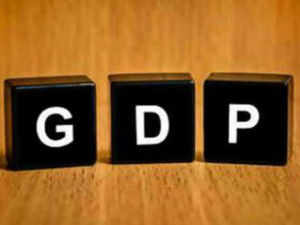
 NEW DELHI: India has been pushed to the seventh place in the global GDP rankings in 2018 with the UK and France forging ahead to the fifth and sixth spots, data compiled by the World Bank showed. In 2017, India had emerged as the sixth largest economy, while France was pushed to the seventh place in the global GDP league table. The US remains the top economy with a GDP of $20.5 trillion in 2018. China was the second largest economy with $13.6 trillion, while Japan took the third place with $5 trillion. India’s GDP was at $2.7 trillion in 2018, while UK and France were at $2.8 trillion. In 2017, India was at $2.65 trillion, UK at $2.64 trillion and France at $2.5 trillion, helping the third-largest economy in Asia to emerge as the fifth largest economy at that time.
 3 August 2019
India slips to 7th largest economy in 2018: World Bank
NEW DELHI: India has been pushed to the seventh place in the global GDP rankings in 2018 with the UK and France forging ahead to the fifth and sixth spots, data compiled by the World Bank showed. In 2017, India had emerged as the sixth largest economy, while France was pushed to the seventh place in the global GDP league table. The US remains the top economy with a GDP of $20.5 trillion in 2018. China was the second largest economy with $13.6 trillion, while Japan took the third place with $5 trillion. India’s GDP was at $2.7 trillion in 2018, while UK and France were at $2.8 trillion. In 2017, India was at $2.65 trillion, UK at $2.64 trillion and France at $2.5 trillion, helping the third-largest economy in Asia to emerge as the fifth largest economy at that time. How China Can Offer Pakistan a Path From the Precipice
By Zoe Leung
Valued at $62 billion, the China-Pakistan Economic Corridor (CPEC) is a focal point of the Belt and Road Initiative, China’s ambitious undertaking to enhance connectivity between Asia, Europe, and Africa. CPEC promises to create economic prosperity by turning Gwadar, Pakistan, into a trade hub that links China to the rest of Asia and Europe. However, with Pakistan’s economy suffering and in the midst of a bailout by the International Monetary Fund, Islamabad has been more carefully scrutinizing CPEC’s affordability. Pakistan has been coming to terms with the massive, unsustainable amount of Chinese loans it has taken to implement these projects.
Six years into this initiative, Beijing is beginning to acknowledge the growing international criticism about its distortive lending practices, and it is pledging to instill a greater level of openness, transparency, and sustainability. The Chinese government is taking steps to not only help Pakistan, which has been dubbed its “all-weather friend,” to restore its economic balance, but also to realize the true promise of CPEC.
Pakistan’s Economic Woes
The Missing Debate about Afghanistan
BY JOSHUA C. HUMINSKI
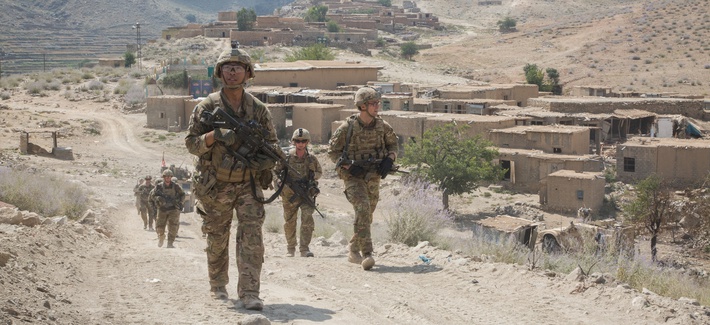 Speaking to reporters during the recent visit of Pakistan’s Prime Minister Imran Kahn, President Donald Trump lamented the state of the Afghanistan conflict and boldly asserted an easy win, if only it were fought like a proper war. “We’re like policemen. We’re not fighting a war. If we wanted to fight a war in Afghanistan and win it, I could win that war in a week,” Trump said. “I just don’t want to kill 10 million people.” Continued the U.S. president, “I have plans on Afghanistan that if I wanted to win that war, Afghanistan would be wiped off the face of the earth. It would be gone; it would be over literally in 10 days.”
Putting to the side the morality, legality, and strategic sensibility of Trump’s claims, his comments drew a rare moment of public attention to America’s longest-ever war and the lack of public debate about it. “The world should know that the Trump administration has not forgotten, the American people have not forgotten” Afghanistan, Secretary of State Mike Pompeo said recently, and yet it is far from clear that the war registers for most Americans even as a top-ten issue or concern.
Saudi-Pakistan Relations: More than Meets the Eye
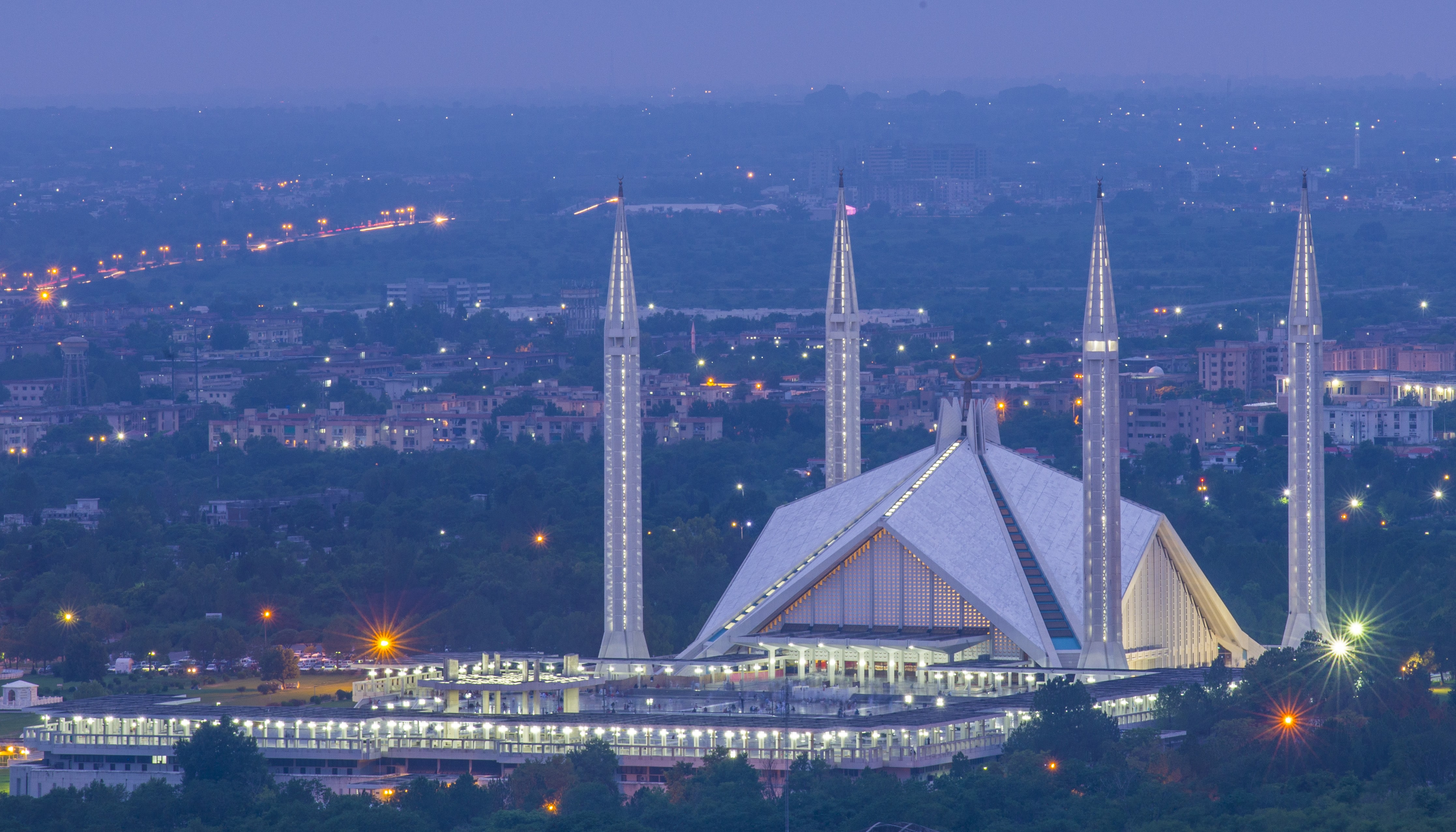 A special relationship has developed between Saudi Arabia and Pakistan, centered on a particular trade-off. Saudi Arabia depends on Pakistan for strategic depth and regards it as both an important asset in restraining Iranian influence and an answer to its need for a non-Arab ally. In exchange, Pakistan receives extensive economic aid, and benefits from Saudi Arabia’s influence in the Gulf and its role as guardian of the Islamic holy sites. The two countries have been able to overcome several disputes between them by maneuvering between various pressures, strengthening their special relations, and ensuring that more is unknown than known about their strategic cooperation, both conventional and nuclear.
Asia’s Great Huawei Debate
Based on these overlapping concerns, the U.S. government banned Huawei from being used in U.S. government systems or by U.S. government contractors. In May 2019, as trade talks between China and the United States collapsed (again), the Trump administration went a step further and placed Huawei on an “entity list” – effectively banning U.S. companies from doing business with the firm. That meant, in essence, that Huawei would have no access to U.S. technology. While not a proverbial “death blow,” it was a huge setback; Huawei itself estimated the blacklisting would cost the company at least $30 billion.
Is the Greater Bay Area China’s Future?
By Dingding Chen and Tiffany Chen
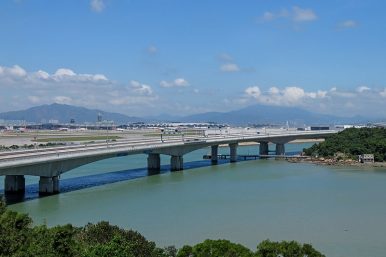 In recent decades, in addition to the famous Belt and Road Initiative (BRI), China has aimed to reshape the Pearl River Delta, which includes Hong Kong, Macao, and nine cities in Guangdong province. The goal was to create one economic entity called the Greater Bay Area. According to the Development Outline published by the State Council of China on February 18, 2019, the Greater Bay Area will represent China in industrial competitions worldwide and provide opportunities for internal economic transformations.
This ambitious plan soon caught the attention of the rest of the world. Some, like the BBC, which calls the Greater Bay Area plan “ambitious but vague,” noticed the vastness of China’s new plan — aimed at “spurring the economy” — and yet question whether it can truly achieve its goals. Others, looking at the region’s industries and finances wonder if it truly can compete with Silicon Valley, the other Bay Area, someday.
What America’s China Debate Gets Right and Wrong—and What It’s Missing
Howard W. French
 America’s foreign policy establishment is at war with itself over the shape of the country’s approach toward a steadily rising China. For now, it is only an epistolary war. But as the debate deepens, its outcome will go far toward deciding how the United States responds to its most serious global rival for economic and geopolitical power for decades ahead.
Among a slew of recent op-eds and policy papers about how Washington should manage the perceived challenge that China represents, two statements stand out as poles in the debate and, as such, deserve extended consideration.
The first, which appeared in early July in The Washington Post, takes on the Trump administration for driving a “downward spiral” in relations with China. While the authors mostly trace this to President Donald Trump’s confrontational approach on trade, they also criticize the administration more generally for treating Beijing increasingly like an enemy, beginning with an early strategy document identifying China as a strategic competitor.
Why the Fate of Hong Kong's Protests Will Come Down to Beijing
 The size, frequency and duration of street demonstrations alone do not determine the success of a protest movement. Major cracks are beginning to form among Hong Kong's "pillars of power" — the major stakeholders in any society as identified by the social scientist Gene Sharp — suggesting that protesters could make greater headway. One critical stakeholder, Hong Kong's business community, will ultimately support the force that will bring more stability to the territory. But even if protesters succeed in eroding support for the government, Beijing will step in as the ultimate backstop so as to preserve Hong Kong's status within the People's Republic of China.
Not all protests are created equal. So far this year, popular uprisings in Sudan, Algeria and Puerto Rico have successfully overthrown their leaders — some of whom were authoritarian figures entrenched in power for decades. But perhaps some of the most geopolitically consequential protests of the year are still raging in Hong Kong, four months after they started over a controversial bill that would permit Hong Kong to extradite criminal suspects to mainland China. Protesters successfully blocked that legislation in June, but over the past six weeks, they have expanded their demands by agitating for the resignation of Hong Kong's leader, Carrie Lam, among other calls.
The Big Picture
As West retreats, China surges in Myanmar
By BERTIL LINTNER

At the same time, China has emerged as the largest investor in Myanmar’s commercial center Yangon, accounting for 65 of 113 approved foreign invested projects in fiscal 2018-19.
Chinese tourist arrivals, guided in part by Beijing’s control of tour groups and Myanmar’s new relaxed visa rules for Chinese visitors, have also skyrocketed, making them far and away the largest national group to visit the country in 2018.
According to a July 26 report in The Irrawaddy, the surge in new Chinese investment has been concentrated in Yangon but is also growing fast in other parts of the country.
What the US and China each got out of the Trump-Xi meeting in Japan
Ryan Hass
This generally positive but non-specific characterization likely reflects that both leaders covered a range of issues in a short period of time, and did so without the benefit of detailed preparatory negotiations to define outcomes that both leaders could affirm. Even so, a few early takeaways from the meeting are visible.
For Beijing, key outcomes include:
No new tariffs. President Trump earlier had threatened to impose tariffs on the roughly $300 billion of Chinese imports that currently fall outside of existing taxes on imports. This list includes popular consumer items such as smart phones, tablets, laptops, and cameras. Trump pledged to withhold tariff escalation to enable an opportunity for negotiators to reach a trade deal.
Reduced pressure on Huawei. President Trump indicated that American companies could sell to telecom giant Huawei “where there is no great national emergency problem with it.”Irrespective of how many products the Trump administration exempts for sale to Huawei, the broader impact is that Trump effectively gutted the U.S. global campaign to compel other countries to sever ties with the company. If President Trump sees Huawei as an object of leverage in negotiations, but not a national security threat, it is likely that many other countries similarly will discount the national security risk posed by Huawei.
Looking before we leap: Weighing the risks of US-China disengagement
Jonathan D. Pollack and Jeffrey A. Bader
The political right and left in the United States have both long hewed to antagonistic views of China, though for very different reasons. The far more pronounced shifts in thinking now emanate from intellectual constituencies and commercial interests in the center of U.S. policy debate. By default or by design, centrist opinion now aligns with sentiments in the Trump administration and on the right and left of the political divide, with all arguing that China’s policy goals and strategic intentions are increasingly malign.
China’s economic and technological emergence and the leadership’s reversion to a state-dominated economic strategy have been the focal point of much U.S. policy debate. The more dire views see China’s advance leading ineluctably to the weakening of American power and the displacement of the United States from regional and ultimately global leadership. In this pessimistic assessment, these power shifts warrant a decoupling between the world’s two largest economies and a parallel effort at strategic separation.
How China Lost Hong Kong
BY ANTONY DAPIRAN
 Over the past two weekends, as crowds of pro-democracy protesters massed in Hong Kong’s Sheung Wan district, they adopted a slogan that had not been heard in the previous weeks of protest. Cries of “Go Hong Kongers!” “No extradition to China!” and “Withdraw the bill!” have been common, referencing the proposed extradition law that ignited the movement.
But recently, with the roar of their voices amplified and echoing in the cavern created by the surrounding buildings and overhead freeway bridges, the crowd has been chanting: “Reclaim Hong Kong! Revolution of our time!” That’s a frightening slogan for the city’s establishment, one that points to just how deeply Hong Kongers have turned against Beijing and one that may prompt a dangerous response.
Dangerous Liaisons: Russian Cooperation with Iran in Syria
As tensions escalate between the United States and Iran in the Middle East, Russia is engaged in covert and overt cooperation with Iran in ways that undermine U.S. national security interests. This analysis of commercial satellite imagery at Tiyas Airbase in Syria indicates the scope and proximity of Russian and Iranian military ties. If Washington wants to contain Tehran and prevent further Iranian expansion, U.S. policymakers will need to increase pressure on Moscow to curb Tehran’s activities in countries like Syria.
Introduction
Following a June 2019 meeting with Iranian President Hassan Rouhani at the Shanghai Cooperation Organization summit in Kyrgyzstan, Russian President Vladimir Putin remarked that “relations between Russia and Iran are multifaceted, multilateral.” In characterizing the primary areas of cooperation, Putin noted: “this concerns the economy, this concerns the issues of stability in the region, our joint efforts to combat terrorism, including in Syria.”1 One example of Russian-Iranian cooperation is in Syria.
Iran says it's prepared for dialogue if Saudi Arabia also ready
Iran's Foreign Minister Mohammad Javad Zarif is seen before meeting with Oman's Minister of State for Foreign Affairs Yousuf bin Alawi bin Abdullah (not pictured) in Tehran, Iran July 27, 2019. Nazanin Tabatabaee/WANA (West Asia News Agency) via REUTERS
GENEVA (Reuters) - Iran is prepared for dialogue if Saudi Arabia is also ready, Iranian Foreign Minister Mohammad Javad Zarif was quoted as saying on Wednesday.
Tensions have spiked between Iran and Saudi Arabia, arch-rivals for predominance in the Middle East, since Riyadh accused the Islamic Republic of carrying out attacks that damaged six oil tankers in the Gulf. Tehran has denied the allegation.
“If Saudi Arabia is ready for dialogue, we are always ready for dialogue with our neighbors,” Zarif was quoted as saying by the IRIB news agency. “We have never closed the door to dialogue with our neighbors and we will never close the door to dialogue with our neighbors.”
Inside Sevastopol: The maverick city fights back
Ridvan Bari Urcosta
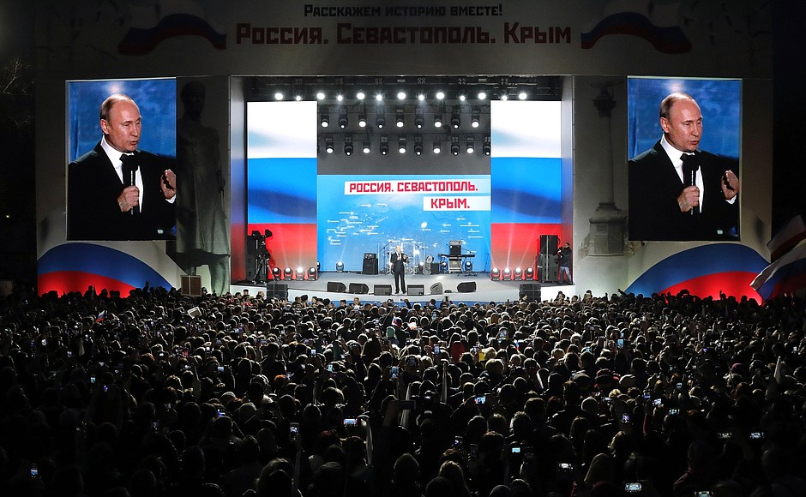 The most pro-Russian part of Crimea is also the greatest source of headaches for Moscow. Will the Kremlin succeed in extending its writ there?
In a serious blow to the Kremlin, Vladimir Putin recently accepted the resignation of the second Moscow-appointed governor of Sevastopol since 2014. This city is the most pro-Russian part of Crimea, and has its own governance separate to the rest of the peninsula. But Moscow has had trouble extending applying its usual template for control of Sevastopol.
In the rest of Crimea, local elites are relatively stable and tame to the wishes of the federal centre. But throughout their period in office, both governors in question faced serious problems with the Sevastopol elite, which was not opposed to Putin or United Russia as such but which is led by “People’s Mayor” Aleksei Chaly. The businessman and scientist was also, in fact, acting governor of the city for just two weeks in April 2014. In a recent interview, he revealed some previously untold elements of the Crimea annexation of February 2014, namely that he and others in Sevastopol pressed ahead with the referendum and pro-Russian demonstrations that year without necessarily being sure that the Kremlin backed them, and without knowing how it would respond. It was during that period that Chaly was “elected” leader of the pro-Russian movement, which eventually spread to the Crimean capital, Simferopol. And the main original Russian sources of military pressure on Ukraine were Russian soldiers from Sevastopol.
Russia in the Gray Zone
In its ongoing efforts to influence world affairs, Russia is waging campaigns both bloodless and bloody. A significant number of its tactics fall in the space between routine statecraft and direct and open warfare, a space sometimes referred to as the gray zone. Americans are familiar with Russia’s disinformation efforts in the United States and its use of “little green men” in Ukraine, but they may be less attuned to stepped-up Russian political and economic coercion abroad, its gray zone cyber and space operations, and its use of proxy forces in Syria. Its aim with these approaches is to achieve Russian objectives at low-cost, notably by side-stepping military escalation with the United States or its North Atlantic Treaty Organization (NATO) allies. Although Russia’s exploitation of the gray zone is not new, the prevalence of these tactics is more significant today than any time since the end of the Cold War.
Disinformation, political influence, and economic and energy coercion are the core of the Gerasimov Doctrine’s emphasis on the non-military means to achieve security goals. Russia continues to remain undeterred and committed to interfering and influencing foreign elections. U.S. officials have acknowledged Russian attempts to influence the 2018 midterm elections and identified efforts already underway to influence the 2020 election. The European Commission recently released a report which found that Russia undertook a “continued and sustained” disinformation campaign that targeted Europe’s May 2019 parliamentary elections. Its efforts were aimed at both suppressing voter turnout as well as influencing voter preference.
By Other Means—Part I: Campaigning in the Gray Zone

This report has been made possible by support from the Smith Richardson Foundation.
You Can Read Yuval Noah Harari’s Book in Russian, Except for the Parts About Russia
MOSCOW — Andrei Chernikov, an information-technology specialist from western Ukraine, was near the end of Yuval Noah Harari’s book “21 Lessons for the 21st Century” when he stumbled onto something that concerned him directly — a description in the “Post-Truth” chapter of how Russia’s government in 2014 attempted to hide its invasion of Ukraine and annexation of Crimea.
Mr. Chernikov, 35, was reading a hard copy of the book in Ukrainian, but when he switched to the Russian e-book version on his tablet, the same chapter contained different material. Instead of events in Crimea, it began with an analysis of President Trump’s statements to illustrate the proliferation of fake news in the modern world.
“The difference between Ukrainian and Russian languages texts powerfully exposes the stated issues,” Mr. Chernikov wrote in a Facebook post that quickly went viral.
Japan and South Korea Can’t Get Along
By Celeste L. Arrington And Andrew Yeo

Who Will Win the Twenty-First Century?
JOSCHKA FISCHER
BERLIN – The first two decades of the twenty-first century are beginning to cast a long shadow over the Western world. We have come a long way since the turn of the century, when people everywhere, but particularly in Europe, indulgently embraced the “end of history.”
With Boris Johnson’s improbable ascendance as Britain’s new prime minister, the absurdity of British politics in the age of Brexit has plumbed new depths.
In this special double issue of On Point, Edoardo Campanella seeks to uncover the deeper forces behind Johnson’s rise, and Nicholas Reed Langen anticipates the consequences of his victory.
According to that illusory notion, the West’s victory in the Cold War – the last of the three great wars of the twentieth century – had given rise to a global order for which there could be no alternatives. Thenceforth, it was thought, world history would march steadily toward the universalization of Western-style democracy and the market economy. The new century would merely be a continuation of the previous one, with a triumphant West extending its dominion.
2020 and beyond: Maintaining the bipartisan narrative on US global development
Over the past 15 years, a strong bipartisan consensus—especially in the U.S. Congress—has emerged to advance and support U.S. leadership on global development as a key pillar of U.S. foreign policy. 2020 presidential and congressional candidates are taking the field and looking for themes that will galvanize their campaigns in 2019.
Regardless of which political stripes win at the ballot box, the president and Congress taking office in January 2021 will be faced with old constraints and new opportunities. In the development arena, issues that are drawing attention include the growing prevalence of state fragility and violence, climate change, the unprecedented level of refugee populations, China’s entry as a major development actor, and how to address development issues such as education, youth, women’s empowerment, sustainable infrastructure, and job-friendly growth.
The 16th Brookings Blum Roundtable will consider what narrative and practical proposals will not only maintain current levels of U.S. development leadership and investments, which have remained static in recent years, but respond appropriately to rising global challenges. Ahead of the roundtable, Brookings commissioned eight briefs to set the scene for discussion.
Which way now for the EU?
Kemal Derviş
With the main European Union institutions preparing for a change of leadership this autumn, now is a good time to reflect on the European Union’s priorities for the coming years.
The EU’s new top team is all but confirmed. Ursula von der Leyen, the former German defense minister, will be the next president of the European Commission, while Christine Lagarde, the outgoing managing director of the International Monetary Fund, will take over at the European Central Bank. Belgian Prime Minister Charles Michel will be the next president of the European Council, and Spanish Foreign Minister Josep Borrell is poised to become the EU’s new High Representative of the Union for Foreign Affairs and Security Policy.
Several commentators say the EU’s new leaders should seek to strengthen Europe’s “strategic sovereignty” through greater pooling of member states’ resources and much closer policy coordination. This is certainly much needed, not least on eurozone matters. But calls for increased strategic sovereignty often imply that a more integrated EU should become the third pillar of a “G-3” world alongside the United States and China. And that is insufficient.
How Blockchain Will Redefine Supply Chain Management

When does blockchain become a significant technology in supply chain management? Only when it adds value by automating interactions and by building trust, notes Stefan Gstettner, partner and associate director at Boston Consulting Group. Gstettner expects blockchain to have the greatest impact in dispersed networks with many participants. “It will have most impact in complex environments and less impact in, say, one factory.” In a conversation with Knowledge@Wharton, Gstettner discusses how blockchain can transform supply chain management, and some of the myths and realities that surround it.
Stefan Gstettner: Supply chain management isn’t well defined across industries. I like to put it is as “end-to-end synchronization of entire value chains.” There are two new words in this — “end-to-end” and “synchronization.” Both are important.
The Impact of Social Media: Is it Irreplaceable?

Recently in the realm of commerce, Facebook faced skepticism in its testimony to the Senate Banking Committee on Libra, its proposed cryptocurrency and alternative financial system. In politics, heartthrob Justin Bieber tweeted the President of the United States, imploring him to “let those kids out of cages.” In law enforcement, the Philadelphia police department moved to terminate more than a dozen police officers after their racist comments on social media were revealed.
And in the ultimate meshing of the digital and physical worlds, Elon Musk raised the specter of essentially removing the space between social and media through the invention — at some future time — of a brain implant that connects human tissue to computer chips.
Hamas and Technology: One Step Forward, Two Steps Back
Aviad Mendelboim, Liran Antebi
 Scientific and technological advances have made various applications affordable, available, and easy to operate - including in the security realm. The article examines this development as it relates to the modus operandi of Hamas and its threat to Israel. The essay provides an overview of the events of mid 2018 to mid 2019 along the Gaza Strip border, from the beginning of the Marches of Return to the middle-to-high intensity fighting, and questions Hamas’s limited use of advanced, off-the-shelf products despite their accessibility; indeed, the organization clearly prefers to use primitive means of attack. The essay posits that restraining factors inhibit Hamas’s use of more advanced technologies in its struggle against Israel, including deterrent and psychological factors that discourage using advanced technologies, political restraint, the effect of classical means, and the power of inferior means over technological superiority.
War in Cyberspace: Can America Protect Its Virtual Borders?
 If the first war was fought with sticks and stones, the next one likely will be fought with data. Cyber threats both big and small are increasing around the world, and they come with serious implications for governments and businesses that struggle to stay a step ahead of digital criminals. Cyberspace has become what the Pentagon calls the fifth domain, and a new book by Richard A. Clarke and Robert K. Knake looks at how to protect it. Clarke spent 30 years working in the U.S. government, including as a White House counterterrorism coordinator under Presidents Bill Clinton and George W. Bush. He was the first White House official to be in charge of cybersecurity. Clarke, a Penn graduate, visited with the Knowledge@Wharton radio show on Sirius XM to discuss the book, The Fifth Domain: Defending Our Country, Our Companies and Ourselves in the Age of Cyber Threats. (Listen to the podcast at the top of this page.)
An edited transcript of the conversation follows.
Cyber Command’s first decade shows its value. Congress needs to ensure it continues
By: Rep. C.A. “Dutch” Ruppersberger
/arc-anglerfish-arc2-prod-mco.s3.amazonaws.com/public/T5AQMGZRSVCG3HY7ETWBTEHDKU.jpg) It was the fall of 2007, and I was at a briefing with the Director of National Intelligence – at the time, Adm. Mike McConnell – and Melissa Hathaway, the director of the Joint Interagency Cyber Task Force. We huddled in a secure, windowless room in the U.S. Capitol. I wasn’t surprised they were asking a member of Congress for money. I was surprised by how much they were seeking: about $17 billion.
It was the fall of 2007, and I was at a briefing with the Director of National Intelligence – at the time, Adm. Mike McConnell – and Melissa Hathaway, the director of the Joint Interagency Cyber Task Force. We huddled in a secure, windowless room in the U.S. Capitol. I wasn’t surprised they were asking a member of Congress for money. I was surprised by how much they were seeking: about $17 billion.
It had been four years since I came to Congress. I was the first Democratic freshman assigned to the House intelligence committee and eventually chaired the technical and tactical subcommittee. It was a perfect match because my district – the 2nd district of Maryland – is home to Fort Meade and the National Security Agency.
Little did I know those emergency funds would be but a small down payment on a desperately-needed investment in our nation’s ability to defend itself in cyberspace. One decade later, we’re spending roughly $17 billion on cyber operations every two years and we have a unified combatant command dedicated to both our offensive and defensive threats. Cyber Command, co-located with NSA at Fort Meade, has been a game-changer.
The next cybersecurity concern for NATO? Space
By: Kelsey Reichmann
/arc-anglerfish-arc2-prod-mco.s3.amazonaws.com/public/MT2RAFDZWVH7LEE64JORPEW3LM.jpg) A new report warns that the cybersecurity vulnerabilities related to military space systems, specifically terminals and command-and-control systems, deserves renewed attention from NATO countries.
A new report warns that the cybersecurity vulnerabilities related to military space systems, specifically terminals and command-and-control systems, deserves renewed attention from NATO countries.
The report, titled “Cybersecurity of NATO’s Spaced-based Strategic Assets,” was produced by Chatham House, which is part of the Royal Institute of International Affairs, a policy institute in London. The paper, by Beyza Unal, was released July 1.
“There is an urgent need to study and address cyber-related challenges to strategic assets within NATO and its key member countries, particularly the cyberthreat to space-based command and control systems,” the report read. “The increasing vulnerability of space-based assets, ground stations, associated command and control systems, and the personnel who manage the systems, has not yet received the attention it deserves.”
Defense Against Hypersonic Attack Is Becoming The Biggest Military Challenge Of The Trump Era
Loren Thompson
In the eternal competition between offense and defense for military dominance, the offense is winning. Russia has been testing a hypersonic cruise missile with a speed above 6,000 miles per hour that can be used to deliver nuclear or conventional warheads against targets at sea or on land. The U.S. military at present has no defense against the weapon.
U.S. intelligence expects the missile, called Zircon, to be deployed on Russian warships in the near future. Meanwhile, Russia is testing a second hypersonic weapon, a glide vehicle boosted to speeds in excess of a mile per second by a ballistic missile, that is expected to carry a nuclear warhead over intercontinental distances. China has similar research under way, and has tested its own hypersonic system within the last year.
So a technology that the Pentagon until recently considered mainly a boon to the firepower of the joint force is now rapidly turning into the biggest military threat of the Trump era. It isn’t hard to see what makes hypersonic weapons so worrisome. Aside from their high velocity—five times the speed of sound or greater—they operate almost entirely within the atmosphere, at elevations below which existing early-warning sensors are optimized to monitor.
Civilian Control of the Military with regard to Value-Based Issues in a World of Hybrid Conflicts
Kobi Michael, Carmit Padan
 Hybrid conflicts bring with them many varied situations in which the need to neutralize threats and ensure security on the one hand clashes with the need for restraint and moderation in the use of military force to achieve these goals on the other hand. In the many instances in which the IDF has had to operate under such tension and maintain its values in force application, it has often found itself at the center of social and political division, and without the backing of the political echelon. The question of civilian control of military force to achieve political goals becomes even sharper in the world of hybrid conflicts, highlighting the need to consider the way in which values influence the use of military force and to study the political echelon's involvement in defining the army’s values. In the military context, values serve as guiding principles for the use of force and open-fire orders, and have the capacity to influence the achievement of political goals and the area of political maneuvering. The article argues that in the world of hybrid conflicts, the political echelon – by means of mechanisms of civilian control – must have a say and be involved in value-related issues that influence how military force is used.