Maj Gen PK Mallick, VSM (Retd)
Introduction
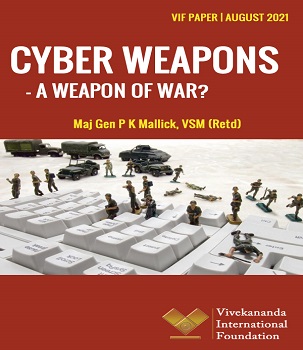 The character of warfare has changed fundamentally over the last decade. In the past, it was essential for an adversary nation or insurgent to physically bring weapons to bear during combat. That requirement is no longer a necessity. In cyber operations, the only weapons that need to be used are bits and bytes. In this new era of warfare, logistics issues that often restrict and limit conventional warfare and weaponry are not impediments. This new weaponry moves at the speed of light, is available to every human on the planet and can be as surgical as a scalpel or as devastating as a nuclear bomb.
Cyber attacks in various forms have become a global problem. Cyber weapons are low-cost, low-risk, highly effective and easily deployable globally. This new class of weapons is within reach of many countries, extremist or terrorist groups, non-state actors, and even individuals. Cyber crime organisations are developing cyber weapons effectively. The use of offensive Cyber operations by nation-states directly against another or by co-opting cyber criminals has blurred the line between spies and non-state malicious hackers. New entrants, both nation-states and non-state actors have unmatched espionage and surveillance capabilities with significant capabilities. They are often the forerunners for criminal financial gain, destruction and disruption operations. Progressively, we see non-state actors including commercial entities, developing capabilities that were solely held by a handful of state actors.













:quality(70)/cloudfront-us-east-1.images.arcpublishing.com/mco/OEK3SFESO5GVHGIZGKKEH336DY.jpg)