The Profession of Arms: A Guide for Young Army Officers
It takes courage, especially for a young officer, to check a man met on the road for not saluting properly or for slovenly appearance, but, every time he does, it adds to his stock of moral courage, and whatever the soldier may say, he has respect for the officer who does pull him up.
Read Document →The Dragon's Teeth: Assessing China's Military Modernization
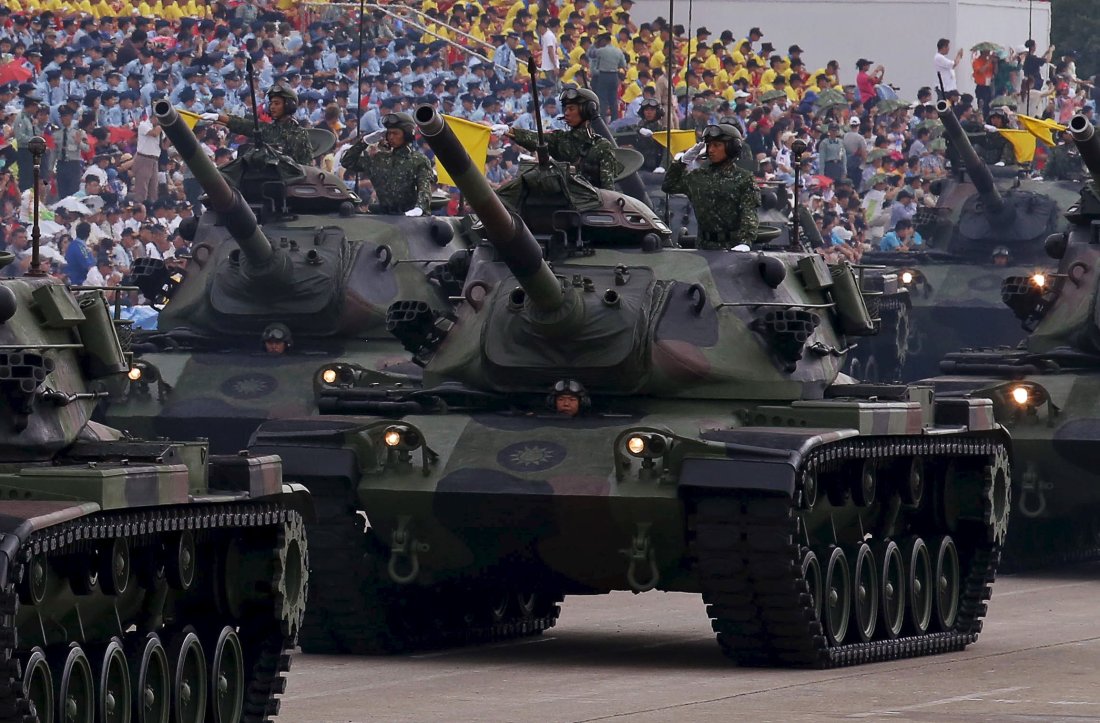
PLA has focused on modernising its capabilities across all warfare domains to achieve these goals. This includes land, air, and maritime operations, nuclear, space, counter-space, electronic warfare and cyberspace operations, aiming to become a fully integrated joint force.
Read Document →Transforming the PLA: A Decade of reorganisation from SSF to ISF
PRC has engaged in a sustained and broad effort to transform the PLA from an infantry-heavy, low-technology, ground forces-centric military into a high-technology, networked force with an increasing emphasis on joint operations and naval and air power projection.
Read Document →Eyes without Borders: Exploring the World of Open Source Intelligence (OSINT) in the Digital Age
Open Source Intelligence (OSINT) is gaining prominence with the rise of social media, the digital society and the vast growth of publicly and commercially available information (PAI and CAI).
Read Document →
The PLA’s Developing Cyber Warfare Capabilities and India's Options
Informationised warfare blurs the lines between peacetime and wartime. A nation in the information age cannot wait for the hostilities to break out to collect intelligence, carryout influence operations, develop antisatellite systems or design computer software weapons.
Read Document →
Galwan and After
Why did China did this when he is under tremendous pressure in all fronts, is this China's salami slice tactics being progressed rigorously, what will be new Rules of Engagement, what will be escalatory control mechanism, who has taken this decision, will there be some pressure put by China in India's North-East through insurgency.
Read Document →
India’s Joint Doctrine for Cyberspace Operations: A Critical Review
Chief of Defence Staff (CDS) General Anil Chauhan and Secretary, Department of Military Affairs, formally released declassified versions of the Joint Doctrines for Cyberspace Operations during the Chiefs of Staff Committee meeting in New Delhi.
Read Document →
Know your Enemy General(now Field Marshal) Syed Aseem Munir
Gen SA Munir's position in the hierarchy of Pakistan was not very comfortable. The state of economy, insurgency in Pakhtoonistan and Balochistan, attack on the Jaffar Express, constant protests by supporters of Imran Khan's supporters inside and outside of parliament.
Read Document →
Decoding Operation SINDOOR: Key Aspects and Implications
Precision strikes were carried out on nine sites—four in Pakistan and five in PoK—linked to anti-India terrorist groups such as the LeT, JeM and the Hizbul Mujahideen. The targeted sites included Muridke (LeT headquarters) and Bahawalpur (JeM headquarters).
Read Document →
Chinese Cyber Exploitation in India's Power Grid - Is There a linkage to Mumbai Power Outage?
The New York Times (NYT), based on analysis by a U.S. based private intelligence firm Recorded Future, reported that a Chinese entity penetrated India’s power grid at multiple load dispatch points. Chinese malware intruded into the control systems that manage electric supply across India, along with a high-voltage transmission substation and a coal-fired power plant
Read Document →17 August 2018
Pakistan’s Water Woes: Don’t Blame India
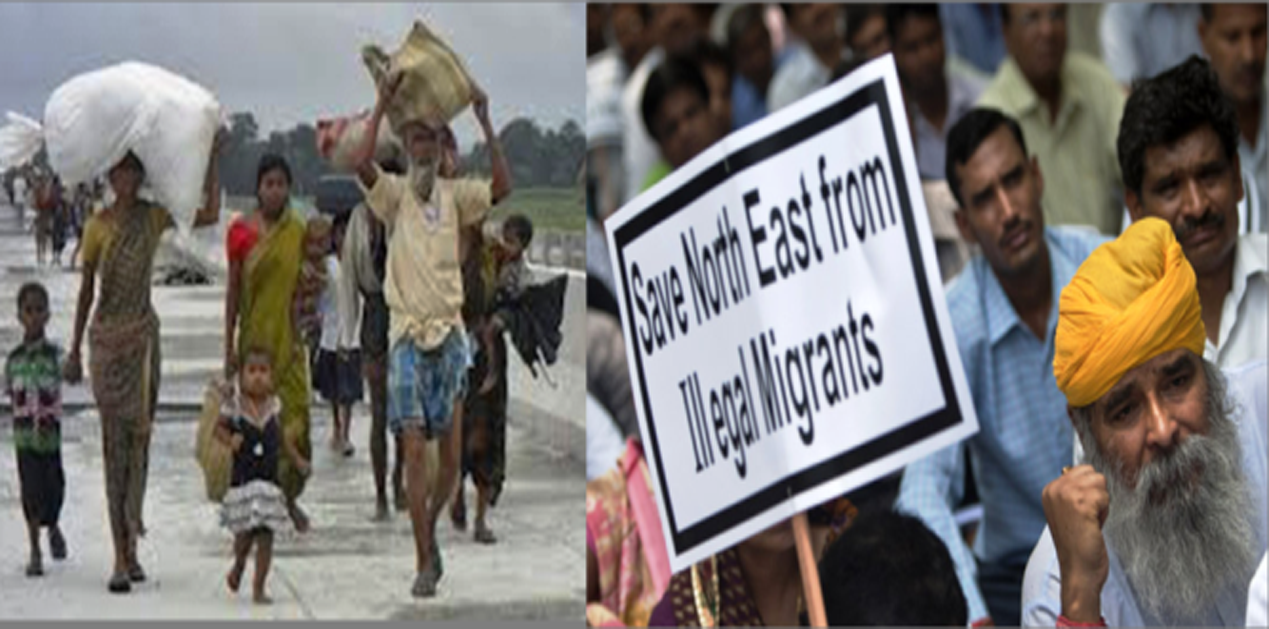
The NRC process: Both Complex and Necessary
If we disentangle politics from the ongoing process to prepare a National Register of Citizens (NRC) for Assam, we will better understand the ‘what, why and how’ of the exercise, its enormity, and its necessity from both the State and the national perspectives. The task to finalise the NRC, even if limited to one State for now, is complex. And yet, the bottom line is simple enough: Identify residents who are genuine Indians and those that have illegally entered and stayed on in the country in violation of the laid down laws.Western India is leaving the eastern half behind
The founders of the modern Indian state faced policymaking challenges of bewildering complexity. Among the most difficult was the need to finesse vast socioeconomic disparities. Much progress has been made since then—most of it in the post-liberalization era—in lifting people at the bottom of the ladder. But 71 years after independence, the problem of how to address the disparities remains. Spatial inequality is arguably the most vexing aspect of this problem. It is sand in the gears of the federal structure, creating diverging incentives across states. It disrupts the policy consensus needed for essential structural reforms—witness the interminable birth pangs of the goods and services tax. It complicates the push-and-pull of Centre-state relations at a time when recalibration is under way. And it reduces income and occupational mobility, generating chronic poverty.When China Rules the Web
China-U.S. Trade Spat Is Just a Start to the Economic Cold War
China is not just another front in President Donald Trump's war on trade. Unlike Mexico, Canada, Europe and other targets of the president, China will be a source of economic conflict for years to come, long after the tariff level on soybeans has been settled. Like the rivalry with the Soviet Union, economic competition with China may form a cold war that shapes American politics and economic policy for a generation or more. Until now, through flukes of timing, Americans have largely been distracted from China's economic development. China joined the World Trade Organization in December 2001, three months after the Sept. 11 terrorist attacks. For the next several years, America's focus was terrorism and war in the Middle East, not China's ascension and its impact on the U.S. economy. Next came a financial crisis and the great recession, which became the national focus for the next several years. The post-recession political environment in the U.S. has largely been one of government dysfunction and partisan polarization.Let’s Not Invite China to Invade Taiwan
In “The United States Must Be Realistic on Taiwan,” Lyle Goldstein, writing on this site, misreads Taiwan’s history, portrays Chinese territorial ambitions as benign, and essentially argues Washington must do what China says because it has weapons. To makes these points, he neglects crucial facts and endorses pro-Beijing arguments that have now been discredited. In addition, he manages to misrepresent my views, sling epithets, resort to innuendo, and include an unrelated personal attack. Personally, I’m appalled, but I will put my feelings aside in order to address the most important geopolitical issue facing Goldstein, me, and everyone else on the planet: How does the world contain persistent Chinese expansionism? “Besides the usual platitudes about supporting democracy and relying on deterrence,” Goldstein writes, “Chang offers no specific policy prescriptions.”Soviet Collapse Echoes in China’s Belt and Road
According to one influential view, it’s ultimately a question of investment. Great powers are the nations that best harness their economic potential to build up military strength. When they become overextended, the splurge of spending to sustain a strategic edge leaves more productive parts of the economy starved of capital, leading to inevitable decline. That should be a worrying prospect for China, a would-be great power whose current phase of growth is associated with an increasingly aggressive military posture and a tsunami of capital spending in its strategic neighborhood.Malaysia is pushing back against a $20 billion Chinese debt trap
China Doesn’t Want to Play by the World’s Rules
U.S. President Donald Trump’s most recent threat to target all $505 billion in annual Chinese imports to the United States is only the latest development in the looming U.S.-China trade war. While Trump and his team are preparing for an economic competition focused largely on tariffs, policymakers must prepare for a multi-domain competition rooted in Chinese political posturing, domestic propaganda, and economic coercion targeting American firms operating in China. These unconventional challenges will demand a comprehensive U.S. response.While everyone obsesses over Russia, China is stealing our data blind
Space Force Is Trump’s Answer to New Russian and Chinese Weapons
The United States’ decision to establish a new military service to oversee American operations in space reflects a growing concern in Washington over the development of sophisticated new weapons by Russia and China. Our adversaries have transformed space into a warfighting domain already. And the United States will not shrink from this challenge,” said Vice President Mike Pence during a speech at the Pentagon on Thursday. The primary aim of establishing a sixth armed service—the others being the Air Force, Army, Coast Guard, Marine Corps, and Navy—is to accelerate the development and deployment of new technologies for space warfighting, Deputy Secretary of Defense Patrick Shanahan told reporters during an engagement after the rollout.Xi Jinping's Path for China
Since assuming power, Chinese President Xi Jinping has taken many steps to reshape his country, de-emphasizing growth to build a more sustainable economy and engaging in more proactive diplomacy. He has also been rewriting political rules to establish himself as a strongman. But as China's economy slows while the United States escalates its trade attacks, policy debates inside the country are intensifying and testing core pillars of Xi's economic and foreign policies — as well as his own political strength. Despite the challenges, China cannot afford to dial back its progress in economic development and global involvement, especially considering its growing strategic competition with the United States.China's Belt and Road Initiative Finds Shaky Ground in Eastern Europe
As part of its Belt and Road Initiative, China will work to build economic and security ties with Ukraine, Belarus and Moldova in the coming years. A variety of factors, including insufficient infrastructure and competition in the region between Russia and the West, will complicate China's expansion in these states. Forging deeper relationships with China will give Ukraine, Belarus and Moldova more leeway for negotiating the standoff between Russia and the West, though Beijing will be careful not to encroach on Moscow's interests in the region.Daily Memo: Purges in Iran, Concessions in China, Troubles in Idlib
How China's state-backed companies fell behind
How the U.S. Helped Prevent North Korea and South Korea From Reaching Real Peace in the 1950s
The Changing Risk Landscape
History’s Lesson Regarding Russian Cyber Warfare
Trump’s Secret War on Terror
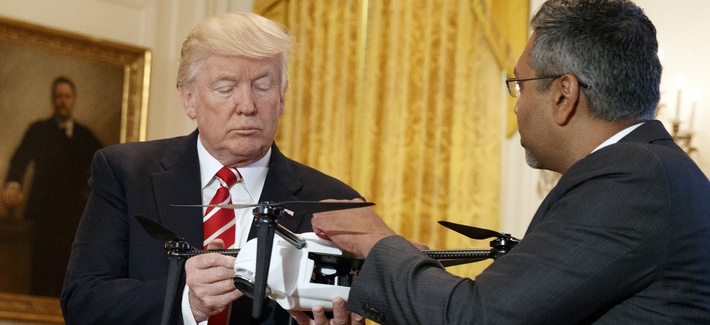
President Donald Trump has dramatically expanded the war on terror. But you—and perhaps he—would never know it. Since he came into office, Trump has reportedly abandoned Obama-era rules governing the use of drones in non-combat theaters such as Somalia and Libya. Whereas Obama operationally expanded but bureaucratically constrained drones’ use, from what we can tell, Trump’s new rules instead vest strike decisions with military commanders, without requiring approval from the White House.The Missile Arsenal at the Heart of the Israeli-Iranian Rivalry
Iran and Hezbollah will continue efforts to enhance their missile and artillery capabilities by threatening Israel where it is most vulnerable; in the economic realm. In response, Israel will seek to lobby Washington and Moscow to restrict Tehran's activities in Syria. In the event of a war, Israel will seek to take a load off of its missile defense system by launching a ground incursion into Syria or Lebanon to destroy possible launch pads for Iranian or Hezbollah missiles as well as the projectiles themselves. Following a string of recent successes, Syria's government is in a dominant position as the Syrian civil war transitions to a new phase. Meanwhile, the two largest outside powers involved in the conflict — the United States and Russia — are looking to make an exit as their primary foes lose ground. But even as the war appears to be winding down for some, it's beginning to ramp up for one key player: Israel.Looking Back on the Russian-Georgian War, 10 Years Later
Russia's invasion of Georgia in August 2008 gave it a new geopolitical foothold after decades of weakness in the wake of the Soviet Union's collapse. The war paved the way for Russia to increase its influence throughout Eurasia, although the collapse of global oil prices and the Euromaidan uprising in Ukraine later demonstrated the limits of Moscow's reach. In the years since, Russia has maintained its clout on the world stage and revived its rivalry with the West, which, in turn, has redoubled its support for Georgia and other countries in the region.The Unlikely Activists Who Took On Silicon Valley — and Won
1 big thing: How the robot revolution is changing our lives
We should fear the use of killer drones like in Venezuela – all you need is £5,000 and some tinfoil
Space Warfare Is Here
When Would Russia's Cyber Warfare Morph Into Real Warfare? Refer To The Tallinn Manual
Army Cyber Command has many roles
Science Board Advises Fighting War Without End in Cyberspace
Air and Missile Defense Integration Needed Now…More Than Ever
New Navy Boards Will Send Underperforming Officers to Early Retirement
The Navy as a whole is poised to grow in coming years -- but top brass say there's still no room for senior officers who don't carry their weight. In a new move aimed at rooting out officers who are underperforming or causing problems at their units, the Navy on Thursday announced the creation of a new Selective Early Retirement Board, set to convene this fall. The move was made possible by a provision in the Fiscal 2018 National Defense Authorization Act that gives military service secretaries the ability to look within subsets of paygrades to find officers who aren't making the cut, Chief of Naval Personnel Vice Adm. Robert Burke told reporters this week.