The Profession of Arms: A Guide for Young Army Officers
It takes courage, especially for a young officer, to check a man met on the road for not saluting properly or for slovenly appearance, but, every time he does, it adds to his stock of moral courage, and whatever the soldier may say, he has respect for the officer who does pull him up.
Read Document →The Dragon's Teeth: Assessing China's Military Modernization
PLA has focused on modernising its capabilities across all warfare domains to achieve these goals. This includes land, air, and maritime operations, nuclear, space, counter-space, electronic warfare and cyberspace operations, aiming to become a fully integrated joint force.
Read Document →Transforming the PLA: A Decade of reorganisation from SSF to ISF
PRC has engaged in a sustained and broad effort to transform the PLA from an infantry-heavy, low-technology, ground forces-centric military into a high-technology, networked force with an increasing emphasis on joint operations and naval and air power projection.
Read Document →Eyes without Borders: Exploring the World of Open Source Intelligence (OSINT) in the Digital Age
Open Source Intelligence (OSINT) is gaining prominence with the rise of social media, the digital society and the vast growth of publicly and commercially available information (PAI and CAI).
Read Document →
The PLA’s Developing Cyber Warfare Capabilities and India's Options
Informationised warfare blurs the lines between peacetime and wartime. A nation in the information age cannot wait for the hostilities to break out to collect intelligence, carryout influence operations, develop antisatellite systems or design computer software weapons.
Read Document →
Galwan and After
Why did China did this when he is under tremendous pressure in all fronts, is this China's salami slice tactics being progressed rigorously, what will be new Rules of Engagement, what will be escalatory control mechanism, who has taken this decision, will there be some pressure put by China in India's North-East through insurgency.
Read Document →
India’s Joint Doctrine for Cyberspace Operations: A Critical Review
Chief of Defence Staff (CDS) General Anil Chauhan and Secretary, Department of Military Affairs, formally released declassified versions of the Joint Doctrines for Cyberspace Operations during the Chiefs of Staff Committee meeting in New Delhi.
Read Document →
Know your Enemy General(now Field Marshal) Syed Aseem Munir
Gen SA Munir's position in the hierarchy of Pakistan was not very comfortable. The state of economy, insurgency in Pakhtoonistan and Balochistan, attack on the Jaffar Express, constant protests by supporters of Imran Khan's supporters inside and outside of parliament.
Read Document →
Decoding Operation SINDOOR: Key Aspects and Implications
Precision strikes were carried out on nine sites—four in Pakistan and five in PoK—linked to anti-India terrorist groups such as the LeT, JeM and the Hizbul Mujahideen. The targeted sites included Muridke (LeT headquarters) and Bahawalpur (JeM headquarters).
Read Document →
Chinese Cyber Exploitation in India's Power Grid - Is There a linkage to Mumbai Power Outage?
The New York Times (NYT), based on analysis by a U.S. based private intelligence firm Recorded Future, reported that a Chinese entity penetrated India’s power grid at multiple load dispatch points. Chinese malware intruded into the control systems that manage electric supply across India, along with a high-voltage transmission substation and a coal-fired power plant
Read Document →7 January 2020
India–UK counter-terrorism cooperation: convergences and challenges
Suicide Bombings Worldwide in 2019: Signs of Decline following the Military Defeat of the Islamic State
Suicide bombings in 2019, despite a sharp decline in number from the previous year, remained one of the most effective tactics available to terrorist groups. The drop in number is in keeping with an ongoing (albeit more modest) decline seen in recent years, but the figures of 2019 can be attributed to the final military defeat of the Islamic State. Therefore, while the Islamic State and its affiliates - the organizations that since 2015 have committed the most suicide bombings – remain the groups primarily responsible for suicide bombings, the actual number of attacks plummeted. According to collected data in 2019, 149 suicide bombings were carried out in 24 countries by 236 suicide bombers, among them 22 women. In these suicide bombings, 1,850 people were killed and 3,660 were wounded.In 2019, around 149 suicide bombings were carried out worldwide (compared to around 293 in 2018 - a decline of around 49 percent). For the second consecutive year, the most active arena in this regard was Asia, where around 68 suicide bombings were carried out – primarily in Afghanistan - accounting for 45.5 percent of all suicide bombings globally. In the Middle East, around 47 suicide bombings were carried out in 2019, accounting for around 31.5 percent of all suicide bombings. In Africa, around 33 such attacks were carried out in 2019, accounting for around 22 percent of attacks during the year. Latin America saw a sole, rare attack, launched in Colombia, by the National Liberation Army, killing 21 people.What to worry about: 6 top risks to watch for in 2020
SecDef Esper Warns Iran: US May Take ‘Preemptive Action’
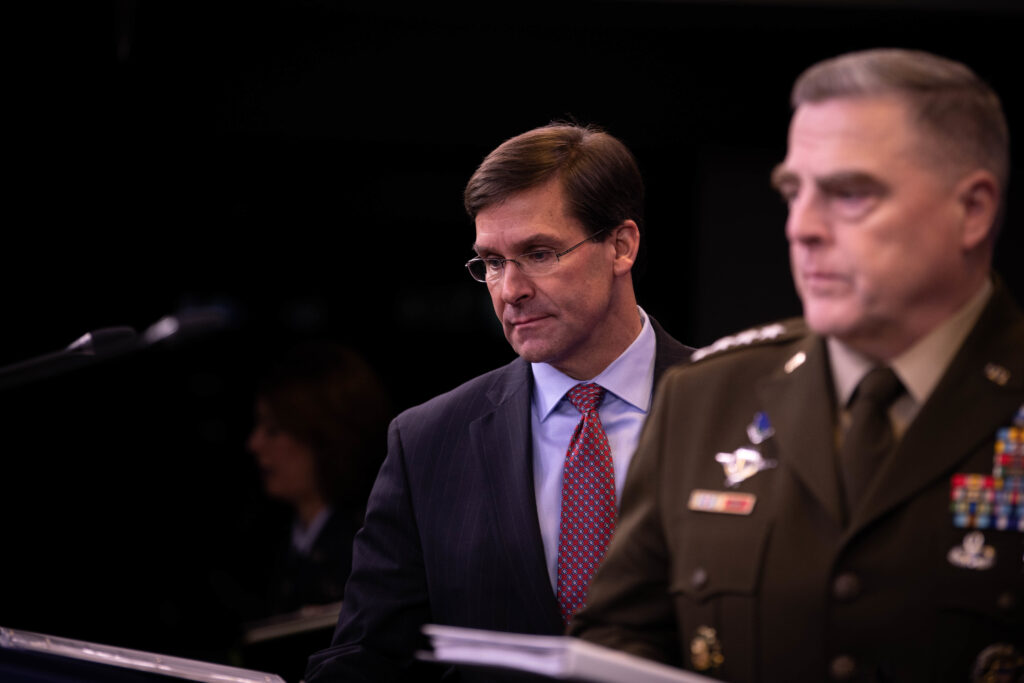
PENTAGON: In what appears to be a return to the Bush Doctrine, the United States will consider launching preemptive strikes on Iran to stop what it says are months of attacks on US forces and facilities in Iraq and the Middle East, Defense Secretary Mark Esper says.Are Saudi Arabia and Its Gulf Neighbors Close to Ending the Qatar Boycott?
How Tehran Rolled Donald Trump In Iraq
The Real Start Of “Maximum Pressure” Against Iran
President Trump Should Worry About Iran's Military
To understand how, look at the last major provocation in the Middle East: Iran’s September surprise attack on the Saudi oil facility at Abqaiq. Unlike the glaring lack of response to that strike, however, Tehran likely feels emboldened to hit back now.More Than Mines: Iran Is Ready To Harass And Destroy The U.S. Navy
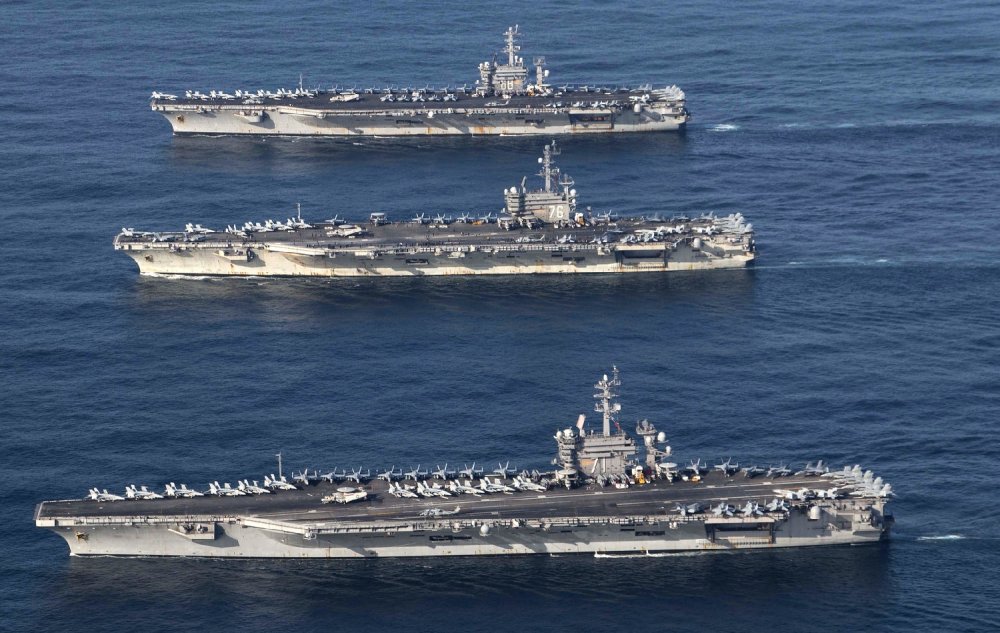
In the event of war with Iran, the U.S. Navy’s small, aging force of Persian Gulf-based minesweepers would struggle to locate and disarm Iran’s underwater mines.Chapter One: Tehran’s strategic intent

Iran Loses Its Indispensable Man
The killing of Qassem Soleimani robs the regime of the central figure for its ambitions in the Middle East.Around the halls: Experts discuss the recent US airstrikes in Iraq and the fallout
Iran’s Year of Living Dangerously is Just Beginning
Trump’s Ground Game Against Iran
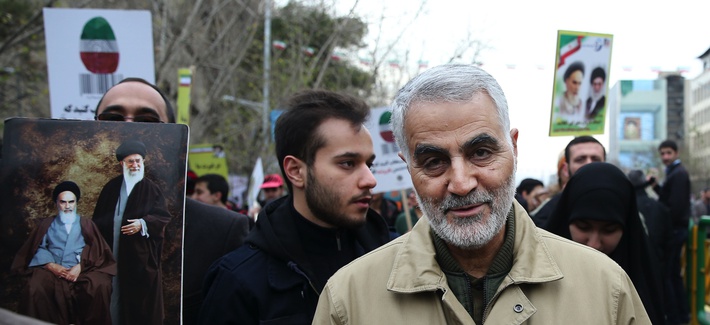
More than any other American military operation since the invasion of Iraq, the assassination yesterday of Maj. Gen. Qassim Suleimani, the head of Iran’s Qods Force of its Islamic Revolutionary Guards Corps, is a seismic event. The killings of Osama bin Laden and Abu Bakr al-Baghdadi, the leaders of al-Qaeda and the Islamic State, were certainly meaningful, but they were also largely symbolic, because their organizations had been mostly destroyed. Taking out the architect of the Islamic Republic’s decades-long active campaign of violence against the United States and its allies, especially Israel, represents a tectonic shift in Middle Eastern politics.After Soleimani: Confronting Iran's Dangerous Regime
America’s Failed Strategy in the Middle East: Losing Iraq and the Gulf
Turkey Makes Its Move
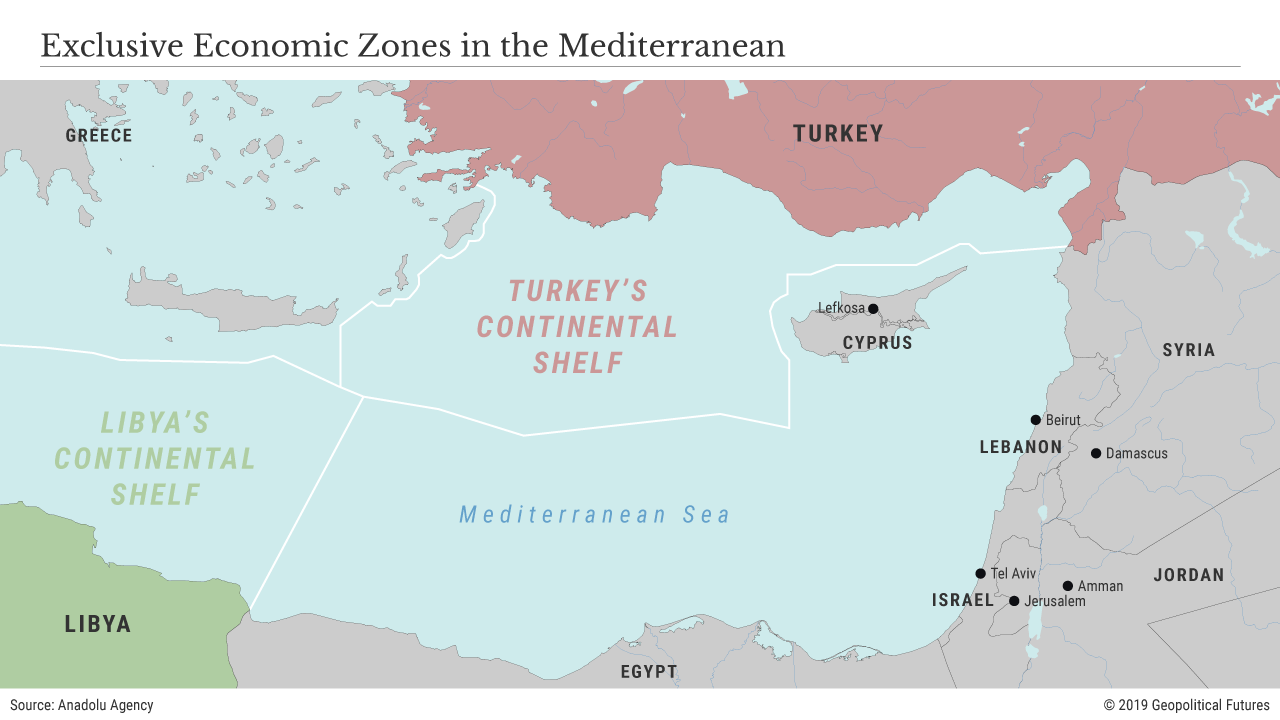
In “The Next 100 Years,” I described Turkey as an emerging regional power that would over time extend its sphere of influence to resemble the range of the Ottoman Empire. Over the past decade, in spite of pressure from various directions, it has refrained from taking risks to assert itself. This changed significantly in recent weeks, signaling what is, in my opinion, the inevitable emergence of Turkish power.TURKEY ENTERS LIBYAN ESCALATION SPIRAL AT GREAT RISK
Iran is losing its grip on Iraq
The conflict between America and Iran intensifies in Iraq
For months young Iraqi protesters trying to reach the Green Zone, the government enclave in Baghdad, were met with bullets and tear-gas canisters, the latter often fired at their heads. But on December 31st hundreds of militiamen were allowed to enter unmolested. The men, affiliated to Kataib Hizbullah, an Iranian-backed Shia paramilitary group, tried to storm the American embassy. They threw petrol bombs over the walls and broke into a reception area where security personnel would normally screen visitors. Iraqi police largely stood by for hours; it was not until nightfall that the Counter Terrorism Service (cts), an elite unit, sent men to secure the embassy. They did not have orders to evict the rioters, who made plans to camp outside. As night fell, American Apache helicopters could be seen flying overhead, dropping flares.