The Profession of Arms: A Guide for Young Army Officers
It takes courage, especially for a young officer, to check a man met on the road for not saluting properly or for slovenly appearance, but, every time he does, it adds to his stock of moral courage, and whatever the soldier may say, he has respect for the officer who does pull him up.
Read Document →The Dragon's Teeth: Assessing China's Military Modernization
PLA has focused on modernising its capabilities across all warfare domains to achieve these goals. This includes land, air, and maritime operations, nuclear, space, counter-space, electronic warfare and cyberspace operations, aiming to become a fully integrated joint force.
Read Document →Transforming the PLA: A Decade of reorganisation from SSF to ISF
PRC has engaged in a sustained and broad effort to transform the PLA from an infantry-heavy, low-technology, ground forces-centric military into a high-technology, networked force with an increasing emphasis on joint operations and naval and air power projection.
Read Document →Eyes without Borders: Exploring the World of Open Source Intelligence (OSINT) in the Digital Age
Open Source Intelligence (OSINT) is gaining prominence with the rise of social media, the digital society and the vast growth of publicly and commercially available information (PAI and CAI).
Read Document →
The PLA’s Developing Cyber Warfare Capabilities and India's Options
Informationised warfare blurs the lines between peacetime and wartime. A nation in the information age cannot wait for the hostilities to break out to collect intelligence, carryout influence operations, develop antisatellite systems or design computer software weapons.
Read Document →
Galwan and After
Why did China did this when he is under tremendous pressure in all fronts, is this China's salami slice tactics being progressed rigorously, what will be new Rules of Engagement, what will be escalatory control mechanism, who has taken this decision, will there be some pressure put by China in India's North-East through insurgency.
Read Document →
India’s Joint Doctrine for Cyberspace Operations: A Critical Review
Chief of Defence Staff (CDS) General Anil Chauhan and Secretary, Department of Military Affairs, formally released declassified versions of the Joint Doctrines for Cyberspace Operations during the Chiefs of Staff Committee meeting in New Delhi.
Read Document →
Know your Enemy General(now Field Marshal) Syed Aseem Munir
Gen SA Munir's position in the hierarchy of Pakistan was not very comfortable. The state of economy, insurgency in Pakhtoonistan and Balochistan, attack on the Jaffar Express, constant protests by supporters of Imran Khan's supporters inside and outside of parliament.
Read Document →
Decoding Operation SINDOOR: Key Aspects and Implications
Precision strikes were carried out on nine sites—four in Pakistan and five in PoK—linked to anti-India terrorist groups such as the LeT, JeM and the Hizbul Mujahideen. The targeted sites included Muridke (LeT headquarters) and Bahawalpur (JeM headquarters).
Read Document →
Chinese Cyber Exploitation in India's Power Grid - Is There a linkage to Mumbai Power Outage?
The New York Times (NYT), based on analysis by a U.S. based private intelligence firm Recorded Future, reported that a Chinese entity penetrated India’s power grid at multiple load dispatch points. Chinese malware intruded into the control systems that manage electric supply across India, along with a high-voltage transmission substation and a coal-fired power plant
Read Document →20 June 2014
How not to end a war
A Syrian tragedy of many dimensions
Indian money in Swiss banks rise to over Rs. 14,000 cr.
June 19, 2014
PTIChairman Justice (retd) M.B. Shah and other SIT members come out after the first high level meeting. A data on Thursday said Indians’ money in Swiss banks has risen to nearly Rs 14,000 crore, despite a global clampdown against the famed secrecy wall of Switzerland banking system. File photo
Indians’ money in Swiss banks has risen to over two billion Swiss francs (nearly Rs 14,000 crore), despite a global clampdown against the famed secrecy wall of Switzerland banking system.
The funds held by Indians with banks in Switzerland rose by over 40 per cent during 2013, from about 1.42 billion Swiss francs at the end of previous year, as per the latest data released on Thursday by the country’s central banking authority Swiss National Bank (SNB).
In contrast, the money held in Swiss banks by their foreign clients from across the world continued to decline and stood at a record low of 1.32 trillion Swiss francs (about $1.56 trillion or over Rs 90 lakh crore) at the end of 2013.
During 2012, the Indians’ money in Swiss banks had fallen by over one-third to a record low level.
Do you think I am Indian?!
India’s Worrying Border Infrastructure Deficit
Forty Indian Construction Workers Kidnapped in Iraq
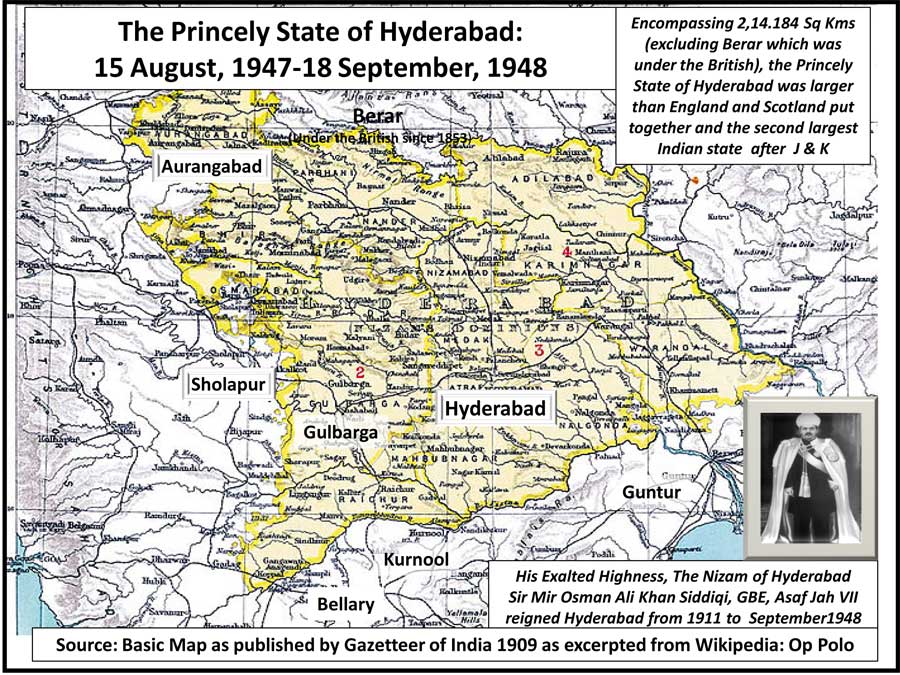
Operation ‘Polo’ and Impact & Ramifications on India’s First Kashmir War
Running out of control
Enabling the Dragon: China’s Foreign Policy between Thucydides and Sun Tzu
https://medium.com/the-spin/enabling-the-dragon-chinas-foreign-policy-between-thucydides-and-sun-tzu-e31bcaf643fa
On March 8 Chinese foreign minister Wang Yi gave his first major press-conference against the background of the ongoing session of the National People’s Congress. More than 500 journalists listened to the FM for 95 minutes, but it was the very last statement that deserves the most attention. Wang outlined the three main foundations for China’s new age foreign policy and behind the traditional aesthetically sophisticated formulas one can see a pure case of Thucydidian realism.
When asked about a personal vision of Chinese foreign policy, Wang Yi said the three requirements for Chinese diplomacy are “confidence,” “backbone,” and “generosity.” Each of these concepts is tied up with confidence and pride in China’s power: “Confidence comes from the strength and prosperity of our motherland … The backbone comes from our national pride … Generosity comes from the self-confidence of an old civilization.” (quoting The Diplomat here).
The statement itself is quite characteristic of Chinese official rhetoric. A sophisticated metaphoric reminder of China’s national supremacy backed by “5,000 years of uninterrupted civilizational prosperity” is supposed to serve as a basis for a relaxed and powerful international stance. Then Wang posits that Beijing pursues “major-country diplomacy with Chinese characteristic”. Now that’s when I got the itch — a feeling that something sounds very familiar. Oh, there it is — if we substitute “major-country diplomacy” with a synonymous “great-power politics” we get a classic notion from political realism. Great power — small power is something purely realistic and it seems the Chinese are well aware of that.
Now for the “generosity”. When Thucydides outlined the basics of political realism in his History of the Peloponnesian War he made international relations look like a world of cynicism, state-scale egoism and unchallenged domination of pure national interest. These circumstances seemingly leave no room for goodwill, except for one manifestation — restraint in power excercise. Essentially it means denying the “just-because-I-can” logic, often characteristic of authoritarian leaders in internal policy.
China’s Second Coast: Implications for Northeast India
Rescue Pakistan chorus is back again
The problem with Teesta
18 June 2014
Source Link
Recently, the Bangladeshi Prime Minister Sheikh Hasina wrote to Mr Modi to convey her hopes for a resolution to the long-standing dispute on the Teesta river, shared by both countries. In a letter dated May 26, Hasina referred to the Teesta dispute and called for a "speedy resolution" to "all pending issues between the two countries." Additionally, the Indian Foreign Secretary Sujatha Singh confirmed that in the brief meeting between Mr. Modi and Ms. Shirin Sharmin Chaudhary -- the Bangladesh Speaker who was in India to attend Modi's swearing-in ceremony -- India was able to reaffirm its commitment towards resolving the Teesta conflict. Such a move is a good harbinger for the India-Bangladesh relationship as it can provide much needed momentum for the deadlock on this issue.
However, arriving at an acceptable solution requires caution as the Teesta has proved to be a political landmine in the past. The Teesta is the fourth largest river in South Asia and due to its geographical profile, has multiple stakeholders. It originates in Sikkim, flows through West Bengal and then enters Bangladesh. The main problem arises because of seasonal variations in its flows. It is estimated that the Teesta River has a mean annual flow of 60 billion cubic metres but a significant amount of this water flows only during wet season i.e. between June and September, leaving scant flow during the dry season i.e. October to April/May wherein the average flow gets reduced to about 500 million cubic metres (MCM) per month. This creates issues of equitable sharing during lean season.
Beyond the Environment: Obama's Big Pacific Ocean Move
China Moves Second Oil Rig Into Vietnam's Exclusive Economic Zone
China’s Maritime Safety Administration (MSA) announced that a second oil rig will set up off Vietnam’s coast.
By Ankit Panda, June 20, 2014
On Thursday, China said that it would move a second oil rig into the waters off Vietnam’s coast, where the two countries have been engaged in a protracted dispute since early May. China’s Maritime Safety Administration (MSA) posted a notice on its website stating that this new rig will be installed between June 18 and 20. Its final location will be at 17°14.1′ North latitude and 109°31′ East longitude off the coast of Vietnam.
China’s HYSY 981 oil rig sparked a major bilateral dispute over the sovereignty of the South China Sea waters off Vietnam’s coast. While Vietnam claims that the waters belong to it as part of its exclusive economic zone (EEZ), China claims that it holds sovereignty over the territory based on its claim to the Paracel (Xisha) Islands. The Paracel Islands are also disputed between China and Vietnam.
According to the Associated Press, the “600-meter (1,970-foot) -long rig is being towed southeast of its current position south of Hainan Island and will be in its new location closer to Vietnam by Friday.” Despite the fact that this rig will also set up shop in disputed waters, it is less likely to draw the same sort of condemnation from the Vietnamese government as the first rig did. First, the new rig is somewhat more distant from the controversial Paracel Islands. Chinese Foreign Ministry spokesperson Hua Chunying said that the second oil rig is “operating within the coastal waters off China’s Hainan Island,” making this drill’s position far less controversial. Additionally, the AP cites an anonymous Vietnamese official who notes that the second rig will be installed in waters that China has already explored in the past. So far, it appears that Hanoi is less concerned about this second oil rig than it continues to be about HYSY 981.
The rig is described by China National Offshore Oil Company (CNOOC) as the second largest in the company’s fleet of rigs. CNOOC is a state-owned enterprise and as such these actions take place with at least the knowledge, if not acquiescence, of China’s government. With two oil rigs in place, it remains to be seen if China will also move additional coast guard and PLAN assets into these waters to protect the platforms. In May, China moved 80 ships, mostly civilian and coast guard, to accompany HYSY 981 on its foray into Vietnam’s EEZ.