China is the world’s biggest dam builder, with the country boasting more dams than the rest of the world combined. China is also the world’s largest exporter of dams.The Profession of Arms: A Guide for Young Army Officers
It takes courage, especially for a young officer, to check a man met on the road for not saluting properly or for slovenly appearance, but, every time he does, it adds to his stock of moral courage, and whatever the soldier may say, he has respect for the officer who does pull him up.
Read Document →The Dragon's Teeth: Assessing China's Military Modernization
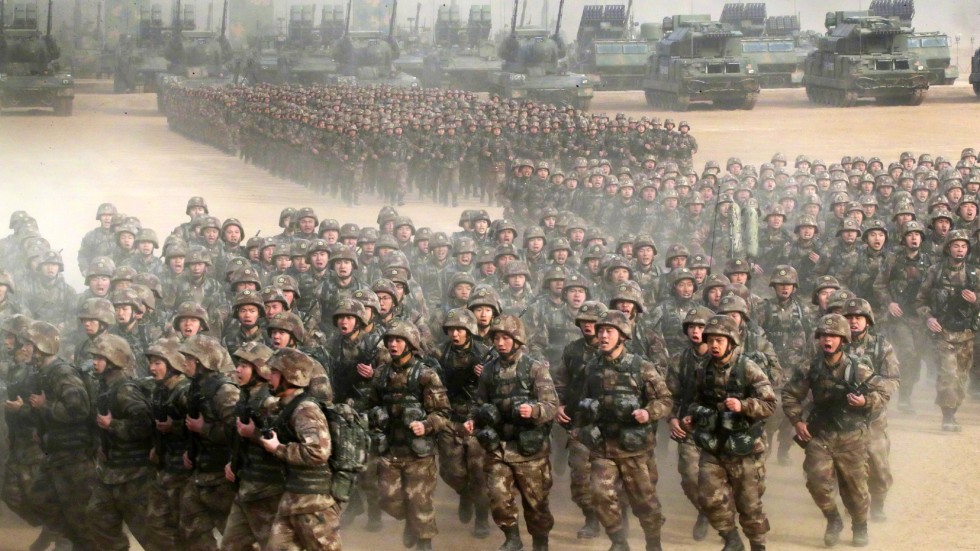
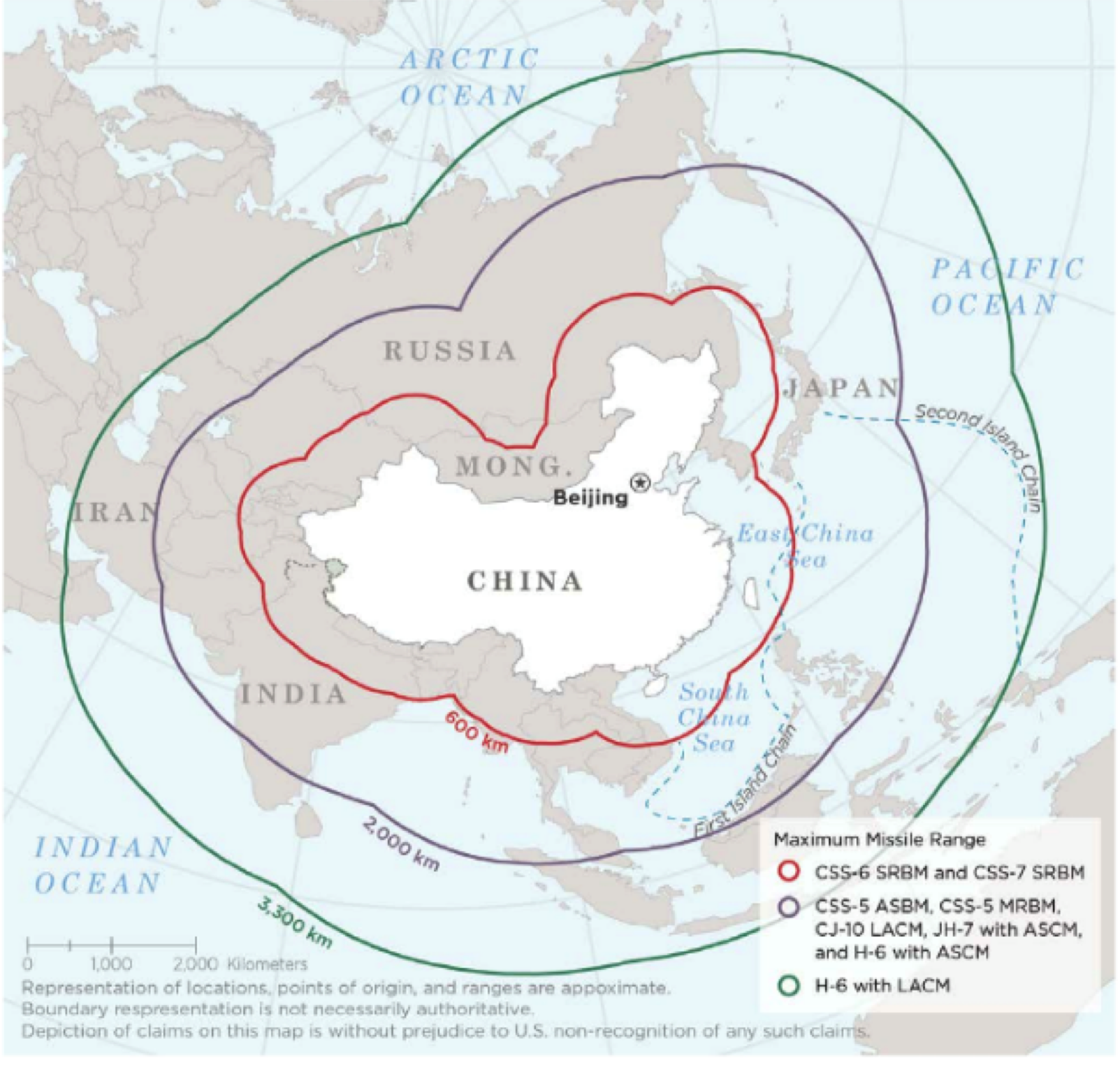
PLA has focused on modernising its capabilities across all warfare domains to achieve these goals. This includes land, air, and maritime operations, nuclear, space, counter-space, electronic warfare and cyberspace operations, aiming to become a fully integrated joint force.
Read Document →Transforming the PLA: A Decade of reorganisation from SSF to ISF
PRC has engaged in a sustained and broad effort to transform the PLA from an infantry-heavy, low-technology, ground forces-centric military into a high-technology, networked force with an increasing emphasis on joint operations and naval and air power projection.
Read Document →Eyes without Borders: Exploring the World of Open Source Intelligence (OSINT) in the Digital Age
Open Source Intelligence (OSINT) is gaining prominence with the rise of social media, the digital society and the vast growth of publicly and commercially available information (PAI and CAI).
Read Document →
The PLA’s Developing Cyber Warfare Capabilities and India's Options
Informationised warfare blurs the lines between peacetime and wartime. A nation in the information age cannot wait for the hostilities to break out to collect intelligence, carryout influence operations, develop antisatellite systems or design computer software weapons.
Read Document →
Galwan and After
Why did China did this when he is under tremendous pressure in all fronts, is this China's salami slice tactics being progressed rigorously, what will be new Rules of Engagement, what will be escalatory control mechanism, who has taken this decision, will there be some pressure put by China in India's North-East through insurgency.
Read Document →
India’s Joint Doctrine for Cyberspace Operations: A Critical Review
Chief of Defence Staff (CDS) General Anil Chauhan and Secretary, Department of Military Affairs, formally released declassified versions of the Joint Doctrines for Cyberspace Operations during the Chiefs of Staff Committee meeting in New Delhi.
Read Document →
Know your Enemy General(now Field Marshal) Syed Aseem Munir
Gen SA Munir's position in the hierarchy of Pakistan was not very comfortable. The state of economy, insurgency in Pakhtoonistan and Balochistan, attack on the Jaffar Express, constant protests by supporters of Imran Khan's supporters inside and outside of parliament.
Read Document →
Decoding Operation SINDOOR: Key Aspects and Implications
Precision strikes were carried out on nine sites—four in Pakistan and five in PoK—linked to anti-India terrorist groups such as the LeT, JeM and the Hizbul Mujahideen. The targeted sites included Muridke (LeT headquarters) and Bahawalpur (JeM headquarters).
Read Document →
Chinese Cyber Exploitation in India's Power Grid - Is There a linkage to Mumbai Power Outage?
The New York Times (NYT), based on analysis by a U.S. based private intelligence firm Recorded Future, reported that a Chinese entity penetrated India’s power grid at multiple load dispatch points. Chinese malware intruded into the control systems that manage electric supply across India, along with a high-voltage transmission substation and a coal-fired power plant
Read Document →6 January 2019
China's dam-building rage is threatening the whole of Asia, and India has the most to lose
China is the world’s biggest dam builder, with the country boasting more dams than the rest of the world combined. China is also the world’s largest exporter of dams.Why the US pushed the ‘India office’ out of the Pentagon
US: Afghan Security Strategy Is ‘Working,’ Despite Insider Attacks
The Future of Democracy in South Asia Why Citizens Must Stay Vigilant
Does Sino-US Competition Mean a Zero Sum Game?
The United States’ policy on China is shifting to emphasize competition over cooperation, as described in its National Security Strategy. In response to the idea of competition, China has called on America to “discard the cold-war and zero-sum mindset.” But U.S. Vice President Mike Pence insists that “‘Competition does not always mean hostility,’ nor does it have to.” So whose definition is correct? And what does this mean for U.S.-China relations?China’s military priorities for 2019: boost training and prepare for war
China’s Malign Secrecy
In principle, China’s massive savings, infrastructure know-how, and willingness to lend could be great for developing economies. Alas, as many countries have learned the hard way, Chinese development finance often delivers a corruption-filled sugar high to the economy, followed by a nasty financial (and sometimes political) hangover.China’s Gulag for Muslims
One of the darkest episodes of the 20th century was the gulag — the Soviet system of forced labor camps where dissidents were imprisoned in terrible conditions, often to perish. The camps were established by Lenin, expanded by Stalin and finally exposed to the world by the great Russian author Aleksandr Solzhenitsyn, with his 1973 masterpiece, “The Gulag Archipelago.”Economists look to US and China for risks in 2019
The New Face of Terrorism in 2019
The way Westerners think about Islamist terrorism has grown dangerously outdated. For decades, officials have focused on attacks launched by Middle Easterners. Today, however, the real threat increasingly comes from further east. In the former Soviet states and beyond, militants who once harbored mostly local grievances are turning their attention to the West. They will be the menace to watch in 2019.The Eroding Balance of Terror The Decline of Deterrence
Snake-Oil Economics The Bad Math Behind Trump’s Policies
How Predictable Is Donald Trump?
Donald Trump will begin the third year of his Presidency amid a level of chaos that appears unprecedented, even for him. After hasty announcements (and partial walkbacks) of troop withdrawals, with markets jittery and Cabinet members departing, and with the government shut down over his request for border-wall funding, the President is reported to be especially isolated and volatile. But is Trump actually any different than he was when he began his Presidency? And how might his behavior in the next two years differ from what we have seen from him so far?WP319 | The Hindu Rights Action Force and the Malaysian Indian Minority after the 2018 General Election in Malaysia
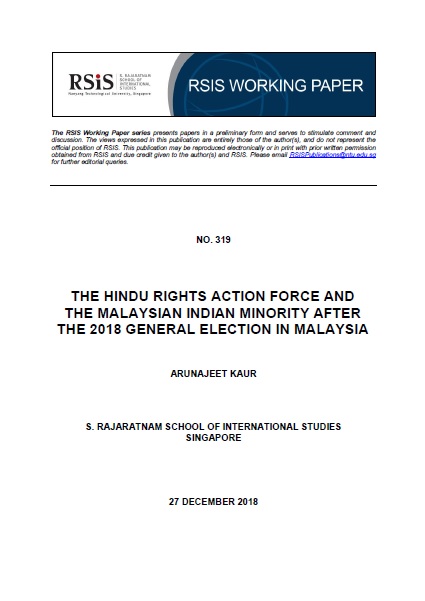
The Hindu Rights Action Force (HINDRAF) came out from a series of controversial actions perceived by the Malaysian Indian community as discriminatory. The issues were topical occurrences such as the errant destruction of Hindu temples and the body-snatching cases of Tamil Hindus, thought to have been converted to Islam, as well as the state of poverty confronted by the Tamil Hindu community in Malaysia. From a protest rally in November 2007, led by mainly Malaysian Tamil lawyers, the Malaysian Indian community framed its demands in legal terms and questioned the position of not only the Malaysian Malay-Muslim majoritarian government but also the decolonising decisions of the departing British colonial authorities at the point of Independence in 1957. The 2007 event become known as the HINDRAF rally. It had an overwhelming impact internationally, in drawing attention to the plight of Malaysian Tamil Hindus. Inside Malaysia, by garnering the support of non-Malays, mainly the Chinese, to unite with the Indians, it affected the Malaysian general election in 2008, as the ruling Barisan Nasional government lost its two-thirds majority in Parliament.Welcome to the World’s Least Ugly Economy
Economic competition among nations is more of a beauty contest than a footrace. In reality, every economy performs under its own spotlight. By that reckoning, as the new year dawns, it’s already obvious which economy is likely to be crowned Miss World 2019.How a World Order Ends And What Comes in Its Wake
Germany has big plans for UN Security Council seat
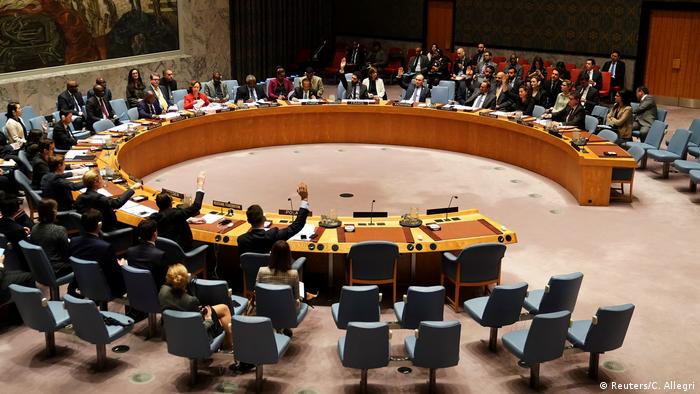
The decision to award the Germans a seat alongside the five permanent members — the United States, Russia, China, France and the United Kingdom — and nine other nonpermanent members was a clear one: 184 votes out of a possible 193. Germany took its place on January 1.Climate Change Action Cannot Ignore Social Issues
Despite a series of troubling new reports and studies, the world has yet to respond adequately to the threat posed by global warming. One reason is that policymakers have not made the connection between climate action and the social and political challenges their countries face.The Mattis Resignation and the U.S. FY2020 Defense Budget and Strategy Crisis
Trump’s 2019 Vision: Let Others Fight Our Battles
In extraordinary and apparently impromptu remarks on Wednesday, U.S. President Donald Trump indicated that he believes it isn’t in America’s interest to be fighting in either Syria or Afghanistan, which he appears to view as local conflicts best left to regional powers.Trump calls it 'insane' to publicly release military watchdog reports
Acting SecDef Shanahan’s First Message: “China, China, China.”
PENTAGON: In his first day on the job, acting Defense Secretary Patrick Shanahangathered civilian leaders of the military services to deliver a simple message: “China, China, China.”Taiwan boosting cyberwar readiness to ‘strike back’
The Dangers of Artificial Intelligence in 2019
If we learned anything in 2018 it’s that algorithms and social platforms are under regulated, can easily be weaponized and that cybersecurity is an accelerating threat.The US Justice Department Is Just Getting Started Against State-Backed Hackers
The announcement of charges against two Chinese nationals by the U.S. Department of Justice earlier this year in connection with various alleged computer intrusion crimes might seem like yet another salvo in the growing cold war between Beijing and Washington.Air Force turns to nontraditional contracting for space technology projects
Capt. Benjamin Leaf, program manager of the Space Enterprise Consortium: “We are changing space acquisitions in multiple ways."Is there such a thing as too much supply chain cybersecurity?
As a result, "there is [a] possible theft of data or proprietary information or classified information. There’s the ability through malware to sabotage activities or to destroy the confidence in the data,” said Daniel McGarvey, former director of information protection for the Air Force and a senior consultant to the federal Performance Accountability Council. “There’s the threat of putting embedded malware into a system that either takes control of or actually disables the system.”Four big questions for cybersecurity in 2019
In the past year, the Trump administration announced it would take more offensive hacking operations against foreign countries, the Department of Justice announcedsweeping indictments against Chinese hackers and the U.S. intelligence community reported that foreign countries continued to interfere in American elections.The Small War That Wasn’t
The years between the collapse of the Soviet Union and the 9/11 attacks are largely thought of as a footnote to history—one eventually interrupted by Islamist terrorism, economic crisis, and genuine geopolitical competition from China and Russia. The meager legacy of Washington’s military intervention in Kosovo is a case in point: It is seen as a brief, successful, and low-stakes war, remembered as insignificant when it’s remembered at all—which it rarely is by Americans, even as the war’s 20th anniversary approaches in March.