They were the forgotten voices of the first world war: 1.5 million men, mostly illiterate villagers from northern India, fighting under the command of colonial masters who repaid their bravery and sacrifices with brutality and prejudice.The Profession of Arms: A Guide for Young Army Officers
It takes courage, especially for a young officer, to check a man met on the road for not saluting properly or for slovenly appearance, but, every time he does, it adds to his stock of moral courage, and whatever the soldier may say, he has respect for the officer who does pull him up.
Read Document →The Dragon's Teeth: Assessing China's Military Modernization
PLA has focused on modernising its capabilities across all warfare domains to achieve these goals. This includes land, air, and maritime operations, nuclear, space, counter-space, electronic warfare and cyberspace operations, aiming to become a fully integrated joint force.
Read Document →Transforming the PLA: A Decade of reorganisation from SSF to ISF
PRC has engaged in a sustained and broad effort to transform the PLA from an infantry-heavy, low-technology, ground forces-centric military into a high-technology, networked force with an increasing emphasis on joint operations and naval and air power projection.
Read Document →Eyes without Borders: Exploring the World of Open Source Intelligence (OSINT) in the Digital Age
Open Source Intelligence (OSINT) is gaining prominence with the rise of social media, the digital society and the vast growth of publicly and commercially available information (PAI and CAI).
Read Document →
The PLA’s Developing Cyber Warfare Capabilities and India's Options
Informationised warfare blurs the lines between peacetime and wartime. A nation in the information age cannot wait for the hostilities to break out to collect intelligence, carryout influence operations, develop antisatellite systems or design computer software weapons.
Read Document →
Galwan and After
Why did China did this when he is under tremendous pressure in all fronts, is this China's salami slice tactics being progressed rigorously, what will be new Rules of Engagement, what will be escalatory control mechanism, who has taken this decision, will there be some pressure put by China in India's North-East through insurgency.
Read Document →
India’s Joint Doctrine for Cyberspace Operations: A Critical Review
Chief of Defence Staff (CDS) General Anil Chauhan and Secretary, Department of Military Affairs, formally released declassified versions of the Joint Doctrines for Cyberspace Operations during the Chiefs of Staff Committee meeting in New Delhi.
Read Document →
Know your Enemy General(now Field Marshal) Syed Aseem Munir
Gen SA Munir's position in the hierarchy of Pakistan was not very comfortable. The state of economy, insurgency in Pakhtoonistan and Balochistan, attack on the Jaffar Express, constant protests by supporters of Imran Khan's supporters inside and outside of parliament.
Read Document →
Decoding Operation SINDOOR: Key Aspects and Implications
Precision strikes were carried out on nine sites—four in Pakistan and five in PoK—linked to anti-India terrorist groups such as the LeT, JeM and the Hizbul Mujahideen. The targeted sites included Muridke (LeT headquarters) and Bahawalpur (JeM headquarters).
Read Document →
Chinese Cyber Exploitation in India's Power Grid - Is There a linkage to Mumbai Power Outage?
The New York Times (NYT), based on analysis by a U.S. based private intelligence firm Recorded Future, reported that a Chinese entity penetrated India’s power grid at multiple load dispatch points. Chinese malware intruded into the control systems that manage electric supply across India, along with a high-voltage transmission substation and a coal-fired power plant
Read Document →30 October 2018
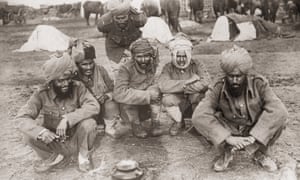
Indians in the trenches: voices of forgotten army are finally to be heard
They were the forgotten voices of the first world war: 1.5 million men, mostly illiterate villagers from northern India, fighting under the command of colonial masters who repaid their bravery and sacrifices with brutality and prejudice.Could Russia's T-14 Armata Tank Be Headed to India?
The Indian Army is one of the largest operators of Russian tanks in the world. According to IISS, it currently fields almost 2000 T-72s of various variants and nearly 1000 T-90Ss. But the older T-72s are aging, despite efforts to modernize them.Friend with no benefits: Why China is not Pakistan's pal at all
Pakistan and China define their friendship as “higher than the heights of Himalayas and deeper than the depths of Arabian Sea”. To make it even stronger, President Xi Jinping of China visited Pakistan in April 2015, with a multi-billion dollar investment plan (nay debt-trap) — the China Pakistan Economic Corridor (CPEC), the main plank of Xi’s Belt and Road Initiative (BRI).Israel, China: Beijing Tempts Israel With Money for Development
From Asia to Africa, China is challenging the United States. In the Middle East, it is finding ways to exploit the region's need for investment and to build up relationships beneath the dominating U.S. shadow. The Belt and Road Initiative is a means to that strategic end, and in Israel, Beijing is trying to close a key gap in the Levant. But America's close relationship with Israel means that the task won't be easy.The EU’s new strategy on “Connecting Europe with Asia” could spell trouble for China’s “Belt and Road Initiative.”
In September, the European Union released a new strategy on “Connecting Europe with Asia” as its principal guidelines toward connectivity between the two continents. It has been without doubt that for a long time now, the EU has been hoping to work toward an effective response to the Chinese-led Belt and Road Initiative (BRI), launched five years ago but defined in the guiding document “Vision and Actions on Jointly Building Silk Road Economic Belt and 21st-Century Maritime Silk Road” (referred to hereafter as the “BRI Vision and Action Plan”), released in March 2015.A US-China cold war isn't inevitable - or even likely
Who has the real leverage on US Treasuries?
Israel Could Expand Its Anti-Iran Fight to Iraq and Yemen
Yemen does not present an existential threat to Israel, but Israel could move against the Iranian-backed Houthis in Yemen to foster better ties with Saudi Arabia. Iran's decision to supply militias in Iraq with ballistic missiles could provoke some form of Israeli response. Any strike on Iranian proxies in Iraq, however, would increase anti-American sentiment and potentially push Baghdad even more toward Tehran. Editor's Note: This is the second in a two-part series. The first part assessed the burgeoning ties between Israel and Saudi Arabia and the United Arab Emirates.The Saudi regime doesn’t reign alone – a global network enables it
Just as it takes a village to raise a child, so it takes a network of enablers to empower a tyrant. While domestically the Saudi government’s capital is fear, abroad it is cash and the influence it brings. Not content with Khashoggi’s murder, Mohammed bin Salman dragged one of the journalist’s sons before the cameras to set up some good optics for the royal family. With new details of his father’s brutal death and dismemberment reaching his ears daily, it is hard to imagine what kind of pressure, what kind of threat, compelled him to shake the hands of his father’s murderers.No Exit From the US-Saudi Relationship
Trump Reverses The Defense Buildup: 2020 Cuts Analysis
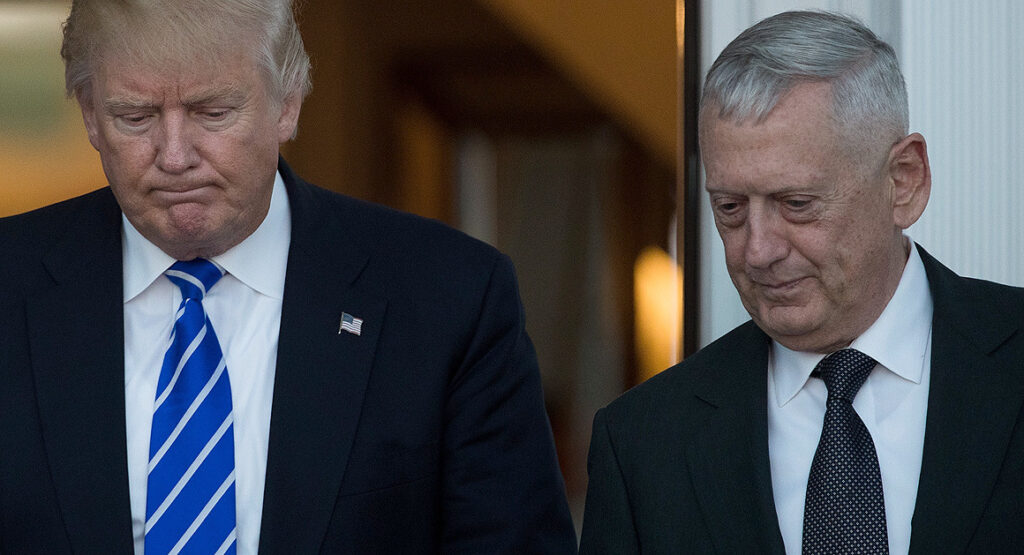
The good news about President Trump’s $30 billion cutback to defense? The Pentagon still has enough money to execute a national security strategy. The bad news? It’s enough to execute Obama’s strategy. Trump’s plan would undercut the more expansive National Defense Strategy for “great power competition” that embattled Defense Secretary Jim Mattis rolled out just nine months ago.America’s stockmarket gains evaporate
FRENETIC trading on October 24th ended with America’s leading share-price indices giving up most if not all of the gains of what, only a month ago, had been a good, if not spectacular, year. Expectations had hovered between positive and very positive, and these had hitherto appeared to be borne out by strong third-quarter earnings. The markets regained some ground on the morning of October 25th. But signs of impending problems are clearly attracting investors’ attention. Three Reasons Not to Leave the INF Treaty
President Donald Trump’s announcement that he intends to withdraw from the Intermediate-Range Nuclear Forces (INF) Treaty was cast in contractual logic: the U.S.-Russian agreement prohibits land-based short-and-intermediate-range ballistic and cruise missiles, both nuclear and conventional, which aredifficult to track and make unintentional nuclear war more likely. Washington, withsupport from the North Atlantic Treaty Organization, alleges that Moscow has breachedthat ban, and, as Trump put it , “we’re not going to let them violate a nuclear agreement and go out and do weapons and we’re not allowed to.”The Challenges of NATO Nuclear Policy – Alliance Management Under the Trump Administration
Maintaining consensus on NATO’s nuclear posture remains the most demanding aspect of Alliance management in NATO, especially given the fundamentally changed security environment in Europe. Robert Bell writes that it is thus crucial that Allies understand that the benefits of the US’ extension of its nuclear deterrent come with responsibilities. At the same time, the Trump Administration must appreciate that if all Allies are expected to support the enhancements of NATO’s nuclear posture, they will require an equally robust arms control, disarmament and non-proliferation posture on the part of the US in return.US Navy Successfully Shoots Down Medium-Range Ballistic Missile Target in Test
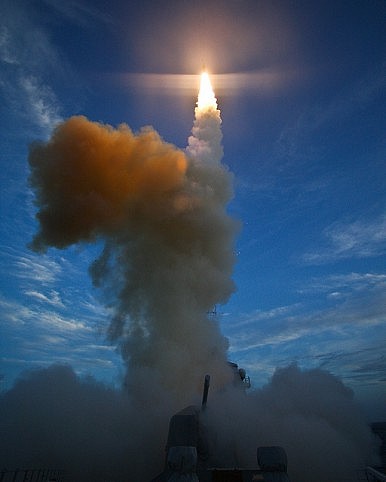
The U.S. Missile Defense Agency (MDA) and U.S. Navy successfully conducted an intercept of a medium-range ballistic missile target with a Standard Missile-3 (SM-3) Block IIA missile on October 26, according to a MDA statement.Big data, AI, and digital technologies: Cambodia’s nascent tech sector is blooming.
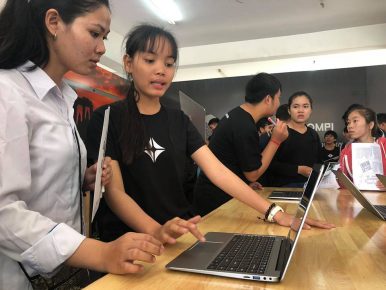
October 20 saw the launch of KOOMPI, a Cambodian “home-grown” laptop, at BarCamp ASEAN 2018, the annual regional expo for tech start-ups. The laptop is distinctive for running entirely on Open Source platforms so that production costs are kept low and the device is affordable, and so that owners without a background in computing can “hack” the platforms and become “super-users.” KOOMPI is already doing market testing in Myanmar and exploring bringing the product to other regional markets such as Japan, Brunei, Bangladesh, Indonesia, Laos, and the Philippines.DoD seeks industry input on multibillion-dollar cloud collaboration solution
The Pentagon and General Services Administration released a request for informationOct. 25 for a new unified collaborative cloud solution that will unite the entire defense apparatus under one enterprise contract. The Defense Enterprise Office Solution is the first capability set of three that the Department of Defense plans to use to capture its enterprise collaboration and productivity needs. The DEOS capability set needs include a productivity suite, messaging capabilities, content management systems and collaboration tools. “We operate pretty much in a disparate environment right now, and predominantly on-[premises] for these capabilities. So DEOS will give us an opportunity to tear down some of those barriers, posture us for increased interoperability while taking advantage of what the commercial community has to offer,” said Essye Miller, principal deputy to the DoD chief information officer, at a press roundtable.INSIDE THE CRYPTO WORLD'S BIGGEST SCANDA
ONE DAY IN the spring of 2010, Kathleen McCaffrey, a sophomore at New York University, received an invitation from a stranger named Arthur Breitman. On the basis of what Breitman had been told about her political persuasion by a mutual acquaintance, he thought she might want to join his monthly luncheon for classical liberals. (Breitman had also seen a photograph of McCaffrey and thought she was pretty.) McCaffrey, the curious type, accepted.The Real Purpose Of MDMP: Creating Solid Orders When We’re Not Patton Or Rommel
Cyber operators get first crack at training platform
The Pentagon recently concluded the first limited assessment of its persistent cyber training environment (PCTE) with actual users, providing the team with valuable insights. The Army is running the PCTE on behalf of U.S. Cyber Command, which will eventually provide the platform for distributed individual and collective training purposes, as well as mission rehearsal. The joint cyber community currently doesn’t have an immersive training environment akin to the National Training Center for the Army. The Army has decided to take best practices from industry in agile software development, breaking the PCTE program into a series of innovation challenges and prototypes that will help to inform the eventual solution.Here’s The Pentagon’s Initial Plan For Creating a Space Force
The U.S. Space Force will include uniformed service members drawn from the Air Force, Navy and Army — but it is not expected to include the National Reconnaissance Office mission, according an internal draft of the Pentagon’s plan to create a sixth branch of the military. Defense One reviewed a copy of the 13-page document, which will be further developed in coming months before the Pentagon sends it to Congress in February along with its 2020 budget request. This early draft provides a glimpse into a 21st-century approach to creating a new service branch, an endeavor not undertaken since 1947. Among other things, it reveals divergent views among senior Pentagon officials about how to structure it.DoD Wants More Hackers To (Legally) Break Into Its Websites
Here’s The Pentagon’s Initial Plan For Creating a Space Force
The U.S. Space Force will include uniformed service members drawn from the Air Force, Navy and Army — but it is not expected to include the National Reconnaissance Office mission, according an internal draft of the Pentagon’s plan to create a sixth branch of the military. Defense One reviewed a copy of the 13-page document, which will be further developed in coming months before the Pentagon sends it to Congress in February along with its 2020 budget request. This early draft provides a glimpse into a 21st-century approach to creating a new service branch, an endeavor not undertaken since 1947. Among other things, it reveals divergent views among senior Pentagon officials about how to structure it.Women in peacekeeping: an operational imperative
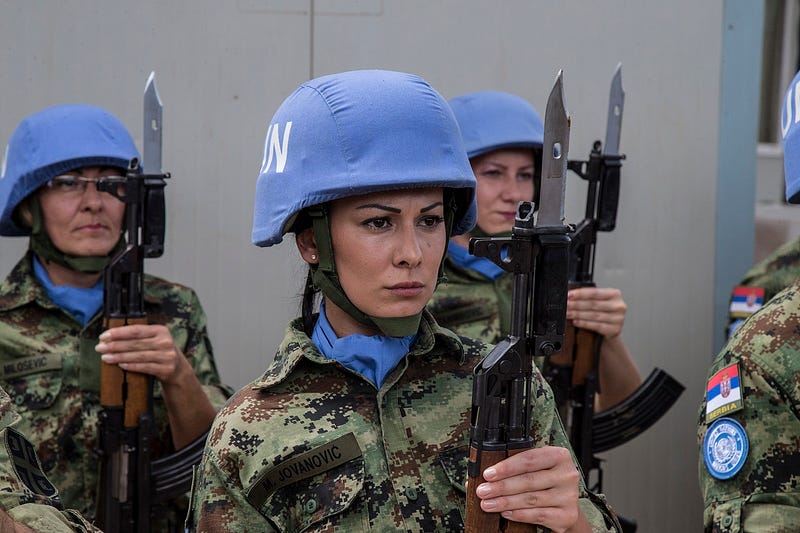
Some 8,000 women are currently deployed in our 14 peacekeeping missions across the world, more half of them wearing the police and military uniform. However, as the United Nations strives to reach gender parity by 2030, women represent less than 5% of the total uniformed personnel within our peacekeeping missions. Recruiting and retaining women in the field — including those in uniform — is an operational imperative, says Bintou Keita, Assistant Secretary-General for UN Peacekeeping Operations, in an interview with Medium UN Peacekeeping.Military tensions around Taiwan could make it harder to resolve the trade war
Chinese authorities hate the word "independence." But whether spoken by fringe figures in Hong Kong or marchers demonstrating in Taiwan, they are hearing it all the same. Compounding frustrations in Beijing have worsened ties with the United States, which sailed warships through the Taiwan Strait on Monday for the second time since July. International criticism has also mounted over a human rights crackdown on ethnic Uighurs in the western region of Xinjiang, whom authorities fear want to break away. "The main problem is that the Communist Party of China is paranoid about calls for separatism and independence and continually overreacts to them," Michael Kovrig, senior advisor for North East Asia at the International Crisis Group, told CNBC on Thursday in an email.