The Organization of Islamic Cooperation, the largest multilateral body claiming to represent the global Ummah, hosted a virtual meeting in honor of Kashmir Solidarity Day last Friday. In it, representatives from Pakistan, Turkey, Saudi Arabia, Niger and Azerbaija expressed their “unwavering” support for movements for Muslim self-determination in the Himalayan region where four of the most populous regions out of the six are disputed by India and Pakistan.The Profession of Arms: A Guide for Young Army Officers
It takes courage, especially for a young officer, to check a man met on the road for not saluting properly or for slovenly appearance, but, every time he does, it adds to his stock of moral courage, and whatever the soldier may say, he has respect for the officer who does pull him up.
Read Document →The Dragon's Teeth: Assessing China's Military Modernization
PLA has focused on modernising its capabilities across all warfare domains to achieve these goals. This includes land, air, and maritime operations, nuclear, space, counter-space, electronic warfare and cyberspace operations, aiming to become a fully integrated joint force.
Read Document →Transforming the PLA: A Decade of reorganisation from SSF to ISF
PRC has engaged in a sustained and broad effort to transform the PLA from an infantry-heavy, low-technology, ground forces-centric military into a high-technology, networked force with an increasing emphasis on joint operations and naval and air power projection.
Read Document →Eyes without Borders: Exploring the World of Open Source Intelligence (OSINT) in the Digital Age
Open Source Intelligence (OSINT) is gaining prominence with the rise of social media, the digital society and the vast growth of publicly and commercially available information (PAI and CAI).
Read Document →
The PLA’s Developing Cyber Warfare Capabilities and India's Options
Informationised warfare blurs the lines between peacetime and wartime. A nation in the information age cannot wait for the hostilities to break out to collect intelligence, carryout influence operations, develop antisatellite systems or design computer software weapons.
Read Document →
Galwan and After
Why did China did this when he is under tremendous pressure in all fronts, is this China's salami slice tactics being progressed rigorously, what will be new Rules of Engagement, what will be escalatory control mechanism, who has taken this decision, will there be some pressure put by China in India's North-East through insurgency.
Read Document →
India’s Joint Doctrine for Cyberspace Operations: A Critical Review
Chief of Defence Staff (CDS) General Anil Chauhan and Secretary, Department of Military Affairs, formally released declassified versions of the Joint Doctrines for Cyberspace Operations during the Chiefs of Staff Committee meeting in New Delhi.
Read Document →
Know your Enemy General(now Field Marshal) Syed Aseem Munir
Gen SA Munir's position in the hierarchy of Pakistan was not very comfortable. The state of economy, insurgency in Pakhtoonistan and Balochistan, attack on the Jaffar Express, constant protests by supporters of Imran Khan's supporters inside and outside of parliament.
Read Document →
Decoding Operation SINDOOR: Key Aspects and Implications
Precision strikes were carried out on nine sites—four in Pakistan and five in PoK—linked to anti-India terrorist groups such as the LeT, JeM and the Hizbul Mujahideen. The targeted sites included Muridke (LeT headquarters) and Bahawalpur (JeM headquarters).
Read Document →
Chinese Cyber Exploitation in India's Power Grid - Is There a linkage to Mumbai Power Outage?
The New York Times (NYT), based on analysis by a U.S. based private intelligence firm Recorded Future, reported that a Chinese entity penetrated India’s power grid at multiple load dispatch points. Chinese malware intruded into the control systems that manage electric supply across India, along with a high-voltage transmission substation and a coal-fired power plant
Read Document →18 February 2021
How China is Wooing the Muslim World
The Organization of Islamic Cooperation, the largest multilateral body claiming to represent the global Ummah, hosted a virtual meeting in honor of Kashmir Solidarity Day last Friday. In it, representatives from Pakistan, Turkey, Saudi Arabia, Niger and Azerbaija expressed their “unwavering” support for movements for Muslim self-determination in the Himalayan region where four of the most populous regions out of the six are disputed by India and Pakistan.Afghans—Not American Troops—Must Fix Afghanistan’s Problems
In a recent press conference, Pentagon officials signaled hesitation on the part of the United States to adhere to last year’s peace deal with the Taliban, blaming the group for Afghanistan’s recent streak of violence and saying such actions jeopardized the planned U.S. troop withdrawal. At the bottom, this signals a continued belief in Washington that Afghanistan’s internal state of affairs can justify a U.S. troop presence.Moving Beyond “China, China, China” in the Indo-Pacific
Inside China's Quiet Flex On Myanmar Coup
It’s Easier to Become a Chinese General Than an American or Russian One
Here's What You Need to Remember: Nonetheless, the Russian and American scandals only involve theft and kickbacks. Damaging as those are to military efficiency, China’s promotion scandal suggests that senior offices are obtaining their positions not on competence, but on their willingness to pay.How China Stole and Copied Its Way Into Creating a Highly-Networked Military
steal specs, copy U.S. platform designs and in many instances closely replicate U.S. weapons systems is both well documented and widely known. However, a less visible yet equally significant aspect of this phenomenon may well be found in apparent Chinese efforts to mirror U.S. military tactics and modernization strategies.Will the Biden Administration Push Russia and China Closer Together?

SolarWinds and the Three Rs
The U.S. and Its Allies Must Ensure Taiwan Doesn’t Fall to Beijing
Gaza Shows How Tough Future Wars Will Be
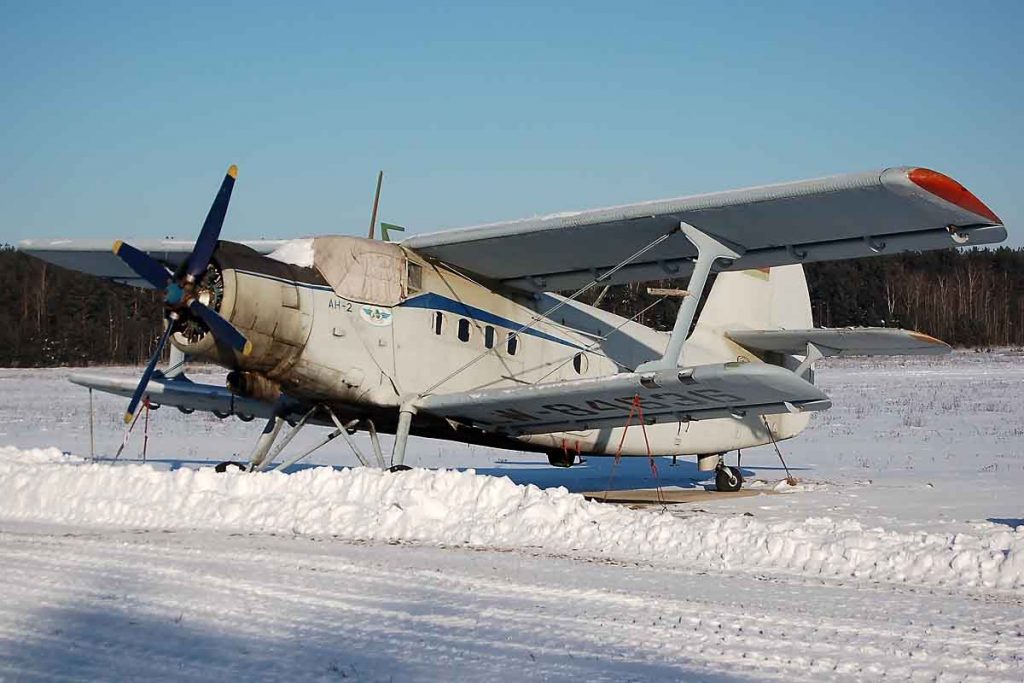
Key point: High-tech armies do not always win, especially in protracted land wars. Here is the warning of how a cheaper, weaker foe could still achieve victory.The next frontier in drone warfare? A Soviet-era crop duster

America’s Other Forever War

How the British Army Plans to Join the Drone Game
Here's What You Need To Remember: Beyond scouting, the drones could be used to ambush the enemy. The tracked X3 isn't armed, but it is fitted with speakers on the front and could be employed in a deception effort.New Long-Range Weapons (Like These) Could Change Warfare Forever
Here's What You Need to Know: There are many new, cross-domain technologies that are improving the ability of the Army to wage war.The U.S. Navy: Soon a Drone Navy?
Here's What You Need To Remember: Drones have several key advantages over manned ships - the largest of which is the ability to function non-stop. Drones don't need to eat or sleep and can stay on a mission remotely for months at a time.When Allies Go Nuclear
We Must Reorient US Cyber Strategy Around the Only Safe Assumption
This oped is adapted from Dmitri Alperovitch's Feb. 10, 2021, testimony to the House Homeland Security Committee.Against Great Power Competition
Microsoft asks government to stay out of its cyber attack response in Australia
SolarWinds: How Russian spies hacked the Justice, State, Treasury, Energy and Commerce Departments
THE RUSSO-GEORGIAN WAR: RUSSIAN INFLUENCE
RUSSIAN CYBER STRATEGY
America Is Back. Europe, Are You There?

These AI Drones Could Keep the Momentum Going During a High-Pitched battle.
Here’s What You Need to Remember: The Army seeks self-guiding, auto-loading robots empowered to arm combat vehicles and move ammunition from one platform to another quickly while reducing risk to soldiers and coordinating combined joint attacks.Get Ready to Enter the Era of Hypersonic Warfare
Here's What You Need to Remember: Hypersonic autonomy would also bring new dimensions to high-speed attack, as it would introduce a measure of flight precision far beyond what’s known as waypoint kinds of GPS guidance. Projectiles or hypersonic missiles could not merely transit from one predetermined point to another but rather maneuver more freely to avoid defenses by synergizing sensor targeting with guidance systems. For instance, an autonomous hypersonic weapon or drone could discern, and then avoid, an interceptor weapon or air defense system.Space Force begins adding cyber warriors
/cloudfront-us-east-1.images.arcpublishing.com/mco/FFAP6246O5DK3CVKUGWY5GDQBU.jpg)

Who Should Stop Unethical A.I.?
In computer science, the main outlets for peer-reviewed research are not journals but conferences, where accepted papers are presented in the form of talks or posters. In June, 2019, at a large artificial-intelligence conference in Long Beach, California, called Computer Vision and Pattern Recognition, I stopped to look at a poster for a project called Speech2Face. Using machine learning, researchers had developed an algorithm that generated images of faces from recordings of speech. A neat idea, I thought, but one with unimpressive results: at best, the faces matched the speakers’ sex, age, and ethnicity—attributes that a casual listener might guess. That December, I saw a similar poster at another large A.I. conference, Neural Information Processing Systems (Neurips), in Vancouver, Canada. I didn’t pay it much mind, either.A Silicon Chip Shortage Is Causing Big Issues for Automakers
Why the Military’s Biggest Drones are Here to Stay
Here’s What You Need to Remember: Mini-drones, drone swarms and stealthy drones all regularly receive attention as areas of Pentagon emphasis for future warfare. This is because advances in sensor technology are quickly miniaturizing form-factors and increasing image resolution from longer ranges, all while accelerated, AI-enabled computer processing streamlines data analysis from those sensors.Why Drones That Aren't Stealth or 'Swarm' Are Here to Stay
Mini-drones, drone swarms and stealthy drones all regularly receive attention as areas of Pentagon emphasis for future warfare. This is because advances in sensor technology are quickly miniaturizing form-factors and increasing image resolution from longer ranges, all while accelerated, AI-enabled computer processing streamlines data analysis from those sensors.