The Profession of Arms: A Guide for Young Army Officers
It takes courage, especially for a young officer, to check a man met on the road for not saluting properly or for slovenly appearance, but, every time he does, it adds to his stock of moral courage, and whatever the soldier may say, he has respect for the officer who does pull him up.
Read Document →The Dragon's Teeth: Assessing China's Military Modernization
PLA has focused on modernising its capabilities across all warfare domains to achieve these goals. This includes land, air, and maritime operations, nuclear, space, counter-space, electronic warfare and cyberspace operations, aiming to become a fully integrated joint force.
Read Document →Transforming the PLA: A Decade of reorganisation from SSF to ISF
PRC has engaged in a sustained and broad effort to transform the PLA from an infantry-heavy, low-technology, ground forces-centric military into a high-technology, networked force with an increasing emphasis on joint operations and naval and air power projection.
Read Document →Eyes without Borders: Exploring the World of Open Source Intelligence (OSINT) in the Digital Age
Open Source Intelligence (OSINT) is gaining prominence with the rise of social media, the digital society and the vast growth of publicly and commercially available information (PAI and CAI).
Read Document →
The PLA’s Developing Cyber Warfare Capabilities and India's Options
Informationised warfare blurs the lines between peacetime and wartime. A nation in the information age cannot wait for the hostilities to break out to collect intelligence, carryout influence operations, develop antisatellite systems or design computer software weapons.
Read Document →
Galwan and After
Why did China did this when he is under tremendous pressure in all fronts, is this China's salami slice tactics being progressed rigorously, what will be new Rules of Engagement, what will be escalatory control mechanism, who has taken this decision, will there be some pressure put by China in India's North-East through insurgency.
Read Document →
India’s Joint Doctrine for Cyberspace Operations: A Critical Review
Chief of Defence Staff (CDS) General Anil Chauhan and Secretary, Department of Military Affairs, formally released declassified versions of the Joint Doctrines for Cyberspace Operations during the Chiefs of Staff Committee meeting in New Delhi.
Read Document →
Know your Enemy General(now Field Marshal) Syed Aseem Munir
Gen SA Munir's position in the hierarchy of Pakistan was not very comfortable. The state of economy, insurgency in Pakhtoonistan and Balochistan, attack on the Jaffar Express, constant protests by supporters of Imran Khan's supporters inside and outside of parliament.
Read Document →
Decoding Operation SINDOOR: Key Aspects and Implications
Precision strikes were carried out on nine sites—four in Pakistan and five in PoK—linked to anti-India terrorist groups such as the LeT, JeM and the Hizbul Mujahideen. The targeted sites included Muridke (LeT headquarters) and Bahawalpur (JeM headquarters).
Read Document →
Chinese Cyber Exploitation in India's Power Grid - Is There a linkage to Mumbai Power Outage?
The New York Times (NYT), based on analysis by a U.S. based private intelligence firm Recorded Future, reported that a Chinese entity penetrated India’s power grid at multiple load dispatch points. Chinese malware intruded into the control systems that manage electric supply across India, along with a high-voltage transmission substation and a coal-fired power plant
Read Document →28 October 2018
There’s No Path to Victory in Afghanistan
'Series Of Oversights’ Reportedly Contributed To Recent Death Of US Soldier In Afghanistan
Ballots and bullets in Afghanistan
Trump’s Plan to Leave a Major Arms Treaty With Russia Might Actually Be About China
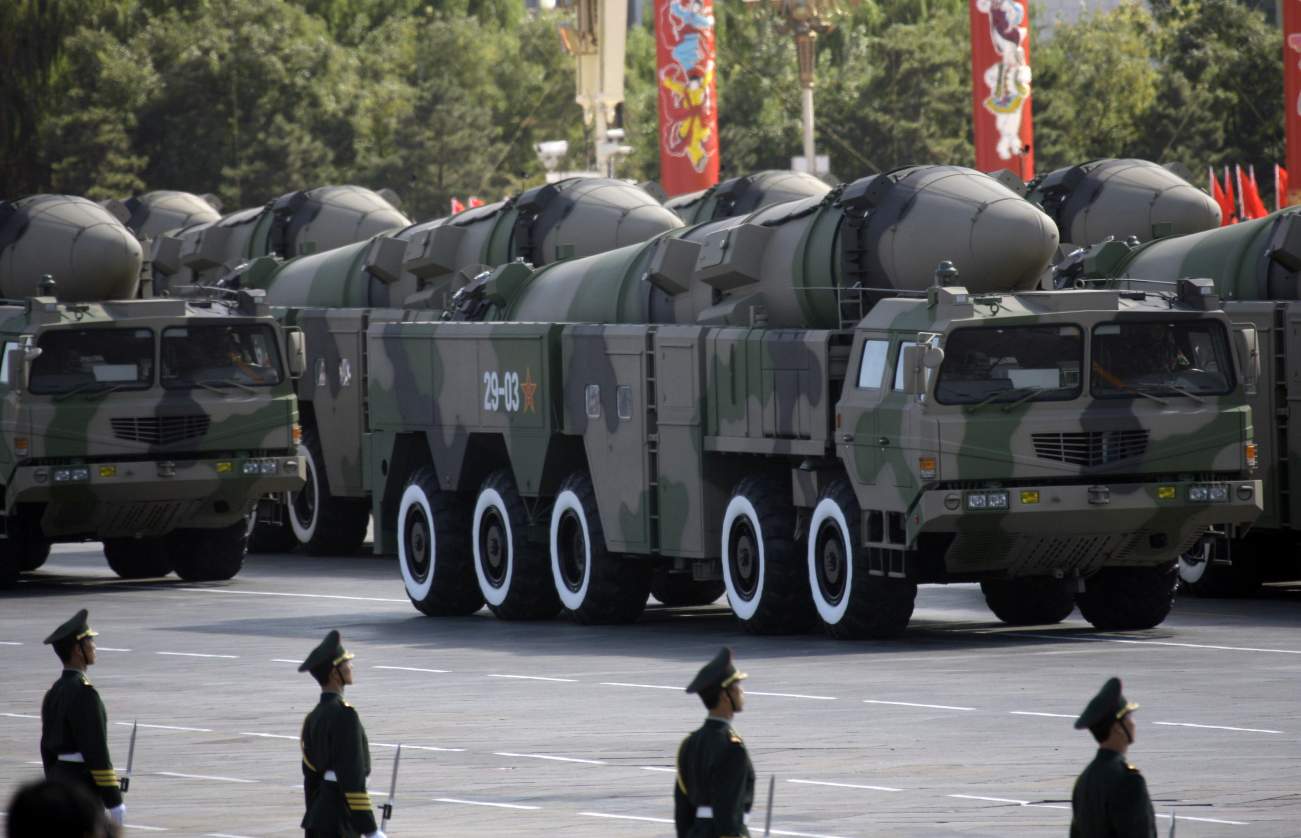
President Donald Trump’s proposal to pull out of a major U.S. arms control agreement with Russia is not just about Moscow, or nuclear weapons. The move also clears a path to boost America’s conventional forces in China’s backyard, according to arms control experts as well as current and former administration officials. The Intermediate-Range Nuclear Forces (INF) Treaty, signed in 1987 by U.S. President Ronald Reagan and Soviet General Secretary Mikhail Gorbachev, prohibits the use of nuclear and conventional missiles with ranges between 500 and 5,500 km (300 to 3,400 miles). But since China has never been a signatory, it has been able to build up a vast arsenal of conventional weapons that now threaten freedom of navigation in the region, such as the DF-21 “carrier killer,” experts say.WHY DEMOCRACIES ARE TURNING AGAINST BELT AND ROAD
China-US ties sinking amid acrimony over trade, politics
The Sino-American cold war’s collateral damage
The escalating trade feud between the United States and China is increasingly viewed as the opening campaign of a new cold war. But this clash of titans, should it continue to escalate, will cost both parties dearly, to the point that even the winner (more likely to be the US) would probably find its victory Pyrrhic. Yet it is the rest of the world that would pay the steepest price. In fact, despite the low probability of a direct military clash between the US and China, a new cold war would undoubtedly produce collateral damage so far-reaching and severe that the very future of humanity could be jeopardised. Already, bilateral tensions are contributing to an economic decoupling that is reverberating across the global economy. If the end of the Cold War in 1991 launched the golden age of global economic integration, the beginning of the next cold war between the world’s two largest economies will undoubtedly produce division and fragmentation.China: President Xi’s Digital Prison – OpEd
As Mao Zedong saw his control over the Communist Party challenged, he unleashed the Cultural Revolution. The Great Leap Forward and other failed economic policies were of little importance. Only his continued leadership of the Chinese Communist Party and the survival of the Party as the sole source of power and thought was what Mao considered to be the essence of Chinese society. The Communist Party was the brain and the soul of the people; the state was the muscle.Have The Chinese Reached A Tipping Point? – Analysis
The Tipping Point by Malcolm Gladwell asserts that, “Little Things Can Make a Big Difference.” This year small, innocuous events are building towards possible big changes for the Chinese government, it’s citizens, Southeast Asia and globally as well if geopolitical and economic events continue down this path. And with the United States (US) forging a new path confronting China – financial markets and geopolitics could be in for turbulence – that hasn’t been seen since the Cold War.Trump's INF Treaty Termination Puts China on Notice—At Last
Most of the debate over the administration’s decision to leave the Intermediate-Range Nuclear Forces Treaty is missing the point. Thus far, the commentary has focused on whether the decision bodes good or ill for arms control and nuclear proliferation.Why Are US Academics Attending a Conference Led by a Terror Supporter in Erdogan’s Turkey?
TO CURB TERRORIST PROPAGANDA ONLINE, LOOK TO YOUTUBE. NO, REALLY.
Rita Katz is the Executive Director and founder of the SITE Intelligence Group, the world’s leading non-governmental counterterrorism organization specializing in tracking and analyzing the online activity of the global extremist community. YouTube’s problem worsened with the rise of ISIS and its resilient propaganda machine. In a May 2017 study, I detailed the ways groups like ISIS and al-Qaeda were sneaking their media onto YouTube and the massive extent to which they were doing so. In recent years, YouTube was among the most recurrent platforms used by terrorist groups. In link compilations issued by terrorist propagandists, the first item listed was often a YouTube URL.MbS: For Better Or For Worse? – Analysis
Embattled Saudi Crown Prince Mohammed bin Salman could prove to be not only a cat with nine lives but also one that makes even stranger jumps. King Salman’s announcement that Prince Mohammed was put in charge of reorganizing Saudi intelligence at the same time that the kingdom for the first time admitted that journalist Jamal Khashoggi had been killed in its Istanbul consulate signalled that the crown prince’s wings were not being clipped, at least not immediately and not publicly. With little prospect for a palace coup and a frail King Salman unlikely to assume for any lengthy period full control of the levers of power, Prince Mohammed, viewed by many as reckless and impulsive, could emerge from the Khashoggi crisis, that has severely tarnished the kingdom’s image and strained relations with the United States and Western powers, even more defiant rather than chastened by international condemnation of the journalist’s killing.Pompeo’s Dangerous Delusions
The Trump administration is preparing a major mistake on the INF Treaty
Army Futures Command Wants YOU (To Innovate)
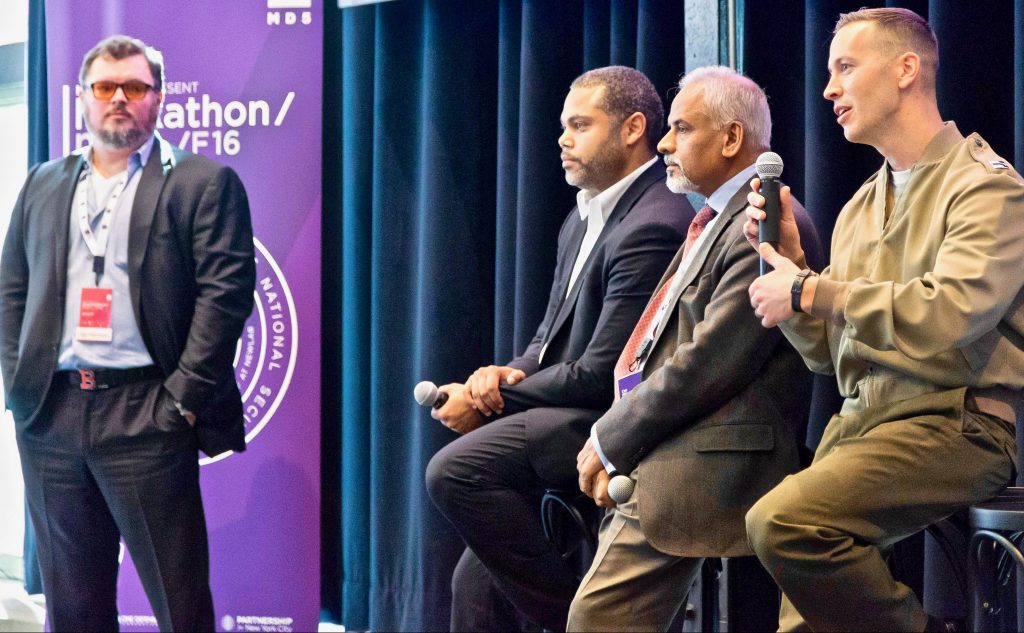
NDIA: The Army’s new Futures Command is creating multiple pilot projects to bring tech geeks in hoodies, defense contractors in suits, and soldiers in uniform, the command’s chief innovation officer said this morning. The goal? Instead of heartwarming but inconclusive “outreach” to innovators in Silicon Valley and beyond, Adam Jay Harrison wants to actually turn their neat ideas into mass-produced, military-grade tech. That requires hybridizing outside creativity with insider expertise to get promising projects across what’s called the “valley of death” between conception and production. “I get really irritated when I’m in the audience and I hear ‘startup, startup, startup,'” Harrison said this morning at the National Defense Industrial Association (NDIA).Pence Defends Space Force Costs: ‘What Price Freedom?’
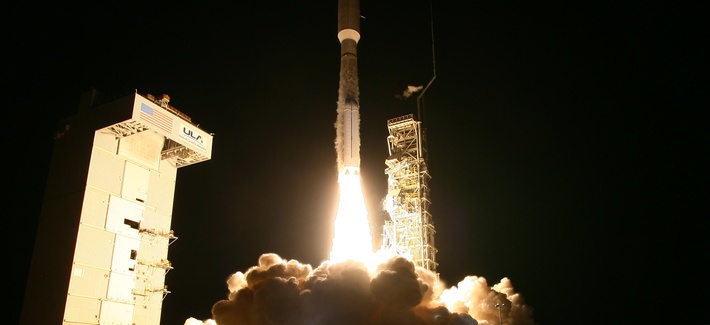
WASHINGTON: It’s unclear how effective the gambit will be, but Vice President Mike Pence called out to lawmakers on Capitol Hill today, urging them to fund the nascent Space Force, which Air Force officials say will cost $13 billion for the first five years. Pence, asked by a Washington Post reporter if the Space Force was worth it, offered this: “I would just ask my colleagues in Congress, what price freedom?” The effort to create a Space Force took a step forward today as the National Security Council approved the administration’s nascent plan. My Space News colleague, Sandra Erwin, said the NSC plan “will be part of a new space policy directive, SPD-4, that will be sent to Trump’s desk for approval in the coming weeks.”Russian Intel Chief: Internet Should be Controlled By ‘Proper Authorities’
“Fighting terrorism” is how the Kremlin explains its latest effort to broaden its surveillance of Russian society and increase its control over internet content. But the program is also Moscow’s latest step toward digital isolationism. “For us professionals, it has long been obvious that cyberspace should be under the control of the competent authorities,” Sergei Smirnov, the First Deputy Director of the Federal Security Service of Russia, or FSB, told state-run media. “Without this, we can’t guarantee proper information security and successfully counter modern terrorist threats.” Smirnov spoke after a meeting of a high-level working group that includes China, Pakistan, and some former Soviet republics, called RATS SCO. He said the group had decided to expand governmental control over the internet in their respective countries.Iran in Syria: Securing Regional Deterrence
Iran is primarily concerned with preserving Syria’s prominent role in the Axis of Resistance and its overarching goal of securing its regional deterrence. Accordingly, the collapse of Damascus was intolerable because it would have negatively affected Iran and its allies in the region. This includes securing supply routes to Lebanon; enhancing the deterrence capabilities and operational experience of the Axis of Resistance against Israel and the United States, especially with Trump’s renewed hostility; and balancing Turkey in northern Syria. In addition, preserving Syria’s significant position within the Axis of Resistance serves to showcase Iran’s effectiveness in supporting allies and in its leadership role in the axis.The Army turns its attention to aerial electronic warfare
The Army’s rapid procurers are turning their focus to aerial electronic warfare solutions in response to ongoing needs in the European theater. The Army’s Rapid Capabilities Office has been working to deliver EW capabilities to Europe in phases that build upon each other, providing deployed forces with needed capabilities against a real threat now while also informing longer-term programs of potential requirements. A new effort “includes an aerial capability that extends the range of signal detection and will be used to inform the program of record, [Multifunction Electronic Warfare] Air Large,” Pete Manternach, EW lead for the RCO, said in written responses to C4ISRNET.The role of AI in education and the changing U.S. workforce
Here’s The Pentagon’s Initial Plan For Creating a Space Force
The U.S. Space Force will include uniformed service members drawn from the Air Force, Navy and Army — but it is not expected to include the National Reconnaissance Office mission, according an internal draft of the Pentagon’s plan to create a sixth branch of the military. Defense One reviewed a copy of the 13-page document, which will be further developed in coming months before the Pentagon sends it to Congress in February along with its 2020 budget request. This early draft provides a glimpse into a 21st-century approach to creating a new service branch, an endeavor not undertaken since 1947. Among other things, it reveals divergent views among senior Pentagon officials about how to structure it.The Rest Of The Story: Trump, DoD & Hill Readied INF Pullout For Years
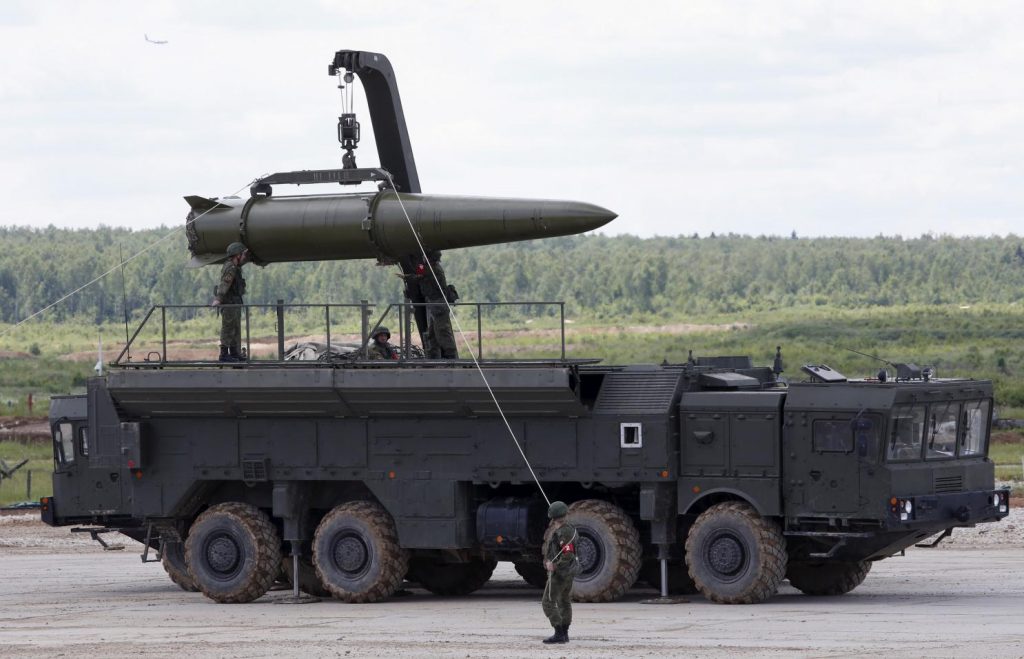
Russia’s 9M729 ground-based cruise missile, a key reason US considered leaving INF Treaty. WASHINGTON: Unreleased Pentagon documents and Congressional demands for information reveal that Washington has long planned for the day when the Intermediate-range Nuclear Forces Treaty (INF) with Russia would be ripped up. The report by the Joint Staff and Strategic Command, exclusively obtained by Breaking Defense, make clear that as far back as 2013 — a year before the Obama administration first publicly complained about Russian violations of the treaty — the Defense Department was considering which technologies the US could develop should Washington walk away from the INF. The report points to four ways the US could quickly develop and field missiles with a range between 300 and 3,400 miles, banned under the 30 year-old treaty.