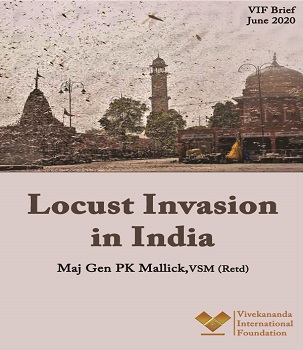
It has been a double whammy. As the nation is reeling under the effects of COVID-19 pandemic, India has to fight another menace: locust invasion. Massive swarms of desert locusts have devoured crops across seven states of western and central India including Rajasthan, Gujarat, Madhya Pradesh and Haryana, Maharashtra, Uttar Pradesh and Punjab. The locust population might grow 400 times larger by end June 2020 and spread to new areas without action. It would be disrupting food supply, upending livelihoods and require considerable resources to address. India is facing its worst desert locust invasion in nearly 30 years.The Profession of Arms: A Guide for Young Army Officers
It takes courage, especially for a young officer, to check a man met on the road for not saluting properly or for slovenly appearance, but, every time he does, it adds to his stock of moral courage, and whatever the soldier may say, he has respect for the officer who does pull him up.
Read Document →The Dragon's Teeth: Assessing China's Military Modernization
PLA has focused on modernising its capabilities across all warfare domains to achieve these goals. This includes land, air, and maritime operations, nuclear, space, counter-space, electronic warfare and cyberspace operations, aiming to become a fully integrated joint force.
Read Document →Transforming the PLA: A Decade of reorganisation from SSF to ISF
PRC has engaged in a sustained and broad effort to transform the PLA from an infantry-heavy, low-technology, ground forces-centric military into a high-technology, networked force with an increasing emphasis on joint operations and naval and air power projection.
Read Document →Eyes without Borders: Exploring the World of Open Source Intelligence (OSINT) in the Digital Age
Open Source Intelligence (OSINT) is gaining prominence with the rise of social media, the digital society and the vast growth of publicly and commercially available information (PAI and CAI).
Read Document →
The PLA’s Developing Cyber Warfare Capabilities and India's Options
Informationised warfare blurs the lines between peacetime and wartime. A nation in the information age cannot wait for the hostilities to break out to collect intelligence, carryout influence operations, develop antisatellite systems or design computer software weapons.
Read Document →
Galwan and After
Why did China did this when he is under tremendous pressure in all fronts, is this China's salami slice tactics being progressed rigorously, what will be new Rules of Engagement, what will be escalatory control mechanism, who has taken this decision, will there be some pressure put by China in India's North-East through insurgency.
Read Document →
India’s Joint Doctrine for Cyberspace Operations: A Critical Review
Chief of Defence Staff (CDS) General Anil Chauhan and Secretary, Department of Military Affairs, formally released declassified versions of the Joint Doctrines for Cyberspace Operations during the Chiefs of Staff Committee meeting in New Delhi.
Read Document →
Know your Enemy General(now Field Marshal) Syed Aseem Munir
Gen SA Munir's position in the hierarchy of Pakistan was not very comfortable. The state of economy, insurgency in Pakhtoonistan and Balochistan, attack on the Jaffar Express, constant protests by supporters of Imran Khan's supporters inside and outside of parliament.
Read Document →
Decoding Operation SINDOOR: Key Aspects and Implications
Precision strikes were carried out on nine sites—four in Pakistan and five in PoK—linked to anti-India terrorist groups such as the LeT, JeM and the Hizbul Mujahideen. The targeted sites included Muridke (LeT headquarters) and Bahawalpur (JeM headquarters).
Read Document →
Chinese Cyber Exploitation in India's Power Grid - Is There a linkage to Mumbai Power Outage?
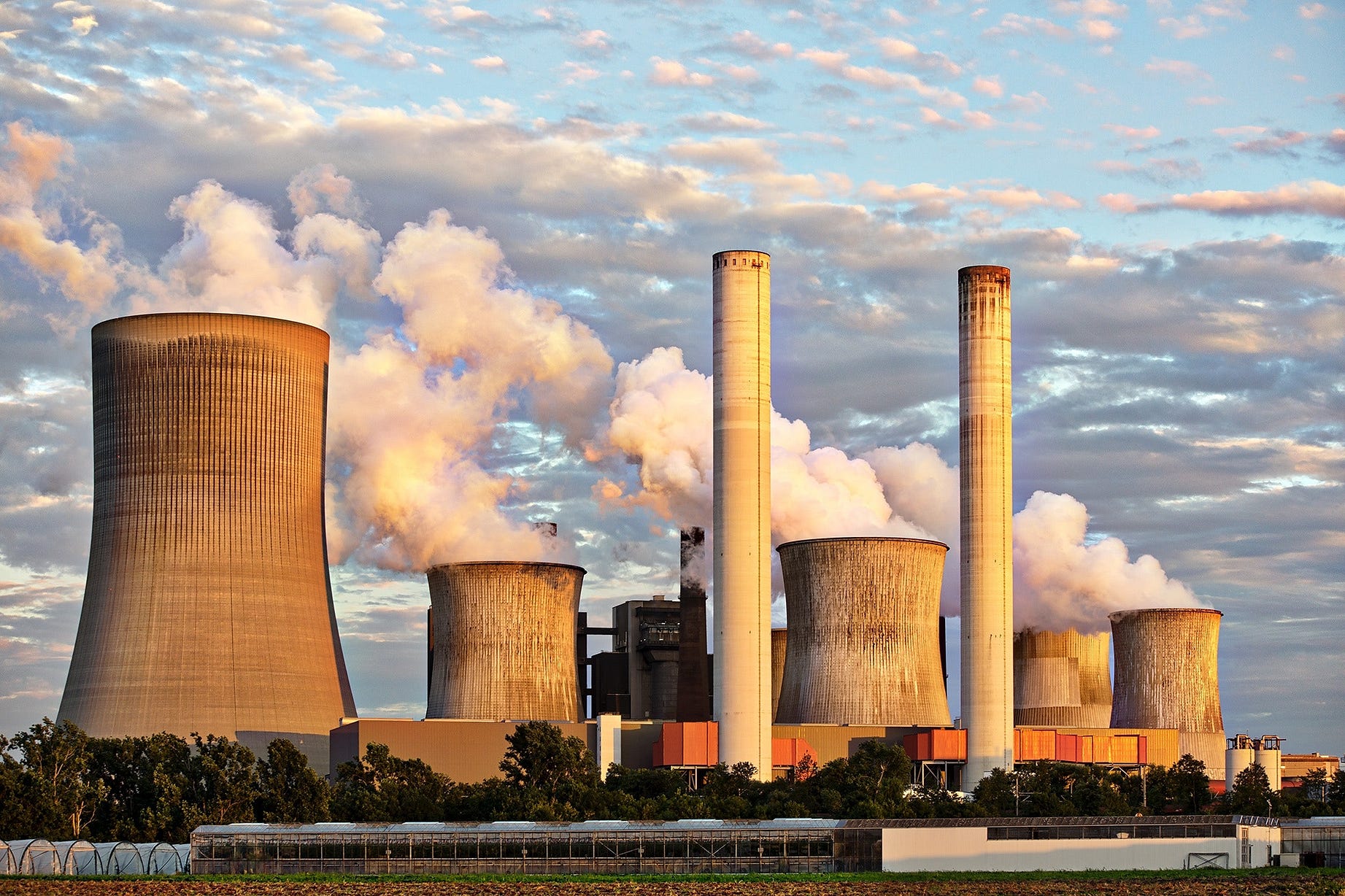
The New York Times (NYT), based on analysis by a U.S. based private intelligence firm Recorded Future, reported that a Chinese entity penetrated India’s power grid at multiple load dispatch points. Chinese malware intruded into the control systems that manage electric supply across India, along with a high-voltage transmission substation and a coal-fired power plant
Read Document →25 June 2020
Locust Invasion in India
It has been a double whammy. As the nation is reeling under the effects of COVID-19 pandemic, India has to fight another menace: locust invasion. Massive swarms of desert locusts have devoured crops across seven states of western and central India including Rajasthan, Gujarat, Madhya Pradesh and Haryana, Maharashtra, Uttar Pradesh and Punjab. The locust population might grow 400 times larger by end June 2020 and spread to new areas without action. It would be disrupting food supply, upending livelihoods and require considerable resources to address. India is facing its worst desert locust invasion in nearly 30 years.China and India’s Deadly Clash: Why You Should Be Worried
World War 3 fears: China in menacing display of military power amid brutal India massacre
How to Prevent a War in Asia
China’s Surveillance Technology Is Keeping Tabs on Populations Around the World
China and COVID-19: A Central-Local ‘Chess Game’
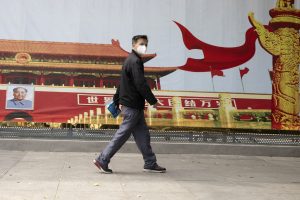
It is wrong to assume, like most Western media and Chinese propaganda alike, that COVID-19 in China is being contained by the central government, or “Beijing.” The vast majority of pandemic measures are local in nature. They have been enacted by provinces and cities and vary greatly. The strictest rules yet applied in the pandemic’s first epicenter: Wuhan city in Hubei province. Such local regulatory difference is anything but usual in China. The world’s most populous country rejects federalism as a political “taboo.” Both state and party are not constructed bottom-up but through “democratic centralism.” “Top-down governance” and “top-level design” have further increased under Xi Jinping. And in times of crisis, decision-making typically becomes even more centralized.Leveraging Vietnam’s COVID-19 Success
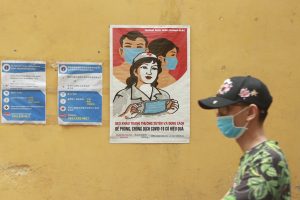
The political stability of many countries has been challenged by the COVID-19 pandemic. As authoritarian governments in countries like China and Vietnam strive to maintain the fruits of economic growth, questions about their legitimacy arise in the face of compounding crises. These governments use their authoritarian control to legitimize societal rules and regulations in service to a shared belief system that maintaining centralized control can not only mitigate chaos in the market but also secure public safety in a pandemic crisis. Why a US-China Dรฉtente Is Coming in 2021: The COVID-19 Factor and the Turn Inward
Against the backdrop of the COVID-19 global pandemic, the major task of governments around the world for the near future is and will be to restore their ravaged national economies. This will include solving domestic unemployment problems, revitalizing tertiary industry, and restoring the supply chains of various industries. In addition to economic issues, many of America’s traditional allies and partners, led by the European Union, will face a domestic political shakeup during this year or the next. For example, many European Union member states, led by Italy and Austria, have been caught in the political conflicts between populist parties and elite parties. Frequent turnover in ruling parties also makes it difficult for these countries to maintain consistency and continuity in policies.Why a War With China Would Be a Terrible Thing
Key Point: A conflict between these two giants would risk going nuclear. Either way, the each side is high-tech and has the industrial might for a truly devastating conflict.China Won’t Win the Race for AI Dominance
The COVID-19 crisis has revealed Taiwan’s resilience
The Key to Stability in Syria: Renewing Relations with Kurds
Admitting the Hard Reality of US Influence in Iraq
The United States is again considering escalating the conflict in Iraq, threatening to repeat a familiar mistake rooted in overconfidence. Instead of focusing support behind the anti-corruption and economic reforms millions of Iraqis demand, the United States is intent on continuing its use of threats and military force to achieve short-term victories against unwanted Iraqi Shia Islamists – despite the long-term diminishing effect these have on US influence.Why the Russians Would Have Won a War in Europe in the Early Days of the Cold War
Key Point: Moscow's forces were more powerful and could concentrate higher numbers before the 1970s. But NATO was able to restore some sense of deterrence and balance--something that might once again be slipping.America's Cold War Endgame Plans Called For Nuking Both Russia And China
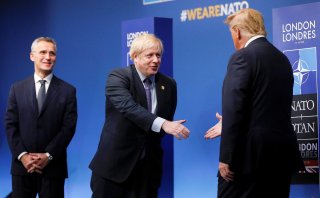
After Brexit: Will the U.S.-UK Deal Get Tariffs Down to Zero?
How America’s Credibility Gap Hurts the Defense of Rights Abroad
Is this the incentive we need? — IPCC Climate Report
Now, this report is highly controversial, for several reasons. Many question the feasibility of keeping warming under 1.5 degrees for the century, and the methods that the IPCC is likely to suggest are unpopular. On top of that is the element of politics: researchers from oil-rich regions are likely to defend fossil fuels and declare that we are past the point of no return, while scientists from resource-poor nations will declare that we can reach the 1.5 degrees mark.Putin Is Not Smiling
When the System Fails
The chaotic global response to the coronavirus pandemic has tested the faith of even the most ardent internationalists. Most nations, including the world’s most powerful, have turned inward, adopting travel bans, implementing export controls, hoarding or obscuring information, and marginalizing the World Health Organization (WHO) and other multilateral institutions. The pandemic seems to have exposed the liberal order and the international community as mirages, even as it demonstrates the terrible consequences of faltering global cooperation.A farewell to the Open Skies Treaty, and an era of imaginative thinking
Morrison reveals malicious 'state-based' cyber attack on governments, industry
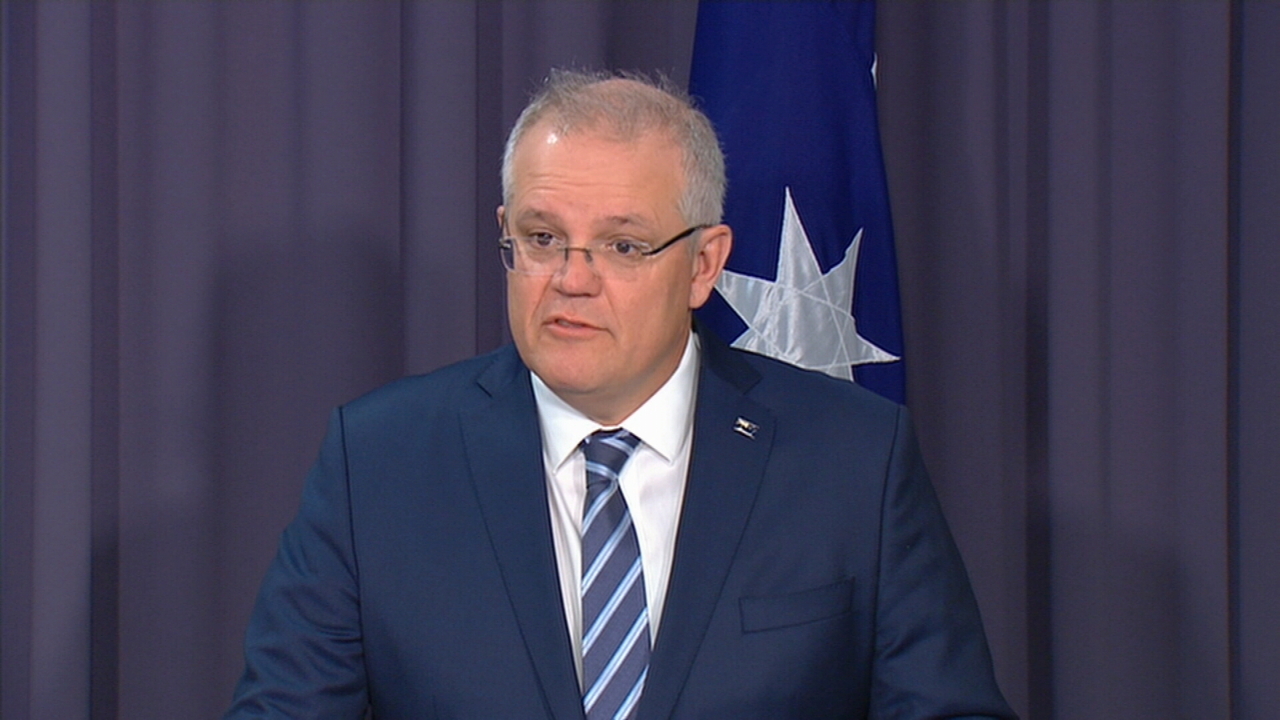
Australian governments and industry are being targeted by major cyber attacks that could put pressure on critical infrastructure and public services, with China understood to be a likely source of the threat.Coronavirus: Why Did One Country Ignore an Army of Existing Contact Tracers?
North Korea’s Military Capabilities
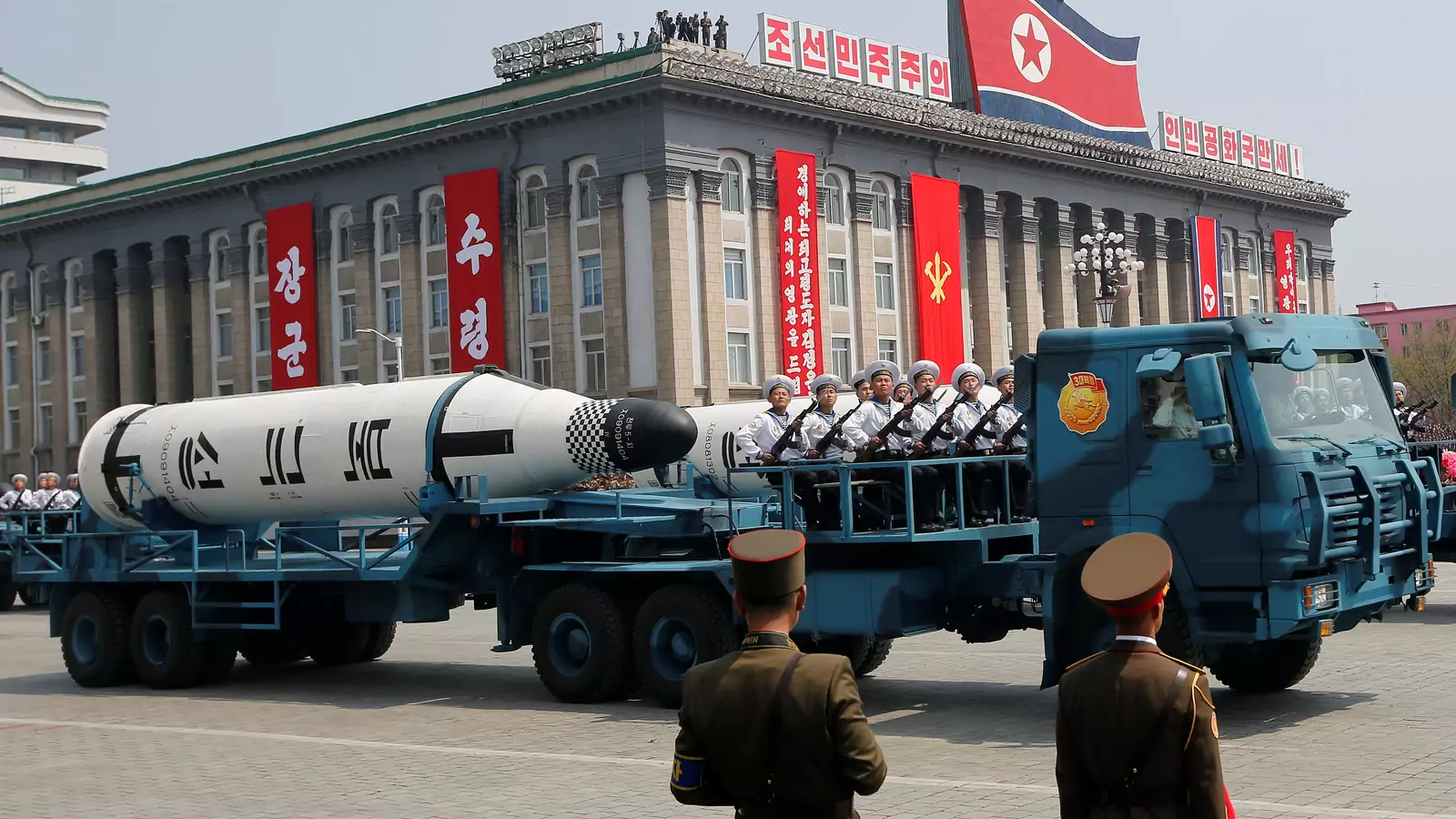
The United States and its Asian allies regard North Korea as a grave security threat. North Korea has one of the world’s largest conventional military forces, which, combined with its missile and nuclear tests and aggressive rhetoric, has aroused concern worldwide. But world powers have been ineffective in slowing its path to acquire nuclear weapons.What the Optimists Get Wrong About Conflict
The political turmoil of recent years has largely disabused us of the notion that the world has reached some sort of utopian “end of history.” And yet it can still seem that ours is an unprecedented era of peace and progress. On the whole, humans today are living safer and more prosperous lives than their ancestors did. They suffer less cruelty and arbitrary violence. Above all, they seem far less likely to go to war. The incidence of war has been decreasing steadily, a growing consensus holds, with war between great powers becoming all but unthinkable and all types of war becoming more and more rare.Here’s what to expect from the Army’s new electronic warfare effort
The first phase of prototyping for the Army's Terrestrial Layer System will last for 16 months, after which one of two companies will be selected to move on. (Army)