It was a squally Saturday evening in Manhattan, winds touching 40mph and seeping through the cracks of my rent subsidized midtown apartment(it’s the details, not just the location). I had just invited a friend over for a drink and we planned on binge watching Altered Carbon and finish a party pack of Doritos(not healthy, I know). We started discussing our doomsday scenarios of a post apocalyptic world where the state monitors your every movement and spoke at length about the Chinese “Credit Score” for appropriate behavior and its parallels with the credit score in the US which unfairly docks points for minorities and people in less than glamorous neighborhoods.
20 March 2018
Indian Foreign Policy Establishment’s China Policy Conundrum – Analysis
By Dr Subhash Kapila
India and its foreign policy establishment’s most confusing conundrum once again is to clearly define whether in the larger and long-range perspective China is India’s ‘Friend or Foe’? India’s lack of discerning this distinction makes it ecstatically jump at every crumb of feigned friendship that China spasmodically keeps throwing at India India’s confused China Policy Conundrum has once again surfaced recently when media reports indicate that Indian Foreign Secretary Gokhale sent an advisory note to the Cabinet Secretary that Indian leaders and officials should not attend HH The Dalai Lama’s ‘Thank Yu India’ event in Delhi out of sensitivity for China’s stances on Tibet.
Why the Taliban Isn't Winning in Afghanistan
By Seth G. Jones
We must face facts,” remarked Senator John McCain in August 2017, “we are losing in Afghanistan and time is of the essence if we intend to turn the tide.” He is not the only one who has argued that the Taliban are on the march. “The Taliban are getting stronger, the government is on the retreat, they are losing ground to the Taliban day by day,” Abdul Jabbar Qahraman, a retired Afghan general who was the Afghan government’s military envoy to Helmand Province until 2016, told the New York Times over the summer. Media outlets have likewise proclaimed that “The Taliban do look a lot like they are winning” and that this is “The war America can’t win.”
The 'Resource War' in Kachin State
By Eugene Mark
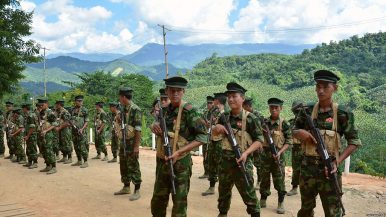 Myanmar’s Tatmadaw has been launching air strikes in the gold and mining region inside Kachin state’s Tanai township in recent months. The area is controlled by the Kachin Independence Organization (KIO) and its armed group, the Kachin Independence Army (KIA). The aim is to clear out the illegal mines in the area that provide a lucrative source of income for the KIO. But underneath this military operation is actually a “resource war” between the Tatmadaw and the KIO in Kachin state. Indeed, control of not only gold and amber but also jade, copper, and ruby mines in the area is important for both the Tatmadaw and the KIO. This competition for natural resources can be viewed as an obstacle to implementing lasting peace in the Kachin state, as it precipitates or worsens the socioeconomic crisis faced by the rest of the Kachin community.
House Proposal Targets Confucius Institutes as Foreign Agents
 Chinese consular staff wave national flags in front of a demonstration by supporters of the Falungong spiritual movement outside the venue where China's Vice President Xi Jinping was opening Australia's first Chinese Medicine Confucius Institute, at the RMIT University in Melbourne on June 20, 2010. A new draft proposal in the House of Representatives seeks to require China’s cultural outposts in the United States, the Confucius Institutes, to register as foreign agents.
The battle for digital supremacy
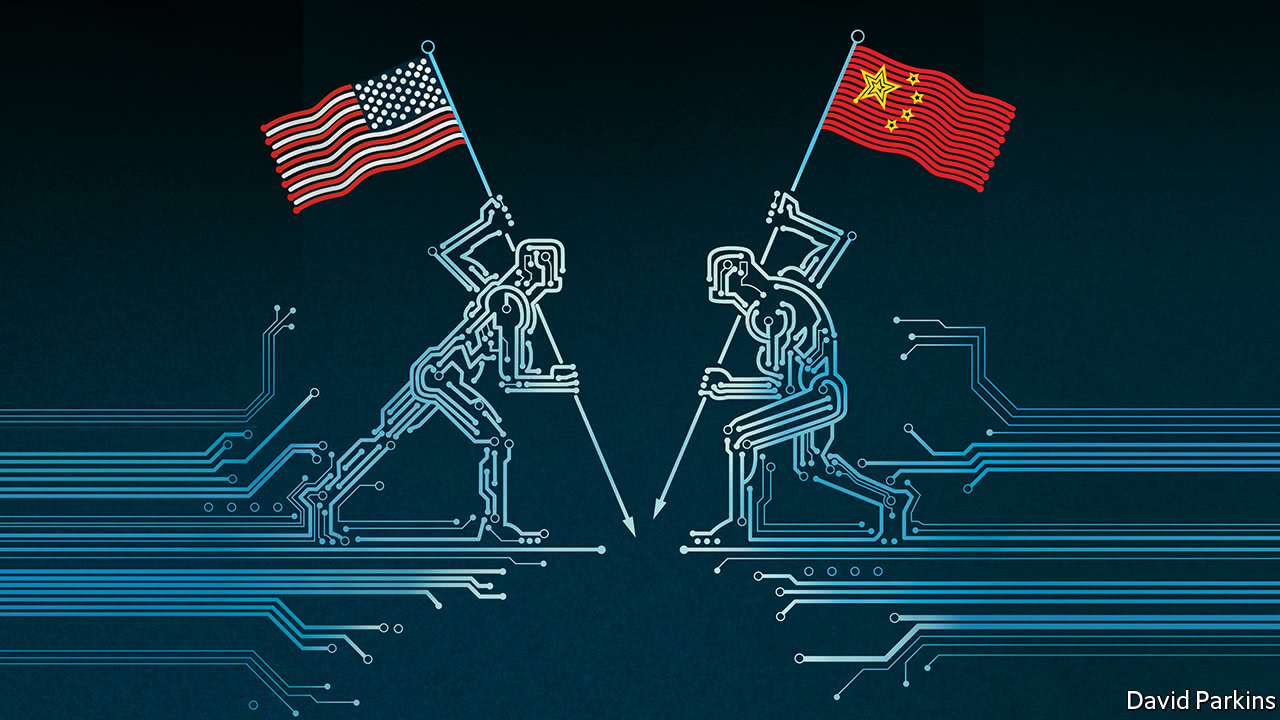 “DESIGNED by Apple in California. Assembled in China”. For the past decade the words embossed on the back of iPhones have served as shorthand for the technological bargain between the world’s two biggest economies: America supplies the brains and China the brawn. Not any more. China’s world-class tech giants, Alibaba and Tencent, have market values of around $500bn, rivalling Facebook’s. China has the largest online-payments market. Its equipment is being exported across the world. It has the fastest supercomputer. It is building the world’s most lavish quantum-computing research centre. Its forthcoming satellite-navigation system will compete with America’s GPS by 2020.
The Fatal Flaw in China's Plan for Dominating the World Economy
 Chinese premier Li Keqiang recently delivered a remarkably revealing speech. Addressing the National People’s Congress for two full hours early in March, he stressed the county’s determination to rely on broad industrial policies as a means to development. The objective, to use Li’s words, is to “speed up work to build China into a leader in manufacturing.” Li doubtless wanted his audience and the world to hear his remarks as a challenge to Western economic power. Many no doubt did. What Li failed to note, and assuredly does not realize, is how his blueprint for progress, rather than ensure Chinese dominance, will instead keep that country indefinitely dependent on the West, doom it to repeat its already well-established pattern of wasteful overbuilding, and ensure that its economy will always remain just a bit behind the West technologically.
China’s Quest for Political Control and Military Supremacy in the Cyber Domain
By Elsa Kania
The People’s Republic of China seeks to contest information dominance (制信息权) and discursive dominance (话语权) in cyberspace. For the Chinese Communist Party (CCP), cybersecurity is integral to comprehensive state security (国家安全). That’s distinct from ‘national’ security in that it focuses on preserving stability and legitimacy to ensure the regime’s survival. Xi Jinping has said that ‘without cybersecurity, there is no state security’. In this concept of cybersecurity, information security and control take priority. Indeed, for the CCP, threats to cyber sovereignty (网络主权) are seen as existential in nature. For that reason, the People’s Liberation Army (PLA) is actively building its capabilities to engage in ‘military struggle’ (军事斗争) in the cyber domain.
The Chinese Leadership's Reform Strategy Comes With a Risk
 The next few years will determine whether China's leaders have the commitment and ability to adapt to economic changes and follow through with necessary reforms. Chinese President Xi Jinping will need to retain a firm grip on power while at the same time meeting the rising expectations that come with that level of authority. Beijing aims to reshape local governments' behavior and lower its growth target, paving the way for more sustainable economic growth. Trade pressure from the United States and a slowing economy will test Beijing's resolve as it strives to restructure its economy, challenging its deleveraging campaign and its attempts at enforcing environmental reforms.
 China’s great leap forward in science and engineering
Narayan Ramachandran
 Sixty years ago, Chairman Mao Zedong of China launched his great leap forward, a plan for social and economic transformation that is widely believed to have resulted in the great Chinese famine of the 1950s. Luckily for China, in the intervening years since then, systematic development programmes and diligent execution begun by Deng Xiaoping and continued by subsequent governments have lifted 700 million people out of poverty, brought prosperity to millions of households and put China on an undeniable path to super-power status.
Threat of Russian cyber reprisal puts UK finance, power and water on high alert
Mark Townsend and Toby Helm
 Britain’s finance sector is on high alert amid warnings of a possible Russian cyber-attack on the nation’s infrastructure. Banks, energy and water companies are on maximum alert over the threat of a serious cyber-attack from Moscow as concern continues over the safety of Russian exiles in the UK. Fears that Russia will target Britain’s critical national infrastructure have prompted round-the-clock threat assessments by the UK’s financial sector, energy firms and GCHQ, the UK’s largest intelligence agency, along with the security services MI5 and MI6.
Obstacles to Mexico’s Territorial Control
Mexico City, the seat of Mexico’s government, has a very basic problem: It has a lot of territory to govern and many physical obstacles between itself and much of that territory.

A U.S. Containment Strategy for Syria
By Aaron Stein
The United States’ interests in Syria lie in formalizing its battlefield gains with a negotiated settlement and then leaving the country. To achieve this goal, it will need to find common cause in the short term with its greatest geopolitical foe, Russia. Doing so will require Washington to acknowledge a painful but obvious truth: Syrian President Bashar al-Assad has largely routed the anti-regime insurgency, consolidated power in much of the country’s west, and received open-ended support and security guarantees from Moscow and Tehran. Assad will govern most of Syria for the foreseeable future.
Africa, Latest Theater in America’s Endless War
Joe Penney
 Last October, four American soldiers, four Nigerien soldiers, and a Nigerien translator were killed in combat on Niger’s border with Mali while looking for the jihadi militant Doundoun Cheffou. For the most part, the fallout concentrated on President Trump’s mangled call with the widow of Sergeant La David Johnson. But the incident also called attention to a dangerous development at multiple levels of US politics. From a small village in rural Niger all the way to the White House, the US military has increasing influence over American foreign policy in Africa.
Last October, four American soldiers, four Nigerien soldiers, and a Nigerien translator were killed in combat on Niger’s border with Mali while looking for the jihadi militant Doundoun Cheffou. For the most part, the fallout concentrated on President Trump’s mangled call with the widow of Sergeant La David Johnson. But the incident also called attention to a dangerous development at multiple levels of US politics. From a small village in rural Niger all the way to the White House, the US military has increasing influence over American foreign policy in Africa. The global impacts of a terrorist nuclear attack: What would happen? What should we do?
Irma Arguello, Emiliano J. Buis
As seen by recent events such as the bombing in Manchester, UK, terrorism can occur anywhere, at any time. So far, the terrorist incidents have been relatively low-tech – such as improvised explosive devices detonating inside pressure cookers, trucks driving down crowded sidewalks, or bombs exploding in backpacks containing metal bolts and screws. But what if terrorists were to build a dirty bomb that contained radioactive materials instead of bits of metal shrapnel, and set it off in a major city? Or, worse, what if they managed to build a fully functioning nuclear weapon, cart it to the downtown of a city, and then detonate it – even a small, rudimentary one that was much smaller than the atomic bomb dropped on Hiroshima? What would the social, economic, and political impacts of the successful terrorist use of a nuclear weapon look like? What planning has the international community done for such an event?
NATO’s Next Nuclear Challenges
MICHAEL RÜHLE
A more competitive international environment, and in particular Russia’s assertive policies, has sparked renewed interest in the concept of nuclear deterrence in Western defense strategies. For NATO, this rediscovery has manifested itself (among other things) in a thorough analysis of Russia’s nuclear policy and posture, renewed attention to NATO’s own nuclear arrangements, and a stronger emphasis on nuclear deterrence and nuclear arms control in public statements. But there’s more. Major changes in the global nuclear landscape, including in nuclear governance, may soon put renewed pressure on this important part of NATO’s deterrence strategy. Allies need to look not only at the challenges posed by Russia’s nuclear modernization, but also ponder the implications of other—potentially much more far-reaching—changes. Three areas stand out.
Syria: Russia's Military Proving Ground
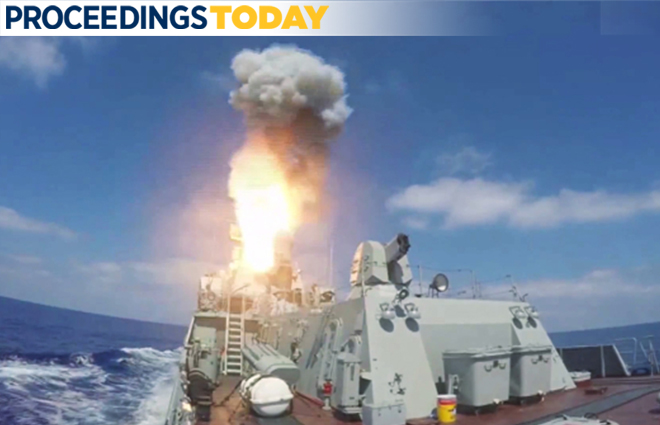 In the past decade, Russia has made a strategic breakthrough in terms of developing its military, but before its operations in Syria, it had not tested its armed forces in combat. In this regard, Syria became the perfect laboratory for mastering skills and testing equipment of the Russian military machine.The Russian-Georgian War For the Russian Federation, the Russian-Georgian War in 2008 was a harsh lesson regarding its military weaknesses and strategic backwardness compared to the West, and it triggered a reassessment of the real situation with the Russian Army. Although victory was achieved quickly, the military noted its deficiencies and the advantages Georgia enjoyed compared to Russia.
A Storm Is Brewing in Transatlantic Relations
By Louis Golino
Recent events in Washington, especially the nomination by US President Donald J. Trump of Mike Pompeo to be the next secretary of state and US imposition of tariffs on aluminum and steel imports, combined with a Europe that is politically weakened and internally focused, are helping create what may become the worst divergence in the transatlantic relationship since the 2003 crisis over the war in Iraq. Unlike the Iraq split, which was over one issue—Franco-German opposition to the US intervention there —the new crisis involves a wide range of complex issues that will be much more difficult to resolve. The replacement of Rex Tillerson with Pompeo, whose paternal great-grandparents came to the United States from Italy, is being greeted in Europe with caution and concern.
Food Insecurity: A Devastating Consequence—And Weapon—of Conflict
LEVI MAXEY
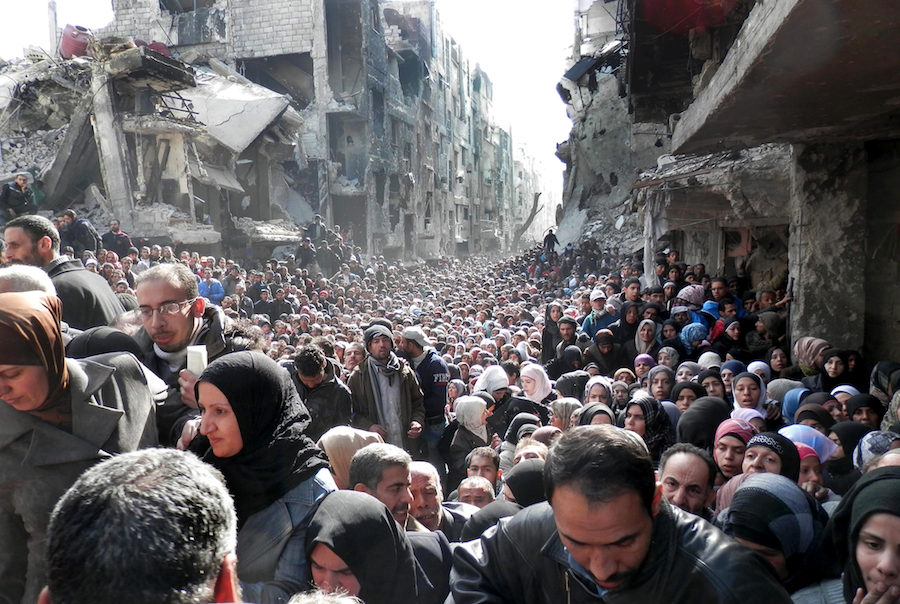 Bottom Line: Behind the curtain of violent conflict often resides a potentially devastating, long-term issue that demands global attention: food insecurity as both a weapon and consequence of war. Militant groups recruit the hungry with promises of the next meal, and states such as North Korea and Syria control food as a mechanism of internal power and psychological warfare. The problem of feeding the world’s hungry – many of whom find themselves in the crossfire of conflict – is only expected to get worse as climates change, populations grow and the rural migrate to booming megacities.
Bottom Line: Behind the curtain of violent conflict often resides a potentially devastating, long-term issue that demands global attention: food insecurity as both a weapon and consequence of war. Militant groups recruit the hungry with promises of the next meal, and states such as North Korea and Syria control food as a mechanism of internal power and psychological warfare. The problem of feeding the world’s hungry – many of whom find themselves in the crossfire of conflict – is only expected to get worse as climates change, populations grow and the rural migrate to booming megacities.Redefining Skilled Labour
Ganesh Chakravarthi
 Skilled labour seems to be in short supply. At least that is what many companies gripe. However, artificial intelligence can substitute the vast expertise, placing the ‘skill’ in the hands of machines. That McDonalds you frequent, the construction workers you employ, or the shop stewards in a supermarket that restock empty shelves may eventually be replaced by robots. The subsequent wave of automation, currently underway — machine learning, sensors feeding data to an AI system, and artificial cognition — will eventually spread from manual labour to white-collar work.
Russians Targeting the “Achilles Heel” of Critical Infrastructure
 The Trump administration has accused Russia of a coordinated “multi-stage intrusion campaign” to hack into critical U.S. infrastructure networks and conduct “network reconnaissance” while attempting to delete evidence of their intrusions. Homeland Security officials say they have helped the affected companies remove the Russian hackers from their compromised networks, but the Russians keep trying to hack into these critical systems.
How Social Media Affects Politics
Anirudh Kanisetti
A recent book, Political Turbulence, uses data to uncover the effect social media has on politics. Let’s say you have a pendulum. You give it a bit of a nudge, and it oscillates peacefully. You know exactly how this simple system works. What’s better than a nice, calming pendulum? Two nice, calming pendulums. So you tie another pendulum to the first one. And you give it a nudge. But from the confluence of two simple, predictable systems, chaos ensues. Over the last few years, chaos and turbulence have become ever-more apparent parts of our daily lives. Apparently small effects can be magnified to produce dizzyingly large and unpredictable effects. Social media has moved from being peripheral to integral to politics, and those who have understood and exploited it have reaped massive electoral rewards.
Intelligence official: US still leads in quantum computing ... for now
By: Mark Pomerleau
/arc-anglerfish-arc2-prod-mco.s3.amazonaws.com/public/FR55XVRFZNCZ5OOV66E2T5IXBE.jpg) Recent comments from the intelligence community indicate quantum computing could be one of the most important technology investments being made today, but the field has many worried about what might happen if others achieve it first. Quantum encryption, enabled by quantum computing, could have profound national security implications such as making adversary messages unreadable and enabling others to easily decrypt critical protected intel. The United States, for now, remains the leader, according to one U.S. intelligence official.
Recent comments from the intelligence community indicate quantum computing could be one of the most important technology investments being made today, but the field has many worried about what might happen if others achieve it first. Quantum encryption, enabled by quantum computing, could have profound national security implications such as making adversary messages unreadable and enabling others to easily decrypt critical protected intel. The United States, for now, remains the leader, according to one U.S. intelligence official.Guns, Drones, & Augmented Reality: Army Seeks Infantry Revolution
By SYDNEY J. FREEDBERG JR.
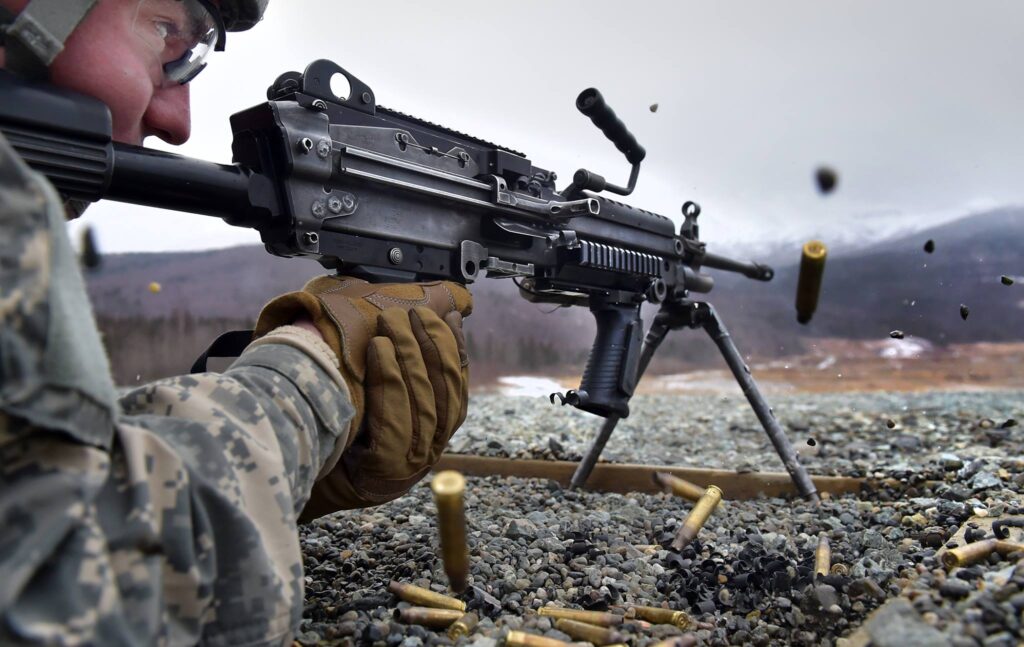 There’s a revolution afoot in America’s infantry. New guns to replace the M4 carbine, M16 rifle, and M249 Squad Automatic Weapon. A new mini-drone to scout ahead. A new tactical network to link scattered units. A new night vision sight that displays targeting data like a fighter pilot’s Heads-Up Display. New tactics to use all of the above and new VR simulators to train on. All these innovations could be in the hands of US Army infantry within “a few years,” Brig. Gen. Christopher Donahue told reporters Friday.
Army Accelerates Upgraded Intel Data-Base to War
By Kris Osborn
 The Army is taking its intelligence data base and accelerating it to the edge of combat with a series of strategic and technological initiatives including ruggedized laptops and an increased ability to enable tactical operations in challenged or “disconnected environments,” service officials announced. Through a new deal with Raytheon and Palantir technologies, the Army plans to quickly integrate hardware and software improvements to its Distributed Common Ground System-Army such that it can better access and organize combat relevant information at the “tactical echelon,” Army officials announced.
The Army is taking its intelligence data base and accelerating it to the edge of combat with a series of strategic and technological initiatives including ruggedized laptops and an increased ability to enable tactical operations in challenged or “disconnected environments,” service officials announced. Through a new deal with Raytheon and Palantir technologies, the Army plans to quickly integrate hardware and software improvements to its Distributed Common Ground System-Army such that it can better access and organize combat relevant information at the “tactical echelon,” Army officials announced.19 March 2018
Super Dan and Roger Federer
Maj Gen P K Mallick,VSM (Retd)
Two days back I wrote in my FB page:
Only person who has a realistic chance to defeat Roger will be standing across the net at the finals. The beanpole from Tanda is in impressive form. He is serving bombs, his forehand has the most devastating power in the game. To add his backhand up the line has now added lot of venom, he is not depending on his slices alone in his back hand side.
But Federer being the supreme artist and craftsman is still my favourite. He has not been at his best in this tournament, though lost only a set in the semifinals where he has again made a Houdini act. But his impeccable serve is bailing him out,
Best wishes to Roger, sorry Del Potro.
My premonition has come true. The tall and handsome man from Argentina has beaten Roger in 3 sets. Juan Martín del Potro rallied from three match points down in the third set and beat top-ranked Roger Federer 6-4, 6-7, 7-6 to win the BNP Paribas Open, handing the world No1 his first loss of the year.
Del Potro held a match point at 8-7 in the second-set tiebreaker, but he lost the final three points on his own errors and allowed Federer to force a third set. They were on serve in the third until Federer broke for a 5-4 lead with a backhand winner off del Potro’s serve. Federer had a chance to serve out the match, holding two match points but del Potro staved both off to force deuce and broke to force a deciding tiebreak. In the tiebreaker, Del Potro raced to a 6-1 lead, helped by two Federer double faults. He closed out the win on his third match point when Federer’s forehand failed. Roger serving 2 double faults in the decider tie break! After all the GOAT is human.
This year the biggest threat to Roger is the Argentine. Make no mistake about it. Of all the players playing now only he has the game and numbers of Roger.
Lets see how Roger plans to counter that humungous forehand of Del Potro.
On Sunday it was All England Open badminton championships in Birmingham. On one side stood the aging superstar, the GOAT, 6 times All England champion Lin Dan, the Super Dan and on the other side the rising Chinese star last year's finalist Shi Yuqi. It was a pulsating match. Lin Dan fought hard in the first game but lost narrowly at 19. The grate man levelled the match by winning the second game. But in the third he was blown away by the power of the young pretender. Shi Yuqi toiled for 75 minutes to beat his senior 21-19, 16-21, 21-9 for his first All-England title. The 22-year-old Shi lost to Lee Chong Wei in the men's singles final last year.
It was not a nice sight to see one time alpha male of badminton world sprawling on the ground to retrieve the powerful smashes of his opponent though he managed to make winners even from there.
Old order changeth yielding place to new. Surely. But the great man ( October 83 born) is still good enough to reach the finals! The familiar debate will start. Look at Super Dan’s achievements :
- He is a two-time Olympic champion, five-time World champion, as well as a six-time All England champion.
- He won Malaysia open in April, 2017 by defeating Lee Chong Wei in straight sets to complete winning all the major world titles available in the world of badminton.
- He is the first and only player to complete the “Super Grand Slam” by the age of 28, which includes all nine major titles in the international badminton.
- Dan was nicknamed “Super Dan” by his fans for his amazing achievements including 5 gold and a silver in World Championships, 2 gold medal in badminton World Cup, 5 gold and 2 bronze medal in Thomas Cup, 3 gold medal in Asian Games, 3 gold medal in Asian Championships and the title of Hong Kong East Asian Games in 2009.
- He is the only badminton player in history to win the Olympic gold medal twice consecutively in 2008 Beijing Olympics and 2012 London Olympics.
In his younger days fans used to soon over his powerful acrobatic smashes and diving retrievals. Today he is more of a craftsman, uses a cat and mouse game, though the old power comes out once in a while.
Let’s leave it to the Super Dan to decide when he quits. Till then NJOY his game.
Is there an uncanny similarity between the two GOATS: Roger and Lin Dan?
Blog has crossed six million visitors
 It took exactly six months to add one more million. Today the blog has touched six million visitors.
Distribution of last months visitors country wise is given below. For Latin America I need Spanish! Africa has still not caught up. When I visited China I found the great wall of China has blocked my site as I do post lot of papers concerning China. Some hits probably from Think Tanks/ universities do come from China which I suppose have the necessary permission.
Happy reading !
Pageviews by Countries
Indian banks with outdated software: Easy targets for fraud
Rohan Jahagirdar
 The timing of the recent Punjab National Bank — Nirav Modi scam couldn’t have been worse. After just having committed to pay for a giant recapitalization package to bail out the banks’ for bad loans, the public trust in banking system is at its lowest. Some commentators have suggested big bang reforms like complete privatization of banking systems while others think we need better regulatory oversight. However, very few have focused on a crucial aspect that enabled the fraud: the bad, old tech used by the bank.
Despite Four Major Exits, Telecom Is Still An Unstable Triopoly, Thanks To Jio
by R Jagannathan
 Jio will continue to wage a war for more market share by keeping tariffs low. The telecom disruption isn’t over yet, for Jio is not aiming for number three. The rapid consolidation in the telecom industry, where four major players exited over the last six months (Reliance Communications, Tata Tele, Telenor and Aircel), is not bringing stability to the industry. The remaining field of three big private players (plus one government player) is in a state of unstable equilibrium.
Jio will continue to wage a war for more market share by keeping tariffs low. The telecom disruption isn’t over yet, for Jio is not aiming for number three. The rapid consolidation in the telecom industry, where four major players exited over the last six months (Reliance Communications, Tata Tele, Telenor and Aircel), is not bringing stability to the industry. The remaining field of three big private players (plus one government player) is in a state of unstable equilibrium.CENTCOM Confirms That Pakistan Is Still Covertly Supporting the Taliban in Afghanistan
Bill Gertz
Gen. Joseph L. Votel, commander of the Central Command, disclosed in congressional testimony this week that despite a new U.S. policy of pressuring Pakistan, the Islamabad government is still supporting the Taliban terrorist group in the border region with Afghanistan. Asked during a Senate Armed Services Committee hearing Tuesday if Pakistan is continuing to back terrorist activity in Afghanistan, Gen. Votel said the U.S. pressure campaign has produced some “positive indicators” of a shift. However, on the question of continued Pakistani support, Gen. Votel noted: “I cannot tell you that we have seen decisive changes in the areas in which we’re working, but I remain very well-engaged with my partner to ensure that we are moving forward on this.”
U.S. Strategy in Afghanistan and Pakistan
Ronald E. Neumann, David S. Sedney
SHINN: As you finish your lunch and dessert, welcome to today’s session in this series of—Council on Foreign Relations Series What to Do About… And specifically, today is “What to Do About U.S. Strategy in Afghanistan and Pakistan.” A timely conversation, since this is the 6,025th day of the war in Afghanistan, some would say the longest and the bloodiest war in American history. So no surprise that it’s the topic of some reconsideration from a strategic standpoint, and that the CFR is not the only place where this reconsideration is taking place. Here is a letter from the Islamic Emirate of Afghanistan that came out three weeks ago that asks, what are you—what is U.S. strategy in Afghanistan and Pakistan? And is it time to reconsider? You can down this—download this, by the way, off their website, which is rather a slick—has rather a slick user interface.
Tell the Truth About Our Longest War
Susan E. Rice
 The nearly 17-year-old Afghanistan conflict, the longest war in United States history, will not end on the battlefield. It can be resolved only at the negotiating table. So, the bold offer last month from President Ashraf Ghani of Afghanistan to negotiate with the Taliban “without preconditions” is a welcome initiative. But it faces daunting obstacles. Mr. Ghani’s proposal envisions an outcome in which the Taliban would be recognized as a legitimate political party, prisoners would be released and United Nations sanctions against the group would be lifted. In exchange, the Taliban would have to recognize the Afghan government and respect the rule of law, including women’s rights.
The nearly 17-year-old Afghanistan conflict, the longest war in United States history, will not end on the battlefield. It can be resolved only at the negotiating table. So, the bold offer last month from President Ashraf Ghani of Afghanistan to negotiate with the Taliban “without preconditions” is a welcome initiative. But it faces daunting obstacles. Mr. Ghani’s proposal envisions an outcome in which the Taliban would be recognized as a legitimate political party, prisoners would be released and United Nations sanctions against the group would be lifted. In exchange, the Taliban would have to recognize the Afghan government and respect the rule of law, including women’s rights.Mackinder and Mahan: The Chinese Geopolitics in South Asia
By Jennifer Loy
Geopolitics is always at play within international relations, but none more so than the current role the People’s Republic of China (PRC) has in South Asia. Sir Halford Mackinder explained the Heartland Theory in “The Geographical Pivot of History” in 1904. Whichever nation controlled Eastern Europe would control the Heartland (the core of Eurasia); subsequently this nation would then control the World Island (all of Europe and Asia); and finally, would dominate the world. Alfred Thayer Mahan’s view was focused upon the oceans. Simply, whoever conquered the seas would control the world. Both have proven true throughout history, but not at the same time with the same nation. The partnership of Mackinder and Mahan’s theories are found within the PRC’s One Belt One Road (OBOR) project.
China’s Global Dreams Give Its Neighbors Nightmares
BY ROBERT DALY, MATTHEW ROJANSKY
 In 1904, Halford Mackinder theorized that whichever nation ruled the “World-Island” of Africa, Asia, and Europe would “command the world.” One hundred and nine years later, in Astana, Kazakhstan, Chinese Communist Party General Secretary Xi Jinping made his move, declaring himself the prophet and China the engine of Afro-Eurasian integration. The era of China’s Belt and Road Initiative (BRI) diplomacy had begun.
Why China stopped making fissile material for nukes
Hui Zhang
Some western scholars have expressed growing concern about China’s expansion of its nuclear arsenal and what they see as a “sprint to parity” with the United States. One scholareven claimed that China could have built as many as 3,000 nuclear weapons, far above the estimate of Western intelligence agencies, which assume that China has between 200 and 300. As a comparison, the United States and Russia each keep roughly 7,000 nuclear weapons. If China had any interest in parity, that would leave it with an awfully long way to go.
Subscribe to:
Posts (Atom)