| Source Link | ||
| Violence marked the third anniversary of the Tahrir revolution, a symptom of the uncertainty in Egypt, writes Pinak Ranjan Chakravarty | ||
 Egypt reached a historical
milestone as the country marked the third anniversary of the Tahrir
revolution on January 25 that overthrew Hosni Mubarak, the Egyptian
dictator who ruled Egypt for almost 30 years. The anniversary was marked
by bomb blasts, rallies and killings as Muslim Brotherhood supporters
clashed with security forces. Muslim Brotherhood supporters used the
anniversary to signal renewed defiance of the military and the political
transition, planned by the military-backed interim government. The
Muslim Brotherhood has been declared a terrorist organization by the
interim government that has also put the former president, Mohamed
Morsi, in the dock for criminal offences. The Ansar Beit Al-Maqdis, a
group affiliated to al Qaida, claimed responsibility for the bomb blasts
and warned that more would follow. This group has been responsible for
suicide bomb attacks and a savage campaign of violence against the
security forces in the Sinai Peninsula. Egypt reached a historical
milestone as the country marked the third anniversary of the Tahrir
revolution on January 25 that overthrew Hosni Mubarak, the Egyptian
dictator who ruled Egypt for almost 30 years. The anniversary was marked
by bomb blasts, rallies and killings as Muslim Brotherhood supporters
clashed with security forces. Muslim Brotherhood supporters used the
anniversary to signal renewed defiance of the military and the political
transition, planned by the military-backed interim government. The
Muslim Brotherhood has been declared a terrorist organization by the
interim government that has also put the former president, Mohamed
Morsi, in the dock for criminal offences. The Ansar Beit Al-Maqdis, a
group affiliated to al Qaida, claimed responsibility for the bomb blasts
and warned that more would follow. This group has been responsible for
suicide bomb attacks and a savage campaign of violence against the
security forces in the Sinai Peninsula.
The last
three years have seen Egypt undergoing wrenching political upheavals
that have left the country deeply polarized. Egyptians opposed to the
Muslim Brotherhood are clamouring for the defence minister and army
chief, General Abdel-Fattah el-Sisi, to run for president. He was the
Egyptian strongman behind the overthrow of the Morsi-led Islamist
government in June 2013. Crippled by months of continuous crackdowns
against its members, the Muslim Brotherhood supporters have been killed
in their hundreds. The crackdown has included arrests and the seizure of
assets of pro-Brotherhood businesspersons. A rising tide of anger
against the Brotherhood has aroused the Egyptian public and secular
Egyptians, the latter group being critical of both the military and the
Islamists. The secularists are currently caught between the resurgent
military and the Islamists in retreat mode. The referendum on the new
constitution held on January 14 and 15 had a low turnout of about 38 per
cent, marginally more than the turnout in the referendum on the first
constitution drafted under the Islamist government of Morsi. The
Islamists had called for a boycott of this referendum.
|
8 February 2014
AN UNFINISHED REVOLUTION
CFR Backgrounder on the Current NSA Domestic Surveillance Controversy
February 5, 2014
This backgrounder prepared by the Council on Foreign Relations (CFR) in New York City is a little more than a month old, but it nicely explains all the various political and legal issues involved in the current NSA domestic surveillance imbroglio.
U.S. Domestic Surveillance
Council on Foreign Relations
Introduction
In the wake of the September 11 attacks, Congress passed sweeping legislation to bolster U.S. counterterrorism efforts. Some of the most controversial measures, including the 2001 USA PATRIOT Act, significantly enhanced the federal government’s ability to collect and analyze private information related to U.S. citizens. Proponents argue that the broader surveillance authorities are required to uncover and neutralize terrorism plots, while critics say the expanded powers infringe on civil liberties.
In 2005, the Bush administration came under fire from Democrats and activist groups after press reports disclosed the National Security Agency’s warrantless wiretapping program. In 2013, the Obama administration similarly attracted criticism from watchdog groups upon leaks related to its far-reaching domestic surveillance activities under the NSA. The episode has revived debate over privacy and national security and raised calls for reform.
 The National Security Agency (NSA) headquarters building in Fort Meade, Maryland. (Courtesy Reuters)
What is the domestic surveillance controversy under Obama?
Two NSA surveillance programs were exposed in press reports in June 2013. First, a Guardian report disclosed a classified Foreign Intelligence Surveillance Court (FISC) order instructing Verizon, one of the largest U.S. telecommunications firms, to hand over phone records of millions of Americans to the NSA. Another secret program, code-named PRISM, accessed troves of communication data—audio/video chats, emails, photos, and other media—from several U.S. technology companies, according to the Washington Post. Subsequent leaks revealed details on additional programs that gave the NSA extensive electronic surveillance tools, both domestic and international, allowing the government to track and tap into conversations of suspected terrorists, civilians, and even friendly foreign heads of state.
UK Cyberwar Unit Launched Cyber Attacks on Hacker Organizations Anonymous and LulzSec, Snowden Docs
February 5, 2014
War on Anonymous: British Spies Attacked Hackers, Snowden Docs Show
Mark Schone
NBC News
A secret British spy unit created to mount cyber attacks on Britain’s enemies has waged war on the hacktivists of Anonymous and LulzSec, according to documents taken from the National Security Agency by Edward Snowden and obtained by NBC News.
The blunt instrument the spy unit used to target hackers, however, also interrupted the web communications of political dissidents who did not engage in any illegal hacking. It may also have shut down websites with no connection to Anonymous.
According to the documents, a division of Government Communications Headquarters Communications (GCHQ), the British counterpart of the NSA, shut down communications among Anonymous hacktivists by launching a “denial of service” (DDOS) attack – the same technique hackers use to take down bank, retail and government websites – making the British government the first Western government known to have conducted such an attack.
The documents, from a PowerPoint presentation prepared for a 2012 NSA conference called SIGDEV, show that the unit known as the Joint Threat Research Intelligence Group, or JTRIG, boasted of using the DDOS attack – which it dubbed Rolling Thunder — and other techniques to scare away 80 percent of the users of Anonymous internet chat rooms.
The existence of JTRIG has never been previously disclosed publicly.
The documents also show that JTRIG infiltrated chat rooms known as IRCs and identified individual hackers who had taken confidential information from websites. In one case JTRIG helped send a hacktivist to prison for stealing data from PayPal, and in another it helped identify hacktivists who attacked government websites.
Intelligence sources familiar with the operation say that the British directed the DDOS attack against IRC chat rooms where they believed criminal hackers were concentrated. Other intelligence sources also noted that in 2011, authorities were alarmed by a rash of attacks on government and corporate websites and were scrambling for means to respond.
“While there must of course be limitations,” said Michael Leiter, the former head of the U.S. government’s National Counterterrorism Center and now an NBC News analyst, “law enforcement and intelligence officials must be able to pursue individuals who are going far beyond speech and into the realm of breaking the law: defacing and stealing private property that happens to be online.”
“No one should be targeted for speech or thoughts, but there is no reason law enforcement officials should unilaterally declare law breakers safe in the online environment,” said Leiter.
Former Commander of Israeli SIGINT Agency on Role of Espionage in the Cyber Era
February 2, 2014
Espionage in the Cyber Era
Hannan Gefen
Israel Defense
February 2, 2014
The computer system of the US National Security Agency (NSA) is probably one of the world’s most heavily protected sites. The databases of this agency store the most sensitive intelligence information collected by this huge intelligence organization all over the world. The NSA has been familiar with the cyber world since its very inception and was a partner in the shaping of many of its rules, mainly in order to safeguard the state’s abilities to monitor communication traffic, when required, and prevent hostile elements from hiding inside the information jungle.
This organization has been exposed to the most substantial and most damaging cyber break-in any organization could have been exposed to. The damage was caused neither by a ‘Trojan Horse’ or any other state-of-the-art technology, nor by a sophisticated team of hackers, but by a single person, and to add insult to injury – that person was an outside contractor hired to carry out a seemingly technical mission of operating some of the agency’s non-mission computer systems, a kind of “transparent, back-office” type of person.
The NSA operates under severe compartmentalization of all intelligence materials, developed methodically and through considerable effort, by the book,. The agency’s access authorization and document classification table is strictly enforced and observed. This system had not been applied, however, to their collection plans, cooperative alliances with organizations around the world and other administrative aspects that pertain to the management and collection of information. Those aspects were readily accessible by a technical administrator of computer systems who, in his free time, over a relatively short period of three months working at the NSA, managed to store on magnetic media thousands of documents and classified professional presentations and submit them to the media.
This is not the only case where computer systems were broken into by a human element. The case of US Army Corporal Manning is very similar: a soldier serving with US military intelligence and enjoying legitimate authorizations, went on to store diversified intelligence material and eventually released it to the public. The damage he caused was massive; it had an adverse effect on US relations with numerous countries, it exposed active field agents and may have initiated change-of-government processes in several countries.
In Israel, IDF soldier, Anat Kam, reminded us of the human factor as the weakest link in the protection of computer systems. By examining the materials leaked by Snowden, it is possible to chart the deployment of the American and world SigInt community vis-à-vis the challenges presented to it by today’s state-of-the-art computer and communication systems, or in the IDF jargon – C3 systems.
The communication revolution cliché is more relevant to this field than to any other related subject. In the past, until about twenty years ago, C3 systems were divided into two categories: civilian stationary communication systems and military dedicated stationary and mobile systems. Computer systems were ‘closed’ systems that were not connected to any external communication network.
This division had existed since before World War II and throughout the Cold War. The monitoring layouts of the internal security organs (police, security services) and military organizations were divided accordingly. The military systems were regarded as the higher value systems and the entire military hierarchy was managed through them, including the planning and actual conduct of operations. Civilian systems were regarded as inferior in terms of their intelligence value. The change began when the Cold War ended.
Since the 1990s, we have witnessed a series of communication revolutions that followed one another in waves at three-year or four-year intervals, with the new one replacing the previous one or with sequential revolutions establishing synergies that empower one another.
Israel Now One of the Top Exporters of Unmanned Surveillance Drones
February 4, 2014
Israel’s defense industry boosts UAV sales, eyes unmanned subs
TEL AVIV, Israel, Feb. 3 (UPI) — Elbit Systems says it is delivering its new Hermes 900 unmanned aerial vehicle to three foreign countries, as well as the Israeli military, underlining how the Jewish state’s defense industry has become one of the world’s top exporters of drones.
Aeronautics Defense Systems said it is about to start deliveries of 50 Orbiter mini-drones to the Finnish army as part of a $30 million contract signed 18 months ago.
The Israeli company will deliver 150 more Orbiters to Finland’s military later in the year, turning around a recent financial crisis that resulted in former Elbit executive Amos Natan being brought in to replace Aeronautics founder Avi Leumi as chief executive officer.
"We’re working very hard and 2013 was a very good year for us, in which we resumed growth," said Natan, who was previously chief executive of Elbit Systems’ artillery unit Soltam.
"I believe that with all the problems and challenges facing the defense market now because of budget cuts we’ll see further growth this year thanks to deal that we’ll announce."
In a recent analysis, the international business consultancy Frost & Sullivan tagged Israel as the world’s leading UAV exporter, with aerial drones worth more than $4.6 billion sold between 2005 and 2012.
Israel’s drone sales account for 10 percent of its military exports, a key source of revenue for the Jewish state. The peak year was 2005 when the Israelis racked up $1.4 billion in UAV and systems exports.
The overall total averages $580 million a year for the aircraft themselves, along with their command-and-control vehicles, operating systems and various payloads. That did not include a $100 million deal for state-owned Israel Aerospace Industries, a major UAV manufacturer, to upgrade India’s Heron drones.
India is a major buyer of Israeli military systems and operates 60 IAI Herons acquired in several deals worth $1 billion. And it wants more of the craft that can stay aloft for 40 hours at 30,000 feet and carry a formidable array of sensors.
Frost & Sullivan forecast Israeli drone exports will grow by 5 percent to 10 percent through 2020, in part by exploiting U.S. curbs on American drone sales to foreign countries because most of their systems, which are used by the Central Intelligence Agency and the military, remain classified.
IAI Chief Executive Officer Joseph Weiss observed in the years ahead armies around the world will be gradually expanding their drone inventories, taking over operations currently conducted by manned aircraft.
"It’s hard for me to assess at the moment what our next UAV platform will look like, but the upcoming innovations will mainly be in the area of payloads which the platforms can carry," he said.
IAI and Elbit in particular have focused on developing payloads for long-range intelligence-gathering, marine operations, real-time surveillance of targets and electronic warfare. Some Israeli drones can carry several payloads simultaneously.
Elbit Systems, and its subsidiary Elisra, say it’s developed a hyperspectral payload for spotting and identifying hazardous materials for the Hermes 900, the advanced variant of their workhorse Hermes 450.
The 900 has a maximum altitude of 30,000 feet, can operate in extreme weather conditions and carry a wide range of payloads. It uses the same command and control infrastructure as the 450.
In addition to IAI, Elbit Systems and Aeronautics Systems, other key Israeli companies involved in drone development and production include Bluebird Aero Systems and Gilat Satellite Networks.
The Israeli air force’s biggest and most advanced UAV is the Heron TP, known as the Eitan, Hebrew for “strong.” It’s built by state-owned IAI, the defense industry flagship.
IAI says the 4 1/2-ton craft with a range of 700 miles and flight endurance of up to 45 hours is designed primarily for long-flight, high-altitude electronic surveillance missions. It has a wingspan of 86 feet, as big as a Boeing 737’s.
The Israeli business daily Globes reports the Defense Ministry has tasked Israel’s defense industry to match its mastery of UAV technology by developing unmanned submarines.
Defense analyst Yuval Azulai observed: “If the industry moves quickly and purposefully in identifying this emerging market and offers a well-functioning unmanned submarine, it could be riding the right wave a decade from now in a market that will be worth $2 billion a year by 2020.”
Secrecy, Drone Warfare, and the Legal Definition of Covert Action
February 2, 2014
Reforming the legal definition of “covert action”
Kenneth Anderson
Washington Post
February 2, 2014
The Hoover Institution’s Task Force on National Security and Law has been running an essay series on its blog, The Briefing, “Secrecy and Accountability in the Digital Age.” (Introductory post by Peter Berkowitz, Hoover senior fellow and Task Force chair.) Most of the essays (written by Task Force members, of which I’m one) are about surveillance, big data, NSA, the FISA court, etc. Mycontribution, by contrast, returns the debate over secrecy, accountability, and oversight issues to where it was before Edward Snowden sent it into an argument over data collection – drones and targeted killing.
It’s a little difficult to recall, frankly, but before Snowden, the most heated national and international debate was about procedures, oversight, and accountability in drone warfare and targeted killing. In part, that’s because the process questions were, for many, a stand-in for campaigning against the programs’ substance. Many critics (including many in the anti-war Left and the Pauline wing of the Republican Party), then and now, regarded accountability and oversight as a procedural stalking horse for delegitimizing drone warfare as such, and particularly drone programs conducted by the CIA. No process of either targeting or transparency will ever be enough; they will happily take whatever gains are offered by way of transparency as grounds to ask for more. The appetite grows with the eating.
Still, irrespective of strategic political goal, critics are not wrong to “question the adequacy of the accountability mechanisms and oversight of these programs.” I don’t mean that in the sense that the existing mechanisms are inadequate as such or inherently illegitimate; quite the contrary. But legitimacy is a dynamic process in a democracy, and it just is delegitimizing, over time, to have programs that are widely known, even widely supported by the public (as drone warfare is), are discussed extensively by government officials – but with respect to which the government response in any official setting, including the courts, is “neither confirm nor deny.” It undermines public trust to have a democratic government say that it’s not lying to the public, not technically lying, merely because because it refuses comment. The combination of every unofficial and near-official statement saying, x, but then officially saying not-x, not-not-x, not-saying-anything, not-not-saying-anything - is a falsehood, even if a falsehood delivered sotto voce.
Knowingly making a bunch of statements that government – and the public – know can’t all be true, even if no one is actually a falsehood, amounts in combination to a falsehood. It undermines public confidence in processes that necessarily can’t be shared in any detail with the public. It’s one thing if the government neither confirms nor denies events that are mostly secret and which the government has tried to keep secret. But, well, a genuinely public position of what amounts to “irony” – wink-and-nod secrecy, “notional” secrecy – won’t work for a democracy. Say what you mean, mean what you say – but that means that if government says no comment, it really hasn’t said anything, and hasn’t been talking out of the side of its mouth.
Unmanned Air Systems: The Future of Air & Sea Power?

Paul ROGERS
Focus stratégique, No. 49, January 2014
Since their early use for primitive ISR and combined operations, UAS have developed into increasingly multipurpose instruments performing a wide array of missions (from limited strike operations, search and monitoring to time-sensitive targeting) and offering new maneuver options to the armed forces. These improvements in range, speed, endurance, situational awareness and payload, achieved through adaptive use of new information technologies, were catalyzed by the Afghanistan and Iraq testing grounds that proved critical in breaking institutional resistance. Yet for all their contribution to the shaping of a quick learning curve, these developments have occurred in permissive airspace. After tracing back the history of UAS development, this paper argues that the US can overcome the different challenges to UAS brought by contested and denied airspace, as traditional power threats constrain force projection through A2AD strategies. To increase their force multiplier potential, the US will likely improve UAS capabilities in stealth, evasiveness, maneuverability and automation, strengthening both air and sea power.
Since their early use for primitive ISR and combined operations, UAS have developed into increasingly multipurpose instruments performing a wide array of missions (from limited strike operations, search and monitoring to time-sensitive targeting) and offering new maneuver options to the armed forces. These improvements in range, speed, endurance, situational awareness and payload, achieved through adaptive use of new information technologies, were catalyzed by the Afghanistan and Iraq testing grounds that proved critical in breaking institutional resistance. Yet for all their contribution to the shaping of a quick learning curve, these developments have occurred in permissive airspace. After tracing back the history of UAS development, this paper argues that the US can overcome the different challenges to UAS brought by contested and denied airspace, as traditional power threats constrain force projection through A2AD strategies. To increase their force multiplier potential, the US will likely improve UAS capabilities in stealth, evasiveness, maneuverability and automation, strengthening both air and sea power.
Governing the Geostationary Orbit: Orbital Slots and Spectrum Use in an Era of Interference
Guilhem PENENT
Note de l'Ifri, January 2014
Executive Summary
Outer space, particularly in the telecommunication sector, is benefiting and becoming accessible to more and more actors. But with this trend comes also a reality that is every day more compelling: no meaningful development can be achieved without a clear, stable and predictable interference-free environment for the use and control of all satellites that depend upon ready access to radio frequencies and appropriate geostationary orbital slots to function properly.
The increasing incidence of harmful interference these recent years, including intentional ones implying a deliberate purpose to obstruct reception of specific information against which no technical efficient counter measure exists, is putting in danger this capacity to continue operating safely. Despite itself, the International Telecommunication Union (ITU) in charge of the rational, equitable, efficient and economical management of the orbit spectrum resource is increasingly becoming a permanent battlefield between opposing interests. And the ability of this specialized agency of the United Nations to remain aloof from broader political issues is now being challenged on a regular basis.
In the face of such a worrying development, the costs of non-action can only be but prohibitively high as noted by Frank Asbeck, Special Adviser for Space and Security Policy to the European External Action Service (EEAS), in the preface to the topic of the book. While paying tribute to efforts that aimed at elevating public awareness concerning the illegal jamming of satellite transmissions, Mr. Asbeck insists on the importance this issue has for the European Union from a human rights as well as space security point of view.
The present book aims at placing the issue of the orbit/frequency governance at the heart of the European political agenda. It is the main outcome of a one half-day workshop on “Orbital Slots and Spectrum Use: a Governance Outlook” held in Paris (France) in April 2013 whose objective was to establish a precise diagnostic of the situation. To this end, both the functioning of the current system of governance and the reasons and processes explaining why the system might be deteriorating were discussed by recognized academics and experts, as well as representatives from space agencies, national and international regulatory entities and satellite fleet operators.
As manifested repeatedly in the contributions contained in this study, at least three main areas of interests require further focus: 1) the need for a large understanding and awareness of the issue of harmful interference with, notably, a better knowledge of the difference between the different types of interference, be they internal to the satellite network or external, deliberate or unintentional; 2) the need to improve the ITU process by giving it some ability to confirm the source and nature of frequency jamming and take informed actions and decisions that would be more compulsory in nature; 3) the need to consider the broader legal regime and the relevance of other instruments.
The study itself is divided into three parts. Following some preliminary comments on the ITU regime and its evolution over the years with regards to the use of radio frequencies and orbits, the first section on “Getting into the Picture: Satellite Communications Today” captures the basic debate on satellite communications from a legal and political point of view. It is opened by three authors focusing on the different contexts surrounding the issue of harmful interference.
While Xavier Pasco identifies the key historical trends behind the transformation of the satellite communications activity from the early days and their consequences on the whole collective governance issue, Tanja Masson-Zwann investigates in details the ITU regime and the space law regime and finds the latter better suited for solving today’s politically-motivated cases of intentional harmful interference. These are also the subject of the next article by Guilhem Penent on the historical debate of whether states should be given the right to interfere deliberately with the flow of information coming across their borders.
14 Israeli Air Force Pilots Court-Martialed For Storing Operational Data on SmartPhones
February 5, 2014
Israeli Pilots Punished for Storing Sensitive Data on Smartphones
Reuters
JERUSALEM — Two Israeli combat pilots were jailed for five days and 12 others were disciplined for storing operational maps on their smartphones, Israeli Army Radio reported on Wednesday.
Israeli military authorities discovered the security breach after one of the pilots reported he had lost his cellphone and that it contained sensitive data. It was recovered, the report said, and investigators found he had loaded maps, waypoints and other classified documents.
Other members of his squadron had done the same, so they could have the information readily at hand, the radio said.
The 14 pilots were court-martialed: two sent to jail, 11 received suspended sentences and one was fined
Energy Rush: Shale Production and U.S. National Security
FEBRUARY 6, 2014
Elizabeth Rosenberg
Reports

Senior Fellow Elizabeth Rosenberg calls for policymakers and military leaders to reassess U.S. strategy to “safeguard the physical oil trade, new criteria for the use of strategic reserves, new potential energy export opportunities and new possibilities for energy-focused trade arrangements.” The author states that civilian and military leaders must adapt policies and recast strategic relationships and military commitments to better-fit complex and volatile global energy markets.
7 February 2014
*** Why So Much Anarchy?
February 6, 2014
By Robert Kaplan
 Twenty years ago, in February 1994, I published a lengthy cover story in The Atlantic Monthly, "The Coming Anarchy: How Scarcity, Crime, Overpopulation, Tribalism, and Disease are Rapidly Destroying the Social Fabric of Our Planet." I argued that the combination of resource depletion (like water), demographic youth bulges and the proliferation of shanty towns throughout the developing world would enflame ethnic and sectarian divides, creating the conditions for domestic political breakdown and the transformation of war into increasingly irregular forms -- making it often indistinguishable from terrorism. I wrote about the erosion of national borders and the rise of the environment as the principal security issues of the 21st century. I accurately predicted the collapse of certain African states in the late 1990s and the rise of political Islam in Turkey and other places. Islam, I wrote, was a religion ideally suited for the badly urbanized poor who were willing to fight. I also got things wrong, such as the probable intensification of racial divisions in the United States; in fact, such divisions have been impressively ameliorated.
However, what is not in dispute is that significant portions of the earth, rather than follow the dictates of Progress and Rationalism, are simply harder and harder to govern, even as there is insufficient evidence of an emerging and widespread civil society. Civil society in significant swaths of the earth is still the province of a relatively elite few in capital cities -- the very people Western journalists feel most comfortable befriending and interviewing, so that the size and influence of such a class is exaggerated by the media.
The anarchy unleashed in the Arab world, in particular, has other roots, though -- roots not adequately dealt with in my original article:
The End of Imperialism. That's right. Imperialism provided much of Africa, Asia and Latin America with security and administrative order. The Europeans divided the planet into a gridwork of entities -- both artificial and not -- and governed. It may not have been fair, and it may not have been altogether civil, but it provided order. Imperialism, the mainstay of stability for human populations for thousands of years, is now gone.
The End of Post-Colonial Strongmen. Colonialism did not end completely with the departure of European colonialists. It continued for decades in the guise of strong dictators, who had inherited state systems from the colonialists. Because these strongmen often saw themselves as anti-Western freedom fighters, they believed that they now had the moral justification to govern as they pleased. The Europeans had not been democratic in the Middle East, and neither was this new class of rulers. Hafez al Assad, Saddam Hussein, Ali Abdullah Saleh, Moammar Gadhafi and the Nasserite pharaohs in Egypt right up through Hosni Mubarak all belonged to this category, which, like that of the imperialists, has been quickly retreating from the scene (despite a comeback in Egypt).
By Robert Kaplan
Twenty years ago, in February 1994, I published a lengthy cover story in The Atlantic Monthly, "The Coming Anarchy: How Scarcity, Crime, Overpopulation, Tribalism, and Disease are Rapidly Destroying the Social Fabric of Our Planet." I argued that the combination of resource depletion (like water), demographic youth bulges and the proliferation of shanty towns throughout the developing world would enflame ethnic and sectarian divides, creating the conditions for domestic political breakdown and the transformation of war into increasingly irregular forms -- making it often indistinguishable from terrorism. I wrote about the erosion of national borders and the rise of the environment as the principal security issues of the 21st century. I accurately predicted the collapse of certain African states in the late 1990s and the rise of political Islam in Turkey and other places. Islam, I wrote, was a religion ideally suited for the badly urbanized poor who were willing to fight. I also got things wrong, such as the probable intensification of racial divisions in the United States; in fact, such divisions have been impressively ameliorated.However, what is not in dispute is that significant portions of the earth, rather than follow the dictates of Progress and Rationalism, are simply harder and harder to govern, even as there is insufficient evidence of an emerging and widespread civil society. Civil society in significant swaths of the earth is still the province of a relatively elite few in capital cities -- the very people Western journalists feel most comfortable befriending and interviewing, so that the size and influence of such a class is exaggerated by the media.
The anarchy unleashed in the Arab world, in particular, has other roots, though -- roots not adequately dealt with in my original article:
The End of Imperialism. That's right. Imperialism provided much of Africa, Asia and Latin America with security and administrative order. The Europeans divided the planet into a gridwork of entities -- both artificial and not -- and governed. It may not have been fair, and it may not have been altogether civil, but it provided order. Imperialism, the mainstay of stability for human populations for thousands of years, is now gone.
The End of Post-Colonial Strongmen. Colonialism did not end completely with the departure of European colonialists. It continued for decades in the guise of strong dictators, who had inherited state systems from the colonialists. Because these strongmen often saw themselves as anti-Western freedom fighters, they believed that they now had the moral justification to govern as they pleased. The Europeans had not been democratic in the Middle East, and neither was this new class of rulers. Hafez al Assad, Saddam Hussein, Ali Abdullah Saleh, Moammar Gadhafi and the Nasserite pharaohs in Egypt right up through Hosni Mubarak all belonged to this category, which, like that of the imperialists, has been quickly retreating from the scene (despite a comeback in Egypt).
Will India’s Economy Surge After the General Election?
Q&A February 4, 2014
India’s economy is performing poorly, at least compared to its relative dynamism just a few years ago. With a general election to be concluded by the end of May 2014, many are looking to the country’s next government to break India out of its economic doldrums—but that hope may be misplaced. Political scientist Milan Vaishnav spoke with Ila Patnaik, a leading Indian macroeconomist, about the deep roots of India’s current economic crisis and the type of reforms a new government will need to institute to fix these issues.
Vaishnav: India’s economic growth rate recently slumped to a ten-year low. Inflation remains stubbornly high, and twin fiscal and current account deficits are cause for concern. Will India’s economic prospects improve if a new government comes to power in the upcoming general election?
Patnaik: Many observers are optimistic. Several recent reports suggest that India will regain its economic footing once elections are held and a new government is formed.
These reports all emphasize the effect that creating a stable government will have on India’s economy. Of course, the performance of the economy will also depend on the policies and preferences of that new government. For instance, investors are hopeful that a government headed by Narendra Modi, chief minister of Gujarat and the prime ministerial candidate from the opposition Bharatiya Janata Party (BJP), would be more likely to promote economic reforms than the incumbent United Progressive Alliance because Modi is considered more pro-business than the ruling Congress Party.
By contrast, investors are less optimistic about what a new government headed by one of India’s myriad regional parties or the untested anticorruption Aam Aadmi Party would mean for the economy. The country has little experience with such governments at the center, so their economic policies are largely unknown. Furthermore, investors view such “third front” governments as inherently less stable.
Changes in leadership aside, there are significant problems with the Indian economy at the heart of the current slowdown. So I fail to see how India’s economic problems will suddenly disappear, regardless of the election results. To truly make change, future governments would need to resolve some of the country’s deep-seated issues and build state capacity. How they propose to do that, however, is unclear.
Vaishnav: What are these deep-seated problems with the system?
India grew very quickly in the last decade, and institutional change and state capacity have yet to catch up with the country’s now much-higher GDP. Had the economy grown at a slower rate, India could have gradually scaled up its state capacity and reformed its institutional foundations.
India lacks a transparent, systematic, and nondiscretionary policy framework that allows the government to function effectively in many spheres, which means that many government decisions are made on the basis of individual discretion. For example, the state currently issues licenses and permits to firms for their operation on a case-by-case basis, a practice that results in the government choosing—often in an arbitrary and opaque manner—which firms receive clearances and which ones do not. As a result, favoritism and bribery can heavily influence which companies are granted permits. This model worked when India’s economy was smaller and growing slowly, but it no longer functions in the current era of economic dynamism with the number of firms and decisions increasing rapidly.
Leadership: The Indian Tragedy
February 6, 2014: Since its founding India has had to import most of its weapons. Efforts to change this have failed so far, mainly because of corruption and unwillingness to tolerate competitive and efficient defense industries. The corruption that has been pervasive in India for thousands of years and makes imported weapons more lucrative to bribe-friendly government officials involved than locally made stuff.
One bit of good news is that this form of corruption is under heavy attack. Not just because fighting corruption has become enormously popular with voters, but because with more Western countries supplying weapons to India you have suppliers who are often very anti-corruption themselves. When Russia was supplying over 80 percent of weapons imports you had a supplier who was quite comfortable with bribes and payoffs. But for most of the last decade Russia has been losing sales to Western firms. The culture of corruption still exists in Indian defense procurement, but it is under heavy attack. But even if no bribes were involved when buying foreign weapons, that would not fix the inability to create a competitive Indian weapons industry.
The reason for that has to do with why, for most of the last half century, some 80 percent of Indian weapons imports have come from Russia. There were several reasons for that; politics, price and practicality. The politics was a decision by Indian politicians to be “non-aligned” during the Cold War. This conflict began just as India became independent from the British Empire. Still resentful towards Britain and the West for two centuries of colonial domination, India officially did not take sides during the Cold War. Yet its relations with Russia (a dictatorship) were much warmer than with the Western democracies. Although India clung to democracy, the educated classes were infatuated with the promise of socialism. For several decades Indians abhorred the Russian form of government (a dictatorship) but admired their socialist approach to running their economy. It wasn’t until the 1980s that most Indian politicians admitted that the Russian economic model was not working and set in motion the sort of free enterprise policies that China employed. By then it was too late. Decades of attempts to impose government regulation and guidance of the economy had created a huge bureaucracy that could not be easily dismantled. That’s because many of these jobs were used by politicians to reward supporters.
Then there was the price of Russian weapons. They were cheaper than Western stuff. This meant more could be spent on bribes and payoffs. Finally, there was practicality. India’s main foes were Pakistan and China. Pakistan had a much smaller population, economy and defense budget than India. Russian weapons were adequate for Pakistan. China was also poorly equipped (until quite recently) and separated from India by the Himalaya Mountains. So the Russian weapons were just fine for Indian needs.
Since the Cold War ended in 1991 all this has changed. Indian politics has changed and now officially wants to clamp down on the corruption (which everyone admits cripples the economy). Price is still important, but it’s been noticed that the Russian weapons have slipped in quality and effectiveness since the Soviet Union collapsed. Pakistan is even less of a military threat, because Pakistan is even more corrupt and economically crippled than India. China, however, is another matter. China has managed to build a powerful and productive arms industry. So all those Russian weapons India has no longer provide any degree of superiority. India needs Western arms to maintain a competitive military for confronting China. But Western weapons are more expensive. It’s possible to make them in India under license, but Indian industry has not been able to master high tech sufficiently to make this practical. In short, it’s no longer practical to tolerate an inefficient domestic defense industry.
Strategic Bomber for IAF
By Bharat Karnad
07th February 2014
A trick question: What was the most decisive weapon of the Second World War? If your answer, as expected, is the atom bomb, you are wrong. It was the B-29 Superfortress bomber that delivered it. Without the plane, the A-Bomb would have been only a novelty. The flip side of this question is: What was the most egregious policy failure of Imperial Japan (besides the surprise raid on Pearl Harbour)? It was the delay in developing its Nakajima G10N Fugaku strategic bomber with the range to hit American island bases in the western Pacific and the US west coast early enough in the war to make some difference. Often, the means of delivery are as important as what’s delivered.
These historical thoughts were prompted by the statement of the new Chief of the Air Staff, Air Chief Marshal Arup Saha, who talked of his service achieving a “strategic” profile in terms of its ability to pull “expeditionary” missions. While the growing numbers in the inventory of C-17 and C-130J transport planes, and of aerial tankers able to extend the range of combat aircraft, make expeditionary actions easier to mount, such tasks in the past (Operation Cactus in the Maldives, Operation Pawan in Sri Lanka) were adequately managed with the old An-32s. The Saha statement revealed an eagerness to sidestep the traditional criterion — a fleet of bombers capable of long range attack — that distinguishes a strategic air force from a theatre-oriented one, such as the IAF.
How and why did the IAF, despite a palpable need, not become strategic? The fault lies in the natural shrivelling of missions beginning in the 1950s that accompanied the dimming of the strategic vision and the narrowing of the military focus, laughably, to Pakistan as main threat, and the quality of leaders helming the air force. The 1947 era of service brass, mostly Group Captain-Air Commodore rank officers fast-forwarded to the top, having loyally served the Raj and imbibed British ways of thinking, configured the service in the manner their old bosses had planned. It resulted in the IAF emerging as a creditable tactical force.
Short-legged fighter aircraft with a leavening of fighter-bombers became its calling card with the UK-built Lysanders, Tempests, and Spitfires of the 1940s replaced by the French Dassault Ouragans and Mystere-IVs, and the Hawker-Siddeley Hunters which, in turn, were succeeded by the Russian Mig-21s, MiG-23s, MiG-27s, MiG-29s, and the Su-30MKIs. The odd Western import during this latter phase — the Jaguar and Mirage 2000, were also only short to medium range aircraft. The only dedicated bomber the IAF ever acquired was the medium-range Canberra in the Sixties. But highlighting its limited operational mindset was the air force’s choice of the Folland Gnat, a local area air defence aircraft, for licence-production in the country.
BIG DAY AND SMALL SLAM
Unusual memories of a chilly, windy day
First Person Singular
 Memory has whims of its own, and is all the while choosy. Or perhaps it has its own rationale which it refuses to disclose. Thus it happens that on a somewhat chilly and windy January morning in Calcutta, memory hectors me back 50-odd years across the span of continents and oceans.
January 1961 and it was Inaugural Day in Washington, DC. John Fitzgerald Kennedy was to be sworn in as the new president of the United States of America. He had won back the presidency on behalf of the Democratic Party after a lapse of eight years in one of the closest, bitterest contests, defeating Richard Nixon; then vice-president and the Republican candidate.
American politics had been passing through an intensely interesting phase during the preceding few decades. The long post-First World War reign of the Republican Party came to an end because of its gross failure to tide over the crisis of the Great Depression. Franklin Delano Roosevelt, who had an impeccable plutocratic background, was nonetheless elected the Democratic president in the 1932 polls. He was imaginative enough to launch the New Deal; the stream of publicly-sponsored projects he initiated succeeded in creating new jobs and the economy began to turn the corner. That was applied Keynesianism even before Keynes’s General Theory had been published. Roosevelt was thunderingly re-elected in 1936, again in 1940, and, with the Second World War on, once more for an unprecedented fourth term in 1944. But by then he was physically a wreck and was soon dead. The vice-president, a former haberdasher from Kansas, Missouri, formally filled in as president. He took everyone by surprise; he was full of guts and was quick to take decisions. It was at his decision that the bomb devastated Japan; hastened its surrender and drew the final curtain on the Second World War. Truman’s truculence was again the central factor which terminated the wartime alliance with the Soviet Union and the tacit understanding with it over respectful territorial jurisdiction in Europe in the post-Nazi era; in a sense, therefore, he was, along with Winston Churchill, the co-author of the concept of Cold War.
It had been a long wait. The Republican Party was itching to get back to the White House. Harry Truman frustrated them even in 1948 and got elected almost on his own by plunging into a fighting campaign, making all predictions look foolish. In desperation, the Republicans turned to the vastly popular Dwight Eisenhower, the victorious Second World War army general, and implored him to be their candidate in the presidential elections in 1952. He agreed. His ability to charm the people was unbelievable. The Democrats had put up a former governor of Illinois, the slightly scholarly Adlai Stevenson, as their candidate. He was no match for ‘Ike’; the Republicans re-captured the White House after 20 years.
LoC Trade Under Fire
 06 February 2014
J&K
Shujaat Bukhari
Editor, Rising Kashmir
http://www.ipcs.org/article/india/loc-trade-under-fire-4295.html
Notwithstanding many inherent bottlenecks, the cross Line of Control (LoC) trade between two parts of erstwhile state of Jammu and Kashmir had emerged as a significant achievement of the peace process that started with a ceasefire along the LoC in 2003. Besides the ambitious resumption of travel on once famous Jhelum Valley road between Srinagar and Muzaffarabad and subsequently in Jammu’s Poonch-Rawlakot sector, the LoC trade kick-started in October 2008 soon after the Amarnath agitation hit the two regions of Kashmir and Jammu in a bitterly fought “communal” fight over the land allotted to Amarnath Shrine Board by the state government.
On the face of it, the land row has nothing to do with the trade between two sides. But the trade was already on the wish list of both India and Pakistan as a cementing measure to bring the two sides closer as part of confidence building. However, when the traders in Jammu put an “economic blockade” in place to “avenge” the opposition of Kashmiris to allotment of land, the clamour for opening the traditional Muzaffarabad route grew louder.
Delhi and Islamabad quickly moved to make it a reality, not only to douse the fires of land row but also to complete the process of CBMs. But it came at a huge cost. By that time 60 people had died in firing by police including senior separatist leader Sheikh Abdul Aziz who led the Muzaffarabad Chalo march on August 11, 2008. The march had been supported by all separatists across the board and even hard-liners such as Syed Ali Geelani had thrown his weight behind it.
Despite many ups and downs, the trade moved on. Lack of proper infrastructure and facilities such as banking proved to be a stumbling block in its progress, but the trade survived. Even amid heightened hostilities between the two countries, the traders who had developed huge stakes in this trade tried to push it in this hostile environment. But the biggest blow that came to the trade was in the third week of January when a truck coming from Muzaffarabad was found to be carrying Brown Sugar worth whopping Rs 114 crores in the Indian market. The driver of the truck was arrested and it led to detention of drivers of many trucks on both sides. The Srinagar-Muzaffarbad bus service was also suspended leaving many people stranded on either side of LoC. Even though the bus service resumed on Monday, the trade standoff prevails.
This was not for the first time that any contraband item was found in a truck. But in the past the quantity was ignorable. This time, the cost of this 114-kilogram consignment in the International market is put at Rs 560 crores and police sources say that it was Sri Lanka bound consignment. The result is that the trade has suffered not only huge losses but a threat about its closure is also looming large since both sides are sticking to their ground.
J&K Cross-LoC Trade and Our Collective Failure
 6 February 2014
D Suba Chandran
Director, IPCS
http://www.ipcs.org/article/india/cross-loc-trade-and-our-collective-failure-4294.html
http://www.ipcs.org/article/india/cross-loc-trade-and-our-collective-failure-4294.html
The cross-LoC trade between two parts of J&K has been stopped once again. This time the reason is the arrest of a driver from the other side, who was found by the Indian authorities bringing Brown Sugar. Smuggling across the international border between India and Pakistan and across the LoC between two parts of J&K is nothing new; the amount of drugs and drug addicts in Punjab and J&K would reveal the quantum of illegal drug trade in this part of the world. However, in this case, it was found being carried by the driver who was to bring goods from the other side of J&K to this side.
Trade across the LoC remains suspended, as both India and Pakistan have failed to reach an agreement; while Pakistan wants the release of the driver, India would like to pursue legal action against the driver for smuggling drugs. As a result, the cross-LoC trade has not resumed.
Perhaps, in the next round of talks over the issue, both countries may be able to find a way out. Perhaps it may take some more time If cross-LoC trade has to be meaningful and really achieve its potential, then certain serious questions needs to be addressed. Else, even if the cross-LoC trade resumes, it would be slow and dull, without achieving what it could – politically and economically, and wait for another incident to trigger a closure.
The most important question is: are India and Pakistan serious about the cross-LoC trade? This in fact is the primary question and mother of all troubles for the cross-LoC trade. An unbiased answer would be a simple no. Neither India nor Pakistan is keen on strengthening and expanding the cross-LoC trade.
For both the countries – it is more of a charade. If one has to be more sympathetic to both countries, perhaps the argument could be – both India and Pakistan started this initiative and got embroiled in multiple other issues – domestically and bilaterally. Neither the bus service nor the truck service between the two parts is a priority for them.
It is unfortunate, that neither Manmohan Singh nor his Pakistani counter parts in the last few years took the cross-LoC initiatives seriously. If only New Delhi and Islamabad wanted to make these initiatives serious and meaningful, by now they would have expanded substantially. From building institutions of trade to facilitating communication and travel, so much could have been achieved in the last few years. Also in this expansion, there would have been a relook into goods and items of trade that would have made the initiative meaningful.
Given the lack of political interest in such an important initiative in the national capitals in India and Pakistan, and given the sensitive nature of J&K and its history, it is anything but natural that the intelligence and security agencies view these initiatives more as a security problem, than as a social and political initiative. At the slightest provocation, they are meant to do, what they are supposed to.
Indian Military Helicopter Fleet
Issue
Vol. 29.1 Jan-Mar 2014| Date : 06 Feb , 2014
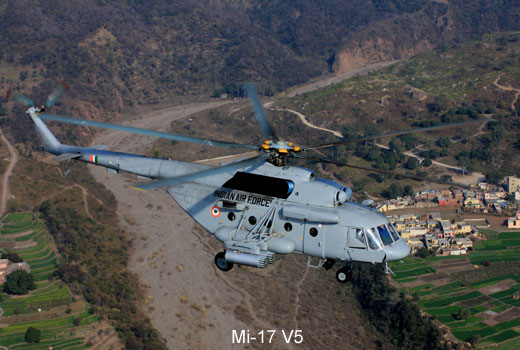
In terms of size, the Indian armed forces are amongst the largest in the world but in terms of equipment, they are lamentably lagging behind the leading edge of weapon systems and aircraft technology. In the area of military helicopters as well, India is forced to import most of the requirements from foreign vendors while the regulatory framework panders to HAL monopoly. Should the indigenous helicopter design and production capability be untethered from HAL and opened to private enterprise, there would be two advantages. Firstly, the delays and inefficiencies would disappear and secondly, the cost of leading edge technologies and products would reduce not just because of indigenous production, but also because of the possibility of export and economy of scale.
The Chinook scored over the Mi26 due to its lower acquisition/ life-cycle costs and poor serviceability record of the Mi26…
According to a report entitled “Global Helicopters Market Assessment” prepared recently by business consulting firm Frost & Sullivan, more than 11,170 military platforms are expected to enter service worldwide up to the year 2022, with a peak in 2018 for most regions. However, as per the report, the Asia-Pacific and Central Asia regions are likely to prove exceptions and would continue to order “significant” amounts of new helicopters as the technological and demand hub, especially for the military helicopters segment, progressively shifts from the West to the East.
Given that prognostication and considering the existence of two inimical territorial neighbours eagerly waiting for opportunities to afflict an ignominious military trouncing upon India, it is tragic that the nation should still be dithering over important defence procurement decisions. This is all the more lamentable as indigenous defence production is abysmal despite India being the largest arms importer in the world. The MMRCA saga has taken on the tenor and texture of an Indian TV serial wherein the story line changes in a bizarre manner just as one senses that the narrative is coming to an end. In a similar vein, the Reconnaissance and Surveillance Helicopter (RSH) selection process has been inordinately delayed for one reason or another while the military awaits the much needed rotary wing elements to meet urgent and minimal needs commensurate with its size, roles and adversaries.
Private Sector in Defence: Expendable or Indispensable?
06/02/2014
E-Mail- karanpreet.kaur06@gmail.com
In an attempt to build a high-tech, self reliant and service oriented defence industry, India developed a considerable and large complex of Defence Public Sector Units (DPSUs), Ordnance Factories (OFs) and the Defence Research and Development Organisation (DRDO). In addition, the Ministry of Defence (MoD) formulated policies like the Defence Procurement Procedure, Defence Production Policy and Offsets Policy, and established systems and structures to indigenise defence production. However, decades of efforts by the government and the public sector units has not resulted in the expected optimum levels of indigenisation. India's defence industry is plagued with a number of structural, technological and institutional limitations that impede the growth of the armament industry. The year 2001 ushered in numerous reforms, the highlight being the opening of doors to the private industry. However, nearly thirteen years later the results are dismal and have had a negative impact on our national security preparedness.
The private industry has abundant enthusiasm and is optimistic about its ability to play a greater role in in-house defence production and exports. Time and again, the MoD and security experts have voiced their opinion about encouraging the private sector in the defence arena and providing it with a level playing field with respect to their public sector counterparts. However, the private sector is uncertain and unwilling of investing in a highly risky Research & Development (R&D) and infrastructure environment in exchange for low returns. An uncertain regional neighbourhood, the epicentre of terrorism next door and the growing nexus between Pakistan and China combined with the economic imperatives of a vibrant and robust domestic defence industry obligate the decision makers to accord the highest priority to indigenisation. The need to enhance trade, increase investment, and accelerate GDP growth coupled with a flourishing manufacturing sector is required to revive the flagging Indian economy. The hallmark of emerging economies has been R&D, manufacturing and exports acting as the fundamental drivers of rapid growth. India has been slow off the blocks, but through the application of best standards and stringent enforcement of policy guidelines, it possesses the capability to improve its languishing defence export figures and plug critical operational modernisation gaps in the armed forces.
A possible pragmatic suggestion to actively involve the private sector is the privatisation of INSAS rifles' production and the subsequent export of a modified version to foreign countries. INSAS (INdian Small Arms System) rifles were developed by the OFB and Armaments Research and Development Establishment (ARDE), Pune in the 1980s and were inducted in the Indian Army in 1994-95. The indigenous 5.56mm design borrowed features from Kalashnikov pattern rifle, SLR and other rifles.[i] The indigenously developed rifles were used extensively in the 1999 Kargil conflict but they suffered from several glitches – rifles' bulging barrels, frequent breakdown of metal parts and cracks in its composite material and plastic magazines when employed in extreme weather of Kashmir and Rajasthan. The rifles encountered reliability problems in the cold climate as they would jam occasionally and the polymer magazines would crack. There were also cases where the rifle would fire on full-automatic while in three-round burst fire mode. Consequently, the Army planned to replace the INSAS rifles with new generation assault rifles for conventional warfare and counter insurgency operations. As part of the Army's F-INSAS programme, acquisition of rifles from foreign vendors along with transfer of technology is underway. The five shortlisted contenders are Beretta ARX-160, the CZ-805 BREN, the Galil ACE, the Sig 551, and the Colt Combat Rifle, a variant of the M16A1.
Defence Industry: Reach for the Sky!
IssueVol. 29.1 Jan-Mar 2014| Date : 06 Feb , 2014
 Nearly sixty-seven years of Independence and not a single combat aircraft has been produced by India! Despite the word ‘indigenisation’ featuring repeatedly in political rhetoric, one of the reasons is because of the vested interests within the government of the huge kickbacks associated with imports of military hardware. The perception that in every armament deal massive amounts of taxpayers’ money is siphoned off is largely correct. Blacklisting vendors is merely theatrics to divert public attention from this crass truth. The long, convoluted and tedious process of procurement of military hardware has been created deliberately by the politico-bureaucratic red-tape to extract larger kickbacks which eventually is the taxpayers’ liability!
Worse, it appears that the primary national objective is not to add military capabilities to ensure the nation’s security but to find ways to guarantee maximum kickbacks.
Worse, it appears that the primary national objective is not to add military capabilities to ensure the nation’s security but to find ways to guarantee maximum kickbacks. Frankly, nobody involved in the decision-making process is really concerned about the MMRCA being inducted on time to shore up the rapidly declining firepower of the Indian Air Force; or about the Indian Navy receiving submarines in time; or with the tremendous collateral damage the nation suffers on its borders with Pakistan because the infantry is ill-equipped. Despite similar levels of corruption, China never overlooks the primary objective of building military muscle. Frankly, no other country does except India!
It is amazing that the Indian genius that has successfully launched technologically advanced and sophisticated spacecraft to Mars or has finally mastered ‘cryogenic’ engine technology is unable to produce small arms such as a modern rifle, carbine or a pistol.
India’s increasing dependence on import of arms up to almost 80 per cent is attributable to multiple reasons. Instead of creating competition between the Defence Public Sector Units (DPSUs) and the private sector, the Ministry of Defence (MoD) and the entrenched vested political interests continue to ignore colossal wastage of resources in the public sector. Elements in the government appear to have huge personal stakes in resources being funneled from the meagre defence budget under the guise of secrecy. The case of the Tatra trucks being re-invoiced at higher price by the Indian public sector unit clearly revealed the modus operandi of siphoning public funds.
The truth, however, is that substantial foreign assistance by way of technology was obtained in developing spacecraft, cryogenic engine, Light Combat Aircraft, the Arjun tank or missile systems. While one may take pride in naming the indigenous tank as ‘Arjun’, the fact is that the tank boasts of foreign components up to 55 per cent. In all fairness, even critics will agree there is nothing to be ashamed of in using imported technology till the capability for indigenous design is developed in-house. All modern hospitals in India today rely largely on imported equipment but at the same time, they earn millions in foreign exchange through medical tourism.
Subscribe to:
Posts (Atom)