22 March 2014

The Complexities of U.S. Oil Exports

March 20, 2014

It’s unlikely that anyone can stop the flow of oil—one of the world’s most durable and sought-after resources. Nevertheless, since 1975, U.S. crude oil exports (with a few exceptions) have technically been banned. The president has executive authority to reverse the ban, but Congress and interest groups have begun to weigh in as U.S. oil production is projected to ramp up to 9.6 million barrels a day (bpd) in 2016—a peak not seen since 1970.

Should the forty-year-old decision to ban U.S. crude oil exports be reversed? The right answer is murkier than those in favor or against suggest. In reality, it depends on what the new rules are for the array of new oils surfacing around the globe. Given the contentious politics surrounding this decision, a healthy debate is necessary to avoid falling into traps set by numerous unanswered questions.

First, oil exports are only actually banned in theory. In reality it depends on how you define “oil.” While raw, unrefined American crude oil generally cannot be exported, there is no legal limit on exporting refined oil products. In fact, product exports have increased four-fold over the past eight years, to 3.6 million barrels per day in January 2014. While crude exports were once the industry hallmark set by the five nations that founded OPEC in 1960, today’s oil trade is increasingly driven by more valuable diesel, gasoline, jet fuel, fuel oil and petrochemical feedstocks. Through November 2013, the U.S. exported $120 billion in oil products, up 10 percent from a year earlier. New export-oriented refinery capacity in the Middle East and Asia will further tilt global trade from crude to oil products in the years ahead.

Second, the world’s refineries don’t crave American oil given the way they are currently set up. Crudes are very different from one another and most nations in fact run their transport and industry on diesel and heavier residual fuels. Gasoline is not in high demand. Because of this international preference, the U.S.—the only nation that prefers gasoline to diesel—has recently invested tens of billions in Gulf Coast and Midwest complex refineries that are designed to maximize diesel exports by processing heavier global crudes. Thus, the majority of U.S. refineries—and a growing number of refineries overseas—cannot be fed a steady diet of America’s light-tight oils despite the ease of refining these oils into gasoline, jet fuel, and petrochemical feedstock. The reality is that the oil industry did not see the U.S. oil boom coming. As a result, U.S. oil is incompatible with the recently retrofitted refining sector that will require revamping to handle America’s fracked oils.

Third, exporting oil won’t necessarily increase reliance on foreign supplies. It is true, for example, that U.S. oil imports from Nigeria witnessed a 50 percent drop between 2011 and 2012, the lowest since 1986. Angolan oil experienced even greater reductions. This was due in part to the boom in production from Texas and North Dakota as well as the idling in late 2011 of two refineries on the East Coast that were significant buyers of North Africa’s light crude. On the other hand, refining U.S. light-tight oils at home currently requires the blending of substantial amounts of heavy oil from Venezuela, Saudi Arabia, and Canada, which must be imported. The truth is that, despite newfound resources at home, the U.S. will never be free from foreign supplies in an increasingly oil-interdependent world.


Nigeria: An International Effort Against Boko Haram

March 19, 2014

The government reports that over 2,000 have died as a result of Boko Haram activity during the last six months. Most of the dead were civilians, largely the result of Boko Haram raiding rural towns and villages in search of supplies and two terrorize civilians. There have been over 40 of these raids so far this year and casualties from these attacks account for most of the thousand plus people killed so far this year. These raids have been the cause of some 60 percent of the half million refugees in the last year. Rural people in the northeast, especially Christians, are terrified of the Boko Haram. The government is trying to combine aggressive operations against Boko Haram with a deliberately kinder and gentler approach to the local civilians. This is difficult because it has long been customary for the police, and especially the army, to deal harshly with civilians in a crises and to regard all civilians as potentially hostile. This has been a very unpopular attitude and the government is under growing pressure to get the security forces to be less brutal with civilians. The government has issued orders to do just that and most, but not all, soldiers and police are at least trying. 

The government is organizing a new Border Patrol Corps to monitor the land borders, especially in the northeast. Over the next year the government will also establish 500 new border control posts in an effort to reduce the number of border crossings (currently about 1,400) that are not monitored and allow anyone to illegally enter the country. These illegal crossings have long been tolerated because many tribes are astride the border and the people are used to crossing back and forth without passports. The new border posts will generally allow locals to move back and forth freely but will be on the alert for smugglers, terrorists and anyone the police are looking for. Most of these new posts will first be established in border areas where Boko Haram is active. The way these things work in Nigeria the new border guards would be exposed to bribes from smugglers or even terrorists and many would take the money and do nothing. But some would refuse bribes from Islamic terrorists and at least report having spotted them. 

The success of recent joint operations around Lake Chad has led the nations bordering Lake Chad (Chad, Cameroon, Libya, Niger, Nigeria and the Central African Republic/CAR) to form a permanent task force to patrol the lake region and coordinate operations against smugglers, Islamic terrorists and bandits. The initial emphasis will be on containing the Islamic terrorists, mainly Boko Haram, in the area. The new task force will have its headquarters in the Nigerian town of Baga, which is on the lake. Baga is large enough to accommodate a new military base. The goal is to have the new task force up and running before the end of the year. Increased coordination will start immediately. 

NSA General Counsel Says American High-Tech Companies Knew All About NSA Surveillance Programs

March 19, 2014
US tech giants knew of NSA data collection, agency’s top lawyer insists
NSA general counsel Rajesh De contradicts months of angry denials from big companies like Yahoo and Google
Spencer Ackerman
The Guardian

The senior lawyer for the National Security Agency stated unequivocally on Wednesday that US technology companies were fully aware of the surveillance agency’s widespread collection of data, contradicting month of angry denials from the firms.

Rajesh De, the NSA general counsel, said all communications content and associated metadata harvested by the NSA under a 2008 surveillance law occurred with the knowledge of the companies – both for the internet collection program known as Prism and for the so-called “upstream” collection of communications moving across the internet.

Asked during at a Wednesday hearing of the US government’s institutional privacy watchdog if collection under the law, known as Section 702 or the Fisa Amendments Act, occurred with the “full knowledge and assistance of any company from which information is obtained,” De replied: “Yes.”

When the Guardian and the Washington Post broke the Prism story in June, thanks to documents leaked by whistleblower Edward Snowden, nearly all the companies listed as participating in the program – Yahoo, Apple, Google, Microsoft, Facebook, Paltalk, AOL – claimed they did not know about a surveillance practice described as giving NSA vast access to their customers’ data. Some, like Apple, said they had “never heard” the term Prism.

De explained: “Prism was an internal government term that as the result of leaks became the public term,” De said. “Collection under this program was a compulsory legal process, that any recipient company would receive.”

After the hearing, De said that the same knowledge, and associated legal processes, also apply when the NSA harvests communications data not from companies directly but in transit across the internet, under Section 702 authority.

The disclosure of Prism resulted in a cataclysm in technology circles, with tech giants launching extensive PR campaigns to reassure their customers of data security and successfully pressing the Obama administration to allow them greater leeway to disclose the volume and type of data requests served to them by the government.

Last week, Facebook founder Mark Zuckerberg said he had called US president Barack Obama to voice concern about “the damage the government is creating for all our future.” There was no immediate response from the tech companies to De’s comments on Wednesday.

It is unclear what sort of legal process the government serves on a company to compel communications content and metadata access under Prism or through upstream collection. Documents leaked from Snowden indicate that the NSA possesses unmediated access to the company data. The secret Fisa court overseeing US surveillance for the purposes of producing foreign intelligence issues annual authorisations blessing NSA’s targeting and associated procedures under Section 702.

23 Reasons Why Cyber Strategy is Bunk

http://kingsofwar.org.uk/2014/ 03/23-reasons-why-cyber- strategy-is-bunk/#comment- 37434
19 MARCH 2014
TIM STEVENS

Well, that’s not quite what he said at all but Martin Libicki has some words of wisdom for anyone still looking for the ‘digital Clausewitz’, or any similar mould-breaking, genre-defining strategist for the ‘information age’.

In a new article for Strategic Studies Quarterly, Libicki suggests ‘Why Cyber War Will Not and Should Not Have Its Grand Strategist’ [pdf]. He makes three key points about why we should not be looking for a ‘cyber’ equivalent of the ‘classics’ of Mahan, Douhet or, indeed, Clausewitz:

First, the salutary effects of such classics are limited. Second, the basic facts of cyberspace, and hence cyber war, do not suggest that it would be nearly as revolutionary as airpower has been, or anything close. Third, more speculatively, if there were a classic on cyber war, it would likely be pernicious.

On the first, it’s not always a strategist’s fault if those who follow him misrepresent him somehow in word or deed. Basil Liddell Hart laying responsibility for the ‘progressive butchery’ of World War I at the feet of Clausewitz is a case in point. Libicki rightly notes, however, that the ‘classics’ of strategy – land, sea, or air – quite often serve greater heuristic functions than they do guides to action. The danger lies, writes Libicki, ‘when such thinkers are cited as authorities [and] their arguments are converted into answers, at least in the minds of their adherents’. We have to be careful, therefore, in transposing tenets of the classical strategic canon into ‘cyberspace’.

The second point is largely an explanation for the first. Libicki presents a nuanced argument for why cyber war/fare is significantly less revolutionary than it is often presented, a position also taken by several writers of this parish. I won’t rehearse those arguments here, except to say that Libicki is onto something fundamental here: success in the ‘fifth domain’ is often unpredictable, which makes it a very risky proposition, tactically, operationally and strategically. Says Libicki, ‘Everything appears contingent, in large part, because it is’. Hardly the basis for a grand theory of cyber war, he reasons.

The third point stems from the second. If information environments are currently evolving so fast, yet we get locked into ways of viewing them based on past classics of strategy, the effects could be distinctly ‘pernicious’. To summarize a subtle argument in brutal fashion, the strategic utility of cyber war is over-rated but its complexities are under-appreciated. Getting rail-roaded into traditional modalities is ‘misleading, even harmful’, especially if cyber war is sufficiently un-strategic to warrant such a treatment in the first place. The search for a ‘cyber Clausewitz’ is not only potentially counter-productive but essentially pointless.

Libicki’s not arguing for a non-strategic approach to ‘cyber’ but he does offer a compelling argument for why war-fighters and politicians should be wary of expecting too much of this novel medium. We should not await or desire, he argues, the emergence of a strategic colossus because, in the main, there’s no need.

In concluding, Libicki writes:

Furthermore, there are good reasons to believe that its contribution to warfare, while real, is likely to be modest, while its contribution to strategic war is a great deal easier to imagine than to substantiate.

The Mobile-Finance Revolution

How Cell Phones Can Spur Development


Tanzania, October 2011. (Kai-Uwe Waerner / Courtesy Reuters)

The roughly 2.5 billion people in the world who live on less than $2 a day are not destined to remain in a state of chronic poverty. Every few years, somewhere between ten and 30 percent of the world’s poorest households manage to escape poverty, typically by finding steady employment or through entrepreneurial activities such as growing a business or improving agricultural harvests. During that same period, however, roughly an equal number of households slip below the poverty line. Health-related emergencies are the most common cause, but there are many more: crop failures, livestock deaths, farming-equipment breakdowns, even wedding expenses.

In many such situations, the most important buffers against crippling setbacks are financial tools such as personal savings, insurance, credit, or cash transfers from family and friends. Yet these are rarely available because most of the world’s poor lack access to even the most basic banking services. Globally, 77 percent of them do not have a savings account; in sub-Saharan Africa, the figure is 85 percent. An even greater number of poor people lack access to formal credit or insurance products. The main problem is not that the poor have nothing to save -- studies show that they do -- but rather that they are not profitable customers, so banks and other service providers do not try to reach them. As a result, poor people usually struggle to stitch together a patchwork of informal, often precarious arrangements to manage their financial lives.

Over the last few decades, microcredit programs -- through which lenders have granted millions of small loans to poor people -- have worked to address the problem. Institutions such as the Grameen Bank, which won the Nobel Peace Prize in 2006, have demonstrated impressive results with new financial arrangements, such as group loans that require weekly payments. Today, the microfinance industry provides loans to roughly 200 million borrowers -- an impressive number to be sure, but only enough to make a dent in the over two billion people who lack access to formal financial services.

The Cost of Power Miscalculation The dangers of overestimating oneself and underestimating your opponent


Chad Pillai dives into the necessity of land forces and the changes on the horizon for the US military. The views expressed belong to the author alone and do not represent the US Army or the Department of Defense.

In light of the recent East-West tensions due to Russia’s near-annexation of Crimea, China’s aggressive behavior in the East and South China Seas, continued instability in the Middle East, and the threat of a nuclear Iran, or worse, a failed nuclear Pakistani state highlight the dangers the United States faces in the decades to come. The recently released DoD Budget and QDR both highlight the need to rebalance the force through greater investments in technological solutions at the expense of manpower along with the future applications of the joint force. The biggest bill payers for this joint force rebalance will be the Army followed by the Marine Corps as both services reduce their force structures. The intellectual basis for the rebalance is the continued perceptions that the nation will not be engaged in large scale land operations, either conventional force-on-force or large scale stability operations. Underpinning this intellectual bias is the perception or belief that the joint force will quickly dominate any potential competitor, and worse, that the cost of domination will be relatively small both in blood and treasure.

Dr. John J. Measheimer, R. Wendell Harrison Distinguished Service Professor,
University of Chicago

Two recent articles “Mearsheimer Is Dangerously Optimistic” and “America Doesn’t Need a Big Army Any More” highlight this disturbing trend where policy elites continue the trend of over-estimating our own capabilities while under-estimating the capabilities of our opponents that create the potential to miscalculate power dynamics. As a result, it is important to deconstruct the premise of the two articles which distort the reality of our ability to respond militarily to threats vs. our willingness to accept the cost associated with a response, and how others view that calculation.

Sun Tzu is famous for his advice on knowing yourself and your enemy and this advice has been taken as gospel by intelligence professionals, military strategists, and policy elites; however, this approach has generally been flawed due to an over reliance on technical analysis of military capabilities and less on the human element associated with will and intent to gauge an opponent’s tenacity or willingness to losses. James Holmes rightly highlights Mearsheimer’s flawed analysis by clarifying that while China doesn’t have to have a military force capable of defeating the U.S. globally; it only needs a military force capable of defeating a U.S. military contingent in a time and place of its choosing in order to achieve its stated political objective. China, like it did during the Korea War, maybe willing to accept significantly higher casualties and short-term economic degradation during a potential conflict with the U.S. in order to achieve its political objective as long as it knows the U.S. will not likely engage in an all out war where it is prepared to fully mobilize.

Counterterrorism Office Seeks Array of Technologies

April 2014
By Yasmin Tadjdeh


The Defense Department office charged with developing technologies to tackle some of the most challenging counterterrorism problems released its annual wish list. Devices to defeat improvised bombs and chemical and biological weapons are among its most acute needs.

The Combating Terrorism Technical Support Office uses rapid research, advanced studies and technical innovation to combat terrorism and irregular adversaries. The office incorporates numerous divisions that focus on different topics ranging from forensics to improvised explosive devices, each with their own critical needs.

The chemical, biological, radiological, nuclear and explosive arm of the office is looking to acquire new systems in the coming year such as a sampling device that can collect nanogram-levels of explosives on the fly, training and simulation programs, and gear that can suck up dangerous biological agents, said Program Manager Christina Baxter.

The training program should focus on the basic science of explosives detection, Baxter said. It should be a true simulation program that incorporates virtual environments, graphics and videos and not just a series of PowerPoint presentations, she said during CTTSO’s annual advanced planning briefing for industry.

“What I don’t want is to … [give] the operator a Ph.D. in explosive detection. What I do want is to teach them how to best operate their system,” Baxter said. “[That way] they get … that repeated, repetitive training they need.”

Once completed, CBRNE intends to distribute the system to members of the explosive community, she said.

CBRNE is also seeking a new scalable vacuum evidentiary powder collection device. Collecting powder-based biological samples is difficult because it can be tough to gather small quantities, Baxter said.

Biological sampling was used during the 2001 anthrax attack that killed five people after they were exposed to the bacteria spores. The attack demonstrated the hazards of handling biological agents and the need to recover as much as possible for forensic analysis, said CTTSO materials.

The device would need to collect and preserve a powder-based biological agent from a number of surfaces and scenarios, Baxter said. It should also be able to collect anywhere from 10 milligrams to 1 gram of powder. It needs to be portable, weigh between seven and 10 pounds and scalable to accommodate different quantities of powder. It should also have a sterile and sealable collection chamber, Baxter said.

The device also should be able to collect liquids, Baxter said.

A new explosives-sampling device that can collect nanogram levels of particles – both airborne and on surfaces for commercial, military and homemade explosives – is also on CBRNE’s wish list.

20 Characteristics of Special Operations

by LTG Samuel V. Wilson

Special Operations is a root term/generic euphemism covering a wide gambit of special activities outside of conventional operations; examples are UW, PSYOP, Terrorism, Counter-Terrorism, Direct Action (raids, snatches, heists), Diversions, and Deceptions, Special Operations is a form of military judo -

NOT A GENTLEMAN'S GAME; NO HOLDS BARRED.

1. Special Operations are POLITICAL in nature.

Special Operations are, by their very nature, more political than conventional operations. The National Command

Authorities will surely be calling the shots.

2. Special Operations normally involve Three Steps:

A. Getting to the location of the operation.
B. Accomplishing the operation.
C. Returning from the operation.

3. Joint in Concept, Execution, and Interdepartmental, as well.

Nearly always under the lead agency concept, the State Department will be controlling the situation. State will exercise authority over the military options.

4. Special Operations are strategic in impact and nature.

5. The limitations for Special Operations are not the same as the limitations for Special Operations Forces:

That is, individual force capabilities usually exceed the operational capabilities which can be supported by logistics, OPSEC, INTEL, and POLITICAL concerns.

6. There must be an upper limit on Special Operations mission force size.

Increasing the size of the forces involved in a Special Operations compromises many aspects of support and OPSEC capabilities. Almost always a small vs. large force structure must be decided upon. One must be careful not to see bogeymen behind every bush and go for largest of all available forces to stifle every contingency. The smallest force to do the job makes possible many more operational alternatives.

Counter Terrorism, Continuing Advantage, and a Broader Theory of Victory


Clausewitz reminds his readers, “In war the result is never final.” When the strategist considers counter terrorism, they must grapple with the larger focus of their aim, which is the act of building a bridge between two unlike elements: policy and military action. At the tactical level, counter terrorism is an action meant to culminate in an event that prevents, preempts, deters, defeats, or punishes a terrorist. However, at the strategic level, counter-terrorism is meant “as a plan for attaining continuing advantage.” In order for our counter terrorism strategies to remain effective, we must reject the strategic heuristic of specific end states, and instead seek continuing advantage towards a better state of peace. Ultimately, this also means rejecting a narrow theory of victory.

In June of 2011, the Obama administration published the most recent National Strategy for Counterterrorism. In this document, eight deliberate end states “articulate a framework for the success of the United States global counterterrorism mission.” Those eight interdependent end states are:
  • Protect the American People, Homeland, and American Interests
  • Disrupt, Degrade, Dismantle, and Defeat al-Qa’ida and Its Affiliates and Adherents
  • Prevent Terrorist Development, Acquisition, and Use of Weapons of Mass Destruction
  • Eliminate Safehavens
  • Build Enduring Counterterrorism Partnerships and Capabilities
  • Degrade Links between al-Qa’ida and its Affiliates and Adherents
  • Counter al-Qa’ida Ideology and Its Resonance and Diminish the Specific Drivers of Violence that al-Qa’ida Exploits
  • Deprive Terrorists of their Enabling Means

Pure Strategy
by
Everett C. Dolman

There is one clear problem with this strategy: while these are admirable goals, they’re not actually end states. The critique is not just semantic. Rather, quite distinct from a paradigm that often equates strategy making and planning, the primary goal for a strategist is to qualitatively establish the bounds of action and set the conditions for the tactician. Do not misunderstand; end states are paramount to employing operational art, especially as a matter of objectives for the tactician to consider for victory. However, for the strategist, end states are anathema to the ultimate goal of advantage. Before we examine this more carefully within one aspect of the National Counterterrorism Strategy itself, let us understand the critique more deeply, and Everett Dolman illuminates this Clausewizian if paradoxical relationship between victory in tactics and advantage in strategy:

It may seem intuitive that the strategist must have an end in mind, a goal to be achieved, at least to conceptually organize and make sense of the series of actions that are to be taken. Not so, and herein is another critical difference between tactician and strategist. Tacticians personify decisions made. The plan is owned by them, they are a part of it, responsible for the outcome, positive or negative. The results of these difficult decisions affect them directly and personally. Tacticians must act to bring events to conclusion, so as to extricate themselves from the conflict. When the war is over, they go home. When tacticians die, their battles end. Their goals were victory and, regardless of the outcome of the current battle or war, there will be no more for them. But military strategists act on behalf of an abstract concept—the state. They are the reification of the shared image. They plan on behalf of the state or military force and the actions they take continue to shape decisions long after they are removed from authority. The plan embeds itself into the fabric of the state, and the structure it creates becomes the responsibility of everyone in it. The strategist can never finish the business of strategy, and understands that there is no permanence in victory—or defeat. The real winner is the side that has established the framework for the next war (a decidedly realist strategic position) or the conditions for a lasting peace (an idealist outlook).

New and updated reports from the Congressional Research Service

***** Defense Planning for National Security: Navigation Aids for the Mystery Tour

Defense Planning for National Security: Navigation Aids for the Mystery Tour
Authored by Dr. Colin S. Gray.
Added March 19, 2014 
Type: Monograph 
76 Pages 
Download Format: PDF
Cost: Free 
Brief Synopsis

The challenge that is defense planning includes: "educated futurology" and the humanities as methodological approaches; futurists and scenarios, trend spotting and defense analysis; the impossibility of science in studying the future; the impossibility of verification by empirical testing of hypotheses; the value of the humanities which are politics, strategy, and history for defense planning; the use and misuse of analogy; learning from history; why and how strategic history works; and recommendations for the Army. What can be learned from history and what cannot are discussed in this analysis.

21 March 2014

*** Maoists: Surviving Adversity

Ajai Sahni
Editor, SAIR; Executive Director, ICM & SATP

In a searing self-assessment, the Central Committee (CC) of the Communist Party of India-Maoist (CPI-Maoist), at its 4th Meet, some time in April-May 2013, conceded, "the condition of our countrywide movement is critical". And further,

In DK (Dandakaranya) mass base decreased in considerable area, the intensity and expanse of the resistance of the PLGA (People's Liberation Guerrilla Army) and people decreased; non-proletarian trends increased in party and the PLGA, recruitment decreased; number of people leaving the party and the PLGA increased... the movement in NT (North Telangana) and AOB (Andhra Odisha Border) is in ebb. We are striving hard for their revival. Gondia division is continuing in a weak condition since a long period of time. Due to series of arrests in the past few years the Maharashtra movement is facing setback.

Though the Mainpur division movement in the COB (Chhattisgarh Odisha Border) area has weakened, in the rest of the area the movement is gradually getting established among the people and expanding. Due to betrayal of (Sabyasachi) Panda and enemy onslaught the Odisha movement weakened a lot. Due to heavy losses to the leadership and subjective forces and due to decrease in mass base the BJ (Bihar Jharkhand) movement suffered setback at present. Due to Comrade Kishenji's martyrdom and martyrdom and arrests of state and district leadership comrade and dent in the deluge of Lalgarh movement the Paschim Bang (West Bengal) movement suffered a setback... ..

(Due to) the martyrdom of four comrades including the secretary of the State Leading Committee in a fake encounter and arrests of other comrades... the Asom (Assam) state movement that was gradually developing weakened. In North Region we lost subjective forces at various levels along with party's central and state level leadership... As a result the North Regional Bureau was completely damaged... 

Further,

Between 2009 and 2012 the enemy damaged our central weapon manufacturing and supply departments; the political and military people's intelligence departments, the central magazine department, central SUCOMO (Sub Committee on Mass Organisations) and the international department. 

No official or outside assessment has been quite as devastating as the 4th CC's resolutions, reiterated thereafter in the Revolutionary Greetings for the 9th Anniversary of the party (September 21-27, 2013). Unsurprisingly, given the acknowledged weakening of the party, fatalities linked to Maoist violence across the country have remained relatively low, at 421 in 2013 [including 159 civilians, 111 Security Force (SF) personnel and 151 insurgents], less than 36 per cent of the peak fatalities in 2010, at 1,180 (626 civilians, 277 SF personnel and 277 Maoists), according to the South Asia Terrorism Portal (SATP) database. The 2013 figure, however, represents a significant escalation, after three years of continuous decline, from 367 fatalities in 2012 [146 civilians; 104 SF personnel; 117 Maoists]. Initial data for 2014 suggests a continuation of this escalating trend, with 81 already killed by March 17. Union Ministry of Home Affairs (UMHA) data, however, indicates a continuance of the declining trend through 2012-2013, with 394 fatalities recorded in 2013, as against 415 in 2012, 611 in 2011 and 1,005 in 2010.

Lessons from the Gate of Hell

March 21, 2014 
Praveen Swami

The Hindu ArchivesTRENCH VIEW: The notion that Jawaharlal Nehru allowed the Indian military to degenerate towards its defeat is an article of faith for many commentators on the war. Like much faith, though, it sits fill with fact. Picture shows Nehru and Defence Minister Y.B. Chavan talking to jawans in December, 1962.

The online release of the Henderson Brooks report has led critics of Jawaharlal Nehru to sharpen their swords. But their assumptions are wrong

From inside India’s western-most outpost, in that bleak winter of 1962, troops would have stared out across the sheet of ice at the shattered ruins of their retreating army, and at their the foes beyond. Murgo, it was called by the Yarkandi tribesmen who guided caravans across the great Karakoram pass, the Gate of Hell. The attack they must have feared never came. Chinese troops reached the line they claimed to be their border, just east of Murgo — and then stopped. For two generations since, soldiers have faced each other, prepared to kill on the roof of the world.

The online release this month of the first volume of the most closely-held 1962 war secret, Lieutenant General Henderson Brooks and Brigadier Premindra Bhagat’s searing indictment of the conduct of operations, has stoked deep fears Indians have nursed for over fifty years.

For critics of Prime Minister Jawaharlal Nehru, on the right of Indian politics, the release of the Henderson Brooks report has been an occasion to call for a more muscular military policy — holding him responsible for eviscerating India’s armed forces in the build-up to the defeat. Every historical text, though, has a context, and the context to this one shows that this would be precisely the wrong lesson to draw.Scapegoating Nehru

The notion that that Mr. Nehru allowed the Indian military to slowly degenerate towards its catastrophic defeat in 1962 is an article of faith for many commentators on the war. Like much faith, though, it sits ill with fact. From 1947 to 1962, the Army expanded from 280,000 to 5,50,000, the doyen of Indian security studies K. Subrahmanyam pointed out in a 1970 paper. Expenditure on defence rose from Rs. 190.15 crore in 1951-1952 to Rs. 320.34 crore in 1961-1962 despite the enormous financial constraints that a fragile, just-born nation faced.

The Army, by the eve of the 1962 war, had acquired a division of state-of-the-art Centurion tanks and two regiments of AMX-13 light tanks which fought at Kameng against Chinese troops who had none, but could not prevent the routing of Indian troops. The Air Force bought six squadrons of Hunter fighter-bombers, two squadrons of Ouragons, and two of Gnat interceptors—all equipment far superior to anything flown by their adversary. The Navy had acquired an aircraft carrier, three destroyers, and eleven spanking new frigates.

Mr. Nehru might indeed, as critics contend, been an instinctive dove, but if this is true, the record suggests he also believed in keeping his talons sharp. Yet, India lost the war. “So long as we cling to these myths to explain away the debacle,”Mr. Subrahmanyam concluded, “the reasons for the debacle will not be adequately investigated and correct lessons drawn.”

Reading Henderson in historical context

Triggered by India’s ‘forward policy’ and the leadership’s failure to read the Chinese reaction, the 1962 war was lost before it was fought 

Zorawar Daulet Singh

THE partial release of the Henderson Brooks Report (HBR) has affirmed a widely held belief among historians and sections of the strategic community that a politicised and incompetent higher defence and intelligence system in Delhi contributed to and adversely affected the outcome on the battlefield in 1962.

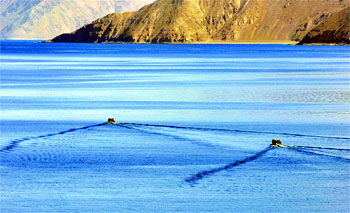
A lake on the Line of Actual Control (LAC) with China in Ladakh. The border with China remains as contentious as ever. Tribune file photo: Mukesh Aggarwal

To enable a better understanding of the causes of 1962, however, the HBR should also be located in its historical context. A study of Indian perceptions at the highest level is vital to understanding the path to 1962.

The primary objective of the Nehru regime, even as the dispute deteriorated after 1959, was to avoid a frontal collision with China. The central puzzle, therefore, is why did India find itself on the Himalayan battlefield in October 1962? There are four factors that arguably shaped Indian behaviour leading up to 1962:

Contested worldviews

It is useful to appreciate the context that framed India’s geopolitical worldview since this directly influenced the type of China policy adopted. The entry of Pakistan into the Western alliance system in 1954 led to an ideological model of threat assessment where an externally backed Pakistan was deemed as the primary political and military threat. India’s engagement of China and the 1954 Agreement emanated from Nehru’s unwillingness to open a second front.

After 1959, there appears to be one worldview embodied by Nehru and Krishna Menon favouring non-alignment, resisting Pakistan, and avoiding conflict with China, and another worldview from the right calling for an entente with the West, a common defence pact with Pakistan and a more robust policy vis-ร -vis China. This was not simply a dichotomy of ideological threat assessments but a real military dilemma since given fixed force levels the challenge was finding an appropriate deployment mix for the Pakistani and Chinese frontiers.

If such a notion of contested worldviews is plausible, it might explain the erratic pattern of India’s policies and posture subsequently. Nehru in trying to placate the Congress right was compelled to make a policy shift and adopt an unyielding posture of no-negotiations and demonstrate resolve through the 1961 forward policy that even though did not intend for conflict with China it inevitably led to it.

The misreading

Nehru in trying to placate the Congress right was compelled to demonstrate resolve through the 1961 forward policy, without intending the conflict it inevitably led to.

India receiving strategic attention and material aid from both superpowers probably emboldened the Nehru government to overestimate India’s importance in superpower strategies.

Nehru believed in a nuclear world the next war could only be global. Mao saw that the basic nature of warfare remained unchanged.

In most standoffs between 1959 and 1962 the Chinese backed off. These experiences shaped the perception that the Chinese were not interested in a serious conflagration.

India in world politics

After 1959, the Indian government began to perceive both the superpowers’ tilt toward India on the dispute as some sort of restraint on Chinese behaviour. One could view it as ‘soft’ external balancing. In 1959, India made requests to the Soviets to rein in the Chinese. Soviet support via its neutrality, which was expressed in the famous Tass statement of September 9, 1959, while a symbolic gesture could have shaped India’s false sense of confidence in its dealings with China. Although we also now know that Moscow had told Delhi the limits of their influence on Chinese behaviour.

*** Orthodoxy and Europe


By Robert Kaplan
Horia-Roman Patapievici is a Romanian philosopher who, way back in the late 1990s, told me that Romania's task was to acquire a public style based on impersonal and transparent rules like in the West, otherwise business and politics would be full of intrigue. And he questioned whether Romania's Eastern Orthodox tradition is helpful in this regard. He went on to explain that Romania, Bulgaria, Serbia, Macedonia, Russia, Greece and Cyprus -- the Orthodox nations of Europe -- were all characterized by weak institutions, compared with those of northwestern Europe. He and many others have intimated that this is partly because Orthodoxy is flexible and contemplative, thus tolerant of the world as it is, having created its own alternative order.

Because of Orthodoxy, according to the late British historian Hugh Seton-Watson, early 20th-century Russians who lost their religious faith did not become "rationalist skeptics" in the Western tradition; they merely transferred their spiritual fervor to social revolution. Nicolas Berdyaev, a Russian intellectual of the era, observed that Bolshevism was an Orthodox form of Marxism, because it underscored "totality." (Indeed, Stalin, who studied for six years at an Orthodox monastery in Georgia, gave speeches that evoked the singsong litanies of the church.)

There is much to debate here. But clearly, given the millennia-old traditions of Eastern Orthodox Christianity, with its forests of beeswax candles, silver-plated icons and other exemplars of intoxicating magic, there is a clear otherness to Orthodoxy that defines it as a great world religion. To say that the Orthodox countries that dominate the Balkans and Russia are capable eventually of the same level of institutional development as those in northwestern Europe is altogether reasonable; but to say that such things as culture and religion simply do not contribute at all to different development patterns in Greater Europe is not reasonable.

Culture, geography and historical experience are all of primary significance. They make us what we are. To erase the past and to say that we are suddenly all identical creatures in a global meeting hall is the height of folly. Yet that, after a fashion, is what Europe's elites have believed for decades. If you even mention national characteristics to them, such as those devolved from Orthodoxy, you are an "essentialist," an academic word that means you are guilty of ethnic stereotyping. But can it be wholly an accident that the countries facing the direst financial and political straits in Europe today are mainly in the southeastern and southern parts of the continent? Clearly, geography, history and religion play some sort of a role, however much they can be overcome, and however difficult it is to quantify them.

RUSSIA WORKS ON THE ‘NEAR ABROAD’ THEORY

Friday, 21 March 2014 | M Zulqernain

The country would have been more mindful of regional sensibilities if the West had been less aggressive in trying to fill the space Soviet Union vacated, and if regime change wasn’t integral to Washington's agenda 

Events in Crimea confirm that every large country must enjoy exclusive authority in its neighbourhood. The analogy that comes to mind is of Kolkata’s Fort William. The surrounding Maidan is the fort’s strategic glacis. Military historians agree that Nawab Siraj-ud-Daulah captured the earlier Fort William so easily in 1756 because the glacis was crowded with houses which he took one by one. The possibility of an American-sponsored coup in Kiev holds a similar danger.

This is the logic of what Russia calls its Near Abroad. Actually, the Americans first enunciated the theory in 1823 with the Monroe Doctrine. China has tried to safeguard its glacis by swallowing up Tibet and Xinjiang, nibbling at the Paracel and Spratly Islands, designating the South China Sea a “core interest”, and unilaterally announcing an Air Defence Identification Zone restricting flights in international air space. India’s security demands international recognition of its own geopolitical ‘near abroad’. This means not only Pakistan, Afghanistan, Bangladesh, Nepal and Bhutan, but also Sri Lanka, probably Myanmar and possibly parts of Tibet. I would have included Sikkim if India had not in this one respect self-defeatingly followed the Chinese example of annexing a fragment of the Near Abroad.

The main question revolves round Pakistan which is yoked with India in the American consciousness like unreconciled Siamese twins. As I noted in Waiting for America: India and the US in the New Millennium, sometimes the hyphenation is symbolic, like Harry Truman lavishing exactly the same hospitality on Liaquat Ali Khan immediately after Jawaharlal Nehru’s first US visit. Sometimes it is substantive like successive administrations building up Pakistan militarily. The latest instance of that is provided by the current talks to hand over to Pakistan $7 billion worth of mine-resistant ambush-protected vehicles the US Army no longer needs in Afghanistan.

“Parity was extended to create the myth that if India’s neighbours were not its equal in every way (despite their combined area and population being a fraction of India’s), this invested India with a special responsibility to shrink to their level in all regional transactions.” Indians did not repudiate this theory, perhaps seeing in it a tribute to their own pre-eminence. In January 2002, China’s Foreign Minister, Tang Jiaxuan, advised Mr Jaswant Singh that “as a big country” India should “play a more positive role” in the subcontinent. No one asked Mr Tang what concession big China made to smaller Vietnam or to the even more vulnerable Philippines.

Some facts may have changed since I wrote, “Pakistan’s domestic product is one-eighth India’s; it has one-seventh the population and one-fifth the area. Pakistan’s Armed Forces are only between two-and-a-half to three times smaller than India’s because the military has been built up at the expense of social welfare. While India has sustained its parliamentary democracy through regular elections at several levels — from village council to Parliament — Pakistan had already known three prolonged spells of military rule before General Pervez Musharraf seized power.” Yet, Mr Henry Kissinger dared to argue that a strong and stable Pakistan threatened India with a psychological challenge!

MH370: India’s wake-up call

PRAVEEN SWAMI

There is no reason to believe MH370 was hijacked to target Indian cities. But if such an attack was to occur, is India ready?

The surreal disappearance of Malaysia Airlines MH370 is a good occasion for Indians to start thinking about what might happen if we are ever compelled to live those nightmares.

Bar online speculation as idle as the Indian Mujahideen’s Internet chatter, there’s no reason to think that MH370 was hijacked to stage a 9/11-type attack on an Indian city or nuclear installation. There’s even less reason to think the aircraft might have been fitted with nuclear, biological or chemical weapons. Yet, on the morning of September 11, 2001, there was no good reason at all to believe a terrorist attack involving hijacked jets might bring down the Twin Towers in New York.

Threats from the air

Though the prospect of a terrorist group acquiring nuclear weapons or radiological assets remains small, Indian nuclear installations remain at risk from aircraft used as weapons. Though newer nuclear reactors have double-domed concrete structures, in theory capable of withstanding a direct hit, there are obvious reasons to avoid testing the engineering in the real world. In the wake of 9/11, New Delhi promulgated no-fly regulations around several nuclear facilities. However, as the scholar Sitakanta Mishra noted in a 2009 paper, “even today, aircrafts can fly over the Bhabha Atomic Research Centre.”

It isn’t only nuclear installations that are at risk. There have, government sources say, been repeated restricted air space violations over New Delhi, each a potential threat to critical targets like Parliament, defence and intelligence complexes, the President’s estate and the Prime Minister’s home and office. None reached crisis-point — but there is little clarity on what would happen if they did.

Air Force sources familiar with air-defence systems at these facilities say one key problem is pre-delegation — instructions for when commanders on the ground can use lethal force against a potential threat.

For military planners, the dilemmas involved in such decisions are significant. In 1983, the Soviet Union shot down a Korean Airlines Boeing 747 flying from New York to Seoul. Soviet feared that it might be a hostile aircraft.

Declassified Soviet documents show that the commander of the Soviet Far East District Air Defense Forces, General Valery Kamensky, wanted the aircraft destroyed — but only after it was positively identified not to be civilian. His subordinate, General Anatoly Kornukov, commander of Sokol Air base, disagreed.

India’s Role in the Hague Nuclear Security Summit

P.R. Chari
MARCH 18, 2014

SUMMARY

So far, the Nuclear Security Summits have proved unable to break through India’s penchant for secrecy on what it considers to be matters of national security, so the country’s nuclear security arrangements remain somewhat opaque.

At President Obama’s initiative, a series of biennial Nuclear Security Summits begun in 2010 have sought to raise awareness about the need to tighten controls over nuclear materials. States participating in these summits were urged to meeting international best practices and to improve transparency so as to build confidence that their security systems would prevent nuclear materials from being stolen or diverted.

India is a participant in the Nuclear Security Summit process, but thus far the results of its engagement are mixed. The summits elicited commitments to stronger security measures but failed to convince New Delhi to increase transparency regarding its nuclear security practices. So far, the summits have proved unable to break through India’s penchant for secrecy on what it considers to be matters of national security, so the country’s nuclear security arrangements remain somewhat opaque.

Another summit is now on the horizon. As it looks toward the next meeting, scheduled for March 24–25 in the Netherlands, New Delhi should take steps to further improve its own nuclear security and to advance the goals of nuclear security summits more broadly.

THE NUCLEAR SECURITY SUMMIT FRAMEWORK

Nuclear security involves protecting nuclear materials in order to guard against theft or diversion and preventing sabotage of nuclear facilities. It entails physical protection, the deployment of guards to confront on-site threats and to respond from off-site to emergencies, and the use of automated systems to prevent unauthorized persons from gaining access to nuclear materials. 

These issues came to the fore after the breakup of the Soviet Union and the dissolution of the Warsaw Pact in 1991 led to acute concerns regarding “loose nukes.” Great fears arose that chaotic conditions in the erstwhile Soviet Republics would invite nonstate actors to acquire nuclear materials and, perhaps, even operational nuclear weapons. 

In his historic Prague speech on nuclear weapons in April 2009, President Obama highlighted the need to bring nuclear materials around the world under national and international control, and he set a target of four years to accomplish this task. Toward this end, Obama declared that “we will set new standards, expand our cooperation with Russia, [and] pursue new partnerships to lock down these sensitive materials.” 

India-China relations: Visa issue

March 18, 2014

The practice of issuing stapled visa instead of proper visa by the Chinese embassy to Indian citizens from Arunachal Pradesh in last few years, and earlier in respect of Indian citizens from Jammu and Kashmir, has been an irksome issue in the Sino-Indian relations. It may be recalled that in 2010, when Lt Gen. BS Jaswal, the GoC-in-C Northern Command, was issued a stapled visa by the Chinese Embassy, allegedly on the ground that he commanded a disputed territory, to visit China to participate in a defence exchange programme, it created deep resentment in India. The government responded strongly by freezing defence exchanges with China. Beijing later signaled overtures to defreeze the military exchanges. Subsequently, an eight-member delegation led by Maj Gen Gurmeet Singh of the Northern Command visited China in 2011.

Subsequently, the issue of stapled visa was discussed between the two countries during the visit of Chinese Premier Wen Jiabao in December 2010. A welcome change of attitude was seen when the Chinese embassy issued proper visas to journalists from Jammu& Kashmir accompanying the Prime Minister on his visit to China to participate in the BRICS summit in Sanya in April 2011. Ever since, there has been no instance of stapled visa being issued to the residents of Jammu and Kashmir. However, the Chinese embassy continues with the practice of issuing stapled visas to Indians from Arunachal Pradesh.

This differentiated approach can be understood in the context of the Chinese claims over the bordering state of Arunachal Pradesh, which they call ‘South Tibet’. India’s claim over Arunachal Pradesh is based on the McMahon line drawn at the Simla Convention of 1914. Consequent upon its independence in 1947, India inherited the McMahon line in the eastern sector. India not only exercises administrative and political control over the territory, but also exercises effective sovereignty over Arunachal. China, on the other hand, does not recognize the McMahon line. The Chinese inference is that if its visa is embossed on the Indian passport, it may tantamount to recognizing India’s sovereignty over Arunachal Pradesh. The Indian position is that if the holder of a stapled visa with Indian passport is allowed to travel to China, it may be construed as conceding to Chinese claim over Arunachal Pradesh, and hence dilute India’s stand towards Chinese claims.

There is, however, a view that by issuing stapled visas to the Indian citizens from Arunachal, instead of the earlier policy of denying them a visa altogether, the Chinese government has “softened” its position and has virtually conceded that Arunachal Pradesh is a “dispute”.1India, clearly does not regard Arunachal as disputed. In fact, the Indian stance on the issue is that by following a two-track visa policy, China has disputed the legality of country’s international border, thereby impinging adversely on its sovereignty as well as territorial integrity.

Given that the visa issue has caused intermittent irritants, it is time to resolve it thoughtfully and imaginatively through the CBMs signed between the two countries in 1993, 1996 and in 2005. The ‘Political Parameters and Guiding Principles’ agreed between the two countries in 2005 envisages that “in reaching a boundary settlement, the two sides shall safeguard due interests of their settled populations in the border areas”. If the spirit of these provisions is understood in a broader sense, then it is only reasonable to expect that Beijing should be sensitive to the interests of the residents of Arunachal Pradesh in granting them a visa.

Mizoram: Continuing Irritants

Veronica Khangchian
Research Associate, Institute for Conflict Management

A 20-year insurgency, in what was then the Lushai Hills District of Assam (after 1972, the Union Territory of Mizoram) came to an end on June 30, 1986, with the signing of an accord between the rebel Mizo National Front (MNF) and the Government of India (GoI). The accord resulted in the creation of Mizoram as a State in February 1987. The end of the insurgency, however, only solved the 'Mizo' (Lushai speaking people's) issues, leaving out the State's minority tribes, such as the Hmars and the Brus. Nagging issues continue to feed cycles of low grade strife, and the 'silent' activities of the Hmar under the Hmar People's Convention-Democracy (HPC-D), and the issue of Bru (Reang) refugees, remain unresolved, more than two-and-a-half decades after peace was restored to the State.


On February 9, 2014, the Mizoram Bru Displaced People's Forum (MBDPF) declared that repatriation of refugees from Tripura to Mizoram would not be possible as long as three basic demands were not fulfilled: financial assistance to each family should be enhanced from INR 90,000 to INR 150,000; free ration for two years; and allotment of land under the Scheduled Tribes and Other Traditional Forest Dwellers (Recognition of Forest Rights) Act, 2006.

Following the Assembly elections of November 2013, the new Government of Mizoram had initiated steps to resume repatriation of Bru refugees sheltered in six relief camps in North Tripura’s Kanchanpur Subdivision. A. Sawibunga, President of MBDPF, stated, on February 9, 2014, “We heard that the Mizoram Government is on the move to resume repatriation of Reang refugees without considering our basic demands. We are ready to resettle in Mizoram but provided the Government takes steps to address our basic needs or requirement.” Arguing that repatriation of Bru refugees is not the only solution to the problem, A. Sawibunga added that the Government must pay heed to the ‘social demands’ of the Bru people, and that, “Return of displaced Bru people could take place any time after addressing genuine grievances of Bru people.”

Congress leader Lal Thanhawla, at his swearing-in ceremony as the Chief Minister of Mizoram for the second consecutive term, on December 14, 2013, declared that the future of Brus lodged in six relief camps in Tripura would be taken up by his Government, and that the new Government would try its best to end the problem. He, however, asserted that the Government would take steps to delete the names of those who refused to be repatriated.

This declaration came even before the dust had settled, after scores of Brus fled Mizoram following the abduction of three people [two Mizos and Deep Mondal, an official of a Delhi-based telecom company and resident of Kolkata (West Bengal)] by Tripura-based National Liberation Front of Tripura (NLFT) and Bru Democratic Front of Mizoram (BDFM) militants from Damparengpui village near the Dampa Tiger Reserve in Mamit District of Mizoram on November 23, 2013. On December 6, Mizoram Police officials stated that an NLFT cadre, who abducted the trio, had demanded a ransom of INR 50 million for Mondal's release. A senior Police official indicated that the ransom demand was made directly to the telecom company. The abductors had not demanded any ransom for the two abducted Mizos. On January 19, 2014, over 2,423 Bru, including women and children fled from Mizoram, and sheltered in Tripura, after Mizo Zirlai Pawl (MZP, Mizo Students’ Federation), a powerful students' union, reportedly began a mass voluntary search operation, on January 14, 2014, to find the abducted men. "Over 2,423 men, women and children comprising 368 families late January 19 evening took shelter in four villages in Tripura," a Tripura relief department official disclosed. The Brus from at least three villages - Damdiai, Tumpanglui and New Eden - in Mamit District, fled to Tripura or had taken refuge in nearby villages, fearing a repeat of the 1997-Bru-Mizo ethnic violence. On January 16, 2014, MBDPF President Saibunga alleged that a group of Mizo youth had perpetrated violence against Brus living in the three villages on January 13, and accused the latter of maintaining clandestine relations with banned militant outfits. Saibunga alleged, "They beat up the Brus and set at least 13 house on fire, forcing the Bru families to flee the place and take shelter in camps in Tripura."

Armor: T-90s Recover From Heat Stroke


March 17, 2014

India is upgrading 600 of its Russian T-90 tanks with new electronics (navigation systems, thermal sights and fire control computers) and air conditioning at a cost of about $42,000 per tank. The main reason for air conditioning in the tanks is not the crew, but the electronics. Russia was asked to develop and install air conditioning but were unable to create a system that could handle the Indian climate. That failure caused a lot of damage to the Russian and foreign made electronics in the Indian T-90s, thus the need for these changes. 

One of the most obvious reasons for this upgrade was the heat related problems. Despite years of effort India was unable to get the thermal imaging systems to operate reliably on its T-90 tanks. Most of the thermal imagers on the T-90s were down at any one time. The problem was eventually found to be heat, and the 40 degree (Celsius/104 Fahrenheit) heat is unavoidable because it's a desert area where Indian T-90s have to be stationed. The Indians paid $2.6 million for each tank (half the price of the U.S. M-1). Some 20 percent of the cost was for the thermal sight, similar to the one that makes the U.S. M-1 tank so effective on the battlefield. Unfortunately, tests of the T-90 revealed that the thermal sight system could not handle the heat of Indian summers once the air conditioning failed. Much of the border between India and Pakistan is desert, and most of India's armored units are stationed there. The problem is that while the T-90 had Russian developed air conditioning (something new in Russian tanks), it cannot handle the 100+ degree heat in tropical India. The Russians were unable to develop a suitable upgrade because there was no room inside the tank to install a more powerful, but larger, cooling system. The American M-1 air conditioning has been able to handle extreme heat, so the Indians knew it could be done and eventually found a supplier who could build a system that worked and fit into the space available. 

The T-90 went into low level production in 1993, but was too expensive for the Russian army to buy more than a few of them. India eventually became the biggest user. The T-90 is based on the T-72, but has composite armor (plus reactive armor) and better electronics. The 50 ton tank uses a 125mm smooth bore gun, and can also fire the 9M119M Refleks-M missile (to 4,000 meters) at ground or air (helicopter) targets. The tank carries 43 tank shells or missiles, 22 of them in the autoloader carousel. India agreed to buy 310 T-90s initially and is to have over 1,600 of them by the end of the decade, most of them assembled in India using Russian made parts.