30 March 2014

DEFENSE DEPARTMENT DEPLOYS SECURE CLOUD SERVICE

March 26, 2014 
On Wednesday, March 26, 2014 8:35 AM, “Kurtz, James H” wrote:
Defense Department Deploys Secure Cloud Service

MilCloud provides military with on-demand infrastructure and network management tools through web-based interface.

Solar-Powered Wearable Tech Lightens Marines’ Loads

The Department of Defense (DOD) is rolling out a new cloud computing service as part of its ongoing efforts to trim IT costs and provide more streamlined services to its military and civilian users. The service, called MilCloud, provides an integrated suite of capabilities, including the ability for users to configure infrastructure resources and manage applications on a self-service basis.

Developed by the Defense Information Systems Agency, the DOD agency responsible for managing the military’s communications infrastructure, MilCloud represents the latest effort by DOD to reduce IT costs. But DISA officials also claim the service will provide agencies with more flexibility and control over how they manage their computing environments.

The cloud service also helps DISA improve IT security safeguards by standardizing how classified and unclassified data are processed and stored.

“MilCloud allows us to… integrate various applications at the CDC [core data center] level,” DISA’s chief of staff, brigadier general Frederick Henry, said last week at an annual event for government and industry executives that do business with the military.

Henry said MilCloud can deliver cloud services and support DOD applications for about the same cost as providers such as Amazon, “but in a more secure fashion.”

MilCloud forms the foundation of the Joint Information Environment’s core datacenter service and represents one part of a broader effort to connect all of the military services’ networks into a single, secure information-sharing space. DISA officials say that MilCloud’s infrastructure incorporates strict security protocols that keep data secure in the DOD’s core datacenters.

DISA chief of staff
Frederick A. Henry

MilCloud can also support DOD organizations and military personnel anywhere on the planet, using a variety of authorized desktop and handheld devices. Its features include:

•On-demand self-service — Users can place orders via web-based self-service tools, configure infrastructure resources, and manage mission applications running on those resources without manual intervention from DISA support staff.

•Broad network access — All MilCloud products and services are connected to the Department of Defense Information Networks (DODIN) and meet DOD security guidelines and protocols.

•Resource pooling — MilCloud resources are pooled, permitting multiple users to access services for more efficient and flexible use of resources.

Five Reasons Cold War II Isn't Happening

Published on The National Interest (http://nationalinterest.org)
March 28, 2014

At a press conference in the Hague, President Obama [3]dismissed [3] the suggestion that Mitt Romney had been right in 2012 to peg Moscow as America’s top strategic challenge. "The truth of the matter is that America's got a whole lot of challenges,” Mr. Obama said. “Russia is a regional power that is threatening some of its immediate neighbors, not out of strength but out of weakness."

The pooh-poohing of Moscow certainly understates the severity of the challenge posed by a restive Russia. No world leader should be sanguine when having disagreements with other countries that own nuclear weapons. But, that said, the nature and scope of that challenge does not support the “Cold War is back” rhetoric now current among many pundits. Today’s Russia is not yesterday’s Soviet Union. This Russia represents a problem all its own.

In sparring with reporters, the president suggested that Russia’s seizure of Crimea was actually proof of Moscow’s weakness—an attempt to mask the significant strategic vulnerabilities facing a new Russian ‘empire.’ It’s an interesting take on events, but not terribly reassuring. After all, the 1914 Austria-Hungarian invasion of Serbia was rooted in trying to cover-up the empire’s strategic vulnerabilities. In 1941, Japan bombed Pearl Harbor out weakness. That same year, Germany invaded Russia to end once and for all the insecurity of its Eastern flank.

History is littered with examples of powers trying to paper over problems by striking out. That doesn’t make the wars they ultimately provoke any less horrifying or destructive.

A reckless Russia on the outskirts of the transatlantic alliance is trouble. Armed squabbling on NATO’s borders has the potential to spiral into a regional conflict. That ought to be recognized on any president’s list of top strategic concerns.

Further, as Mr. Obama continues to gut the U.S. military [4], conflict in one part of the world that requires America’s attention can create space for competitors elsewhere to make mischief while Washington’s back is turned.

The Old Russian Battleship That Helps Explain Crimea

The battlewagon ‘Sevastopol’ and the enduring politics of Russian shipbuilding
Robert Farley in War is Boring


Until the invasion of Crimea, Russia expected to take into service in 2016 RFS Sevastopol, a 21,000-ton-displacement, French-built amphibious assault ship. The choice of name was odd, given that—until recently—the city of Sevastopol lay outside the borders of Russia.

France may cancel the deal in light of Moscow’s aggression. But the soon-perhaps-not-to-be Sevastopol was not the first ship named for the great Russian naval base on the Crimean peninsula.

In fact, Russian naval history is an intricate web of politics, geography and foreign influence. Moscow has long struggled with the problems of maintaining four distinct, unsupportable fleets—and of an unreliable shipbuilding industry.

The Kremlin’s purchase of the assault ships RFS Vladivostok and RFSSevastopol—and the construction of two additional ships under license in Russia—mirrors, in some ways, long-term Russian practice with respect to naval technology.

In May 1905, Japanese Adm. Heihachiro Togo destroyed the Russian Baltic fleet at Tsushima, putting a grim coda on a long, difficult journey around the Cape of Good Hope. Only Ottoman intransigence prevented Tsar Nicholas II from sending the five battleships of the Black Sea Fleet to the same fiery fate.

However, the commissioning of the British warship HMS Dreadnought in early 1906 proved a blessing in disguise, rendering even the surviving Russian battleships obsolete.

Prior to 1905, the Russian Imperial Navy had alternated between domestic and foreign battleship construction, purchasing vessels from both France and the United States.

Now, needing entirely new Baltic and Pacific fleets, and needing to replace the obsolete Black Sea Fleet, Russia commissioned an international design contest, with the most competitive designs coming from the United Kingdom, Germany and France.

Russian domestic politics scotched an early proposal to go with a British design, and the final proposal came from a Russian builder, with engines and significant technical assistance provided by the British.

The resulting Gangut class most closely resembled the Italian battleshipDante Alighieri. Russia began construction of one class of four dreadnoughts in the Baltic, and another class of three slightly-modified vessels in the Black Sea.
Brassey’s art via Wikimedia Commons

Shipwrights laid down the 24,000-ton-displacement Sevastopol in 1909. Moscow named the ship after the Crimean War siege of Sevastopol, rather than after the city itself. Inefficiency and corruption delayed the battlewagon’s completion until December 1914.

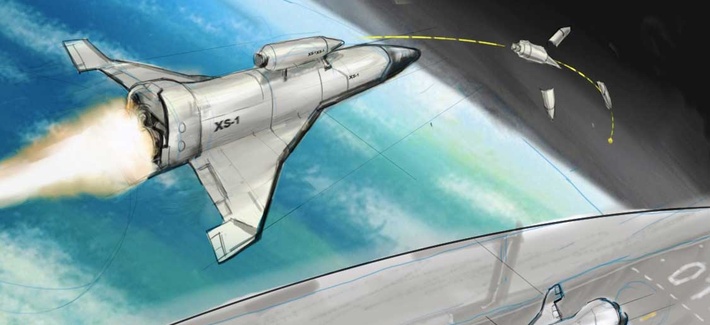
Big Data, Synthetic Biology and Space Planes Are the Weapons of the Future

March 26, 2014

What are the military’s cutting-edge capabilities of the next decade? According to the Defense Advanced Research Projects Agency, it’s big data, synthetic biology and space planes.

“We can see the information revolution unfolding across operations,” DARPA Director Arati Prabhakar told the House Armed Services Committee at a hearing on the FY2015 budget on Wednesday. She emphasized that it was very important to create “new tools to help us get a handle on the explosion of data.”

AUTHOR

Patrick Tucker is technology editor for Defense One. He’s also the author of The Naked Future: What Happens in a World That Anticipates Your Every Move? (Current, 2014). Previously, Tucker was deputy editor for The Futurist, where he served for nine years. Tucker's writing on emerging technology ... Full Bio

Amid the budget crisis in Washington, as the Defense Department is “doing more with less” after more than a decade of war, DARPA is one of the few agencies that’s seeing an increase in parts of its budget.

DARPA’s budget (PDF) reveals a growing focus not on new data sources but on developing entirely new and far-fetched methods for processing it.

The agency is requesting $13 million in FY 2015 for a program to build a so-called “models of the brain,” an increase of about $2 million from this year’s budget. The program will “establish a functional mathematical basis on which to build future advances in cognitive neuroscience, computing capability, and signal processing across the DOD. An important focus of this program will be determining how information is stored and recalled in the brain and other DOD-relevant signals and developing predictive, quantitative models of learning, memory, and measurement.”

DARPA’s Big Mechanism program will create “new approaches to automated computational intelligence applicable to diverse domains such as biology, cyber, economics, social science, and intelligence.” It saw its spending increased to triple inFY2015 to $15 million. There’s also more money for quantum computing research—up to $31 million from $23 million.

The agency is looking beyond bits to bugs, of the biological variety. One of the key new programs highlighted in the budget is the ACE program in Advanced Capabilities in Engineering Biology. The program seeks to create “new chemicals and materials, sensing capabilities, therapeutics, and numerous other applications,” will receive $8 million in funding to develop novel biological materials.

Infinity Journal Special Edition: “The Strategy Bridge”


Infinity Journal has just released our "The Strategy Bridge" Special Edition. Simply login to the site and take advantage of the new articles, our newly-designed website, our reading list, links, and more.

Read on (Free registration required).

29 March 2014

Consensus on talks with Taliban

Political parties in Pakistan, however, protect their own turf
D. Suba Chandran

EVER since the current round of negotiations with the Taliban in Pakistan began, there have been numerous committees, limited military strikes and continuing violence by militants. A cursory look at the problematique reveals two major fault lines. The first is between the multiple actors who are directly and indirectly party to the negotiations and its outcome — political parties, the military, the Taliban and civil society. Second, there is also a fault line within each of the above actors on the endgame.
Maulana Sami-ul-Haq, a negotiator for the Tehreek-e-Taliban Pakistan (TTP), addresses the media after a meeting of the negotiation committee in Islamabad on March 22, 2014. AFP

There have been numerous “all-party conferences” and debates within and outside Parliament. Though there seems to be a consensus in negotiating with the Taliban in Pakistan, there are subtle differences within the political parties in terms of the endgame. The ruling PML-N and the Punjabi leadership seems to be primarily interested in ensuring that violence does not spread into Punjab. It appears they prefer to live with an element of Taliban presence and influence in the Federally Administered Tribal Areas (FATA) and Khyber Pakhtunkhwa (KP), provided they do not attempt to infiltrate into Islamabad and the rest of Punjab.

The regional political parties, especially in KP, including the Awami National Party and Imran Khan's PTI, also seem to be pursuing a same goal, but to a limited extent. It appears that the political parties in Khyber Pakhtunkhwa are also willing to live with a Taliban presence and influence in FATA, and selected settled regions in KP such as Swat, as long as the TTP and its ideology gets quarantined within these tribal belts.

The MQM and the PPP also seem to be more interested in protecting Sindh, especially the port city and economic capital of Pakistan, Karachi. Today, there are more Pashtuns living in Karachi than in Peshawar, Kabul and Kandhahar. The Taliban has an influence over the Pashtuns in Karachi, which undermines the MQM, the ANP and the PPP. Since the PML-N has a smaller political constituency in Sindh, the Punjabi leadership may not be averse to an element of Taliban presence in Karachi as long as it does not affect economic growth and the economic corridor to Lahore and Islamabad.

Given the nature and size, the Baloch parties have less or no say in what they want vis-ร -vis the Taliban, though the latter's presence in Balochistan has increased sectarian violence and undermined Baloch nationalism. For the rest of Pakistan, perhaps the undermining of Baloch nationalism under the heat of a violent sectarian discourse suits their larger, but narrow interests.

CAN PAKISTAN SHIFT FOCUS FROM INDIA?

Saturday, 29 March 2014 |

Saturday Special this week focusses on the changing trend in Pakistan’s foreign policy with Islamabad’s greater thrust on China (Main), removing sticking points in its relations with Iran (The Other Voice), and whether Pakistan will stop using terror as a foreign policy (Perspective) 

In the run up to the Lok Sabha elections in India, issues like cross-border terrorism and “AK 49” being “an agent of Pakistan” have stirred debates not only in India but in our western neighbour too. Pakistan’s foreign office on March 27 expressed dismay over “Pakistan” being a poll issue in India. Pakistan foreign office spokesperson Tasnim Aslam said: “Unlike Pakistan, where India is not an issue; in India, Pakistan has become a poll issue unfortunately.”

Pakistan’s official statement — though a blatant lie as India has always occupied the mind space of state and non-state actors in Pakistan — is intriguing as it is yet to be established whether the new regime led by Nawaz Sharif really wants to attenuate animosity towards India or the assertion was aimed at the US which is pushing Pakistan to improve ties with India.

Whatever be the reason, the fact remains that India is still being targeted by non-state actors aided and abetted by Pakistan’s ISI. The spate of arrests of Indian Mujahideen commanders, three of whom are Pakistani nationals, within a week indicates the ulterior motive of Pakistan. But more alarming is the debutant intrusion of Taliban attackers via Nepal border.

Old habits die hard

There is nothing extraordinary in Pakistan’s sinister design to weaken India as it is widely known that Islamabad’s foreign policy revolves around New Delhi. In fact, during the last parliamentary elections in Pakistan, India was one of the prime focus and almost all Islamist groups had offered their support to political parties in lieu of intensifying covert war on India.

Even though Nawaz Sharif has been considered as one of the most moderate politicians as far as animosity towards India is concerned, considering the past record of mutual hatred between him and the powerful Army, it is premature to expect there can be a sea change in the course of their foreign policy, particularly against the wishes of the Pakistan Army.

As a matter of fact, even though all clandestine anti-India activities in Pakistan are backed by its Army, India had found the last military regime in Pakistan more soothing owing to a simple reason that while in government, they were accountable to the US for every misdeed. But the coercive approach of the military only built up anger among Islamists for later use.

India-Japan Vietnam Strategic Trilateral- An Asian Security Imperative

Paper No. 5674 Dated 28-Mar-2014

By Dr Subhash Kapila

India-Japan-Vietnam strategic trilateral emerges in 2014 as an indigenous Asian security imperative against the contextual background of United States and Russia despite their Strategic Pivots to Asia getting distracted by global and regional events.

United States sustained focus on its Strategic Pivot to Asia Pacific is seemingly becoming diluted by domestic political constraints and revised foreign policy outlooks. US Congressional imposition of budgetary cuts is ending in reduced force deployments on the ground. With change of US Secretary of State American focus is shifting to the Middle East. US hedging strategies and risk aversion in its China policies are confusing Asian powers perspectives on US real intentions.

Russia is being distracted from its declared Strategic Pivot to Asia Pacific by the United States embarking to destabilise Russia’s Western peripheries as it recently got manifested in an American inspired regime change in Ukraine through a civilian coup. The aim of the United States is to keep Russia’s strategic focus away from the Asia Pacific.

In such a contextual strategic backdrop Asian security focus has to perforce look inwards to develop an indigenous Asian security trilateral to cater for Asian security and stability and the management of Asian conflicts flash-points.

Ideally Asian security demands an Asian Strategic Quadrilateral comprising India, Japan, Vietnam and China. But then the problem is that China in terms of Asian security and stability is a major part of the problem rather than being a part of the solution. Asian security and stability today stands endangered by China-initiated conflictual flash-points.

The imperative that therefore emerges is an Asian Strategic Trilateral comprising India, Japan and Vietnam. Common strategic concerns and strategic convergences amongst India, Japan and Vietnam have resulted in the forging of bilateral Strategic Partnerships amongst these three nations. China is the only Asian power to view the emergence of such a Strategic Triangle with misgivings and read it as a China-centric hostile move.

Notably, neither United States nor Russia as global powers are likely to view such a strategic development with any degree of concern. India, Japan and Vietnam have a record of being stable and benign powers with no record of instigating conflicts against their neighbours.

India, Japan and Vietnam are strategically pivotal nations and powerful ones at that, relatively. What requires to be done in this direction by these three nations is to synergise their respective bilateral Strategic Partnerships into a Strategic Trilateral.

As stressed by me in an earlier Paper, the aim of such a Strategic Trilateral is not to form a China-containment military bloc. The common effort required from all these three nations is to create formal mechanisms to coordinate their diplomatic efforts and initiatives to ensure a unified approach to meet any challenges to Asia Pacific security from any quarter. It would also entail intelligence sharing and assisting each other in capacity building of their respective maritime security postures. They should also work together to sensitise the global community for all countries to respect and honour international conventions especially in the maritime domains.

The Hague Nuclear Security Summit: Evaluating Major Achievements

28 March 2014
PR Chari

That the third nuclear security summit meeting could be held as scheduled in the Hague on 24-25 March, attended by 53 nations, must be deemed a minor miracle, considering the rapidly deteriorating American-Russian relationship over the crisis in Crimea. It revealed that both countries appreciate the reality that the incipient threat of nuclear terrorism transcends their bilateral tensions and rivalries and requires a concerted effort by them to strengthen global nuclear security. 

Taking account of the achievements in earlier Summit meetings viz. Washington (2010) and Seoul (2012), what was expected in the Hague summit? The danger of nuclear terrorism had been recognized in Washington, and the world leaders present had agreed to cooperate in protecting their dangerous nuclear materials by jointly and severally improving nuclear security practices. In Seoul, the participants agreed further to secure their radiological sources that can be fashioned into ‘dirty bombs’ capable of causing panic and disruption. A notable success achieved over the intervening years is that the number of countries possessing weapons usable nuclear materials has decreased from 32 to 25. Some 12 other nations have reduced their inventories and improved their security arrangements. In a significant step to improve the atmospherics before the Hague Summit, Japan has agreed to let the United States take charge of its inventory of some 700 pounds of weapons-grade plutonium and a large quantity of enriched uranium. Canada, too, announced that it had returned some highly enriched uranium in its possession to the US. Belgium and Italy also announced they had shipped out HEU and plutonium to the United States for down-blending into less proliferation-sensitive materials.

Against this encouraging backdrop what were the priorities set before the Hague Summit? Key participants like the United States, Netherlands, and South Korea wished to press for reduction in the usage of highly enriched uranium and plutonium in nuclear reactors. Besides they wished the IAEA to undertake more frequent reviews; ensure the registration and protection of radioactive materials; enhance the role of industry in nuclear security matters; and increase transparency on steps taken by states to secure their nuclear facilities and materials. Another major objective was to phase out existing plutonium separation facilities and place a moratorium on new facilities; apart from gaining more adherents to implement IAEA guidelines for protecting nuclear materials. 

The Abandoned Refugees of North Waziristan

Pakistan refugees to acknowledge a growing crisis emerging from its tribal belt. 
By Taha Siddiqui
March 27, 2014

As the government of Pakistan and the Pakistani Taliban continue to discuss conditions for a peace dialogue, thousands of refugees have fled the tribal belt that sits alongside the Pakistan-Afghan border, especially the North Waziristan area where the terrorist organization commonly known as Tehrik-i-Taliban Pakistan (TTP) is based. The refugees have made their way to safer areas in the settled areas of the Khyber Pakthunkhwa province.

The mass exodus happened when the Pakistani army carried out airstrikes in the region last December on suspected militant hideouts.

The refugee crisis has yet to be acknowledged by the government of Pakistan, because it has not formally announced any operation in the North Waziristan region, even though there have been a wave of airstrikes by the country’s armed forces in areas occupied by the TTP and other foreign terrorists.

Most of these terrorists have been hiding in Pakistan’s lawless tribal belt since they escaped from neighboring Afghanistan in the aftermath of the U.S.-led attack following 9/11.

The military’s media wing has been claiming that it has killed scores of militants in these strikes, the first of which took place four months ago. However, since journalists from outside are not allowed to visit the North Waziristan area, there is no independent verification of these claims.

Refugees who have fled the area have another story to tell. “The bombardments happened near our homes in the market area and the army was not precise in these airstrikes so many civilian homes were targeted too,” says Javed Iqbal, a 31-year-old who comes from North Waziristan’s Mir Ali area and is currently living in Bannu city, next to the Waziristan’s tribal region.

Mr. Iqbal who fled in the middle of the night with more than forty members of his family after the December air strikes had to pay exorbitant sums to transporters in his hometown to shift them to a safer area.

Even now, he and his family have received no help from official authorities. “No one is registering us or giving us any aid. Our children are not going to school anymore. There are no medical facilities being offered to us either. We are left entirely on our own,” he adds.

Pakistan President Visits Afghanistan

Pakistani President Mamnoon Hussain visited Kabul for the first time since coming into office. 
March 28, 2014

On Thursday, Pakistani President Mamnoon Hussain visited Kabul for one day upon the invitation of the Afghan government, marking his first visit to Afghanistan since taking office in September 2013. Hussain’s visit, which comes on the occasion of the Persian new year, Nowruz, will attempt to strengthen Pakistan’s relationship with Afghanistan. Hussain was accompanied by Pervaiz Rashid, the Pakistani Minister for Information, Broadcasting and National Heritage.

According to a statement released by the Pakistani Foreign Ministry, ”The President’s visit is part of the efforts to strengthen bilateral relations with Afghanistan in all dimensions and support efforts for durable peace, stability and prosperity in the region.” The Afghan government also invited other leaders from around the region to participate in the Nowruz celebrations. ”On the sidelines, the President will be interacting with the other participating leaders, during which bilateral matters and regional issues of peace and security and trade and economic cooperation are expected to figure,” the Foreign Ministry statement added.

The visit comes in the wake of Afghan government accusations that Pakistan’s intelligence agency, the Inter-Services Intelligence (ISI), may have abetted the perpetrators of the deadly terror attack on the Serena Hotel in Kabul last week. Pakistan’s support of the Taliban government from 1996 to 2001 as well as its strategic interests in maintaining Afghanistan as a weak buffer state have caused Afghan policymakers to regard it with suspicion. Particularly as the United States draws down and prepares to withdraw its troops from Afghanistan at the end of this year, Afghanistan remains concerned that a resurgent Taliban could find clandestine support from Pakistan.

Afghanistan’s President Hamid Karzai is on his way out soon after the elections scheduled to take place next month. In his last few months, however, Karzai has accomplished quite a bit with regard to Afghanistan’s foreign policy with its neighbors. After infamously refusing to sign the Bilateral Security Agreement with the United States, which would have allowed a small U.S. troop presence post-2014 for limited counter-terrorism and training operations, Karzai has reached out to India, Iran, and Central Asian states for security and economic cooperation.

CONFRONTING CHINA’S WATER INSECURITY – ANALYSIS

By RSIS

With the emergence of water insecurity as a major threat to China’s economic growth and social stability, preventive measures should start with reforms to the country’s food security.

By Zhang Hongzhou

AMONG THE numerous challenges China faces in its quest to become a great power, the biggest perhaps is mounting water insecurity. China has 20 percent of the world’s population but only seven percent of the world’s fresh water. To make matters worse, the country’s scarce water resources are unevenly distributed between the south and north of the country.

With rapid industrialisation and urbanisation, the demand for fresh water is increasing at a very fast rate. It is forecast that by 2030, China’s water demand will surpass 800 billion cubic metres. However, China’s supply is severely undermined by worsening water scarcity and pollution.

Worsening water scarcity and pollution

Due to over-exploration and inefficient consumption, China’s water resources are declining as more rivers disappear and aquifer water levels drop. According to a 2013 report published by the Chinese authorities, the number of rivers in China has decreased from at least 50,000 over a period of 20 years to almost 23,000 rivers in 2011. This means that in the past two decades, China has lost more than 28,000 of its rivers.

Besides, the country’s wetlands have shrunk nearly nine percent to make way for massive agricultural production and infrastructure projects since 2003. This is equivalent to an area of 340,000 km2 of wetland, an area larger than the Netherlands. As wetlands store a large amount of freshwater resources, receding wetlands means that less water will be available in future.

Also, China’s agricultural production and industries are shifting from the southern regions to the central, western, and northern regions where water resources are even scarcer. Unsustainable extraction of underground water has led to the dramatic fall of water levels of aquifers in these regions, in particular, the North China Plain. This region has one of the world’s most overexploited groundwater resources – the North China Plain aquifer system. Due to the expansion of the irrigation systems and intensive farming practice, a significant proportion of the shallow aquifer has dropped by more than 20 metres in the past decades, and with some areas experiencing declines of over 40 metres.

Governance in India: Infrastructure

Author: Beina Xu, Online Writer/Editor
March 25, 2014


Introduction

India's emerging economic power, like that of neighboring China, has been spurred by its momentous growth rates in the past few decades. But years of underinvestment in infrastructure have left the country with poorly functioning transit systems and power grids that have further endangered its slowing economy. Growth slipped from 10.5 percent in 2010 to 4.8 percent in 2013, according to the World Bank. Burgeoning trade is putting pressure on India's inefficient ports, and rapid urbanization is straining the country's unreliable electricity and water networks. Bureaucratic red tape and political inertia have thwarted the success of foreign investment partnerships and bruised India's international standing, discouraging further outside investment. Such large-scale failures have raised sharp debate about how the country's infrastructure weaknesses will hamper its economic future as it struggles to recover from a slowdown.

A Broken Grid

India's infrastructure sector has battled decades of dysfunction. Post-independence, the government led a state-centric approach to infrastructure development, building, owning, and managing projects. The system created a host of inefficiencies; after years of unmet demand and growing financial constraints, the government opened the sector to private investment as part of its economic liberalization in the early 1990s. Yet the success of the reforms has been mixed; private participation has fallen short of expectations, and energy shortfalls have proliferated. The endemic dysfunction has bruised India's international standing and further discouraged direly needed outside investment. Indiaranked 85 out of 148 for its infrastructure in the World Economic Forum's most recent Global Competitiveness Report. Delhi and Mumbai, its two largest cities, ranked far belowother regional capitals like Beijing and Bangkok for infrastructure in a UN report.

Commuters wait for the Delhi metro. (Photo: Jayanta Shaw/Courtesy Reuters)

Power: The chronic electricity shortage is increasingly viewed by the government and international business community as one of the gravest threats to India's growth. While GDP had grown at around 8 percent until 2010, electricity generation only increased at 4.9 percent a year, according to the World Bank. Thermal power—which includes gas, liquid fuel, and coal—accounts for roughly two-thirds of power generation, with most of it coming from coal. Other sources include hydro, wind, solar, and nuclear.

The electricity sector is dominated by large, government-owned utilities at both national and state levels, and in earlier decades of development, jurisdictional conflicts in the sector sometimes led to inefficiencies in the use of capital, says Sunila Kale, assistant professor at the University of Washington. Institutional boundaries of the energy grid corresponded neatly to those of political constituencies, Kale writes, meaning a close relationship between the government and State Electricity Boards—which generated and distributed power—tied utility power to electoral power. "In the 1960s and 70s, for example, when technologies of power generation were favoring greater economies of scale, state government were limiting the size of generating units because they were trying to serve their own territories, leading to an inefficient use of capital."

CHINA RUNS RISK WITH NEW GAS ROUTE THROUGH CENTRAL ASIA – ANALYSIS

By RFA
By Michael Lelyveld

China is planning to start work on a new gas route through Central Asia this year despite cross-border conflicts in the region that threaten transport and trade.

On March 10, state-owned China National Petroleum Corp. (CNPC) announced an agreement with Tajikistan’s national gas distributor Tajiktransgaz to jointly manage construction of a new pipeline across the country’s territory.

The deal clears the way for a fourth strand of China’s Central Asia Gas Pipeline (CAGP) from Turkmenistan, known as Line D, following intergovernmental agreements with Uzbekistan, Tajikistan and Kyrgyzstan last September.

The project continues the rapid rise of China’s gas imports from the region since the first 2,000-kilometer (1,242-mile) strand of the CAGP began deliveries from Turkmen gas fields through Uzbekistan and Kazakhstan in late 2009.

Last year, the CAGP system supplied 27 billion cubic meters (953 billion cubic feet) of gas to China’s West-East pipelines through Xinjiang.

By 2020, the four lines from Central Asia will carry 80 billion cubic meters per year, accounting for over 40 percent of China’s gas imports, CNPC said.

The route stretching over 7,000 kilometers (4,349 miles) to China’s eastern cities and the growing volume may make it the longest and one of the largest in the world.

But unlike the first three branches of the CAGP, Line D will bypass Kazakhstan, taking a southern track through Kyrgyzstan and Tajikistan. The two republics are the neediest nations of former-Soviet Central Asia, which China avoided for transit in the past.

Unlike Kazakhstan, Uzbekistan and Turkmenistan, which are all petroleum exporters, the two countries are almost wholly dependent on imports, raising questions about gas transit risks.

China has been silent about the reasons behind its route choice and the challenges of clearing a new corridor through countries that have suffered through civil war, in the case of Tajikistan, and two revolutions since 2005 in Kyrgyzstan.

CNPC has also offered few details about the project, although the Bishkek-based 24.kg news agency has estimated construction will cost $1.5 billion in Kyrgyzstan alone. Completion of the Kyrgyz section is planned for 2016, Reuters reported.

In any case, a new route is likely to prove far more expensive than one that has already been cleared.

One clue to motivation was suggested by a report last year in the industry publication Nefte Compass, citing China’s concerns with alleged gas diversions from transit lines in Kazakhstan during winter shortages in early 2013.

Russia May Sell China New Advanced Submarines

Russia has announced it will build a new fifth generation, Kalina-class submarine. Will Moscow sell them to China? 
March 28, 2014

Russia is developing a new advanced submarine class and may sell them to China, according to reports in Russia’s media.

Last week, the head of Russia’s Navy, Adm. Viktor Chirkov, announced that Russia would build new fifth-generation submarines dubbed the Kalina-class.

“Russia is currently designing a fifth-generation conventional submarine, dubbed Project Kalina, which will be fitted with an air-independent propulsion (AIP) system,” Adm. Viktor Chirkov said, according toRussian media outlets.

“Our industry promises to develop this AIP system by 2017 and build the first boat fitted with such a system by 2018,” he added.
The report did not specify what type of AIP technology would be used.

Submarines equipped with AIP technologies offer significant advantages over conventional diesel-electric engines and even nuclear submarines. AIP systems allow submarines to stay submerged far longer than diesel-electric submarines, which must surface more frequently for oxygen, and thus give away their positions to potential adversaries.

On the other hand, submarines with AIP systems are much stealthier than nuclear-powered submarines, which must constantly run pumps to cool their nuclear reactors. This pump emits noises that can be used by adversaries to detect the submarine’s presence and location. Thus, AIP-powered submarines can stay submerged for long periods of time while remaining virtually silent.

A number of countries, predominately Western ones but also including ones like India, have acquired or are pursuing AIP-powered submarines. There is also speculation, including by the Indian government, that China’s Type 041 (Yuan-class) submarines—or at least some of the fleet—may be powered by AIP systems.

The development of the new Kalina-class submarines raises questions about a prospective submarine deal Russia is negotiating with China. As The Diplomat has reported before, Russia and China have long been in negotiations over Beijing’s desire to purchase four of Russia’s fourth generation Lada-class submarines. However, Russia’s decision to proceed with production of the fifth-generation Kalina-class submarines may mean that Moscow will not continue producing the Lada-class submarines (so far, only one Lada-class submarine, St. Petersburg, actually exists).

According to Want China Times, however, Voice of Russia reported soon after Admiral Chirkov’s announcement that Russian President Vladimir Putin will probably authorize the sale of the Kalina-class submarines to China. Want China Times said that the Voice of Russia report—which does not appear to be available in English—was based on the assessment of Vassily Kashin, a senior research fellow from the Moscow-based Center for Analysis of Strategies and Technologies.

China Gives Itself Failing Grade for Air Pollution

China’s Ministry of Environmental Protection reports that government efforts are not effectively curbing air pollution. 

March 27, 2014

Although Chinese leaders have placed environmental protection and clean-up efforts at the top of their agenda, China’s own Ministry of Environmental Protection (MEP) cast doubts this week upon the effectiveness of steps taken so far. A report issued by the MEP [Chinese] found that, in 2013, only three of 74 cities were able to meet China’s new air quality standards.

The MEP also found that pollution was most severe in the Beijing-Tianjin-Hebei area. The 13 cities in this region accounted for 11 of China’s 20 most polluted cities, and seven of the top ten. The average amount of PM2.5 pollution among the cities in this region was 106 micrograms per cubic meter—over ten times the World Health Organization’s recommended standard of 10 micrograms per cubic meter for an annual mean.

Based on the report’s analysis, the MEP concluded that China’s air pollution situation is “extremely severe.” An unidentified MEP official told 21st Century News [Chinese] that there were four reasons for the problem: high energy consumption, excessively rapid development of high-polluting heavy industry, and unacceptably high proportions and concentrations of air pollution (with the latter due in part to below-average wind speeds and precipitation in northern China in 2013). The official warned that China’s air pollution levels have “long exceeded environmental capacity” and that an increased pace of urbanization has only exacerbated the problem.

In an attempt to tackle the problem at the root, the MEP announced that it will undertake a large-scale, standardized research effort to identify the sources of air pollution (especially PM2.5). According to MEP official Zhu Jianping, this will be the first national undertaking to determine major causes of pollution. Before, each city had performed the research separately.

Though China’s leaders have repeatedly expressed their commitment to resolving pollution issues, the MEP’s report shows that promoting urbanization (also a key goal, especially of Premier Li Keqiang) is at odds with the goal of reducing pollution. Since urbanization is also seen as a crucial aspect of rebalancing China’s economy by increasing domestic consumption, it will be difficult for leaders to slow the rate of urbanization, even if doing so could help clean up China’s air.

Vietnam’s Relations with China – A Multifaceted Partnership

March 17, 2014, by Editor
Written by Ramses Amer.

Vietnam’s relationship with China is of paramount importance for its development and security. Although much outside attention is focused on the disputes between the two countries in the South China Sea, the relationship is much broader and multifaceted than these disputes alone. The long historical interaction between the two countries is a reference point for those who highlight long periods of collaboration as well as for those who focus on periods of China’s control and attacks against Vietnam. The close cultural and political links both historically and in modern times through the leading rule of the Communist Party of Vietnam (CPV) and the Communist Party of China (CPC) have cultivated stronger ties between the two countries. The complexities of this relationship can be formulated as follows for Vietnam: China is Vietnam’s major collaborative partner, while at the same time, its major geo-strategic challenge.

The current stage of the relationship with China began with the full normalisation of relations in November 1991, which put an end to over a decade of animosity following the dramatic deterioration of bilateral relations in the late 1970s, culminating in the 1979 border war.

The period up to 2000 was characterised by two contradictory trends. While positive contacts and co-operation were expanding in many fields, the negative aspect of differences relating primarily to the territorial disputes persisted. The positive trend was prevalent throughout this period but was at times slowed down by the fluctuating levels of tension relating to the territorial disputes. In this century, relations have deepened further, particularly in terms of expanding economic ties. The territorial disputes have caused less tension except for periodic increases in tension relating to developments in the South China Sea between 2009-2011.

Expanding political, cultural, economic, and military contacts between the two countries illustrate the positive trend in improving and expanding bilateral relations. On a regular basis, official delegations visit the other country to discuss ways of expanding co-operation in various fields. A strong political willingness to strengthen and expand the overall relationship between the two countries has been displayed. A number of bilateral agreements have been signed following the full normalisation of relations.

Expanding economic relations can be seen through the growth in bilateral trade from $32 million in 1991 to $36 billion in 2011 – making China Vietnam’s major trading partner. In terms of foreign direct investment (FDI) in Vietnam the projects listed as originating from China proper were few in the 1990s and with modest amounts of capital, but in recent years there has been a trend towards increased investment. Cumulative figures for the period 1988-2012 shows 893 projects with registered capital approaching $5 billion.

We're Losing Our Military Edge Over China. Here's How to Get It Back.

Published on The National Interest (http://nationalinterest.org)

March 27, 2014

A flurry of recent statements by senior Defense Department officials has thrown a bright but cold light on a reality that Washington has yet to grapple with: that America’s edge in military technology and the balance of military power in the Asia-Pacific writ large is under serious and growing pressure from China’s military-modernization efforts. Admiral Samuel Locklear, head of the Hawaii-based U.S. Pacific Command, observed at a conference in January that “our historic dominance...is diminishing [4]” in the Pacific. Meanwhile, Frank Kendall, the Under Secretary of Defense for Acquisition, Technology, and Logistics, has been even more pointed, telling the House Armed Services Committee that[5], when it comes to “technological superiority, the Department of Defense is being challenged in ways that I have not seen for decades, particularly in the Asia-Pacific region.” And Chairman of the Joint Chiefs Martin Dempsey soberly warned in his “Chairman’s Assessment” of the QDR [6] that in the coming decade, he expects “the risk of interstate conflict in Asia to rise, the vulnerability of our platforms and basing to increase, [and] our technology edge to erode…Nearly any future conflict will occur on a much faster pace and on a more technically challenging battlefield.” And this, he notes, is the good case—if the United States does not spend its defense resources more wisely and make the “dramatic changes” required to upgrade our defense posture, the situation will likely be considerably worse.

Some might criticize these officials for their candor. We believe Admiral Locklear, Under Secretary Kendall, and General Dempsey should be commended for sounding the alarm because they are right that the military balance in the Asia-Pacific—and especially our edge in technology and its exploitation, the true source of our military advantage in recent decades—is eroding.

Congress’s failure to support the International Monetary Fund is shameful and self-defeating

America and the IMF
Dereliction of duty
Mar 29th 2014 | From the print edition

ANYONE who doubts the importance of the International Monetary Fund should look at Ukraine. Every Western nation is talking about helping the Ukrainians resist Vladimir Putin. In terms of immediate cash, America has come up with $1 billion of loan guarantees, while the European Union has found €1.6 billion ($2.2 billion) of budget support. The IMF, meanwhile, is discussing lending Ukraine’s government about $15 billion. It is the only outfit capable of mobilising large sums fast. That is why, for the past 70 years, the fund has been the world’s financial firefighter. And it is why Congress’s refusal to support reforms to strengthen it is shockingly shortsighted.

The reforms in question concern the IMF’s system of “quotas”. Each country’s quota determines how much it pays in, its clout in the organisation and how much it can borrow if it gets into trouble. America’s quota is the biggest, giving it veto power. But today’s system gives excessive heft to small countries in Europe and too little to emerging economies. And, at $370 billion, the total value of the quotas is modest compared with the scale of global capital flows. That is why, during the 2008-09 financial crisis, the fund’s resources were topped up with temporary credit lines from big economies. And it is why, in December 2010, at America’s instigation, the fund’s members agreed to a bolder reform that would double the quotas and raise the emerging economies’ voting power.

More than three years later, Congress has still not endorsed this reform. It failed to do so once again this week, and in a particularly galling manner. The Obama administration tried to attach quota reform to the legislation approving America’s bilateral aid to Ukraine. Both the House of Representatives and the Senate refused to include it. Just as the fund is promising billions for a country that America is desperate to support, Congress has undercut it.

This is a shameful outcome, driven largely by ignorance. The fund’s most vociferous congressional critics, mainly Republicans, misunderstand both the organisation and its reforms. They argue that the quota change would put more taxpayer money at risk and weaken America’s influence within the fund. Both claims are bogus. America will retain its veto power. The larger role for emerging economies comes at the expense of European countries. Nor does a larger quota add to America’s overall exposure, not least because its credit lines to the fund will be commensurately cut.

The real risk to Americans lies in Congress’s failure to support the reforms that its technocrats championed. This has infuriated the fund’s other member countries, making them less inclined to support America’s priorities. Big assistance packages, such as that for Ukraine, could be a casualty of their anger at America’s unwillingness to live up to its promises. And with a smaller quota and greater reliance on credit, the fund’s finances will be less secure that they should be. America’s arsenal of economic diplomacy will be the emptier for it.

No Easy Answers for Ukraine


The West should do all it can to ensure Ukraine succeeds.

Ukraine needs a lot of support, and fast.
March 26, 2014

Events in Ukraine moved fast. While Russia had long asserted its “privileged” interests in its neighborhood, few, if any, suspected that protests against the government of former President Viktor Yanukovych would escalate to Russian annexation of Crimea. Today, with Russian troops uncomfortably close to the border and East Ukrainians skeptical of the interim government in Kiev, the United States and EU face several quandaries and no easy answers.

The United States is on record: Russia’s annexation of Crimea is illegitimate, illegal and unacceptable. However, Washington is no less clearly on record that it has no intention of using military force in this crisis. Indeed, a threat of military action by the United States over Ukraine, which is not a treaty ally, would not be credible. As a result, U.S. and European responses have largely taken the form of economic sanctions. These sanctions, particularly the harsher set announced on March 20, will inflict pain on some very important Russians and on the Russian economy as a whole. However, they are unlikely to quickly change Russian policy vis-ร -vis Ukraine. Rather, the Putin regime will make much of its ability to stand up to U.S. pressure, gaining it credit at home and in some quarters abroad.

Ukraine’s interim government is in a horrible position. Put in place by parliament to replace a semi-legally ousted corrupt administration, it soon found itself in charge of a country one peninsula smaller than it had been days before. The people of Ukraine’s east and south are terrified of the political chaos, right-wing militias and economic austerity that Russian television has told them to expect, enough that some of them are thinking a Russian invasion isn’t such a bad bet.

Worse yet, although some of these threats are exaggerated, none are imaginary: Ultra-nationalists are part of the government, militias have been patrolling the streets and seem disinclined to put down arms, and economic reforms could in the near term hurt Ukraine more than U.S. sanctions could ever begin to hurt Russia. Ukraine needs elections, it needs reform and it needs a massive infusion of cash, which must not be stolen or misused. For the United States and Europe, Russia’s aggression makes it imperative to show steadfast support for Kiev — which makes imposing real conditionality on assistance that much harder.


An outright land grab and annexation of part of Ukraine that came after assurances of respect for the country’s territorial integrity is a difference in kind, not degree from, the 2008 war with Georgia. Russia’s action in Crimea was a stark violation of not only international law, but also Russia’s own long-standing commitment to principles of sovereignty. Of course, in Russia’s view, sovereignty doesn’t apply to Ukraine. Russia never made a secret of its proprietary approach to its neighbor. Washington and Brussels had hoped that time, peace and growing prosperity would change minds and attitudes such that both Ukraine and Russia would be integrated into a European, and global, community of nations, precluding unpleasantness such as this. Enough time, it seems, was bought for Ukraine to feel independent, but not enough for Russia to agree. And enough integration and cooperation took place that sanctions on Russia will hurt investors and energy consumers, among others, in the EU. The United States is less economically exposed, but it has gotten used to Russian supply routes in and out of Afghanistan (and Russian helicopters to provide to the Afghans). The need to make clear that Russia’s behavior is a game changer thus wars with the desire to keep as many of the game pieces in working order as possible.