4 May 2014

New Realities: Energy Security in the 2010's and Implications for the US Military

How will changing patterns in global energy consumption affect US security and the effectiveness of its military? Today, the Strategic Studies Institute profiles these patterns – including developments in China, India and elsewhere – in order to assess how the US might respond.

By Editor: John Deni for Strategic Studies Institute of the US Army War College (SSI)


China’s Burgeoning Demand and its Quest for Resources

Michal Meidan

China’s energy profile is changing rapidly. After years of breakneck economic growth and ravenous appetite for natural resources, the Chinese government has committed to putting China on a more sustainable development path. Beijing has introduced energy efficiency goals and policy measures aimed at reducing China’s carbon footprint by increasing the share of non-fossil fuels to 15 percent of the Chinese energy mix by 2020 and raising the share of gas in the country’s energy mix from roughly 5 percent in 2010 to roughly 12 percent in 2020.

But even though renewable energy and nuclear technology will gradually offset demand for coal, China’s continued dependence on oil and rising demand for gas—that it will be incapable of supplying wholly from domestic sources—will sustain a high dependence on imported resources. With China’s domestic oil production stagnating, the International Energy Agency (IEA) expects its import dependence ratio to reach 80 percent in 2030. Beijing has over the past two decades made efforts to diversify its sources of imported oil, but it has only managed to tinker at the margins with its heavy reliance on the Middle East and Africa. China remains dependent on six countries for over half of its oil supplies: Saudi Arabia, Angola, Iran, Russia, Oman, and Sudan. And as demand for imported oil and gas will continue to grow, supply security will remain a prominent feature of China’s energy strategy and its foreign policy calculus.

China’s reluctance to rely solely on imports has led to heavy investments overseas in oil and gas resources, ranging from Sudan to Canada, through Iran and Iraq. Government support for these investments has benefitted China’s commercial actors that have sought to become globally competitive energy producers and traders. Yet this has done little to enhance the country’s supply security: Chinese traders behave according to market dictates for the most part and sell the resources they produce to the highest bidder. Aware of the numerous vulnerabilities it is exposed to, Beijing is trying to diversify not only its supply sources but also its supply routes. While the military has been promoting the need to secure maritime transportation as a means to build its naval capacity, Chinese decision makers have also sought to build cross border pipelines through Myanmar, Central Asia, and Russia in a bid to reduce oil flows through the Straits of Malacca. For all its attempts to purchase assets, “lock in” resources, reduce reliance on maritime transports, and secure sea lanes of transportation, no strategy – as Beijing and its companies are learning – is infallible. The reality remains that much of the oil and gas that is vital to China’s economic growth will continue to be produced in volatile countries, traded on international markets, and flow through sea lanes that ultimately pass through the Straits of Malacca.

The sum of these diversification efforts is a growing global footprint. Yet China has neither the intention nor the capacity to safeguard its interests worldwide. Moreover, China is not ready to assume the United States’ role as provider of public goods such as freedom of navigation in international waters, or to secure the stability of producer countries. Beijing’s preference therefore will remain to free-ride on indirect U.S. security guarantees. With the limits of this preference becoming increasingly palpable, China will begin to experiment with a model of reluctant and narrowlyfocused participation in third countries. This presages an era of rising coordination, but also friction, with the United States.
To Escalate or Not to Escalate?


This article was provided by Bryan Groves, a US Army strategist and PhD student at Duke University. The views expressed herein are those of the author and do not necessarily reflect the position of the U.S. Department of Defense, the Department of the Army, the Combined Arms Center, the School of Advanced Military Studies, the Advanced Strategic Planning and Policy Program at Fort Leavenworth, or Duke University.

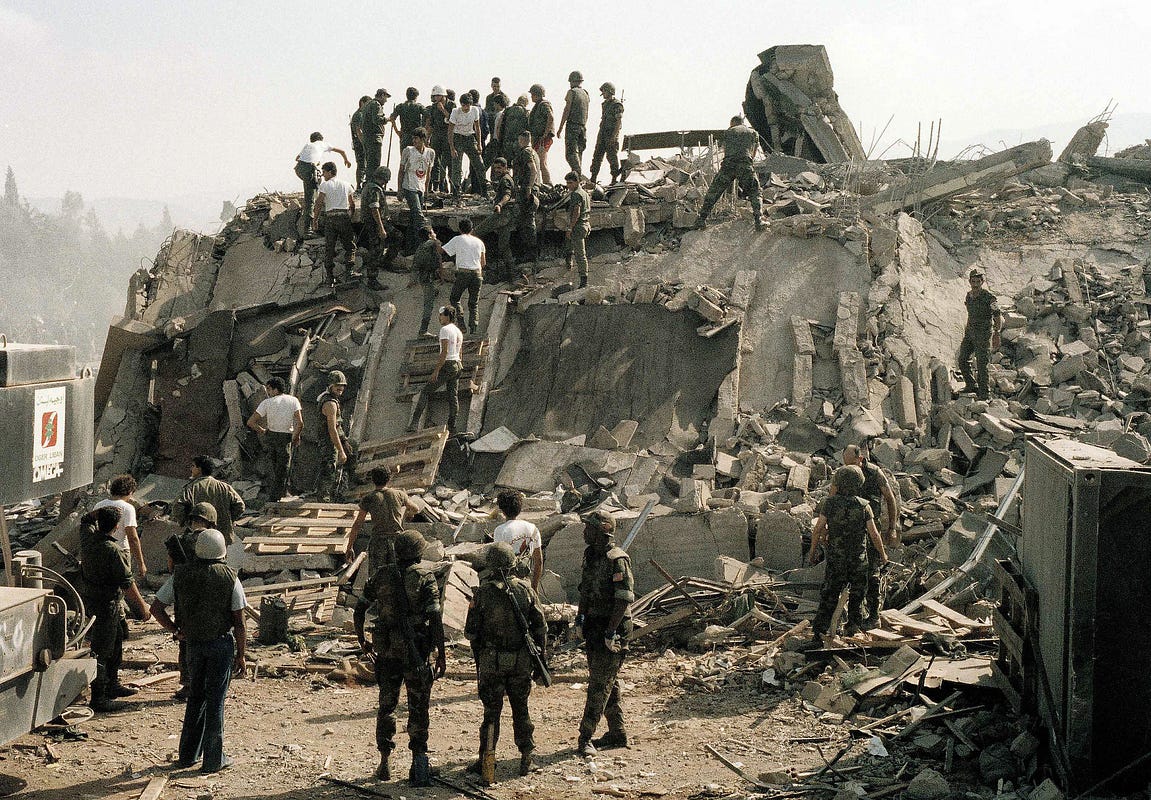
U.S. presidents have made decisions to ramp conflicts up or down throughout the nation’s history, with varied outcomes and sometimes unclear connections to vital national security interests. Presidents Reagan and Clinton chose to withdraw American military forces from Lebanon and Somalia respectively. Two seemingly very different presidents, from opposite political parties, walked a similar path when deciding whether to expand or contract a military mission overseas. What drove their decisions for deescalation? In the last six years, another Republican and a Democratic president have decided to “surge” additional military forces and civilian personnel to Iraq and Afghanistan respectively. What led these two leaders, again with divergent political ideals and conceptions about the use of force, to implement such similar approaches? How did President George W. Bush and President Obama reach these decisions, especially given that the American public in both circumstances was weary of war and saw the probability of achieving success as limited? Were there similar factors at play in each of these two pairings that caused apparently different leaders to reach similar conclusions, for or against escalation?

Political science, economics, and psychology offer a variety of useful conceptual explanations including prospect theory, the rational actor model, the organizational process model, bureaucratic politics, diversionary war, utility theory, and cognitive bias. Drawing on these fields, I offer a unique theory for each case study. “Projecting strength” was the impetus behind Ronald Reagan’s decision to abandon the U.S. military mission to Lebanon. “Higher priorities” at home and abroad caused Bill Clinton to bring troops home from Somalia. On the other hand, George W. Bush chose escalation in Iraq because he “feared losing on his watch.” Finally, candidate Obama cast Afghanistan as the “good war,” and President Obama acted in accord with what that label would suggest. I lay out the four case studies sequentially, explaining how the corresponding model in each case explains the decision for or against escalation. I then describe alternative models and explain why the selected model in each case study has greater explanatory power than the alternatives. Before concluding with the policy ramifications, I show how a researcher could test my models against the alternatives.

Myanmar's Growing Regional Role

NBR Reports (Mar 2014) 
Mely Caballero-Anthony, Priscilla Clapp, Catharin Dalpino, Abraham M. Denmark, Meredith Miller and Morten B. Pedersen 

PDF free through May 28, 2014

Myanmar’s ongoing political and economic reforms have paved the way for expanded engagement with Southeast Asia and the world. In this new NBR Special Report, leading experts explore the issues surrounding Myanmar’s re-emergence as a regional power and outline implications for U.S. policy. This report is part of the project Myanmar's Growing Regional Role.
Table of Contents


Meredith Miller and Abraham M. Denmark 


Priscilla Clapp


Catharin Dalpino


Mely Caballero-Anthony


Morten B. Pedersen 


Abraham M. Denmark


Meredith Miller

A Modern Airpower Theorist


Colin Gray has written prolifically and thoughtfully about airpower. Here’s a short lesson plan written for those who need to tune up their “elevator speech.”

Seminar on the Evolution of Airpower Theory
Modern Airpower Theorist: Colin Gray

This lesson examines the contributions to the theory of airpower by the recognized strategist Colin Gray. Gray provides a theory of airpower that includes the empirical lessons of its meandering maturity within joint warfare. His theory provides evenhanded advocacy, vice zealotry, for the enduring utility of airpower.

This is a 30-45 minute lesson.

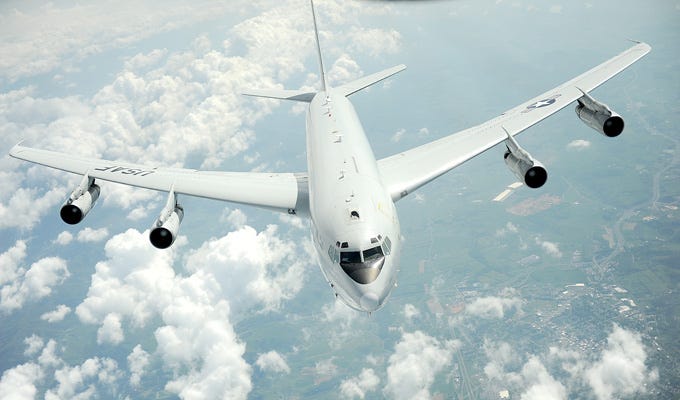
An E-8C Joint STARS from the 116th Air Control Wing, Robins Air Force Base, Ga., pulls away, May 1, 2012, after refueling from a KC-135 Stratotanker with the 459th Air Refueling Wing, Joint Base Andrews, Md.
(Photo: MSgt. Jeremy Lock/USAF)

ENABLING LEARNING OBJECTIVES

1: Analyze the airpower theories of Colin Gray based on Winton’s model.

STANDARD: Analysis will include a comparison of Gray with other theorists discussed previously both in this course and the CGSC core history courses.

2: Analyze the typology of empirical errors in theory.

STANDARD: Analysis will include the extent limitations to Winton’s model.

3: Develop an understanding of the theoretical strengths and limitations of airpower that can be described to joint and coalition partners as well as policy makers.

STANDARD: Analysis must include airpower’s role in the “whole house of war.” Students should be able to articulate contextual principles for the utility of modern airpower in joint warfare.

Assessing the People's Liberation Army in the Hu Jintao Era

Assessing the People's Liberation Army in the Hu Jintao Era

Added April 22, 2014 
Type: Monograph 
547 Pages 
Download Format: PDF
Cost: Free 
Brief Synopsis


The 2012 PLA (People’s Liberation Army) conference took place at a time when the Chinese Communist Party (CCP) was making its leadership transition from Hu Jintao to Xi Jinping. The conference discussion focused on the developments in China’s national security and in the PLA during the Hu Jintao Administration from 2002 to 2012. Key observations are presented in this volume. The most significant ones are Hu Jintao’s promulgation of the new Historic Missions for the PLA, and Hu’s complete handover of power to his successor. The former has turned on the green light for the PLA to go global. The latter is a milestone is the CCP’s institution building.

Changing Minds In The Army: Why It Is So Difficult and What To Do About It

Changing Minds In The Army: Why It Is So Difficult and What To Do About It

Added October 28, 2013 
Type: Monograph 
49 Pages 
Download Format: 

Brief Synopsis

History and organizational studies both demonstrate that changing one’s mind is quite difficult, even in the face of overwhelming evidence that this change needs to occur. This monograph explains how smart, professional, and incredibly performance-oriented Army senior leaders develop frames of reference and then oftentimes cling to their outdated frames in the face of new information. It describes the influence of individual-level concepts—personality, cognitive dissonance reduction, the hardwiring of the brain, the imprints of early career events, and senior leader intuition—along with group level factors to explain how frames of reference are established, exercised, and rewarded. It concludes by offering recommendations to senior leaders on how to structure Army leader development systems to create leaders comfortable with changing their minds when the environment dictates.

A Soldier’s Morality, Religion, and Our Professional Ethic: Does the Army’s Culture Facilitate Integration, Character Development, and Trust in the Profession?


Added April 30, 2014 
Type: Monograph 
55 Pages 
Download Format: PDF
Cost: Free 
Brief Synopsis


The authors argue that an urgent leadership issue has arisen which is strongly, but not favorably, influencing our professional culture--a hostility toward religion and its correct expressions within the military. Setting aside the role of Chaplains as a separate issue, the focus here is on the role religion may play in the moral character of individual soldiers--especially leaders--and how their personal morality, faith-based or not, is to be integrated with their profession's ethic so they can serve in all cases "without reservation" as their oath requires.

ASPJ


May 1 

The May–June 2014 issue is now available at http://www.au.af.mil/au/afri/aspj/. To support today’s electronic reading devices, ASPJ makes all articles available in multiple formats. 

In this issue. . . . 


Maj Gen Michael A. Keltz, USAF

Anand Datla


CDR Brian Rivera, USNR
Maj Jussi Toivanen, Finnish Army


Col Suzanne M. Streeter, USAF


Col Michael W. Pietrucha, USAF


Chaplain, Maj Robert A. Sugg, USAF

The Editor 

Air and Space Power Journal 

“Air and Space Power Journal” is published by Air University Press, part of the Air Force Research Institute.

3 May 2014

DANGERS OF HERO WORSHIP - Reading Ambedkar in the time of Modi

Politics and play - Ramachandra Guha 
http://www.telegraphindia.com/1140503/jsp/opinion/story_18192582.jsp#.U2RgIlfA34Y


Ambedkar being presented a copy of the draft Constitution 

In this election season, I have been thinking a great deal about B.R. Ambedkar — about Ambedkar the theorist of democracy, rather than Ambedkar the emancipator of the Dalits. I have been recalling, and returning to, a remarkable speech he delivered to the Constituent Assembly of India on November 25, 1949. Here he uttered three warnings. One pertained to the dangers in eschewing constitutional methods for unregulated street protest, which he characterized as “the grammar of anarchy”. A second drew a distinction between political democracy on the one hand and social democracy on the other. With the Constitution, every adult Indian would have the vote, thus ensuring political equality. And yet, remarked Ambedkar, “on the social plane, we have in India a society based on the principle of graded inequality which means elevation for some and degradation for others. On the economic plane, we have a society in which there are some who have immense wealth as against many who live in abject poverty.” If this disjunction between political rights and social disprivilege persisted, warned Ambedkar, “those who suffer from inequality will blow up the structure of political democracy which this Assembly has so laboriously built up.” 

These two warnings remain pertinent. However, in the context of the present elections per se, it is the third of Ambedkar’s warnings that needs to be more urgently recalled. This asked Indians not to blindly and uncritically follow a particular leader. Ambedkar quoted the liberal thinker, John Stuart Mill, who had said that the citizens of a democracy must never “lay their liberties at the feet of even a great man, or ...trust him with powers which enable him to subvert their institutions”. 

Ambedkar remarked that “there is nothing wrong in being grateful to great men who have rendered life-long services to the country. But there are limits to gratefulness. As has been well said by the Irish patriot Daniel O’Connell, no man can be grateful at the cost of his honour, no women can be grateful at the cost of her chastity and no nation can be grateful at the cost of its liberty”. Then he continued: “This caution is far more necessary in the case of India than in the case of any other country. For in India, Bhakti or what may be called the path of devotion or hero-worship, plays a part in its politics unequalled in magnitude by the part it plays in the politics of any other country in the world. Bhakti in religion may be a road to the salvation of the soul. But in politics, Bhakti or hero-worship is a sure road to degradation and to eventual dictatorship.” 

Ambedkar was here uttering a generalized warning. But did he also have any particular individual in mind? Ambedkar had long been critical of what he saw as the excessive adulation of Mahatma Gandhi by his countrymen. Now, in the immediate aftermath of Independence, he could see the enormous prestige that men like Jawaharlal Nehru and Vallabhbhai Patel commanded. They and their Congress Party had participated in an arduous and extended struggle for freedom. The years they had spent in jail demanded attention, and respect. Ambedkar could see all this, and was worried about the consequences. Just because Gandhi and Nehru had rendered ‘lifelong services to the country’, did it mean that their actions or ideas were immune from critical scrutiny? Was their record of patriotism enough reason for the ordinary citizen to follow them implicitly and unquestioningly? 

ELUSIVE PEACE AND SHADOW PLAY

http://www.telegraphindia.com/1140503/jsp/opinion/story_18291054.jsp#.U2RXmfmSzyQ

Pinak Ranjan Chakravarty
The Israeli-Palestine peace process has been hit by the political equivalent of a tsunami. The announcement on April 23 of a reconciliation deal between the Fatah-led Palestinian Authority government of the West Bank and Hamas, the Islamic militant organization controlling Gaza, has caused a political upheaval. The deal aims to form a Palestine unity government within five weeks and then go for national elections after six months. Both Israel and the United States of America have been surprised by this new unity move of the two estranged Palestinian factions.

The Palestinian movement for full nationhood has been split between the moderate Palestinian Authority, led by President Mahmoud Abbas, and Hamas, the Islamic militant faction. The Palestinian Authority favours reconciliation with Israel, leading to a peace deal that would include the recognition of Israel and the establishment of a sovereign and independent Palestine, with defined borders and with East Jerusalem as its capital. The Hamas, founded in 1987 as a sub group of the Egyptian Islamic Brotherhood, maintains an armed wing called the Ezzedeen al-Qassam Brigades, responsible for numerous attacks inside Israel on both civilian and military targets.

After the Hamas won a majority in the Palestinian parliament in the January 2006 election, it ousted the Fatah faction from Gaza and took control of this part of Palestine. Following this, the US, Russia, the United Nations and the European Union attached several strings to the flow of foreign assistance to the Palestinian Authority, demanding commitment to non-violence, the recognition of Israel and the non-repudiation of previous agreements. Hamas opposed these conditions, leading to a suspension of foreign assistance. Israel imposed an economic blockade on Gaza. Hamas and Fatah expelled each other’s officials and the Palestinian Authority retreated to the West Bank town of Ramallah from where it operates to this day. Hamas retained full control of Gaza and the Palestinian freedom movement became bitterly divided.

Moderating its stance in July 2009, the Hamas’s political bureau chief, Khaled Mashal, announced that the Hamas would be willing to work for a resolution of the Arab-Israeli conflict provided that a Palestinian state was established based on the 1967 borders, that Palestinian refugees would have the right of return to the new state and East Jerusalem would be recognized as the capital.

When reality outruns strategy

Khaled Ahmed | May 3, 2014 
http://indianexpress.com/article/opinion/columns/when-reality-outruns-strategy/99/
Indians should stop pining for a single-minded strategic culture, look where that got Pakistan

Indian ex-foreign minister Jaswant Singh, in his latest insightful book India at Risk (2014), laments that “ersatz pacifist” Nehru didn’t fight China properly in 1962 “and security got relegated to a much lower priority”. As a consequence, “independent India simply abandoned the centrality of strategic culture as the first ingredient of vigorous and bold national policies.”

Let’s accept that Nehru didn’t fight properly, but has that hurt India? Pakistan fought India “properly” and has got badly hurt. There was something right about Nehru and his pacifism; there was something wrong about Pakistan’s militarism.

Pakistan fought India and gave its people the “strategic culture” Singh wanted for India under Nehru. Obsessed with “strategy”, Pakistanis are still not able to start trading with India to improve their lives. Singh should recall his former BJP colleague, Yashwant Sinha, who actually told Pakistan in 2003 that by not being “revisionist” towards China, India had benefited economically through trade. He had said: “I hope our western neighbour [Pakistan] will not keep its eyes for ever shut to this truth.”

Nehru was probably right in not fighting China. And the smaller leaders that followed him were right to not let India become “revisionist”, for ever locked in conflict like Pakistan while the economy went belly-up. India has had its defeats and there are thinking men like Singh who compel India to meditate on them. Does Pakistan have the same capacity to review its defeats?

Some say Pakistan can’t take stock because the wars it fought were inconclusive and the “fall of Dhaka” was blamed on India and therefore not analysed. One reason for that was the extremely negative third-party analyses, like the recent book, The Blood Telegram. The textbook therefore still sacralises revisionism, pledging exegesis of even the future defeats as victories. Except that an army officer, whom I have quoted in an earlier article on East Pakistan, the late Major General Hakeem Arshad Qureshi, disagreed with the textbooks in his book titled The 1971 Indo-Pak War: A Soldier’s Narrative (2002).

LESSONS FROM KASHMIR 2014 ELECTIONS – ANALYSIS


By Rahul K Bhonsle

That the separatists, terrorist groups and their masters across the Line of Control will attempt to disrupt or at least restrict participation of people in the General Elections in the Valley was a given. United Jihad Council (UJC) chairman and Hizbul Mujahideen supreme commander appealed to the people to boycott forthcoming polls, Salah-ud-Din said; “Incidents like the hanging of Muhammad Afzal Guru and rape of innocent women at the hands of Army indicate that all Indian agencies are hand in glove to inflict maximum humiliation on Kashmiri people. The government of India, its armed forces and other establishments are pursuing the same policy vis-ร -vis Kashmir and its people. Guru was hanged to appease Hindu fanatics while the death sentence of Bhullar was commuted to life sentence,” Salah-ud-Din said


While the mood was sullen yet the overall percentage was decent. South Kashmir polled approximately 29 percent one percent higher than the 2009 elections. In Central Kashmir polling was 26 percent again a notch higher than that in 2009 by the 12 lakh electorate in Lok Sabha constituency amid tight security. This is a marginal increase from the 25 percent or so that was recorded in 2009. Surpassing the same has not been possible due to a number of factors.

With separatists extending their boycott of elections in the Valley there were not much expectations of high voting. Lack of enthusiasm in the masses for Lok Sabha elections as compared to local ones is another major factor apart from the boycott. While the Srinagar city has recorded a mere 11 percent plus other areas on the periphery which are the strong hold of National Conference have seen relatively heavy polling at over 40 percent thus raising hopes of permeation of nationalist sentiment in these areas. Similarly there was a fair percentage of voting in Anantnag and Kulgam segments of the South Kashmir constituency but Shopian and Pulwama particularly Tral remain a concern as in the latter only 6 percent plus voting was recorded indicating both a fear amongst residents to come out and vote and tacit support to boycott call by separatists. It is apparent that the security forces could not prevent militant groups from creating fear by targeting grass roots leaders of nationalist parties’ just days before the elections.

INDIA AND NO FIRST USE: DOES ‘CALCULATED AMBIGUITY’ HELP? – ANALYSIS

By IPCS

By Ruhee Neog

Since the Bharatiya Janata Party (BJP) released its election manifesto that promises to “study in detail India’s nuclear doctrine, and revise and update it, to make it relevant to challenges of current times,” and Prime Minister Manmohan Singh’s statement about a global no first use (NFU) policy, there has much speculation on the subject.

The nuclear programme mandate that the BJP has delineated for itself, should it come to power in 2014, pins itself on the changing security scenario in South Asia. With Pakistan’s increasing nuclear stockpile and emphasis on tactical nuclear weapons (TNW), a retaliatory Indian nuclear posture is considered insufficient. The most significant of the implied revisions is to its NFU pledge, which is considered the bedrock of India’s declaratory policy as couched in its nuclear doctrine. It must be noted however that despite assumptions to the contrary, India’s NFU is not absolute.

An Absolute NFU or Flexibility of Response?

It has been argued that India’s own 2003 statement makes its NFU pledge ambiguous. It states, “However, in the event of a major attack against India, or Indian forces anywhere, by biological or chemical weapons, India will retain the option of retaliating with nuclear weapons.” There are two concerns here: one, what defines ‘major’? Two, a literal interpretation of the statement means that India’s first response via nuclear means will also be directed against chemical and/or biological attacks – technically, this is in fact nuclear first use. That this may be a deliberate attempt to dilute the official stand on NFU only stands to strengthen the notion that the NFU is not meant to be unqualified, and flexibility of response was preferred but not signalled. However, this also questions the credibility of India’s NFU by the audiences for whom the doctrine is intended, which could have dangerous implications for nuclear postures and arsenals.

Accidental Nuclear Escalation

While India’s nuclear policy has the country’s civilian leadership at the top of the command and control structure, in the event of a crisis, conventional forces may prompt inadvertent escalation. As Vipin Narang writes, this may be by targeting the adversary without knowing (or caring to know) whether these targets are conventional or nuclear, and without prior political authorisation. Such an action will of course have huge implications: through the use of its own conventional abilities against a nuclear-armed adversary, India could trigger nuclear first use – either by putting the adversary in a ‘use-it-or-lose it’ situation or by causing an unintended ‘nuclear detonation’.

Election Posturing?

The draft Indian nuclear doctrine was promulgated in 1999 and the Cabinet Committee on Security (CCS) released a press statement in 2003. Significantly, the draft doctrine and the press release were both undertaken while the BJP-led National Democratic Alliance (NDA) government was in power. The sudden mention of India’s weapons programme – which is rarely discussed in public – at this critical time, can be read most importantly as posturing for elections. The BJP has sought to re-claim ownership of the doctrine and rebuke the Congress for having ‘frittered away’ the ‘strategic gains’ made under Prime Minster Atal Behari Vajpayee’s leadership. Manmohan Singh’s statement therefore seems to be an attempt at responsible nuclear pledge-making in the run-up to the elections.

Early Warning Signs of Shia Genocide in Pakistan

The international community can no longer ignore the alarming rise in violence directed at Pakistan’s Shia minority. 

By Waris Husain
May 02, 2014


Last month the world commemorated the 20th anniversary of the Rwandan Genocide. Dignitaries from around the world delivered speeches to mark the occasion, but UN Secretary General Ban Ki Moon’s statement was perhaps the most remarkable, as he admitted that the United Nations was “ashamed” of its failure to prevent the mass killing. At the same time Ban was making this statement, a Shia doctor was gunned down in Karachi, Pakistan by sectarian terrorists, as part of a self-avowed campaign to “make Pakistan a graveyard” for all Shias.

Despite the escalation of targeted killings of Shia leaders and large-scale bombings of Shia neighborhoods, the Pakistani government and international community have failed to apply the lessons from cases like Rwanda in recognizing the early warning signs of an impending genocide perpetrated by sectarian terrorist groups. While the murder rates of Shias in Pakistan is nowhere close to the 800,000 Tutsis killed in Rwanda, members of the international community are duty-bound to prevent mass killing events before they occur.

The Shia’s plight must be understood in the context of Pakistan’s position within the larger sectarian struggle between Sunnis, largely supported by Saudi Arabia and other Gulf states, and Shias, supported by Iran and its close allies. Pakistan walks a tightrope in this conflict as it shares a border with Iran, but relies on Saudi Arabia for aid and political patronage. This international tension has domestic implications with 20 percent of Pakistan’s population belonging to the Shia faith, amounting to nearly 25 million people who are being threatened with extermination by sectarian outfits.

To understand the threat that Pakistan’s Shias face, one must look to the Convention on the Punishment and Prevention of Genocide, to which Pakistan is a signatory. Under the Convention, a genocide occurs when a party has the intent to destroy a religious, ethnic, or racial group “in whole, or in part” and acts on that intent by killing, injuring, or deliberately causing conditions leading to the physical destruction of that group.

The Convention applies to all people, including private groups that are perpetrating genocidal acts in a country without direct assistance from the state. Under the Responsibility to Protect (R2P), all countries are obliged to recognize if such acts are taking place and take steps to punish past transgressions while preventing future acts.

In the context of Pakistan, the two elements to prove genocide are clearly satisfied: terrorist groups like Lashkar-e-Jhangvi (LeJ) have openly committed brutal murders of Shias with the self-avowed purpose of “cleansing Pakistan” of their presence. The attacks against Shias have basically taken three forms. First, high profile community members like doctors, lawyers and judges have been targeted in drive-by shootings in Karachi. Second, Shia religious processions and pilgrims have repeatedly been targeted in mass-shooting attacks. Third, Hazara Shias have been attacked en-masse in the city of Quetta, with several car bombings that have left hundreds dead in the last three years.

Without U.S. troops, Afghanistan, like Iraq, could descend into chaos

latimes.com
Op-Ed
Max Boot
April 30, 2014

Afghanistan had an election a few weeks ago. Iraq had one Wednesday. But that is about all that these two countries, both invaded by the United States in the last decade, have in common right now. Afghanistan is moving forward just as rapidly as Iraq is moving backward. It is a telling contrast, and one that should inform the looming decision about a U.S. troop presence in Afghanistan after 2014.

Iraq is being plunged deeper into the abyss of all-out civil war that it barely avoided in 2007 thanks to President George W. Bush's troop "surge." Today, violence is back up to 2008 levels as Al Qaeda in Iraq, now known as the Islamic State of Iraq and Syria, or ISIS, has returned from its near-death experience.

ISIS once again controls much of Anbar province, and its fighters regularly set off car bombs that kill scores of innocent people across the Shiite Muslim heartland. ISIS fighters are drawing nearer to Baghdad itself, retaking areas they lost in 2007 and 2008. So perilous has the situation become that the government closed the notorious Abu Ghraib prison, west of Baghdad, for fear that it would fall into insurgent hands.

Al Qaeda's comeback has been enabled by the shortsighted policies of Iraq's sectarian prime minister, Nouri Maliki, who is now unrestrained by a U.S. military presence. He has targeted senior Sunni Muslim politicians, including former Vice President Tariq Hashimi, for prosecution. He has fired on groups of Sunni demonstrators. And, worst of all, he has welcomed the Shiite militia groups Asaib Ahl Haq and Kataib Hezbollah, both supplied by Iran, who are fighting alongside the overmatched Iraqi security forces against Sunni militants. These militias are held responsible for massacres of Sunnis in towns such as Buhriz, north of Baghdad.

Iraq is now in the midst of a cycle of sectarian violence — with Sunnis murdering Shiites in retaliation for Shiite murders of Sunnis, and vice versa — that leads to the seventh circle of hell into which nations such as Yugoslavia, Rwanda and Syria have previously plunged. There is no obvious escape in sight because, by manipulating Iraq's sectarian politics, Maliki has managed to solidify Shiite support, which will probably ensure his continuation in office for a third term even as the country collapses. (Only the quasi-independent Kurdish region remains peaceful.)

Contrast that with Afghanistan, which I visited last week. While violence, corruption, drug production and government dysfunction remain very real problems in what is still one of the world's poorest countries, Afghanistan is making real progress. Kabul is bustling and, notwithstanding some high-profile Taliban attacks, far safer than Baghdad. The Afghan National Security Forces, now 370,000 strong, largely on their own managed to beat back Taliban attempts last summer to retake strongholds in Kandahar and Helmand provinces that had been won in the U.S.-led offensive from 2010 to 2012.

Brunei Imposes Sharia Law

The country goes ‘back to the Dark Ages’ in a move that has sparked widespread international criticism. 
May 02, 2014

Brunei has ignored a chorus of international pleas and imposed Sharia law on the 416,000 people who live in the tiny, oil-rich country, which has been ruled by an absolute monarch, Hassanal Bolkiah, for almost half a century.

Bolkiah had attempted to justify the introduction of the strict Islamic penal code, arguing it was a type of special assistance from God to protect his Sultanate from outside, decadent influences, commonly found on the Internet.

“It is because of our need that Allah the Almighty, in all his generosity, has created laws for us, so that we can utilise them to obtain justice,” he said. He also recalled the long gone days of the Divine Right of Kings, when he said that God himself “has said this law is indeed fair.”

Stiff penalties, normally associated with countries like Afghanistan or Pakistan, that include stoning to death, floggings and the amputation of limbs are to be introduced for theft, adultery and gay relationships. Sodomy, along with blasphemy, drinking alcohol and pregnancy outside of marriage are also illegal. Penalties can be imposed on people who were under the age of 18 when a Sharia crime was committed.

Singapore’s smart army


1 May 2014
Author: Michael Raska, RSIS 

Since its inception as a small city-state, Singapore has grappled with insecurity and strategic uncertainty. Traditionally, small states have experienced considerable limitations in balancing their security needs and strategic ambitions with policies directed at maintaining economic growth and social stability. 

These challenges have become even more acute within the context of East Asia’s changing and progressively complex security environment. East Asia’s strategic template is shifting toward a mix of asymmetric anti-access/area-denial threats, low-high intensity conventional conflicts, and a range of non-traditional security challenges. Accordingly, Singapore must devise an adaptive defence posture that takes into account factors such as its lack of strategic depth, resource limitations, changing strategic priorities, as well as external factors, such as increasing geostrategic competition between great powers in the region. 

Unfortunately, the range of policy options available to small states seeking to overcome their external as well as internal geostrategic limitations is not particularly wide. 

Small states have often sought to offset their geostrategic vulnerabilities by strengthening their alliances with great powers — a form of external balancing, in which a great power defends the interests of a small state and ensures at least partial extended deterrence. The downside of this route is that it potentially leads to costly diplomatic attachments and long-term policy constraints. Accordingly in Singapore’s case, external balancing has served as a hedging strategy, allowing Singapore to view both China and the US as potentially useful strategic partners, but not allies. 

Alternatively, other small states have pursued military self-reliance by maximising their internal resources. However, the potential payoffs from internal balancing are limited. Small states, especially those seeking to counterbalance their ‘smallness’ by increasing levels of military expenditure and production, invariably find that the ancillary economic and social costs associated with pursuing self-reliance are high, if not crippling. 

Cracks Appear in US Myanmar Rapprochement

New legislation signals growing concern over the Obama administration’s Myanmar policy. 

By Steve Hirsch
April 30, 2014
http://thediplomat.com/2014/04/cracks-appear-in-us-myanmar-rapprochement/

Recent legislation introduced to U.S. Congress to put conditions on U.S. cooperation with Myanmar’s military may be one of the first signs of emerging dissatisfaction with President Barack Obama’s rapprochement policy with the post-junta government.

The bill was sponsored in the House of Representatives April 2 by Republican Steve Chabot, chairman of the Foreign Affairs Subcommittee on Asia and the Pacific, and Democrat Joseph Crowley. It grows out of concernsthat the Obama administration, having begun limited cooperation with Myanmar’s military, is moving too quickly without demanding reforms from Myanmar first. The bill is a modification of similar, earlier bipartisan House and Senate legislation and follows enactment of language in a funding law limiting spending for assistance to Myanmar.

Myanmar’s military is notorious for atrocities including destroying villages, using villagers as forced labor, and rape. Other concerns include Myanmar’s military ties with North Korea and continuing government fighting with ethnic minorities.

So far, U.S. cooperation with Myanmar’s military has been modest. Efforts have included allowing observers during the last two Cobra Gold regional military exercises, human rights talks, and exchanges and workshops on such goals as promoting civilian control of the military. They have also included exchanges with Myanmar military leaders, judge advocate officers, and others on human rights law and law of armed conflict.

In addition, Myanmar was among 10 countries Defense Secretary Chuck Hagel invited to participate in this month’s meeting of Association of Southeast Asian Nations defense ministers in Hawaii, the first such meeting to be held in the United States.

Administration officials have publicly cited the importance of working with Myanmar’s military in efforts to foster reform there. “Strengthening the rule of law and promoting security sector reform are essential elements of the reform effort,” State Department Senior Advisor for Burma Judith Cefkin told Chabot’s subcommittee in December.

Promoting Peace in Myanmar

U.S. Interests and Role
By Lynn Kuok
MAY 1, 2014

Myanmar has made important progress toward democratic reform since President Thein Sein’s civilian government came to power in early 2011. Significant challenges, however, remain and could scuttle efforts at change. Key among these are the peace process between the government and armed ethnic groups in the border regions; communal tensions in Rakhine state bordering Bangladesh and in central Myanmar; and the free and fair conduct of the 2015 general elections, which could also impact the peace process and communal relations. This report explores the United States’ interests in peace in Myanmar and offers recommendations for how Washington can best promote it.

Lynn Kuok was a visiting fellow with the Sumitro Chair for Southeast Asia Studies at CSIS.
Publisher CSIS/Rowman & Littlefield

ISBN 978-1-4422-2845-0 (pb); 978-1-4422-2846-7 (eBook)

Russia and the CIS in 2013: Russia's Pivot to Asia

MAY 1, 2014

As global demand for energy supplies grew, Russia’s Far East and Eastern Siberia in 2013 acquired ever more importance in the region’s geopolitics. Moscow and Beijing reached accord on joint development of key oil fields in Eastern Siberia. But Moscow used arms sales to Vietnam as part of an apparent effort to thwart Chinese hegemony in the South China Sea. Still, just as Russian comparative economic advantage with Europe and the West has derived primarily from oil and gas, so has integration with Asia hinged on energy.

This article first appeared in Asian Survey, Volume 54, Number 1, January/February 2014, available online athttp://ucpressjournals.com/journal.php?j=as.
Publisher Asian Survey
Programs
Topics
Regions


The Developing India-China Maritime Dynamic

India needs to grapple with a growing Chinese naval presence in its strategic backyard. 

By Abhijit Singh
May 01, 2014


India’s decision to send the warship INS Shivalik to participate in a multilateral naval exercise at the northeastern Chinese port city of Qingdao last week generated some curiosity among maritime watchers. The naval exercise, meant to commemorate China’s 65th anniversary, was held alongside the Western Pacific Naval Symposium (WPNS) – the first time China has ever hosted the meet. Beijing had earlier cancelled a fleet-review planned to precede the exercise, citing “special conditions” occasioned by the ongoing efforts to locate the lost airliner MH370 in the Southern Indian Ocean.

While the naval drill involved ships from Bangladesh, Singapore, Indonesia, Brunei and Malaysia, it was the presence of a Pakistan Navy vessel that caused the most excitement among Indian analysts. Coming on the heels of the Indian Ocean Naval Symposium in Perth last month – attended by the Chief of the Pakistan Navy – the joint appearance by naval ships of the two ostensible Indian Ocean arch-rivals was indeed a significant development. The Indian Navy and Pakistan Navy share a famously frigid relationship, and even though neither has, in a very long time, presented proof of the profound hostility that each side suspects the other harbors, the lack of strategic trust has been glaring. Qingdao, needless to say, would have presented both navies with a good opportunity to initiate some form of operational contact

The thrill of seeing Indian and Pakistani naval ships in the same photo-frame, however, is unlikely to have shifted the focal point of analytical interest: the emerging India-China maritime dynamic. As “routine” as official sources sought to portray India’s participation in a People’s Liberation Army Navy (PLAN) organized maritime exercise, it came laden with symbolism and strategic possibility, making it apt for a deeper examination.

To begin, it is important to see the Indian Navy’s presence at Qingdao in conjunction with certain other recent developments. By itself, one country’s invitation to another to participate in a multilateral naval exercise does not represent a seminal strategic shift. Maritime forces – even those that share an adversarial relationship – often come together for a regional or collective cause. Indeed, the Indian Navy and PLAN have cooperated regularly in combating piracy off the coast of Somalia, and even exercised together in the northwest Pacific. India and China are, however, known to have separate geographical areas of maritime interest and are both distinctly uncomfortable with the other’s presence in their respective theaters of nautical influence.