10 June 2014

Danger at Sea

08 Jun , 2014

Vietnam, India’s strategic partner in the east is facing the heat. Not that Vietnam has not seen much worse days, having fought years of war with the US, latter using every known weapon system at its disposal, gas, defoliants, napalm et all. Vietnamese war memorials and the famed Cu Chi Tunnels (some 200 sq km inside which Vietnamese forces remained for seven years and undertook guerilla attacks on the Americans) are witness to the tremendous resilience of the Vietnamese people who eventually forced the US to withdraw its mauled military. Then was the 1979 war with China, with China aiming to ‘teach a lesson’ to Vietnam, capture territory and force Vietnam to withdraw her forces from Cambodia to relieve pressure on the Khmer Rouge – all of which China could not achieve, herself learning a lesson from this war to change her strategy of warfighting.
China’s rise and assertiveness pose challenges for both India and Vietnam though not very similar.

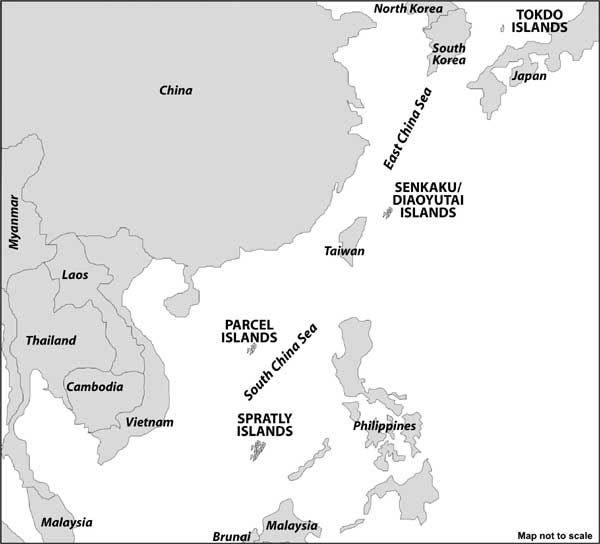
Tension has been brewing in Asia Pacific ever since China arbitrarily extended her EEZ and made territorial claims in adjoining seas based on her ‘9-dash line’. There has been confrontation with Japan, Vietnam and Philippines. In the recent past President Obama has given an assurance to Japan with regard to Senkaku islands. Philippines claims China has occupied and built structures on submerged banks, reefs and low tide elevations in the South China Sea and illegally claims that these are “islands” under international law – main bone of contention being the Mischief Reef, Scarborough Shoal. China also launched its ADIZ war that has led even South Korea to declare her own ADIZ.

With respect to Vietnam, this time it is no massive attack but more the tactics of a shark at sea, disguised as a sea wolf, circling its prey. The recent escalation began on 27 May when China shifted her oil rig Haiyang Shiyou in Vietnamese waters to a new location 23 nautical miles from its original location (also within Vietnam’s EEZ) where it had been deployed since 1st May. The attacks on Vietnamese Coast Guard vessels commenced next day onwards, asking them to leave Vietnamese waters in the East Sea. The tactics employed by Chinese forces are 2-3 ships surrounding individual Vietnamese fishery-cum-surveillance ships and continuously firing water cannons; a tactics that by itself has been causing injuries to Vietnam Coast Guard personnel. In addition, Chinese vessels have tried to ram Vietnamese vessels from multiple directions simultaneously, forcing them to move to avoid collision – all this with Chinese aircraft hovering overhead and even making low level intimidator passes over the Vietnamese vessel. At one point of time, two Chinese Coast Guard boats and many other Chinese vessels besieged four Vietnamese ships including two Coast Guard boats and again tried to ram Vietnamese vessels with Chinese planes hovering low overhead. Vietnam Coast Guard has displayed prudence, remaining calm in face of provocations. These Chinese tactics are being repeated in Vietnamese waters.

In the recent past, Chinese troops have resorted to similar intimidating tactics and even jostling with India troops during transgressions across the Sino-Indian border. This is in addition to inching forward to grab more and more territory through developing roads and tracks across the LAC. While an about ten kilometer long road had been built in the area of Pangong Tso through such silent creeping over the years, recent media reports indicating China constructing a road in Asaphila area of Arunachal Pradesh, if true, is presumably aimed at bringing the Indian airfield at Tuting within effective artillery range. But just as India has to contend with China on its own, Vietnam would have to do so as well. In the case of ASEAN countries it may not be a case of false alarm for long. If President Obama is advocating use of military force unilaterally if necessary, why would China remain behind when President Xi Jinping came to power vowing to restore the greatness China enjoyed for centuries, with the risk calculation matrix diminished in absence of any effective security structure in the region save US alliance with some countries (like Japan) and US Pivot Asia in limbo.

Both India and Vietnam seek to engage with China politically and economically, while seeking to maintain their autonomy in a multi-polar world.

US Defence Secretary Chuck Hagel recently stated “In recent months China has undertaken destabilising, unilateral actions asserting its claims in the South China Sea”, which has been pooh-poohed by Wang Guanzhong, Chinese Army’s Deputy Chief of Staff. China has so far been following the policy of ‘push and shove, till stonewalled’ but with increasing belligerence – a recipe that can lead to escalation of hostilities. While China’s maritime disputes with Japan, the Philippines, and Vietnam have escalated, US and most observers don’t appear concerned about possibility of escalation but no one is sure about it either. Vietnam does not have the luxury of a US-Japan type of alliance though in a time of crisis, both Russia and US would be loathe to abandon Vietnam given Vietnam’s strategic location in East Asia and geopolitical realities, as indicated by supply of Russian submarines to Vietnam as well as US warming up to Vietnam. At the same time, China appears sanguine that her neighbours would not prefer to align with a weakening US and would not fight back either, China having effectively divided ASEAN with her economic clout over some members by simply buying out countries like Cambodia and Laos.

India-Vietnam strategic partnership is strong and includes defence. A MoU signed by Defence Ministers of both countries provides for cooperation in national defence, navy, air defence and military training. China’s rise and assertiveness pose challenges for both India and Vietnam though not very similar. Economic and trade ties between India and Vietnam are on the upswing, India is likely to get more involved in developing Vietnam’s energy sector on a sustained basis especially since India has long been involved in developing Vietnam’s oil and gas sector. However, China has signaled India not to develop Vietnam’s oil and gas blocks in areas contested by China, this even as China is continuing with numerous development projects in Pakistan Occupied Kashmir especially in Gilgit-Baltistan region, all of which legally belongs to India.

Vietnam has the option to follow the path taken by Philippines, latter having been forced to take the issue to the UN after exhausting all other options post China occupying the Mischief Reef in 1995. Through the UN, Philippines is seeking a legal award on the interpretation and application of UNCLOS; an injunction that Philippines is legally entitled to a maritime zone drawn from its baseline comprising a territorial sea, contiguous zone, EEZ and continental shelf, plus seeking a ruling that China’s claim to the South China Sea based on its 9-dash line is unlawful. Philippines had to do so despite Chinese warnings that the issue should not be internationalised. Vietnam may have to follow suit. Both India and Vietnam seek to engage with China politically and economically, while seeking to maintain their autonomy in a multi-polar world. Hopefully, China will resort to resolving territorial disputes with her neighbours in peaceful manner that she propounds outwardly.

Asia's Greatest Fear: A U.S.-China War

How would it start? Who would win? Welcome to World War III. 
June 9, 2014


How does the unthinkable happen? As we wind our way to the 100thanniversary of the events that culminated in World War I, the question of unexpected wars looms large. What series of events could lead to war in East Asia, and how would that war play out?

The United States and China are inextricably locked in the Pacific Rim’s system of international trade. Some argue that this makes war impossible, but then while some believed World War I inevitable, but others similarly thought it impossible.

In this article I concentrate less on the operational and tactical details of a US-China war, and more on the strategic objectives of the major combatants before, during, and after the conflict. A war between the United States and China would transform some aspects of the geopolitics of East Asia, but would also leave many crucial factors unchanged. Tragically, a conflict between China and the US might be remembered only as “The First Sino-American War.”

How the War Would Start

Fifteen years ago, the only answers to “How would a war between the People’s Republic of China and the United States start?” involved disputes over Taiwan or North Korea. A Taiwanese declaration of independence, a North Korean attack on South Korea, or some similar triggering event would force the PRC and the US reluctantly into war.

America's Grand Strategy Disaster

June 9, 2014

There is no excuse for Washington’s failure to articulate a clear and concise set of core principles that will guide its foreign policy path.

While the United States today faces a whole host of challenges from the rise of China, Russia’s recent annexation of Crimea, the question of Iran’s nuclear program to the ongoing civil war in Syria it faces a much more basic challenge that pales in comparison to all the rest. America does not have a coherent, functioning grand strategy.

No nation—superpower or otherwise—can afford to conduct its foreign policy in such a manner. And of course, the United States can implement a grand strategy—we have done it before and we can certainly do it again. The question seems clear: does America want a grand strategy when it comes to its foreign policy goals and aspirations?

It is beyond dispute that the failure to articulate a grand strategy is certainly dangerous. Unless the U.S. and its adversaries understand what the nation seeks to achieve, the boundaries to permissible challenges, and the limits to its forbearance—we are asking for a crisis, which will emerge when other states underestimate what truly matters to Washington. And America itself may be confused as to what it really values until it struggles during a moment of crisis.

What is Grand Strategy?

The first place to begin is with the question of what grand strategy is in the first place. Some define it in narrow terms, relating it to military and national security concerns; while others define it broadly to mean political, economic, technological, and military matters. For myself, grand strategy, in its simplest form, is a fundamental awareness and articulation of what a nation seeks to achieve in foreign policy—what kind of world it hopes to build and what resources it will employ to operate in that world.

In the late 1940s, George Kennan defined the concept of containment, which provided the intellectual foundations of American grand strategy for the remainder of the 20th century. During the next forty or so years, generations of American policymakers and the people—whether democrat or republican, liberal or conservative, interventionist or isolationist—knew what the United States stood for in the world, and the purpose behind its foreign policies. They knew in the most elegant sense that the United States had committed itself to prevent the spread of Soviet communism—no matter what. For decades, policymakers in Washington pursued policies that sought to contain the power and influence of Moscow. Through persistence and strength (including a number of debatable policy choices), we won that struggle despite the fact that no one—and I mean literally no one—saw the defeat of the Soviet Union coming.

Why is it Important for the U.S. to Have a Grand Strategy?

Fundamentally, it is critical for the United States to have a grand strategy. Without one, the nation, its leaders, and people will experience a sense of drift and confusion. How do we know what is important, what threatens our interests, when we should act, and what instruments of power should we use? Essentially, a coherent grand strategy provides the United States with an overarching sense of purpose in its international affairs. It helps to build domestic support and provide international clarity for its foreign policies. Indeed, there is no excuse for not having one.

In a recent article in the New Yorker, David Remnick quotes President Obama, as saying that the United States does not need a new grand strategy. Remnick writes, “Obama told me that what he needs isn’t any new grand strategy—‘I don’t really even need George Kennan right now’ states Obama ‘but, rather, the right strategic partners.”

On the contrary, a new grand strategy is precisely what the nation needs. I would argue the current sense of confusion in American foreign policy today traces directly to Washington’s failure to articulate a post-containment grand strategy for the U.S. Keep in mind that grand strategy tells the United States, as examples, who its “strategic partners” are and what they should seek to achieve through collaboration.

The problem for the U.S. is that containment no longer provides a coherent grand strategy. For some, America is perceived as pursuing a strategy of containment as it tries to “contain” China with its "pivot" or "rebalance” to the Asia-Pacific—while avoiding the word “contain.” In the case of Iran, Washington for years has relied on a strategy of economic sanctions as a way to "contain" Iran's nuclear aspirations. A mere Google search of containment will show that the idea is still very much on people's minds.

As I wrote in 2012, containment as a basis for grand strategy died more than twenty years ago. While it was once an immensely successful policy, the risk of adhering to containment or believing that we do not need a modern grand strategy promises certain foreign policy failures.

Ukraine: Why Is the US Trying to Restart the Cold War?


By DIANA JOHNSTONE
JUNE 2014

Attached is an important op-ed by Diana Johnstone. She places the Ukraine Crisis in a very different perspective than that portrayed by the mainstream media, the neoconmen, and the neoliberal globalists. Note particularly her reference to the meeting in Yalta during September 2013. This has not been widely reported on but is, I think, important to anyone’s understanding of the West’s (US, NATO, and EU) agendas that are now playing out. More background information about this Yalta meeting can be found these links: 

Tightening the U.S. Grip on Western Europe

Washington’s Iron Curtain in Ukraine

, COUNTERPUNCH, WEEKEND EDITION, 

[Reprinted with permission of the editor of Counterpunch]

NATO leaders are currently acting out a deliberate charade in Europe, designed to reconstruct an Iron Curtain between Russia and the West.

With astonishing unanimity, NATO leaders feign surprise at events they planned months in advance. Events that they deliberately triggered are being misrepresented as sudden, astonishing, unjustified “Russian aggression”. The United States and the European Union undertook an aggressive provocation in Ukraine that they knew would force Russia to react defensively, one way or another.

They could not be sure exactly how Russian president Vladimir Putin would react when he saw that the United States was manipulating political conflict in Ukraine to install a pro-Western government intent on joining NATO. This was not a mere matter of a “sphere of influence” in Russia’s “near abroad”, but a matter of life and death to the Russian Navy, as well as a grave national security threat on Russia’s border.

The perils of leaning forward

Jun 2014

(Stringer/Reuters) - U.S. President Barack Obama takes part in a ceremony during the \"Freedom Day\" anniversary in Warsaw's Castle Square June 4, 2014. Obama's visit to Poland coincides with the \"Freedom Day\" anniversary, marking the holding of the country's first partially-free elections 25 years ago, which led to the end of communist rule and the victory of the Solidarity trade union. REUTERS/Filip Kimaszewski (POLAND - Tags: POLITICS ANNIVERSARY)
The controversy over Army Sgt. Bowe Bergdahl has largely obscured what should have been an important initiative by the Obama administration. The president’s trip to Polandwas one more step in what is going to be the central task of U.S. foreign policy over the next decade: deterring a great power challenge. The world today — for most countries, one that is stable, peaceful and open — rests on an order built by the United States that, since 1989, has not been challenged by any other major player. How to ensure that these conditions continue, even as new powers — such as China — rise and old ones — such as Russia — flex their muscles? 

Russia’s actions in Ukraine are a serious challenge, and President Obama has responded seriously, enacting sanctions, rallying support in Western Europe and reassuring Eastern Europe. The president’s critics in Washington feel that this isn’t enough, that he is showing a dangerous weakness. 

Writes a weekly foreign affairs column

You may also like...

America’s Late Imperial Dilemma


JUN 2014 

Ian Buruma is Professor of Democracy, Human Rights, and Journalism at Bard College. He is the author of numerous books, including Murder in Amsterdam: The Death of Theo Van Gogh and the Limits of Tolerance and, most recently, Year Zero: A History of 1945. 

NEW YORK – US President Barack Obama is under attack – from so-called liberal hawks, more or less to the left of center, as well as from active interventionists on the right – for being a weak president, leading a war-weary (even world-weary) America in retreat.

Obama’s critics, whether on the left or the right, believe that the United States has a unique calling to impose its will on the world. The only difference is that the former justify their views with talk of democracy and human rights, while the latter do not need any such justification, because, after all, America is the greatest country on earth.

Either way, the premise that the US should lead forcefully rests on the idea that without a benevolent hegemonic power to police the world, chaos will ensue and more malevolent forces will take over. This opinion was expressed most clearly in a recent article by the conservative foreign-policy thinker Robert Kagan.

A Guide to Exploiting Social Media Sites for Intelligence Purposes

June 8, 2014

For those of you interested in how open source intelligence (OSINT) data is being collected from social media sites and used in real-world situations, this interesting unclassified 32-page document entitled “Social Web Sites: A Guide for the Open Source Analyst,” is now available online.

The document shows which sites, in the opinion of the authors, generally produce the best intelligence information. Not surprisingly, Facebook, Twitter, Flickr and Linkedin rank very high in the opinion of OSINT intelligence analysts.

Scary and informative at the same time, this document is a must read. After reading this, I am glad that I have never had a Facebook page. Nor will I ever have one any time soon!

Metadata Analysis as an Intelligence Tool

June 8, 2014
The Potential of Social Network Analysis in Intelligence
Kristan J. Wheaton and Melonie K. Richey
e-International Relations
January 9, 2014

The legality of the National Security Agency’s (NSA’s) use of US citizens’ metadata to identify and track foreign intelligence organizations and their operatives is currently a subject of much debate. Less well understood (and consequently routinely misreported) are the capabilities and limitations of social network analysis, the methodology often used to evaluate this metadata.

One of the first causes of confusion is definitional. Social network analysis is often linked to an inappropriate degree with social media. True, social media such as Facebook and Twitter are frequently used as rich data sources for social network analysis, but understanding the importance of networks in the affairs of states has been around at least since Machiavelli.[1]

In addition, the first modern version of what would come to be called social network analysis was developed not by an intelligence agency or computer scientist but by Columbia professor and psychosociologist, Jacob Moreno, in 1934. These “sociograms,” as Moreno called them were used to graph individual preferences or relations within a small group.

Little did Moreno suspect that his method for understanding the relationships between people, when combined with graph theory and the processing power of computers, would allow for the detailed analysis of thousands of people or organizations with hundreds of thousands of connections between them (See Fig. 2). [2]

Unlocking the Cyber Tool Kit: Integrating Cyber Attack Options into the Targeting Cycle at the Operational Level of War

By ENS Shane Halton, USN
May 2014
https://www.usnwc.edu/mocwarfighter/Article.aspx?ArticleID=25

In their new book The Second Machine Age Work: Progress, and Prosperity in a Time of Brilliant Technologies, authors Erik Brynjolfsson and Andrew McAfee note that there is often a productivity lag following the introduction of new technologies to an industry. This lag exists because while the new technology offers potentially revolutionary gains in productivity and efficiency, it often takes time to develop and implement the business practices most capable of harnessing the power of the new technology and to phase out old practices based on suddenly obsolete technologies.

The U.S. Navy is currently undergoing just such a productivity lag with regards to “cyber warfare.” The potential advantage of employing cyber capabilities to accomplish operational objectives is apparent after even a cursory glance at headlines from the past two years. Secure databases have been raided, vital information continues to be compromised at an alarming rate, industrial production has been directly attacked by malware, and new vulnerabilities in critical systems across the world are discovered daily. It is clear that there are actors, state-funded or otherwise, working alone and collectively, that are capable of wielding immense power in our digital age.

However, it is not yet clear how the Navy should best integrate cyber capabilities into existing operational frameworks and sufficiently educate military personnel as to the cyber capabilities that have combined to form an important new dimension of modern warfare. This article argues that, for the Navy to effectively harness the tools of cyber warfare and make best use of the personnel who develop and employ those tools, two things must occur.

China May Ban IBM Servers Amid Escalating Cyber War With U.S.


May 27, 2014 
http://www.cruxialcio.com/china-may-ban-ibm-servers-amid-escalating-cyber-war-us-7862


Reports indicate that the Chinese government may bar its banks using servers made by U.S. manufacturing IBM. Tensions between the two countries are mounting amid mutual recriminations over cyber espionage. Reuters 

On Point 

Case Studies 

White Papers 

Chinese authorities may move to ban banks in the country from using servers made by IBM, according to a published report.

The plan comes amid mutual recriminations and charges of cyber-espionage between the U.S. and China, and is seen as a largely retaliatory act by the People’s Republic.

Bloomberg reported Tuesday that the Chinese government may cite security concerns to formally block the use of high-end IBM servers at its banks.

Such a move could cost IBM millions of dollars in lost hardware and maintenance sales. The ban could include the System z mainframe and Power line of servers.

The report, which cited unnamed individuals said to be familiar with the government’s plans, said China wants its financial institutions, including the People’s Bank, to replace Big Blue machines with hardware from local suppliers.


What to Do:Understand that China’s concerns about the security of U.S.-made IT products are largely political in nature. Conduct internal security testing or use reliable third-party reports for all new systems.

China accuses Cisco of supporting US cyberwar efforts

May 2014

China is attacking secret surveillance programs of the U.S. government with harsh words from its state-controlled press, accusing Cisco of helping the U.S. in cyberespionage. 

The criticisms come a week after the U.S. indicted five Chinese military personnel for allegedly hacking into several U.S. companies for trade secrets. It marks the first time the U.S. has tried to criminally charge China for state-sponsored cyberattacks. But so far, the indictments have done more to damage relations between the two nations, compelling China to accuse the U.S. of hypocrisy with its own spying programs. 

China hit back again Monday when state-controlled media released a government report about the “unscrupulous” U.S. surveillance activities. 

“These operations have flagrantly breached International laws,” said the report, adding, “They deserve to be rejected and condemned by the whole world.” 

The government report, authored by China’s Internet Media Research Center, largely cited leaks from former U.S. National Security Agency contractor Edward Snowden, as well as articles written by foreign press groups. But it added that China had carried out its own investigation over several months and confirmed the spying activities. 

The report claims that China has been the main target of U.S. surveillance programs. “Chinese government offices are a particular target of U.S. spy operations,” the report said, adding that local banks, telecommunication companies and schools have also suffered cyberattacks from the U.S. 

The Implications of the Vodaphone Report About Global Eavesdropping on Cellular Networks

Cellphone operator wades into surveillance debate
June  2014

NEW YORK (AP) — Wireless carrier Vodafone Group PLC is performing a tricky balancing maneuver by publishing a report on government surveillance of its subscribers in 29 countries — a release that reveals more than first meets the eye.

In the report published Friday, Vodafone, which has unparalleled global reach for a cellphone company, said six countries have demanded direct access to its network. That cuts Vodafone’s employees out of the surveillance process, removing one of the hurdles that can curb government overreach.

Vodafone would not say which countries have established these direct links. But in an exhaustively researched appendix to the report, the U.K.-based company sheds light on the legal frameworks that surround government interception in the 29 countries. The appendix reveals that six countries — Albania, Egypt, Hungary, Ireland, Qatar and Turkey — have provisions that allow authorities to request unfettered access.

In two other countries, India and the U.K., legal provisions are unclear as to whether government officials are allowed to have direct access, according to the report.

CIA Holding Academic Conference at Georgetown University This Week

CIA to Hold First Public Conference at Georgetown on National Security

Georgetown University News
JUNE  2014

The Central Intelligence Agency’s (CIA) first public conference on national security will take place at Georgetown June 11 with scholars and experts from both academia and the intelligence community.

The conference, also sponsored by the university’s Security Studies Program, will explore, among other topics, the status of intelligence work in the 21st century, cybersecurity threats and the balance between secrecy and transparency.

John Brennan, CIA director 

“The CIA and [Georgetown’s] security studies program are natural partners for this important conference given our mutual focus on the key national security challenges facing the United States,” says CIA Director John Brennan. “By bringing together leaders from across the government, private sector, academia, policy institutes and the media, I believe this joint conference will generate fresh ideas for the future of our country and the intelligence community.”

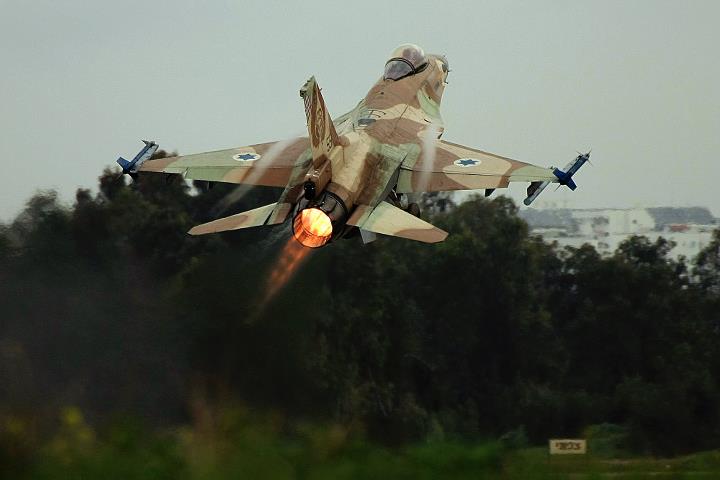
Operation Opera: how 8 Israeli F-16s destroyed an Iraqi nuclear plant 33 years ago today

Jun 07 2014


33 years ago, one of the most famous and dangerous long range attack mission in Israeli Air Force history.

Israeli Air Force’s interest in the Lockheed Martin F-16 was born after the Yom Kippur War when the IAF realized that, alongside the F-15 Eagle, they needed a new, advanced, relatively cheap, multirole jet.

The negotiations with the U.S. to acquire the F-16 started in 1975 and after some years of delay, caused by the Middle East tensions, the Fighting Falcon sale was finalised in 1979 as result of the Camp David peace treaty between Israel and Egypt.

The first F-16s were delivered to the IAF in 1980 and the following year, before all the Netz (as the F-16A is called by IAF) were handed over, the new Vipers took part in one of the most famous mission in Israeli Air Force history, the Operation Opera.

The operation was aimed at destroying the Iraqi Osirak nuclear plant, also called Tamuz 1, at Al Tuwaitha, 12 miles southeast of Baghdad.


As explained by Bill Norton in his book Air War on the Edge, A History of the Israel Air Force and its aircraft since 1947, the IAF conducted this attack following Saddam Hussein’s bellicose claims which led to the Israeli fear that the French-built facility could have the capabilities to produce weapons-grade fissionable material.

D-Day Validates Realism


U.S. WWII policy in general, and the landing at Normandy in particular, were based on realist logic. 

Most of the U.S. foreign policy establishment is aghast at the foreign policy doctrine President Obama outlined at West Point last week, and even more so by the fact that administration is now describing its vision for foreign policy as “Don’t do stupid sh*t.” And, as Henry Kissinger has often pointed out, when Americans want to be critical of foreign policy, they often slap on the label “realism.” And so what passes for Obama’s foreign policy doctrine is now being demonized as realism.
To be fair, as I noted immediately following the West Point speech, certain elements of President Obama’s foreign policy mimic the Nixon Doctrine, and Nixon and Kissinger are seen as the penultimate realists of post-WWII U.S. foreign policy. That being said, I’m in full agreement with John Allen Gay when he argues that just because Obama “resists the idealism of the neoconservatives and humanitarian warriors while also rejecting isolation does not mean he is therefore a realist.”
One of the more egregious attempts to tie Obama’s supposed realism to his failings in foreign policy comes to us courtesy of Roger Cohen. In his column for the New York Times this week, Cohen more or less deems Obama unworthy of visiting the site of D-Day to commemorate the 70th anniversary of the allied landings on the beaches of Normandy on June 6, 1944.

To be clear, I find the New York Times reporting and opinions to be fantastic reads, and the newspaper counts me among its subscribers (I actually have two subscriptions at the moment, but that’s a different story). Moreover, I have often found Cohen’s columns in particular to make a great deal of sense (especially his commentaries on Iran). Which is why I find this week’s column to be particularly noteworthy, and in need of a response.

9 June 2014

The collapse of the Shimla Accord


Inder Malhotra | June 9, 2014

Zulfikar Ali Bhutto reneged on his commitment to Indira Gandhi much earlier than some had anticipated.

Shortly after the shining victory in the 1971 Bangladesh war, Indira Gandhi embarked on the more arduous task of restoring peace with India’s western neighbour. Zulfikar Ali Bhutto, prime minister of what was earlier only the western wing of the larger Pakistan, needed a settlement a lot more acutely. Both sides knew, however, that their objectives were conflicting and therefore difficult to achieve. Gandhi wanted a final solution of the Kashmir issue once and for all. Bhutto aimed at getting back the 93,000 prisoners of war and 5,000 square kilometres of his country’s territory under Indian possession.

Consequently, there were intense “preparatory” negotiations between Gandhi’s trusted aide, D.P. Dhar, and Aziz Ahmed, a hardline Pakistani foreign secretary so liked by Bhutto that he was made minister of state for both foreign affairs and defence, controlled by the Pakistani prime minister himself. Only much later it became known that these conversations were preceded by “informal talks in London” between Gandhi’s principal aide, P.N. Haksar, and two of Bhutto’s emissaries. Before the two prime ministers met at Shimla in the last week of June 1972, Dhar and Ahmed had agreed on two points: to convert the UN-sponsored Ceasefire Line in Jammu and Kashmir into the Line of Control to be “respected” by both sides, and settling all disputes through peaceful and bilateral means.

In Shimla, Pakistan was tersely told that while India would readily return all Pakistani territory it had captured during the war, nothing of the kind would be done in relation to the areas in Kashmir that had been won. As for the 93,000 PoWs, Gandhi told Bhutto, politely but firmly, that they could not be returned without the consent of Bangladesh, which had not yet been recognised by Pakistan, and was determined to put at least 195 Pakistani officers and men “on trial for war crimes”. (It was a year later that, as a result of a trilateral agreement between India, Bangladesh and Pakistan, the PoWs were sent home without anyone having to face a trial.)

On recognising the LoC in J&K as a permanent border between India and Pakistan and thus settling the Kashmir problem on the basis of status quo, Bhutto’s position was that no ruler of Pakistan could accept this and hope to “survive”. At the same time, he pleaded that he could not go back “empty handed”. Of course, he promised to “forget the past and forge an entirely new relationship with India”. No wonder, the failure of the Shimla conference was announced on the evening of July 2. However, as often happens during India-Pakistan parleys, Bhutto suggested, after a dinner hosted for him by Gandhi, that the two of them should make a “last-ditch” effort to break the deadlock.

The North-eastern challenge


Published: June 9, 2014
Sanjoy Hazarika

In a region like the North-east, where few groups actually constitute a numerical majority, the State has been involved in unending and fatiguing efforts to deal with a cycle of demands and counter-demands

The recent attacks and killings in Assam, Manipur and Meghalaya by armed non-State groups represent a challenge and test for the Narendra Modi government and the need to understand the frustrating complexities of the North-eastern region.

Things are not being made easy after strident demands by the newly elected Bharatiya Janata Party MPs from Assam to rid the State of “Bangladeshis,” a phrase that many from the minority community say is aimed at targeting them, irrespective of nationality, and one that can swiftly turn into a security nightmare not just for governments in Delhi and Dispur, but also for ordinary people caught up in a storm. For a moment, the “Bangladeshi” issue has moved away from the headlines because of other events that have captured public attention.

A Superintendent of Police in Assam’s Karbi Anglong district was shot dead when his tiny unit was engaged in a fight with an armed group wanting a separate state for the Karbi community in the jungles of Assam’s eastern hills — the second major setback that the police in the State have suffered, an Additional Superintendent having fallen earlier to the bullets of an armed faction from the Bodo tribe.

Some 400 kilometres west of Karbi Anglong, blurred images emerge of a woman who was executed gangland style execution after she resisted rape by men from the “Garo National Liberation Army” in Meghalaya. The GNLA was launched five years back by a former police officer, who is now in police custody. But the group is still active, extorting funds, and carrying out strikes against security forces and civilians.Rise of insurgent factions

The law and order situation in the Garo Hills, the home district of Meghalaya Chief Minister Mukul Sangma, is such that a top official says that his men could not have moved to the village of the murdered woman at night as they got word of a possible attack on police convoys. They got the news when the woman’s family walked into a police station and told them what had happened. This is a poor reflection of police capacity, underscoring the need for better equipment as well as strong political leadership.

These issues underline both the ethnic and social complexity of the North-eastern region, home to over 200 ethnic communities, as well as how political mobilisation and armed violence have changed in these past years. While the principal militant factions have been sitting at the negotiating table with New Delhi or in “designated camps” for years, be it the Nagas, Assamese, Karbis, Bodos and Garos, they are being sharply challenged by smaller, more violent, breakaway factions.

Armed with new weapons which are easily available in the illegal small arms markets in the region, combined with new technology and better connectivity, these groups are demonstrating the seamless manner in which they can move across State borders.

Counter-Terrorism: The Deal With The Devil That Terrifies Asia

http://www.strategypage.com/htmw/htterr/articles/20140608.aspx

June 8, 2014: Pakistan’s long (since the 1970s) support of Islamic terrorism has made it something of a pariah to all its neighbors. This is because Pakistan appears to have lost control of the Islamic terrorist groups it has provided support and sanctuary to for so long. This puts all the neighbors at greater risk of attack by Islamic terrorists who still operate out of bases in Pakistan. Those threatened include India, Afghanistan, China, Iran, the Moslem Central Asian nations and, worst of all, non-Moslem nations worldwide. Especially since September 11, 2001 Pakistan was increasingly and often publically criticized for its terrorism policy. This became more common since 2011 as many of the terrorists it supported have declared war on their host and the neighbors have concluded that Pakistan has lost control of the terrorism monster it created. Now the neighbors are discussing this situation with each other and international organizations. Pakistan appears unable to fix itself or deal with the international terror threat it created.

Pakistan is still reluctant to admit it is the cause of so many problems but the neighbors are not being very understanding. China, who supplies a lot of Pakistan’s weapons and foreign investment, has told its troublesome neighbor to fix the situation or see China go from being a helpful to a hostile neighbor. The other neighbors have had a similar reaction, but given China’s place as Pakistan’s most important ally, Pakistan can no longer ignore the problem.

Yet the Pakistani government really does not have a lot of control over the situation. That’s because its intelligence service, the ISI (Inter Service Intelligence agency) is supposed to be controlling the terrorists but is itself out of control and few politicians want to mess with the ISI. It wasn't always that way. The ISI was created in 1948 as a reaction to the inability of the IB (Intelligence Bureau, which collected intelligence on foreign countries in general) and MI (Military Intelligence, which collected intel on military matters) to work together and provide useful information for senior government officials. The ISI was supposed to take intel from IB and MI, analyze it and present it to senior government officials. But in the 1950s, the government began to use the ISI to collect intel inside Pakistan, especially on those suspected of opposing the current government. This eventually backfired, and in the 1970s, the ISI was much reduced by a civilian government. But when another coup took place in 1977 and the new military government decided that religion was the cure for what ailed the country and that ISI would be expanded to make this work. That meant encouraging Islamic clergy and groups to become even more active in politics and for Islamic terrorist groups to accept cash and other help from the government. The deal with the devil was made and there was, at least for the Islamic radicals, no going back.

What kept this nasty arrangement going for so long was the fact that until quite recently elected and military government alternated running Pakistan. Typically, the Pakistani generals seized control of the government every decade or so, when the corruption and incompetence of elected officials becomes too much for the military men to tolerate. The generals never did much better, and eventually there are elections, and the cycle continued. The generals controlled ISI and supported the pro-Islamic terrorism policy. Civilian government never had sufficient time or will to shut down ISI. The latest iteration began in 1999, when the army took over, and was voted out of power nine years later, pretty much on schedule. There followed, for the first time, another election that had one civilian government replace another. This has upset the generals considerably. Civilian governments tend to be hostile to the ISI, and apparently they are making a real effort to clear out many of the Islamic radicals in the ISI this time around. Then again, recent attempts by the government to take control of the ISI backfired when the generals said they would not allow it. Nothing is simple in Pakistan but this time is different and the ISI feels it is facing a grave threat.

Counter-Terrorism: The Hidden Menace In Pakistan

http://www.strategypage.com/htmw/htterr/articles/20140605.aspx

June 5, 2014: Islamic terrorism in Afghanistan and Pakistan is largely a Pushtun problem and is rarely noted outside the region. Pakistani Islamic terrorists are most often noticed when they kill people or blow something up. Most of this mayhem is caused by the Taliban, an organization formed by the Pakistani military in the early 1990s inside the Pakistani tribal territories. The membership was almost entirely Afghan Pushtuns living in refugee camps. After 2001 a Pakistani branch of the Taliban (staffed by Pakistani Pushtuns) was formed. Largely unnoticed (outside of Pakistan) is the fact that the Pushtuns have also been responsible for a lot more of the non-Islamic criminal activity inside Pakistan as well as most of the Islamic terrorism..

What is remarkable about this is that the Pushtun tribes comprise only 15 percent of the Pakistani population and are also the poorest and least educated minority. A unique feature of Pakistan is that it's 165 million people are all minorities, although the Punjabis (44 percent of the population) are the dominant one (not just in numbers, but in education and income as well). Closely allied with the Punjabis are the Sindis (14 percent), and together these two groups pretty much run the country. Karachi, the largest city in Pakistani, is in Sind, but contains residents from all over the country. Then there are Seraikis (10.5 percent, related to Punjabis), Muhajirs (7.6 percent, Moslems who came from India after 1947), Baluchis (3.6 percent) and other minorities amounting to about five percent. The Seraikis and Muhajirs live in Punjab and Sind.

Since September 11, 2001 there have been a lot more Pushtun fleeing to Pakistan's largest city, Karachi. This metropolis contains eight percent of the nation's population (14 million people) and produces a quarter of the GDP. Islamic radicals have long been present in the city. The Taliban have established a presence among the two million Pushtuns there. But a lot of the criminal gangs in Karachi are Pushtun and these are the gangs the Taliban often work closely with. Moreover there are now more murders in Karachi than in the tribal territories and this has been a trend since 2010. Finally, in 2013, the number of terrorist deaths in the northwestern tribal territories fell below 2,000 and the murders in Karachi rose above 2,000. Pakistani security forces are acutely aware of who is doing most of the mayhem.

A lot of the violence in Karachi is the result of the Taliban trying to prevent the police from stopping the Pushtun radicals establishing save havens in Karachi. The Taliban are succeeding at this, and many Islamic terrorist attacks in non-tribal Pakistan (where over 90 percent of the population is) are coming out of Karachi Pushtun neighborhoods. The Pushtun gangsters cooperate with the Taliban to keep the police out of Pushtun neighborhoods.

Electronic Weapons: The All Seeing Towers Of Iraq

http://www.strategypage.com/htmw/htecm/articles/20140607.aspx

June 7, 2014:

Iraq recently bought seven Aerostats and 14 RAID towers from the United States in order to provide persistent vidcam and radar surveillance of large areas. The aerostats and towers were key American security tools in Iraq and Afghanistan where the U.S. used over 300 towers and dozens of aerostats. Some American allies used this equipment as well. Iraq is paying about $90 million for the aerostats, towers, sensors, associated equipment, training, spare parts and tech support.

The aerostats (tethered blimps) float at about 300 meters (a thousand feet) up, tethered by a cable that provides power and communications to the radar and day/night vidcams up there. The cameras can see out to 80 kilometers at that altitude, less than half that with a radar. The major problem is not weather, but ground fire from rifles and machine-guns. Locals like using the blimps as targets. Rifle fire won't destroy the blimps, but does cause them to be brought down more frequently for repairs. Normally, the blimps can stay up for 30 days at a time, but the bullet hole repairs can cause them to be brought down every few days.

Shorter steel tower systems also suffer gunfire damage, but rarely any that damages the equipment. It was soon found that tower mounted cameras were just as good as the aerostats, in most situation, and much cheaper. Thus there are more than twenty times as many tower systems as aerostat based ones in use.

In Iraq and Afghanistan the towers were introduced in 2003 and the aerostats a year later. The U.S. would set up the towers even for temporary bases. The tower provides the equivalent of a permanent UAV presence, which, just by being there, tends to discourage attacks, or any misbehavior in the vicinity of the base. The tallest tower is 32 meters (107 feet) tall allowing cameras to spot vehicles up to 25 kilometers away. Great for keeping an eye on thinly populated areas in a desert, which western Iraq has plenty of. The nine meter (30 foot) tower can see out to eleven kilometers, the 18 meter (60 foot) tower out to 16 kilometers and 25.5 meter (84 foot) tower out to 20 kilometers. The nine meter tower was adequate for most situations, which usually involved guarding a base, but the taller towers also served as a communications relay for widely dispersed troops. The towers were designed to be easily taken apart or erected by troops.

Reforming the European project

June 9, 2014
Parvathi Menon

The victory of Eurosceptic parties has underscored the need for the reform of a bloated institutional conglomerate with excessive overreach

The current tussle within the countries of the European Union over the choice of the next head of the powerful European Commission is but a fallout of the recent European Parliament elections that showed a popular surge in favour of Eurosceptic parties.

In fact, the results to the European elections came close on the heels of an even bigger electoral exercise in another and very different part of the world. The Indian and European Parliament elections could not have been more different in terms of purpose, scale and organisation. And yet, there are some commonalities like voter impetus. In both instances, the vote contained a clear anti-establishment message. Interestingly enough, voters in India and Europe, in separate but similar voices, rejected the policy packages that had adversely impacted their national economies and lives in the last five years.

Disenchantment

Another common feature of both elections was that the parties that were most effective in directing their campaigns toward the victims of the economic crises drew the biggest electoral dividends. Unlike India, in Europe it was not just the Right that rode on on the prevailing anti-establishment mood; the Left too played that role.

The European Parliament comprises 751 directly elected members, thus making it one of the largest democratically elected assemblies in the world. Together with other institutions of the European Union, its vast and expanding legislative and executive control over national governments is the reason behind the growing opposition to it.

Thus, the election results reflect popular disenchantment with the EU and the national governments that support it. It was a vote of protest against the economic crisis that has gripped the Eurozone and resulted in rising unemployment and economic hardship for a growing number of citizens.

The voter turnout varied quite sharply across countries, with the average at 43.09 per cent — marginally higher than in 2009.

The parties on the right of the political spectrum performed better in the richer countries of northern Europe where the impact of the economic crisis has been less sharply felt. This broad group includes established pro-EU centre-right parties — Angela Merkel’s centre-right coalition led by the Christian Democratic Union, for example — plus Eurosceptic, ultra-nationalist parties that represent the hard right.

It is the perceived surge in support of hard-right parties that has been read as a key outcome of the elections. These parties played on working class insecurities in developed EU economies over immigration flows from poorer, debt-ridden Europe economies.

INDIA: GENERALSHIP AND THE NORTHEAST – ANALYSIS


IPCS 
By IPCS
By Ashok Behuria , AS Lamba

An article by Thangkhanlal Ngaihte, an independent researcher, draws a negative dimension in its exhortation of linking the appointment of a General to oversee the Northeast-specific ministry in a perspective of Generalship, and alleging that this symbolises the BJP Government’s view of the need for military control over a “troubled region with the loyalty of its people being suspect.” He also alludes to Sanjib Barua’s reference to the practice of sending “Generals as Governors”.

Interpreting the Indian Army’s long history of involvement in the Northeast as one of just quelling the people is as naรฏve as forgetting the true causes of insurgency and turbulence between the tribes, states and the people, and as much a grave misgiving as the Army’s first induction in 1949 in the face of the Naga Revolt. The Indian Army’s acrimony towards the people of the Northeast has often been focused on and flogged endlessly, giving adverse publicity to the Army, but the ironic truth lies far from this perception. The history of conflict and military presence in this region needs to be put into perspective.

The phenomenon of conflict in this region can be traced back to the tenth century. WW Hunter (1879), the British Administrator, observed that the Northeast witnessed constant friction and tension between numerous ethnic groups, tribes and peoples from the tenth through the eighteenth centuries, leading to a series of wars with the Chutiyas, Ahoms, Kacharis, Tripuris, Meiteis, Mons, Burmese, Shuns and others. The accounts of Elwin (1962, 1964), Furer Haimendorf (1969, 1976), Hutton (1921), Mills (1922, 1926, 1937) and other British administrators also show that various ethnic groups, for example the Angami, Sema, Lotha, Ao, Rengma and Konyak and other Naga tribes were involved in feuds, inter-khel (clan) quarrels and headhunting. About Arunachal Pradesh, Elwin (1964:13) wrote: “In temper aggressive, reserved and suspicious, they have quarrelled among themselves for generations; there are still old blood-feuds taking their toll of human life and cattle-theft had long been common.”

The Indian Army’s bond with the Northeast is older than even people from the region would know. It is pertinent to recall that the EIC (East India Company) troops predominantly comprised soldiers recruited from Eastern India till the 1857 revolt. As the Eastern India publication of Princely States’ contribution to the Indian Army (2009) recalls, Cooch Behar, Tripura, and Manipur sent soldiers to take part in WW-I, the 1st Tripura Bir Bikram Manikya Rifles and the Tripura Mahabir Legion were part of the Burma campaign in 1943, and the Bihar Regiment and Assam Regiment troops participated in WW-II. When these small armies were disbanded, Communist and other militant movements in the Northeast drew recruits and arms from some of these, sowing the seeds of conflict.