12 July 2014

British Combatants of a Different Religious War


By ALAN COWELLJULY 10, 2014 

The memorial to the victims of the London terrorist attacks of July 7, 2005.

LONDON — It was nine years ago on July 7, 2005, that four suicide bombers killed 52 people on the London transit system during the morning rush hour, introducing Britons to a kind of terrorism that Americans had confronted on Sept. 11, 2001.

This week, the memory conjured grief and defiance in uneven measures: In Hyde Park, just hours before survivors gathered on Monday to recall the bloodshed, the steel pillars that form a monument to the dead were defaced with stenciled slogans redolent of that era: Blair Lied, Thousands Died; 4 Innocent Muslims.

Britons probably did not need what one survivor called this “immature act” to grasp that Islamic militancy has not gone away, and may indeed have intensified, its focus widened to the highways and deserts and battered cities of Iraq and Syria, drawing ever more young Britons to the black banner of far-flung jihad.

The police in the northern city of Manchester, for instance, said that twin 16-year-old girls of Somali descent who disappeared in June were probably en route to join a brother fighting for the Islamic State in Iraq and Syria — the fierce militants who have spilled from Syria into Iraq and declared an Islamic state.

That disclosure came after intense news coverage of a group of young British Muslims — three from Cardiff, Wales, and one from Aberdeen, Scotland — said to have traveled to Syria to join militants who now include an estimated 500 British Muslims.

In court this week, two women from London denied a charge that they had tried to help finance terrorism. One of them, the prosecution said, had been found carrying 20,000 euros, or $27,000, in high-denomination bank notes in her underwear when she tried to board a plane to Turkey — the conduit to Syria — in January.

Time has woven the July 7 bombings into the national memory, dulling the shock that flowed from the realization that the assailants were not citizens from some exotic, distant society, but, mostly, British-born Muslims who had grown up in a land that prided itself on tolerance and inclusion.

Since the so-called Arab Spring, however, a new militancy has arisen, beckoning young Muslims in Britain and many other parts of the West to join its ranks. It has become axiomatic to conclude that some of them will return to wreak havoc in their own lands.

Indeed, in an online posting showing what appeared to be homemade bombs, one Briton in Syria, Nasser Muthana, 20, declared: “So the U.K. is afraid I come back with the skills I have learned.”

There is, however, a counternarrative, evoking the fine balance between national security and civil liberties, and to the ever-more strident calls for tighter security laws such as those introduced in recent days by France and the United States. On Thursday, Prime Minister David Cameron pledged to enforce stricter electronic surveillance laws.

“It is a loud official drumbeat and it is getting ever louder,” The Guardian newspaper said in an editorial.

On the anniversary of July 7, moreover, Sir Richard Dearlove, former head of Britain’s MI6 secret intelligence service, said that the latest fighting in the region was “essentially a Muslim on Muslim affair” and that both the government and the media were exaggerating the threat.

“It is time to move away from the distortion that 9/11 understandably created in our national security stance,” he said. “We must continue to cover the Middle East as a political requirement but without putting the incipient terrorist threat to ourselves at the center of the picture.”

The view contradicted the Western orthodoxy.

“This is a global crisis in need of a global solution,” Eric H. Holder Jr., the United States attorney general, told a European audience this week. “If we wait for our nations’ citizens to travel to Syria or Iraq, to become radicalized, and to return home, it may be too late to adequately protect our national security.”

Pro-Moscow Ukrainian Separatist Forces Are a Patchwork of Militias

Sabrina Tavernise and David M. Herszenhorn
New York Times
July 10, 2014

Patchwork Makeup of Rebels Fighting Ukraine Makes Peace Talks Elusive

DONETSK, Ukraine — One rebel group, Oplot, comes from the Ukrainian city of Kharkiv. Another, the Russian Orthodox Army, is composed of Russians and Ukrainians. A third, named for a river, Kalmius, is made up mainly of coal miners.

This motley mix forms just part of the fighting force of Ukraine’s eastern uprising. It is more patchwork than united front: Some groups get along with others. Some do not. And their leaders seem to change with the weather.

“I can’t keep them straight anymore,” said a fighter who was buying walkie-talkies in preparation for what fighters here expect will be a major showdown with Ukraine’s military.

The tangle of rebel groups presents a challenge for Ukraine as it struggles to quell a separatist movement inflaming its eastern edge, now in its fifth month. While the United States, the European Union and Russia would like to arrange a negotiated settlement, the fluidity and occasional hostility among the rebel groups is complicating the difficult task of getting peace talks off the ground.

The calculus may have changed recently with the appearance in Donetsk of Igor Girkin, a Russian citizen and rebel leader who goes by the name Strelkov, or shooter. He surfaced over the weekend along with hundreds of rebels who abandoned their positions after being overpowered by the Ukrainian military in weeks of fighting in the city of Slovyansk.

His presence raised the question of the role of Russia, Ukraine’s powerful neighbor, whose next steps will be crucial to this country’s fate. The West has accused Russia of arming the rebels, even while the Kremlin called for a peaceful resolution of the conflict.

But in recent weeks, fighters have complained that Moscow abandoned them, a sentiment that burst into public view this week when a political strategist closely allied with the Kremlin was shouted at by fighters at a news conference here.

The deputy prime minister of the Donetsk People’s Republic, Andrei Purgin, said in an interview on Wednesday that Mr. Strelkov was trying to stitch the patchwork of militias into one professional army, to which soldiers would swear an oath. But the task is difficult, he said, as some fighters want to stick close to home.

“It is our hope that it will be one collective organ,” Mr. Purgin said, sitting on a yellow couch in the government administration building in Donetsk that the rebels control.

As the rebel groups prepared for a fight in Donetsk, Ukraine’s military continued to move troops and machinery into place around the city. Just south of Donetsk on Wednesday, Ukrainian forces steered a long column of more than 100 military vehicles toward the city. The column included a half dozen tanks, mobile launch rocket systems, armored personnel carriers and open-backed trucks crammed with troops.

A Framework for NGO-Military Collaboration

July 9, 2014

A Framework for NGO-Military Collaboration

What do military professionals need to know about NGOs? The literature on NGOs includes very little about NGO-military relationships in troubled areas. Moreover, the U.S. military fails to convey or encourage an adequate understanding of NGOs in its publications and mid-career military education. Drawing from scholarly literature, case studies, and practitioner interviews, I theorize that the efficacy of NGO-military collaboration varies with the type of NGO (international NGO (INGO) or local NGO (LNGO)) and the type of operation. I crystallize this argument into a typology of NGO-military outcomes. I find that military cooperation with international NGOs is most productive during humanitarian-assistance and disaster-relief operations, whereas military cooperation with local NGOs is most productive during conflict and post-conflict operations. 

The operational environment (OE) requires comprehensive cooperation between military and civilian actors, and state and non-state actors. There are in excess of 36,000 nongovernmental organizations (NGO) operating throughout the world, and the United Nations (UN) lists nearly 20,000 international nongovernmental organizations (INGO). Yet, there is an existing history of NGO antipathy to cooperation and identification with military forces. U.S. military professionals and NGO professionals, despite differing operational approaches, share much in common in regard to commitment and desired ends. However, there is not a coherent framework for NGO-military collaboration.

When INGOs and local NGOs (LNGO) operate in the same area, they compete for donor funds, influence, and operational space. Due to the increasingly converging areas of operation, there is a need to study the relationship between militaries and NGOs. Furthermore, in the contemporary environment of reduced military budgets, it is prudent for military officers to seek out more cost-effective methods to accomplish missions. Collaboration with any legitimate organization that can assist in mission accomplishment should be considered.

This study defines an INGO as: a voluntary, non-profit organization of citizens organized on an international level to perform economic or infrastructure development, humanitarian functions, provide information, encourage political participation and conflict resolution, or advocate and monitor policies and practice of governments.

LNGOs are generally smaller organizations and focus solely within the borders of their respective countries, provinces, cities, or neighborhoods. The general term NGO will be used throughout this study unless specification is required.

This study draws from scholarly literature on NGO-military interactions, case studies from both civilian and military sources, and interviews relating experiences about NGO-military interactions. I find that military cooperation with INGOs is most productive during humanitarian assistance and disaster relief (HADR) operations, whereas military cooperation with LNGOs is most productive during conflict and post-conflict operations. With this in mind, I produce a typology based on NGO specificity and its relevance to different types of military operations.

This study looks at NGO-military interaction during planning, conflict, post-conflict, and humanitarian assistance and disaster scenarios. The terms conflict and post-conflict are used in this study, rather than identifying operations by operational phase (0-V) because NGOs are less familiar with military phased operations than the terms conflict or post-conflict.

Chinese Cyberspies Broke Into Computers of U.S. Office of Personnel Management (OPM)

July 10, 2014
Chinese Hackers Pursue Key Data on U.S. Workers
Michael S. Schmidt, David E. Sanger and Nicole Perlroth
New York Times

WASHINGTON — Chinese hackers in March broke into the computer networks of the United States government agency that houses the personal information of all federal employees, according to senior American officials. They appeared to be targeting the files on tens of thousands of employees who have applied for top-secret security clearances.

The hackers gained access to some of the databases of the Office of Personnel Management before the federal authorities detected the threat and blocked them from the network, according to the officials. It is not yet clear how far the hackers penetrated the agency’s systems, in which applicants for security clearances list their foreign contacts, previous jobs and personal information like past drug use.

In response to questions about the matter, a senior Department of Homeland Security official confirmed that the attack had occurred but said that “at this time,” neither the personnel agency nor Homeland Security had “identified any loss of personally identifiable information.” The official said an emergency response team was assigned “to assess and mitigate any risks identified.”

One senior American official said that the attack was traced to China, though it was not clear if the hackers were part of the government. Its disclosure comes as a delegation of senior American officials, led by Secretary of State John Kerry, are in Beijing for the annual Strategic and Economic Dialogue, the leading forum for discussion between the United States and China on their commercial relationships and their wary efforts to work together on economic and defense issues.

Computer intrusions have been a major source of discussion and disagreement between the two countries, and the Chinese can point to evidence, revealed by Edward J. Snowden, that the National Security Agency went deep into the computer systems of Huawei, a major maker of computer network equipment, and ran many programs to intercept the conversations of Chinese leaders and the military.

American officials say the attack on the Office of Personnel Management was notable because while hackers try to breach United States government servers nearly every day, they rarely succeed. One of the last attacks the government acknowledged occurred last year at the Department of Energy. In that case, hackers successfully made off with employee and contractors’ personal data. The agency was forced to reveal the attack because state disclosure laws force entities to report breaches in cases where personally identifiable information is compromised. Government agencies do not have to disclose breaches in which sensitive government secrets, but no personally identifiable information, has been stolen.

Just a month ago, the Justice Department indicted a group of Chinese hackers who work for the People’s Liberation Army Unit 61398, and charged them with stealing corporate secrets. The same unit, and others linked to the P.L.A., have been accused in the past of intrusions into United States government computer systems, including in the office of the secretary of defense.

In Fog Of Cyberwar, US Tech Is Caught In Crossfire


Distrust of the US intelligence community is eroding consumer confidence and hampering US technology firms on the global stage at a time when the sector should be showing unprecedented growth.

The escalation of state-backed cybercrime is very real, and increasingly alarming. The situation is a national security risk and is being taken seriously by the federal government. However, the disclosure of the US’s own cyber counter-terror tactics, and the reaction from around the world, has created a dangerous situation for the US economy, with technology firms particularly in the crosshairs.

The dangers to US businesses are compounded by a growing number of revelations about the NSA and its tactics. As the seriousness of the situation grows, so does the potential for ramifications in the tech industry. A recentreport in Bloomberg News revealed that the Chinese government is already pressuring its banks to remove all high-end IBM servers. It’s also been reported in The New York Times that China wants to ban the use of Cisco products in its government-owned businesses. The Chinese government isn’t alone in its wariness of US spying -- news that the NSA took advantage of the Heartbleed bug to gather intelligence without disclosing it created worldwide outrage.

Many would argue that the government should be protecting businesses and its citizens, and not exploiting them for surveillance purposes. While the disclosure of US cyber counter-terror tactics should come as no surprise -- the threat of state-backed bad actors stealing intellectual property or worse is a critical one -- the government has put US businesses in harm’s way.

In November Facebook, Google, Apple, Yahoo, Microsoft, and AOL sent a letter to Congress supporting the creation of a privacy advocate to represent the interests of civil liberties when it comes to the NSA’s counter-terror surveillance efforts. Distrust of the US intelligence community at home and abroad is eroding consumer confidence and hampering US technology firms in their pursuit of global business. This could ultimately lead to a tech recession at a time when the sector should be showing historic and unprecedented growth.

The National Security Agency in 2002

July 3, 2014

During the past year, a number of slides from a 2002 NSA presentation titled "National Security Agency: Overview Briefing" were disclosed as part of the Snowden-leaks.

This presentation as a whole would have been a great comprehensive overview of the structure and the mission of NSA at the start of this millennium, but until now only six slides were made public, widely scattered over a period of almost a year and media from 3 continents, almost as to prevent people getting to see the whole picture.

All slides from this presentation can be recognized by their rather overloaded blue background, combining the seals of NSA and CSS, a globe, numerous ones and zeros representing digital communications, and a fancy photoshopped lens flare. In a number of slides, the font type of the classification marking looks different, which could indicate that the presentation was altered and/or re-used several times.

This slide was published by Brasilian media in July 2013. A somewhat distorted version (pdf) was published by Der Spiegel on June 18, 2014. It shows a world map with all the locations where there's a satellite intercept station, which is used for the collection of foreign satellite (FORNSAT) communications.

Nine stations are operated by NSA, including two as part of an SCS unit (see below), and seven stations operated by 2nd Party partners, in this case Great Britain, Australia and New Zealand:

US Sites:
- TIMBERLINE, Sugar Grove (US)
- CORALINE, Sabena Seca (Puerto Rico)
- SCS, Brasilia (Brazil)
- MOONPENNY, Harrogate (Great Britain)
- GARLICK, Bad Aibling (Germany)
- LADYLOVE, Misawa (Japan) 
- LEMONWOOD, Thailand
- SCS, New Delhi (India) 

2nd Party Sites:
- CARBOY, Bude (Great Britain)
- SOUNDER, Ayios Nikolaos (Cyprus)
- SNICK, Oman
- SCAPEL, Nairobi (Kenya)
- STELLAR, Geraldton (Australia)
- SHOAL BAY, Darwin (Australia)
- IRONSAND, ? (New Zealand)

The GRU: Russia’s Swashbuckling Military Intelligence Service

Mark Galeotti
Foreign Policy
July 8, 2014

Putin’s Secret Weapon
There are two ways an espionage agency can prove its worth to the government it serves. Either it can be truly useful (think: locating a most-wanted terrorist), or it canengender fear, dislike, and vilification from its rivals(think: being named a major threat in congressional testimony). But when a spy agency does both, its worth is beyond question.

Since the Ukraine crisis began, the Kremlin has few doubts about the importance of the GRU, Russia’s military intelligence apparatus. The agency has not only demonstrated how the Kremlin can employ it as an important foreign-policy tool, by ripping a country apart with just a handful of agents and a lot of guns. The GRU has also shown the rest of the world how Russia expects to fight its future wars: with a mix of stealth, deniability, subversion, and surgical violence.Even as GRU-backed rebel groups in eastern Ukraine lose ground in the face of Kiev’s advancing forces, the geopolitical landscape has changed. The GRU is back in the global spook game and with a new playbook that will be a challenge for the West for years to come.

Recent years had not been kind to the Main Intelligence Directorate of the General Staff, the Glavnoe razvedyvatelnoe upravlenie (GRU). Once, it had been arguably Russia’s largest intelligence agency, with self-contained stations — known as “residencies” — in embassies around the world, extensive networks of undercover agents, and nine brigades of special forces known as Spetsnaz.

By the start of 2013, the GRU was on the ropes. Since 1992, the agency had been in charge of operations in the post-Soviet countries, Russia’s “near abroad.” But Russian President Vladimir Putin appears to have seen it as increasingly unfit for that purpose. When the Federal Security Service (FSB), Russia’s domestic security agency, was allowed to run operations abroad openly in 2003, one insider told me that this was because “the GRU doesn’t seem to know how to do anything in our neighborhood except count tanks.” (It may not even have done that very well. Putin regarded the GRU as partly responsible for Russia’s lackluster performance in the 2008 invasion of Georgia.) There was a prevailing view in Moscow that the GRU’s focus on gung-ho “kinetic operations” like paramilitary hit squads seemed less relevant in an age of cyberwar and oil politics.

Political missteps also contributed to the GRU’s diminished role. Valentin Korabelnikov, the agency’s chieffrom 1997 to 2009,seemed more comfortable accompanying Spetsnaz assassination teams in Chechnya than playing palace politics in Moscow. His criticisms of Putin’smilitary reforms put him on the Kremlin’s bad side too. Korabelnikov was sacked in 2009 and replaced with soon-to-be-retired Col. Gen. Alexander Shlyakhturov, who, within two years, was rarely seen in the GRU’s headquarters due to his bad health. In December 2011 the GRU welcomed its third head in nearly three years, Maj. Gen. Igor Sergun, a former attachรฉ and intelligence officer with no combat experience and the lowest-ranking head of the service in decades. By the end of 2013, the Kremlin seemed to be entertaining the suggestion that the agency be demoted from a “main directorate” to a mere directorate, which would have been a massive blow to the service’s prestige and political access.

Former NSA Deputy Director Now Trying to Sell Insider Threat Protection to Private Industry

Matt Sledge
Huffington Post
July 9, 2014

Burned By Snowden, Former NSA Official Now Helps Finance Industry Avoid ‘Insider Threats’

As the highest-ranking civilian employee of the National Security Agency, Chris Inglis was just as surprised as anyone else last year by the leaks from Edward Snowden, a contractor with a top-secret security clearance.

"99.9999 percent of the people that we’ve extended that trust to have more than met that good faith," he told HuffPost in an interview. "Snowden was a significant departure."

Inglis continued to lead the agency as deputy director for six months after the leaks, retiring on Jan. 10. Now he’s working to sell the financial services industry on a tool to prevent the same sort of “insider threat” that so blindsided him at the NSA.

The World Wide Web didn’t even exist when Inglis joined the agency. As its deputy director since 2006, his name was briefly bandied about as a possible successor to former director Keith Alexander last year.

Inglis said he misses the agency “for all the reasons I should,” and that “the work that they do continues to have both an effectiveness and high moral purpose.”

But now he’s moving onto the next chapter of his life with three new positions: strategic adviser for a Los Angeles-based technology company, Securonix, which develops algorithms to detect insider threats; venture partner at the Paladin Capital Group, which invests in cybersecurity technologies; and teaching computer science at the U.S. Naval Academy in Annapolis, Maryland.

Securonix Chief Operating Officer Chris Bell said Inglis has already proved his worth since first meeting up with the company in February of this year. He evenspoke at a financial services industry cyber-security summit in May, alongside the company’s CEO.

"In the summer of 2013, in the fall, we saw a surge of interest around the topic of insider threat and data exfiltration, especially from commercial clients and markets, especially out of the financial services industry," Bell said.

BG. (RES.) HERZOG ASSESSES ISRAELI OPERATION ‘PROTECTIVE EDGE’

July 10, 2014 

BRITISH ISRhttp://fortunascorner.com/2014/07/10/bg-res-herzog-assesses-israeli-operation-protective-edge/AEL COMMITTEE

Analysis – Brig. Gen. (res.) Michael…

Herzog, Israel Defense Forces

08/07/2014


Brig. Gen. (res.) Michael Herzog assesses Operation Protective Edge

On Tuesday 8 July BICOM Senior Visiting Fellow Brig. Gen. (res.) Michael Herzog briefed journalists on a BICOM conference call following the initiation of Operation Protective Edge to stop rocket fire from the Gaza Strip. The following is an edited transcript of his assessment. You can listen to the interview in full at http://www.bicom.org.uk/podcasts.

Introductory overview

We are in the middle of an escalating situation. On Monday more than 100 rockets were fired from Gaza into Israel. This morning [Tuesday] dozens more were fired. Israel scaled up its response yesterday night by hitting dozens of Hamas targets, all of them part of their military infrastructure such as launchers, offensive tunnels, headquarters and so on. Today, the IDF continues its response to the rocket attacks, and the Security Cabinet has approved the calling up of 40,000 reservists.

Initially the assessment in Israel was that Hamas is not interested in escalation and at a certain point would stop firing, as happened in the past. Recently the assessment has changed, based on intelligence, that at least the military wing of Hamas is interested in escalating the situation given the deep economic and political crisis of Hamas in Gaza. Hamas’s administration is economically bankrupt and unable to pay the salaries of public employees. The border crossing with Egypt is mostly closed and Hamas is politically isolated. Some people in the Hamas military leadership believe that by escalating the attacks up to a certain point, they can then extricate better terms for the movement. This could prove a costly miscalculation.

The situation on the ground is very sensitive since there are other factions who initially fired rockets and now Hamas has joined them and leads the firing. It is not clear if Hamas can control all the factions. The Egyptians are heavily involved in mediation but this seems so far to have failed. Since the overthrow of the Morsi government the leverage of Egypt on Hamas is more of a coercive leverage.

At this point the sides may find it hard to contain the current situation and we may see some further escalation. Both parties have various measures at their disposal to gradually escalate the situation. Israel could scale up its airstrikes, target military leaders and ultimately carry out a ground operation. As far as Hamas is concerned, they have initially fired in close proximity to Gaza, then up to a range of 40km, but they are already threatening to target Tel Aviv, for which they have several dozen rockets, if not several hundred.

I believe that there is no desire in Israel to escalate to the point of a ground operation. Until now the government acted with restraint but despite that, the rockets continued and the government felt little choice but to escalate the use of force. That’s why they declared a gradual scale up of operations and will not immediately send in ground troops. They hope to push Hamas towards a ceasefire.

That said, if airstrikes prove insufficient to stop the rockets then Israel may be forced to enter Gaza. The Prime Minister and senior leadership are not rushing into this and it is not their preferred option, but they are under mounting pressure. Ministers Lieberman, Bennett and the right wing are pressuring the Prime Minister to escalate the situation and crush Hamas. If hundreds of thousands of people continue to sit in shelters in Israel, then the situation could escalate further.

11 July 2014

A GOOD MAIDEN BUDGET - Jaitley needs to be better aware of his need for more knowledge

Ashok V. Desai 

I had modest expectations of this budget for two reasons. First, Arun Jaitley is at least as good a lawyer as P. Chidambaram, for whose intelligence I continue to entertain high respect; and Chidambaram was a consistently lousy finance minister. And second, Jaitley did not have much time to prepare the budget, especially since he is Narendra Modi’s right-hand man and gets pulled into all kinds of extra-curricular affairs. I must admit that my expectations have been exceeded; in fact, I find it a very good budget for the present circumstances.

But a few things are not great about the budget. The fiscal deficit is projected to change very little. This, however, can be justified on the grounds of mixed signals. On the one hand, the current account is running huge deficits; that would have called for fiscal tightening. On the other hand, the growth rate, close to 4 per cent, is low for India; industry in particular is doing pretty badly. That would have called for a fiscal stimulus. One can say that pulled on both sides, the finance minister decided to stay where he was. Second, Congress budgets were known for numerous boondoggles with Sanskrit names ostensibly for the poor, children, widows and such other people worth helping. They were all schemes for making corrupt party men, bureaucrats and traders rich; one only has to look at the assets of election candidates in the past twenty years to see how rich they made them. Jaitley’s budget is also replete with such boondoggles. To mention just a few, there is one to “cover every household by total sanitation”, whatever that might mean, another to “deliver integrated project based infrastructure in rural areas”. Third, the gigantic statue of Sardar Vallabhbhai Patel. I am a great admirer of him; I met him for the last time just two months before his death. But a statue of him is of the same order as the elephants erected by Mayavati, only a hundred times more wasteful. Vallabhbhai would have thoroughly disapproved of it. And finally, Jaitley is extremely vague about many of these schemes. Clearly, he has done precisely what Chidambaram did. Every year before the budget, the finance minister is swarmed by opportunists of his party who put up ostensibly philanthropic schemes; for each, he provides fifty or a hundred crores in the budget. But Jaitley did not ask for even minimum details. He was in too much hurry to present the budget; he should have taken another month and done a better job. His good intentions are transparent; everyone would approve of them. But he tells us so little about how he will go about realizing them, that one’s confidence in him is apt to evaporate.

ISIS Seizes Nuclear Material—but That’s Not the Reason to Worry

http://nationalinterest.org/feature/isis-seizes-nuclear-material%E2%80%94-that%E2%80%99s-not-the-reason-worry-10849


"Like the Taliban’s Afghanistan before 9/11, the Islamic State may become a safe haven for people from other groups and countries to train and plot complex attacks."
Matthew Bunn

July 11, 2014
The Iraqi government has told the United Nations that when the group now calling itself the Islamic State (formerly the Islamic State of Iraq and Syria, or ISIS, sometimes referred to as the Islamic State of Iraq and the Levant, or ISIL) seized the city of Mosul, it also acquired some 40 kilograms of uranium compounds from the university there. Iraq’s ambassador to the United Nations, Mohammad Ali al-Hakim, warned that “terrorist groups have seized control of nuclear material at the sites that came out of the control of the state.” (See the excellent account from Frederik Dahl of Reuters here.)

This has provoked a bit of a hullabaloo on the internet (see, for example, hereand here) – but I would argue it’s time for everyone to calm down. All of the highly enriched uranium (HEU) that once existed in Iraq – the material that could really be used for a nuclear bomb, which Iraq had as fuel for research reactors provided by Russia and France – was removed after the 1991 war. (Saddam Hussein launched a “crash program” to make a bomb out of that HEU after the invasion of Kuwait, but didn’t succeed before the war intervened.) Iraq’s most dangerous radiological sources that could be used in a so-called “dirty bomb” were largely removed in a cooperative effort after the 2003 war. Former IAEA safeguards chief Olli Heinonen has confirmed that there should be no enriched uranium in Mosul. IAEA spokeswoman Gill Tudor told Dahl that “on the basis of initial information we believe the material involved is low grade and would not present a significant safety, security, or nuclear proliferation risk.”

What we appear to be talking about here is 40 kilograms of compounds of natural or depleted uranium – useless for a terrorist group trying to make a nuclear bomb. It’s of no significant use for a “dirty bomb” either, as uranium is only very weakly radioactive. Even if intentionally dispersed in a city, it would pose only a modest health hazard (far less than the risk to human life from virtually everything else the Islamic State has been doing). It’s not clear this even demonstrates an interest by the Islamic State in getting materials for a nuclear bomb – they may have just seized whatever happened to be lying around at the university, without thinking in any detail about what they were going to use it for.

This is not the first time uranium has been compromised in Iraq since the ill-begotten U.S.-led invasion in 2003. Many forget now that the United States failed to properly secure the al-Tuwaitha nuclear site, and barrels of uranium “yellowcake” were looted – not for the yellowcake, but for the barrels, which local residents used to store food, thereby creating a significant local contamination problem. (See here for a useful account of investigating the resulting issues.)

Ukraine's Dangerous Drift Towards Chaos

http://nationalinterest.org/feature/ukraines-dangerous-drift-towards-chaos-10853?page=show


Tensions are rising; positions are hardening; the tension between “self-determination” and “territorial integrity” is coming into play. What happens now?
David C. Hendrickson
July 11, 2014
One of the most deplorable features of the Ukraine crisis has been the unwillingness of both Russia and the United States to restrain their respective allies. Until yesterday, when reports emerged that Washington is now counseling a go-slow approach to the prospective sieges of Donetsk and Lugansk, Washington has betrayed little anxiety that the Ukrainians might go too far. About the only daylight observable between the two states has been that the U.S. State Department refers to the insurgents as separatists, whereas the Ukrainians call them terrorists. But American officials have not condemned the use of that terminology by the Ukrainians, and they continue to defendUkraine’s military actions as “moderate and measured.”

The language of the Ukrainian authorities is of a war to the death. "We will not stop,” said the newly appointed Defense Minister, Valeriy Heletey. He continued:
We will bring in maximum numbers of troops and weapons, and strengthen them with National Guard soldiers, police troops and the Security Service - all will be thrown in to defend the Donbas . . . to defend those cities from terrorists.

Those not willing to give up arms [will] understand that waging a war against the Ukrainian army and the Ukrainian people is not just dangerous but it will mean doom for these people . . . We will continue the active phase until the moment there is not a single terrorist left on the territory of Donetsk and Lugansk.

Heletey, the fourth defense minister since February, was appointed on July 3; in his maiden speech, he promised to liberate Crimea. “There will be a victory parade,” he declared, “in Ukraine's Sevastopol.” The minister acknowledged that the people in the southeast “are disoriented and afraid of Ukraine, of Kyiv. They are afraid they will be punished and tortured.” But he also warned the residents, in effect, that you’re either with us or against us. “The residents have to . . . first and foremost not support, passively or actively, those terrorists. If it works this way, the process will be very quick," he said.

Another piece of ominous news, from the New York Times, is that the new Ukrainian forces have learned to kill their fellow countrymen without being conscience-stricken about it. This, the Times intimates, is great progress. "They have overcome that psychological barrier in which the military were afraid to shoot living people," says one local expert. Once the military had gotten over their silly phobia, “and it became clear who were our people, who were foes, the operations became more effective."

Can India's military be fixed?

A reformist prime minister vs. a dysfunctional defense ministry
June 20, 2014
Reuters

India's new Finance Minister and Defence Minister Arun Jaitley (2nd L) inspects a guard of honour aboard Indian aircraft carrier "INS Viraat", in Mumbai June 7, 2014.

American strategists are taken with the idea of India’s strategic potential: a large democracy with a blue-water navy and the world’s third-largest armed forces that happens to be jammed between an imploding Pakistan and an expansionist China. But a deeply dysfunctional Indian defense community has frustrated efforts to turn that potential into reality. Will the election of Prime Minister Narendra Modi last month with the strongest mandate of any Indian leader in 30 years jumpstart much-needed reforms? The answer will help determine whether India begins to fulfill its vaunted potential as a U.S. strategic partner in Asia and beyond.

On the face of it, Modi’s election augurs well for India’s defense preparedness. On the campaign trail, Modi promised a strong India able to stand up to its adversaries. He deplored what he called the then-ruling Congress party’s lack of respect for soldiers, and promised to devote his government to long-overdue military modernization.

But the list of problems he faces is a long one. The Indian defense budget has declined to less than 2 percent of the country’s GDP, the lowest in five decades. This might be tolerable if the country’s security environment had gotten appreciably better in recent years—but it hasn’t. Though India hasn’t witnessed a major terrorist strike since the carnage in Mumbai in 2008, Pakistan remains a threat, and the prospect of terrorist attacks has not gone away. As the United States draws down its troops in the region, Afghan instability is likely to be of increasing concern, and India faces on land and at sea a rapidly rising military power in China, with which the country shares a disputed 2,500-mile border.

The challenges, however, run much deeper than a lack of resources. The procurement system is broken, corruption a constant problem, and tensions between the various military services and the civilian defense bureaucracy are serious and longstanding. Politically appointed defense ministers have had little time for—and, more important, little interest in—straightening out all that ails the Indian defense effort.

The last defense minister, A. K. Antony, was so worried that corruption associated with military procurement would tarnish his image that he brought India’s acquisition process to a virtual halt. At the slightest hint of scandal, purchases would be stalled and companies blacklisted until investigations could be completed. The result: tens of billions of dollars in new equipment not acquired, with existing platforms growing outdated and more expensive to maintain.

Indians themselves point to the history of multiple on-again, off-again attempts to procure aerial refuelers, transport aircraft, and light utility helicopters. For example, even though India’s air force is replete with older (in some cases, relatively ancient) fighter aircraft like the MiG-21, there seems little urgency in replacing them. After a drawn-out bidding process, the government finally opted in 2012 to buy 126 of Dassault’s Rafale aircraft for $11 billion, but it still hasn’t finalized the contract. As a result, the full complement of Rafales probably will not enter the Indian Air Force’s inventory until well into the next decade.

Afghanistan and the Growing Risks in Transition

JUN 30, 2014 

As the Vietnam War and recent events in the Iraq War have shown all too clearly, every serious counterinsurgency campaign involves at least three major threats: the enemy, dealing with partners and allies, and dealing with ourselves. A review of the trends in all three areas raises growing questions as together the U.S. and its allies can carry out a successful Transition in Afghanistan.

The Burke Chair has prepared three related reports that illustrate the current security threats in stabilizing the Afghan security forces; the post-election challenges to Afghan reconstruction; and the challenges facing Afghan governance and the Afghan economy. 

The first report is entitled The Post-Election Challenges to Afghan Transition: 2014-2015, and is available in the CSIS web site at http://csis.org/files/publication/140708_Transition_Afghanistan.pdf

It provides a comprehensive overview of all of the key trends in “Transition,” Afghan forces, Afghan governance, and the Afghan economy using unclassified maps, graphics, and key factors from a wide range of official and NGO sources. 

The second report is entitled the Security Transition in Afghanistan, and is available on the CSIS web site athttp://csis.org/files/publication/140708_Security_Transition_Afghanistan.pdf.

It excerpts key portions of the first report that focus on the trends in the war, the impact of U.S. and other allied force cuts, military budget issues, and the trends in each key element of Afghan National Security forces. 

The third report is entitled the Governance and Economic Transition in Afghanistan, and is available on the CSIS web site at http://csis.org/files/publication/140630_Gov_Econ_Transition_Afghanistan.pdf.

It excerpts key portions of the first report that focus on governance, corruption, budget problems, demographic issues, and economic issues, poverty, narco-economics, agriculture, and the limits to near development. 

These reports all show a rising risk that Transition will fail. They show that the “surge” in Afghanistan did not achieve anything like the positive results that the surge in Iraq achieved before U.S. and allied forces left, and that Afghan security forces still have critical problems in quality and funding. These are problems that President Obama largely discounted in his May 27, 2014 speech on Transition in Afghanistan:

President Obama, May 27, 2014, on Transition in Afghanistan:

“… Our objectives are clear: Disrupting threats posed by al Qaeda; supporting Afghan security forces; and giving the Afghan people the opportunity to succeed as they stand on their own.

“Here’s how we will pursue those objectives. First, America’s combat mission will be over by the end of this year. Starting next year, Afghans will be fully responsible for securing their country. American personnel will be in an advisory role. We will no longer patrol Afghan cities or towns, mountains or valleys. That is a task for the Afghan people.

“Second, I’ve made it clear that we’re open to cooperating with Afghans on two narrow missions after 2014: training Afghan forces and supporting counterterrorism operations against the remnants of al Qaeda.

“Today, I want to be clear about how the United States is prepared to advance those missions. At the beginning of 2015, we will have approximately 98,000 U.S. -- let me start that over, just because I want to make sure we don’t get this written wrong. At the beginning of 2015, we will have approximately 9,800 U.S. service members in different parts of the country, together with our NATO allies and other partners. By the end of 2015, we will have reduced that presence by roughly half, and we will have consolidated our troops in Kabul and on Bagram Airfield. One year later, by the end of 2016, our military will draw down to a normal embassy presence in Kabul, with a security assistance component, just as we’ve done in Iraq.

“Now, even as our troops come home, the international community will continue to support Afghans as they build their country for years to come. But our relationship will not be defined by war -- it will be shaped by our financial and development assistance, as well as our diplomatic support. Our commitment to Afghanistan is rooted in the strategic partnership that we agreed to in 2012. And this plan remains consistent with discussions we’ve had with our NATO allies. Just as our allies have been with us every step of the way in Afghanistan, we expect that our allies will be with us going forward.

“Third, we will only sustain this military presence after 2014 if the Afghan government signs the Bilateral Security Agreement that our two governments have already negotiated. This Agreement is essential to give our troops the authorities they need to fulfill their mission, while respecting Afghan sovereignty. The two final Afghan candidates in the run-off election for President have each indicated that they would sign this agreement promptly after taking office. So I’m hopeful that we can get this done.”

In spite of the rushed and uncertain character of Afghan force development, the president chose to provide the minimum recommended mix of U.S. advisors, enablers, and counterinsurgency forces recommend by ISAF for only one year. This, in spite of the fact that the U.S. military has consistently understated the need for advisors, aid, and prolonged effort in their past plans in Vietnam, Iraq, and other operations.

More generally, he did not address either military or civil aid issues, focused solely on the election as a measure of governance, establish no condition for aid and support other than Afghan agreement to a bilateral security agreement, and did not address economic risk, the problems posed by sanctuaries in Pakistan and Pakistan’s part actions. The White House also issued a “Fact Sheet” that repeated past claims to progress in “Afghanistan” that are uncertain, false, or taken out of context.

As the data in these report show, the end result is to grossly understate the risks facing our Afghan ally, and to repeat the false estimates of progress or “follies” the U.S. issued in Vietnam and towards the end of the fighting in Iraq. These kinds of assessments make the U.S. a potential threat to its own interests, and are the same failures, oversights, and shortcomings that Neil Sheehan described in his critique of U.S. folly in Vietnam, A Bright and Shining Lie.

The range of metric and data in The Post-Election Challenges to Afghan Transition: 2014-2015, and its subreports, can only cover part of this story, but they do provide a wide range of warnings of just how serious the risks in Transition really are. In practice, both these risks and the prospect of some form of failure in Afghanistan may be acceptable. The U.S. has higher strategic priorities in Europe, the Middle East, and Asia, and finite resources. It has a weak and uncertain Afghan partner, and one that has yet to show it can develop either effective leadership or effective governance.

At the same time, there are enough positive trends in Afghan forces, governance, and economics to show that that a still limited but more realistic level of U.S. effort might produce a relatively stable Afghanistan. A more realistic effort to support Afghan forces might offer a higher prospect of success, and the same World Bank reporting that provides level of realism on Afghan governance and economics is sadly lacking the U.S. official reporting present in past reports, including Islamic State of Afghanistan: Pathways to Inclusive Growth. That report offers a far more realistic and affordable path to acceptable levels Afghan governance and economics that dreams of a new Silk Road or sudden wealth in exploiting nation resources.

For all of the negative trends and warnings issued in these three Burke Chair reports, there are potentially affordable options that can prevent U.S. withdrawal from repeating the experience in Vietnam and Iraq and from ending in either a bang or a whimper.


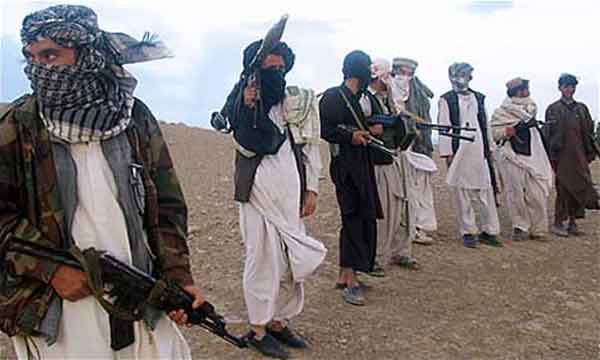
Impact of Talibanisation

Impact of Talibanisation
IssueCourtesy: Aakrosh| Date : 09 Jul , 2014


The most serious implication of this onward march of the Taliban has been the radicalisation of Pakistan’s armed forces. As the armed forces draw their manpower from the same society, its composition is bound to reflect the biases of the society. General Musharraf, after two assassination attempts, did try to cleanse the army of radical elements and succeeded in purging overtly religious generals. However, the junior officers and other ranks by and large reflect the prevailing views of the society. Most of them still believe that the war against Taliban is America’s war and have reservations about fighting them.

The growing Talibanisation is eroding the state structure, and the unravelling of Pakistan is a distinct possibility. For the first time since its creation, there is a threat to the cohesion of the Pakistan army…

Every single attack on a military installation has borne clear marks of collusion by elements from within. Many PAF and Pakistan army personnel, including six officers, were convicted of attempts on General Pervez Musharraf in December 2003, when he was the president. An army soldier, Abdul Islam Siddiqui, was hanged on 20 August 2005, after court martial for the same offence. In April 2012, one of the six convicts, an air force technician Adnan Rashid, who had been sentenced to death, was freed by the Taliban in a daring jail break in Bannu.1 As early as 2006, six middle-ranking officers were court-martialled for refusing to fight in FATA.2

On another occasion, an anti-aircraft gun was discovered on the flight path of General Musharraf’s plane when he was taking off from the Rawalpindi airbase on a pitch-dark night. In September 2006, most of the 40 men arrested for attacks on Musharraf were mid-ranking PAF officers. The conspiracy was uncovered when an air force officer used a cell phone to activate a rocket aimed at Musharraf’s residence in Rawalpindi. The rocket was recovered, and its activating mechanism, also a cell phone, revealed the officer’s telephone number.3 The PAF confirmed in 2009 that it had acted against at least 57 personnel following the December 2003 assassination attempt against Musharraf. Six of these men were sentenced to death; others were arrested or dismissed from service. Over 100 PAF men faced disciplinary action in the aftermath of the murder attempt. However, the possibility that some of the accomplices evaded arrest cannot be ruled out.4 There were numerous instances of sabotage in the PAF to prevent aircraft from being deployed against the militants.

In one of the most bizarre cases, 200 armed security personnel led by a colonel were taken captive along with their officers and equipment by 20 Taliban militants in South Waziristan.5During subsequent attacks on Kohat Cantonment in 2008, there were reports that some tribal cadets of Army Cadet College had joined the militants. Former army personnel were also involved in the attack on the GHQ, which was carried out with the possible collusion of insiders. In 2010, two former army officers, along with two serving officers, including a colonel, were convicted by a court martial for planning an attack on the Shamsi airbase, which was being used by the Americans to fly their drones.

Breakdownistan: U.S. Concerns in Central Asia and Afghanistan Going Forward

Journal Article | July 5, 2014
Charles J. Sullivan

Abstract: This article highlights the phenomenon of state failure in Central Asia. (Kyrgyzstan, Uzbekistan, and Tajikistan for this discussion) to address this security challenge. In order to try to effectively curtail state failure, this article maintains that the United States should focus its efforts mainly on three “fronts” (democracy, religion, and the narcotics trade) so as to prevent the collapse of these states to the greatest possible extent. Additionally, the United States should chart a course in Afghanistan for the remainder of Operation Enduring Freedom (presumably until 2016) with the aim of orchestrating a settlement between the primary warring parties in the hopes of ending this conflict. That said, if the aforementioned Central Asian states ultimately succumb to collapse in the coming years and/or negotiations do not lead to the brokering of a political settlement between Kabul and the Taliban, then the United States will have to somehow learn to cope with the added complexity.

Central Asia is widely perceived as a remote part of the world which rarely makes the news headlines. Generally construed as a post-Soviet backwater, it is a place where autocracy reigns supreme and corruption is rife.[1] Worldly interest in the region tends to focus on the Great Powers vying for political and economic supremacy in a “New Great Game.”[2] That said, it is also a somewhat dangerous place in that a considerable portion of this region presents a rather complex national security issue to the United States today.

The guiding purpose of this article is to initiate a discussion between the U.S. academic, military, and policymaking communities so that America may effectively address the challenges that it will likely face in Central Asia in the years ahead. Overall, I believe that it is worthwhile for national security professionals to engage in a discussion with others who normally consider themselves to be outside of this community (such as social scientists), namely because a variety of threats face us all throughout the greater Middle East today. Since 9/11, the United States has gone to war in Afghanistan and Iraq in an effort to eradicate menacing regimes and replace them with peaceful democratic states. However, both state/nation-building campaigns have proven to be extremely costly and neither has led to a desirable outcome. As such, it is necessary to start thinking more about how to deal with complex security concerns as they arise in the future. In his recent commencement address to the graduating cadets of the United States Military Academy at West Point, President Barack Obama (in speaking about the danger of terrorism) stated that America must “develop a strategy that matches this diffuse threat; one that expands our reach without sending forces that stretch our military too thin, or stirs up local resentments.”[3] But what type of strategy should the United States adhere to in the future?

In my efforts to stimulate dialogue on this subject, this article puts forth an interpretation of Carl von Clausewitz’s “center of gravity” concept as it applies in the context of American interests in Central Asia. As U.S. and coalition forces prepare to withdraw most of their remaining resources from Afghanistan, the military and policymaking communities are surely aware that a substantial shift in the region’s power dynamics may soon take place. Yet the infinitely complex situation in Afghanistan is merely the tip of the iceberg, for the ruling regimes situated in neighboring countries such as Kyrgyzstan, Uzbekistan, and Tajikistan are extremely “wobbly” on account of a volatile mixture of “aging autocrats,” elite rivalries, and ethnic tensions, coupled with the inability of these governments to exert full authority within their borders.[4] In response, the United States should strive towards ensuring that none of these states collapse. Aptly stated, the “centers of gravity” here are the states, and it is in our interest that they do not give way. Preventing a collapse thus constitutes our core regional interest in the “Stans”.[5]