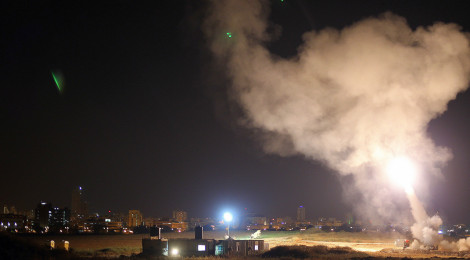
30 July 2014

WHY A GAZA CEASEFIRE IS SO DIFFICULT

Jacob Stoil
July 29, 2014 
 

From President Barack Obama, to the U.N. Secretary General, to the U.N. Security Council, there has been no scarcity of calls for a ceasefire to end the fighting between Israel and Hamas; yet, there are few signs that these attempts have made significant progress. Previous rounds of the Hamas-Israel conflict have all ended with ceasefires fairly soon after the conflicts escalated. In the last six years there have been four major increases in the tempo of fighting. Operation Hot Winter in March 2008, Operation Cast Lead less than eleven months later, Operation Returning Echo in March 2012, and Operation Pillar of Defense roughly nine months after that, all ended with an Israeli withdrawal from Gaza and a ceasefire which returned the situation more or less to the status quo ante bellum. Three of the four ended with a relaxation of border restrictions. So if all of the previous flare-ups ended this way, why is this time around different? Why is a ceasefire proving so difficult to attain?

Part of the problem lays in the pattern. Euphemistically called “mowing the grass”, the Israeli military responses to Gaza flare-ups seek to denude Gaza-based militant capabilities before declaring the job done and returning to the pre-war situation. After many years of this, the Israeli public seems weary and eager for something more definitive. Since 2012, Hamas has stockpiled missiles and built tunnels and other infrastructure. Through its current operations, the Israeli military can probably reduce the stockpiled weapons and tunnels to a level that will deliver another period of respite for the Israeli population, but this will not be enough. Even in the face of mounting casualties and international condemnations, the majority of the Israeli public has remained relatively calm and supportive of the ongoing operations in Gaza. They expect a strategic payoff, a tangible victory that makes their perceived sacrifices worthwhile. For the Israeli public, such a victory must not be ephemeral; it must be immediate and not indefinitely postponed. Without such a victory, at least one recent poll has shown that the Israeli public overwhelmingly supports continuing the operation.

This desire for what many Israelis conceive of as a real victory, combined with their frustrations about the repeated cycle escalations from Gaza, and the recent casualties explains Israeli discussions about reoccupying the entirety of Gaza. While full reoccupation is unlikely, any ceasefire that looks like it fulfills Hamas’ operational objectives, and thus might constitute a Hamas victory, would be unacceptable to the Israeli public. Moreover, as criticism of Israel’s policy of slow escalation has already surfaced fromnotable individuals, any such ceasefire will likely push Israel to intensify combat operations to a greater level early in any future period of escalation.

ISIS Now Using American-Made Heavy Weapons Captured From the Iraqi Army Against Bashar al-Assad’s Forces in Syria

Richard Spencer
Daily Telegraph
July 27, 2014

Islamic State uses high grade captured weapons to fight Assad troops in Syria

The extremist group Islamic State has launched a series of attacks acrossSyria,using military equipment seized from Iraq in its biggest concerted challenge yet to Assad regime forces.

Fighters from Islamic State have attacked two major military bases in the north-east of the country and well as regime-held areas near Aleppo.

They seized most of one base before coming under retaliatory aerial bombardment, seizing senior regime officers and in at least one case decapitating him, placing his easily recognisable head on a pole, according to pictures posted to social media.

The attacks mark a significant shift in the Syrian civil war. While the regime and Islamic State have fought in the past, both have until now preferred to focus their energies on the third major force in the civil war, the so-called “moderate rebels” comprising the Free Syrian Army and a variety of Islamist groups.

The attacks also suggest the group has for now abandoned plans to move further into Iraq or attack the capital Baghdad.

The change of tactics by Islamic State follows the gradual weakening of the western-backed rebels, who are squeezed between the jihadists and the regime. They declared war on the Islamic State in January, hoping that tackling the extremists would encourage more military backing from the West and its allies.

That backing never came, and with thousands of opposition fighters dying in the battles between competing rebel forces, the regime has advanced across key battlegrounds in the centre and north of the country, including Aleppo.

Meanwhile, in a series of lightning raids and defections, Islamic State managed to drive out competitors from most of the eastern province of Deir al-Zour, and seized major oilfields from the regime.

On Thursday, they attacked two of the remaining regime strongholds in the region, the Division 17 base east of Raqqa, and the Battalion 111 base further north in Raqqa, according to activists and the Syrian Observatory for Human Rights.

The ISIS Caliphate’s Coming Blitz of Baghdad


07.28.14 

Analysts say the Islamic State is about to launch a major offensive—but one built around commando raids and suicide bombings rather than a frontal attack. 

BEIRUT, Lebanon—When the minions of the self-anointed caliph in the self-declared Islamic State that now straddles Iraq and Syria blow up a mosque supposed to contain the remains of the prophet Jonah, or offer punctilious details about the kind of purdah to be imposed on women, the world takes brief notice. But the group’s military campaigns have made less news in recent weeks because they seemed to have stalled. 

Now, according to Western military analysts, it’s time to start worrying again. Those studying the attacks by the group formerly known as ISIS see critical changes in the bombings and skirmishing by the caliph’s troops and their allies in and around Baghdad. Some experts warn that a blitzkrieg—a lightning attack—is imminent, and it will be one the beleaguered and squabbling politicians in the Iraqi capital are ill equipped to combat. But it is more likely to be a guerrilla and terrorist offensive than an all-out push along conventional military lines. 

Until recently, Islamic militant action around Baghdad appeared sporadic, uncoordinated, and lacking a clear strategic purpose. But analysts at the U.S.-based think tank the Institute for the Study of War, who have been plotting the locations and types of attacks in the recent flurry of blasts buffeting the Iraqi capital, have noted a clear pattern developing. They say it suggests the Islamic State is building up to something big and is no longer just focused on consolidating its grip and developing governance in the lands it now controls. 

The institute’s analysts predict the caliphate may be readying for an onslaught, possibly timed for the end of the holy month of Ramadan on Monday or during the Eid holiday celebrations this week. The aim would not be to seize Iraq’s capital, which has a very large Shia population with every incentive to fight to the death against an organization that slaughters Shia prisoner en masse. The purpose of the Islamic State offensive would be to sow mayhem and to keep Iraq’s state apparatus from recovering from its stunning defeats in June, when it lost control of Mosul, the second-largest city in the country. 

A sustained bombing campaign could well finish off the government of the embattled Prime Minister Nuri al-Maliki, who is still trying to cling to power, despite indications that even Iran, his main foreign backer, thinks it is time for him to step down. 

There has been a burst of attacks by bombers wearing suicide vests and also car blasts “along avenues of approach to the capital and also within Baghdad proper,” the institute notes in an intelligence update. Most significantly, the analysts say, IS has been launching coordinated suicide attacks like those on July 19 which involved half a dozen or more blasts in a day. IS has made these so-called wave attacks a signature feature in their terrorist repertoire but had not mounted one on the capital since May 13. 

Chaos Triumphant: Libya Coming Apart at the Seams

Kareem Fahim
New York Times
July 28, 2014

Still Torn by Factional Fighting, Post-Revolt Libya Is Coming Undone

Black plumes of smoke on Saturday after clashes among militants, former rebel fighters and government forces in Benghazi. Credit Esam Omran Al-Fetori/Reuters

CAIRO — For weeks, rival Libyan militias had been pounding one another’s positions with artillery, mortar rounds and rockets in a desperate fight to control the international airport in the capital, Tripoli. Then suddenly, early Saturday morning, the fighting just stopped.

The pause came as United States military warplanes circled overhead, providing air cover for a predawn evacuation of the American Embassy’s staff. Apparently fearing the planes, the militias held their fire just long enough for the ambassador and her staff to reach the Tunisian border — a reminder to Libyans of how even their most powerful allies were incapable of putting out their incendiary feuds.

American officials said the evacuation was a temporary measure after fighting drew too close to the embassy. But, coming so soon after the withdrawal of other diplomatic missions, including the United Nations, the moment appeared to signal a defeat — for Libyans who had convinced themselves that the country would band together to save the revolution, and for the country’s Western allies, who sometimes acted as if Libya’s stability would take care of itself.

“No one in Libya can win,” said Mahmoud Okok, 33, a civil engineer who lived near the airport and the United States Embassy, and who abandoned his apartment because of the shelling. A cousin who also lived near the airport was killed when a rocket landed on his home. Now Mr. Okok was moving, with his wife and young son, overseas.

“Enough is enough,” he said. “I have lost hope in Libyans.”

Three years ago, the United States and its NATO allies used air power to propel the Libyan rebels to a sweeping victory over Col. Muammar el-Qaddafi, bombing government troops so that rebels could advance on cities, and even the colonel himself, when he tried to flee.

But after the revolt, as Libya’s government struggled and violence spread, the Obama administration and its allies failed in their efforts to help Libyans achieve either democracy or security. Now, with diplomats escaping and neighborhoods becoming battlefields, Libyans have been left to wonder whether there is anyone left to broker the endless fights.

The country is coming undone. Relentless factional fighting in Tripoli and in the eastern city of Benghazi has left dozens of people dead. Well-known political activists have been killed, diplomats have been kidnapped, and ordinary citizens fear bandits on the roads.

Water and electricity shutdowns have become more frequent than at any time since the chaos after Colonel Qaddafi’s fall, and fuel has disappeared from Tripoli’s gas stations. On Sunday, several Western nations advised their citizens to leave immediately. Gunmen attacked a convoy of British diplomats.

ISIS Goes to Business School? The Islamic State’s Leadership Advantage

July 28, 2014 

Much of the group’s recent success can be credited to a leadership cadre that resembles a strong corporate board.

Much of ISIS’ recent success can be credited to a leadership cadre that resembles a strong corporate board.

Terrorist leader Abu Bakr al-Baghdadi’s appearance last month in a propaganda video garnered significant worldwide attention, to include in-depth analysis of his wristwatch. The interest is understandable; the leader of the Islamic State (IS) eschews the spotlight, audio clips and grainy photos having previously served as the only proof of his existence.

But the most tantalizing portion of the film may have come near its conclusion as the camera panned the blurred faces of several men standing behind Baghdadi. Given their proximity to the self-styled caliph, they were probably his senior lieutenants, charged with translating al-Baghdadi’s lofty vision into action. In recent years they have achieved much, effectively marshaling an array of resources and building a potent paramilitary force that threatens several regional actors. Indeed, the group’s effective leadership structure stands in stark contrast to those of Syrian insurgent factions or the Iraqi security apparatus, granting the IS key advantages over its opponents.

As the IS expands, the fortunes of the group will increasingly depend on these senior managers rather that its black-clad CEO. This natural devolution of authority is a quandary that faces many business leaders: success fuels expansion beyond the ability of one figure to manage, putting the fate of the company increasingly in the hands of the leadership team. While the mythos of the powerful and all-seeing CEO sells many a memoir, it is increasingly antiquated.

This dynamic attracts the attention of numerous academics and business analysts, whose work provides us with a model to better understand IS and explain its recent victories. In 2008, several prominent academics published a book entitled Senior Leadership Teams: What It Takes to Make Them Great.The result of nine years of research and surveys of 120 companies, the authors identified three essential characteristics of sound leadership teams; the first, that team members understand their roles and the boundaries of their authority. This is certainly the case of IS; according to an article last month in London’s Daily Telegraph, the IS leadership is a rigid hierarchy, with commanders responsible for overseeing specific regions or functions such as the transportation of suicide bombers. This orderly structure communicates to senior leaders where they fit and how, precisely, their efforts contribute to overall success.

Coup-Proofing for Dummies

JULY 27, 2014

The Benefits of Following the Maliki Playbook

The ink-stained finger of an Iraqi soldier, April 13, 2013. (Mohammed Ameen / Courtesy Reuters)

Last month, when the Islamic State of Iraq and al-Sham (ISIS) easily captured much of northern Iraq, Iraqi Prime Minister Nouri al-Maliki took most of the blame for his army’s utter ineffectiveness against the much smaller enemy.

And it is true that, in an effort to insulate his regime from coups, Maliki staffed his security forces with loyalists, separated key army units from the military chain of command, and built up forces under the Interior Ministry to counterbalance the army. These efforts undermined soldiers’ morale and made it nearly impossible for the multiple forces that were responsible for security in the north to coordinate effectively. 

Yet the condemnation of Maliki misses something: the dilemma he faces is not unique. A military that is strong enough to defeat insurgents and deter invaders is also strong enough to seize power. And for individual leaders, the consequences of a coup are far more serious than those of defeat in battle: leaders deposed by coups face the prospect of exile or death. A military setback rarely brings the same fate. The coup-prevention, or coup-proofing, strategies that Maliki used work, and it is no surprise that leaders from Fidel Castro to Saddam Hussein have also employed them.

In short, the problem of how to improve Iraqi military capacity without undermining civilian control won’t go away when Maliki leaves office. It will persist until norms of democratic and civilian rule become entrenched in Iraq -- a process that could take decades, if not longer. In the meantime, U.S. policy in Iraq must reflect an understanding of the competing threats that leaders such as Maliki face, and the tools at their disposal to address those threats.

PROOF POSITIVE 

When Maliki took power in 2008, he inherited a state with deep sectarian divisions and a long history of military intervention in politics. Concerned that political opponents might use the military as a quick route to power, Maliki separated key brigades, including the army’s 56th Brigade, which is tasked with protecting government institutions and officials within Baghdad, and the first and second Presidential Guard Brigades, from military command. He then replaced experienced commanders with men personally loyal to him. Further, since 2010, when Maliki took over the post of interim Interior Minister, he has also exercised direct control over all Ministry of Interior forces, including the Border Guard and Federal Police, which serve as counterweights to military power. 

These strategies are now demonized as sectarian power-grabbing, but they are in fact rational -- and common -- coup-proofing measures with a long history in Iraq. Following the 1958 Baathist coup, for example, President Ahmed Hassan al-Bakr created the Republican Guard and Popular Militia forces, both composed of party loyalists. And Saddam established several additional forces, including the Special Republican Guard, Fedayeen Saddam, and al-Quds militia, all of which reported directly to him. 

Is It Just Me or Is the World Exploding? So Why Isn’t Obama Doing More?


07.28.14 
Reuters, Michael Tomasky 

The broader Middle East is always in crisis. But not like this. We could be on the edge of cataclysm. And what are we doing? Retrenching. 

We are always cautioned not to overdramatize, because if the worst doesn’t happen, we can look silly. Maybe so. But I look around the world right now and think: Let’s not under-dramatize, either. We see a set of crises coming to a head all at once that could well plunge the world into war and chaos for some time to come. And we the United States—not President Obama, not John Kerry, not the Republicans; the whole United States—aren’t doing nearly enough to try to help the region’s democrats and promote our purported values. 

Americans have long since learned to live with more or less permanent crisis in the larger Middle East. The Israel-Palestine situation is always a disaster. Iran is a disaster. Syria—not usually the unspeakable disaster it is now, but never good. Lebanon, always on the edge of (and sometimes past the edge of) calamity, but too complicated for most people to figure out. Iraq, always a catastrophe of one kind (crypto-fascist Ba’athism) or another (the maelstrom engulfing it today). We take note of it, that tiny percentage of Americans who bother to care in the first place, and we mourn it for a moment or two, and then we let it all wash away. 

But: Am I the only one to whom things right now feel a little…different? By which I of course mean worse. This Israel-Hamas war feels different, neither turtle nor scorpion even pretending anymore about seeking peace. What’s happening in Syria, where hundreds die every week now with almost no notice in Washington, is certainly different. Lebanon teems with Palestinian and now Syrian refugees—imagine if you lived in a country of 4.5 million people that was being asked to house a number of refugees that equaled 20 percent of your population—and every effort at normalization is pulverized by the thugs of Hezbollah, which in effect governs the country and which is helping Bashar al-Assad murder civilians while limning Hamas’s glorious contributions to “the resistance,” as Hezbollah leader Hassan Nasrallah did in a bellicose speech Friday.

And the most different thing of all, obviously, is the rise of the Islamic State, as the group formerly known as ISIS now calls itself, imposing extreme sharia law in its Petri dish of Mosul, the testing ground of the caliphate it has declared in the parts of Iraq and Syria it controls, which it hopes to expand deeper into those countries and perhaps into Lebanon and Jordan, as well. Reports that circulated last week that the Islamic State had ordered female genital mutilation in the parts of Iraq it controls were apparently not true, thankfully. But based on what the Islamic State imposed in areas of Syria where it gained control, we know all we need to know about what’s taking shape in Mosul: no basic freedoms, women covered from head to toe, amputations for theft, and worse. 

And yesterday, the Times reported that the Taliban is making gains, and fast, in Afghanistan. And we might as well throw in Putin there. Ukraine is a different problem, but Russia is clearly a big force in the Middle East, as Putin continues to back his kindred spirit Assad. 

ISIS’s Black Flags Are Flying in Europe

07.28.14 

The symbol of the murderous Islamic State is waving in The Hague. ‘Death to the Jews,’ shout the demonstrators. Yet the Dutch government authorized the protests. 

“Death to the Jews” chanted the crowd waving the black flags of the Islamic State, or ISIS as it used to be known. They were looking for new supporters for their cause, the creation of a worldwide caliphate answering to the man who now calls himself Ibrahim: a zealot too radical even for Al Qaeda who has stormed through Syria and Iraq carrying out mass executions, crucifying rivals, beheading enemies. But these marchers were not in Syria or Iraq; they were in The Hague in The Netherlands. And their message was one tailored to the disaffected young descendants of Muslim immigrants in Europe. 

“We are Moroccans,” went out the cry over a portable loudspeaker. "The French killed the Moroccans but they didn’t kill them all; the grandchildren of the few men left protest against the West, America and the Jews.” 

Many of the demonstrators covered their faces with Palestinian scarves or balaclavas. “Anyone who doesn’t jump is a Jew,” someone shouted as the whole group started jumping in a scene that might have been ludicrous if it weren’t for the hateful message. “Death to the Jews!” the crowd shouted in Arabic. 

This scene last Thursday came in the wake of an earlier demonstration supposed to defend the Palestinians suffering in Gaza, which turned quickly into a hatefest targeting Israel, with people carrying placards that screamed“Zionism is Nazism.” But while the comingling of pro-Palestinian, anti-Zionist and anti-Semitic sentiment has become all too common in European protests in recent weeks, that the battle flag of the Islamic State waved in the streets of The Netherlands on July 24 is something new and particularly dangerous. 

All rallies in Dutch municipalities require permission from the local city council, the police and the public prosecutor’s office. The ISIS demo had been granted permission on the grounds that it was in support of the detained Dutch recruiter for jihad, Oussama Abu Yazeed. But the fact that the mayor’s office in The Hague either was unaware the rally was ISIS-linked or deemed it legitimate regardless has raised serious questions about the city council’s judgment. 

Dutch Labor Party (PVDA) member Ahmed Marcouch, a former policeman who sits on the parliament’s security and justice committee, was one of the many who criticized the local government: “Unacceptable!” he tweeted. “Threatening journalists and shouting racist statements is punishable by law.” 

Just Who Are The So-Called “Ukrainian Rebels”

'Ukrainian Rebels' Aren't Ukrainian or Rebels

Casey Michel

The Moscow Times, July 28, 2014
Maxim Zmeyev / Reuters

As we slowly move beyond the downing of Malaysia Airlines Flight MH17, it is gradually becoming clearer that the likelihood of a proper international investigation, unimpeded by external actors, has all but evaporated. There have been numerous reports of separatists tampering with the crash site, denying international investigators access to the crash and even raiding bodies of cash and other valuables.

But where the separatists have likely stolen any chance to determine for sure who destroyed MH17, they have, through their blundering exploits, allowed us to remind ourselves of who these men are, of what they want and of what they are willing to do. And most of all, they have allowed us an opportunity to examine just where they come from.

Unfortunately, in the blitz of media coverage since the crash, a handful of outlets continue to label the separatists fighting in Donetsk and Luhansk as “Ukrainian rebels.”

But if the annihilation of MH17 ends in anything, it should be the realization that these men are neither “Ukrainian” nor “rebels.” Rather than Ukrainian citizens carrying a legitimate grievance against the Kiev government’s pro-EU outlook, they are outsiders and usurpers, men with either mercenary or imperial motivations.

They are pro-Russian, yes. They are separatists. But these men are invaders — and they are not Ukrainians.

Just look at the leadership structure of those who purport to fight for Novorossia, a large area of land in east and southeast Ukraine once ruled by Russia.

Igor Strelkov, considered commander-in-chief of the self-declared Donetsk People’s Republic (DPR) and the Luhansk People’s Republic (LPR), maintains Russian citizenship. In addition to having a Russian intelligence background, either in the Federal Security Service or the Main Intelligence Directorate, Strelkov loves to re-enact famous Russian battles and appears to see himself in the tradition of Russian tsarist officers.

Alexander Borodai, meanwhile, carries the self-appointed mantle of prime minister of the Donetsk People’s Republic. He sought to speak on behalf of the separatists last week, handing off the black boxes from MH17 that he and his troops had found, swaggering as Malaysian officials referred to him as “his excellency.” And yet Borodai is simply another Russian, an interloper rather than an local.

And then there’s Vladimir Antyufeyev, the new deputy prime minister in eastern Ukraine. Antyufeyev carries a peculiar, disconcerting legacy. Before coming to Ukraine he held security roles in the breakaway states of Transdnestr and Abkhazia, pro-Russian separatist regions in Moldova and Georgia respectively. Like Putin, Strelkov and Borodai, Antyufeyev is a Russian citizen.

Destroy Hamas? Something worse would follow: Pentagon intel chief

ASPEN Colorado
Jul 26, 2014 

Defense Intelligence Agency director U.S. Army Lt. General Michael Flynn testifies before the House Intelligence Committee on ''Worldwide Threats'' in Washington February 4, 2014.

ASPEN Colorado (Reuters) - A top Pentagon intelligence official warned on Saturday that the destruction of Hamas would only lead to something more dangerous taking its place, as he offered a grim portrait of a period of enduring regional conflict.

The remarks by Lieutenant General Michael Flynn, the outgoing head of the Defense Intelligence Agency, came as Israeli ministers signaled that a comprehensive deal to end the 20-day-old conflict in the Gaza Strip appeared remote.

At least 1,050 Gazans - mostly civilians - have been killed, and 42 Israeli soldiers and three civilians in Israel have died.

Flynn disparaged Hamas for exhausting finite resources and know-how to build tunnels that have helped them inflict record casualties on Israelis. Still, he suggested that destroying Hamas was not the answer.

"If Hamas were destroyed and gone, we would probably end up with something much worse. The region would end up with something much worse," Flynn said at the Aspen Security Forum in Colorado.

"A worse threat that would come into the sort of ecosystem there … something like ISIS," he added, referring to the Islamic State, which last month declared an "Islamic caliphate" in territory it controls in Iraqand Syria.

Confined in the crowded, sandy coast enclave of 1.8 million, where poverty and unemployment hover around 40 percent, weary Gazans say they hope the battle will break the blockade that Israel and Egyptimpose on them.

Israeli officials said any ceasefire must allow the military to carry on hunting down the Hamas tunnel network that criss-crosses the Gaza border.

Flynn's comments about the conflict came during a gloomy, broader assessment of unrest across the Middle East, including in Syria and Iraq. Flynn said bluntly: "Is there going to be a peace in the Middle East? Not in my lifetime."

Hamas Seems Determined to Keep Fighting Despite Losses and Heavy Civilian Casualties

Jodi Rudoren and Ben Hubbard
July 28, 2014

Despite Gains, Hamas Sees a Fight for Its Existence and Presses Ahead

JERUSALEM — Hamas, the militant Palestinian faction that dominates the Gaza Strip, has more to boast about in its current 20-day battle against Israel than ever before. Forty-three Israeli soldiers have been killed in fierce fighting. Gunmen infiltrated Israel through tunnels five times. Rockets repeatedly rained over Tel Aviv, and one even led most airlines to halt flights into Israel’s only international airport for two days.

As added leverage for cease-fire negotiations, Hamas seems to have at least the dog tags and perhaps remains of one of the Israelis killed in combat. Internationally, there is both mounting outrage over the hundreds of civilian Palestinians dead and growing consensus that any cease-fire deal should include Hamas’s demands for lifting trade and travel restrictions on Gaza and investing in its economy and infrastructure.

Yet Hamas shows little readiness to declare victory, as it did only 20 months ago, based largely on a single rocket hitting an apartment building in a Tel Aviv suburb. Analysts attributed this apparent intransigence to a fractured leadership, redrawn regional alliances, the sharp downturn in Gaza’s condition and a sense within Hamas that this time the fight is for its very existence.

Israelis carry the coffin of fallen reserve Israeli soldier Yair Ashkenazy during his funeral on Friday near Tel Aviv. Credit Ronen Zvulun/Reuters

“All these achievements of Hamas, if they strike a deal without achieving something for the people of Gaza, they will lose everything and will bury themselves,” said Zakaria al-Qaq, a Palestinian political scientist at Al Quds University in East Jerusalem.

“It’s a very critical moment; Hamas is to be or not to be,” he added. “If they didn’t reach what they promised to reach, it will be like a balloon, just punctured.”

With large sections of Gaza devastated and the Palestinian death toll topping 1,000, Hamas waffled over the weekend on the United Nations’ calls for a “humanitarian pause” in hostilities. It said Saturday night that such a pause was unacceptable as long as Israeli troops maintained positions and limited operations inside Gaza, then hours later declared its own pause without conditions, a bewildering back-and-forth that made it difficult to glean a clear strategy.

Politically isolated after breaks with Syria, Iran and especially Egypt, and its effort at reconciling with the Palestinian factions that rule the West Bank having failed to bear fruit, Hamas has all but given up on governing Gaza to focus on the battlefield. Israelis have expressed outrage that thousands of tons of concrete built a vast network of tunnels rather than schools or hospitals, but that argument has little traction in Gaza, where many see violence as the only language that works.

Why Is Israel Losing a War It's Winning?

Jeffrey Goldberg

July 27, 2014 -- Things change, of course—the only constant in the Middle East is sudden and dramatic change—but as I write it seems as if Israel is losing the war in Gaza, even as it wins the battle against Hamas’s rocket arsenal, and even as it destroys the tunnels meant to convey terrorists underground to Israel (and to carry Israeli hostages back to Gaza). 

This is not the first time Israel has found itself losing on the battlefield of perception. Why is it happening again? Here are five possible reasons:

1. In a fight between a state actor and a non-state actor, the non-state actor can win merely by surviving. The party with tanks and planes is expected to win; the non-state group merely has to stay alive in order to declare victory. In a completely decontextualized, emotion-driven environment, Hamas can portray itself as the besieged upstart, even when it is the party that rejects ceasefires, and in particular because it is skilled at preventing journalists from documenting the activities of its armed wing. (I am differentiating here between Hamas's leadership and Gaza's civilians, who are genuinely besieged, from all directions.)

2. Hamas’s strategy is to bait Israel into killing Palestinian civilians, and Israel usually takes the bait. This time, because of the cautious nature of its prime minister, Israel waited longer than usual before succumbing to the temptation of bait-taking, but it took it all the same. (As I’ve written, the seemingly miraculous Iron Dome anti-rocket system could have provided Israel with the space to be more patient than it was.) Hamas’s principal goal is killing Jews, and it is very good at this (for those who have forgotten about Hamas's achievements in this area, here is a reminder, and also here and here), but it knows that it advances its own (perverse) narrative even more when it induces Israel to kill Palestinian civilians. This tactic would not work if the world understood this, and rejected it. But in the main, it doesn’t. Why people don’t see the cynicism at the heart of terrorist groups like Hamas is a bit of a mystery. Here is The Washington Post on the subject:

The depravity of Hamas’s strategy seems lost on much of the outside world, which — following the terrorists’ script — blames Israel for the civilian casualties it inflicts while attempting to destroy the tunnels. While children die in strikes against the military infrastructure that Hamas’s leaders deliberately placed in and among homes, those leaders remain safe in their own tunnels. There they continue to reject cease-fire proposals, instead outlining a long list of unacceptable demands.

2. People talk a lot about the Jewish lobby. But the worldwide Muslim lobby is bigger, comprising, among other components, 54 Muslim-majority states in the United Nations. Many Muslims naturally sympathize with the Palestinian cause. They make their voices heard, and they help shape a global anti-Israel narrative, in particular by focusing relentlessly on Gaza to the exclusion of conflicts in which Muslims are being killed in even greater numbers, but by Muslims (I wrote about this phenomenon here).

3. If you've spent any time these past few weeks on Twitter, or in Paris, you know that anti-Semitism is another source of Israel’s international isolation. One of the notable features of this war, brought to light by the ubiquity and accessibility of social media, is the open, unabashed expression of vitriolic Jew-hatred. Anti-Semitism has been with us for more than 2,000 years; it is an ineradicable and shape-shifting virus. The reaction to the Gaza war—from the Turkish prime minister, who compared Israel's behavior unfavorably to that of Hitler's, to the Lebanese journalist who demanded the nuclear eradication of Israel, to, of course, the anti-Jewish riots in France—is a reminder that much of the world is not opposed to Israel because of its settlement policy, but because it is a Jewish country.

The Fireman And The Arsonist

SHIRA LOEWENBERG

Fire and smoke rises from burning buildings hit by an Israeli air strike in Gaza


An Israeli point of view: Israel is dealing with a situation that no other democratic country has had to face in recent years

The latest Hamas-triggered war with Israel is now in its third week.

The hope for an early end was dashed when an Egyptian-brokered ceasefire proposal (supported by India and most countries in the international community) was accepted by Israel, but was met by Hamas with a new barrage of rockets aimed at the Jewish state.

Israel is dealing with a situation that no other democratic country has had to face in recent years. Try to imagine that a neighbour of the US or India has smuggled or assembled thousands of missiles with a range of hundreds of miles, and that neighbour has declared a goal of inflicting the greatest possible damage on our countries, whose legitimacy it does not recognize. What would our governments do?

They could bury their head in the sand pretending the threat did not exist, until one day the first missile comes flying across the border.

They could attempt to show restraint, hoping this would set an example for the other side, unless, of course, the other side interprets our behaviour as weakness and lack of political will.

They could respond "proportionately" to any attack by firing, say, one missile for each one sent our way, but that could lead to an interminable war and countless casualties.

They could follow the tempting prescription put forth by all those calling for coexistence, as if every conflict has a negotiated settlement built in, and as if our adversary were not ideologically determined to destroy us.

Or they could conclude, as Israel has, that the adversary is determined at all costs to wage war, won't change its outlook, and seeks to maximize murder and mayhem, and that this adversary must therefore be answered with a strong, unambiguous response.

It is important to recall that it did not have to be this way.

IDF Gaza Tunnels Media Show 2013 and 2014

July 2014 Tunnel, 26 July 2014 

This tunnel was shown to the press. 


March 14, 2014. A photograph supplied by the Israeli Defense Forces (IDF) shows tunnels inside the Gaza Strip near the border with southern Israel. The tunnels are the longest discovered, but the army has not explored all of it and no weapons were found inside.


2013 Tunnel 


FILE - In this Sunday, Oct. 13, 2013 file photo, Israeli soldiers enter a tunnel discovered near the Israel Gaza border.


FILE - In this Sunday, Oct. 13, 2013 file photo, an Israeli soldier stands at the exit of a tunnel discovered near the Israel Gaza border.