15 February 2015

Army Missile Defense Stretched Thin: Readiness, Crisis Response At Risk

By SYDNEY J. FREEDBERG JR.
February 12, 2015

ARLINGTON: There’s no peace dividend in missile defense. While most types of Army units don’t deploy to Iraq or Afghanistan anymore, some scarce specialties are in increasing demand worldwide, such as special operators, division staffs, and missile defense forces like the famous Patriot. As long-range missile threats increase from Iran and North Korea,China and Russia, Hezbollah and Hamas, Army Chief of Staff Ray Odierno himself has said the current pace of missile defense deployments is not sustainable.

“Today, we have air and missile defense forces in nine countries,” said Col. Clement Coward, deputy commander of the 32nd Air and Missile Defense Command. “On any given day, nearly half of the Army’s Patriot batteries are outside the continental United States [and] we’ve begun forward-deploying THAAD batteries” — even though THAAD’s so new there are only three batteries in service. As a result, Coward told the Association of the US Armytoday, “we are rapidly approaching an inflection point where we face the risk of breaking our AMD force.”

Skilled personnel are thinking of getting out, equipment is wearing out, and upgrades are delayed because the units aren’t at home to get them, Army leaders warned. Even more worrying is that, with so much of the force either deployed or recovering from deployment, little is ready and available to respond to unexpected crises.

“The risk really comes in our contingency forces,” said Maj. Gen. Gary Cheek, assistant deputy chief of Army staff for operations and plans (section G-3/5-7), also speaking at AUSA.

U.S. Troops Can Now Call in Tomahawk Cruise Missiles for Close Air Support

by DAVID AXE

U.S. Troops Can Now Call in Tomahawk Cruise Missiles for Close Air Support

And that’s not the old munition’s only https://medium.com/war-is-boring/u-s-marines-can-now-call-in-tomahawk-cruise-missiles-for-close-air-support-2a8aa4a64428new trick

The U.S. military received its first Tomahawk cruise missile in 1983. And now 32 years later, American troops are still teaching the far-flying smart munition new tricks.

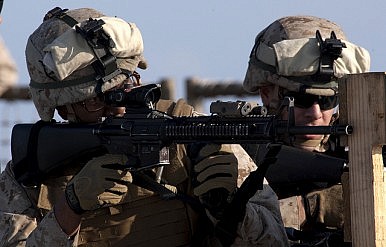
In a test on Jan. 29, a team of U.S. Marines called in an upgraded Tomahawk, called a “Block IV,” to quickly strike a nearby target—just like the Marines routinely do with their artillery, Harrier attack jets and Cobra helicopter gunships.

This is not what the Tomahawk normally does. By applying new software and procedures, the Marines have transformed the super-accurate missile with its 1,000-pound warhead into a close-support weapon—one they can dial up to blast the enemy during, say, fast-moving street-to-street fighting on some urban battlefield.

Meanwhile, the Navy is teaching the land-attack Tomahawk to also be an anti-ship missile.

This is a big, big deal. The U.S. military is getting powerful new weapons … without actually buying much new hardware.

The Pentagon keeps thousands of the million-dollar-apiece Tomahawks in stock—the precise number is classified. Mainly, the Navy launches them from submarines and surface ships to punch holes in enemy air defenses at the start of bombing campaigns. After all, there’s no pilot on board, so it’s no big deal if some of the Tomahawks get shot down.

WEEKEND READING: FRIDAY THE 13TH EDITION

February 13, 2015

Welcome to our latest installment of weekend reading, you strategy party people. Before you do anything else, check out our store where you can buy the swag you need to make it through your weekends (everyone needs a good flask).

Welcome back, Carter – Ash Carter is returning to “the building” as our nation’s newly confirmed Secretary of Defense. See who he is bringing with him here, from Defense News. What are the keys to success in this position? Take a look back at Charlie Stevenson’s take on why this is a “nearly impossible job.” And here are some defense reforms Secretary Carter should turn his attention to immediately, according to Jerry McGinn, Stephen Rodriguez, and Peter Lichtenbaum.

New day, new Duck – Check out the new website for the Duck of Minerva, where you can find top academics wonking out on politics.

Profiling Great (and Terrible) Men – Mother Jones, of all places, digs into the CIA’s psych profiles of leaders from Castro and Qaddafi to Khrushchev and Saddam and everything in between. See what the Office of Strategic Services had to say about Hitler’s prowess (or lack thereof) in the bedroom.

A romantic tour of Chinese shipyards – That’s what Information Dissemination has served up for you. Feng offers a breakdown – aided by an aerial photo – of what might be the busiest naval shipyards in the world.

Influential jihadi ideologue-cum-hostage negotiator – Joas Wagemakers has the scoop over at Jihadica on Abu Muhammad al-Maqdisi, once viewed as the most influential scholar in the jihadist movement, and thesecret role he played in helping to secure the release of Moaz Al Kasasbeh, the downed Jordanian pilot who was later brutally executed by the Islamic State in Iraq and the Levant. According to Wagemakers, Maqdisi played a key role in this affair from the start and details letters he wrote to the self-proclaimed Islamic State Caliph.

Delta Force’s Origins Are Public Record

by JOSEPH TREVITHICK

Official documents detail top-secret force’s creation

After more than three decades and dozens of Hollywood movies, the U.S. Army’s Delta Force—one of Washington’s premier specialized units—is still largely hidden from public view. The Pentagon offers few details about the group, its organization or even how many Delta “operators” there are in total.

But the unit—technically the 1st Special Forces Operational Detachment D—is a part of the Army, and has all the formal trappings that come along with being part of that bureaucracy. As a result, some of the detachment’s formative history is a matter of public record.

The Army originally planned Delta Force as “an organization which can be deployed worldwide and has the capability to provide an appropriate response to highly sensitive situations including acts of international terrorism,” explains a 1977 analysis of the proposed unit held by the Army’s Center of Military History.

The center keeps an assortment of records to help track Army units, their histories and honors. The staff help determine what battalions and squadrons the Army keeps—or even brings back into existence—when the ground combat branch shuffles things up.

Both Delta Force and the Navy’s SEAL Team Six trace their origins to an outburst of political violence in the 1970s. At the time, Washington watched as acts of terror became a significant problem in Europe and the Middle East.

In 1972, Palestinian militants shocked the world when they attacked Israeli athletes at Munich Olympics. Smaller groups like the radical leftist Red Army Faction and ethnic Basque separatists carried out a campaign of bombings and assassinations across the continent.

Military Looking To Give Troops Super Sensing Abilities

BY PATRICK TUCKER
FEBRUARY 10, 2015

The Squad X Core Technologies Program, or SXCT, builds off of a multi-year agency effort to shrink the sensing, detecting, and situational awareness capabilities of ships and fighter jets down to what an individual warfighter could carry with him or her. The program looks to bring troops, sensors and especially drones together in a single web of data collecting and communicating, effectively giving military personnel eyes and ears well into the distance.

“Warfighters in aircraft, on ships and in ground vehicles have benefited tremendously from technological advances in recent decades, with advanced capabilities ranging from real-time situational awareness to precision armaments. But many of these benefits depend on equipment with substantial size, weight and power requirements, and so have remained unavailable to dismounted infantry squads who must carry all their equipment themselves,” DARPA said in a press release.

Some quick background — in a 2013 DARPA request for information, the agency sought new ideas on how to “digitize dismounted squads.” Read that to mean: achieve better integration of computers and sensors to give troops intelligence when they most need it. Some of that digitization is inward facing, physical data on the physical, or even mental, condition of teammates. Most of it relates to the external environment, pregnant with threats.

“By digitization, DARPA means collecting sensor data that would provide much more detailed and actionable real-time information about a squad’s condition, surroundings and adversaries. It is believed that digitization could provide squads of 9 to 13 members and their unmanned assets with enhanced tactical awareness and advantage up to a mile away, in both urban and open‐air environments,” according to a DARPA statement.

14 February 2015

WC MAKES A PITCH FOR INDIA-PAK TALKS

Vineeta Pandey
14 February 2015 

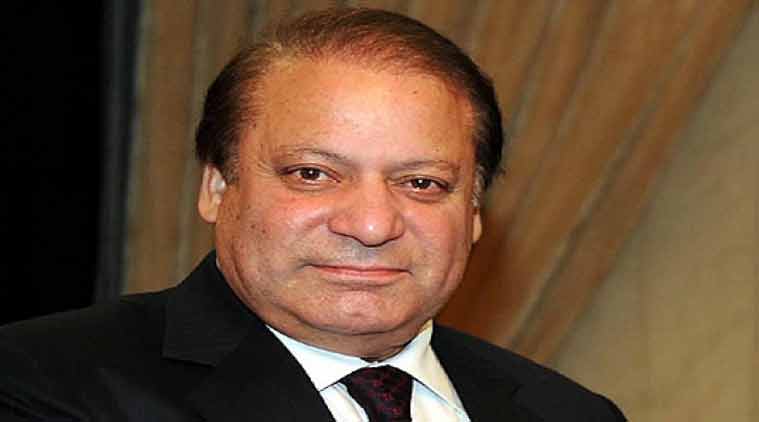
Cricket diplomacy is back again. The game that has often helped thaw relations between India and Pakistan has once again come to ease tension between the two that went cold after a warm start last year. On Friday, Prime Minister Narendra Modi used cricket World Cup as an opportunity to connect with his Pakistani counterpart Nawaz Sharif. Modi called up Sharif to convey his best wishes for the Pakistani cricket team participating in the World Cup. India and Pakistan play their inaugural match against each other on February 15. The PM also announced that new Foreign Secretary S Jaishankar will visit Islamabad and other SAARC countries as part of his SAARC Yatra to push bilateral agenda.

“Spoke to President Ashraf Ghani, PM Sheikh Hasina, PM Nawaz Sharif and President Sirisena. Conveyed my best wishes for the Cricket World Cup,” Modi tweeted. Noting that five SAARC nations are playing and are excited about the World Cup, the Prime Minister said, “I am sure the WC will celebrate sportsman spirit and will be a treat for sports lovers. Cricket connects people in our region and promotes goodwill. Hope players from SAARC region play with passion and bring laurels to the region… would be sending our new Foreign Secretary on a SAARC Yatra soon to further strengthen our ties.”

As they talked, Modi and Sharif also laughed together when Modi joked about Sharif playing a warm-up World Cup match in 1987 alongside Imran Khan, sources said. To this, it is learnt, Sharif replied, “Kash vo din dubaara aata (I wish those days would come back).” Jokes apart, the two leaders used the opportunity to strike some diplomatic conversation and Modi informed Sharif about Foreign Secretary S Jaishankar’s upcoming tour to SAARC countries to push issues of bilateral interest.

India and the CTBT

February 14, 2015
WORLD VIEW

India’s future with the CTBT is still unwritten. Leadership until now may have been delayed, but there are opportunities for it to be reengaged and renewed

India’s past with the treaty to ban all nuclear tests in all places for all time is well known. Some might characterise it as leadership defaulted or, more optimistically, merely delayed. A lot has changed for India since the Comprehensive Nuclear Test Ban Treaty (CTBT) was opened for signature in 1996, and the same is true for the treaty itself — enough to prompt fresh thinking about some renewed engagement.

India did not support the treaty in 1996 — and still does not — but it had been very supportive during negotiations. The roots of that exuberance can be traced to Prime Minister Jawaharlal Nehru’s famous initiative in 1954 for a “standstill agreement” on nuclear testing. His intervention came at a time when the U.S. and the Soviet Union were detonating powerful nuclear weapons with increasing frequency. Nehru played an important role in building international momentum for the 1963 Limited Test Ban Treaty, which India joined. This treaty significantly reduced global levels of fallout, but did little to constrain the nuclear arms race. The CTBT was created as a result.

It has been hard in recent years to discern a public debate on the CTBT in India. This is tragic in the very country that made the path-breaking call for the “standstill agreement”; has been observing a unilateral moratorium since 1998; is a champion of nuclear disarmament; and, in the words of Prime Minister Narendra Modi, “will continue to contribute to the strengthening of the global non-proliferation efforts.” For all of its efforts in galvanising the creation of an effective international verification system, India is currently unable to derive either the political or the technical benefits from it. But 183 other countries do.

When madrasa challenges state

Khaled Ahmed
February 14, 2015

After the adoption of a National Action Plan and a constitutional amendment to tackle terrorism through military courts, the clerics in Pakistan are worried. Records show many terrorists with a madrasa background, some used also by a state that has lost several essential attributes of normality.

The Nawaz Sharif government says madrasas are sacrosanct and will not be investigated, but a growing body of facts in the media says madrasas are involved in terrorism through the training of killers and “excommunication” (takfir) of the Shia community. The state itself apostatises Ahmadi Muslims but baulks at takfir of the Shia counted as

Muslims in the census. Most madrasas have gone on record — they may deny it — in calling the Shia kafir. Their fatwas have been used as handbills prior to Shia massacres.

The document that arraigns the madrasas of Pakistan comes from India in the shape of a collection of fatwas for apostatising the Shia. The compiler was the head of the Lucknow madrasa Nadwatul Ulema, the late Manzur Numani. The compilation is titled Khumeini aur Shia kay barah mein Ulama-e-Karam ka Mutafiqqa Faisala (Consensual Resolution of the Clerical Leaders about Khomeini and Shi’ism), al-Furqan, Lucknow, 1988. Numani was funded by Saudi Arabia to write a book against Imam Khomeini and collect fatwas of takfir of the Shia.

A number of clerical leaders of Pakistan cosigned or confirmed the fatwa against the Shia in 1986. Among them were two well-known names: Muhammad Yusuf Ludhianvi and Mufti Nizamuddin Shamzai. Both were to die in the sectarian upheaval that overtook Pakistan during the Afghan civil war of the 1990s and the jihadist reaction to the American invasion of Afghanistan in 2001.

Medicines in India, for India

Pavan Srinath
February 14, 2015 

Tropical diseases have often been neglected by pharmaceuticals because the size of the drug market is smaller, people have lower incomes and companies are uncertain about IPR
January marked an important breakthrough in the fight against tropical diseases. Researchers and the International Centre for Genetic Engineering and Biotechnology (ICGEB) in Delhi found a drug candidate that prevented TB and malaria pathogens from infecting human blood cells.

It is not just that this cutting edge research took place in India, but it also addresses Indian challenges whose solutions have global implications. Further, Anand Ranganathan and his colleagues did not just find this drug candidate, but also helped develop processes to develop these drug leads. It also happened thanks to a combination of a United Nations facility set up decades ago, attracting top global research talent to come back to India and work here. And the research was funded not just through international sources, but also a ‘Grand Challenge Programme’ on vaccines set up by the Department of Biotechnology, Government of India. Much of this success is the delayed fruit of a biotechnology push in India that started in the mid-1980s, and that has gained in strength over time.

However, the discovery of the drug candidate M5 synthetic peptide is the beginning of a long road and not the end. The process of drug discovery here is not yet complete, and has to be succeeded by more research and a host of clinical trials. Here is a plausible set of intermediate steps from the work of Dr. Ranganathan and others, before a new TB or malaria drug enters the market.

The Internet’s tempting presence

February 14, 2015

Toward the end of last year, there was an uproar when India’s leading telecom carrier Bharti Airtel decided to charge subscribers extra for use of applications such as Skype to make free calls over the Internet. Airtel was criticised for violating a key principle influencing Internet traffic, which is that all data must be treated equally and there must be no discrimination. The principle goes by the name Net neutrality. Within days, the company beat a retreat on its pricing move, saying it would wait for the regulator, the Telecom Regulatory Authority of India’s consultation paper in this regard. The paper is still awaited. In contrast, there was hardly a whimper when a few days ago social media giant Facebook tied up with Anil Ambani’s Reliance Communications to bring to India a service that critics globally believe presents a huge challenge to Net neutrality. The reason is not hard to fathom. Facebook’s offering, internet.org, unlike that in the Airtel example, is free. The stated intention of the social media network is to make available Internet to those who don’t have it. It is hard to find fault with such a mission. Despite fast growth in recent years, the percentage of individuals using the Internet in India is less than 20 per cent. China and Brazil, in comparison, have already got about half their populations accessing the Internet.

The catch then is in how internet.org has been implemented. In every country where it has been launched — India is the sixth — internet.org offers a preselected bouquet of websites free to subscribers of Facebook’s telecom partner, under a practice dubbed zero-rating. Yes, this does mean millions of Indians could for the first time in their lives access the Internet, albeit an extremely limited version of it. But there are numerous reasons why it is difficult to see it as an altruistic endeavour. One, the subscribers have no say in selecting the websites. Two, the Internet ceases to be an open platform where everyone has an equal chance to succeed. Three, in the long run, internet.org could present a huge competitive advantage to some, to the disadvantage of many. This is all the more significant, because newer Internet adopters are going to do so via smartphones, which are becoming cheaper by the day. India’s smartphone sales are exploding, almost doubling to 80 million units in 2014 compared to the previous year, and expected to double once more this year. Also, Facebook and Reliance, both having more than a hundred million users in India, are not small entities trying out a novel practice here. In this context, it will all boil down to what India’s official position is on this. The telecom regulator’s much-awaited consultation paper will make that amply clear.

How to Setup A Modern Defence Industry in India?

By Bharat Verma
13 Feb , 2015


Sixty-seven years of Independence and not a single combat aircraft has been produced by India!

Despite the word ‘indigenisation’ featuring repeatedly in political rhetoric, one of the reasons is because of the vested interests within the government of the huge kickbacks associated with imports of military hardware. The perception that in every armament deal massive amounts of taxpayers’ money is siphoned off is largely correct. Blacklisting vendors is merely theatrics to divert public attention from this crass truth. The long, convoluted and tedious process of procurement of military hardware has been created deliberately by the politico-bureaucratic red-tape to extract larger kickbacks which eventually is the taxpayers’ liability!

Worse, it appears that the primary national objective is not to add military capabilities to ensure the nation’s security but to find ways to guarantee maximum kickbacks.

Worse, it appears that the primary national objective is not to add military capabilities to ensure the nation’s security but to find ways to guarantee maximum kickbacks. Frankly, nobody involved in the decision-making process is really concerned about the MMRCA being inducted on time to shore up the rapidly declining firepower of the Indian Air Force; or about the Indian Navy receiving submarines in time; or with the tremendous collateral damage the nation suffers on its borders with Pakistan because the infantry is ill-equipped. Despite similar levels of corruption, China never overlooks the primary objective of building military muscle. Frankly, no other country does except India!

Will New Delhi Crush Terrorism

By Jagdish N Singh 
February 13, 2015

Abstract: Empress Razia Sultan and King Akbar sidelined communal fanatics with the help of India’s broad, liberal base of society and their military prowess. New Delhi could use this social asset and military prowess to combat Islamist terrorism today as well. 

Can you imagine what would happen if one released some venomous serpents into your land and you refrained from killing them and just got them cornered into a part of your own territory ? Just think of the inevitable that would follow : the serpents would always be in a look out to infiltrate the rest of your land to sting the souls around . This is precisely the story of terrorism India has been faced with since her Independence.

In October 1947, just a couple of months after the tragic partition of the undivided British India, Islamabad invented the ideology of Islamist terrorism and dispatched its warriors (Pakistani soldiers in guise of Pakhtoon raiders) into India’s Kashmir to capture it. Mahatma Gandhi could foresee the consequence thereof and advised Prime Minister Jawaharlal Nehru not to submit to the raiders and have them driven out. The Indian Army, too, was in a position to deal with the menace appropriately. Yet, instead of eliminating the warriors of fanaticism totally, New Delhi cornered them into a part of Kashmir (Pakistan-occupied Kashmir) and took the matter to the United Nations resulting in the loss of the 2/5ths of its own territory. And since then the menace of terrorism has been spreading out to other parts of India. According to authentic studies, since 1980, India has lost 150,000 lives on account of terrorism alone.

It is ironical that New Delhi still seems to be in favour of developing a concerted global strategy to combat Islamist terrorism. At a recent Munich Security Group meeting, organised by the Observer Research Foundation, in New Delhi India’s National Security Advisor Ajit Doval said that the three major challenges in dealing with India’s security threats were - “invisible cyber enemies, outdated intelligence-gathering techniques and a disunited approach to tackle terror” and suggested a Comprehensive Convention on International Terrorism.

Doval argued that the idea of such a convention was first mooted by the National Democratic Alliance government in 2001 but it did not take off, for countries such as Pakistan would not agree to describe groups they wanted to call “freedom fighters” as terrorists. He lamented that  “those days, no one saw India’s point of view on Afghanistan and Pakistan.  Osama bin Laden’s capture in Pakistan has changed that.”

Why Did Afghanistan Just Suspend a Request for Heavy Weaponry from India?

By Ankit Panda
February 13, 2015

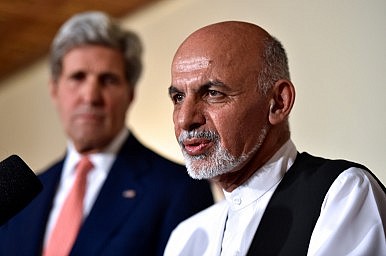
A little noticed report in the Afghan press earlier this week confirms that the Afghan government has suspended a request made for heavy weaponry from India. The request, which was originally made by Afghan President Ashraf Ghani’s predecessor Hamid Karzai during a trip to New Delhi, requested heavy artillery and other weaponry from India. The request was initially rejected but later revisited by the Indian government. A report in Afghanistan’s ToLo News confirms, based on Afghan government sources, that the request for heavy weaponry has been suspended.

Why the sudden change? Well, there are a variety of explanations. The first, and the least convincing, comes straight from within the Afghan government. Mohammad Mohaqeq, a staffer working for Abdullah Abdullah, Afghanistan’s chief executive officer, notes that ”If president the has rejected this, there is the possibility that he has thought of another place to confidently get these arms from.” The bid for Indian weaponry was one of the more public requests by the Afghan government and there have been no similar requests in the works for months now.

“I believe that the president would have a trip to India and he will not contradict all the works of the former president, we need the equipment and should get it from anywhere,” Mohaqeq adds. Relations between Afghanistan and India haven’t declined either.

The best explanation is probably that Afghanistan rescinded the request for heavy weaponry from New Delhi amid what appears to be a slow and steady process of rapprochement with Islamabad. Pakistan has made clear its interest in seeing India and Afghanistan keeping at an arm’s length. Earlier this week, Pakistan’s National Security Adviser Sartaj Aziz recommended that “external actors” following a policy of non-interference in Afghanistan’s internal matters, warning against attempts to wage a proxy war. Similarly, both Afghanistan and Pakistan are looking at expanding their cooperation on counter-terrorism amid efforts by the central government in both countries to assert control over various militant groups.

Terrorist's Laptop Fuels Night Raids in Afghanistan

By Franz-Stefan Gady
February 13, 2015

Today, the New York Times reported that the last couple of months have seen a marked increase in the number of night raids conducted by Afghan and U.S. Special Operations forces in Afghanistan. The New York Times believes that this surge in raids is due to the data retrieved from a laptop detailing Al Qaeda operations in Afghanistan and Pakistan. The intelligence found on the laptop is “possibly as significant as the information found in the computer and documents of Osama bin Laden in Abbottabad, Pakistan,” the article notes.

The laptop’s owner, Abu Bara al-Kuwaiti, was killed during a raid that took place in Nazyan district of eastern Afghanistan, bordering the Khyber tribal agency in Pakistan, a safe haven for Islamic militants across the world. Kuwaiti may have been the assistant and right hand of Atiyah Abd al-Rahman, Al Qaeda’s chief of staff, and may have taken over some of the latter’s duties and responsibilities.

There are no precise numbers on the number of night raids and how many militants have been killed in the last few months, yet according to an unnamed official, the scale and scope of operations is “unprecedented for this time of year” (the fighting season usually starts in early to late spring in the country). “It’s all in the shadows now. The official war for the Americans — the part of the war that you could go see — that’s over. It’s only the secret war that’s still going. But it’s going hard,” emphasized a former Afghan security official, confirming the above statement.

The increase in night raids is also attributable to a new security pact, signed by President Ashraf Ghani in September 2014, which eased restrictions on night raids by American and Afghan Forces. Gen. John F. Campbell, the commander of U.S. and NATO ground forces in Afghanistan, allegedly increased the tempo of Special Forces operations right after the signing. Ghani’s predecessor, Hamid Karzai, was vehemently opposed to those raids and put severe limits on them, to the dismay of many Afghan military commanders.

America’s Pakistan Dilemma

By Sarah Graham
February 12, 2015

One of the few remarked-upon passages in Hillary Clinton’s otherwise unenlightening Hard Choices was her recollection of the decision not to inform Pakistani authorities of the U.S. raid to kill Osama bin Laden. In her retelling, the suggestion that the U.S. should tend to the diplomatic sensitivities of its ally was summarily dismissed by the most senior officials in the room. This would pose too great an operational risk given the known links between the Pakistani military and terrorist organizations such as Al Qaeda and the Taliban, even, scarily, at the risk that Pakistani authorities mightmistake the U.S. incursion for a fully-fledged military attack by someone else.

So well known are these terrorist connections, in fact, that sponsorship of terrorism by various elements of the Pakistani state has its own Wikipedia page, and analysts consider the use of terrorist groups as proxies to be an established operating principle of Pakistani foreign policy. Among senior U.S. officials since 2001, Clinton has been the most willing to openly discuss the contradictions in U.S. policy. She coined the memorable phrase “snakes in the backyard” to describe the impunity with which militants operate in Pakistan’s northwestern provinces. John Kerry has taken a much softer approach. His visits to Pakistan have been accompanied by lavish promises of aid and a generally polite glossing over of the strategic contradictions in one of Washington’s most complicated diplomatic relationships.

Ensnared by History

Like Gulliver, the U.S. is ensnared by its history with Pakistan and the flawed logic behind decades of strategic involvement of the region. Despite its great power and wealth, Washington has only limited means of influencing Pakistan, and few viable options for rethinking its current policy in the short term. This is not a new problem for the U.S. At relatively few points in history do we see a really clear convergence of strategic interests between Pakistan and the U.S., and it is the U.S. that tends not to get the better side of the bargain. Though the stakes have rarely been higher, Washington is continuing in a sort of policy paralysis, leaving other players to exercise a decisive influence on the stability of the region.

Xi Jinping to Visit Pakistan in Coming Months

By Ankit Panda
February 13, 2015

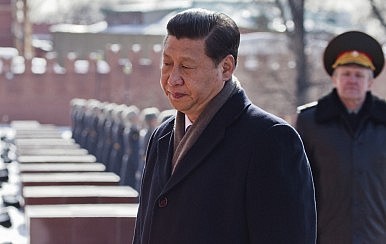
Chinese Foreign Minister Wang Yi confirmed that Chinese President Xi Jinping will visit Pakistan this year, his first official state visit to the country since assuming the Chinese presidency. Xi was slated to visit Pakistan last fall, as part of a general South Asia tour that encompassed Sri Lanka, the Maldives, and India. Due to widespread anti-government protests in Pakistan at the time, both the Chinese and Pakistani governments agreed that it would be best to postpone to the visit.

“That will be [Xi Jinping's] first visit to Pakistan as the head of state of China and that will be the first visit of its kind in nine years,” Wang remarked. Wang, who is in Pakistan on a two-day tour, met with Pakistani President Mamnoon Hussain and Prime Minister Nawaz Sharif. According to Pakistan’s Express Tribune, following meetings with the two Pakistani leaders and with Pakistani National Security Adviser Sartaj Aziz, Wang remarked that China and Pakistan are in complete agreement on all points of discussion — a statement that echoes the common refrain in China-Pakistan relations of the two being “all-weather partners.” “During my discussion with Sartaj Aziz, we agreed on everything. This shows the high degree of trust and support between the two countries,” Wang said.

Interestingly, Wang’s visit addressed the issue of a joint China-Pakistan role in Afghanistan following the United States’ military withdrawal in that country. Wang noted that “ending Afghanistan’s turmoil was a common aspiration for both countries.” “China is ready to play its necessary role and will deliver its commitment in terms of security, economy and support,” he added. “Only with smooth progress can Afghanistan realize its potential and embrace a brighter future,” Wang further commented.

Why 2020 Is a Make-or-Break Year for China

By Shannon Tiezzi
February 13, 201

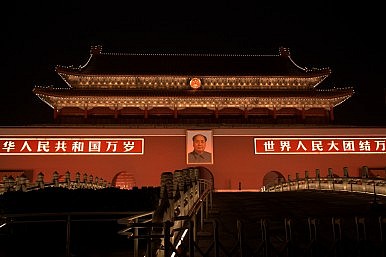
Those perusing China’s reform plans can’t help but notice a certain date popping up with surprising frequency: 2020. A number of key goals, all seemingly unrelated, are pegged to this date. By 2020, leaders say, China will: achieve a 60 percent urbanization rate; complete construction on the Chinese space station; become an “Internet power”; place a cap on coal use and transition to clean energy; and even (according to unofficial reports) have its first domestically-built aircraft carrier. Perhaps most importantly, the Chinese Communist Party (CCP) has pledged that by 2020, China will be a “moderately well-off society” – meaning, in hard terms, that the per capita income in China will be double the 2010 figure. China will also attempt to double its current GDP in that same timeframe. That, in turn, is supposed to help China establish its international image and build up soft power.

What do these goals have in common, other than their projected completion date? They are all benchmarks of China becoming a prosperous, powerful, modern country. And that is exactly the accomplishment China wants to showcase at the 100th anniversary of the founding of the CCP, which will take place in 2021. Before then – in 2020, in other words – China’s government wants to have handfuls of concrete gains to show the people.

2021 marks the first of China’s “two centenary goals,” pegged to the 100th anniversaries of the CCP and the People’s Republic of China. These goals were put down in writing by the 18th Party Congress in 2012 – the same Party Congress that saw Xi Jinping assume the position of China’s top leader. Xi himself linked these goals to a catchier slogan: the “Chinese dream.” In Xi’s speeches, the “two centenary goals” are often paired with the “Chinese dream” or the “great rejuvenation of the Chinese nation” as twin aspirations. “At present, the Chinese people are striving to realize the Two Centenary Goals and the Chinese Dream of the rejuvenation of the Chinese nation,” Xi said in July 2014.

Do China's New Terrorism Laws Go Too Far?

Julia Famularo
February 13, 2015

Beijing’s far-reaching counterterrorism campaign continues to expand with serious implications for Tibet.

As part of a broad counterterrorism campaign, the Ministry of Public Security recently announced that it would reward people for alerting the police to extremist activities. Local police in each city or province determine how much money to allocate for the initiative. For example, authorities in Urumqi reward those who “report the illegal production and sale of face-covering gowns and clothing that represent religious extremism,” and other information pertaining to terrorist and extremist activities.

Authorities in the Tibet Autonomous Region (TAR) recently stated thatpolice will provide up to 300,000 yuan ($48,000) for information thwarting the “organization, planning, and implementation or incitement” of violent terrorist and religious extremist activities inside China by organizations and their members based at home and abroad. Public security officials are tracking the flow of everything from extremist ideology to illegal audio and visual materials to weapons moving across digital and physical borders.

The text of the TAR announcement is broad in scope. Foreign observers wonder whether this is simply standardized national counterterrorism language, or whether officials are referring obliquely to specific security concerns. However, an examination of media reports provides insight into Beijing’s mindset and emerging policies, particularly in light of the ongoing debate regarding how to frame, approach, and manage self-immolations. The government has vacillated between conciliatory and hardline responses since suicide reemerged as a tool of political protest in ethnographic Tibet in March 2011.

Many leaders believe that Tibetans are grateful for state “benevolence” and would not attempt to undermine social stability unless manipulated by external actors. On the fourth anniversary of the 2008 Tibetan unrest, former Premier Wen Jiabao stated, “we do not agree with the use of this type of extremist action, which interferes with and [ultimately] destroys social harmony. Young monks are innocent, and we feel deep grief over this type of behavior.” The Party pledged to punish those who instigate violence by inciting acts of religious extremism. A Foreign Ministry spokesperson accused the “Dalai Clique” of instigating Tibetans to self-immolate and glorifying rather than condemning violence: separatism “at the cost of human lives is violence and terrorism in disguise.”

Why 2015 Will Be a Great Year for US-China Relations

By Shannon Tiezzi
February 12, 2015

It’s official: Chinese President Xi Jinping’s first state visit to the U.S. is scheduled for September. Xinhuareported today that Xi, in a phone conversation with U.S. President Barack Obama, accepted the “invitation to pay a state visit to the United States in September.” Xi is also expected to attend celebrations of the 70th anniversary of the United Nations in New York this September.

Now the race is on for both the U.S. and China to hammer out some deliverables over the course of the next seven months. My colleague Ankit Panda provided some predictions of what topics might be on the agenda, including progress on a bilateral investment treaty (BIT). Other possible topics of discussion: military confidence building measures and agreement on what approach to take at December’s climate change conference to be held in Paris.

While the announcements won’t be made until September, the discussions are already taking place. Two high-ranking U.S. State Department officials are in Beijing this week to begin laying the groundwork for Xi’s visit: new Deputy Secretary of State Antony Blinken and Assistant Secretary of State for East Asian and Pacific Affairs Daniel Russel. Blinken stopped in China as part of a larger tour of Northeast Asia, his first trip abroad since assuming his post. Blinken was in Seoul from February 9-10 and will travel to Tokyo on February 12. The purpose of his visit, he announced on Twitter, was “advancing the rebalance” to Asia. Russel, meanwhile, traveled only to China; he’s in Beijing for talks from February 9-12.

Is the Chinese Military Weaker Than We Think?

By Franz-Stefan Gady
February 12, 2015

Today, the U.S.-China Economic and Security Review Commission (USCC) published an assessment on the weaknesses of the China’s People’s Liberation Army (PLA). While the report, compiled by the RAND National Security Research Division (NSRD), points out that “the PLA’s capabilities have improved dramatically,” it also notes “potentially serious weaknesses” that could “limit [the PLA's] ability to successfully conduct the information-centric, integrated joint operations Chinese military strategists see as required to fight and win future wars.”

The authors divide Chinese military’s weaknesses into two broad categories: institutional and combat capabilities. Institutional problems arise from rampant corruption, outdated command structures, the quality of personnel, and lack of professionalism. The weakness in combat capabilities is due to “an incomplete military transformation,” which produced logistical weaknesses, insufficient strategic airlift capabilities, limited numbers of special-mission aircraft, and deficiencies in naval air defense and antisubmarine warfare. The paper also lists shortcomings in other domains such as space and cyberspace. In addition, China’s defense industry is also allegedly suffering from widespread corruption and is in the middle of a “transition from central planning to a more market-oriented system.”

Based on the authors’ study of more than 300 Chinese-language articles, numerous books, and other military publications, the report notes that the PLA is aware of its own shortcomings. Many Chinese military writers have in the last few years pointed out that the PLA appears incapable of conducting information-centric, integrated joint operations, which are required to fight and win future ”local wars under informatized conditions.”

Urbanization With Chinese Characteristics

February 12, 2015

As part of China’s larger-reaching economic reforms, the government hopes to achieve a 60 percent urbanization rate by 2020. On Tuesday, President Xi Jinping expounded on the right way – and the wrong way – to go about achieving this goal during a meeting of an economic work group.

Speaking to the Central Leading Group on Financial and Economic Affairs on February 10, Xi “demanded stable urbanization,” according to Xinhua. Xi’s conception of urbanization involved attracting “suitable people” to live in urban areas. “Suitable people,” apparently, are those who are both “capable of maintaining steady jobs and comfortable in cities.”

It sounds odd to suggest that China has a problem attracting people to make the move from rural areas to the cities. That process has been underway for decades now; according to data from the World Bank, China has gone from a 30 percent urbanization rate in 1994 to 53 percent in 2014. That means nearly a quarter of China’s population – roughly 300 million people – made the move from countryside to city in the past 20 years.

Enticing rural migrants to cities is not a problem for China. In fact, China has had serious difficulties figuring out how to handle the migration that is already happening. The hukou system, which links receipt of social services (from healthcare to education) to a residence permit, has made many rural migrants second-class citizens in their new urban homes. Viewed in this way, Xi’s comments on attracting “suitable people” are telling. The problem lies not in the “attraction” factor of cities, but in making sure the migrants that do arrive in urban areas are “suitable.”

If the Iran Nuke Talks Fail...

Ilan Goldenberg, Robert D. Kaplan
February 13, 2015

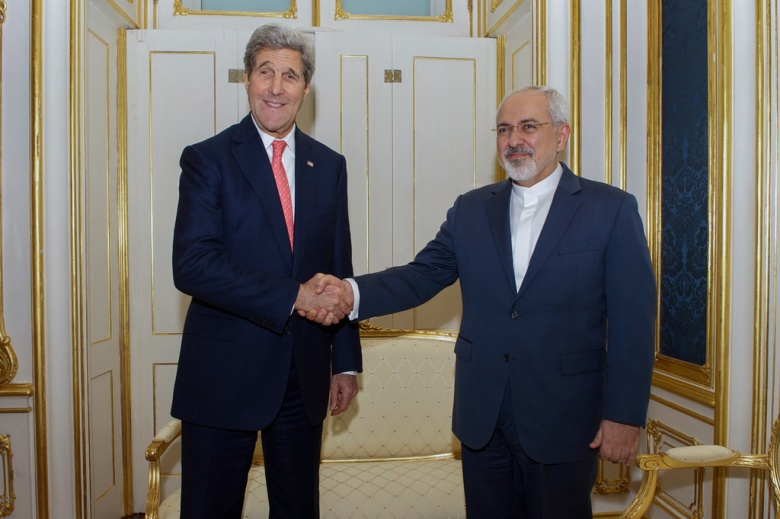
What if the nuclear talks with Iran completely break down at some point, as quite a few people in Congress and the Washington policy community seem to want? We believe the results might be more dangerous for Iran, the United States, and the Middle East than an imperfect deal that keeps Iran a healthy distance from a bomb and gives the United States reasonable confidence that it could catch an Iranian attempt to dash to a weapon, without eliminating Iran's nuclear program.

First of all, the possibility of an Israeli military strike on Iran's nuclear facilities goes up considerably. The Israelis would claim that, having restrained themselves for years while the talks were ongoing, they now had the moral right and strategic imperative to act. It is possible that Israel has been bluffing all along to try to get the United States and international community to act— or that its last realistic window of opportunity to bomb Iran was in 2010-2012 before the deeply buried Fordow nuclear facility became operational rendering an Israeli air strike ineffective.

However, it is also quite possible that lacking a large enough air force for a comprehensive campaign, the Israelis will launch a less ambitious set of strikes, in order to set the Iranian nuclear program back a few years while leaving Iran’s conventional naval and missile capabilities intact.Iran might retaliate proportionally with missile strikes against Israel and using its global network of proxies to launch terrorist attacks against Israeli and possibly American targets.Or Iran could go further, believing that the United States was complicit in the attack and respond conventionally against American naval assets and forces deployed on the Arabian Peninsula, forcing the United States to finish the job through a military campaign lasting weeks against Iran: something that would be worse for Iran than the United States, but that to say the least, we should all want to avoid.

HOW THE ISLAMIC STATE MAKES SURE YOU PAY ATTENTION TO IT

Charlie Winter
February 12, 2015
 
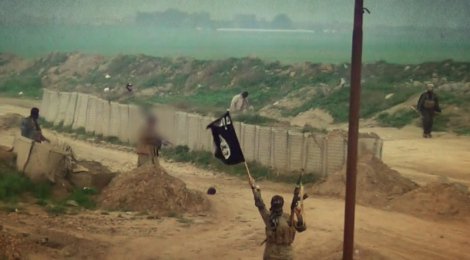
The Islamic State (IS) has played us. It’s been playing us for a long time now. Since it captured the Iraqi city of Mosul in June last year, the cogs of its propaganda machine have continually turned, cranking up hysteria across the world and ensuring it never appears far beyond the front pages of our newspapers. Every day, we read that IS militants have committed some new atrocity, be it a massacre, execution or use of child soldiers, and, every day, our cathartic fascination with it keeps its spectre burning brightly at the front of our minds.

This is not some unhappy coincidence. This is the fruit of the IS media machinery’s tireless efforts.

It started long before the fall of Mosul in June 2014, the point at which the Islamic State of Iraq and the Levant (as it was then known) entered the world’s common lexicon. Before then, while it was a known player in the Syrian War, it had largely been overlooked by the international media.

However, in August, when tens of thousands of Yezidis were surrounded in Sinjar province, the jihadists’ manifold atrocities truly began to bear scrutiny from Western press. This was compounded when James Foley appeared before a camera on a hillock near the seat of the IS pseudo-state, Raqqa. Seeing an unarmed American photojournalist address his government and people before being decapitated by a British jihadist really caught the world’s imagination. Thus was secured IS propagandists’ featured space in the media.

After Foley, it was John Cantlie, another photojournalist. This time, he was playing “Foreign Correspondent” for IS, reporting variously from his cell, Kobane and, more recently, Mosul.

North Korea's Most Dangerous Weapon (Hint: It's Not Nuclear)

Robert E Kelly
February 12, 2015

The cyber attack on Sony Pictures by North Korea in response to the film The Interview (which opens in Australian cinemas today; see my review) came after a series of North Korean hacks of institutions in South Korea. It appears North Korea is improving its cyber capabilities and widening its target list. The decision to strike the private sector outside of South Korea is a new development with disturbing ramifications.

The Sony hack got global attention because it showed Pyongyang's new willingness to target high-profile, non-Korean, private companies. All this raises major questions about Pyongyang's asymmetric efforts against the South, and now for foreign firms operating in Korea.

There remains some disagreement over whether it was in fact North Korea that hacked Sony. Recently, the Director of the FBI felt compelled to come forward with more evidence in support of the U.S. government's claim, and President Obama has repeatedly spoken with great confidence that North Korea was the perpetrator. Furthermore, it is scarcely disputed that hacks of South Korean institutions, such as the nuclear power industry, banks, and broadcasters, were performed by North Korea.

North Korea's use of the cyber domain to contend with its opponents – South Korea, Japan, the U.S., and now perhaps their firms – is a new development.

For much of the internet age, North Korea has been so far behind South Korea and others technologically that cyber was not an area in which it was expected to thrive. Indeed, it may be that North Korea contracts out its hacking requests to specialist, third-party “hacktivist” groups like the Lizard Squad or Anonymous. Yet Pyongyang has repeatedly surprised observers with its technological leaps. North Korea beat South Korea in drone development, and of course, it has developed nuclear weapons and ballistic missiles. It therefore seems likely that cyber is an emerging arena of North Korean activity. Governments, and now business, will be forced to defend themselves.

Is Israel Next in Line for an Energy Revolution?

By David A. Merkel
February 12, 2015

The fall in oil prices over the last several months carries significance far beyond the low prices American commuters are paying at the pump. Low oil prices serve Western strategic interests by starving some of the most troublesome actors in the world of their major source of revenue - countries such as Iran, the leading state sponsor of terrorism, and Russia, which attacks its neighbors and uses its energy might to blackmail Europe.

One cause of the drop in oil prices is the technological advances that have enabled Western countries such as the United States and Canada to dramatically increase their domestic oil production. Now the global oil supply appears set to get a boost from a new and improbable player in the oil business: Israel.

Former Israeli Prime Minister Golda Meir famously lamented that Moses wandered the desert for 40 years before coming to the only place in the Middle East that doesn't have oil. Today, Israel imports 99 percent of the oil needed to satisfy domestic demand. But depending on the results of drilling tests now underway on the Golan Heights, this situation - which leaves Israel vulnerable to supply interruption - may soon change, and perhaps dramatically.

U.S. company Genie Energy has received permits to drill 10 test wells in the Golan Heights. The company's surveys suggest that some parts of Golan may contain enough oil to fill billions of barrels - enough to satisfy Israel's domestic oil needs and even become an oil exporter.

Oil discoveries would complement Israel's already-discovered natural gas fields to make Israel truly energy-independent. But an oil discovery would also strengthen the U.S.-brokered peace treaties between Israel and neighbors Jordan and Egypt, which, like Israel in the past, are poor in natural resources. Amman and Cairo maintain their peace treaties with Israel despite enormous domestic opposition. Energy partnerships are perhaps the single best way to foster closer relations - promoting regional stability and furthering U.S. interests in the region.