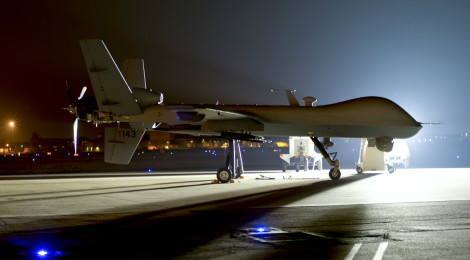
 In May 2013, President Obama announced major changes to the U.S. drone war. Though previously United States leaders described drone strikes as “surgical” and causing little to no civilian casualties, the president announced a set of criteria that the government must meet before authorizing a strike during counterterrorism operations. Under the new policy, a strike is not made unless the government has:
Near certainty that the terrorist target is present; and Near certainty that non-combatants will not be injured or killed.
The U.S. government has not released data concerning these operations to validate that these criteria are being met. However, other organizations, such as the Bureau of Investigative Journalism and the New America Foundation, compile open source information to create estimates of strikes and casualties. The data suggest that while there have been improvements over time, operations still fall short of these goals.
The recent revelation of American and Italian hostages being killed in a signature strike by a drone in January 2015 renews concerns that the drone campaign is not living up to President Obama’s promises. Specifically, in that strike the exact identity of the target was unknown and persistent surveillance was unable to detect the presence of the hostages.