28 August 2015

Chronology of U.S. Special Operations Forces

By Merrie Monteagudo
August 26, 2015

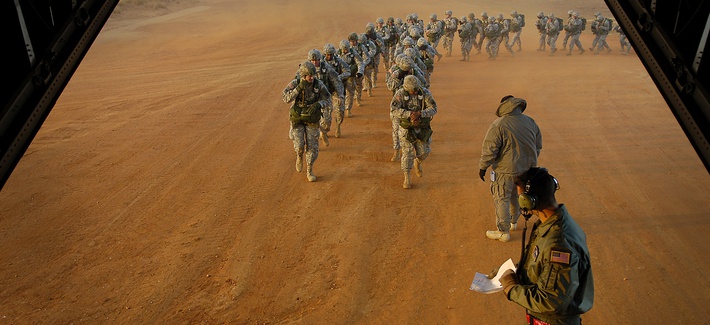
U.S. special operations history: Milestones and missions 

1670s: Benjamin Church of Massachusetts, captain of the first Ranger force in America, adopted American Indian tactics in the conflict known as “King Phillip’s War.”

1750s: Maj. Robert Rogers of New Hampshire organized and led a company of colonists known as Rogers’ Rangers against the French in Canada during the French and Indian War. Rogers’ 28 Rules of Ranging became a blueprint for Ranger fighting tactics.

Rogers’ 1759 raid on the Abenaki Village of St. Francis in Quebec inspired James Fenimore Cooper’s 1826 novel, “The Last of the Mohicans.”

1775: Notable Ranger companies fought for the Continental Army during the Revolutionary War, including “Morgan’s Riflemen” led by Capt. Daniel Morgan of Virginia and the South Carolina company led by Capt. Francis Marion, known as the “Swamp Fox.”

1805: During the Barbary Coast War, Marine 1st Lt. Presley O’Bannon led seven Marines and a band of mercenaries in a successful attack on the port city of Derna, Tripoli, in what is now eastern Libya, to rescue the crew of the American frigate Philadelphia who had been captured by pirates.

O’Bannon and his men are immortalized in the Marines’ Hymn, “From the Halls of Montezuma to the shores of Tripoli, we fight our country’s battles in the air, on land and sea.” Like later special operations troops, these early Marines were an elite force operating behind enemy lines against overwhelming odds.

UN Report: China Sold $20 Million in Arms and Ammunition to South Sudan

August 27, 2015

On Tuesday, the UN Security Council held a “briefing and consultations on the UN Mission in South Sudan (UNMISS) and on the work of the 2206 South Sudan Sanctions Committee.” The meeting discussed the situation in South Sudan, including the role of foreign-produced military supplies in the conflict. According to a report from the UN Panel of Experts on South Sudan, China has been one of the top sources of arms and ammunition for the South Sudan government.

The conflict in South Sudan pits President Salva Kiir against former Vice President Riek Machar, whom Kiir accused of plotting a coup. Violence has since spread along ethnic lines – Kiir is part of the majority Dinka ethnic group, while Machar belongs to the Nuer ethnic group. The ethnic dimension of the conflict is particularly worrying to observers.

Thailand’s Air Force Gets a Boost with New Helicopters

August 27, 2015

The Royal Thai Air Force (RTAF) has received the four new medium-lift helicopters it ordered, Airbus Helicopters announced August 25.

The four EC725 helicopters, which were ordered in 2012, were delivered and will become operational next month, the company announced. Two additional EC725s which were ordered in 2014 are expected to be delivered to the RTAF in 2016.

The EC725 – which has been renamed the H225M in 2015 in line with Eurocopter’s corporate rebranding as Airbus Helicopters – is a 11-ton, twin-engine helicopter. It features high-performance navigation and mission systems – including a unique digital four-axis autopilot. It boasts a maximum speed of 201 miles per hour, a range of 533 miles and a service ceiling of nearly 20,000 feet.

According to Airbus Helicopters, it is capable of performing multiple missions including combat search and rescue, long-range tactical transport, aeromedical transport and logistic support and naval duties. Delivering excellent flight autonomy and seating 28 persons, the company says the powerful helicopter is “perfectly tailored” for the RTAF to carry out such missions.

What We Learned from the Inter-Korea Deal

By David Eunpyoung Jee
August 26, 2015

Inter-Korean tensions sky-rocketed after August 4, when two soldiers of the Republic of Korea (ROK) were maimed for life after stepping on landmines allegedly placed by North Korea. In response to the North Korean provocation, the ROK decided to resume anti-Pyongyang propaganda, after the broadcasts had been scrapped for many years. Pyongyang warned of possible strikes unless Seoul halted the broadcasts, and actually fired at a propaganda loudspeaker (but did not hit it). South Korean forces fired back, and announced that the propaganda broadcasts would continue.

Subsequently, Pyongyang offered to talk to Seoul in the border village of Panmunjom. On Monday, the talks reached their conclusion: Seoul would cease the propaganda broadcasts in exchange for Pyongyang expressing its regrets for the landmine incident. Assessments of the deal vary, but there are two clear implications. First, the ROK propaganda broadcasts are powerful, and second, that the ROK can leverage this tool in case of further provocations in the future.

Australia’s Worldview, Minus the Spin

August 26, 2015

In a telling lecture at the Lowy Institute for International Policy this month, Peter Varghese, Secretary of Australia’s Department of Foreign Affairs and Trade, spoke about his country’s place in Asia. Successive governments have tried to define how Canberra should engage with the changing region. All have fallen short. Last week, Varghese cut through the politician-speak that clouds too much of Australian foreign policy and set out Canberra’s strategic view.

Australia, he noted, has traditionally existed in the “slipstream” of power (think relations with the U.K. and the U.S.), both when operating in the region and internationally. In recent years, new power relations in the Indo-Pacific are forcing a period of adjustment. As Varghese noted, any “grand bargain” between the two great powers in the region is unlikely. Instead, Varghese noted that the process of adjusting to shifting power balances in a multi-polar Asia will be “incremental and organic.”

Army Takes Biggest Hit InOPM Hack

AUGUST 25, 2015

The service will cover 40 percent of the Pentagon's plan to spend $132 million on credit monitoring. 
Federal agencies have begun submitting proposals for how they will cover the costs of responding to the hack of background investigation data maintained by the Office of Personnel Management, and for some it is coming with a hefty price tag.

Eric Katz joined Government Executive in the summer of 2012 after graduating from The George Washington University, where he studied journalism and political science. He has written for his college newspaper and an online political news website and worked in a public affairs office for the Navy’s ...Full Bio

Last month, OPM notified agencies it would charge them for their share of the protection services being offered to hack victims, proportional to the number of impacted former and current employees, contractors and applicants connected to each agency. Now that OPM has notified each agency of what they owe for fiscal 2015, agencies must shift funds around to make the required payments.

27 August 2015

Defence of Khalra and Khemkaran

By Maj Gen Sukhwant Singh
26 Aug , 2015

Major General Freemantle, General Officer Commanding 7 Infantry Division, was operationally responsible for the security of the southern half of the Bari Doab area between the Ravi, Beas and Sutlej. The area is generally flat and crisscrossed by irrigation canals and drains extensively constructed to prevent water logging. The anti-tank-obstacle belt had been extended about six to nine kilometres deep in our territory all along the international border.

Freemantle was assigned the task of defending the sensitive areas of Harike and Hussainiwala headworks and Ferozepur town by denying the main routes of ingress from Pakistan into the area of his operational responsibility, namely Khalra-Patti Harike, Khemkaran-Patti-Harike, Khemkaran-Bhikhiwind -Amritsar, and Hussainiwala-Ferozepur. The main defences were to be based along the obstacle belt with covering troops deployed between the border and the belt. The contingency plan envisaged the capture of the Sehjra bulge.

Exposรฉ: How Hafiz and Hurriyat killed NSA talks

By RSN Singh
Issue: Net Edition | Date : 25 Aug , 2015

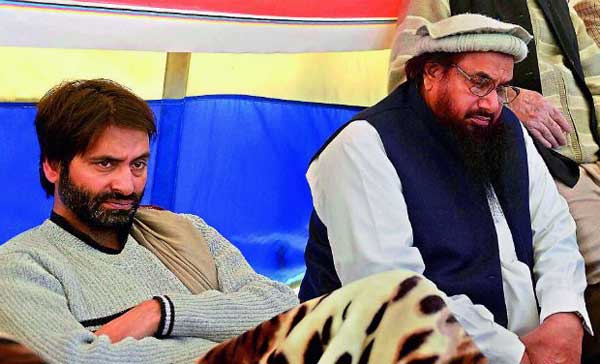
It is not the military-intelligence establishment of Pakistan, which was solely responsible for the sabotage of NSA level talks between India and Pakistan, the pre-dominant role was that of Hafiz Saeed and to some extent the Hurriyat leaders in India. The other abetting forces were some mainstream political parties of J&K, which are essentially Kashmir Valley centric, as has always been the case since 1947.

Hafiz Saeed warned the Pak authorities that under the circumstances it would be difficult for him to prevent the LeT cadres from gravitating to ISIS.

Sources within Pakistan have revealed to this author that the military-intelligence establishment was very much onboard when Ufa Joint-Declaration of India and Pakistan was being drafted. The drafting process was a horrid, painstaking and extremely contentious affair. The imposing presence and influence of Russia and China was a significant factor. Considering that India–Pakistan Joint Declaration was on the sidelines of the Shanghai Cooperation Organization (SCO) meet and therefore could not be allowed to sully the atmosphere. Pakistan had no choice but to give in. India prevailed and the ‘K’ word did not intrude the joint statement. It was effectively stone-walled.

India's 5 Most Lethal Weapons of War

August 25, 2015 

These could give China and Pakistan a run for their money...

India occupies one of the most strategically important locations in the world. A short distance from the Persian Gulf, Central Asia and Southeast Asia, India has been an important hub for ideas, trade and religion for thousands of years.

That geographic positioning has its disadvantages. India is faced on two sides by powerful, nuclear-armed countries it has fought wars with—China and Pakistan.

India’s most formidable rival is China, with whom it fought a short, sharp border war with in 1962. China’s growing military has transformed it from a mainly ground-based threat to a multifaceted one with powerful assets in the air, at sea and even in space.

India’s second most powerful rival is Pakistan, which was also part of the British Raj. India and Pakistan have fought four wars since 1947, and frequently appear on the verge of a fifth.

Is There an Alternative To Talks Between India and Pakistan?

August 25, 2015

Nisid Hajari, in his book, Midnight’s Furies, says that the time has come when “the heirs of Nehru and Jinnah put 1947’s furies to rest.” He suggests that India and Pakistan both invest in peace rather than in conflict.

The way scheduled talks between the National Security Advisors (NSA) of the two neighbors were aborted—without any preliminary rounds—suggests peace between remains as elusive today as it was six decades ago.

One questions the rationale and wisdom of cancelling talks just a day before they were supposed to start while both nations resort to semantics to justify their rigidness.

New Delhi placed preconditions before Islamabad that the the Pakistani NSA, Sartaj Aziz, could not meet separatist leaders from Kashmir (the Hurriyat) before talks during his Delhi visit. But Pakistan refused to follow any red lines drawn by India for starting the talks. The stalemate could not be resolved and Aziz cancelled his scheduled flight to Delhi on Sunday.

Reward India’s nonproliferation good behavior

By Kelly Wadsworth 
AUG 20, 2015 

In June, India made yet another bid to join the Nuclear Suppliers Group (NSG) and Missile Technology Control Regime (MTCR). Delhi also has standing bids to join theWassenaar Arrangement and the Australia Group. These four regimes make consensus-based export recommendations to prevent the proliferation of weapons of mass destruction (WMDs). India should be given membership to the NSG on the basis of its compliance with the spirit of these regimes and in demonstrating responsible nonproliferation behavior per the US-India Civil Nuclear Agreement.

There are several reasons to back India’s bid for membership.

First, India has complied with the US-India civil nuclear agreement. This 2006 agreement required India to separate its civil and military nuclear facilities and place its civil facilities under International Atomic Energy Association (IAEA) safeguards. Subsequently, India was granted an NSG waiver in 2008, and since then has been allowed to do limited nuclear business with NSG members. India would benefit from full NSG membership, which would increase its ability to engage in responsible nuclear business and would open the door to membership in the other three regimes.

Operation Karachi: Pakistan's Military Retakes the City

August 24, 2015 

"If the roots of Karachi’s woes are political, so are the keys to its success."

Terrorism in Pakistan is in decline for the second consecutive year. If current trend lines continue, the number of Pakistani civilians killed in terrorist attacks this year will be the lowest since 2006, a year before the Pakistani Taliban began a nationwide insurgent and terrorist campaign.

This precipitous drop is due to both Pakistani counterinsurgency operations being conducted in all seven tribal areas near Afghanistan, and urban counterterrorism operations in all four provinces—the most expansive of which is taking place in the megacity of Karachi.

While foreign observers of Pakistan remain fixated on North Waziristan, the major gains of the Pakistan Army and local police toward pacifying the complex urban environment of Karachi merit exploration.

Karachi: A ‘Feral City’

Happening Now: Ask Us Anything on Southeast Asia!

August 25, 2015

Prashanth Parameswaran, Shawn Crispin, Luke Hunt and Mong Palatino are authors for The Diplomat’sASEAN Beat blog. As most of you are aware, the blog focuses primarily on events in Southeast Asia, the Association of Southeast Asian Nations (ASEAN), and the subregion’s links with the rest of the world.

We’re over at /r/geopolitics today to engage in a frank and open discussion with the /r/geopolitics community about Southeast Asia. We’ll do our best to answer as many questions as possible during the allotted time frame and will be filtering in and out over the course of the day.

If you’d like to keep the conversation going outside the AMA, follow some of us on Twitter: Prashanth Parameswaran (@TheAsianist); Luke Hunt (@lukeanthonyhunt); Mong Palatino (@mongster). And, of course, follow The Diplomat (@Diplomat_APAC).

Dredging Under the Radar: China Expands South Sea Foothold

August 26, 2015

Venturing ever further from the rivers and coasts that it helped develop in the first three decades of China’s post-Mao reforms, China’s burgeoning dredging fleet has not only excavated new land in the South China Sea, but has also given China a big new shovel to break ground on the seaward vector of China’s “One Belt, One Road” initiative, the “Maritime Silk Road.” Even after Chinafinishes constructing new “islands,” its dredgers stand ready to support port construction and channel widening along its strengthening Silk Road. China’s rapid rise to the forefront of world dredging exemplifies its ability to leverage its broad economic and technological achievements into the advancement of the country’s strategic goals.

How Xinjiang Has Transformed China’s Counterterrorism Policies

August 26, 2015

Since ascending to power in November 2012, Chinese Communist Party (CCP) chairman Xi Jinping has supported a wide range of directives, regulations and policies in his quest to bring long-term stability to the Xinjiang Uyghur Autonomous Region (XUAR). Of particular importance is the Party-State’s ideological assault and security crackdown on the so-called “three evil forces” of ethnic separatism, religious extremism and violent terrorism. Yet, although foreign analysts are gaining a deeper and more nuanced understanding of Beijing’s hardline security and religious policies in Xinjiang [East Turkestan], it’s also important to consider how the central leadership’s focus on combating the “three evil forces” in the western PRC has consequently shaped elite thinking on how to prevent, manage and respond to threats nationwide.

Building a National Framework to Combat Terrorism

30 Heads of State Will Watch China’s Military Parade Next Week

August 26, 2015

After months of anticipation, China has released the guest list for its September 3 military parade, the highlight of a series of events commemorating the 70th anniversary of Japan’s surrender and the end of World War II. Vice Minister Zhang Ming of China’s Foreign Ministry revealed the list at a press conference on August 25.

There will be 30 heads of state at the parade, Zhang said, including Russian President Vladimir Putin, South Korea President Park Geun-hye, Pakistan’s President Mamnoon Hussain, Myanmar’s President Thein Sein, and Vietnamese President Truong Tan Sang. China’s guests will also include the heads of state of each member of the Shanghai Cooperation Organization (Russia, Kazakhstan, Kyrgyzstan, Tajikistan, and Uzbekistan, in addition to China itself).

However, only half of the ASEAN member countries are sending top-level political representatives. Vietnam and Myanmar’s presidents will be joined by Cambodia’s King Norodom Sihamoni, Laotian President Choummaly Sayasone, and Thai Deputy Prime Minister Prawit Wongsuwan. Absent from the list: any mention of top-level representation from Brunei, Indonesia, Malaysia, the Philippines, or Singapore.

North Korean leader Kim Jong-un will also be absent from the parade. Instead, North Korea will be represented by Choe Ryong-hae, secretary of the Korean Workers’ Party.

Why Did China Amass Tanks at the North Korean Border?

August 26, 2015

Even as North and South Korea engaged in hours of talks over the weekend, in the hopes of defusing tensions, China was apparently making its own preparations for a worst-case scenario on the Korean peninsula.

On Saturday, Chinese social media users began posting pictures of tanks and other military equipment moving through city streets. The photos were purportedly taken in Yanji, China, the capital of Yanbian prefecture in Jilin province, which lies along the China-Korea border.

Other Chinese social media users posted pictures of a train appearing to carry more military equipment – but those pictures were explained as showing military technology on its way to Beijing for the upcoming military parade. There was some confusion about this point, with some of the same pictures being identified by different sources as taken in or outside of Yanji and Beijing.

China, Japan and Europe Are Flashing Economic Warning Signs

AUG. 24, 2015 

An investor monitored stock data Monday at a securities brokerage house in Beijing.CreditRolex Dela Pena/European Pressphoto Agency

Even before the recent plunge in commodity and stock markets, the world economy was weak. But recent data from China, Europe, Japan and other countries suggest that growth is slowing more sharply than many analysts had anticipated. That puts the burden on policy makers in these countries to come up with more credible ways to bolster their economies.

The most worrying signs are coming from China, the world’s second-biggest economy. After two decades of rapid growth, China’s economy is decelerating and its leaders are failing to strengthen it — by, for instance, decreasing its reliance on investment and putting greater emphasis on consumer demand. In a sign of how quickly business activity is falling,exports declined more than 8 percent in July from June and auto saleswere down more than 6 percent compared to a year earlier. Gross domestic product grew at 7 percent in the second quarter, the slowest pace in six years.

On Display: China's Master Plan to Sink the U.S. Navy

August 24, 2015 

Look out, China military watchers. Beijing seems to have displayed some of its most impressive missile technology—technology that would be used to keep the U.S. Navy at bay in the event of a military conflict. And if all works out, we might just get an up-close look in the days to come.

According to a report in China’s Global Times, Beijing displayed some of its most deadly military hardware during a warm-up for its September 3rd World War II commemorations and parade.

Get your cameras and cell phones ready. Logic would suggest such weapons will be displayed in the actual celebrations.

According to various accounts, several types of missiles were paraded, among them some of the most lethal in China’s arsenal.

What (If Anything) Can We Do Against Lone Wolf Terrorists?

August 25, 2015

Security worry: How to stop the ‘lone wolf’ attacks

PARIS (AP) – The gunman had an arsenal that he claims to have stumbled upon in a park near the train station. Like three other men accused of drawing up failed plans for attacks in France recently, the suspect denied any links to terrorism, telling his lawyer he was homeless and only wanted to rob a train “to eat.”

Instead, the assault rifle jammed, and he was tackled and bound with a necktie by three Americans and a Briton who were celebrated Monday with France’s highest honor. Now, with many lives potentially saved on the high-speed train by quick-thinking and courageous passengers, the limits of a continent’s worth of security were thrown into relief by a lone attacker during a less-sophisticated act of violence.

“I don’t think we can rely entirely on the police, the law enforcement services. They will do their best. We can put in place the best intelligence networks, but somebody is probably going to get through at some stage. And my vision of this is that as citizens, we need to be prepared to think about how to act,” Chris Norman, the British businessman who helped bind the suspect, told The Associated Press.

“We need to have it in our minds, because if I had never thought it before, then I probably would’ve just been sitting in a corner cowering,” Norman said.

Where is my Islam? The identity crisis of 21st century Muslims

By Cawo Abdi
August 24, 2015

A young Nigerian arrives with his prayer mat to pray at the Isa Kazaure praying ground in Jos on July 17. 
Story highlights 
Islam in most Muslim countries is increasingly defined in rigid term, writes Cawo Abdi 
Confusion, shame and victimhood might define the future memories of Muslim children 

Cawo Abdi is author of "Elusive Jannah: The Somali Diaspora and a Borderless Muslim Identity." Abdi is associate professor of sociology at the University of Minnesota and a research associate in sociology at the University of Pretoria, South Africa. The views expressed in this commentary are solely those of the author.

(CNN)My most treasured childhood memories are colored by beauty associated with what Islam was in the society that I was born in and raised.

One vivid memory of this childhood involves regularly sitting on the edge of my father's prayer mat, made from goat-skin that became supple over years of usage in nomadic hamlets in central Somalia.

Terrorists Always Will Find Targets

August 25, 2015
http://nationalinterest.org/blog/paul-pillar/terrorists-always-will-find-targets-13696

The foiled attack last week by a heavily armed gunman on a Paris-bound express train has generated a surge of discussion and hand-wringing in Europe about how better to protect against such attacks. There is nothing new about European trains as a terrorist target; an attack against commuter trains in Madrid eleven years ago that killed 191 people was a far more significant event. And the policy challenges involved are hardly specific either to Europe or to trains.

Security for particular types of potential terrorist targets is routinely a topic after even failed terrorist attacks, and protective security countermeasures constitute a large proportion of public measures to counter international terrorism. Nonetheless, a serious and inherent limitation to what can be accomplished on this front is the unlimited number of potential targets. This limitation flows from the very nature of terrorism as the use of violence to elicit a broader political and psychological effect rather than merely to disable the particular target that is attacked. Soft targets can be made harder, but then terrorists will turn to other soft targets. Commercial aviation—still a juicy terrorist target for several reasons—has been made much harder than it once was, but there are still plenty of trains to go after. And it's not just transportation; any public place with a lot of people, such as shopping malls, will do.

No Deal: Why North Korea Won't Be the Next Iran

August 25, 2015

As the sounds of artillery faded across the North-South Korean border recently, hopes were truly dashed for a new diplomatic breakthrough between the United States and North Korea. Hopes had been raised in Washington, in Beijing and even in Seoul, for a revival of the Six Party Talks in the wake of the successful U.S.-Iran Nuclear Deal. These hopes were especially cogent in the run up of visits to Seoul, Tokyo and Beijing by the American special envoy to these talks, Sydney Seiler, in late July. However, the recent announcement of Vice-Premier Choe Yong-gon’s execution in North Korea dampened such hopes. For North Korea-watchers, the recent spate of purges of elites by Kim Jong-un suggests that the regime is going through a consolidation of power, and it is unlikely to accept or even to deal with diplomatic overtures from the United States or its allies for some time. In many ways, the reason for this latest cross-border flare-up has its origins in North Korea’s domestic politics.

Be Afraid: Why America Will Never 'Destroy' ISIS

August 25, 2015

On July 22, after months of negotiations, Turkey finally agreed to allow the United States to use its bases, most importantly Incirlik Air Base, for manned and unmanned strike sorties against the self-declared Islamic State. Prior to this, Turkey had only permitted that its sovereign territory be used for unarmed surveillance drone flights and (apparently) a combat search and rescue element. This latest development was characterized as a “game-changer” by a senior Obama administration official, in particular for more intensive bombing of the Islamic State in northern Syria. Rather than flying from carriers or Persian Gulf bases, flying out of Incirlik significantly increases the time that coalition strike aircraft can loiter above Islamic State-controlled territories and, potentially, provide close air support for coalition-backed opposition forces on the ground, including the Pentagon-trained rebels that entered Syria on July 12.

The Iran Nuclear Agreement: The Need for a Full U.S. Implementation Plan

AUG 24, 2015 

The U.S. focus on whether the Congress can get 60 votes against the agreement, and then 67 votes to override a veto, presents the potential danger that the U.S. does not prepare properly for what happens if they can’t block the agreement and the Joint Comprehensive Plan of Action (JCPOA) actually goes into force.

The Need for an Implementation Plan

The implementation process will be extremely complex. It requires a wide range of actions by the IAEA, and the creation of new institutions to support the agreement.

It requires the U.S. to be ready to independently verify and deal with any possible problems in each step in Iran’s compliance with the agreement as Iran moves toward Implementation Day at some point in 2016. It will then require a constant U.S. effort to monitor compliance with the agreement and to put that compliance in a broader security context.

In practice, this means the U.S. must have an implementation plan both to ensure that the IAEA and new institutions required to make the agreement are effective at the proper time, and that the U.S. is ready to support and enforce the agreement.

IS TURKEY’S WAR ON TERROR A CONSEQUENCE OF THE IRAN DEAL?

AUGUST 25, 2015

The historic Turkish-Persian rivalry has been rekindled by the nuclear deal with between the world's leading powers and Iran. The uptick of violence and tension in Turkey and on its borders after negotiations ended is no accident.

The deal negotiated by the P5+1 with Iran on its nuclear program has been heralded by supporters as a historic agreement and regional game-changer. Much of the international criticism thus far has centered on Israeli and Gulf Arab skepticism about the deal. Overlooked in these discussions, however, is the significant impact the Iran deal is already having on other regional disputes, including Iran’s relationship with its traditional competitor, Turkey.

HOW THE AP GOT THE IRAN INSPECTIONS STORY WRONG

AUGUST 24, 2015

Last week's Associated Press story on nuclear inspections of an Iranian military facility left out key details on how inspections work, creating a misleading picture and introducing new controversy into the already heated debate on the Iran deal.

A new controversy over a small facility on an Iranian military base at Parchin now threatens to blow up the support President Obama needs to get the Iranian nuclear agreement past Congress. Unfortunately, the controversy is the result of shoddy reporting and a poor understanding of nuclear inspections.

The Parchin site, which is southeast of Tehran, has been the subject of scrutiny for a number of years. Iran may have carried out experiments there that would help it design a nuclear weapon. In connection with the recently negotiated Iran deal — the Joint Comprehensive Plan of Action (JCPOA) — the International Atomic Energy Agency (IAEA) and Iran have agreed on a plan to investigate allegations of work that might be related to nuclear weapons design (the IAEA term for this is possible military dimensions, or PMD). Parchin is a military site, not a declared nuclear site under regular IAEA surveillance.

Why Israel Did Not Attack Iran‘s Nuclear Sites

George Friedman
August 25, 2015

Israel: The Case Against Attacking Iran 

On Aug. 21, Israeli Channel 2 Television aired a recording of Ehud Barak, Israel’s former defense minister and former prime minister, saying that on three separate occasions, Israel had planned to attack Iran’s nuclear facilities but canceled the attacks. According to Barak, in 2010 Israel’s chief of staff at the time, Gabi Ashkenazi, refused to approve an attack plan. Israeli Cabinet members Moshe Yaalon and Yuval Steinitz backed out of another plan, and in 2012 an attack was canceled because it coincided with planned U.S.-Israeli military exercises and a visit from then-U.S. Defense Secretary Leon Panetta.

The fact that the interview was released at all is odd. Barak claimed to have believed that the tape would not be aired, and he supposedly tried unsuccessfully to stop the broadcast. It would seem that Barak didn’t have enough clout to pressure the censor to block it, which I suppose is possible.

Yaalon, like Ashkenazi, was once chief of staff of Israel Defense Forces but was also vice premier and Barak’s successor as defense minister. Steinitz had been finance minister and was vocal in his concerns about Iran. What Barak is saying, therefore, is that a chief of staff and a vice premier and former chief of staff blocked the planned attacks. As to the coinciding of a U.S.-Israeli exercise with a planned attack, that is quite puzzling, because such exercises are planned well in advance. Perhaps there was some weakness in Iranian defenses that opened and closed periodically, and that drove the timing of the attack. Or perhaps Barak was just confusing the issue.

We Asked David Bromwich: What Should Be the Purpose of American Power?

August 26, 2015

Editor’s Note: The following is part of TNI’s special 30th anniversary symposium. We asked twenty-five of the world’s leading experts: What is the purpose of American power? You can find all of their answers here. You can also find our exclusive interview with Henry Kissinger here.
No nation has a purpose engraved on its character as the natural law was said to be engraved on the heart of a person. A nation, even more than a person, is a complex entity: you cannot touch, taste, hear, smell or see it as a whole. America’s purpose, if we have one, must be inferred from our actions, as measured by the judgment of sane and reasonably well-informed persons.

The elites that governed the United States between 1990 and the present were broadly agreed on our national purpose. We existed in order to dominate the world for the world’s own good. After all, most people everywhere wanted to be like us. On the other hand, a Gallup poll released at the end of 2013 showed that the United States is perceived worldwide as the greatest threat to world peace. American elites and international opinion have come to different conclusions.

We Asked Gary Hart: What Should Be the Purpose of American Power?

August 26, 2015

Editor’s Note: The following is part of TNI’s special 30th anniversary symposium. We asked twenty-five of the world’s leading experts: What is the purpose of American power? You can find all of their answers here. You can also find our exclusive interview with Henry Kissinger here.
This is a call for making principles the centerpiece of U.S. foreign policy. That is both less and more radical than it sounds. Less, because most policy makers believe themselves naturally to be men and women of principle. More, because the assumption that we are a principled nation simply because we are American is not always true.

One does not have to be a veteran of the Church Committee to recall the overthrow of governments, assassination attempts against foreign leaders, support for repressive dictators, misbegotten wars, dubious alliances and so on.

In the realm of principled behavior, there is a gap between our proclaimed convictions and the performance of our relations in the world. Chalk most of this questionable conduct up to expediency, haste, perceived necessity, ideological motivation, mistaken intelligence or simple ignorance of history.

US Will Send B-2 Bombers to Guam in Support of South Korea

August 25, 2015

The United States will dispatch three B-2 bombers to Guam amid heightened tensions on the Korean Peninsula, the U.S. Air Force Chief of Staff, General Mark Welsh, told the Air Force Times on Monday.

“We are in the process right now of deploying three B-2s on a scheduled rotation to Andersen Air Base in Guam. We continue to have airmen stationed on the Korean Peninsula who are there full time who are ready for whatever might happen, and they are ready everyday,” Welsh said.

In 2013, B-2 bombers entered North Korean airspace in a show of force to deter Pyongyang. Such as display appears unlikely this time, as Seoul and Pyongyang have reached an interim agreement to defuse the ongoing crisis on the Korean Peninsula.

“The United State welcomes the agreement reached between the Republic of Korea and the DPRK earlier today. We support President Park’s tireless efforts to improve inter-Korean relations, which support peace and stability on the Korean Peninsula,” U.S. State Department spokesman John Kirby told reporters at a regular briefing yesterday.

Can South Korea Lead Nuclear Cooperation in Northeast Asia?

August 26, 2015

South Korea faces significant challenges as the Asian power tries to lead nuclear safety cooperation in Northeast Asia, a scholar said Tuesday.
Northeast Asia has been an early adopter of nuclear energy, Dr. James E. Platte, a former counterproliferation analyst at the U.S. Department of Defense, said, with Japan taking the lead, followed by South Korea and then China in the 1990s. About half of all nuclear plants being constructed around the world are in Northeast Asia. Nuclear power accounts for about 30 percent of South Korea’s energy needs, and it used to account for around the same amount for Japan before plants were shut down following the Fukushima incident in 2011

Yet the Fukushima incident was a reminder that there are still a number of unresolved issues related to nuclear power, Platte, who is now a visiting fellow at the East-West Center, a Washington, D.C-based think tank, said at an event there. While nuclear safety was the issue in that case, other concerns remain with respect to proliferation as well as nuclear waste management. In theory, these challenges open up room for potential collaboration.

“There is a lot of opportunity for cooperation,” Platte said.

Will the US Air Force’s Top-Secret Bomber Cost $3 Billion Per Plane?

August 25, 2015

As I reported four days ago, the costs of the top-secret Long-Range Strike Bomber (LRS-B)–likely to be designated B-3–have gone up due to a calculation error, according to the U.S. Air Force (See: “US Air Force’s Top-Secret Bomber More Expensive Than Thought”). In 2014, the Department of Defense’s ten-year budget estimate for fiscal years 2015-2025 for the bomber program was $33.1 billion. This year’s estimate for fiscal years 2016-2026 jumped up to $58.4 billion.

The U.S. Air Force, however, stated that both numbers are wrong and that the actual ten-year costs (the first installment in the 30-year program) are $41.7 billion for each period. “The 10-year cost estimate provided by the Air Force for LRS-B in Table 4 of the FY2015 and FY2016 Section 1043 Report was incorrect. The correct 10-year cost entry for both the FY2015 and FY2016 reports is $41.7B. Again, the program costs have remained stable,” Air Force spokesman An Stefanek told Breaking Defense.

Central Asia Must Unite to Revive the Aral Sea

By Saghit Ibatullin
August 25, 2015

Many of us take water for granted. Many of us believe it will always be plentiful. Yet only 3 percent of water on our planet is fresh, and two-thirds of that is locked away in frozen glaciers or otherwise unavailable.
For Kazakhstan, as the largest landlocked country in the world, the issue of fresh water deficit is significant. This is why we have been working hard to reverse one of the worst man-made environmental disasters to take place over the last 40 years.

The Aral Sea – which only half a century ago was the fourth largest freshwater lake in the world – is now just a tenth of its former size. There is now no water in sight in parts where the Aral Sea used to be – merely brown earth and sand. Fishermen earning their income and children playing on the beach have been replaced by the wreckages of fishing boats and swathes of empty mud fields. Grass nearby has dried up and herds of antelope that used to roam the area have disappeared. An area that once teemed with life now resembles an eerie no man’s land.

The retreat began with Soviet irrigation schemes far upstream, which cut off supplies of water to replenish the lake. Continued mismanagement, pollution and increased temperatures have all taken a terrible toll on the size and health of the Aral Sea.