http://thediplomat.com/2015/10/china-projecting-power-through-peacekeeping/
World peace is an admirable goal, but states are rarely interested in pursuing it over their own interests.
By Ryan Pickrell, October 15, 2015
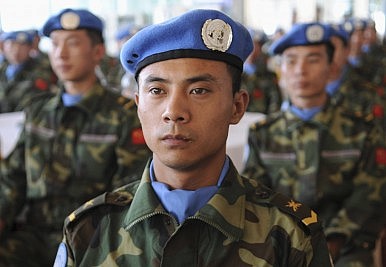
President Xi Jinping’s recent visit to the United Statescame with a lot of the usual and the expected, but it also delivered a few surprises. One was Xi’s announcement at the United Nations (UN) headquarters in New York that China is preparing to set up a permanent peacekeeping force of 8,000 soldiers, donate $100 million over the next five years to the African Union for the creation of an emergency response force, and contribute $1 billion over the next ten years for the establishment of a China-UN “peace and development fund.” This kind of contribution to global peacekeeping operations suggests that China may be ready to answer America’s call and become a “responsible stakeholder.” While contributions of this nature are sure to produce positive effects in many struggling states, Chinese actions signal a distinct shift in Chinese foreign policy, a shift that is being driven by motives other than a desire to promote peace.
Peacekeeping, emergency response, and disaster relief activities are excellent opportunities for power projection. While humanitarian assistance benefits struggling states, assisting states often offer assistance only when their assets and interests are on the line. As a general rule, in an anarchic international system, what are perceived as altruistic humanitarian endeavors are often self-serving actions. In most cases, China likes to pull plays out of the American playbook, but this time, it appears to be tossing in a few plays from Japan as well. Since the 1990s, Japan has been actively engaging in international disaster relief cooperation in an effort to create a more positive image of itself in the international community, protect economic assets abroad, and steadily create a place for Japanese military operations abroad. This process set the stage for the amending of the Japanese constitution and the re-militarization of Japan. For Japan, disaster relief has been an excellent outlet for increased power projection. While China and Japan have different long-term aspirations, there is reason to believe that China is interested in using peacekeeping for similar purposes.
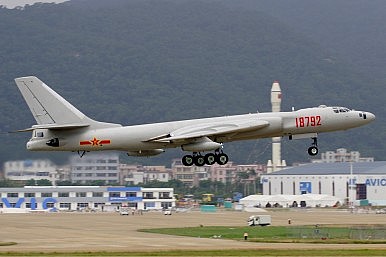
As China’s influence grows and its national interests move further from its borders, China will need the ability to protect them. In April of this year, China sent a force of 700 peacekeeping units to South Sudan to contribute to ongoing peacekeeping efforts and humanitarian assistance projects there. As the world’s largest energy consumer, China is very interested in the oil fields in South Sudan; in fact, it is one of the largest investors in those oil fields. Problems within South Sudan, however, are slowing production, which is bad for business. Before 2013, it was rare to see the Chinese military operating far from its borders, but now, as China moves further away from the tao guang yang hui (“hide your light”) strategy put forward by Deng Xiaoping and embraces a more assertive and proactive approach to international relations and politics, the world is seeing People’s Liberation Army (PLA) naval units carrying out “far seas operations,” the development of serious military hardware capable of hitting distant targets, such as nuclear submarines, aircraft carriers, and long-range bombers, and the deployment of PLA forces abroad for rescue and relief activities, as well as the protection of Chinese interests and assets.



 Ships assigned to the USS Nimitz Carrier Strike Group and the Indian aircraft carrier Viraat (R 22) underway in formation during Exercise Malabar 2005. (Photo: wikimedia commons)