8 January 2016

Recent Military Review Articles of Interest


by SWJ Editors, SWJ Blog Post | January 3, 2016

The Future of Warfare Against Islamic Jihadism: Engaging and Defeating Nonstate, Nonuniformed, Unlawful Enemy Combatants by Lt. Col. Allen B. West, U.S. Army, Retired
A former congressman and retired Army officer opines on the danger to the United States posed by Islamic jihadism and offers ways for U.S. leadership to face that threat.

Criminal Networks in Venezuela: Their Impact on Hemispheric Security by Prof. Leopoldo E. Colmenares G.
A noted Venezuelan educator and author demonstrates how the Chavista political process allowed the formation of a partnership between the Venezuelan government and illicit transnational organizations.

Action Research: A Systematic Approach to the Social Component of the Human Dimension William Hardy by Joseph Rodman
Two social science research analysts for the U.S. Army’s Human Dimension Task Force discuss the importance of U.S. soldiers developing personal relationships with their multinational partners and members of the local communities, deeming those relationships critical to mission success.

Lessons from Yusufiyah: From Black Hearts to Moral Education by Maj. Saythala Lay Phonexayphova, U.S. Army
The Army is attempting to learn from the 2006 massacre at Yusufiyah so that similar tragedies can be prevented. A West Point philosophy instructor offers key lessons about how the Army can teach its soldiers the moral obligations they have to other human beings, and the choices for which soldiers must be accountable.

Military Operations in Megacities: A Linguistic Perspective by Jeff R. Watson, PhD
The author discusses the dynamic linguistic characteristics of megacities and how an appreciation of this linguistic landscape can help military leaders plan future military operations and better understand the megacity environment.

* 10 Ongoing Wars Or Potential Conflicts to Watch in 2016

January 4, 2016
Jean-Marie Guรฉhenno, Foreign Policy, January 3, 2016
Pulling together a list of the wars most in need of international attention and support in 2016 is challenging for all the wrong reasons. For 20 years after the end of the Cold War, deadly conflict was in decline. Fewer wars were killing fewer people the world over. Five years ago, however, that positive trend went into reverse, and each year since has seen more conflict, more victims, and more people displaced. 2016 is unlikely to bring an improvement from the woes of 2015: It is war — not peace — that has momentum.
That said, there are conflicts whose urgency and importance rise above. This year’s list of 10 is weighted toward wars with the worst humanitarian consequences: Syria and Iraq, South Sudan, Afghanistan, Yemen, and the Lake Chad basin. It includes those in influential and functioning states, like Turkey, as well as those that have collapsed, like Libya. It features conflicts that are already bad but are poised to get much worse without intelligent intervention, such as Burundi, as well as tensions, such as those in the South China Sea, that are simmering but have yet to boil over. The list also considers the hopeful example presented by Colombia, where considerable progress is being made toward ending a 51-year insurgency.
 
Half of the conflicts on this year’s list involve extremist groups whose goals and ideologies are difficult to accommodate through negotiated settlement, complicating efforts to plot a path to peace. Looking ahead to 2016, it’s time to dispense with the notion that fighting against violent extremism suffices as a plan for world order — or even the basis of a solution for a single country like Syria. To be sure, stopping the abominations of the Islamic State and other jihadis is vital, but it also exposes policy dilemmas: The fear of what follows the demise of authoritarians (Iraq and Libya being prime exhibits) creates a strong incentive to back repressive regimes, but order based solely on state coercion is not sustainable. The dramatic increase in the reach and influence of jihadis over the past few years is a symptom of deeper trends in the Middle East: mounting sectarianism, a crisis of legitimacy of existing states, and escalating geopolitical competition, particularly between Saudi Arabia and Iran. When the enemy comes from within a given region, military action directed from abroad is more likely to aggravate than assuage.

** Man, Computer, and Special Warfare


http://smallwarsjournal.com/jrnl/art/man-computer-and-special-warfare
by Patrick Duggan, Journal Article | January 4, 2016

“The confounded telegraph has ruined everything.”[1]

       1855 Crimea--General Sir James Simpson

Man-machine teaming is inexorable and Special Warfare[2] needs a blueprint to transform along with it. With every passing day, our hyper-connected landscape spawns a new class of threats more technologically evolved than the last. These ‘hybrid-threats’ confound establishment-thinking seemingly more preoccupied with conflict typology, than the innovation of new organizational concepts to counter them. Success in warfare is not derived by labeling its assembled parts, it is achieved by correctly assembling emerging technology and new capabilities into trusted fields of practice. U.S. military culture must increasingly confront technology’s permutation of conflict, as great powers have contended since the ‘dawn of machines’ during the Crimean War. This paper serves as one step in a larger man-machine journey, and advances a conceptual framework to align technology, tools, and tactics for a new contemporary cyber-enabled Special Warfare practice. If successfully developed, this framework provides a mission-specific blueprint for the convergence of computers and man, and amplifies Special Warfare’s capabilities to counter future hybrid-threats and deny them growing technological advantage.

Hybrid-Hype
Hybrid-warfare has been complicated with umbrella labels ranging everything under the sun. It has been defined as a “combination of conventional, irregular, and asymmetric means, including the persistent manipulation of political and ideological conflict, and can include the combination of special operations and conventional military forces; intelligence agents; political provocateurs; media representatives; economic intimidation; cyber-attacks; and proxies and surrogates, para-militaries, terrorist, and criminal elements.”[3] The examination of hybrid-warfare has fueled spirited debate and spurred numerous papers over its characteristics, purpose, and parts; and no doubt, will continue for some time.

However, the truth is, hybrid-warfare is nothing new. It has, and always will be, a hodgepodge of previously labeled conflicts fused together by technology in unexpected ways. Hybrid-warfare is an asymmetric grab-bag of tricks that converges old and new technology and tactics to open new ‘attack surfaces’ against an adversary. Simply put, “the evolving character of conflict that we currently face is best characterized by convergence.”[4] Hybrid-warfare’s phenomena has only seemed to surge as a result of the tightening interaction between humans, the physical world, and cyberspace, whose connections produce a new class of threats increasingly adept in merging man and machine in a ‘cybered’ world. Powered by the steady proliferation, sophistication, and affordability of technology, hybrid-warfare is a useful means to inflict disproportionate harm against an opponent, relative to the size, resources, or geography of an adversary. Today, every country, non-state actor, or super-empowered individual can increasingly harness hybrid-warfare as a means to pursue their goals.

5 Big National Security Questions for 2016

http://www.defenseone.com/ideas/2016/01/5-big-national-security-questions-2016/124841/?oref=defenseone_today_nl
January 4, 2016 By James Lindsay Council on Foreign Relations

On Tuesday, CFR.org posted an interview I did previewing the year ahead. My take in a nutshell: 2016 is shaping up to be a tumultuous year. The list of problems is long: a resurgence in terrorism, chaos in the Middle East, tensions in Asia, and sluggish global economic growth. All of this will be happening amidst what promises to be a raucous American presidential campaign that will likely generate more heat than light on the foreign policy challenges facing the United States.
James M. Lindsay is senior vice president, director of studies, and Maurice R. Greenberg chair at the Council on Foreign Relations (CFR) where he oversees the work of the more than six dozen fellows in the David Rockefeller Studies Program. He is a leading authority on the American foreign ... So as we enter 2016, here are five big foreign policy questions I am pondering:

Are we on the verge of a global economic slowdown, and if so, what will be its consequences? China’s double-digit economic growth created boom times around the world as countries rushed to feed the Chinese economic juggernaut. But now Beijing says its growth rates have dipped below 7 percent, and they are perhaps substantially lower than that. Oil prices have plummeted, putting a big pinch on oil producers around the world. The U.S. Federal Reserve is trying to raise interest rates without stalling the weak U.S. economic recovery. With no major economy looking ready to reignite boom times, the global economic picture could get worse—potentially much worse. The political and geopolitical fallout could be immense. Will Beijing act more belligerently abroad to offset tough times at home? What about Russia? Will efforts by commodity producing nations to curtail government spending trigger political crises? Will increased economic hardship accelerate the already substantial movement of migrants from poorer countries to richer ones?

Will Europe turn the corner in 2016 or continue to fray? It’s been a rough several years for what Americans like to call the “Old World.” A crushing recession. Austerity plans that inflicted deep pain but produced a feeble recovery. Multiple debt crises that raised deep questions about the viability of the eurozone. A populist (and at times xenophobic) backlash against Brussels and the idea of an “ever closer union.” And, a refugee and migrant crisis that revealed bitter divisions both between countries and within them. Solutions to these problems look to be in short supply. If Europe doesn’t get its mojo back in 2016, will we be talking in 2017 about the unraveling of the European Union, one of the great accomplishments of the post-World War II era?

Dunford: Command, Control Must 'Keep Pace' in 21st Century

http://www.defense.gov/News-Article-View/Article/639844/dunford-command-control-must-keep-pace-in-21st-century
By Jim GaramoneDoD News, Defense Media Activity
U.S. Marine Corps Gen. Joseph F. Dunford Jr., left, chairman of the Joint Chiefs of Staff, meets with U.S. Army Gen. David M. Rodriguez, commander, U.S. Africa Command, at Africom headquarters in Stuttgart, Germany, Jan. 4, 2016. DoD photo by Navy Petty Officer 2nd Class Dominique A. Pineiro
STUTTGART, Germany, January 4, 2016 — The chairman of the Joint Chiefs of Staff said during an interview today that he is taking a broader look at the unified command plan and will focus on enhancing the speed, flexibility and agility of the joint force.
“The nature of war doesn’t change, but the character of war does, and our command and control construct needs to keep pace to the character of war,” Marine Corps Gen. Joseph F. Dunford said.

The core of the current plan essentially grew out of the Goldwater-Nichols Act of 1986, and changes have been made over the years. U.S. Africa Command, for example, was set up in 2007 and U.S. Joint Forces Command was disestablished in 2011.
But, Dunford said, he is not looking for a quick and easy shuffling of commands. “The broader issue for me is what is the right organizational construct to deal with the challenges we’re going to have in the 21st century,” the chairmansaid.

Transregional, Multifunctional
He said his assumptions about the future of warfare are that most conflicts will quickly become transregional -- expanding beyond one or two countries -- and become multi-domain, to include land, sea, air, space, and cyberspace. He also posited that conflicts will be multifunctional – meaning ballistic missile defense, conventional capabilities and so on.
The DoD must look at the full range of what can happen, Dunford said. “We need to make sure in the context of transregional, multidomain, multifunctional conflicts that we have the right command-and-control construct in place to integrate joint capabilities and support rapid decision-making by national command authorities,” the chairman said. “That’s the strategic discussion we’re having about command and control.”

New Year Message to Agamemnon (Don’t Shoot the Messenger)


by Sergio Miller, Journal Article | January 4, 2016 - 8:09am
Introduction

The Iliad opens with the Greek allies in high dudgeon. The Achaeans have fallen out with the Argives. Apollo has punished Agamemnon with ‘a fatal plague’ and many of his fighters have fallen in battle ‘carrion feast for the dogs and birds’.[i] Achilles is in ‘a rage’ with Agamemnon. ‘The corpse-fires burned, night and day, no end in sight’. The war, it seems, was lost.
Achilles contemplates an exit strategy – ‘so home we sail’ – then changes his mind and decides to consult his assessments cell, or the Bronze Age equivalent, a seer. This is Calchas, who ‘knew all things that are, all things that are past, and all that are to come’.
Calchas is no fool. He agrees to explain the Greeks’ misfortunes (provide the strategic assessment), but on one condition:

‘…I will tell all,
But strike a pact with me, swear you will defend me
With all your heart, with words and strength of hand.
For there is a man I will enrage…A mighty king…
Consider it closely, Achilles. Will you save me?’

The story of Calchas reminds us that the phrase ‘don’t shoot the messenger’ is ancient indeed. The mighty king, Agamemnon, of course, only half accepts Calchas’ wise counsel, which is a cautionary tale in itself.

NATO’s recent wars have not been short of Calchases. Assessment and intelligence production has been prodigious. An offstage chorus of astute critics has been vocal. Yet at times it has seemed that the Agamemnons have only half attended the counsel, or discounted it, or bypassed it, and the West remains mired in a ‘long campaign’ with no end in sight.

7 January 2016

After Pathankot, India Needs A Formal Tit-For-Tat Policy To Take On Jihadi Pakistan

http://swarajyamag.com/politics/after-pathankot-india-needs-a-formal-tit-for-tat-policy-to-take-on-jihadi-pakistan/
Anish, The writer works for a leading professional services firm 
6 Jan, 2016 
How should the Government of India formulate its Pakistan policy with regards to the Pathankot attack? 
I started writing this piece nearly a week ago, in the afterglow of Prime Minister Narendra Modi’s surprise Christmas day trip to Lahore, to meet with his Pakistani counterpart, Nawaz Sharif. The introductory part of what I had written said the following: 

In as much as I am a supporter of PM Modi’s initiative, and despite being an eternal optimist, as surely as night follows day and the sun rises in the east, our friends from LeT, JuD, IS, IM, JeM, or some such “non-state” children of Pakistan are going to pay us a return visit soon! 
What was not known was which Tanzeem would be selected, where the attack would occur, and how soon it would be executed. The attack on the airbase in Pathankot by terrorists from Maulana Masood Azhar’s Jaish-e-Mohammad (JeM) has settled these issues. I now unfortunately complete this piece in the aftermath of this attack. 
Of course, I am not claiming any particular insight or intelligence in having come to this conclusion earlier, as this was widely expected both in the “analysts” community, as well as in the government of India. Where most analysts struggle is to answer questions on what should be India’s long-term strategy as far as Pakistan is concerned, given that both extreme positions (all-out war and quiet acquiescence) are unacceptable. 

For nearly 18 months, the Modi government has faced criticism from the Opposition that it did not have a consistent “Pakistan” strategy (as if governments before the present one did). In response, Modi staked significant political capital, and even his personal safety, and made the trip to Lahore. This initiative had been positively received across the world, in Pakistan (except by Hafiz Saeed), and even in India (except by the Congress party). 

I have written extensively on this issue in the past (read here, here and here). This is an updated and contextualised take on this topic. 
I have broken this piece into three parts, i) Understanding Pakistan; ii) What not to do; and iii) What to do. 
Understanding Pakistan 

Understanding the state of Pakistan is critical to developing a strategy to contain it. Unfortunately, we have not invested time, money and effort over the last 68 years, to understand this troublesome neighbour, and hence almost appear like naรฏve fools when dealing with it. I quote below from an earlier article of mine: 
When one talks about tackling a normal state anywhere in the world, one essentially talks about how one needs to engage with, reward, or punish the government of that country, as it is the government which normally takes actions on behalf of a country or people (irrespective of whether it is a democracy or not). Pakistan is an abnormal agglomeration of disparate interest groups, masquerading as a state. Understanding its various hydra-headed components is important, as the approach needs to be nuanced to tackle each head separately, for it to have any chance of success. 

Winston Churchill has once famously said, “Consistency is the luxury of mules”! 

Guts and Glory: All that went wrong with the Pathankot Operation

http://www.indiandefencereview.com/news/guts-and-glory-all-that-went-wrong-with-the-panthankot-operation/
By Brig Deepak Sinha
Issue Net Edition | Date : 06 Jan , 2016
As the operations at the Pathankot Airbase wind down, it is but natural that they will now come under intense and thorough scrutiny, given the manner in which it played out and the disproportionate level of casualties incurred and time taken in neutralizing six terrorists. Both, the investigations by the National Investigating Agency (NIA) and the Air Force Court of Inquiry will not have the professional expertise to go into the actual conduct of the counter-terror operations and we are thus . 

Read more at:

Why Some Allege Pathankot 'Worst-Planned Op In 3 Decades'

http://www.ndtv.com/india-news/why-some-allege-pathankot-worst-planned-op-in-3-decades-1262528?pfrom=home-lateststories
Written by Vishnu Som | Updated: January 06, 2016 

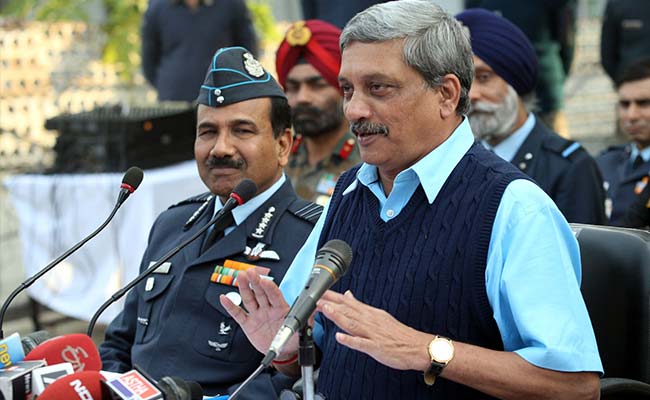
Defence Minister Manohar Parrikar addressing press at Pathankot Air Base.
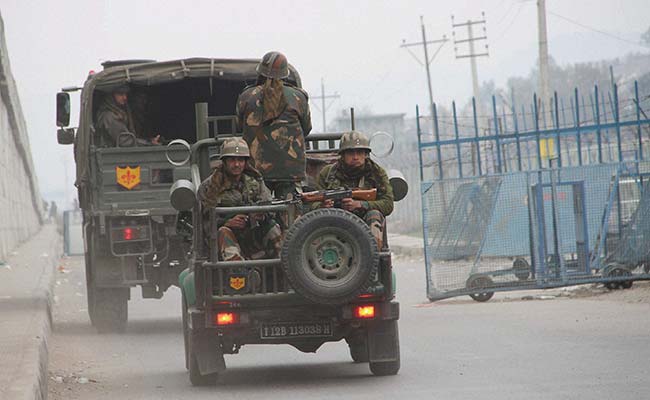
NEW DELHI: With the operations at the attacked Pathankot Air Force base nearly complete, details are emerging of a Command and Control fiasco that unfolded -as six terrorists were battled, there was a damaging tussle for operational control between the Army, Air Force and the National Security Guard or NSG.
A senior army officer closely involved in monitoring the operations told me, "This is the worst planned operation in more than three decades."

At least two top army leaders who have spoken to me but cannot be named for obvious reasons believe the overall command of the operation should always have wrested with the Army since there has never been a case where command of an active operation has been transferred from the Army to the National Security Guard, an elite police force under the Home Ministry. In this case, the NSG was given the lead role after two columns (60 men) of the Army had already been deployed in Pathankot in anticipation of an impending attack on the airbase. General VP Malik, the former Army Chief says, "Command of an operation is transferred to the Army once they are called for an anti-terrorism operation and, in this case, defence of an airfield operation."

I have also been told by reliable sources that there was a full-fledged disagreement between an Army Brigadier commanding operations till then, and the Inspector General (Operations) of the National Security Guard, who flew in on the orders of the Home Ministry. The situation became more confusing when the Air Officer Commanding, Western Air Command, was asked to fly to Pathankot to take key decisions in the conduct of the ongoing encounter prompting another disagreement, this time between the Air Force and the National Security Guard. The lack of cooperation and coordination between the different agencies was blistering.
Ultimately, the Army Brigadier stood down since he was junior to the NSG's IG (Operations), who has the rank of Major General. The National Security Guard ultimately retained overall control of the remainder of the operation though the Air Officer Commanding, an Air Marshal, remained on the airbase.

Our inward looking policy has cost us dearly

http://www.rediff.com/news/column/our-inward-looking-policy-has-cost-us-dearly/20160104.htm
January 04, 2016 
'What India has failed to acknowledge is that sub-conventional war is the name of the game and irregular forces have emerged with greater strategic value over conventional and even nuclear forces, and reliance purely on conventional force and diplomacy is grossly inadequate,' says Special Forces veteran Lieutenant General Prakash Katoch (retd).

Having suffered Pakistan's proxy war for the past several decades, it was unlikely that the Pakistani military would not respond with alacrity to the display of Modi-Nawaz bonhomie at Lahore recently.
We should heed Ayesha Siddiqa on the military's stranglehold on Pakistan both for the enormous money it makes through corporate-private business ($20.7 billion in 2007) and the power it wields in every segment including defining the foreign and defence policies of Pakistan.

After the Taliban strike at the Army School Peshawar on December 16, 2014, Siddiqa maintained that India remains enemy number one. In order to retain the power and money, the Pakistan army must remain in confrontation with India and Afghanistan.
The Pakistan military is getting more and more radicalised, some even calling themselves 'Allah's Army' in private conversation rather than the Pakistani army. Steeped in teachings of Zia-ul Haq and Pervez Musharraf, there is little chance of change -- remember Musharraf saying, 'Even if the Kashmir issue is resolved, jihad against India will continue.'

That is why you find little progress in punishing the 26/11 perpetrators, Zaki-ur Rehman getting royal treatment, Hafiz Saeed acting chief advisor to the ISI and observed in areas across the LoC, and Sartaj Aziz making public statement that 'Pakistan should not engage in war with those terrorists whose target is not attacking Pakistan.'
Moreover, the recruiting base for both the military and terrorist organisations are common and many sections of the Pakistani administration are aligned with terrorist organisations, many politicians also having won elections with terrorist support.

Pathankot: Policy mismeasures Why was the NSG deployed in a cantonment with army resources?

http://epaper.dnaindia.com/story.aspx?id=85998&boxid=20459&ed_date=2016-01-06&ed_page=8&ed_code=820009
Ajai Sahni
The visible sequence appeared quite damning. The terrorist operation in Pathankot was preceded by an attack against a serving superintendent of the Punjab Police, whose car was hijacked nearly 20 hours before the assault on the IAF base; an alert had been sounded; the terrorists still managed to penetrate the IAF base and inflict seven casualties beyond the protected periphery, and managed to keep their operation alive (apparently) for a full three days.
A cacophony of claims and counter-claims commenced immediately after the media got wind of the attack, and conflicting theories — based on plants by ‘highly placed sources’ — began flying about regarding the identity and affiliation of perpetrators. The theme of a ‘botched’ response by security and intelligence agencies was quickly picked up. The general impression of ‘another 26/11’ was quickly disseminated by frenzied anchors on India’s proliferating news channels.

Tactical assessments of an ongoing operation are fraught with the possibilities of gross errors. A detailed evaluation of each stage of response to the Pathankot attack, commencing with initial intelligence that came in on January 1 and the car hijack incident of the early hours of the same day, must await a much more exhaustive and textured understanding of the minute-to-minute developments that occurred. Certainly, some deficits are likely to be found, but the idea of a debacle is not credible even at the present levels of publicly available information. The reality is, there was no surprise when the IAF Base at Pathankot was attacked; indeed, the NSG had already been flown in from Delhi and had been deployed by the late afternoon of January 1, more than 11 hours before the terrorist attack commenced. Whether the NSG deployment was even necessary in a cantonment town with massive availability of local military force, including specialised units, is a question that requires some attention. There has, over the years, been an unfortunate tendency in New Delhi to project NSG as a necessary component of response to any major terrorist incident, to the neglect and marginalization of locally available forces, and this is unfortunate. Locally available first responders should be given priority in all such engagements — as was the case in the July 2015 Dinanagar incident in Gurdaspur. Only when local responders are routinely mobilised for such counter-terrorist operations can one expect a build-up of confidence and capability to make all of India secure. While this may not be a consideration in the present case, the reality is that the NSG cannot everywhere be in time.

By the time the terrorists attacked — at about 3.30 am on January 2 — IAF Garud Commandos, an Army contingent and the NSG had already taken positions inside the Base, while Punjab Police units had been deployed around the periphery. For those who understand the processes of assessment and decision making involved, it should be surprising that all this was already in place by late afternoon on January 1.
At the end of the operation, a group of six well armed and apparently very well trained suicide terrorists were able to inflict just seven fatalities in a well planned attack that was evidently intended to cause mass damage to the strategic assets of the Indian Air Force located at Pathankot. In this objective, the terrorists failed comprehensively.

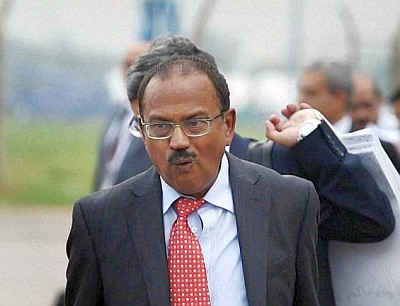
Doval's actions saved critical air assets in Pathankot

http://m.rediff.com/news/column/dovals-actions-saved-critical-air-assets-in-pathankot/20160105.htm
'Ajit Doval has done a splendid job in handling the Pathankot attack and certainly helped save heavy destruction of critical air force assets,' says Abhay Jere.
Ajai Shukla's column is another example of the pathological hatred within a section of armchair columnists towards Narendra Modi's establishment.
Shukla has certainly pretended to be objective while analysing the handling of terrorist attack on the Pathankot airbase, but he has purposefully chosen to overlook/ignore the facts which does not support his viewpoint. Moreover, he has labelled all the journalists praising the handling of the Pathankot attack as National Security Advisor Ajit Doval's 'cheerleaders'.

So now let us systematically dissect the various issues raised by Shukla to perpetuate his prejudice that the Pathankot terrorist attack was poorly handled by Doval and that he is incompetent to be the NSA.
The first and foremost aspect of the Pathankot attack was the availability of credible intelligence inputs before the actual attack. This itself a very positive sign as India has paid heavily in the past for not having credible and actionable intelligence inputs prior to any major terrorist attacks like the 26/11 Mumbai attacks.
Doval, being an ex-spy, certainly must have done something right to ensure that our intelligence system is geared enough to give credible inputs. Needless to say, if we didn't have the intelligence inputs, then the damage would have been far worse.

Did data predict the Pathankot attack?

https://www.linkedin.com/pulse/did-data-predict-pathankot-attack-subhash-chandra?trk=pulse-det-nav_art
Jan 5, 2016
Many watchers had predicted a Pathankot kind of attack and so when the attack happened on the 1st of January, this was an 'I told you so' moment for many of these watchers. In a small piece of secondary research done by me and Mihil Bhansali, we attempt to identify the data points that could have predicted a terror attack in Pathankot. 
The fact is that on the basis of a variety of data points/ intelligence, the Govt was able to forewarn the likelihood of such an attack. This led to a large contingent to NSG commandos being transported to Pathankot the night before the attack. In our approach, we used publicly available data (1999-2015) to see if this attack or an attack in general could have been predicted. 

Hypothesis: Likelihood of a terror attack was very high
Result: Yes. Every single meeting between a Indian PM from the BJP and the Pakistani PM/President was followed by a dramatic terror attack in India 

Hypothesis: The Pathankot attack is due to the recent meeting between PM Modi and PM Nawaz Shariff
Result: Past data is unable to link this well. Every terror attack that followed a meeting between a Indian PM from the BJP and a Pakistani leader occurred a minimum 15 days after the meeting between the leaders. This one occurred within 7 days. In fact, if one were to include the hijacking of the Police Jeep, the timeframe would reduce to 5 days. This is not to suggest there is no linkage but the fact that this is unusual when compared with past occurences

Hypothesis: The attack in Pathankot was quite predictable given the fact the previous attack occurred 40 kms away in Gurdaspur. 
Result: No such geographic linkage can be deciphered from past data. Attacks have occurred over wide distances

Hypothesis: Counter missions inside Pakistan will teach the Pakistanis a lesson and will reduce terror attacks in India
Result: The correlation between increased terror attacks in Pakistan and reduced attacks in India is quite low. Instead, international intervention (2001, 2008) has contributed to reduced attacks in subsequent years. 

Pathankot attack: Pakistan pushing India for war? The challenge for Modi government will be to use the talks as a test of Pakistan's sincerity and hold its feet to fire on terrorism.

http://www.dailyo.in/politics/pathankot-pakistan-attacks-isi-modi-gurdaspur-26-11-parliament-kargil-atal-bihari-vajpayee-/story/1/8296.html
06-01-2016
Grand diplomatic gestures can certainly play a big role in breaking logjams between countries, provided you are dealing with a normal country. Since Pakistan doesn't quite fit the bill of a normal country by any stretch of imagination, the extremely unconventional and bold gambit of Prime Minister Narendra Modi to "drop in" on his Pakistani counterpart in Lahore was always fraught with risk. And as the Pakistani perfidy unfolded in Pathankot, it became clear that what was always being feared - a stab in the back - had come to pass.

Betrayal
Of course, that Pathankot happened within a week of the PM's stopover in Lahore is quite breathtaking in terms of the audacity of betrayal. But this too is true to Pakistani pattern - remember how within weeks, the clouds of hope and optimism that arose after the Lahore Bus diplomacy of Prime Minister Atal Bihari Vajpayee came crashing down on the cliffs of Kargil?

Frankly, even though a big terror attack was always on the cards after the flurry of meetings between Indian and Pakistani leaders - Paris, Bangkok, Islamabad, Lahore - but that it would happen so soon, did come as a bit of a surprise. The timing is important because if this attack took a few weeks, even months, to prepare, it means that even as the smiles and handshakes were taking place, the Pakistanis were sharpening their knives to stick in India's back - Kargil 2.0?
Alternatively, if the visit of Modi was the provocation, then the fact that the Pakistani terrorists and their handlers have the capability to launch such a major attack within a week of the visit should set alarm bells ringing, nay shrieking, in the Indian security establishment.

Perhaps, the "spoilers" were seriously spooked by the somewhat surreal bonhomie that was on display and thought that the longer they took to sabotage the engagement process, the more difficult it will become. Strangely enough, even though everyone is talking about the "spoilers", no one in any position of authority has so far taken the trouble to identify who these guys are.

Media blackout of Pathankot attack a lesson learned from 26/11 By not providing timely updates of the attack, the government did not fill the information gap.

05-01-2016
http://www.dailyo.in/politics/pakistan-pathankot-attack-26-11-mumbai-ajit-doval-isi-narenra-modi-nawaz-sharif/story/1/8293.html
Late into the night of November 26, 2008 when ten terrorists were well into their slaughter of Mumbai’s hapless civilians, one of their handlers remotely steering the massacre from a control room in Karachi had an epiphany. The handler learned of several potential high-profile hostages. “There are three ministers and secretary of the cabinet in your hotel,” he told terrorists rampaging through the Taj Mahal hotel. “We don’t know in which room…find those persons and you will get anything you want from India…”

And just how did this handler sitting nearly a thousand kilometres away, know this? Just hours before, several Indian TV channels broadcast phone-ins with MPs trapped in the Taj. Speaking with victims trapped in a terrorist-infested hotel might have sounded like journalistic due diligence in the din of explosions and gunfire. Broadcasting the conversation live, however, amounted to culpable homicide.
As the first group of hotel guests tip-toed out of their sanctuary at the Chambers in the early hours of November 27, they were set upon by the four terrorists. Fifteen guests and hotel staff were gunned down. The slaughter stopped only when Indian Navy’s Marine Commandos arrived and engaged terrorists in a firefight. The bloody link between the telecast and the civilian deaths was deduced only after intercepts of the conversation were publicised by the Mumbai police weeks after the attacks. Which possibly explained the egregious lapse on November 28-- TV cameras broadcast live footage of an IAF helicopter air dropping commandos on to Nariman House.

The experienced terrorist handlers in Karachi were possibly delighted at this windfall. Their control room echoing with the breathless coverage from Indian TV stations, they precisely instructed how the terrorists were to face the NSG commandos rapelling from the helicopters. One commando, Havaldar Gajender Singh, was killed as he entered a room fortified by the terrorists. TV channels had, once again, unwittingly turned into CCTV cameras for terrorists.
That terrorists use the media to achieve their primary objective of waging psychological warfare is a truism and researchers have weighed in on how live coverage has impacted on their actions.

Driven by neither hawks nor doves

Updated: January 6, 2016 
http://www.thehindu.com/opinion/lead/driven-by-neither-hawks-nor-doves/article8069411.ece
The truth in India-Pakistan relations is not about golden tomorrows but the ingested bitterness about bloody and betrayed yesterdays, and how we can craft a future of a well-functioning, normal relationship despite this.

The terrorist blitz-from-the-ground on the Indian Air Force base in Pathankot has brought home to us the fact that there is no brave new world in cross-border relations with Pakistan. Time after time, the same dissonances come back to haunt us. Overtures made, initiatives taken, emotional handshakes seem to vaporise the instant the atavism and distrust-laden DNA in these relations reasserts itself in the wake of such premeditated violence and terrorism.
Attacks like Pathankot come with a heavy price — the price paid in lives lost of our defence personnel and commandos, and the jolt that is felt when it is realised that the old days when terrorism bled our people have not gone away, more so when it was just a few days ago that our Prime Minister, like Atal Bihari Vajpayee, decided to go to Pakistan, even if briefly, to extend an olive branch.

Negotiating many minefields
In the welter of pain felt on the deaths of our personnel in Pathankot, and the doubts that re-awaken about the judiciousness of a policy advocating dialogue with Pakistan, it is important that we are more reflective and introspective in our reactions. First, there is a need to understand that the truth in India-Pakistan relations is not about golden tomorrows but the ingested bitterness about bloody and betrayed yesterdays and how we can craft a future of a well-functioning, normal relationship despite this.
Second, diplomacy with Pakistan is essentially like seeking a white flag meeting (as a temporary truce for negotiation, not a surrender) while walking a field embedded with mines. That is essentially the terrain we must negotiate and we will be bloodied in the process. Third, hard-nosed rationality demands that we understand the nature of our adversary, and its multi-armed-and-headed character. The deep-seated antagonism that the vast majority of Pakistanis in decision-making capacities evince for India is a given.

Diplomacy with Pakistan is in many ways charting a course without reliable maps. In many ways, that map has a missing segment, much like the map in the latest Star Wars movie, where the search for Luke Skywalker is held up because there is a critical segment missing. Another character in the Star Wars series, Yoda, the most powerful of the Jedi, was perhaps addressing Pakistan when he said: “If once you start down the dark path, forever will it dominate your destiny, consume you it will.”

There is a Jedi-like dilemma also for India here: how do we face the truth and choose, and how do we use our Force for knowledge and defence? The truth in India-Pakistan relations is a miasma-ridden mass of mutual recrimination, of issues that raise pollution levels to the level of near hopelessness, of enmities that exist only between blood brothers. Understanding that we carry this heavy burden must entail that we must seek to ease it rather than add to its weight.

Unlearning what we’ve learned

And that is where India’s initiatives to seek dialogue with Pakistan show the right way. They display the strength and flexibility that is the sign of a grown-up nation. At the same time, vigilance being the price of liberty, we cannot let down our guard because irrational violence and the threat of terrorism directed against Indian interests (including in Afghanistan) from across the border have not ceased being the default actions of powerfully entrenched interests in Pakistan.

But the problems in India-Pakistan relations must be addressed without the application of mantras and shibboleths. That is where, to paraphrase Yoda again, we must unlearn what we have learned. All the issues that covered the old Composite Dialogue need to be addressed in a graduated manner that still enables focus on the larger picture and the organic whole — which should be the need for a relationship that functions peacefully, is normalising and has the well-being of the people of the two countries at its heart. This should be a relationship that is driven by neither hawks nor doves but by a clear charter of goals and the steady hand of a confident leadership.

Systemic responses, not hysteria

In a national agenda defined by the need for development, security and good governance, the factor of security stands out in our external relations and cannot be divorced from the work of diplomacy. The Pathankot experience evokes memories of past attacks and the degrees of national preparedness in terms of intelligence assessments, inter-agency coordination, effective response, and communication strategy. Have we absorbed past experience and the ways to avoid the pitfalls of yesterday? When one witnesses the levels of hysteria and cacophony in some of our media channels, the distinct impression one gets is of a dystopian universe of confusion, blaming and shaming and hyperventilation, a news cycle replaced by an outrage cycle as one observer recently said.

We are not as a country sensitive to the image we should proactively project, although we are easily outraged by slights to our self-esteem and our perceived sense of India’s place in the world. In times of crises, a war-room approach will help — popularly defined as that bunch of strategists around that big table, with a flow chart and that big board but much more than that. The orchestration of operations concerning security, crisis response, and communication is vital: bringing key experts on deck helps clarify chaotic situations as the experts put it. We need to identify critical gaps, timelines, risks and their mitigation, also the communication process and how the checkpoints regarding media management must be manned. The closure of leaks of information is a critical must. In times of emergency, as we have learnt to do with responses to natural disasters, we must learn to systematise our processes better.

Sticking to the agenda

Returning to the agenda with Pakistan, let us not forget that there is a very human desire for peace in both countries. Prime Minister Narendra Modi’s recent handshake in Pakistan with Prime Minister Nawaz Sharif rekindled memories of an event from a long-ago timeline — the Christmas Truce of 1914 between German and Allied soldiers — a momentary truce in a landscape of conflict. “Two nations singing a carol in the middle of a war” was how one observer put it. The next day the hostilities commenced again. But from the two World Wars of the last century, the warring nations involved moved to embrace a situation of coexistence and Europe’s battlefields, while frozen in historical memory, do not exist in the present. For India and Pakistan, there is a lot of learning and unlearning involved.

The emphasis in our relations with Pakistan must be on keeping the channels of dialogue open together with vigilant intelligence and an astute assessment of Pakistan’s moves. When the two sides meet next, Pathankot will obviously dominate the agenda. It will not be enough for Pakistan to just play the usual signature tune that its state machinery was not involved. India has a legitimate right to question Pakistan’s credibility on this issue. It is a truth universally acknowledged that terror groups targeting India continue to operate with impunity from Pakistani soil. Why is it that Pakistani intelligence and security do not silence them? It is not enough to plead that Pakistan is the worst victim of terrorism today. Much as the world and India felt grief for the lives of innocent children lost in Peshawar, the suffering of innocent Indians at the hands of terrorists with cross-border affiliation on so many past occasions cannot be ignored. This is a peace process, therefore, that has many miles to go.
(Nirupama Rao is Former Foreign Secretary and Ambassador of India to the U.S. and China.Twitter: @NMenonRao)

LEARNING LESSONS FROM PATHANKOT INCIDENT

http://www.dailypioneer.com/columnists/edit/learning-lessons-from-pathankot-incident.html
Wednesday, 06 January 2016 | Ashok K Mehta
The air base attack has shown for the nth time that India's readiness to defend and prevent such strikes is well below par. The Government and the country have to get serious about countering terrorism

Prime Minister Narendra Modi’s sudden turnabout in talks with Pakistan was hailed as an act of statesmanship. Surprisingly but not unexpectedly, within days, the spoilers, believed to be from the Jaish-e-Mohammed struck the Indian Air Force base at Pathankot but fortuitously failed to destroy any aviation assets. Even as mopping up operations were progressing slowly in Pathankot, terrorists presumably from the Haqqani network attacked the Indian Consulate at Mazar-e-Sharif in Afghanistan. The pincer attack on India in the new year and less than robust response by the Indian security forces at Pathankot raised the usual questions about the prudence of restoring dialogue with Pakistan for the sake of talking the talk, the readiness of the security forces in counter-terrorism operations and soundness of our internal security structures even after seasonal cross border attacks from Pakistan including spectacular assaults on Parliament and Mumbai, and the Indian leadership’s warped idea of a befitting reply.

The strike at the air base in Pathankot is riddled with holes, that too after exceptional actionable intelligence was available days in advance. The ground operation has turned out to be the longest counter-terrorism action ever anywhere. The lapses by the Border Security Force and the Punjab Police were compounded by the deployment of a mixed band of forces confounding the command and control of the operation. In short, had the operation been properly coordinated, some of the terrorists would have been apprehended but that was not to be. Defusing a grenade booby-trapped to a dead terrorist that killed Lieutenant Colonel Niranjan Kumar of the National Security Guard was also a serious lapse. It was not clear who was directing the operation and from where. Several infantry units were available in Pathankot and should have been pressed into service well before the NSG was flown in. Cross border terrorist attacks in Punjab and Jammu & Kashmir have established a clear pattern, but security forces have failed to learn from it. The thermal imagers deployed on the border were apparently not working which reflects the casual approach to counter-terrorism. While great care and caution have to be exercised in counter-terrorism operations, a sense of urgency to terminate the operation is missing. Stretching out operations gives valuable 24x7 publicity to the terrorists and does not reflect well on the fourth largest Armed Forces in the world. An National Investigation Agency enquiry has been ordered and one hopes it will fix blame and some heads will roll.

We need to take a lesson from the West, notably the UK, the US and Europe who only recently have had to deal with terrorism. Their accent is on preventing acts of terrorism as nearly 70 per cent of the counter-terrorism resources are utilised in preventing at source, planned events of terror. As that does not appear to be politically and militarily doable inside Pakistan or Pakistan-occupied Kashmir, the next best option is to enhance our intelligence assets, strengthen surveillance on the Punjab border and ginger up the counter-terrorism apparatus in border States and integrated it with the central agency. Unfortunately, neither the National Counter Terrorism Centre nor the National Intelligence Grid has seen the light of day. Is India serious about combating terrorism?

Pathankot terror attack: Tough questions Punjab police must answer

05-01-2016
http://www.dailyo.in/politics/pathankot-terror-attack-punjab-police-gurdaspur-pakistan-iaf/story/1/8281.html
Punjab Police gets a tip off at least 10 hours before the first bullet is fired inside the strategic Pathankot Air Force base, but displays poor reflexes which, if avoided, could have prevented the deaths of seven security personnel and a three-day long stand off.

It was not just the poor reflexes but also the lack of professionalism, ineptitude, corruption, involvement of some personnel in drug trafficking that the latest terror attack and a few other instances in the recent past have shown about their handling of such situations. It was less than six months ago, on July 27, that one of its police stations - in Gurdaspur - was attacked by Pakistani jihadis.
Evidently, even that attack did not perturb the police administration and virtually the same route was taken by the latest groups of terrorists from across the border to launch an attack at the Pathankot Air Force Station. While it is true that the primary responsibility to check infiltration from across the international border is that of the Border Security Force (BSF), it is the responsibility of the police to strengthen its intelligence and information network inside state territory.

Its failure to strengthen vigil close to the border despite intelligence inputs of a possible terrorist attack became apparent when an SP-level officer of the Punjab Police, Salwinder Singh, was kidnapped by the terrorists in his official vehicle. Not only he did not put up any resistance, he has also not been able to convincingly explain his presence close to the border for what he claims was a religious visit to a peer. What is even more intriguing is that he takes along a jeweller friend and a cook, rather than a gunman who was provided to him, and goes about in the sensitive area, unarmed. All these aspects reflect poorly on Punjab Police's discipline and administration. It does not seem unusual for police officers to use official vehicles for private purposes and taken along dubious characters.

ISI IS BEHIND PATHANKOT AIR BASE ATTACK: RIEDEL

http://www.dailypioneer.com/top-stories/isi-is-behind-pathankot-air-base-attack-riedel.html
Wednesday, 06 January 2016 | 
Pakistan's powerful intelligence agency ISI is behind the attack on Pathankot air base in Punjab using a terrorist group it created 15 years ago, a former top White House official has said.
Bruce Riedel, who worked in the National Security Council of the White House and was among the few present at the Bill Clinton-Nawaz Sharif meeting in 1999 during Kargil war, said the attack is designed to prevent any detente between India and Pakistan after Prime Minister Narendra Modi's surprise Christmas Day visit to Pakistan.
In an article in the Daily Beast, Riedel said the attacks in Pathankot and on the Indian Consulate in Mazar-e Sharif in northern Afghanistan was the handiwork of Pakistani terror group Jaish-e-Muhammad which the Inter-Services Intelligence (ISI) created 15 years ago.

He quoted "well-informed press and other knowledgeable sources" for his assessment.
He said the ISI is under the generals' command and is composed of army officers, so the spies are controlled by the Pakistani army, which justifies its large budget and nuclear weapons program by citing the Indian menace.
"Any diminution in tensions with India might risk the army's lock on its control of Pakistan's national security policy. The army continues to distinguish between 'good' terrorists like JEM and LET and 'bad' terrorists like the Pakistani Taliban, despite decades of lectures from American leaders," he said.
Riedel, a former CIA officer, said the Pakistani army has long distrusted Prime Minister Nawaz Sharif, who has advocated a detente with India since the 1990s.

"An army coup in 1999 sent him into exile in Saudi Arabia for a decade. His warm embrace of Modi on Christmas Day in his home in Lahore undoubtedly angered the generals," he said.
He noted that the US put JeM on the terrorist sanctions list years ago — but it continues to coddle the Pakistani army.
"Gen Raheel Sharif, the army's boss, got a warm embrace from the Pentagon last fall—despite the ISI support for the Afghan Taliban's offensive against the Kabul government and despite the Pakistani military's backing of terror groups like JeM," he said.

Modi caught in a bind War with Pak a non-option, but no retaliation will rile followers

http://www.tribuneindia.com/news/comment/modi-caught-in-a-bind/179749.html
Jan 6 2016, MMK Bhadrakumar
THE terror attack on the Pathankot base is being simplistically interpreted as an attempt by the Pakistani military establishment to detract from Prime Minister Narendra Modi’s brilliant display of diplomacy to ‘drop by’out of the blue at Prime Minister Nawaz Sharif’s family estate in Lahore on December 25. But the state of play is far more complicated than that.
Pakistan will keep up the pressure on serious negotiation, which India will find unpalatable.
Indeed, there is some sign of confusion also as to whether Prime Minister Sharif wouldn’t have been au fait with Rawalpindi’s sabotage plan. There is an overall lack of clarity in the government’s account of what is happening, compounded by the acute need to cover up the embarrassment over security lapses and the inept handling of the looming threat despite intelligence inputs in advance. 

The Pathankot terror strike coincides with an attack on the Indian consulate in Mazar-i-Sharif, which also comes within a week of Modi’s visit to Afghanistan. The Pakistani objective appears to be to throw the gauntlet at Modi himself. Make no mistake, the ‘powers that be’ in Pakistan have challenged Modi to live up to his carefully-cultivated self-image as a tough leader who is capable of paying back terrorism with terrorism, waging ‘swift, short’ wars if need be, resorting to ‘hot pursuit’, while playing the subtle ‘great game’ in Afghanistan threatening to dismember Pakistan if push comes to shove.

Today, Modi faces a big dilemma. If he decides to live up to his fearsome reputation and orders the subalterns to retaliate with force, there could be unforeseen consequences and the downstream developments will most certainly spin out of control. Washington has already raised the spectre of an India-Pakistan war, alerting the need for the international community’s intervention in the developing situation. No world capital, including Washington, has cared to point finger at Pakistan for staging the attack in Pathankot, which is a sad reflection on the Modi government’s failed containment strategy against that country.

Deploying NSG instead of Army was a mistake: experts

http://www.thehindu.com/news/national/deploying-nsg-instead-of-army-was-a-mistake-experts/article8069544.ece?homepage=true
January 6, 2016 
Thousands of troops were stationed near the airbase, but precious time was lost by sending National Security Guard commandos all the way from Delhi 
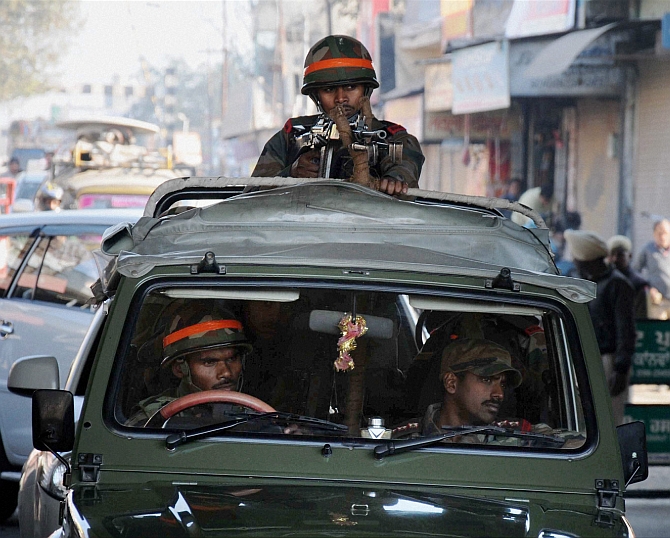
Army and security circles are bewildered and angry over the way the government kept the Army from the Pathankot terror hunt, especially in the early phase, when Army troops were available in thousands close by. Instead of pressing Army units into immediate action, precious time was lost in sending a few dozen NSG commandos from New Delhi. 
“None of us can believe what they did. We have two infantry divisions and two armoured brigades in the vicinity. We have at least three corps headquarters in a couple of hours’ drive, and the Northern Army headquarters too. All of those troops are seasoned in carrying out counter-terror operations,” said a serving Brigadier posted close to Pathankot. “Instead, they wasted time to send a few dozen NSG commandos to the base?” 


Lieutenant-General Prakash Katoch, a veteran para-commando and leading authority on special forces operations in India, said: “NSG is required for a specific target, it cannot tackle an area target.” He said that in a place such as the Pathankot airbase, the perimeter had to be secured first and combing operations to hunt down terrorists should have been initiated. “The Army is the best for that,” he said. 

The terrorist attack on the Pathankot airbase was a result of a series of systemic security failures at various levels. 
1 Despite a huge concentration of Army units in andaround Pthankot, why were they not tasked with securing the airbase? 
2 Despite statements by SP Salwinder Singh and his cook that they were intercepted by terrorists, why did the Punjab police not act? 
3 Why was the Army not deployed for combing operations? 
4 Why were Garud personnel and Defence Security Corps, who are not trained for anti-terror operations, the primary responders? 
5 With so many security agencies involved, who was in charge of the operation against the terrorists? 

'Modi's advisers are well aware of Pakistani army's double game'

http://www.rediff.com/news/report/modi-advisers-are-well-aware-of-pakistani-armys-double-game/20160106.htm
January 06, 2016 
Security Expert Bruce Riedel, who in an interview with rediff.com shortly after the Pathankot terror attacks began said that the attack underscored the determination of jihadist groups in Pakistan to sabotage any attempt at detente with India, writes in the Daily Beast that despite the US putting the Jaish-e-Mohammad on the terrorist sanctions list years ago, the outfit continues to coddle the Pakistani army. 

Pakistan's powerful intelligence agency Inter-Services Intelligence is behind the attack on Pathankot air base in Punjab using a terrorist group it created 15 years ago, a former top White House official has said. 

Bruce Riedel, who worked in the National Security Council of the White House and was among the few present at the Bill Clinton-Nawaz Sharif meeting in 1999 during Kargil war, said the attack is designed to prevent any detente between India and Pakistan after Prime Minister Narendra Modi's surprise Christmas Day visit to Pakistan. 
In an article in the Daily Beast, Riedel said the attacks in Pathankot and on the Indian Consulate in Mazar-e-Sharif in northern Afghanistan was the handiwork of Pakistani terror group Jaish-e-Muhammad which the ISI created 15 years ago. 

"JEM was created in 2000 by Mualana Masoud Azhar... Azhar was captured in India in 1994 after taking western hostages in Kashmir. In December 1999, a group of terrorists hijacked an Air India jet flying from Nepal to India and diverted it to Afghanistan. They demanded the release of Azhar and his colleagues in return for the passengers and crew," he wrote for The Daily Beast. 

How to defend an air base from terrorists

http://www.rediff.com/news/column/how-to-defend-an-air-base-from-terrorists/20160106.htm
January 06, 2016 
'The sky is the limit for what all could be done at an air base to neutralise terrorists. Good proactive local leadership and delegated operational effort would be key to ensuring that a handful of terrorists cannot hold a whole air base, and by extension, the whole nation to ransom,' says Group Captain P I Muralidharan (retd). 

The terrorist attack on the Indian Air Force's Pathankot airbase makes one recapitulate on the important -- but at times ignored -- aspects of passive air defence/ground defence as it used to be called in our days. The task was generally orchestrated by the non-flying staff of an air base, which was inevitable as the aviators would be preoccupied otherwise during conditions of war. 

An elaborate standard operating procedure existed as to how the PAD sectors would be manned, air raid warnings, bomb disposal, water/electricity management, casualty evacuation, etc would be handled and this was periodically exercised by the station authorities and checked out by the Directorate of Air Staff Inspections. 
The IAF surely has come some distance since, what with its own Garud Commandos, essentially raised to undertake IAF-specific tasks including airfield security, commando operations within and outside the perimeter as also typical air warrior missions such as suppression of enemy air defence, combat search and rescue and the like. What has, however, changed dramatically too is the threat spectrum. 

Though the IAF has had aerially inserted paratrooper threats during the 1965/71 wars (some of them being neutralised by our valiant locals in Punjab and Haryana), the nature of terrorist threat as it unfolded in Pathankot is a different kettle of fish indeed. 
The nature of high value assets assembled at a fighter air base especially, as indeed Pathankot is, needs no gainsaying. Besides the war machines themselves, we have other key installations including the runway, air traffic control, command and control centres, fuel storages, bomb dumps, missile sheds, high-tech laboratories, specialist vehicles and the like which truly constitute national assets. 

Attacks Threaten India-Pakistan Thaw

http://thediplomat.com/2016/01/attacks-threaten-india-pakistan-thaw/
Only a week after Narendra Modi dropped in to visit Nawaz Sharif, the rapprochement is in jeopardy.
By Catherine Putz, January 05, 2016
On Sunday evening, gunmen attempted to enter the Indian consulate in Mazar-i-Sharif in northern Afghanistan’s Balkh province. After meeting resistance from the consulate’s guards, the gunmen holed up in a nearby building where they continued to fire on the consulate. After 25 hours, TOLOnews reports that special forces “were dropped by helicopter on to the roof of the building in a bid to eliminate the insurgents.” Shortly thereafter the siege of the Indian consulate was over.

Casualty details vary. TOLOnews cites “officials” as saying that a security officer was killed and nine people, including three civilians, were injured. RFE/RL’s Radio Free Afghanistan was told at one point by Muneer Ahmed Farhad, the government spokesman in Balkh Province, that two from the Afghan security forces had been killed. Before the siege ended, Al Jazeera reported the Indian consul-general as saying that none of the consular staff had been injured in the attack.
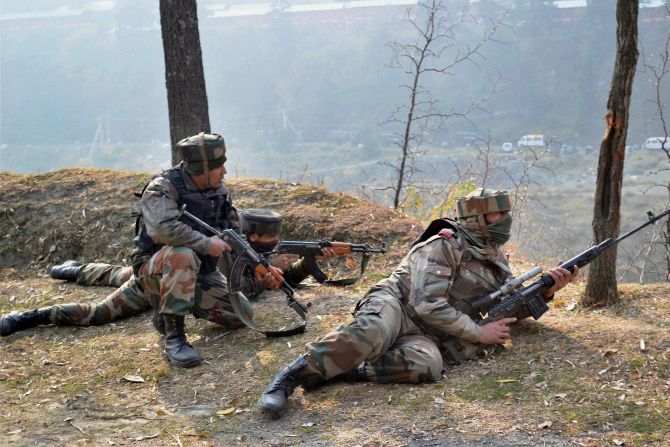
The day before the attack on the Indian consulate, nearly 600 miles to the southeast, militants attacked an Indian air base near the Pakistani border, just south of the contested Jammu and Kashmir region. That attack began early in the morning on January 2, when at least five gunmen entered the Pathankot airbase wearing Indian Army uniforms. On Monday morning, Dushyant Singh, an inspector general in India’s National Security Guard, told a news conference that Indian forces have killed five of the attackers and that “combing and search operations continue.” As of Saturday, officials said at the Monday news conference, the attackers had been confined to a barracks building. The airbase, according to Arun Jaitley, India’s finance minister, is fairly large. He said it would take time to search for any remaining gunmen but that the “strategic assets” presumed to be the target of the attackers were unharmed and had been secured. Seven Indian soldiers have been killed in the three days following the initial attack.

* Why are the Taliban resurgent in Afghanistan?

http://www.bbc.com/news/world-asia-35169478
By Dawood AzamiBBC World Service
5 January 2016 
The Afghan government and its US and Nato allies have been fighting the Taliban in Afghanistan for the past 14 years.
But, despite the killing of thousands of militants, the insurgent group has retaken big chunks of the country.

There are three main reasons for this resurgence.
First, the end, in 2014, of the US and Nato combat mission and the withdrawal of most foreign forces from Afghanistan reduced the risk the Taliban faced of being bombed and raided.
The group was further emboldened by the comparative lack of interest from the international community and the diversion of its attention to crisis in other parts of the world, such as Syria, Iraq and Ukraine.
As the Taliban have overrun military bases, district centres and security check-points in different parts of Afghanistan, they have seized more weapons and have been using them in their fight against Afghan government forces. They have also captured dozens of Humvees and police vehicles, which they now drive in areas under their control.

Secondly, the Pakistani military's Operation Zarb-e-Azb, launched in the North Waziristan tribal area in June 2014, dislodged thousands of mainly Uzbek, Arab and Pakistani militants, who flooded into Afghanistan and swelled the Taliban's ranks.
The Taliban also reportedly moved a big number of their own fighters from Pakistan.

And finally, although the Afghan security forces have fought well against the insurgents over the past year, they lack certain capabilities and equipment especially air power and reconnaissance.
The political infighting in the central government in Kabul and the apparent weakness in governance at different levels is also exploited by the Taliban.
Foreign fighters
The presence of several thousand foreign fighters has further complicated the situation.

China’s Non-Kinetic 'Three Warfares' Against America

http://nationalinterest.org/blog/the-buzz/chinas-non-kinetic-three-warfares-against-america-14808?page=show
Peter Navarro, January 5, 2016
Just as the pen can be mightier than the sword, China’s non-kinetic “ThreeWarfares” may prove to be far more effective at expanding China’s maritime and territorial boundaries than any arsenal of missiles or fleet of Chinese aircraft carriers. 

The Three Warfares were first officially recognized as an important warfighting capability by China’s Central Military Commission and Communist Party in 2003. They include everything from psychological and legal to media warfare.

The goal of China’s psychological warfare is to deter, demoralize, or otherwise shock an opponent nation and its civilian population and thereby discourage the opponent from fighting back. As former White House advisor Stefan Halper starkly revealed in a watershed report to the Pentagon’s Office of Net Assessment in 2014: “It employs diplomatic pressure, rumor, false narratives, and harassment to express displeasure, assert hegemony and convey threats.”
Thus, for example, when China imposes an economic boycott or bans Chinese tourism, it hopes to coerce a Japanese populace struggling with economic stagnation and hungry for prosperity into acquiescing to China’s territorial demands regarding the Senkaku Islands.

As for China’s legal warfare, its goal is to effectively bend—or perhaps rewrite—the rules of the international order in China’s favor. A case in point is China’s campaign to restrict freedom of navigation within its 200-mile Exclusive Economic Zone as defined by the United Nations Law of the Sea Treaty.