2 October 2016

THE CENTAUR AND THE CAVALRY: A FUTURE BATTLE ON NATO’S EASTERN FLANK

SEPTEMBER 29, 2016

To make the most of cutting-edge computers on the battlefield, be prepared to ask the right questions.

To see the future of ground combat, look no further than the tactics of Russian-backed forces in eastern Ukraine. Full-spectrum electronic surveillance quickly identifies Ukrainian forces by their emitted signals. Once identified, a remotely piloted vehicle or helicopter verifies the Ukrainians’ position. Shortly thereafter, massed artillery and rocket fires destroy the Ukrainian force.

The war in Ukraine is not an aberration. The U.S. Army’s adversaries have carefully prepared to defeat America’s preferred tactics and systems. In the next 20 years, the Army should expect its adversaries to become adept at achieving effects based on fewer intercepted electronic signals, with greater speed and lethality, over greater distances. The old ways of warfare will largely be doomed.

Lately there have been many suggestions for tactical or strategic solutions to challenges like these that the Army will face on the future battlefield. While these are useful, they address only two sides of a three-sided problem — the U.S. military must also improve how it fights at the operational level of war, the critically important time and space in which commanders arrange tactical actions and purposefully align them to strategic objectives. The future is approaching fast, and the Army cannot ignore the challenges and opportunities that divisions and corps are likely to face.

Now imagine the U.S. 1st Cavalry Division two decades from now. Thanks to defense modernization and professional soldiers, the 1st Cavalry Division will be devastatingly powerful, able to deliver massive firepower whenever and wherever its commanding general chooses. The 1st Cavalry Division will find itself standing shoulder-to-shoulder with NATO allies, ready to move into the attack. Their shared purpose: to expel aggressor forces from NATO territory, restore the international border, and save thousands of civilians caught behind enemy lines. On this imagined battlefield, the 1st Cavalry Division must take back a vital transport hub, much like the one in MaÅ‚aszewicze, Poland[map]. In the process, the 1st Cavalry Division must liberate 4,000 locals in the neighboring village and secure a forward transfer and distribution point to sustain NATO’s push over the remaining five miles to the international border.

US Senators Want Yahoo! To Answer Questions Regarding Data Breach

SEPTEMBER 28, 2016

Sen. Ron Wyden, D-Ore., joined Sen. Patrick Leahy, D-Vt., and other sponsors of a comprehensive data security and breach notification bill that requires companies to take reasonable steps to secure their customers’ sensitive data and notify customers in the event of a hack, and called on the leader of Yahoo! to disclose how a massive hack at their company went unnoticed for two years.

In a letter to Yahoo! CEO Marissa Mayer, Wyden, Leahy and leading Democratic Senators asked the company to provide a timeline of the hack, which compromised at least 500 million accounts, and when law enforcement and users were notified. The lawmakers are also seeking information about how widespread the hack is, and what Yahoo! is doing to prevent such a hack in the future.

“The stolen data included usernames, passwords, email addresses, telephone numbers, dates of birth, and security questions and answers. This is highly sensitive, personal information that hackers can use not only to access Yahoo customer accounts, but also potentially to gain access to any other account or service that users access with similar login or personal information, including bank information and social media profiles,” the letter states.

YOU CAN BE AMONG THE FIRST WAR ON THE ROCKS MEMBERS

SEPTEMBER 29, 2016

I launched War on the Rocks three years ago because we needed a dedicated platform for public discussion featuring experienced, authentic, authoritative voices on national security, defense, strategy, and foreign affairs. Since then,War on the Rocks has become the outlet of choice for people who had served in government, served in the military, worked abroad, and studied conflict and international affairs in depth. Our daily, free content is widely read in the natsec community and beyond. We are making an impact.

The challenge I face now is how to keep delivering the content you love for free while also allowing War on the Rocks to sustain itself. To do that, we will soon be launching a low-cost, $5 monthly membership plan. Through my interactions with you, I learned that what you want is more opportunities to interact with experts like the folks who write for us, as well as others who — like you — are passionate about national security. So that’s what this new membership is going to do.

So what are the two new services that will form this premium plan?

Every week, I will be hosting a War-Cast: a live webcast with War on the Rocks experts, for members only. The experts will rotate based on what’s going on in the world. If you are listening live, you can submit questions for us to answer. If you’re busy, you can watch or listen to it later. It’s like our podcast series, but better, more regular, and more exclusive.

The second service is a gated social network called the War Hall using a new tool called Ryver. Those of us in the “natsec” community use different tools to interact. We all get too many emails and the tech is limited. Twitter is noisy and, for some conversations, too public, and there are too many trolls. Facebook is fine but how often do we want to subject our high school friends to our thoughts on the war against the Islamic State? This gated forum combines all the upsides of Twitter, Facebook, and e-mail and avoids the downsides. And your favorite natsec experts, including many of our writers, are already in the War Hall waiting for you.

Japan Air Defense Force Rolls Out 1st F-35A Stealth Fighter Jet

September 29, 2016

U.S. defense contractor Lockheed Martin rolled out the first F-35A Lightning II fifth-generation stealth fighter jet ordered by the Japan Air Self-Defense Force (JASDF) during a September 23 ceremony held at a Lockheed Martin production facility in Fort Worth, Texas,according to a company press release.

The ceremony in Fort Worth was attended by a number of senior Japanese defense officials including Kenji Wakamiya, Japan’s State Minister of Defense, and General Yoshiyuki Sugiyama, the JASDF Chief of Air Staff.

“With its low observability and network capability, the F-35 is the most advanced air system with cutting-edge capability as a multi-role fighter. As the security environment surrounding Japan has become increasingly severe, because of its excellence, it is very significant for the defense of Japan to commit to acquiring the F-35 year by year. Given that the United States Government has designated Japan as a regional depot in the Asia-Pacific area, introduction of F-35A to Japan is a perfect example, enhancing the Japan-US alliance,” Wakamiya said.

“The F-35A has remarkably advanced system. This highly sophisticated 5th generation fighter will bring a great development to air operations as a game changer. In integration with current JASDF assets, it surely promises to enormously contribute to not only the benefit of our national defense and but also regional stability,” Sugiyama emphasized.

The maiden flight of the first Japanese F-35A took place in August. Japan is slated to receive a total of 42 F-35A combat aircraft through the U.S. Foreign Military Sales Program. Japan’s Ministry of Defense selected the F-35A conventional takeoff and landing variant of the Lightning II as the JASDF next generation fighter aircraft in December 2011 following the F-X competitive bidding process

Support Military Families, Don't Abandon Them

September 28, 2016 

Advancing veterans and their families is a platform both parties should support.

If this election season has taught us anything, it’s that America is a nation divided. But one area where we can find common ground is the commitment to the men and women who serve our country in uniform and their families. Preserving efforts to advance not only veterans, but military families and spouses, is a platform both parties should be seeking to build upon in the next election.

Veteran-hiring initiatives have received considerable bipartisan consensus, with support from both public and private partnerships. The White House Joining Forces initiative, the Veterans Jobs Mission and Veterans on Wall Street, among others, have been proactively promoting veteran employment through hiring commitments. The Chamber of Commerce has set upnationwide hiring fairs, while the Department of Labor Veterans’ Employment and Training Office generates best practices to help prepare and support veterans in civilian life.

Hiring is not the only area that deserves attention. Military families and spouses are the foundation upon which successful transition is built. We need to focus our efforts on more than just veterans, taking into account how critical the family unit is for success. The challenges and economic sacrifices that accompany military service, particularly for spouses, are enormous.

Debating U.S. Military Aid to Israel

September 28, 2016 

Dov S. Zakheim and Aaron David Miller take a hard look at U.S.-Israel pressure points.

It’s not everyday that a George W. Bush–era official publicly criticizes U.S. military aid to Israel—even if his critique is measured and eloquent and directed at but one small component.

Dov S. Zakheim and Aaron David Miller appeared at the Center for the National Interest Tuesday September 27 to debate a policy initiative at once blatantly pragmatic and viscerally controversial. The topic was U.S. military aid to Israel and its connection to West Bank settlements. Zakheim, a former Pentagon comptroller and CFTNI’s vice chairman, presented a straightforward argument: The United States has subsidized Israeli settlement policy for too long. Every American taxpayer, he lamented, is currently an “accomplice” to the very behavior most responsible for derailing the elusive two-state solution and exacerbating U.S.-Israel tensions.

And yet, his innovative solution would not take “a penny away from” the Israelis.

Zakheim first unveiled what he sees as a “baby-step” proposal in theSeptember/October 2016 print edition of this magazine. Israel is the largest recipient of U.S. Foreign Military Financing (FMF). Under the ten-yearagreement currently in effect, the United States provides Israel about $3 billion a year in military aid. Unlike any other FMF beneficiary, Israel is permitted to spend up to 26.3 percent of that money on indigenously produced weapons. This stipulation is known as Offshore Procurement (OSP).

For Zakheim, there’s the rub. “Money is fungible, and the money that Washington provides Israel for domestic defense-industrial spending allows Jerusalem to divert funds from its defense-technology accounts to support its settlement project in the West Bank.” So when the Israeli cabinet approved an additional 82 million shekels for settlements on June 19, Zakheim saw 20 million taxpayer dollars inflaming a troubled land.

Mini-Drones & Bayonets: New Marine Warfare Concept

By SYDNEY J. FREEDBERG JR.
September 28, 2016 
Gen. Robert Neller

After a generation spent fighting guerrillas, the Marines have just rolled out a new concept for high-tech combat against a nation-state — a concept they’re developing in unusually close concert with the Army and Navy.

“There’s a lot of Navy in it,” said Marine Corps Commandant Robert Neller, introducing the new Marine Corps Operating Concept (MOC) this morning during the Modern Day Marine conference in Quantico. As a companion piece, he went on, “we have written a combined Army-Marine document about…land warfare.” That refers to a draft white paper, jointly commissioned by Neller and Army Chief of Staff Mark Milley, on what the Army’s callingMulti-Domain Battle. (Neller will discuss the topic at next week’s Association of the US Army conference).

Gen. Mark Milley

Past efforts to coordinate with the Army on, say, buying equipment were “a little disappointing,” Neller said, promising to push for more closeness. “There’s always been tension between the armed services because of resources, but I want a big, strong Army and a big, strong Air Force and a powerful Navy.”

All four services are wrestling with the same problem: so-called Anti-Access/Area Denial systems (A2/AD). These are complex and high-tech networks of sensors and missiles that China, Russia, and other powers like Iran are developing to keep American ships and planes at bay. Starting around 2011 with the influential Air Force and Navy concept calledAir-Sea Battle, a consensus has started to emerge among the services: Defeating A2/AD requires every service using every avenue of attack, from long-range missiles and computer viruses to mini-drones and brutal close combat.

1 October 2016

*** Has Uri been Finally Avenged?

By Lt Gen JS Bajwa
30 Sep , 2016

As tactical military operations, these raids were an outstanding success. But a larger question remains.

India’s forces carried out a se­ries of successful pre-emptive surgical strikes 3-5 km across the Line of Control (LC) on ter­rorist launch pads in the wee hours of the morning of 29th September 2016. The terrorists were planning to infiltrate and conduct Uri like operations in J&K and other metros. The In­dian forces eliminated 38 ter­rorists and two Pakistani soldiers, injured nine, and ex­tricated themselves without suffering any casualties. With­out going into details, it is clear that the paratroopers were in­ducted by aircraft along the LoC, and mounted a surprise raid on the unsuspecting ter­rorists, As tactical military operations these raids were an outstanding success.

…the larger question is: has Uri been avenged? What about the many incidents be­fore Uri? Are those all buried unsung and forgotten and Pa­kistan forgiven?

It is a sign of bold decision making at the highest political and military level, excellent ac­tionable intelligence, meticu­lous planning, inter-service coordination of the highest or­der and finally raw guts and courage of the Indian soldier.

However the larger question is: has Uri been avenged? What about the many incidents be­fore Uri? Are those all buried unsung and forgotten and Pa­kistan forgiven?

This operation was a success because the government had the leadership and political will to face the consequences. The military trains to be ready to execute any task against an enemy provided the govern­ment wants it to do so. Unfor­tunately the earlier dispensa­tions at the Centre were not bold and decisive enough to take the harder option.

Uri as inflection point

RAKESH SOOD

Prime Minister Narendra Modi now has a singular opportunity to shape a Pakistan policy that is grounded in realpolitik and which gives him realistic options and leverages.

If there is one element in Prime Minister Narendra Modi’s foreign policy that has baffled foreign policy analysts, it has been his Pakistan policy. Oscillating between the two extremes of ‘Jhappi’ (bonhomie, hugs) and ‘Katti’ (no talks, retaliation threats), alternately pleasing and frustrating both hawks and doves, it gave rise to an inordinate amount of speculation about who was in charge. It also lacked coherence.

The attack on the Army camp at Uri, which left 18 soldiers dead, is not the first such attack during Mr. Modi’s tenure but could well become the inflection point in his Pakistan policy. Political leadership lies not in predicting events but in using them as inflection points to strategise, design and drive a new policy.

The die is cast

Pratap Bhanu Mehta

India’s government may want calibrated strategic escalation, but this genie will not be put back in easily.

We do not know the full details of the surgical strike along the LoC. But the official narrative around it has been professionally surgical. This was a limited strike to pre-empt terrorists from entering India. India acted within its rights. The target was terrorists, not Pakistan’s army or territory. It is for now envisaged, officially, as a limited operation. The diplomatic circumstances around the operation have used this particular conjunction in global politics, and India’s built-up diplomatic capital well. But in the wider discourse and ideological framing, there is a sense, to use the line attributed to Ceaser when crossing the Rubicon: Alea iacta est (the die has been cast). The operation itself is not unprecedented. But the operation’s public use as a statement of India’s intent and resolve is new. The operation, by its public embrace, becomes the declaration of a policy. Its immediate psychological effect has been to boost confidence in our capabilities. It will also, therefore, change expectations, and potentially, the assessment of future options. It enhances Prime Minister Narendra Modi’s standing. It gives him unprecedented political capital, both for his foreign and domestic agenda.

Has India now called Pak’s nuclear bluff?

Manish Tewari

While brinkmanship under a nuclear overhang may be a tactical response, strategic smartness entails creating an international coalition that impels Pakistan to eschew its WMDs

Based on receiving specific and credible inputs that some terrorist teams had positioned themselves at launchpads along the Line of Control to carry out infiltration and conduct terrorist strikes inside Jammu and Kashmir and in various metros in other states, the Indian Army conducted surgical strikes at several of these launchpads to pre-empt infiltration by terrorists. The operations were focused on ensuring that these terrorists do not succeed in their design to cause destruction and endanger the lives of our citizens. During these counter-terrorist operations significant casualties were caused to terrorists and those providing support to them. The operations aimed at neutralising terrorists have since ceased. We do not have any plans for further continuation.” Thus spake Lt. Gen. Ranbir Singh, the director-general of military operations, on September 29.

Checkmate

By Maj Gaurav Arya
30 Sep , 2016

Yesterday evening, as I parked my car in front of gate no. 9 and walked into South Block (Indian Army Headquarters), I looked up at the grey-golden New Delhi sky. I tried hard to see if Pakistani nuclear warheads were slamming into the ground and if Chinese paratroopers were really landing atop Rashtrapati Bhawan. I saw neither. I shrugged my shoulders, smiled, and walked inside AHQ for that obligatory cup of black coffee (always without sugar), and the much-needed camaraderie. I found both. The Indian Army never disappoints.

Now that we have crossed the Rubicon, that much vaunted Line of Control, caused havoc, and come back without any casualties, it is time to put things in perspective. This is a time to celebrate, but it is also a time to be on top alert. Pakistan will hit back, as sure as night follows day. And we are ready.

To those who doubted our ability and resolve, you may want to reconsider your opinion about the Indian Army. I hope we have given you enough faith to go by. We are not Seal Team 6. We are Indian Army Special Forces. This is our backyard. We are better.

To those armchair strategists who cried hoarse and created absolute panic about Pakistani tactical nuclear warheads, China’s response, CPEC, Russia and everything between Mongolia and Disneyland, please take a deep breath and relax. There are no Pakistani induced mushroom clouds over Delhi. And there are no Chinese paratroopers. In fact, there is almost no reaction from China.

And finally, to those who believed in the Indian Army, my heartfelt gratitude. Thank you for believing in us. We have never let you down. Your faith means enough for us to die for. This is your army.

Connecting Northeast: Key to Asian Sub-Regional Linkages

By Sudip Bhattacharyya
30 Sep , 2016

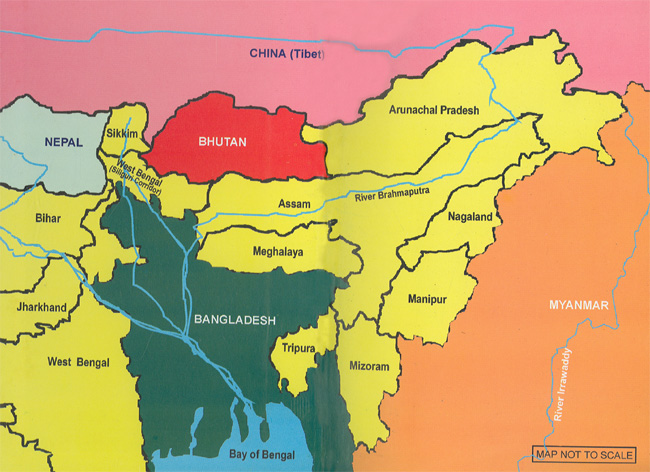
The third North East Connectivity Summit was organized in Agartala from September 21-23, 2016 against the backdrop of a number of positive developments. These are the unprecedented focus on development of roads, inland waterways, railways etc in the Northeastern region, the emergence of a democratic Myanmar, improving ties with Bangladesh, a resurgent foreign policy and above all the emerging potential of Northeast (NE) India as a connecting frontier for the South-East Asian economy. 

The recently announced plans of awarding road projects of 1 lakh crore rupees in the NE in the next five years and the declaration of 18 national waterways in the region have put the NE in developmental focus. Along with the initiatives like Make in India, Skill India and the increased attention in improving international economic ties with countries like Myanmar, Bangladesh, Bhutan, Nepal, etc. with NE and West Bengal (WB) at the helm of affairs, there is now a positive and concerted plan of action.

The development of connectivity will have a multiplier effect on the region’s growth besides paving the way for industrial development. It aims to increase economic ties with Nepal, Myanmar, Bangladesh and Bhutan with the Northeast region. The specific areas for investments in the Northeast region include transport infrastructure (roads; inland waterways; air connectivity), agro-food processing, tourism, energy, IT & ITES, telecom and textile, hand loom & apparel.

India and Pakistan: The Dangerous Drift Towards Militarization

September 29, 2016 

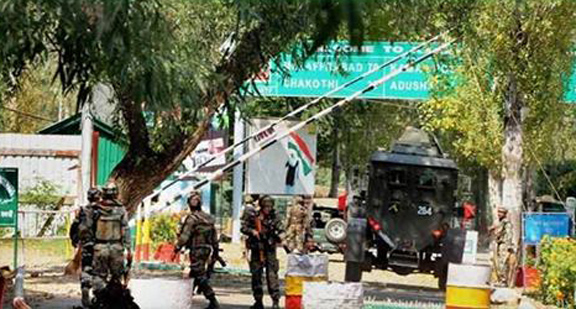
On September 18th terrorists came across the border from Pakistan, attacked a fortified army base in Indian Kashmir and killed 19 soldiers. While the dilemma India confronts in deciding how to respond hasn’t changed substantially since the Mumbai attacks in November 2009, the political cost of inaction with each new attack is higher for the Hindu nationalist party. After the 2009 attacks, I listed six changing India–Pakistan equations; five remain relevant.

First, the balance between military response and inaction is shifting towards the former. With each fresh terrorist outrage, the clamor for disproportionate punitive military strikes—‘a jaw for a tooth’—grows stronger.

Speaking in Kozhikode, Kerala on 24 September, PM Narendra Modi effectivelyreaffirmed India’s policy of strategic restraint. Addressing the people of Pakistan over their rulers’ heads, he simultaneously sent a strong message to Hindu hotheads itching for war: patience has paid big dividends. Instead of internationalizing the Kashmir dispute, terrorist attacks point the finger of criminality at Pakistan. India grows stronger while Pakistan is increasingly isolated internationally.

Modi reminded listeners that in almost all acts of international terrorism, perpetrators either come from Pakistan or, like Osama bin Laden, settle there afterwards. He called on Pakistanis to ask their government why Pakistan exports terror, while India exports software. He challenged Pakistan to compete with India in the wars on poverty, illiteracy, infant mortality and unemployment. India’s hyper-jingoistic media and hardline nationalists were unimpressed. Modi’s bluster increasingly fails to appease the thirst for military vengeance and the policy of strategic restraint is damned as a cover for cowardice.

Remembering Shankar Guha Niyogi, the Legendary Labour Leader of Chhattisgarh


Twenty-five years after his assassination, the need to fight for Niyogi’s goals and learn from his dedication is stronger than ever.

Shankar Guha Niyogi was assassinated on September 28, 1991, when he was just 48. But even at that young age he had become a legendary figure. While he was adored like a brother and son by the iron ore miners and other workers of Chhattisgarh to whom he devoted his entire life, he also became perhaps the most talked about example of someone who could link trade union struggles to wider issues like peasant struggles, social reform, environmental protection and broad-based mobilisation for democratic change.

Born in Jalpaiguri on February 14, 1943, Niyogi came to the steel town of Bhilai as a young man and soon became involved in the struggles of steel workers. He then began travelling to nearby villages in Chhattisgarh (then a part of Madhya Pradesh). It was then that he realised that the workers who were suffering the most, much more than regular workers at the steel plant, were the mostly local rural workers (many of them tribals) employed under the contract system for mining iron ore from the mines in Dalli-Rajhara. But before he could take forward the efforts to mobilise them, Emergency was announced and 32-year-old Niyogi, who by then had married Asha, a woman from a village in the region, was arrested.

Thirteen months later when Niyogi was released from jail, workers welcomed him enthusiastically to form a new union – Chhattisgarh Mines Shramik Sangh (CMSS). The exploitation they faced had only increased during the months of Emergency. The new union succeeded in winning several battles for the workers. This alarmed those in power, who decided to take action against the new initiative. When the workers held their next struggle, the police opened fire on protestors who were resisting the re-arrest of workers. Eleven workers were killed. Niyogi was arrested. But this incident only added to the workers’ determination. The post-Emergency situation at the national level was also favourable and support poured in from several places. Soon after, an agreement was signed that conceded to most of the workers’ demand and Niyogi was released.

If Modi Wants More Disclosures Of Black Money, He Must Rattle The Realty Market

September 12, 2016

The government’s latest voluntary disclosure scheme for undisclosed incomes appears to be heading for as underwhelming an outcome as last year’s scheme to ferret out undeclared foreign assets and incomes. 

Unless black money hoarders believe that the government is going to come down like a tonne of bricks, many may still chose to remain silent.

Modi needs to force cuts in housing costs in states ruled by his own party, and use the black money law to rattle the market.

The government’s latest voluntary disclosure scheme for undisclosed incomes – the deadline for which ends on 30 September – appears to be heading for as underwhelming an outcome as last year’s scheme to ferret out undeclared foreign assets and incomes.

If last year’s scheme ended up with just 638 voluntary disclosures of Rs 4,147 crore, resulting in a tax collection of Rs 2,488 crore, in the ongoing scheme to give domestic evaders a chance to come clean, the disclosures till mid-August seem to add up to a piffling Rs 4,000 crore, Business Standard reports. At 45 percent tax, the tax yield will be less than Rs 2,000 crore on this disclosure – peanuts.

However, it is early days yet, and most people intending to disclose their black incomes tend to wait till the final days – when clarifications from the tax authorities tend to come thick and fast. So, this scheme will not be the kind of flop the earlier one was. However, Business Standard says the government had hoped for declarations of upto Rs 1,00,000 crore in order to collect nearly Rs 45,000 crore in additional taxes. That hope looks distant now, given that only 18 days remain till the deadline.

How Google plans on bringing the internet to India

SEPTEMBER 27, 2016 

Most of the billion-plus Indians still have little or no internet access.

Google released a series of products in India Tuesday to connect more of the country’s 1.3 billion people to the world, even if they have poor or no internet connection.

Several of the apps – YouTube Go, the Play store, and a Google Assistant that understands and speaks Hindi – don’t require fast connectivity, or, in some cases, any connectivity at all. Google Station, the public Wi-Fi initiative, is also working to bring wireless access to India's 400 train stations. So far, 50 stations have internet access, and the company that number will double by the end of the year.

These products and initiatives mark progress for a country with over a billion people, few whom have internet access. They may also make India abellwether for the rest of the world, as Google chief executive Sundar Pichai noted in an op-ed published in the Indian newspaper The Economic Times to coincide with the Google event. 

“Over the last year, we have noticed something important about improving our products in India,” wrote Mr. Pichai. “It makes them better for everyone around the world. In an increasingly mobile-first world, India gives us early insights in the future of the Internet.”

In India, 900 million people lack internet access, according to a 2015 study by the Pew Research Center, in large part because of the lack of Wi-Fi infrastructure and the high cost of phones and computers. 

Google is tackling the first of these. On its second “Google for India” event in New Delhi Tuesday, the company announced the steps it is already taking. 

One app is YouTube Go. Available only in India for now, the app takes advantage of the fact many Indians primarily access the internet through their smartphones, many operating at 2G or lower. With YouTube Go, a user with a poor internet connection choose to download or stream a video at a lower resolution to speed things up or use less data. Users can also preview a video by tapping on a thumbnail, without having to download the whole video first. They can also share videos with their friends through a Bluetooth connection, according to TechCrunch.

The US Snubs “Ally” Pakistan By Standing With India Against Cross-Border Terrorism


White House National Security Advisor Susan Rice (Chip Somodevilla/Getty Images)

If coming under attack from India was not enough of an embarrassment for Pakistan, getting snubbed by their oft-described ally, the United States (US), must not have lifted their spirits.

Earlier, the US would often play the role of a neutral peacemaker whenever the two South Asian nuclear nations came to a head. But for some time now, it seems like good-old Uncle Sam is not interested in shielding its irksome “ally” Pakistan.

In light of the successful surgical strikes conducted by the Indian Army on Pakistan’s terror camps, here’s an excerpt from US National Security Advisor Susan E Rice’s conversation with her Indian counterpart Ajit Doval:

Ambassador Rice affirmed President Obama’s commitment to redouble our efforts to bring to justice the perpetrators of terrorism throughout the world. Highlighting the danger that cross-border terrorism poses to the region, Ambassador Rice reiterated our expectation that Pakistan take effective action to combat and delegitimize United Nations-designated terrorist individuals and entities, including Lashkar-e-Tayyiba, Jaish-e-Muhammad, and their affiliates.Source: Statement By NSC Spokesperson Ned Price

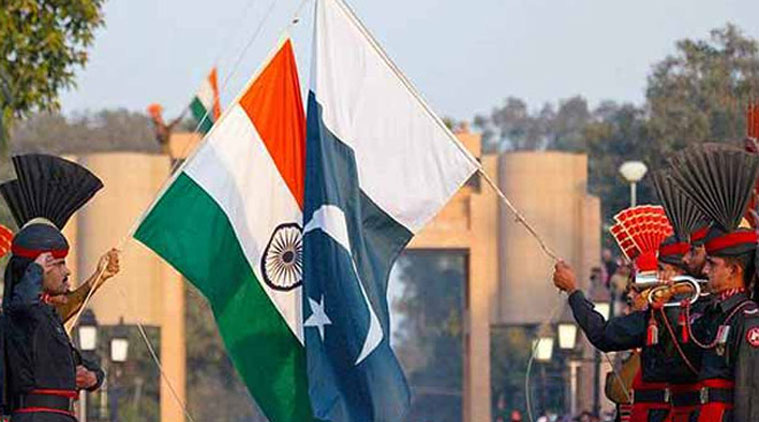
In politics – whether national or international – there are no permanent friends or enemies. But for now, it seems like Pakistan is fast running out of friends it can even partially count on.

A trilateral aimed at Pakistan

29/09/16

A trilateral aimed at Pakistan 

In a remarkable shift in Washington’s policy, it is now publicly asking New Delhi to help arm Afghan forces 

Afghanistan’s government, led by Ashraf Ghani (left), has come to recognize that Pakistan will not play ball in bringing stability to Afghanistan. Photo: PTI

This is the age of trilaterals . From Indo-Pacific to the European hinterland, trilaterals in all shapes and forms are emerging by the day. India too has taken to this diplomatic tool with gusto. One trilateral endeavour shows that Indian diplomatic heft is growing even in its immediate vicinity. India has long struggled to make the world, and especially the US, recognize its key role in Afghanistan. This now seems to be changing. And as New Delhi seems intent on tightening the screws on Pakistan post-Uri, Afghanistan has also acquired a new salience.

On the sidelines of the UN general assembly’s 71st annual session, India, the US and Afghanistan met last week to exchange views on the situation in Afghanistan and on “regional issues of mutual interest”. The three states underscored their shared interest in combating terrorism and advancing peace and security in the region even as they explored ways to “coordinate and align” assistance with the priorities of the Afghan government in the war-torn country.

India and the US decided to relaunch this trilateral engagement during the second India-US Strategic and Commercial Dialogue in New Delhi last month. Though it was in existence even earlier, the US did not really put its weight behind the engagement for fear of annoying Pakistan. It was discontinued in 2013 largely because of this indifference.

How India Is Preparing To Counter Chinese Aggression

September 28, 2016

Beijing’s interest continues to rise in positioning Pakistan as a counterweight to India, eventually bringing the scenario of a two-front war vis-à-vis India.

New Delhi has, therefore, been stepping up modernisation of its armed forces in order to counter the assertive posture of the Chinese.

Fifty-four years ago, on 20 October 1962, with the world’s terrified gaze fixed firmly on the United States-Soviet nuclear standoff in Cuba, China attacked India. Provoked by a territorial dispute and tensions over Tibet, the war was brief, and China emerged victorious. Beijing declared a unilateral ceasefire on 21 November that year, and the Chinese People’s Liberation Army (PLA) withdrew to its pre-war positions.

However, the war still casts a long shadow over Sino-Indian relations. While the conflict is long since over, the relations are still a mess. Thus, to this day, China continues to claim the Indian state of Arunachal Pradesh while New Delhi lays claim to the Chinese-controlled Aksai Chin territory.

India still sees China as a nationalist, aggressive power which seeks to dominate Asia and one that might once again strike unexpectedly, just as it did in 1962. Naturally, China’s recent assertiveness on the border issue and the PLA’s huge military build-up bolster such fears.

Deploying Su-30 MKIs along the LAC to counter Chinese aggression

WHAT COUP-PROOFING WILL DO TO TURKEY’S MILITARY: LESSONS FROM FIVE COUNTRIES

SEPTEMBER 27, 2016

One month after the failure of the coup on July 15, Turkey decided to invade Syria. The historical record suggests this is a very bad idea. Here is why.

On August 24, 2016, 450 Turkish troops, supported by tanks, armored trucks, air, and artillery support, crossed the Syrian border as part of Operation Euphrates Shield. Initially, things seem to go well, though ominous signs already loom on the horizon. Pushed by Erdogan’s pride and anger, nationalist public opinion, and a strong urge to justify sunken costs, the Turkish army may get entangled in an endless counterinsurgency campaign. Unfortunately for Turkey, its military forces are undergoing a severe crisis that undermines its capacity to conduct such warfare. After the abortive military coup in July, the government engaged in a series of sweeping purges in its armed forces. More than 2500 officers, including at least 119 generals and admirals, were arrested or discharged, in addition to sweeping purges in the judiciary, police, schools, and universities. The regime also purged MIT, Turkey’s national intelligence agency, and as Gönül Tol maintained, its remaining agents are likely to invest more resources in fighting the elusive “Gülen conspiracy” than real terrorist threats.

The connection between the coup attempt in July and the military adventure in August is quite direct. One Turkish observer wrote that the anger on the coup brought Erdogan the public support needed for such an adventure. In TheWashington Post, Erin Cunningham and Liz Sly offered convincing evidence that the operation was delayed for almost one year by officers who eventually participated in the coup. If this information is true, then their purge enabled Erdogan to overcome remaining resistance and launch the invasion. Unfortunately for Turkey, the ramifications of the coup on the future of its Syrian intervention may be even bigger. Turkey is going into a military adventure in Syria precisely when its army is least prepared for such a task. As we shall see below, purges and coup-proofing treatments might be dramatically detrimental to military effectiveness, both in counterinsurgency and conventional wars. To use a medical metaphor, they are similar to chemotherapy treatments: very effective in fighting cancer, but at the same time ruinous to essential bodily functions.

Coup-Proofing and its Ramifications: The Historical Experience

South Africa, Iran To Review Bilateral Relations

BY SA NEWS 
SEPTEMBER 28, 2016

The South Africa-Iran Deputy Ministerial Working Group (DMWG) will kick off on Thursday in Pretoria.

To be hosted by International Relations and Cooperation Deputy Minister Nomaindiya Mfeketo, the session is expected to review and enhance bilateral relations between Tehran and Pretoria.

“The DMWG provides impetus to the Structured Bilateral Mechanism and is mandated to track progress in normalising trade and financial relations between the respective countries in the post-sanctions era and to guide and institute measures in this respect,” South Africa’s Department of International Relations and Cooperation (DIRCO) said on Wednesday.

The DMWG is meant to ensure the South Africa-Iran bilateral relationship progresses into a substantive strategic partnership within targeted sectors.

Thursday’s meeting will focus on the outcomes of the April Presidential State visit to Iran, as well as the enhancement of trade, investment and economic relations.

“In addition, the DMWG will assess the implementation of the South Africa-Iran Strategic Framework. It is expected that the outcome of the meeting will subsequently inform the substantive part of the South Africa-Iran Joint Commission,” the department said.

In Saudi Arabia: Can It Really Change?


by Toby Matthiesen 

Cambridge University Press, 277 pp., $29.99 (paper) 

by Pascal Menoret 

Cambridge University Press, 250 pp., $34.99 (paper) 

by Paul Aarts and Carolien Roelants 

London: Hurst, 176 pp., £14.99 (paper) 

by Simon Ross Valentine 

London: Hurst, 362 pp., £25.00 Fayez Nureldine/AFP/Getty Images
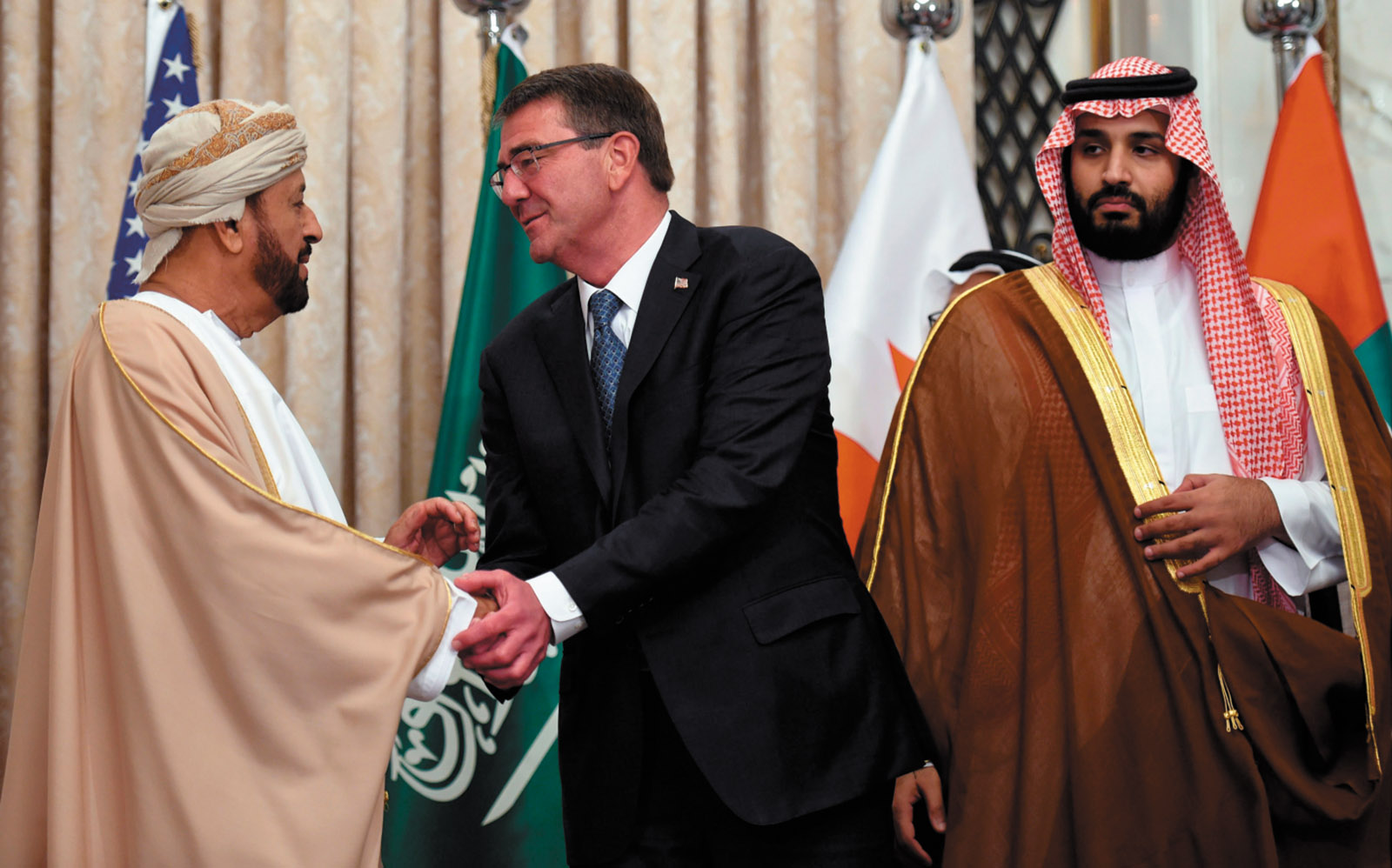
Saudi Defense Minister and Deputy Crown Prince Mohammed bin Salman, right, with Omani Defense Minister Badr bin Saud al-Busaidi and US Secretary of Defense Ashton Carter at the US–Gulf Cooperation Council summit in Riyadh, April 2016

Until the Wahhabi conquest of the Arabian peninsula at the turn of the last century, the mixture of sects there was as diverse as it was anywhere in the old pluralist Middle East. In its towns there lived, among others, Sufi mystics from the Sunni branch of Islam, members of the Zaidi sect, which is linked with the Shia branch of Islam, Twelver Shia traders, and seasonal Jewish farmhands from Yemen. 

From the eighteenth century onward, successive waves of warriors from the Wahhabi revivalist movement, formed from Sunni tribesmen in the hinterland, have struggled to enforce a puritanical uniformity on the cosmopolitan coast. Toby Matthiesen recounts in The Other Saudis that, a few years after taking the eastern shores of the peninsula from the reeling Ottomans in 1913, Wahhabi clerics issued a fatwa obliging local Shias to convert to “true Islam.” In Hijaz, the western region that includes Mecca, Medina, and Jeddah, militant Wahhabi clerics and their followers ransacked the treasuries of the holy places in Mecca, lopped the dome off the House of the Prophet in Medina, and razed myriad shrines. 

The Politics Of Bombing: Wholesale, Retail And Improvised – OpEd

SEPTEMBER 29, 2016

Bombs, domestic and foreign, are defining the nature of politics in the United States, the European Union and among radical Islamist groups and individuals. The scale and scope of bomb-politics varies with the practioner.

‘Wholesale bombers’ are state actors, who engage in large-scale, long-term bombing designed to destroy adversary governments or movements. ‘Retail bombers’ are groups or individuals engaging in small-scale, sporadic bombings, designed to provoked fear and secure symbolic outcomes.

Apart from planned bombings, there are improvised bombings committed by deranged individuals who engage in suicide attacks without any political backing or coherent purpose.

In this paper we will focus on the nature of ‘wholesale’ and ‘retail’ bombings, their frequency, political consequences and long-term impact on global political power.
Bombing as Everyday Events

The US and EU are the world’s foremost practitioners of ‘wholesale bombing’. They engage in serial attacks against multiple countries without declaring war or introducing their own citizen ground troops. They specialize in indiscriminant attacks on civilian populations – unarmed women, children, elders and non-combatant males. In other words, for the ‘wholesale bombers’, unleashing terror on societies is an everyday event.