5 October 2016

US Government Relinquishes Control Of Internet’s ‘Address Book’

BY MINA 
OCTOBER 2, 2016

The US government’s contract to control the internet’s ‘address book’ has expired after 47 years, transferring management of the Internet’s unique identifiers to the private-sector.

The US Department of Commerce National Telecommunications and Information Administration (NTIA) had a contract with the Internet Corporation for Assigned Names and Numbers (ICANN) to perform the Internet Assigned Numbers Authority (IANA) functions.

This essentially meant the US government had authority over the internet’s domain name system. The contract formally ended Saturday and ICANN – a multi-stakeholder nonprofit group based in California – is now the sole overseer.

The global multistakeholder community is made up of private-sector representatives, technical experts, academics, civil society, governments and individual Internet end users.

ICANN says this diverse group is aimed at enhancing accountability and “empowering the global internet community to have direct recourse if they disagree with decisions made by ICANN the organization or the Board.”

The transition has been underway since 1998 and is part of a move to ‘privatize’ the internet.

How telecom companies can win in the digital revolution

By Paul-Louis Caylar and Alexandre Ménard

For telecoms, making smart use of digital technologies calls for a wholesale digital transformation. Five steps are needed to make it happen. 

Telecom companies face increasingly tough times as digitization reshapes the industry landscape. In fact, telecoms come second only to media in the ranks of sectors expecting moderate or massive digital disruption over the next 12 months, according to a 2015 cross-industry survey of senior industry leaders.1

In the past five years, the telecom business has entered a period of slow decline, with revenue growth down from 4.5 percent to 4 percent, EBITDA margins down from 25 percent to 17 percent, and cash-flow margins down from 15.6 percent to 8 percent.2Competitive boundaries are shifting as core voice and messaging businesses continue to shrink, partly under regulatory pressures, but also because social media is opening up new communications channels. Among US telecom companies, for instance, landline and mobile voice now account for less than a third of total access, down from 55 percent in 2010, while data revenue has risen from 25 percent of total revenues in 2010 to 65 percent today. 

But digitization is not just a threat; it also offers telecom companies an opportunity to rebuild their market positions, reimagine their business systems, and create innovative offerings for customers. Not surprisingly, most executives consider digitization to be one of their top priorities,3but few companies are close to capturing its full potential. We calculate that digitization could enable telecom operators to improve their profits by as much as 35 percent, yet the average improvement achieved is just 9 percent. 

So how can companies bridge this gap? We have identified five ways to come out on top of the digital revolution. 

1. Reinvent the core 

Digitization touches almost every aspect of a telecom operator’s business: 

People, Processes and Technology: The Triad of Your Organization’s Cyber Security


OCT 2, 2016 

Since 2003, the Department of Homeland Security (DHS) has designated October asNational Cyber Security Awareness Month (NCSAM). Each week of NCSAM carries its own theme that is meant to help users stay safe online. To help promote those topics, the DHS partners with public and private entities. Together, they create resources, hold special events and raise awareness about best cyber security practices. 

The first week of NCSAM explores basic tips by which everyone can get involved in Stop.Think.Connect. – a national campaign which helps users empower themselves to explore the web safely and securely. Stop.Think.Connect applies not just to individuals. It also concerns corporations and other businesses. 

As we all know, organizations face a number of IT security risks on a daily basis. But they’re not powerless. Companies can take steps to defend themselves against those threats. 

Here’s how your organization can leverage its people, processes and technology to protect itself against six common cyber security threats. 

1. POS MALWARE 

As noted by Gabriel Ryan, pentester, CTF player and Offsec R&D, security incidents are rarely the result of a single, critical point of failure: 

“Breaches happen when an attacker is able to leverage a chain of vulnerabilities across multiple distinct networks, applications, and system components. This means that from an auditor’s standpoint, simply identifying and remediating critical issues is not enough. Lower-priority findings and informationals are included in pentest reports because they could later prove to be the tipping point that leads to network compromise. 

Services integrating cyber and traditional military


Within Cyber Command’s Cyber Mission Force — established in 2012 to include 133 teams in varying roles that reached initial operational capability at the end of September 2016 and will reach full operational capability in 2018 — there are the service cyber components. They work to defend service-specific networks and missions as opposed to the joint cyber effort. Within this construct, the services have begun to integrate their cyber warriors with traditional military units as cyber now touches most everything. 

For example, Air Force Chief Information Officer Lt. Gen. William Bender has described the need for an "organic cyber capability" for the Air Force separate from the joint CYBERCOM mission. 

“There’s a clear recognition that our service needs an organic cyber capability to get after much of what Cyber Command … just doesn’t have the bandwidth to do or simply not in their charter, and it’s critical [to the] Air Force,” he said at a Defense Writers Group breakfast in July. 

This organic capability, he said, revolves around the Air Force’s five core missions — air and space superiority; intelligence, surveillance and reconnaissance; rapid global mobility; global strike; and command and control — and focuses on mission-specific tasks in the air domain. While CYBERCOM is concerned with big problems and high-end warfare, such as protecting missile defense systems and air defense systems and assuring the nuclear enterprise and space enterprise, the Air Force needs organic capabilities to complete daily missions, he said. 

Organic capabilities specific to the Air Force, he said, involve assurance of aerial refueling, assigning crews to planes, and ensuring planes take off on time and complete their mission. All these tasks, Bender said, are dependent on cyber-vulnerable systems. 

Cyber threat a pressing problem for us all


OCTOBER 3 2016 

The term "cyber" has become a buzzword. But its ambiguity, along with such concepts as "cyber security" and "cyber war", mask what is a profound and complex reality facing governments, businesses, institutions and society.


Consider this: thanks to hacking, in the event of a full-scale war, some of Australia's most advanced weapons, including submarines and jet fighters, could be disabled electronically before they can be used. Radar operators could be fed false data to render air defences useless. Power grids could be switched off.

The PM says the pace of change in technology is unprecedented making it tough for cyber security experts to be one step ahead.

At any time, civilian populations can be deluged with hacked data or misinformation aimed at manipulating public perceptions, such as what is happening in the US election.

The internet may actually change the concept of war itself. Nation states can now commit aggressive acts against each other without incursions into sovereign territory. This new reality corrodes what has long been one of Australia's great strategic advantages – geography.

Countering the cyber threat involves a new kind of thinking about Australia's security. 

NOTE TO FUTURISTS: THE MAXIMUM EFFECTIVE RANGE OF A PREDICTION IS 20 YEARS

OCTOBER 3, 2016

Earlier this summer, I wrote about an Army Unified Quest wargame that looked at the operating environment in 2050. Since then, I have noticed some additional speculation about how the Army should prepare for 2050 in outlets such as Small Wars Journal. After thinking some more about such prognostication and the risks of developing programs based on future visions, I propose a working hypothesis for others to consider: The maximum effective range of any future prediction is 20 years or less, and any viable warfighting concepts will be supported by developed or emerging technology rather than some figment of someone’s imagination.

To illustrate my argument, I turn to an example from history: In January 1974, Maj. Gen. Donn Starry wandered the battlefields of the recently ended Yom Kippur War. His papers at the U.S. Army Heritage and Education Center include a copy of the since declassified report he compiled from that visit. The three main conclusions of his report were that it was possible to fight outnumbered and win, the lethality of modern weaponry had vastly increased, and the tank remained the dominant land weapon system. These observations drove a complete revision in the way U.S. Army would fight that eventually culminated in AirLand Battle and contributed to the development of the “Big 5” weapons systems that still serve in the Army today — the Abrams tank, Bradley fighting vehicle, Blackhawk and Apache helicopters, and the Patriot missile. These comprised a “system of systems” that made AirLand Battle possible, and all were already somewhere in the procurement process as that conceptual ferment was ongoing.

Overseeing these intellectual and technological changes was the newly established Training and Doctrine Command of Gen. William E. DuPuy. Initially, the Army got the warfighting concept wrong. Active Defense, the doctrine that appeared in 1976, abandoned the traditional focus on forms of maneuver and concentrated on “winning the first battle” with new defensive weaponry like wire-guided anti-tank missiles. I came into the Army under that doctrine, and I remember practicing it fighting a Dunn-Kempf wargame at my officer advanced course in the late 1970s. I commanded a combined arms battalion task force that successfully decimated a Soviet motorized rifle regiment. Yet we took heavy casualties, and when the enemy’s second echelon force approached, our only option was to call in the nukes.

4 October 2016

Stratfor: The Hype About the Hyperloop

https://fabiusmaximus.com/2016/10/01/the-hyperloop/ 

Summary: History shows that the new industrial revolution just beginning will bring wonders, things often seemingly more like science fiction than practical technology. Here Stratfor looks at the hyperloop, a potentially transformative new transportation technology — if it works. At the end are links are posts about even more fantastic technologies.

Following a recent visit to Elon Musk’s Tesla electric car factory in California, Indian Prime Minister Narendra Modi expressed interest in a less mature but potentially more groundbreaking idea: Hyperloop. Musk, the founder of companies such as SpaceX and Tesla, released an open-source proposal for the new mode of transportation in 2013. Essentially a levitating train car traveling through a tube in near vacuum conditions, Hyperloop technology could make in minutes trips that normally take hours.

Raja Mandala: Breaking the Panipat syndrome

C. Raja Mohan

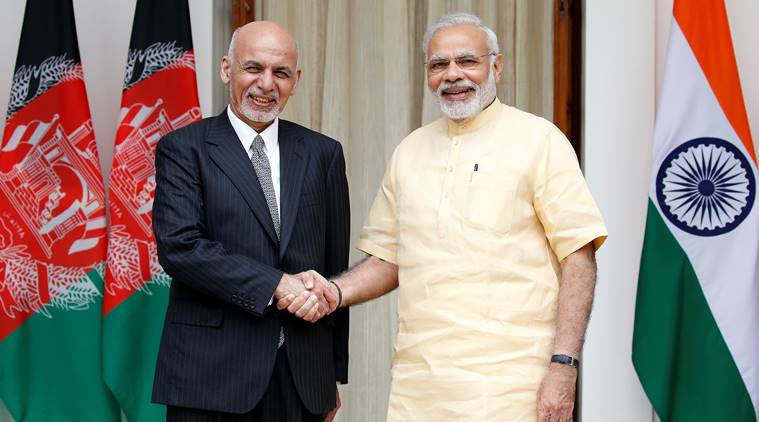
Redefinition of the Afghan issue in the region and India’s conflict with Pakistan could mean a greater role for Delhi in Kabul.

A global conference this week in Brussels marks an important transition for the Afghanistan project — from international to the regional. Gathering a decade and a half after the American intervention in Afghanistan, nearly 70 countries and 25 international institutions will reaffirm, in a manner of speaking, their enduring commitment to the security and development of Afghanistan. There is a rider though.

Amidst the exhaustion with the wars of intervention, buffeted by the massive refugee crisis and declining enthusiasm for writing regular cheques for Kabul, the rich countries are ready to redefine the burden of Afghan peace as a “regional responsibility” and setting conditions for further assistance to Kabul. The international military footprint has already come down from a high of 1,20,000 troops a few years ago to barely 10,000 now. This shift will have significant consequences for India. While benefiting from the international presence in Afghanistan since the ouster of the Taliban at the end of 2001, Delhi has tended to plough a lonely furrow. Its emphasis was on economic assistance. The Western countries, noting Pakistan’s objections, discouraged India from seeking a larger security role in Afghanistan. In the new and regional phase, India is bound to be drawn more deeply into the Afghan conflict. With India’s relations with Pakistan entering a period of turbulence, Afghanistan could acquire an unusual prominence in India’s regional strategy.

An unclean slate

Stephen P. Cohen 

To find the way forward, India and Pakistan must first recognise the pull of history.

India and Pakistan rest in the zone of uncertainty, their terminology makes war difficult but not impossible, risky but not calamitous.

The origins of this Kashmir conflict rest in British policy. They withdrew from the subcontinent without a clear understanding of the consequences. Their strategic naiveté was mirrored in another dispute, the Middle East, where they left plenty of material for future UN sessions. They believed they could entrust the Northwest frontier to Pakistan, and, crossing their fingers, assumed there would be no other quarrel. Some leaders of the British Indian army, including Claude Auchinleck, thought otherwise, but did not reckon on Pakistan turning to a faulty Kashmir accession as a way out.

The rest has been history. In Pakistan, the British general who took command deliberately constrained his forces until he was replaced by General Ayub Khan, who launched the 1965 war. The Indian decisions were made by a man — Jawaharlal Nehru — who did not believe in the use of force except in extreme urgency. He forgot that he had given Pakistan a critical issue, one that would toxically combine with the truth; he (but not Mahatma Gandhi) wanted to politely starve the Pakistanis into submission.

Myopia in the Maldives - India turns a blind eye to human rights abuses

Krishnan Srinivasan

The Maldives is a thousand-island nation 1,350 miles southwest of India with a population of 3,50,000, and a member of the South Asian Association for Regional Cooperation. It receives scant attention in the Indian media. Maumoon Abdul Gayoom ruled the Maldives as president with an iron fist for 30 years and enjoyed India's support, to the extent that Rajiv Gandhi as prime minister helped him to thwart a coup attempt in 1988. Some years later, when P.V. Narasimha Rao was prime minister, Rao turned a blind eye to Gayoom sending secret agents to India to spy on suspected political opponents. Unlike the United States of America and the European Union, which claim that their foreign policy is based on universal values they hold dear but whose record is replete with damning evidence to the contrary, India has never taken an evangelical position in championing the cause of democracy abroad when this comes into conflict with its perceived strategic interests. On the whole, this has served the nation well.

The dilemma previously faced by New Delhi in seeking good relations both with Aung San Suu Kyi and the Myanmar army junta over the last couple of decades has now returned to confront India in the Maldives, where Gayoom's half-brother, Abdulla Yameen (picture), who became president in 2013 in a controversial election, seeks to entrench himself with draconian powers of exceptional severity even by third-world standards. And as with Myanmar, the presence of China in our neighbourhood plays a significant part in fashioning New Delhi's attitude.

The lines that have been crossed

VIPIN NARANG

While strategic restraint vis-à-vis Pakistan may still persist as grand strategy, the predawn operation into PoK signals that the era of visibly ‘doing nothing’ militarily may be ending

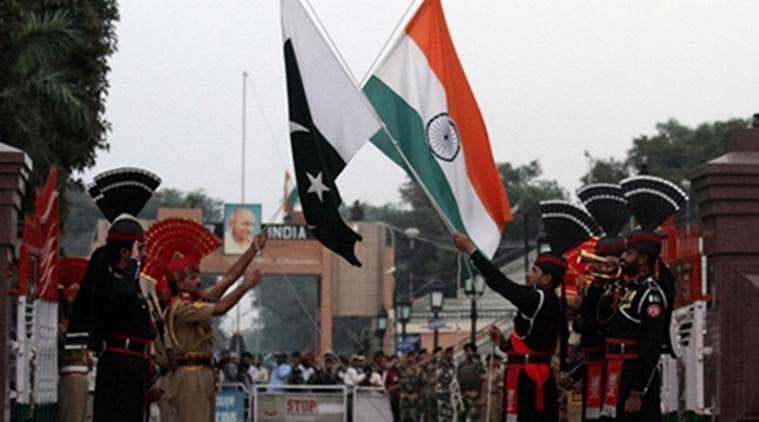
As the dust settles following the so-called September 29 “surgical strike” which witnessed the publicly acknowledged employment of Indian special forces across the Line of Control (LoC) for the first time in over a decade, it is useful to take stock of the larger implications — what the operation does and does not mean for India’s broader strategic dynamic with Pakistan.

On the one hand, those heralding a “new era” where India has “called Pakistan’s nuclear bluff” will be disappointed: the operation did not fundamentally alter the strategic options available to India. On the other hand, those decrying that the operation meant absolutely nothing are also wrong: it has very real implications for future iterations of this tragic and dangerous conflict dynamic, and indicates the degree to which domestic political pressure to do something in response to Pakistani provocations against even military targets — let alone civilians — is boiling over.Three myths

Here’s A Close Look At India’s Emerging Strategic Culture

Swarajya Staff 
October 01, 2016

Any public discourse on strategic culture will only be meaningful when a nation reaches a minimum level of economic prosperity and citizenry, at large, do not have to worry about basic subsistence.

India is on that cusp with a vibrant middle class and a huge educated youth bulge that will soon be interested in more than just politics, sport and basic entertainment.

In the backdrop of the recent surgical strikes by Indian Special Forces on terrorist camps across the Line of Control (LoC) with Pakistan, there is a need to assess whether India’s strategic culture is finally emerging from the closet. What then is strategic culture from a common citizen’s perspective in a democracy like India? Put rather simply, it is what a nation and its people collectively feel about myriad issues that affect their immediate, medium-term and long-term existence and evolution.

These feelings are then structured around ideas, thoughts, writing and oral articulation to form what can be loosely called a ‘culture’. When this culture is given direction and purpose, first by the strategic community and then by the apex political authority, it becomes ‘strategic culture’ and gets focused towards the attainment of core national interests.

Years of Indian indecision and inaction ends


India has finally broken out of years of paralytic indecision and inaction on Pakistan’s proxy war by staging a swift, surgical military strike across the Line of Control — a line it did not cross even during the 1999 Kargil War. Although a limited but unprecedented action, in which Indian paratroopers destroyed multiple terrorist launchpads, it will help to dispel the sense of despair that had gripped India over its prolonged failure to respond to serial Pakistan-backed terrorist attacks.

At the same time, the action represents a loss of face for Pakistan’s all-powerful military, which was quick to deny any such strike. The denial, however, will carry little credibility even within Pakistan, given the military’s long record of refusing to own up to its own actions — from sending raiders into Jammu and Kashmir in 1947 and staging Operation Gibraltar in 1965 to sending light infantry soldiers into Kargil in 1999. When the Pakistani military even denies training and arming terrorists for cross-border missions, how can it admit that Indian paratroopers targeted terrorist launchpads it maintains?

Still, a one-off surgical attack can do little to help reform the Pakistani military’s conduct or deter its rogue Inter-Services Intelligence agency from staging more terrorist strikes on Indian targets. The critical question to ask is whether India, having shaken off its diffidence, will be willing to stage more raids by its special forces across the LoC — not immediately, but in the months to come, so as to forestall terrorist attacks by keeping the Pakistani military off balance.

However, the proxy war by terror is unlikely to end without India imposing significant costs directly on the Pakistani military and the Pakistani state. Militarily, that is a challenging task.

In general, the purpose of any major military action ought to be twofold: to inflict unbearable costs on the enemy; and, if the action escalates to a full-fledged war, to decisively defeat the foe on the battlefield in order to impose peace on it on one’s own terms.

Years of Indian indecision and inaction ends

Brahma Chellaney, The Hindustan Times


India has finally broken out of years of paralytic indecision and inaction on Pakistan’s proxy war by staging a swift, surgical military strike across the Line of Control — a line it did not cross even during the 1999 Kargil War. Although a limited but unprecedented action, in which Indian paratroopers destroyed multiple terrorist launchpads, it will help to dispel the sense of despair that had gripped India over its prolonged failure to respond to serial Pakistan-backed terrorist attacks.

At the same time, the action represents a loss of face for Pakistan’s all-powerful military, which was quick to deny any such strike. The denial, however, will carry little credibility even within Pakistan, given the military’s long record of refusing to own up to its own actions — from sending raiders into Jammu and Kashmir in 1947 and staging Operation Gibraltar in 1965 to sending light infantry soldiers into Kargil in 1999. When the Pakistani military even denies training and arming terrorists for cross-border missions, how can it admit that Indian paratroopers targeted terrorist launchpads it maintains?

Still, a one-off surgical attack can do little to help reform the Pakistani military’s conduct or deter its rogue Inter-Services Intelligence agency from staging more terrorist strikes on Indian targets. The critical question to ask is whether India, having shaken off its diffidence, will be willing to stage more raids by its special forces across the LoC — not immediately, but in the months to come, so as to forestall terrorist attacks by keeping the Pakistani military off balance.

Why India must reclaim its water leverage in the Indus basin


For India, reclaiming its Indus leverage is a cheaper, more-potent option to reform Pakistan’s behaviour than fighting a war.

From Brahma Chellaney, Water: Asia’s New Battleground (Washington, DC: Georegetown University Press).

Brahma Chellaney, The Hindustan Times, September 28, 2016

Be careful what you wish for: Not content with Pakistan enjoying a water-sharing arrangement with India that is by far the world’s most generous, the country’s Senate passed a unanimous resolution in March that declared: “This House recommends that the Government should revisit Indus Waters Treaty (IWT), 1960, in order to make new provisions in the treaty so that Pakistan may get more water for its rivers.” Little did the parliamentarians know that India would heed that call by revisiting the pact, which lopsidedly reserves for the lower riparian 80.52% of the total waters of the six-river Indus system, or 167.2 billion cubic metres of the aggregate 207.6 billion cubic metres average yearly flows. A naïve India, thinking it was trading water for peace through the IWT, even contributed $173.63 million for dam and other water projects in Pakistan.

Indus Waters Treaty: Nehru’s Original Himalayan Blunder

October 02, 2016

How did India come to sign the Indus Waters Treaty when it was disproportionately in favour of Pakistan? Read here: 

“No armies with bombs and shellfire could devastate a land so thoroughly as Pakistan could be devastated by the simple expedient of India's permanently shutting off the source of waters that keep the fields and people of Pakistan green.” – David Lilienthal, former chief of the Tennessee Valley Authority, US

The ‘Aqua Bomb’ is truly India’s most powerful weapon against Pakistan. As the upper riparian state, India can control the flow of the seven rivers that flow into the Indus Basin. And yet, in the last 69 years, only once has it exercised this great power – and not very well.

On 1 April, 1948, with India and Pakistan battling for control of Jammu & Kashmir, engineers in Indian Punjab shut off water supplies from the Ferozepur headworks to the Depalpur Canal and Lahore. Around 8 per cent of the cultivable command area in Pakistan was impacted during the critical kharif sowing season. The city of Lahore was deprived of the main sources of municipal water, and the supply of electricity from the Mandi hydroelectric scheme was also cut off. Water rationing was introduced in Pakistan’s second largest city.

When India had its foot on Pakistan’s parched throat, when a little more pressure would have forced Islamabad to behave, and when Indian soldiers were fighting – and dying – to liberate Indian territory, Prime Minister Jawaharlal Nehru committed his first Himalayan blunder by relaxing India’s chokehold on Pakistan.

Later, it was to be under his leadership that India inked the Indus Water Treaty (IWT), giving away 82 per cent of the total water to Pakistan. Niranjan D. Gulhati, India's chief negotiator, exemplified India’s muddled thinking: “We had to keep in view the interests of the other side: they must live; we must live. They must have water; we must have water.”

Is Pakistan Heading Toward a Coup?

Umair Jamal

A week ago, banners requesting the military’s takeover of the country were put all across Islamabad, Pakistan’s capital. The banners were read as asking the military chief, General Raheel Sharif, to impose martial law in the country.

On Sunday, Imran Khan, the leader of the Pakistan Tehreek-i-Insaf (PTI) said that “the people will celebrate and distribute sweets if the army takes over the country.” Imran Khan’s party runs a coalition government in Khyber Pakhtunkhwa province of Pakistan.

About two weeks ago, the United States Senator John McCain reportedly gave a statement (the authenticity of the report is unclear), asking for General Sharif’s extension as the Chief of Army Staff (COAS) which is due to complete later this year. The U.S. State Department deputy spokesperson Mark Toner a week ago refused to either acknowledge or deny the context of the Senator’s statement.

Besides, the campaign to invite the military for a direct rule by overthrowing the democratically elected government in the country has been going on since the advent of the current government more than three years ago. In the wake of afailed military takeover in Turkey, the coup debate in Pakistan has taken an intriguing turn with many warning that the latest episode of democracy in Pakistan may be nearing its end.

Pakistan: The Making Of A Rogue Nation

Suprita Anupam 
October 01, 2016

The Pakistan army has been continuously selling the idea of ‘insecurity from India’ among the people, giving defence the top most priority while relegating critical issues like education and health to the bottom.

Pakistan has been continuously and successfully perpetuating lies through its media and books.

According to their textbooks, the history of Pakistan begins with 871AD, as Islam enters the Indian subcontinent.

Read the word – ‘Pakistan’ – what pops up in your mind? To me, it is ‘a rogue nation’.

Recently, taking a note of the Kashmir unrest, Nawaz Sharif, the Prime Minister of Pakistan nominated his 22 parliamentarians as special envoys to visit major countries across the world and rake up Indian atrocities and human rights abuses in Kashmir. ‘An attempt to appease the disgruntled parliamentarians by sending them on a world tour’ couldn’t hide behind the Kashmir curtain, but became a laughing stock as the parliamentarians when asked about Mehbooba Mufti, Chief Minister of Jammu and Kashmir and its ethnicity and map on a live show were mum asking, “Who is Mehbooba?” The Prime Minister in fact went on to address the United Nations General Assembly 2016 with Kashmir as their main agenda, another attempt to divert the immediate public attention from core issues, such as water and energy crisis, and most importantly, the Panama leaks, Sharif’s latest dilemma.

15 Years in the Afghan Crucible

By CARLOTTA GALL
OCT. 1, 2016 

Residential apartments in a gated community in Kabul. CreditShah Marai/Agence France-Presse — Getty Images

KABUL, Afghanistan — There is an end-of-an-era feel here these days. Military helicopters rattle overhead, ferrying American and Afghan officials by air rather than risk cars bombs in the streets. The concrete barriers, guarding against suicide attacks, have grown taller and stronger around every embassy and government building, and whole streets are blocked off from the public.

It has been 15 years since American forces began their bombing campaign against the Taliban and Al Qaeda on Oct. 7, 2001, and sometimes it feels as if we are back to square one, that there is nothing to show for it.

The recent American military drawdown has been drastic — from over 100,000 troops a few years ago to a force of 8,500 today. Thousands of Afghans have been made jobless as bases and assistance programs have closed. Meanwhile tens of thousands of Taliban are on the offensive in the countryside, threatening to overrun several provincial towns and staging huge bombings here in the capital.

Afghan forces have been bearing the brunt, suffering unsustainable casualties. Communities talk of hundreds of coffins returning from the front line. Civilians have suffered no less — thousands of families have been displaced anew by fighting, and aid workers warn that their access is deteriorating. Business executives have been leaving, selling off their property, and whole families have swelled the refugee columns heading to Europe.

WHY ARE TERRORISTS OPENLY RECRUITING IN PAKISTAN?

10/1/16 

More than a week after the attack on an Indian army base in Uri, close to the Line of Control (LoC), the de facto border between Pakistani and Indian-administered parts of Kashmir, on the Indian side, a familiar pattern has returned.

Which is to say a group of terrorists crossed the LoC, attacked and killed Indian soldiers, Indian officials cite specific evidence they believe links the terrorists to a group domiciled in Pakistan and the Pakistani government then bristles that such an allegation would be made without a complete investigation.

In this latest instance, within hours of the Uri attack, the Indian director general of military operations offered that he suspected the Pakistan-based group Jaish-e-Muhammad to be responsible. JeM was held responsible for a remarkably similar attack on the Indian army base in Pathankot, Punjab, on January 2, 2016.

Later in the week, presumably based on further evidence, unnamed Indian security officials pinned the blame for Uri on Pakistan-based terrorist group Lashkar-e-Tayyaba (LeT).

Pakistan has categorically rejected any blame for the attack. The Pakistani foreign office spokesman, Nafees Zakaria, offered that “Pakistan has nothing to gain” and that it was India’s “habit” to accuse Pakistan of involvement after attacks.

China blocks tributary of Brahmaputra in Tibet to build dam

October 01, 2016 

China has blocked a tributary of the Brahmaputra river in Tibet as part of the construction of its “most expensive” hydro project which could cause concern in India as it may impact water flows into the lower riparian countries.

The Lalho project on Xiabuqu river, a tributary of Yarlung Zangbo (the Tibetan name for Brahmaputra), in Xigaze in Tibet involves an investment of 4.95 billion yuan (Rs 4,966 crore), Zhang Yunbao, head of the project’s administration bureau was quoted as saying by Chinese state-run Xinhua news agency on Saturday.

Xigaze also known as Shigatse is closely located to Sikkim. From Xigaze, the Brahmaputra flows into Arunachal Pradesh.

Terming it as the “most expensive project”, the report said the project, whose construction began in June 2014, was scheduled to be completed in 2019.

It is not clear yet what impact the blockade of the river will have on the flow of water from the Brahmaputra into the lower riparian countries like India and Bangladesh as a result, it said.

Last year, China had operationalised the Zam Hydropower Station, the largest in Tibet, built on the Brahmaputra river, which has raised concerns in India.

India’s Pre-emptive Escalation Dominance Model

Rahul Bhonsle 

India’s Pre-emptive Escalation Dominance Model

Escalation dominance is seen as the first principle for success in wars between two nuclear-armed rivals, which is to avoid a confrontation rather than expand it. Escalation dominance is best defined by the American think tank Rand Corporation as, “a condition in which a combatant has the ability to escalate a conflict in ways that will be disadvantageous or costly to the adversary while the adversary cannot do the same in return, either because it has no escalation option or because the available options would not improve the adversary’s situation.” Noted American nuclear strategy theorist Herman Kahn has identified 44 steps in the escalation ladder from the emergence of a crisis to full-scale nuclear war.

These include political and diplomatic actions to limited wars to a full fledged conventional war, counter force and finally counter value nuclear options. The escalation ladder in the context of India and Pakistan follows the pathway of expansion from rhetoric to diplomatic face-off, cross-border sniping attacks, Border Action Team (BAT) actions, artillery duels – counter force followed by counter people, skirmishes to localised limited war and beyond. Pakistan’s inhuman and illegal use of terrorist attacks has added another dimension as these have the facade of deniability being carried out by non-state actors; this has an element of control of escalation with Pakistan for the onus for conflagration is on India.

Go Ahead. Let Japan and South Korea Go Nuclear.


Japan ought to become a nuclear-weapons power as soon as possible. South Korea ought to begin a nuclear-weapons program.

The North Korean state is a national gulag. The regime is illegitimate, unstable and totalitarian-and a proliferator of nuclear-weapons technology. It brings nothing to the world but misery, widespread death to the Korean people, suffering and political instability.

Foolishly, the state is sustained by China, which thinks that it would be better to sustain North Korea than to facilitate its collapse, which might lead to a larger U.S. presence on the Korean Peninsula. But this thinking is politically shortsighted: the collapse of the North Korean regime would allow the Republic of Korea to absorb the North, thereby ending the entire reason U.S. forces are on the Peninsula. American forces would likely leave Korea, not grow, once the Pyongyang regime collapses.

Further, it was China that gave North Korea many of the ballistic-missile technologies that it uses to threaten us and our allies. China is not timidly and reluctantly standing with North Korea; it is, as usual, actively contributing to the North Korean mess. China uses North Korea to shove the United States away from Asia and keep Western diplomacy off balance, defensive and uninitiated.

Twenty-First Century Information Warfare and the Third Offset Strategy

By James R. McGrath

Lieutenant Colonel James R. McGrath, USMC, is the Information Warfare Department Head for Expeditionary Warfare Training Group Atlantic.

While the United States and our closest allies fought two lengthy wars over the past 13 years—the rest of the world and our potential adversaries were seeing how we operated. They looked at our advantages. They studied them. They analyzed them. They looked for weaknesses. And then they set about devising ways to counter our technological over-match.

—Deputy Secretary of Defense Robert Work

Why the Bosnian Serb Referendum Really Matters

By Jacob L. Shapiro

It is a sign that, even in Europe, groups are still fighting for self-determination.

The summer (at least in the Northern Hemisphere) began with an important referendum in Britain over sovereignty. It is only fitting then that summer should end with another important referendum on sovereignty, this time in the Balkans. Voters in Bosnia and Herzegovina’s Serb-dominated Republika Srpska – one of the two constituent states that make up the larger political entity – yesterday went to the polls to express their views on whether Jan. 9 should remain a holiday to mark the day Bosnian Serbs declared their own state. At the time of writing, preliminary results show voters have chosen to keep the holiday on Jan. 9. However, the fact that the referendum even moved forward is the real story here. 

Bosnia and Herzegovina’s constitutional court ruled that the holiday discriminates against other religious and ethnic groups in the country and that therefore its celebration should be considered unconstitutional. The constitutional court on Sept. 17 also approved a temporary ban on yesterday’s referendum. Obviously, the court’s writ in Republika Srpska is lacking. Before the ban, Republika Srpska President Milorad Dodik said the referendum would go forward anyway, and so it did.

Modernizing India’s Approach to Peacekeeping: The Case of South Sudan

GARIMA MOHAN 

Over the last several decades, India’s security interests have moved beyond the subcontinent in response to its growing economic and geopolitical interests. This is especially evident by its increasing engagement with Africa. At the Third India-Africa Forum Summit in October 2015, India and many African nations acknowledged the potential benefits of expanded trade and economic ties, as well as greater security cooperation.1 With this recognition, and the long-standing presence of Indian peacekeeping troops on the continent, India has a notable opportunity to raise its profile both in Africa and globally. However, to do so, the country must employ a strategic, holistic approach to peacekeeping that is more in line with its current foreign policy. To bolster regional security cooperation, protect its long-term interests, and compete with other rising powers like China, India can and should add conflict prevention and mediation to its peacekeeping toolbox. The need for such an approach is most apparent in South Sudan, where renewed unrest and an unfolding humanitarian crisis threaten India’s economic, political, and peacekeeping goals.
INDIA’S STAKES IN SOUTH SUDAN

What Does Russia/Putin Seek?

Putin's Russia is becoming the Trump of international security: dominating the news cycle with a constant stream of bold moves (Syria, for example) and often outrageous affronts (Russian hackers just did what?!?!). Just like Clinton will win the White House while The Donald is named Time's Person of the Year (bet on it), Obama's "long game" (see Chollet's new book) may be sound, even as it's seemingly trumped (that word again) on every strategic front by Putin's nonstop shenanigans.

America's Post-Oil Grand Strategy

Thomas P.M. Barnett

The United States defaulted to a Middle East-centric grand strategy in the waning years of the Cold War and has remained stuck there ever since – sometimes in denial (like now) and sometimes in fervent embrace (George W. Bush and his neocons) but always in a manner that demanded some measure of White House attention. That seemingly unbreakable focus – particularly in relation to allies Israel and Saudi Arabia – now rapidly dissipates, falling victim first to a technological curveball and ultimately to a demographic shift that leaves Americans less willing to police the world and more interested in recasting their pursuit of happiness. 

America’s political leaders have taken to describing this era as one of unprecedented uncertainty, but this is hardly the case. Globalization is either winning or has won across all the world’s regions, leaving only the question of which global “brands” (American, Chinese, Indian, European, Russian) will dominate where. President Obama and much of Washington now project the nation’s grand strategic ambitions in the direction of Asia, but they are mistaken. America’s historical scheme of integrating the world “laterally” (West to East) since World War II is largely complete, meaning these United States now enter an age of “vertical” integration (North to South) in the Western Hemisphere. This latitudinal expansion of the American System once imagined by our Founding Fathers will define U.S. foreign policy across the rest of this century.

Can We Guess How Robotics Will Affect Economies In The Future?

October 02, 2016

Is pessimism dominating our view of robotics in economies? Moreover, is it being disregarded that in an economy, outcomes are not dictated by technology but by economic and political institutions?

Following up on my earlier post on Branko Milanvoic’ blog post, I ran into the blog site called ‘Bank Underground’. It is a platform for Bank of England economists, analysts, et al, to post their comments on various issues that may or may not agree with the official policy of the Bank of England. Very good platform, in that sense.

I came across this somewhat optimistic post on the impact of robotisation. This one line, of course, does not do justice to the post which is, on the whole, quite thoughtful. It has many links. I clicked on one of them that took me to a FT Alphaville post of November 2015. In turn, it led me to a speech (‘Labour’s share) by Andrew Haldane in November 2015 and a piece by Martin Wolf in Feb. 2014. I read the latter and have downloaded the former.

Martin Wolf’s piece itself has many links. His final point is well made:

Above all, technology itself does not dictate the outcomes. Economic and political institutions do. If the ones we have do not give the results we want, we must change them.

But, that is true of a lot of things. Most prominent is money, for example. Or, may be, fast cars. They cannot kill or destroy character or whatever, on their own. It is supposedly up to us. But, that also assumes a lot of things about human abilities at self-control that years of research have shown us to be incapable of.

Deutsche Bank’s shares tumble again


A report that some hedge funds have reduced their exposure to Germany’s biggest bank sends its shares spinning again Sep 30th 2016

When main trading ended in Frankfurt on Thursday, Deutsche Bank’s shares were 1% up on the day—cause for quiet relief in another jittery week. At close of play in New York four and a half hours later, they were 6.7% down. The catalyst: a Bloomberg report saying that “about ten” hedge funds that use Deutsche’s prime brokerage had moved part of their derivatives holdings elsewhere, to reduce their exposure to Germany’s biggest lender.

Bloomberg noted that “the vast majority” of clients had not budged. Deutsche responded that it was “confident that the vast majority of them have a full understanding of our stable financial position”. But the news dealt another blow to Deutsche’s already battered shares, which have been plumbing 33-year lows. Deutsche has been reeling for a fortnight, since receiving a request for $14 billion from America’s Department of Justice (DoJ) to settle claims that it mis-sold residential-mortgage-backed securities between 2005 and 2007.

Prepare For The 21st Century Exodus Of Migrants – Analysis


By Joseph Chamie*

Policy planning requires new assumptions about migration in a densely populated world with conflict and climate change.

Immigration has emerged as a key campaign issue in the elections in Great Britain, the United States, Germany, France, Austria and India. International migration, while of little demographic consequence at the global level, can be more visible at the national level, impacting population size, age structure and ethnic composition. Nations like the United States, Australia and Great Britain could expect minimal population growth – and in Canada’s case, decline – without international migration.

International migration accounts for the dominant share of future population growth in many countries, especially those with low fertility rates, over the coming decades. By mid-century, for example, the projected proportions of population growth as a result of immigration are substantial: Australia, 78 percent; the United Kingdom, 78 percent; and the United States, 72 percent. Without international migration, Canadian population is projected be about 3 percent smaller by 2050. In most other developed countries, including Italy, Japan, Germany, Spain and the Russian Federation, immigration reduces the expected declines in their future populations resulting from negative rates of natural increase, with more deaths than births annually. For example, without international migration Germany’s current population is projected to decline by 16 percent by mid-century; with immigration the projected decline is halved to 8 percent.

Meaningful Human Control, Artificial Intelligence and Autonomous Weapons


With the recent rise in concerns over autonomous weapons systems, civil society, the international community and others have focused their attentions on the potential benefits and problems associated with these systems. As sensors, algorithms and munitions are increasingly interlinked, questions arise about the acceptability of autonomy in certain critical functions, particularly around identification and selection of and the application of force to targets. These concerns span ethical, legal, operational, and diplomatic considerations.

Despite wide engagement by states, civil society, international organisations and research institutions, the discussion of autonomous weapons systems is still characterised by different uses of terminology, different assessments of where the problem issues really sit, and divergent views on whether, or how, a formalised policy or legal approach should be undertaken.

In the developing international discussion, the concept of ‘meaningful human control’ has emerged as one point of coalescence. Primarily, it has been used to describe a threshold of human control that is considered necessary; however, the particulars of the concept have been left open so as to foster conversation and agreement. The content of the principle must now be addressed.

How blockchains could change the world


Ignore Bitcoin’s challenges. In this interview, Don Tapscott explains why blockchains, the technology underpinning the cryptocurrency, have the potential to revolutionize the world economy. 

What impact could the technology behind Bitcoin have? According to Tapscott Group CEO Don Tapscott, blockchains, the technology underpinning the cryptocurrency, could revolutionize the world economy. In this interview with McKinsey’s Rik Kirkland, Tapscott explains how blockchains—an open-source distributed database using state-of-the-art cryptography—may facilitate collaboration and tracking of all kinds of transactions and interactions. Tapscott, coauthor of the new book Blockchain Revolution: How the Technology Behind Bitcoin is Changing Money, Business, and the World, also believes the technology could offer genuine privacy protection and “a platform for truth and trust.” An edited and extended transcript of Tapscott’s comments follows.