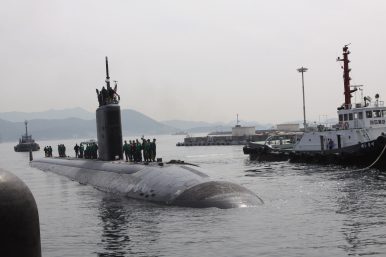
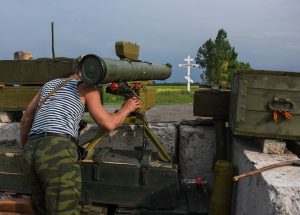
India continues to remain the world's largest arms importer, accounting for 14% of the global imports in the 2011-2015 time frame, India spent a whopping Rs. 83,458.31 crore on arms imports in a matter of three years ending 2013-14. The latest data on international arms transfers released by a global think-tank, Stockholm International Peace Research Institute (SIPRI), also shows India's arms imports remain three times greater than those of its rivals China and Pakistan. Its biggest suppliers are Russia, the US, Israel and France. Russia accounts for 70% of our arms import. But the situation is fast changing and US is fast grabbing the lucrative market. Russians also are exploiting Pakistanis by offering them latest armed helicopters. After India, China ranks second in the global arms import list with 4.7%, China used to top the imports chart earlier but has gradually built a stronger Defence Industrial Base over the last couple of decades to even emerge as the world's third largest arms exporter after the US and Russia. Incidentally, Pakistan is the main recipient of Chinese arms exports, notching up 35% of the total, followed by Bangladesh (20%) and Myanmar (16%). Russia, in turn, is China's largest arms supplier with 59%, followed by France (15%) and Ukraine (14%). Noting that India's arms exports has jumped by 90% between 2006-2010 and 2011-2015, SIPRI reiterated the well-acknowledged fact that "a major reason for the high-level of imports is that the Indian arms industry has so far largely failed to produce competitive indigenous designed weapons".
The present Govt quickly and rightly realised the best bet in Make in India initiative is the defence sector. While this initiative is better than purchasing outright from foreign vendors there are lot of issues. General Electric Co had won a $2.6 billion (nearly Rs 17,271.8 crore) contract to supply India's railways with 1,000 diesel locomotives. If GE makes railway engine in India who benefits. Well, there will be some highly skilled people who will get job in the most sophisticated and automated factories, there will be some suppliers of small items and ancillaries, some people will give vehicles on rent and all that. At least something will happen. The ratio of funds required and employment generated is huge. It is going up and not going down in any hi tech manufacturing field. It is the services which generates max employment. In the United States 70 percent of the workforce works in the service sector; in Japan, 60 percent, and in Taiwan, 50 percent. United States employment as estimated in 2012, is divided into 79.7% in the service sector, 19.2% in the manufacturing sector and 1.1% in the agriculture sector. But larger issue is we have to design our own staff. Otherwise GE or its ilk will get all the money using our cheap labour force making them as sweat shops workers. Who is going to have the IPR. Are they going to transfer those rights. BIG NO. I am not clear on many issues of defence acquisition.I am flagging these issues in following paragraphs.
We have nine DPSUs. 41 ordnance factories are spread across 26 different locations and employ close to 1,25,000 people. A recent report tears into the Department of Defence Production. “The DDP, which on behalf of the Services and the MoD would have been the instrument of indigenisation, became primarily a custodian of a large collection of ordnance factories and de-facto owner of shipyards, aircraft factories etc.” This resulted in a conflict of interest, the report says.
Offset
We have this offset policy since 2006. 30% worth of orders have to be sourced locally. 19 contracts worth 16,000 crores ($3 billion) have been signed since 2006. It is expected that there will be offset of $30 billion out of $100 billion worth of defence imports now. Due to offset clause cost of equipment is increased. People in the know of things is of the opinion that even say 3% increase in cost gets compensated if you see overall life cycle cost. Due to the offset clause large number of Small and Medium Sized Enterprises have come up. They have tied up with the foreign vendors and are manufacturing locally number of high tech components and sub assemblies. However, it is the vendors who select offset programs and partners and in many cases Indian critical needs are not catered for. Mostly low tech components/sub assemblies are made here. Since the offset clause is not getting fully utilised, the defence industry lobby is now demanding to expand the scope of offset to non military fields cancelling the very concept of getting high technology for the indigenous defence industry. They, tongue in check, will give examples of some countries exporting rice in place of defence offset. We can export potatoes to compensate for offsets. Rafael has 50% offset clause. Can anybody tell me what is going to happen to this 50%. I can understand initially we were not very well conversant with the laws, process, negotiation, enforcing penalty, audit etc. But 10 years have passed. By now we should be expert on these issues. I want to know how much offset clause has delivered. How much vendors have not done. How have we penalised them. What is the audit methodology? It is not that the private sector is paragon of virtue. If a particular vendor does not fulfill the contractual obligations, he sould be punished. There is enough provision built into the contract. It should not be like NPA of banks. People outside have a feeling that once a contract has been signed, little effort is paid to enforce contractual obligations and vendors get away with blue murder. This feeling must be proved wrong.
Foreign Military Sales (FMS) Route
Of late more and more defence equipment are being procured through Foreign Military Sales (FMS) Route. As the existing procurement process is extremely complex, cumbersome, riddled with so many loop holes FMS is becoming a preferable option to bypass these procedures. If you ask an army soldier, he would say damn the procedure. I want it now. I am naked. For example, say Air Defence Equipments. FMS piggybacks on the seller country’s own acquisition process. It gives some sort of sovereign guarantee, there is no middlemen. Since the equipment is already in use, the logistic, training, support etc are well established.
However these are serious issues involved which need to be discussed.
From 2002 to 2011 DPP was changed seven times in nine years. The latest change is in the offing. Media reports indicate number of path breaking changes are being made to make DPP simpler and necessary concern of all stake holders have been addressed. The new Defence Procurement Procedure (DPP), which will be notified within a couple of months gives top priority to a new indigenous design, development and manufacturing (IDDM) category under "Buy Indian", will help bolster the indigenous DIB. Under it private sector companies will be chosen for "strategic partnerships" in six broad areas ranging from aircraft and warships to tanks and guided missile systems. The "strategic partnership model" is designed to create capacity in the private sector, in tie-ups with foreign collaborators, over and above the capacity and infrastructure that exists in defence PSUs These are very welcome steps, long overdue. Point is will the latest DPP make sure that we do not have to go through FMS route because of procedural delays. There is a great fallacy here. Government only makes the policy. Then it says, it is too complex and time consuming. So damn the process and go for FMS route! DPP is based on fundamental principle of transparency, free competition and impartiality. FMS abandons open competition, procures equipment on single vendor basis. Every FMS deal violets all the above principles. People have serious misgivings on FMS. Some of them are enumerated below.
It is mostly US defence vendors who are getting benefited. Why don't they compete in Direct Commercial Sales (DCS) which is tough and less profitable. None of them can compete in open tender process costwise. Recently 6 x C130 Super Hercules aircraft for Special Forces, 10 x C-17 Globmaster heavy lift transport aircraft, 12 x Boeing P-81, Poseidon Long Range Maritime Recce aircraft, 12 x AN-TPQ RADARS have been procured. 155 mm Light weight towed Howitzars are in the offing. Why can’t they come through open competition. Some of the services have raised serious maintenance problems on equipments procured through FMS. There are chances of overpricing. For example it is alleged that Australian paid $300 million per C-17 aircraft, we payed 37% more. No purchaser can obtain DES price. All DES negotiations have to be aborted before submitting the buyer countries request. LOR is sent to US Govt without any publicity, competition is killed. However, one can never be sure of costing. People keep on doing conjectures. US Govt imposes additional handling changes for sales negotiation, case implementation, contract management, financial management, allied expenses, additional changes for R&D and Production. Buyer nation gets to know the final price after delivery. Prior to that only estimated price and payment schedules are intimated to the buyers. It is said FMS is free of all extraneous influences. How is that possible, just because two governments are dealing? The seller govt is only looking after the defence industry of his country. It does not own any defence industry. Sophisticated military equipment is developed based on the country’s (US) doctrine, capability, threat perception, administrative requirements, etc. Buyers have no influence on these parameters. Buying countries cannot develop own parameters.Their requirements have to be subservient to US requirements. FMS is an unilateral process, there is no negotiations. A copy of pre drafted contract is handed over to the buying nation for signing. No assurances against future embargoes/ban is provided. This is very critical in case of Indo-Pak conflict scenario.
US Govt does not guarantee fulfillment of offset obligations. US Govt allows its defence producers to recover offset costs from buying nation. These are factored in the unit cost of main equipment. Buyer country is advised to negotiate a separate offset agreement directly with the prime contractor and the Govt abdicates responsibility. In the initial package excessive quantity of support equipment and spares are included. As the buyer country is not fully conversant with the equipment it has to accept whatever is included in the package. There is lack of guarantee of continued US support for spares, technical support. Spare parts take undue long to materialize keeping critical equipment off road for uncomfortably long time. FMS should be used only for special equipment unavailable from other resources. US is cleverly exploiting this route for their business purposes. Should we follow the same?
Lot of clarity is required.on Logistics Support Agreement (LSA), Communication Interoperability and Security Memorandum Agreement (CISMOA) and Basic Exchange and Cooperation Agreement for Geo-Spatial Cooperation (BECA). CISMOA is a US requirement that intends to guarantee the secrecy of advanced communication and crypto equipments on aircraft, ships and other platforms. We are not part of NATO or ally with US. We don’t require interoperability with US platforms. US has not waived this restriction. We have purchased the most sophisticated aircrafts like P-31, AWAC without the necessary encrypted communication system. It is no rocket science to know that it is the avionics, comn, electronics, control system which make the weapon platforms most sophisticated. The speed of a ship has not increased much since the days of First World War. The technology of airframes or a tank has improved but that rate of improvement is nothing compared to that of electronics. We are made to believe that since US is not giving these technologies our DPSUs are making it for us. It ECIL and DPSUs are capable of making the most sophisticated and complicated part of the equipment, then why go in for FMS? I have a sneaking suspicion some Israeli vendor would be laughing away to bank through our JUGAD route. It is reported that Indian Navy has plugged the CISMOA-induced gaps on the American platform -- notably, speech secrecy kit by India's state-owned Electronics Corporation of India Ltd (ECIL), IFF interrogator and transponder by BEL and HAL respectively, mobile satellite system by Avantel and fingerprinting kit by BEL
End User Monitoring Agreement (EUMA) allows US to periodically inspect the equipments in buyer’s premises to check any modification etc. Can a self respecting nation like India allow this after paying through their nose. None of these agreements have been waived off for us. Initially our media was up in arms against these clause. Strangely the same clauses are now coined as Foundation Agreements and there seems to be very little objection. There are other implications. Say Blue Fox RADAR of Sea Hawk aircraft does not meet our requirement. If the aircraft is procured from US on FMS route we will not be able to change the RADAR as per our requirement.
There is a very sensitive issue -- CYBER. After Snowden and Wikileaks there is no doubt what US does to the equipments it supplies. It puts adequate bugs both hardware and software to make any equipment malfunction when he chooses to do so. It is done even during shipment. What is the safeguard we have against this. To my knowledge, NIL.
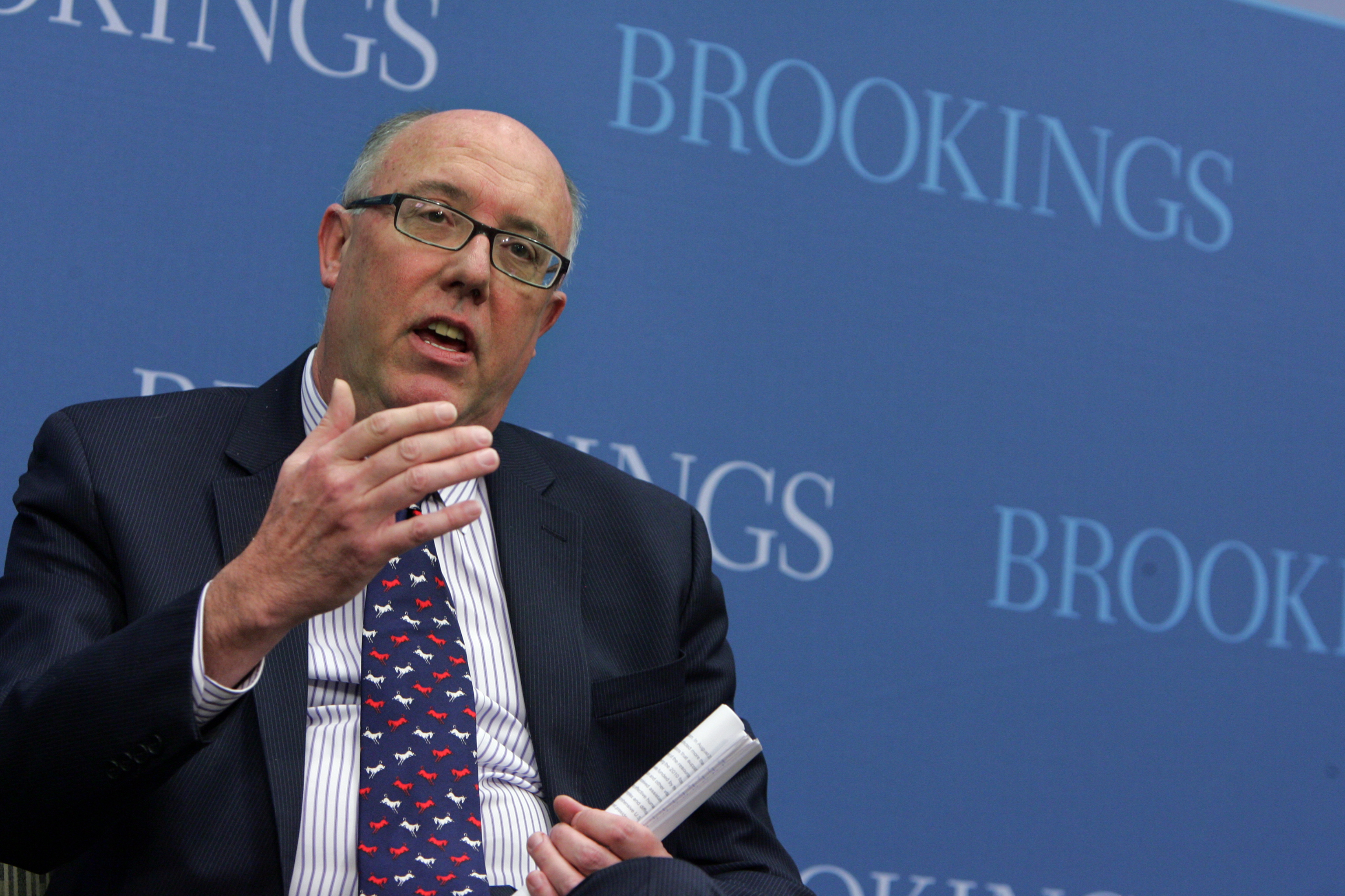
Uncle is smart. The moment Modi Govt came to power Asly Tellis wrote a comprehensive paper in Carnegie on Making Waves: Aiding India’s Next-Generation Aircraft Carrier available at http://carnegieendowment.org/2015/04/22/making-waves-aiding-india-s-next-generation-aircraft-carrier/id5q recommending India’s carrier must have the electromagnetic aircraft launch system (EMALS) and aggressively promotes F-35C as aircrafts for the carriers . Lo and behold in spite of Admiral Goshokov being a Soviet carrier with huge difference in launching systems we are planning on EMALS. To influence decision making not for nothing Carnegie and Bookings are opening shop at Delhi. They have no problem in getting services of some EX NSAs.
TRANSFER OF TECHNOLOGY(TOT)
I have never understood this clause. From day one we have been told of this clause of technology transfer. HAL, for example, has been manufacturing Mig 21, 23, 27, 29. Sukhois, Jaguar, Mirage etc for a very long time. What technology transfer has taken place. If it was there we would not be struggling for at least aircraft manufacture today. TOT would have been ideal for offset, but it does not happen. Cost penalty of offsets is ignored deliberately. Some of the limitations of TOT are :
Too many agencies dealing with the subject, there is no central authority.
India Inc's capability to absorb offset is suspect
Monitoring mechanism is ineffective.
Made in India is costlier; joint development is mere purchase What was supposed to be cheaper when made in India is much costlier. What was supposed to be a joint development programme has been reduced to a purchase from abroad. That is among the key findings of internal government audits of major aerospace projects in recent years.
All the aerospace reports accessed by The Hindu are scathing in their indictment of agencies such as the Defence Research and Development Organisation (DRDO) and Hindustan Aeronautics Ltd. over the way they have handled joint development programmes involving foreign partners, or produced aircraft in India under transfer of technology. Sukhoi-30 MKI fighters
HAL was originally tasked by the Cabinet Committee on Security (CCS) with undertaking licence production of 140 Sukhoi-30 fighters under transfer of technology from Russia, with conditions including: indigenous manufacture of the aircraft at a cost lower than that of the imported aircraft.
The IAF entered into four different contracts with HAL for supply of the 140 aircraft, and later two contracts for 40 and 42 additional fighters. Thus a total of 222 S-30 MKI were to be assembled by HAL. When HAL began to assemble, however, the story was different. “Contrary to projection in the CCS note, where it was estimated that the indigenous aircraft production cost would be lower than that of the imported aircraft cost… the actual cost of phase IV aircraft has always been higher than that of the imported aircraft,” the report says.
In the production year 2014-15 in phase I, when aircraft was directly imported from Russia, the average cost per fighter was Rs. 270.28 crore. In phase IV, when aircraft is manufactured by HAL from raw material, the cost is Rs. 417.85 crore. The report also indicts HAL for taking 2-3 times more man-hours than those taken by Russians.
Indigenous production of Bofors Guns is another issue. In spite of a contract why it was not done for so many years is not known. Now people are taking credit for that. No accountability.
Missile development
The Matheswaran report points out that in 2003, a decision was taken to allow the services to meet their operational requirements of surface-to-air missiles (SAMs), till 2010, by acquiring through the “buy global” route because the development of the indigenous Akash and Trishul missile systems was delayed.
The DRDO stepped in and proposed joint development with Israel. So the DRDO and Israel Aerospace Industries (IAI) started development of a long-range SAM (LRSAM) for the Navy in 2005. In 2007, they started work on developing a medium-range SAM (MRSAM) for the IAF under a separate contract. “Incidentally, LRSAM & MRSAM is the same missile,” the report says.
In a scathing indictment of the entire project, the report says IAI remains the design authority for the complete system. “IAI is doing the role of supplier and the DRDO is the buyer, which is contrary to the DRDO role of design agency.” “No transfer of technology (ToT) has been taken as part of the contract. We will remain dependent on IAI for its share,” the report points out, adding that the intellectual property rights (IPRs) remains with the design authority.
I am slightly confused when there are many experts mostly non military or non air force are eulogizing Tejas and denigrating Rafaels from the roof top. As if all the problem of aircraft manufacture is over with this magic wand. How is it that till recently we have been lambasting HAL, mostly for valid reasons, and suddenly they have become so good. If they are delivering there cannot be no better news. But I want to flag the issue of Dhruv advance light helicopters. The accident and off road state were major issues with army aviation. A major defence export contract that India signed in recent years is the sale of seven indigenously produced Dhruv advance light helicopters to Ecuador for $45 million in 2008. And this has run into trouble. Within six years, four of these helicopters crashed, forcing the Ecuadorian government to place restrictions on flying the remaining three thus putting a question mark on Brand India as a maker of defence equipment. Dhruv's flight safety record has been even worse in India with the armed forces losing as many as 16 Dhruv helicopters in an 11-year period, from 2005 to 2015.
Advanced Light Helicopter
An audit of the Advanced Light Helicopter (ALH) project of HAL from 2001 to 2009 carried out by the Controller-General of Defence Accounts (CGDA) pointed out: “As against the envisaged indigenisation level of 50 per cent, about 90 per cent of the value of material used in each helicopter is procured from foreign suppliers.” The audit said that during the production of the helicopter, despite gaining experience of making 90 of them, the labour hours remained almost double of what was prescribed by the consultant. The Air Marshal Matheswaran report on the aeronautical sector points out that the Shakti engine used in the helicopter “only has an indigenous name with hardly any self-reliance or technology control.
If we want to be self sufficient we have no other alternative but to design our own and then manufacture. Our indigenous defence industry , existing or budding, talk a lot. It is time for them to deliver.
Please see the news item I have referred at the beginning. I want a similar protective armoured vest or shirt, for our armed forces and CAPF. There is a huge market, demand is assured. Technology is not rocket science. Metallurgy. We have the TATAs, Mittals, Jindals, Bharat Forge and lot of new entries. SAIL has got its own R&D organisation, we have special steel plant, Can any one of then take up the challenge and show we have it in us to do it. Yes, they have to do it in competitive cost and not like DRDO or OFV/ DPSUs in some fancy cost, many times more than what is available in the world market. Necessary small prints can always be sorted out. Can the RM take the lead. Our bravehearts, the elitest of elite the Special Forces are dying because they do not have good protective jacket. They have the same weapons as the terrorists have.Is it not a shame. Lets not talk big about aircraft careers, multirole combat aircrafts. Let's make a plane and simple a new lightweight, body armor system that combines a plate-carrier style vest with an armored combat shirt. Our very own defence private sector also talks big. Let them prove their worth, show they do not put their foot in the mouth, they can deliver.
Possible? I think so. Remember we will keep losing some of the finest soldiers that walk in this planet till you do this. Choice is yours.
/arc-anglerfish-arc2-prod-mco.s3.amazonaws.com/public/AADY6BCTGJDXLKDUDBLVSRTT6I.jpg)



/arc-anglerfish-arc2-prod-mco.s3.amazonaws.com/public/EDJKDKQQ2RBV5P4F2RHWVRPPUA.jpg)

/arc-anglerfish-arc2-prod-mco.s3.amazonaws.com/public/ECAS2QR2INBCDFNIHM4T6ROFZI.jpg)