16 November 2017

To Counter China, India Pushes East


China’s regional expansion in the Asia-Pacific will continue driving India into a security partnership with the United States and Japan as part of its Act East policy.

Barriers to market access will continue limiting the expansion of Indian trade with the Association of Southeast Asian Nations (ASEAN).

Fiscal and project management impediments will limit progress on India’s two key infrastructure projects in the northeast, thereby limiting its land-based ASEAN trade.

Why America Can't Afford to Continue Waging a War in Afghanistan


NATO’s Secretary General Jens Stoltenberg announced yesterday that the alliance will send three thousand more troops to Afghanistan in support of Donald Trump’s new strategy to confront the Taliban. NATO’s decision emphasizes the importance of making sure that the United States and its allies have good reason to keep going after such a long, costly and ineffective occupation. As Trump mulled over what he admitted was the difficult decision to remain in Afghanistan, two new arguments for staying the course emerged. Both arguments, unfortunately, are dangerously flawed.

Bangladeshi Hindus: Less Than 5 Per Cent, Very Soon


“‘Below five per cent’ is a huge psychological and physical setback for non-Muslims in an increasingly Islamist country. Once our population falls below 5 per cent, we are doomed. We will have to convert or leave the country.” Last week’s attack on Hindus at Thakurpara in Rangpur in which about 30 houses belonging to Hindus were torched and many more were looted follows a pattern. Islamist mobs, egged on by radical Wahhabi clerics, started burning and looting houses and attacking Hindus and temples after an alleged Facebook post by a Hindu defaming Islam. Investigations have revealed that the rumours about the Facebook post were patently false and spread by hardline Islamist clerics. Last year, too, false rumours about a fake Facebook post triggered widespread attacks on Hindus at Brahmanbaria that left hundreds of families homeless and 15 temples destroyed.

How America and Its Indo-Pacific Allies Will Redefine Regional Security


Even before Trump headed off on his Asian grand tour, the shape of things to come started to emerge. The present administration’s foreign policy will place adequate emphasis on Europe and the Middle East, but America won’t be pivoting away from the Asia-Pacific. Meanwhile, the region presents more challenges than ever. An emerging China is increasingly upsetting the status-quo; North Korea remains as rambunctious as ever, and transnational Islamist terror threats appear ever-present. How the administration manages these problems will go a long way toward determining our status as an Asian power.

Trump and Xi’s Narcissism of Small Differences

BY CHRISTOPHER BALDING
Source Link

President Donald Trump is returning home from an Asian trip during which the United States and China announced agreements worth over $250 billion. This allows Trump, who built much of his political identity on his supposed negotiating prowess and willingness to stand up to China, to return home triumphantly announcing his success at standing up to China.
Perhaps unsurprisingly, this supposed victory is entirely hollow. Most of the largesse comprises ongoing deals or ones unlikely to be executed; even if all of the $250 billion in deals is realized, it will have minimal impact on the structural United States trade deficit and does nothing to address the lack of market access facing foreign firms in China. Trump and Chinese President Xi Jinping carefully avoided any public discussion of more fundamental issues like market access to China by foreign firms.

These 5 Things Could Challenge China's Rise

Jonathan Ward Reed Simmons

During his presidency, George W. Bush famously asked Hu Jintao, then president of China, what kept him up at night. Hu replied that it was job creation: how would he be sure that he could provide employment for the twenty-five million people entering the workforce every year? Hu’s China was a different era. The “peaceful rise of China” has given way to the “great rejuvenation of the Chinese nation,” and, at the 19th Party Congress last month, Xi Jinping unequivocally stated that China will now be “moving closer to center stage.”

China and the CIA Are Competing to Fund Silicon Valley’s AI Startups


The U.S. intelligence community is upping its early-stage investments in machine-learning companies — but Beijing is pouring in far more. 

A trio of new investments in Silicon Valley machine-learning startups shows that the U.S. intelligence community is deeply interested in artificial intelligence. But China is investing even more in these kinds of U.S. companies, and that has experts and intelligence officials worried.

One Belt One Road and East Africa: Beyond Chinese Influence

By: Cobus van Staden

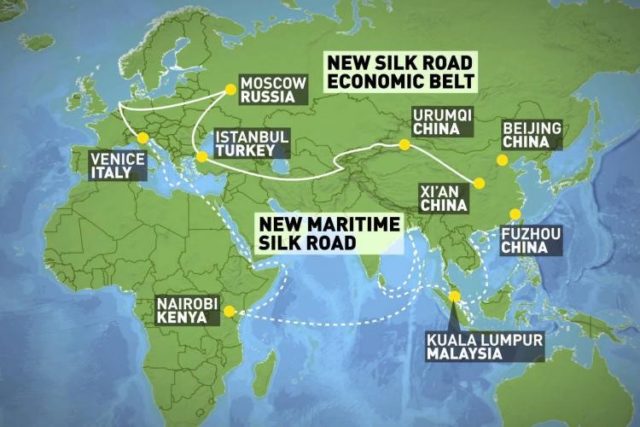
In October the Chinese Communist Party enshrined Xi Jinping’s “One Belt, One Road Initiative” (OBOR) in its constitution. The move again demonstrates how the sweeping plan linking China and Europe via land and sea routes now is at the heart of China’s foreign policy and international development strategy. However, the project is not simply unidirectional. The Belt and Road Forum for Global Development held in Beijing in May gave China an opportunity to both present itself as part of a recently coined global community of countries along the trans-Eurasian route, and as a leader of that community. It offered China a chance to present a China-centered vision of globalization, clad in the rhetoric of mutual development.

Saudi Crown Prince clears a path to the throne

Just two weeks ago, the Future Investment Initiative summit in Riyadh took place to international acclaim. Now, investor interest has turned to intense uncertainty, as power shifts unfold in the Gulf. But despite the short-term risks, Alex Damianou argues that the long term impact should be positive.

The 4th of November was an historic day in Saudi Arabia. King Salman and his son, Crown Prince Mohammed bin Salman (MbS), demonstrated their continued, almost Machiavellian determination to execute social and economic reforms under Vision 2030. Their goals – to usher in a new area of transformation, consolidate power, and re-assert themselves on the regional battleground towards Iran.

An Information Based Strategy to Reduce North Korea’s Increasing Threat

By Fredrick Vincenzo

The United States’ current approach to North Korea does not fundamentally resolve the risks of its belligerent behavior nor halt the development of its nuclear weapons and ballistic missiles. As these capabilities are improved, there is greater potential that Kim Jong-un, the leader of North Korea—confident he can deter a regime-threatening reaction—will attempt a violent provocation to achieve political objectives but in doing so miscalculates and instead sparks a crisis which escalates disastrously. While the United States has contingency plans for a wide range of conflict scenarios, executing them would be extraordinarily costly—the military capabilities Pyongyang has now amassed would inflict catastrophic damage.

How Americans Became Vulnerable to Russian Disinformation


ATLANTA – As the United States marks the first anniversary of President Donald Trump’s election, the question of how Trump won still commands attention, with Russia’s role moving increasingly to center stage. Each new revelation in the investigation of Russia’s meddling in the 2016 campaign brings the vulnerability of the US democratic process into sharper focus.

Last week, Congress unveiled legislation that would force Facebook, Google, and other social media giants to disclose who buys online advertising, thereby closing a loophole that Russia exploited during the election. But making amends through technical fixes and public promises to be better corporate citizens will solve only the most publicized problem.

Russia's Economy Is Growing With Borrowed Money

Leonid Bershidsky
Source Link

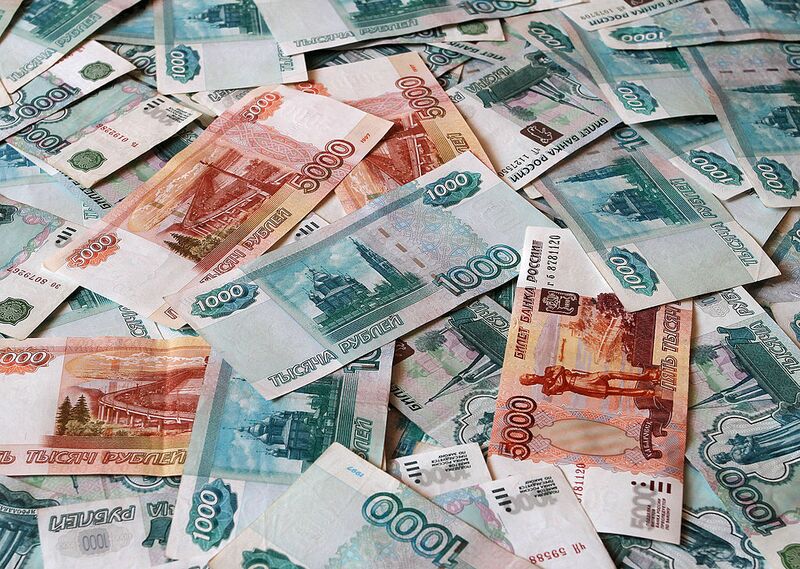
Without any new ideas from a technocratic government constrained by President Vladimir Putin's apparent indifference, the Russian economy is once again relying on consumers, who are borrowing more to buy real estate and imported products. The growth is real, but it's also meager. And it will be hard to sustain without bigger changes. On Monday, Rosstat, Russia's official statistics agency, announced that the country's gross domestic product increased 1.8 percent year-over-year in the quarter than ended in September. That's lower than Bloomberg's consensus forecast of 1.9 percent and slower than the 2.5 percent increase in the previous three months. The oil price jumped 20 percent during the quarter, but the economic statistics won't pick up the related growth until the fourth quarter. So far this year, the Russian consumer deserves most of the credit for the growing economy. After suffering through three tough years -- during which time oil tanked and the ruble devalued sharply -- they are buying things again. Unfortunately, most of the things Russians are buying aren't made in Russia. 

Assessment of U.S. Cyber Command’s Elevation to Unified Combatant Command


Summary: U.S. President Donald Trump instructed the Department of Defense to elevate U.S. Cyber Command to the status of Unified Combatant Command (UCC). Cyber Command as a UCC could determine the operational standards for missions and possibly streamline decision-making. Pending Secretary of Defense James Mattis’ nomination, the Commander of Cyber Command will have the opportunity to alter U.S. posturing in cyberspace.

Mastering Disaster: How Companies Can Help in Rescue and Recovery


Do disaster-hit regions benefit when corporations pitch in on relief efforts? Or can they sometimes crowd-out more productive aid from traditional providers? Looking at a data set that includes more than 74,000 donations by over 34,000 corporations, Wharton management professors Michael Useemand Tyler Wry, and Luis Ballesteros of The George Washington University analyze where corporate contributions can — and cannot — help.

WAR BOOKS: P.W. SINGER

PW Singer

Editor’s note: War Books is a weekly MWI series, in which we ask interesting guests—practitioners, experts, or experienced students of war—to list five books that have shaped the way they understand war, warfare, and strategy. This edition of War Books originally appeared in 2016. The one that started the Horatio Hornblower series, which I love, especially how it follows his changes across the different levels of command, from midshipman to admiral, and yet the same anxieties bedevil him.

U.S. Takes Fight to ISIS on Cyber Battlefield


LEVI MAXEY 

No terrorist group has capitalized on networked technology more than ISIS, both for recruitment messaging and commanding their fighters on the ground. The internet is their response to asymmetric disadvantage. Where they lack in infrastructure and resources of a state, they use the web to plan attacks, solicit money and reach out to potential members.

Hezbollah’s Drone Program Sets Precedents for Non-State Actors


By: Avery Plaw, Elizabeth Santoro

On the afternoon of September 19, an unmanned aerial vehicle (UAV) launched from an airstrip near the Syrian capital of Damascus flew into the demilitarized zone that separates the Syrian-controlled area of the Golan Heights from that which is controlled by Israel. The Israeli military scrambled jets and launched a patriot missile to intercept what it identified as a Hezbollah drone approaching Israeli airspace. The Patriot missile, its flight accompanied by two Israeli fighter jets, successfully intercepted the drone in the air (Haaretz, September 19). The debris fell inside the demilitarized zone, near the ruins of the Syrian city of Quneitra.

Asian Water Security


Few security risks are becoming as serious and far-reaching as those that fall under the heading of “ecological overshoot”, i.e., the idea that humans are stretching the planet’s resources to the breaking point and even beyond. The growing scarcity of fresh water on a rapidly changing planet is an important example of this phenomenon. An insecure supply of clean water raises the dangers of economic disruption, social tension, and even conflict over water resources at both the domestic and international levels. These dangers are highest where water is scarce and governance (at the domestic or international levels) is poor.

SATELLITE AND GROUND COMMUNICATION SYSTEMS: SPACE AND ELECTRONIC WARFARE THREATS TO THE UNITED STATES ARMY

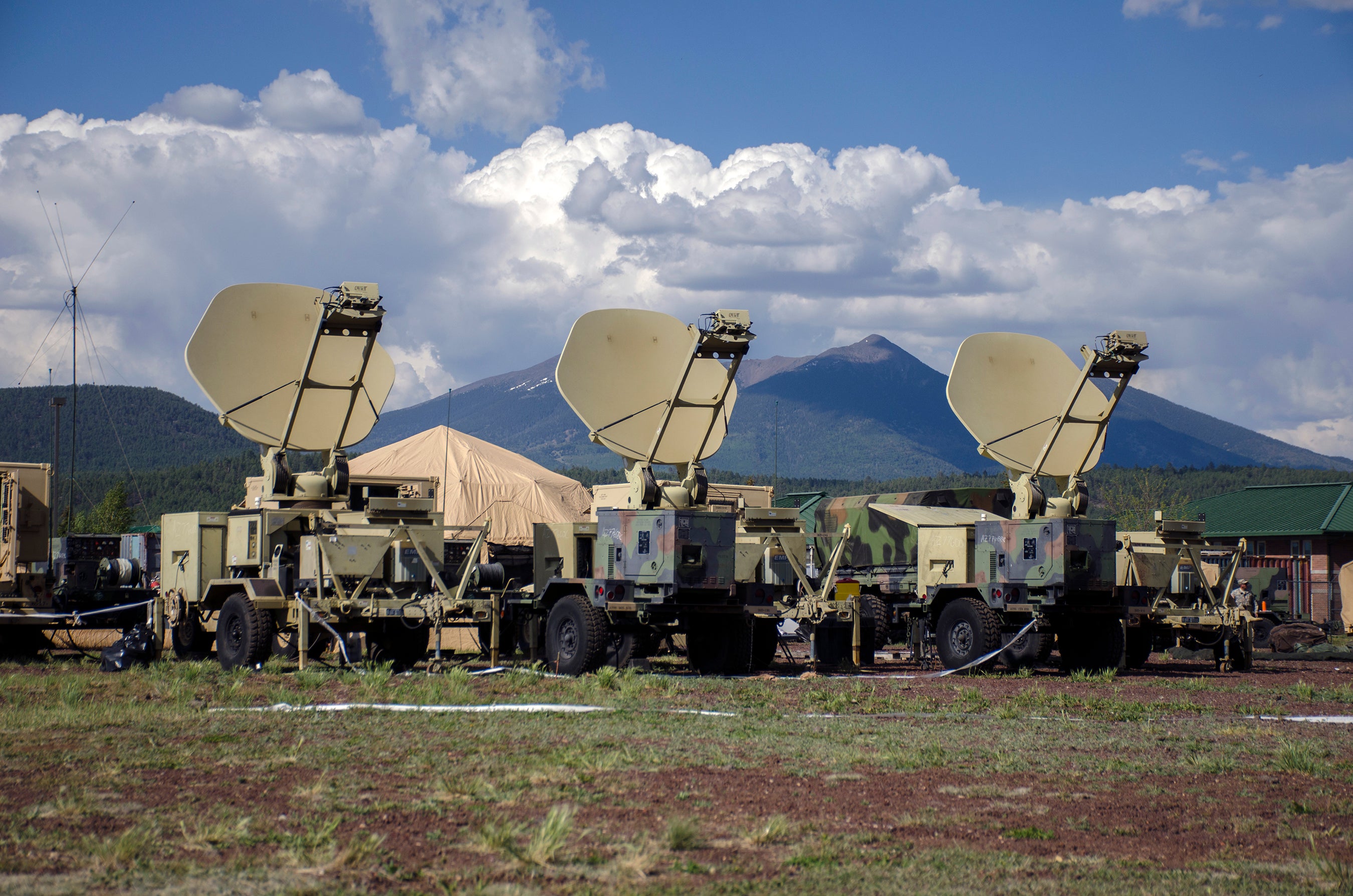
United States ground forces are and will be significantly vulnerable in present and future conflicts due to a dangerous reliance on satellite communication (SATCOM) and a degraded readiness to fight in the face of a growing counter-space and communications electronic warfare (EW) threat. Although SATCOM provides significant advantages over terrestrial communication systems, it carries liabilities for which the U.S. Army is ill-prepared. Coinciding with the Army’s dependence on SATCOM, there is a lethargic institutional response to the unyielding proliferation of EW threats facing terrestrial communications. Although the U.S. military’s overall technological lead over near-peer threats has narrowed, the U.S. Army continues to train and equip as though there is little technological threat to its communication practices and as if SATCOM is guaranteed. This complacency is accompanied by the procurement of high-data communication and mission command systems that deny ground forces both the flexibility and electronic protection that they need to communicate and fight effectively in an environment where both space and the electromagnetic spectrum are contested.

Easy Tips to Service Your Computer


If your computer has become slow and is starting to lag, it’s probably about time you serviced it. You can take it to a computer repair shop, but this will obviously cost you money, and a lot of what they’ll do you could easily do at home yourself. In other words, instead of paying out for pricey malware removal or a computer tune-up, why not simply do it yourself?

This article won’t talk you through how to identify a failing component and repair it by hand. It focuses on the easy fixes – stuff that people still pay hundreds of dollars to have done for them.

15 November 2017

QUAD OR MIDDLE EAST - WHICH IS MORE IMPORTANT

QUAD OR MIDDLE EAST - WHICH IS MORE IMPORTANT
- Maj Gen P K Mallick, VSM (Retd)

US President Donald Trump last week praised India's "astounding" growth, saying he has been working successfully to bring the vast country and its people together. Speaking at a gathering of CEOs on the sidelines of the annual Asia-Pacific Economic Cooperation (APEC) summit in the Vietnamese port city of Danang, Trump cited India as one of the countries in the Indo-Pacific region making strides. The use of the term Indo-Pacific by President Trump has led to speculation that it may have something to do with Washington preparing the ground for a revival of the so-called Quadrilateral strategic alliance between the US, Japan, Australia and India to counter China's rise.

On 11th Nov Officials from India, Australia, the US and Japan met at Manila and discussed issues relating to cooperation the Indo-Pacific region, seen as a first move to set up a quadrilateral grouping to pursue common interests amidst growing assertiveness by the Chinese military in the strategically key region. Saturday’s meeting took place at the “working level” with senior officials from all sides participating. It will still be some time before the ‘Quad’ meets at the ministerial or leaders level, but the Manila meeting offers insight into its presumptive direction. 

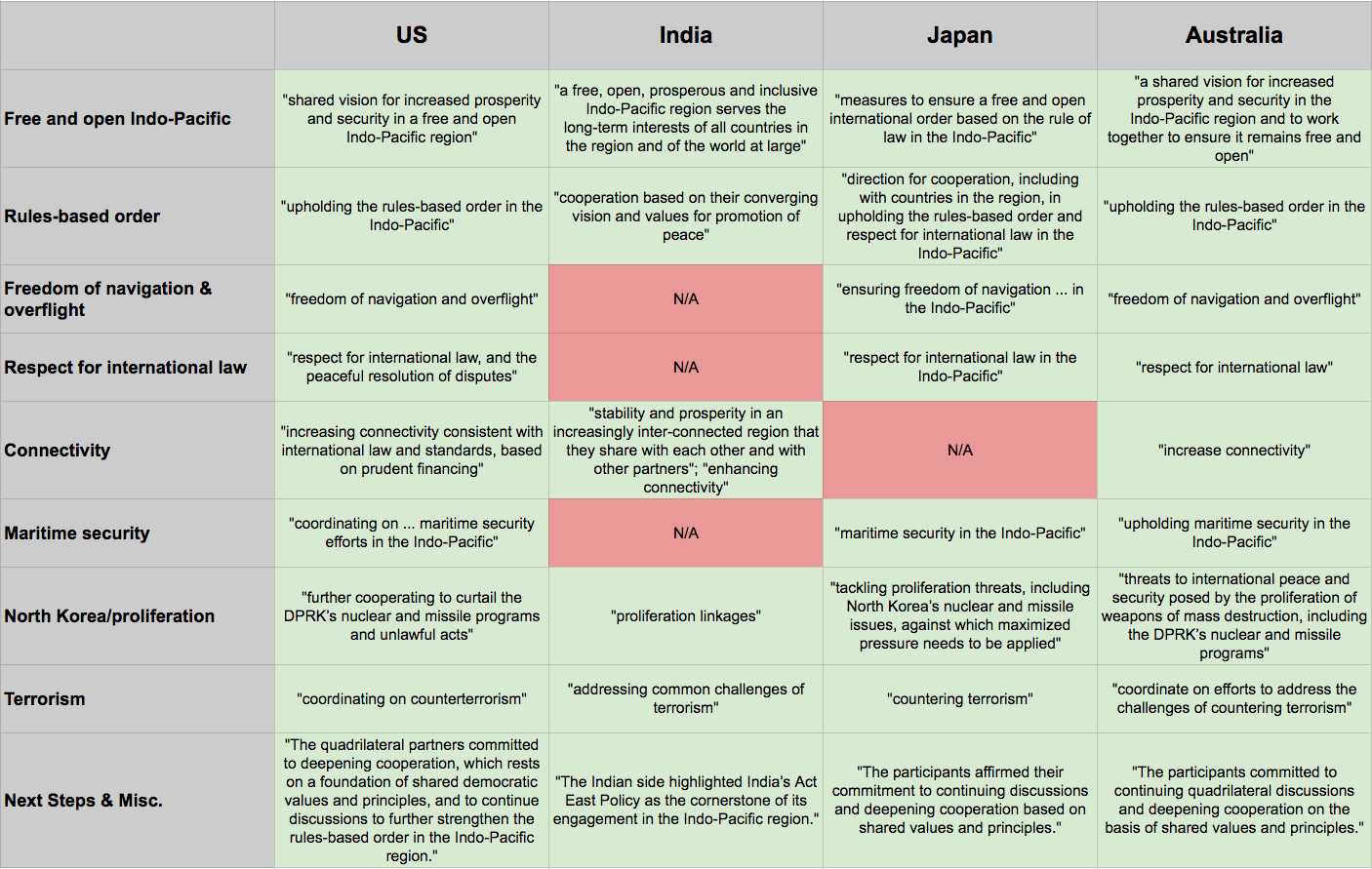
Convened around the theme of a “free and open Indo-Pacific,” the first quadrilateral meeting addressed seven core themes: the rules-based order in Asia, freedom of navigation and overflight in the maritime commons, respect for international law, enhancing connectivity, maritime security, the North Korean threat and nonproliferation, and terrorism.

The move is seen as counter to China’s aggressive behaviour in the area. They agreed that a free, open, prosperous and inclusive Indo-Pacific region serves the long-term interests of all countries in the region and of the world at large. The officials also exchanged views on addressing common challenges of terrorism and proliferation linkages impacting the region as well as on enhancing connectivity. American officials earlier said the new term “Indo- Pacific” replacing Asia Pacific captures the importance of the rise of India with which the US has strong and growing ties.

A senior White House official had said that “we have strong and growing ties with India. We talk about ‘Indo- Pacific’ in part because that phrase captures the importance of India’s rise”.And the strategy is “certainly not” to contain China, he said. Indo-Pacific broadly refers to the Indian Ocean and Pacific Ocean regions, which also includes the disputed South China Sea where Vietnam, Malaysia, the Philippines, and Brunei question China’s claims over almost the entire waterway.

The Indo-Pacific concept has figured prominently during the recent visit by President Donald Trump to the region including to Japan and China.

Following the meeting, the U.S. Department of State, the Indian Ministry of External Affairs, the Australian Department of Foreign Affairs and Trade, and the Japanese Ministry of Foreign Affairs each released statements outlining what was discussed. All four statements emphasized that the convergence of visions and shared interests underpinned the quadrilateral.

The external affairs ministry of India said the discussions focused on cooperation based on converging vision and values for promotion of peace, stability and prosperity in an increasingly inter-connected region. The Indian side highlighted India's Act East Policy as the cornerstone of its engagement in the Indo-Pacific region.


The statements, however, were far from identical and a close reading reveals varying priorities within the quadrilateral. The Australian and the U.S. statements touched on all seven of the issues highlighted above under the aegis of a “free and open Indo-Pacific.” Japan’s statement omitted any mention of enhancing “connectivity,” which, for India and the United States, has come to mean offering an alternative vision to China’s ambitious Belt and Road Initiative. 

Table 1: Comparison of U.S., Indian, Japanese, and Australian statements following the 2017 working-level quadrilateral meeting. 


Meanwhile, India’s statement on Saturday’s meeting omitted any explicit reference to freedom of navigation and overflight, respect for international law, and maritime security. Delhi has however, in various bilateral statements and declarations with each of the other quadrilateral participants, voiced support for these principles.

Both the Indian and Japanese omissions aren’t a statement of disinterest, but rather intended to assuage concerns in Beijing that the reconvened quadrilateral will explicitly attempt to contain China. Just as “connectivity” references speak to an alternative vision to the Belt and Road Initiative, so does freedom of navigation underline a divergent set of interests for the quadrilateral in the South China Sea, for example, where Chinese territorial irredentism is a cause of concern.


As expected, skirting any direct response to the first quadrilateral meeting of India, US, Japan and Australia, China questioned its exclusion from the group and expressed hope that the new concept of ‘Indo-Pacific’ is not directed against it.

“The relevant proposals should be open and inclusive and should be conducive to win-win cooperation and avoid politicising or excluding the relevant parties,” Chinese Foreign Ministry spokesman Geng Shuang said at a media briefing in Beijing. He was answering a spate of questions on the Indo-Pacific concept and the quadrilateral meeting held yesterday at Manila. Asked whether he meant “exclusion of the relevant parties” referred to omission of China, Geng said China welcomes the development of friendly cooperation between relevant countries.

“We hope this kind of relations will not be directed at a third party and conducive to the regional peace and stability. This is the general concept and I think this kind of position applies to any proposal,” he said.

Middle East

India is heavily reliant on oil and natural gas from the Middle East, with 58 percent of oil coming from the region, and an even higher 88 percent of liquified natural gas deriving from states in the Middle East. As India grows, there is more and more demand for oil and natural gas.

There are over 6 million Indian citizens working in the Middle East. 

Trade between the two regions is expansive. India receives over $35 billion per annum in remittances from the Gulf. The Middle East is the country’s largest trading partner and cities like Dubai are sometimes in humour called the “fifth metropolis of India.” Trade with the GCC countries was $137.7bn in 2014-15, In 2015-16, remittances from Indian workers in the GCC were $35.9bn.


By 2016, over half of India’s oil and gas was imported from the Gulf. India’s maritime doctrine of 2009 states that the Gulf and Arabian Sea are vital to India’s interests, including securing choke points.

Beijing sees the Middle East as part of the trade routes it seeks to secure from East Asia, through to Africa and Europe. China is positioning itself as a less judgmental alternative to America. It has signed security agreements with friends of America such as Saudi Arabia, in addition to providing diplomatic protection to rivals such as Iran.

China’s entry furthers the Middle East’s strategic relevance to India. It drives Delhi to increase its own influence and avoid Beijing having leverage over its energy security and being encircled by Chinese allies.


Alice G. Wells, Acting Assistant Secretary for South and Central Asia in a Testimony Before the House Foreign Affairs Subcommittees for the Middle East and North Africa, and Asia and the Pacific on November 8, 2017 said : 

The South Asia strategy also focuses on reducing tensions between Pakistan and India. The United States does not seek a role as a mediator between India and Pakistan, but encourages both countries to restart dialogue at the earliest opportunity. An improved relationship between these two countries is critical to regional security and stability. We are increasingly concerned about the threat to strategic stability in South Asia associated with the introduction of new nuclear capable ballistic or cruise missile systems in the region. In particular, the region and the world looks to both Pakistan and India to safeguard against a nuclear conflict in South Asia. In this context, the United States remains concerned about Pakistan’s growing fissile material stockpiles and its expanding and diversifying military nuclear and missile programs.

Pakistan.There is no doubt about Pakistan’s significant sacrifices and contributions in fighting terrorism; Pakistan has fought against militants intent on undermining the Pakistani state at the cost of over 70,000 soldiers’ and civilians’ lives. It has been and continues to be an important partner in defeating al-Qa‘ida and ISIS in South Asia.

When the United States and Pakistan work in concert, we can achieve significant results. As the President noted, our militaries have cooperated closely and effectively against common enemies. Pakistan facilitates logistical support for NATO operations in Afghanistan. Additionally, the Pakistan Navy is second only to the United States in its longstanding participation in U.S. led Combined Maritime Forces in the Arabian Sea, focused on maritime security and counter-piracy. Beyond security issues, with a population of over 200 million and a growing, entrepreneurial middle class, Pakistan presents promising opportunities for U.S. businesses.

Our FY 2018 request of $344.6 million for Pakistan includes $241.1 million for civilian assistance and $103.5 million for security assistance. The $100 million FMF request is focused on enabling Pakistan to stabilize the Afghanistan-Pakistan border region and fight terrorism. However, part of the President’s new strategy means that we are evaluating the full range of tools that could encourage changes in Pakistan’s actions, including examining the nature and scope of our cooperation with Pakistan. 

The issues that come to my mind are as follows :

Quad is all right. The base for this organisation was being prepared for a long time. The Think Tanks like the Republic dominated The Heritage of USA, VIF of India were active. Please see http://www.heritage.org/the-quad-plus . There is nothing wrong in it.

What interests India more? South and East China Sea or our immediate neighborhood in the West? There is no dearth of experts from strategic community who would go gaga over Quad. Sixth largest Navy of the world gets involved in East of Malacca Strait but left out of battle in Arabian sea, the region through which 70% of our hydrocarbon resources come, $70 billion remittances per year are received, where we have 7 million Indian citizens ! 

Are we yielding too easily to Americans in East ? Why are we not getting our due importance in our immediate West. US is interested in Pakistan market. But every time US Secy of Defence or State visits India, he signs contracts worth billions dollar on Govt to Govt basis.

We are known as hard bargainers. How come with US we are losing our reputation of bargaining?

Would like to get some responses. 

INDIA’S RESPONSES TO THE COMPLEX ROHINGYA CRISIS IN MYANMAR

by Baladas Ghoshal

The recent massive refugee outflow of Rohingya Muslims from Myanmar into Bangladesh has created a humanitarian crisis and international outrage. United Nations human rights chief ZeidRa'ad al-Hussein, accused Myanmar of carrying out "a textbook example of ethnic cleansing" against the Rohingya. Myanmar rejects the accusation, saying its military was engaged in counter-insurgency operations against Rohingya militants who conducted the August 25attack by the Rohingya militant group ARSA (Arakan Rohingya Salvation Army) on police and military posts, resulting in the death of about 70 people. The provocation certainly led to the intensification of the crisis, which originates in a conflict dating back to the 19th century.

Pakistan’s Tanzeem-e-Islami and Its Troublesome Extremist Links


Farhan Zahid

A number of Pakistan’s Islamist organizations that agitate for the establishment of an Islamic caliphate but profess to be non-violent are finding renewed prominence, a concerning result of the surfacing of Islamic State’s (IS) local chapter, Wilayat-e-Khurasan. Islamist organizations such as Hizb ut Tahrir, Jamaat ul Momineena and Tanzeem-e-Islami have large followings in Pakistan, operating across the country and based mainly in the country’s major cities.

The Afghan Abyss, Deeper All the Time

By Alfred McCoy

After nine months of confusion, chaos, and cascading tweets, Donald Trump’s White House has finally made one thing crystal clear: the U.S. is staying in Afghanistan to fight and -- so they insist -- win. “The killers need to know they have nowhere to hide, that no place is beyond the reach of American might,” said the president in August, trumpeting his virtual declaration of war on the Taliban. Overturning Barack Obama’s planned (and stalled) drawdown in Afghanistan, Secretary of Defense James Mattis announced that the Pentagon would send 4,000 more soldiers to fight there, bringing American troop strength to nearly 15,000.

The Haqqani Network: International Friends, Local Enemies

Tom Davis

Introduction to The Haqqani Network

As much as the powers that be want everyone to believe that “terrorism” is a giant catch-all covering every group, the truth is that terrorist groups are extremely varied and unique. They can be massive groups like ISIS or smaller, localized cells. Regardless, one of the most effective ways to eliminate terrorist groups, control the spread of violent and extremist beliefs, and prevent future terrorism from proliferating is by studying groups and understanding them. This understanding allows folks from all walks of life a modicum of knowledge to best respond to any attacks and threats. Most people pay attention to the heavy hitters, but a group that needs more extensive study is the Haqqani Network in Afghanistan, Pakistan and other Central Asian countries. This group is much less infamous than Al Qaeda or ISIS, but no less deadly.

Brief History of The Haqqani Network

ASEAN Must Seek Global Support To Avoid War Over South China Sea – Analysis

By Veeramalla Anjaiah

They are expected to discuss the South China Sea (SCS) conundrum. ASEAN member states are deeply divided over the SCS and even there there has been no common policy among the ASEAN’s claimant states. With the lack of leadership from the world’s sole superpower– the United States—on the issue of the SCS, China, the new power of the world and the biggest claimant in the SCS, is confidently threatening or bullying its small Southeast Asian neighbors.

Power Flows Downstream: Sino-Vietnamese Relations and the Lancang-Mekong River


By: Emily Walz

China’s international rivers are becoming a focal point for contests over control of natural resources—and potentially international conflict. China, in its powerful position as headwater nation, continues to actively promote hydropower development domestically and internationally. When downstream nations rely on un-dammed rivers for fisheries and irrigation, this puts pressure on an increasingly strained natural resource and introduces additional potential for tension into bilateral relations. Nowhere is this more clear than in the relationship between China and Vietnam, the nations that bookend the flow of the Lancang-Mekong river.

The FBI Blindly Hacked Computers in Russia, China, and Iran


JOSEPH COX

During a hacking operation in which U.S. authorities broke into thousands of computers around the world to investigate child pornography, the FBI hacked a number of targets in Russia, China, and Iran, The Daily Beast has learned. The news signals the bold future of policing on the so-called dark web, where investigators are increasingly deploying malware without first knowing which country their suspect is located in. Legal experts and commentators say the approach of blindly kicking down digital doors in countries not allied with the U.S. could lead to geopolitical fallout.

Trump must stop Chinese power grab before we’re at all-out war

BY TODD J. STEIN

The communist nation continues to boost defense spending. The People's Liberation Army now enjoys a $151 billion budget, up from less than $10 billion in 1997. Beijing's investments have yielded fifth-generation fighter jets and hypersonic missiles capable of sinking U.S. aircraft carriers.  China also plans to wage war in cyberspace. State-sponsored hackers have carried out thousands of cyberattacks on America — often to steal military and commercial technology or probe for vulnerabilities in critical infrastructure such as electric grids. These cyberattacks cause hundreds of billions of dollars in economic damage. 

The Middle East Is Nearing an Explosion

ROBERT MALLEY

BEIRUT—Lebanon has long been a mirror for the broader Middle East. The region’s more powerful actors use it, variously, as a venue for their proxy wars, an arena in which to play out the Arab-Israeli conflict, and a testing ground for periodic bouts of Saudi-Iranian coexistence. It’s where the region wages its wars and brokers its temporary truces. This past week, like in so many others, the Middle East has not been kind to Lebanon.

Turkey: An Inconstant but Important U.S. Ally


The United States and Turkey don't fully trust each other, but neither can afford to alienate the other, ensuring they maintain functional diplomatic, security and economic relations. Washington and Ankara will remain at an impasse over certain points of contention as Turkey prioritizes national security goals that clash with U.S. objectives, and as the United States encounters legal barriers to adjusting its stance on Turkish extradition requests. Even greater discord between the two countries lies on the horizon, thanks to Turkey's ties with Russia and violations of U.S. sanctions that threaten to implicate the Turkish government.

Why Niger Proves America's Counterterrorism Tactics Are Failing

by Amitai Etzioni 

The tragic loss of four American fighters in Niger reminds one that the United States has learned little from the wars in Vietnam, Afghanistan and Iraq. It still believes that it can send its troops into a faraway country, in this case a particularly underdeveloped one, and that they will be able to stop ISIS from spreading. This is to be achieved not by the United States doing the fighting, but—the magic formula goes—by advising and training. The main problem with this idea is that all too often the locals would much rather have the Americans do the fighting. Thus, in Niger we learned from a Nigerien involved in the ambush that “the Americans had more sophisticated weapons and so we let them confront the enemy while we took cover.” The Guardian noted that “US special forces 'fought Niger ambush alone after local troops fled.’”

Security Breach and Spilled Secrets Have Shaken the NSA to Its Core

by Scott Shane, Nicole Perlroth and David E. Sanger 

Jake Williams awoke last April in an Orlando, Fla., hotel where he was leading a training session. Checking Twitter, the cybersecurity expert was dismayed to discover that he had been thrust into the middle of one of the worst security debacles ever to befall American intelligence. Mr. Williams had written on his company blog about the Shadow Brokers, a mysterious group that had somehow obtained many of the hacking tools the United States used to spy on other countries. Now the group had replied in an angry screed on Twitter. It identified him — correctly — as a former member of the National Security Agency’s hacking group, Tailored Access Operations, or T.A.O., a job he had not publicly disclosed. Then the Shadow Brokers astonished him by dropping technical details that made clear they knew about highly classified hacking operations that he had conducted.

Why Trump Pushed Arms Sales in Asia

by B. Z. Khasru

By pushing Japan and South Korea to protect themselves from North Korea by buying billions of dollars of American military equipment, President Trump has signaled his intention to further fuel the escalating arms race in Asia and profit from it. On a broader scale, Trump plans to lift restrictions on U.S. arms exports through an executive order before year end, a move that could intensify existing conflicts and spark new ones worldwide.

A history of US nuclear weapons in South Korea

Hans M. Kristensen and Robert S. Norris

ABSTRACT

During the Cold War, the United States deployed nuclear weapons in South Korea continuously for 33 years, from 1958 to 1991. The South Korean-based nuclear arsenal peaked at an all-time high of approximately 950 warheads in 1967. Since the last US nuclear weapons were withdrawn from South Korea in 1991, the United States has protected South Korea and Japan under a “nuclear umbrella” using nuclear bombers and submarines based elsewhere. While defense hawks in Seoul and Washington have, in 2017, called for the United States to redeploy tactical nuclear weapons to South Korea, the authors argue against this idea. Doing so, they say, would provide no resolution of the crisis over North Korea’s nuclear weapons and would likely increase nuclear risks. Redeployment would also have serious implications for broader regional issues because it would likely be seen by China and Russia as further undermining their security.