7 December 2017

Andaman and Nicobar: Vital Islands, Vanishing Tribes

By Sudha Ramachandran

India’s plans for “development” on the Andaman and Nicobar Islands are threatening the survival of the archipelago’s already endangered indigenous populations. One of the projects that has been approved for implementation in the archipelago is a railway line linking Port Blair, the capital of the island chain, with Diglipur, the largest town on North Andaman Island. The 240-kilometer-long railway line will cut through a protected forest reserve where the native Jarawa live. This would increase the exposure of the Jarawa to outsiders – mainly non-tribal settlers and tourists – and impact their culture, health, and way of life, even their survival as a group.
Digital China: Powering the economy to global competitiveness

By Jonathan Woetzel, Jeongmin Seong, Kevin Wei Wang, James Manyika, Michael Chui, and Wendy Wong


China, already a global force in digital technologies, is set to experience huge shifts in revenue and profits as businesses digitize, boosting the economy’s international competitiveness. China has become a force to be reckoned with in digital technologies at home and around the world. As a major worldwide investor in digital technologies and one of the world’s leading adopters of the technologies, it is already shaping the global digital landscape and supporting and inspiring entrepreneurship far beyond its own borders. 

New Geopolitics in the Middle East?

By Joshua Krasna

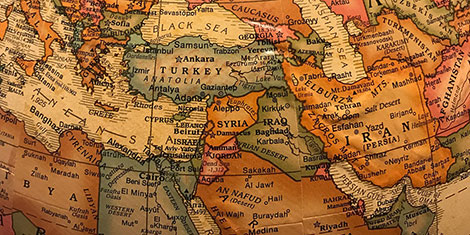
The possible creation of a new geopolitical reality in the Middle East may have snuck under the radar this holiday weekend. The continuing spectacle of the investigations into Russia’s possible involvement in the 2016 Election and the continued naming and shaming of corporate leaders and politicians involved in sexual harassment (as well as Thanksgiving), may have overshadowed the summit in Sochi between the Presidents of Russia, Turkey, and Iran, shortly after Syrian President Bashar al-Assad visited President Putin in the same city (and thanked him for “saving Syria”).

What is Sufism?

Mubaraz Ahmed

A Pakistani devotee dances at the shrine of a Sufi saint at an annual festival in Lahore, 2014. Sufism may be best described as Islamic mysticism or asceticism, which through belief and practice helps Muslims attain nearness to Allah by way of direct personal experience of God. While there are other suggested origins of the term Sufi, the word is largely believed to stem from the Arabic word suf, which refers to the wool that was traditionally worn by mystics and ascetics.Belief in pursuing a path that leads to closeness with God, ultimately through encountering the divine in the hereafter, is a fundamental component of Islamic belief. However, in Sufi thought this proximity can be realised in this life.

OPEC: Oil Production Deal Still Has Gas in the Tank, For Now


Major oil producers have seen enough success to stick with their current strategy. Where previous meetings of OPEC and non-OPEC nations were surrounded by uncertainty, all signs suggested that the recent meeting in Vienna would lead to an extension of the current deal cutting oil production. That extension would leave two major questions: How long would the extension run and would an exit strategy be put in place. On Nov. 30, OPEC and non-OPEC producers agreed to extend the deal until the end of 2018, with a review of the duration scheduled for June. The deal will continue, but the strategy for how and when it will end remains murky.

The Story of How South Africa Voluntarily Gave Up Its Nuclear Weapons

Robert Farley
Source Link

The Republic of South Africa is the only country in the world to build a nuclear weapons program, then unbuild that program after domestic and international conditions changed. Why did South Africa decide to build nukes, how did it build them and why did it decide to give them up? The answers are largely idiosyncratic, although they may hold some lessons for the future of nuclear weapons development on the Korean Peninsula and elsewhere.

Origins of Program

IDF-LINKED THINK TANK ADMITS ISRAEL, ISIS ARE ALLIES IN CONFRONTING IRAN IN SYRIA


A new Meir Amit Intelligence and Terrorism Information Center report says that ISIS and Israel are temporary allies against Iran.A new report suggests that in the area of countering Iran’s presence in Syria, ISIS and Israel’s interests may converge, which in a way makes them allies. Despite suggesting no formal alliance between ISIS and Israel, an IDF affiliated think tank Meir Amit Intelligence and Terrorism Information Center reports that interests of both ISIS and Israel align, making them allies against Iran.

What We Really Know About North Korea’s Nuclear Weapons

By Siegfried S. Hecker

In January 2004, the director of North Korea’s Yongbyon Nuclear Scientific Research Center handed me a sealed glass jar with plutonium metal inside in an effort to convince me that his country had a nuclear deterrent. To make the same point last week, Pyongyang lofted a missile 2,800 miles into space and declared it had a nuclear-tipped missile that could reach all of the United States. Has the country’s nuclear program really come that far? As global anxiety over North Korea grows and the war of words between U.S. President Donald Trump and North Korean leader Kim Jong Un escalates, it is more important than ever to be precise about what we know, and what we don’t, about Pyongyang’s nuclear weapons program and delivery systems. In 2004, nothing I saw on my visit persuaded me that Pyongyang could build a bomb and deliver it. But more recent visits, along with several kinds of open-source analysis, leave little doubt of North Korea’s impressive progress in producing bomb fuel, building powerful nuclear devices, and test-launching a wide variety of missiles—and its determined efforts to integrate all three into a nuclear-tipped missile.

Go After North Korea’s Money!

Nitsana Darshan-Leitner

The news last week from the Korean Peninsula about yet another ballistic missile launch was dรฉjร  vu all over again. This one had an estimated range of 8,100 miles — long enough to hit Washington, D.C., or anywhere else in the continental United States. President Trump responded with angry tweets, but Kim Jong-un has good reason to be cocky. The strongman knows all too well that a military response is highly unlikely. There are some 8,000 North Korean cannons and rocket launchers aimed at Seoul, in effect holding the approximately 10 million inhabitants of that city hostage. All sides realize that the human and economic costs of another Korean war are simply unfathomable.

Redouble Our Whole Of Government Efforts To Fix Perfect Storm Of Strategy Goobledygook!

By MARK CANCIAN and MATTHEW CANCIAN

Mark Cancian is a former Office of Management and Budget official. Unlike many of that ilk, he sometimes exhibits the ability to write a sentence in clear and simple English. As he and his son, Matthew, looked out across the national security landscape, they saw it pocked with large lumps of nearly meaningless verbiage. In advance of the release of the Trump Administration’s first National Security Strategy, they penned an article modestly titled: It’s Time to Retire These Meaningless Policy Phrases. We like our headline much more, but you get the point. Perhaps this will lead to an exit strategy for this wicked problem. Read on! The Editor.

The Surveillance Operative Lurking In The Living Room


The holiday shopping season is here once again. And this year, surveillance and espionage products have made it to the top of a surprising number of wish lists in the guise of digital home assistants. The devices already have brought microphones into as many rooms of our houses as we're willing to allow. Now, many of them come equipped with cameras as well. Despite concerns about the threat to privacy that earlier generations of the devices have posed - one product from Amazon's Alexa line carried the unfortunate name of Dox - enhanced video capability appears to be the next big thing in digital home assistants.

North Korea’s Military Capabilities, In Review

BY ELEANOR ALBERT

Introduction

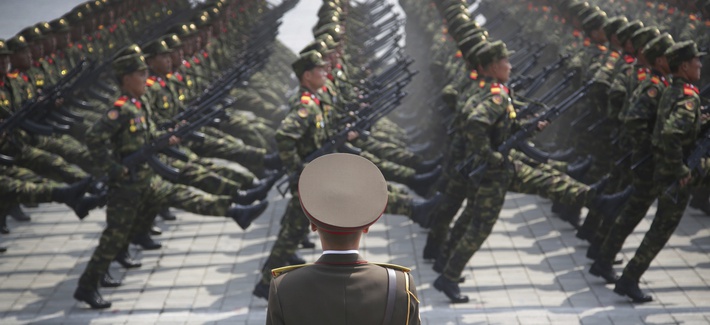
The United States and its Asian allies regard North Korea as a grave security threat. It has one of the world’s largest conventional military forces, which, combined with its escalating missile and nuclear tests and aggressive rhetoric, has aroused concern worldwide. But world powers have been ineffective in slowing its path to acquire nuclear weapons. The North’s leader, Kim Jong-un, sees the nuclear program as the means to sustain his regime. While it remains among the poorest countries in the world, North Korea spends nearly a quarter of its GDP on its military, according to U.S. State Department estimates. Its brinkmanship will continue to test regional and international partnerships aimed at preserving stability and security.

What are North Korea’s nuclear capabilities? 

Mind the Millennial Training Gap

By Margaret S. Marangione

As the need for new analysts continues to grow, the intelligence community is looking to add millennials, the largest generation in the U.S. work force. These young people—born between about 1980 and 2000—bring a new perspective, but teaching them the necessary skills for analysis must be done differently than it was in even the recent past. Their attitudes and thought processes are vastly different from their predecessors, requiring a new approach to intelligence training and education to make the best use of their abundant skills.

Use What’s Known to Get to the Unknowns

JASON MATHENY

The U.S. intelligence community has long considered its mission as the gatherer of secrets. But sometimes insights are hiding in plain sight among tweets, blog posts, online videos, newspaper articles, academic journals and public records. Leveraging such open source information can greatly enhance our understanding of the world and critical events with national security implications. The Cipher Brief’s Levi Maxey spoke with Jason Matheny, the director of Intelligence Advanced Research Projects Activity (IARPA), the U.S. intelligence community’s over-the-horizon research and development wing, about the value the intelligence community places on open source data.

Securing Cyber in the Sky Layered cybersecurity needed to protect aviation ecosystem


When the WannaCry ransomware warning popped up on the arrival-and-departure signs of Germany's national rail system, experts in aviation security took notice. While the now-infamous attack did not affect travel, it did show how easily malicious code can infiltrate mass transit systems. And with thousands of attacks on aviation systems every month, Raytheon, a company with expertise in both cybersecurity and air traffic management, is taking steps to mitigate cyber attacks in the skies.

As AI and Cyber Race Ahead, the State Department Is Falling Behind

BY JOSH KIRSHNERSENIOR

There has been considerable interest in the direction of Secretary of State Rex Tillerson’s ongoing “reimagining” of the State Department, but for all the conversations about the future of American diplomacy, what has been underaddressed is how our oldest Cabinet agency is preparing to deal with the new, but foreseeable, diplomatic challenges presented by emerging technology.

FIFTH GENERATION WARFARE AND OTHER MYTHS: CLARIFYING MUDDLED THINKING IN OUR CURRENT DEFENSE DEBATES

By Dave “Sugar” Lyle

When you are talking about the command and control of forces that could potentially destroy human society as we know it, you owe it to the rest of humanity to be very precise with your terms and concepts – matters of such extreme importance require the greatest degree of conceptual due diligence that we can collectively muster. But the reality is that much of the debate over future force structure, command and control, and strategy writ large is littered with unexplored assumptions and muddled thinking, often cloaked in buzzwords that members of an organization become obligated to use once their leadership has adopted and promulgated them as guidance. We will always need “bumper stickers” to spread new ideas, but as we do that, we must be very careful which ones we use, and be very aware of their inherent limitations, before they are used to justify dangerous courses of action built on conceptual foundations of sand.

Rethinking Sun Tzu

By John F. Sullivan

The author James Clavell once wrote that if he were ever put in charge of the U.S. military, he would require all generals to take an annual written and oral exam covering the tenets of Sun Tzu—with those scoring below 95 percent being summarily dismissed.[1] Predictably, the proposal never gained much traction within the Pentagon, but the hypothetical exam raises an interesting question. Would we even be able to agree on a common, testable understanding of the principles inherent in The Art of War? The number of prominent Western military strategists who consistently attribute to Sun Tzu phrases never a part of his work suggests the Chinese sage suffers the same fate as his Prussian counterpart.[2] That is, he is the author of a book “well-known but little read.”[3] As a result, we too readily ascribe to Sun Tzu contemporary views bearing little resemblance to the cultural and historic milieu that ultimately grounds the text. In short, we stray too far from the original document we are attempting to interpret for a modern audience.

The F-35 Can Now Fight a Ground War

Dave Majumdar

The United States Air Force is adding the ability to attack moving targets to its new Lockheed Martin F-35A Joint Strike Fighter with the addition of the 500lbs Raytheon GBU-49 Enhanced Paveway II laser-guided bomb. "Fielding the GBU-49 for use on the F-35A is a key milestone in delivering combat capability to the warfighter," Brig. Gen. Todd Canterbury, director of the Air Force F-35 Integration Office, said in a statement. 

The U.S. Army Might Just Have a 'Secret Weapon' to Win the Next Big War


Kris Osborn
Source Link

Rapid access to historical databases and sensor information, made available by AI-driven computer automation such as that used by IBM’s Watson, allows commanders to quickly identify and anticipate mechanical failures, equipment functionality and service life details. As a result, wireless connectivity and more AI-driven conditioned-based maintenance expedites analysis and allows for near real-time decision-making, Army developers explained. Army weapons developers recently completed a "proof-of-principle" exercise with Stryker vehicles using wireless devices, faster computer processing speed, cloud technology and artificial intelligence to expedite vehicle health monitoring and anticipate future needs for the platform.

6 December 2017

*** The New American Way of War

By W.J. Hennigan

The convoy of weather-beaten trucks and Toyota Land Cruisers kicked up dirt as it streaked across the wooded West African terrain toward the hazy horizon. A joint team of 12 U.S. Army Special Forces and 30 Nigerien troops were making the trek back to base after a two-day reconnaissance mission to a remote area along Niger’s border with Mali. The weary commandos had just spoken to elders near the village of Tongo Tongo after sifting through a deserted campsite, seeking intelligence on an elusive terrorist operative. But it was a dry hole; whoever was there had since moved along. As the mid-morning sun bore down, the commandos settled in for the 110-mile drive.

Despite Beijing’s Denials, Proof Emerges Of China Planning Diversion Of Brahmaputra Waters

by Jaideep Mazumdar

The economic, military and demographic benefits of this project for China far outweigh the costs it will incur and the censure it will earn from India and other countries. Since early October, people living on the banks of the Siang (as the Yarlung Tsangpo is called once it enters India in Arunachal Pradesh’s Upper Siang district) have found the usually crystal clear waters of the river turning turbid and slushy. The Siang, teeming with fish, turned unsuitable to even bathe in. And soon, the water level of the river also started falling appreciably.

CHINESE MARITIME STRATEGY FOR THE INDIAN OCEAN

By David Scott

Chinese maritime strategy for the Indian Ocean reflects a couple of simple inter-related planks; espousal of a “two ocean” navy and espousal of the Maritime Silk Road. 2017 has witnessed important consolidation of each maritime plank. Each plank can be looked at in turn.

“Two Ocean” Navy

Will Pakistan's Support for Terrorists Destroy Its Relationship with America?

Michael Kugelman
Source Link

On December 3, U.S. Secretary of Defense James Mattis will visit Islamabad. It’s expected to be a short sojourn; he likely won’t be there for more than a few hours. This isn’t particularly surprising. Neither side has been in the mood for long and warm conversations lately, and especially since August, when U.S. President Donald Trump announced a new South Asia strategy that demanded—in no uncertain terms—that Pakistan go after militants on its soil, such as the Afghan Taliban and Haqqani Network that target Americans in Afghanistan, and that called on rival India to step up its role in Afghanistan. Predictably, Islamabad was not pleased.

Pakistan’s Emboldened Islamists

Mubaraz Ahmed

Hardline Islamists brought the Pakistani capital to a standstill for several weeks in November in protest against amendments to the country’s electoral oath. The government pointed out that the change, which was subsequently reversed, was due to nothing more than a clerical error. Those leading the charge, however, felt the move was part of a calculated, coordinated conspiracy to undermine Pakistan’s fundamental Islamic values.

Will Pakistan's Support for Terrorists Destroy Its Relationship with America?

Michael Kugelman

On December 3, U.S. Secretary of Defense James Mattis will visit Islamabad. It’s expected to be a short sojourn; he likely won’t be there for more than a few hours. This isn’t particularly surprising. Neither side has been in the mood for long and warm conversations lately, and especially since August, when U.S. President Donald Trump announced a new South Asia strategy that demanded—in no uncertain terms—that Pakistan go after militants on its soil, such as the Afghan Taliban and Haqqani Network that target Americans in Afghanistan, and that called on rival India to step up its role in Afghanistan. Predictably, Islamabad was not pleased.

Interreligious Tension in South and Southeast Asia

By Sabina Stein for Center for Security Studies (CSS)

Interreligious tensions between Buddhist majorities and Muslim minorities in Myanmar, Sri Lanka and Thailand remain high. So how should domestic and international actors respond to further peace? In this still topical piece, Sabina Stein suggests that efforts that just focus on strengthening the rule of law and security in the region will not be enough. Indeed, she suggests a more fruitful approach might lie in greater engagement with Buddhist nationalism to understand its concerns and address its fears.

China has a plan to rule the world

By David Ignatius 

The friendly words exchanged between Presidents Trump and Xi Jinping this month softened the edge of a Chinese economic and military buildup that a recent study commissioned by the Pentagon described as “perhaps the most ambitious grand strategy undertaken by a single nation-state in modern times.” At the Beijing summit on Nov. 9, Xi repeated his usual congenial injunction for “win-win cooperation,” and Trump responded in kind, calling Xi “a very special man.” Trump also complained about the Chinese trade surplus, but the visit was mostly a serenade to Sino-American cooperation.

How ISIL changed the oil map of Iraq

by Omar Al-Nidawi
 
The last three years dramatically reshaped the oil map in Iraq, OPEC's second-largest producer. The dust from the military campaign against the Islamic State of Iraq and the Levant (ISIL, also known as ISIS) will take weeks if not months to settle, and the Iraqi government's grip on disputed and oil-rich Kirkuk, which the Iraqi Kurds recently vacated, remains infirm.

But when it comes to oil, it is clear that the conflict has left some stakeholders better off than others.

Robotics and the Future of the Russian Military

Samuel Bendett 

Analyst Samuel Bendett, an expert on Russian military systems, fills us in on the latest leg of Russia's decade-old drive to modernize its military.

Russia's aggressive resurgence on the world stage over the last decade has been accompanied by a well-publicized drive to modernize the Russian military. While there is often a fairly wide gap between hope and reality when it comes to the new military systems put into service, progress has been notable.

A key element of the militaries of the future will be unmanned systems, and in this area, Russia lags anywhere from three to 10 years behind. But analyst Samuel Bendett, an expert on Russian military systems with the Center for Naval Analyses, says that Russia is catching up fast. Bendett, a RealClearWorld contributor, catches us up on the latest leg of Russia's decade-old military modernization drive.

Read Full Article »

North Korea missile test shows limits of U.S. leverage


North Korea's launch of a missile that appears capable of striking anywhere in the U.S. is an early test of the Trump administration's relationship with China, and the goodwill reinforced during President Trump's November meetings with General Secretary Xi Jinping in Beijing. But even if Xi wants to help, there are no good options. Reality check: China doesn't actually have that much leverage with North Korea, and until the regime is interested in negotiations, even more help from China isn't going to help the U.S. solve the crisis.

What is the future of work?


A new podcast series from the McKinsey Global Institute explores how technologies like automation, robotics, and artificial intelligence are shaping how we work, where we work, and the skills we need to work. The future of work is one of the hottest topics in 2017, with conflicting information from various experts leaving plenty of room for debate around what impact automation technology like artificial intelligence (AI) and robotics will have on jobs, skills, and wages. In the first episode of the New World of Workpodcast from the McKinsey Global Institute—which is being featured in the McKinsey Podcast series—MGI chairman and director James Manyika speaks with senior editor Peter Gumbel about what these technologies are, how they will change work, and what new research says we can expect.

What is the future of work?

The Folly of Deploying US Tactical Nuclear Weapons to South Korea


BY: RICHARD SOKOLSKY

The mudslinging between US President Trump and North Korean leader Kim Jong Un and the near-daily handicapping of whether the US and North Korea are bound for war have overshadowed an important debate in South Korea over whether the US should redeploy tactical nuclear weapons (TNW) on ROK territory. Proposals that US government officials and defense experts have floated to ease South Korean worries about the credibility of the US extended deterrent have primarily focused on bolstering US/ROK conventional defensesagainst North Korean aggression. These measures, while necessary in the short-term, may not be sufficient to contain South Korean pressure for either US TNW deployments or development of an indigenous nuclear weapons program over the long-run, especially if the conservative party returns to power. If Washington wants to keep the South Korean nuclear genie in its bottle, the administration may need to draw the ROK more closely into US nuclear planning for the peninsula and elevate the visibility of its own nuclear footprint in and around the country. But this path should only be taken if the US is ready to simultaneously take diplomatic initiatives with North Korea to prevent misperceptions and potential escalation. (Photo: Uriminzokkiri)

George Soros: Oppression in Hungary worse than under Soviets

Oppression of the opposition by Prime Minister Viktor Orban’s government is greater than when Hungary was under Soviet domination, Hungarian-American financier and philanthropist George Soros said Friday. Soros said in video messages that he had an “unbridgeable conflict of principles” with Orban and if the Budapest-based, Soros-founded Central European University were to be expelled, it would continue operating “in exile” and return after Orban’s departure. Soros, 87, said Orban has created “an anti-democratic system … a mafia regime where they use their leading positions to keep themselves in power and personally enrich themselves.”

“He exploits and oppresses those who are in opposition. In my judgment, the regime now oppresses people more that during the Soviet occupation.”

A Fractured 2017


A century has passed since President Woodrow Wilson, in his 14 Points speech of January 1918, set out an American plan for the world. He called for the removal of economic barriers to trade, an adjustment of colonial claims that respected “the interests of the populations concerned,” and the creation of a League of Nations to guarantee “political independence and territorial integrity to great and small states.” It was a program that announced America’s ordering intentions, and it was supposed to put an end to war. Wilson failed; Europe’s peace at the end of World War I would last but a generation. Still, having gotten into the global blueprint business, the United States, more powerful than ever by 1945, would not relinquish it — until 2017.