31 May 2018

The story barely reported by Indian media

Justin Rowlatt

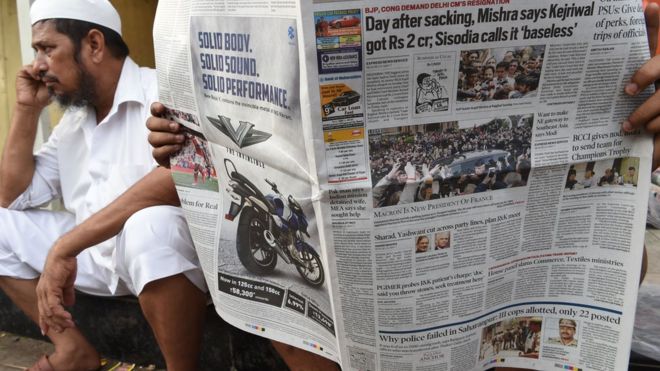
It is a potential scandal that claims to strike at a key pillar of Indian democracy - the freedom of the press - yet it is barely being reported in the Indian media. There's a simple reason for that: this alleged scandal involves many of the most powerful media institutions in the country. A sting operation by a news organisation called Cobrapost claims to have revealed a deeply engrained bias towards the ruling Bharatiya Janata Party (BJP) within many of India's leading media groups, as well as a willingness among some of the country's most senior media executives and journalists to take money in return for pushing a political agenda.
The new world disorder: is war inevitable in the Asian century?

Robert D. Kaplan

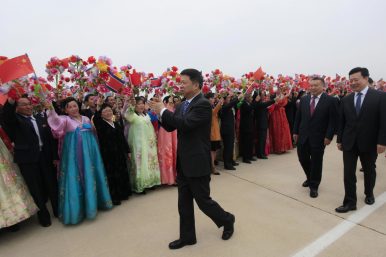
Narendra Modi and Xi Jinping met in China’s historic city of Wuhan last month. Greeting each other warmly, the Indian and Chinese leaders talked over cups of tea and strolled in bucolic gardens. President Xi noted he had only twice met a visiting foreign leader outside Beijing. On both occasions, it was for Modi. Yet rather than demonstrating cordial ties between Asia’s ascending giants, the meeting served mostly to highlight divisions, given Sino-Indian relations have worsened greatly since Modi became prime minister in 2014, in particular after a military stand-off near the Bhutanese border last year. Both sides wanted a “reset”. Modi’s position was the weaker of the two. India’s economy is smaller than China’s, and its military far punier. Many in New Delhi feared that the subtext of the summit was a plea that China should avoid more meddlesome border incidents that could destabilise Modi’s re-election campaign next year. Xi appeared more self-assured, having recently extended indefinitely his term as leader. Yet for all the rapidity of his ascent, China’s leader also often appears unsure how best to manage the complexities of his new global reach.

India, Russia conclude negotiations for Rs 40,000 crore air defence missile systems


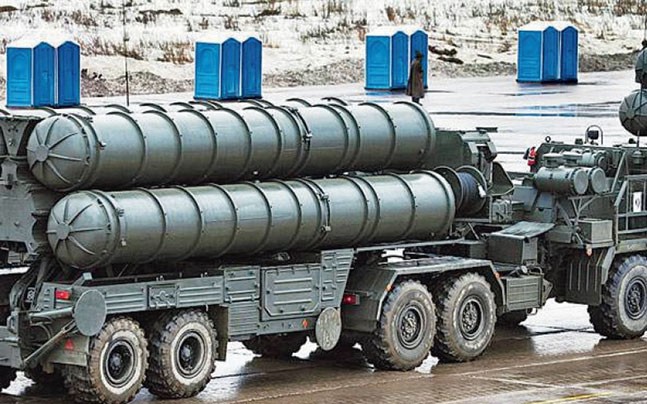
The official said both Russia and India are likely to announce the deal before an annual summit between Prime Minister Narendra Modi and Russian President Vladimir Putin in October. S-400 Triumf deal: India, Russia conclude negotiations for Rs 40,000 crore air defence missile systems 
India has concluded price negotiations with Russia for a nearly Rs 40,000 crore deal to procure S-400 Triumf air defence missile systems for the Indian Air Force, officials said.  they said the two countries are now trying to find a way out to evade the provisions of a US law that seeks to punish countries and entities engaged in transactions with the defence or intelligence establishment of Russia. 

The Great Afghan Paradox By most metrics the war in Afghanistan is going badly.

By JAMES KITFIELD

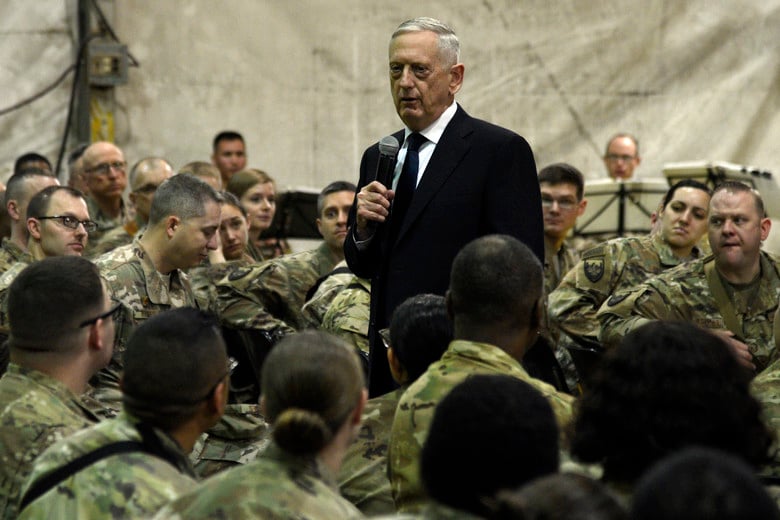
By most metrics the war in Afghanistan is going badly. According to the most recent quarterly report by the Special Inspector General for Afghanistan Reconstruction (SIGAR), the troop strength of Afghan Security Forces is in “sharp decline” even as the Taliban are on the march throughout the countryside. The number of “security incidents” is similarly on the rise, to include a series of recent suicide bombings in Kabul, including one in late April attributed to Daesh (aka the Islamic State) that targeted and killed nine journalists and four police officers. Opium production skyrocketed by nearly 90 percent in 2017, and the Afghan government continues to rate near the bottom on Transparency International’s “Corruption Perception Index.” The publication Long War Journal, which tracks the conflict, recently estimated that the Taliban now “controls or contests” 58.5 percent of Afghanistan’s 407 districts, a high-water mark for the Islamist extremist group. 

The United States And Pakistan: Frenemies On The Brink

by Peter R. Mansoor

For much of its short seventy-year history, Pakistan has managed to thoroughly mismanage its strategic relationships with great power patrons, regional competitors, and non-state clients. It has waged and lost four wars with a larger and more powerful India, supported terrorist organizations that have destabilized Afghanistan and conducted deadly attacks in neighboring India, and alienated its long-time American ally. Only Pakistan’s geopolitical position as a land bridge between the Indian Ocean and Central Asia has kept U.S.-Pakistani relations from severing completely, due to the need to ship military supplies and equipment through Pakistani territory to land-locked Afghanistan. Otherwise, there is little love lost between Pakistanis and Americans; polling indicates three-quarters of Pakistanis view the United States as an enemy, while only 10 percent of Americans trust Pakistan. Never have supposed allies hated each other so much.

Top Afghan Security Officials Visit Pakistan for Crucial Talks


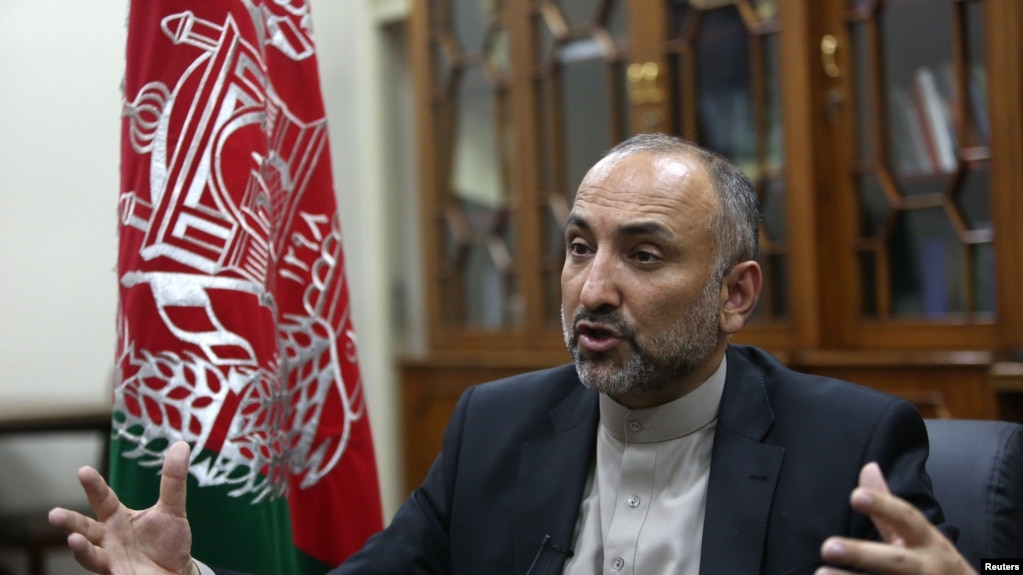
A high-level Afghan delegation held a daylong official visit to neighboring Pakistan Sunday to discuss bilateral matters, border management and regional security. Afghan National Security Adviser Haneef Atmar led a team of top security officials, including the country’s interior minister and heads of the army and the intelligence agency. The visitors held discussions with Pakistani National Security Adviser Nasser Janjua after landing in Islamabad. Janjua’s office said in a brief statement both sides reiterated their resolve to work jointly on issues related to bilateral ties and security. The Afghan delegation also met with Pakistan’s military chief, General Qamar Javed Bajwa. Islamabad and Kabul earlier this month put into operation a new bilateral engagement framework called the Afghanistan-Pakistan Action Plan for Peace and Solidarity (APAPPS) for “eliminating terrorism and achieving peace, stability, prosperity and development of the people of the two countries.”

Looking For A Silver Lining In Indonesia's Black May

by Scott Stewart

It has been a violent month in Indonesia. Nicknamed "Black May" by the Jakarta Post, the sheer number of attacks linked to militant group Jemaah Ansharut Daulah (JAD) took many by surprise. Over the course of nine days, about 40 people - including attackers - have died in a string of bombings and edged weapon attacks, leaving more than 50 wounded. Also in contrast to previous years, most of the violence began before Ramadan, a month in which jihadist violence often surges. However, if a silver lining can be found in the attacks, it is this: The tempo has been unusually high, but the level of sophistication has been low, sparing the country from a higher body count. Furthermore, Indonesians have been repulsed by the use of women and children in some of the bombings, and that will continue to keep jihadism marginalized in the world's most populous Muslim country.

How China acquires ‘the crown jewels’ of U.S. technology

By CORY BENNETT and BRYAN BENDER

The U.S. government was well aware of China’s aggressive strategy of leveraging private investors to buy up the latest American technology when, early last year, a company called Avatar Integrated Systems showed up at a bankruptcy court in Delaware hoping to buy the California chip-designer ATop Tech. ATop’s product was potentially groundbreaking — an automated designer capable of making microchips that could power anything from smartphones to high-tech weapons systems. It’s the type of product that a U.S. government report had recently cited as “critical to defense systems and U.S. military strength.” And the source of the money behind the buyer, Avatar, was an eye-opener: Its board chairman and sole officer was a Chinese steel magnate whose Hong Kong-based company was a major shareholder.

China is taking digital control of its people to chilling lengths

By John Naughton

Watching Donald Trump trying to deal with China is like watching a clown dancing in front of an elephant. The US president’s entire approach is transactional – the methodology he employed in his allegedly successful career as a property developer. It’s all sticks and carrots, bluff and counter-bluff, aggressive bluster followed by rapid retreats. Sometimes, it appears to work. For example, the Chinese leader, Xi Jinping, clearly leant on Kim Jong-un to force him to agree to a summit meeting with Trump. But then Xi leant on Trump to rescue the Chinese tech company ZTE, brought to its knees by a US ban because it had evaded sanctions on trade with Iran. Trump duly complied and ZTE executives breathed again.

China’s missiles in the South China Sea mean girding for war

By ROBERT E. MCCOY
Source Link

The South China Sea China has the potential to become a cauldron of conflict, and China is stoking the fire. By claiming perhaps as much as 90% of the South China Sea, Beijing is trampling on the rights of other nations in the region, nations whose Exclusion Economic Zones (EEZs) and national waters are being violated. China first laid claim to the South China Sea through its Nine Dash Line in the early 1950s. And other than pathetic vocal protestations by other nations – including the US – nothing was done about it for years. Perhaps no one took the claim seriously at the time.

US, Coalition Forces Used Cyberattacks to Hunt Down ISIS Command Posts

By Matthew Cox 

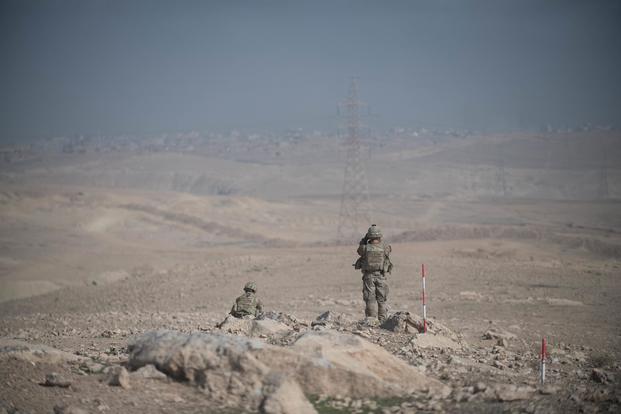
U.S. and coalition forces launched cyberattacks last year to help identify and destroy several command posts of Islamic State leaders, according to the former head of the task force to defeat ISIS in Iraq and Syria. "This is a vignette that actually played out during and after the battle of Mosul and after the battle of Raqqa," said Gen. Stephen Townsend, who commanded Combined Joint Task Force-Operation Inherent Resolve in 2017. Townsend, who now commands Army Training and Doctrine Command, described the multi-domain operation to an audience at the Association of the United States Army's LANPAC Symposium and Exposition in Hawaii.

Top 3 Takeaways from Pompeo’s New Deal for Iran

James Jay Carafano

Mike Pompeo’s first formal speech as Secretary of State can best be described a diplomatic body slam on the Iranian regime. He not only declared the Iran Deal as dead as the Wicked Witch of the West. He laid out the follow-up U.S. strategy to deal with the regime’s nuclear ambitions and destabilizing actions in the region. It’s true that the speech included a long list of complaints about the deal and Iranian behavior that we have heard from Trump before. But Pompeo put three new elements of U.S. policy on the table.

The Populist Revolt Reaches Iraq

by Michael J. Totten

The worldwide populist revolt toppling conventional politicians in the United States, Europe and even the Philippines has now reached Iraq. Most Westerners still following Iraqi politics assumed that incumbent Prime Minister Haider al-Abadi’s Victory coalition would handily win the parliamentary election, but nope. Abadi's coalition came in third. Firebrand cleric Moqtada al-Sadr’s Sairun coalition came in first. You remember Moqtada al-Sadr. He’s the guy who mounted an Iranian-backed Shia insurgency against the United States, the Iraqi government and his Sunni civilian neighbors between 2003 and 2008. He’s a very different person today. He still raises and shakes his fist in the air but today he’s shaking it at crooked elites, and he’s shaking it at his former Iranian patrons.

What Will It Take for Syrian Refugees to Return Home?

By Maha Yahya

Syria’s 18 million people make up less than one percent of the world’s population, but a whopping one-third of all refugees are Syrian. Since 2011, more than 5.5 million people have fled the country and 6.1 million have been internally displaced. Syria’s neighbors have borne the brunt of the crisis: there are 3.3 million registered refugees in Turkey, one million in Lebanon, and 650,000 in Jordan. Another half million Syrian refugees now reside in Europe. (Canada and the United States have taken in approximately 50,000 and 18,000, respectively.)

Oil Shock: Entry Point For Deepening Reform – Analysis

By Sanjeev Ahluwalia

The oil shock poses two risks for India. First, the fear that it will increase the current account deficit. Second, it poses a conundrum of navigating conflicting objectives — preserve the market-based retail oil price mechanism whilst graduating the price shock for consumers and containing inflation. The latest oil shock — an increase from $69 last year to $80 per barrel this week — is courtesy the American President, Donald Trump, who unilaterally pulled the United States out of the 2015 deal that Iran had reached with the UN’s Permanent Five (US, UK, Russia, France, China) plus Germany. This spooked the global financial markets, which justifiably fear renewed trade sanctions on Iran, ending five per cent of world production. The nuclear deal had ended sanctions and boosted world supply. Prices declined from $84.2 in 2014-15 to $46.2 in 2015-16. New sanctions may reverse the trend.

I Served with the Military Leaders Shaping America’s North Korea Plan. Here’s What They’ll Do Next

By James Stavridis

While we were all hoping for a true breakthrough in North Korea by President Donald Trump, let’s face it: the history was never encouraging. Despite similarly hopeful moments in the past, the North Korean pattern is depressingly uniform: come to the peace table, encourage everyone to believe “peace is at hand,” make promises to denuclearize, gain major trade and economic concessions (a whole thumb drive full of them this time, thoughtfully provided by South Korean President Moon Jae-in), then slowly unwind the package of promises and revert to form as a dangerous international outlaw state. What’s different this cycle is the speed: a bipolar burst of seemingly instant high, followed by a crashing low with nuclear threats from both sides again suddenly on the table — all within 60 days. This is the Korea crisis in the key of Trump to be sure.

Erdogan Is Failing Economics 101

BY BORZOU DARAGAHI


Recep Tayyip Erdogan, flanked by his deputy Ali Babacan and Central Bank Governor Erdem Basci with the symbol for the national currency, the Turkish lira, during a ceremony in Ankara, on March 1, 2012. To Recep Tayyip Erdogan’s handlers, it must have seemed like a good idea at the time. Show off Turkey’s president to a group of London bankers and fund managers over a fancy lunch as a way to reassure nervous investors about the country’s economic stability and viability. After all, Turkey’s Central Bank had recently upped interest rates a higher-than-expected 75 basis points, showing a measure of fiscal prudence at a time of lingering questions about the country’s economic health. But the May 14 luncheon and a subsequent interview with Bloomberg quickly went off the rails. Erdogan ranted against interest rates and raised doubts about the independence of the Central Bank, vowing even tighter control of the economy if he wins another full term after the June 24 elections.

A Call for Realism in Europe

Elmar Hellendoorn

President Donald Trump’s abrogation of the Iran agreement indicates again that progressive Europe is increasingly less relevant to the world. At the same time, the world of power politics has an increasing influence upon Europe. Originally, Realpolitiker Konrad Adenauer and Charles de Gaulle wanted to build Europe as a power bloc that could eventually even resist a rising China. However, the generation of May 1968 rejected such “reactionary” thinking, and thus planted the seeds of contemporary populism. As European societies lose control over their own fate, the guardians of the European project lose their legitimacy.

Hamas, Netanyahu and Mother Nature

By Thomas L. Friedman

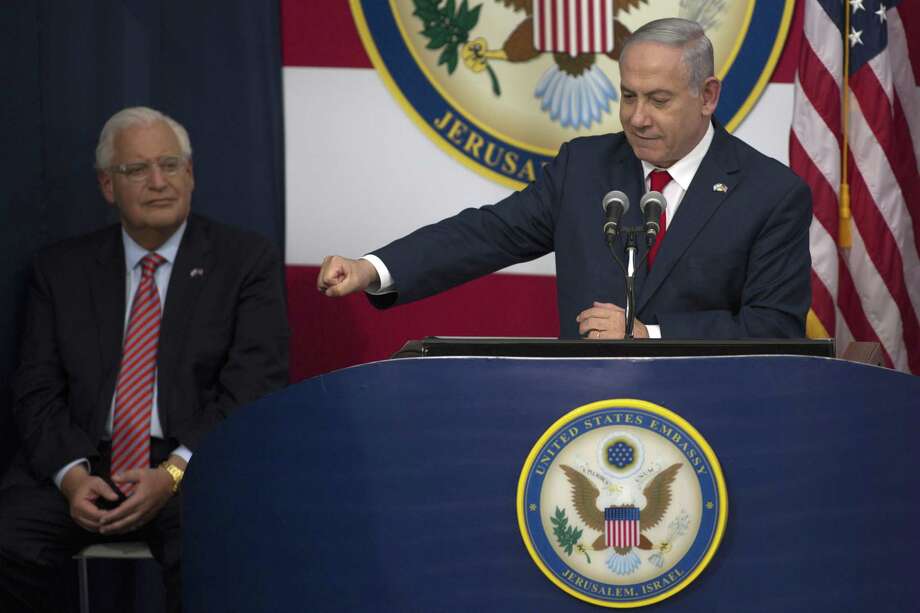
Israel's Prime Minister Benjamin Netanyahu speaks on stage as U.S. ambassador to Israel David Friedman (L) looks on during the opening of the US embassy in Jerusalem on May 14, 2018 in Jerusalem, Israel. US President Donald J. Trump's administration officially transfered the ambassador's offices to the consulate building and temporarily use it as the new US Embassy in Jerusalem. Trump in December last year recognized Jerusalem as Israel's capital and announced an embassy move from Tel Aviv, prompting protests in the occupied Palestinian territories and several Muslim-majority countries.

The Israel-Palestine Standoff

by Richard A. Epstein 

Few issues produce more political and emotional discord than the Israeli-Palestinian conflict. In principle, there is much to commend a two-state solution. If achieved, it could allow the two groups to live beside each other in peace. Unfortunately, but unsurprisingly, the interminable peace process came to a screeching halt this past week as the American embassy opened in Jerusalem. An exultant Israeli Prime Minister Benjamin Netanyahu proclaimed before Israeli and American dignitaries, “We are in Jerusalem and we are here to stay.” At the same moment, thousands of angry Palestinian demonstrators were rebuffed with deadly force as they sought to storm into Israel from Gaza. The confrontations took place on May 14 and 15—and the Palestinians consciously timed their protests to correspond with the seventieth anniversary of the Palestinian Exodus that resulted in the birth of the Israeli state. Some 62 Gazans died and thousands were wounded as the Israelis used live ammunition to keep protestors from storming over the barricades into Israel.

What You Need to Know About Trump's Plan for Auto Tariff


Although the United States remains heavily focused on its trade dispute with China, the U.S. administration has another target in its crosshairs: the global automotive sector. The damage to supply chains and the auto sector could dwarf all previous moves made by President Donald Trump. But the proposal is also likely to see substantial pushback from within the United States.

Denuclearization and the Demise of Moammar Gadhafi’s Regime

Source Link

The United States has canceled its meeting to negotiate an end to North Korea’s nuclear weapons program. One of the many points of contention was not just if Pyongyang would denuclearize but how it would denuclearize. Some in the Trump administration advocated what is colloquially called the Libya model, a total abdication whereby former Libyan leader Moammar Gadhafi gave up his nuclear program, only to die partly at the hands of the United States years later. The graphic above provides a timeline of the events surrounding this deal.

Japan Wants Closer Relations With Russia. Good Luck With That.

Japan Wants Closer Relations With Russia. Good Luck With That. 

The Japanese prime minister's political troubles will add urgency to his country's bid to improve relations with Russia and resolve their long-standing dispute over contested islands.  But the ongoing standoff between Russia and the United States, lackluster Japanese investment in Russia and Moscow's concerns about sovereignty leave little room for a breakthrough that would move beyond the incremental progress of recent years. That said, Russia will maintain its outreach to Japan to gain leverage in the U.S. camp and in an effort to counterbalance China. 

How Italy's Next Government Will Shake Up the EU

By Adriano Bosoni
Internal disagreements, along with Italy's bureaucracy, vested interests and parallel centers of power, could reduce the next Italian government's room for action on its ambitious agenda.
Though the Five Star Movement and the League parties have pledged to keep Italy in the eurozone, they will use the threat of unilateral action, such as ignoring EU fiscal rules, to negotiate softer deficit targets with Brussels. Renegotiating the European Union's economic governance will be almost impossible, but Brussels will have to decide whether to reach a compromise with Italy, at the cost of alienating Northern Europe, or to hold its ground, increasing the risk of unilateral action from Rome.

What the GDPR Means for Companies in Europe and Beyond


Not all EU member states have enacted national laws on data protection, and many will have difficulty shouldering the costs of doing so. The second half of 2018 will provide early indicators of how much the European Union can influence large technology companies to address the privacy concerns of EU citizens. Uncertainty regarding the severity of national enforcement could influence the regional development of technology, especially in terms of small and medium-sized enterprises.

The Big Picture

30 May 2018

Narendra Modi govt’s last mile challenge


The Narendra Modi government’s last year in office will also be the most difficult one, and the biggest challenge will be to protect macroeconomic stability by not compromising on fiscal discipline The last few months before 2019 Lok Sabha elections could be dominated by economic pressure points, yet the Narendra Modi government is likely to leave behind an Indian economy that is in a far better shape than what it inherited in 2014. Illustration: Jayachandran/Mint The Narendra Modi government completed four years in office last week. Its last few months before the nation goes to the polls could be dominated by economic pressure points—rising inflation, a weak rupee, rural distress and a persistent banking crisis. Yet, it is likely to leave behind an economy that is in a far better shape than what it inherited in 2014.

Capricious Afghanistan-Pakistan Trade: Who Wins?

By Shoaib A. Rahim

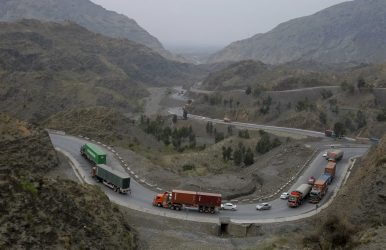
Economics literature insists that trade among nations is beneficial for job creation and fueling economic growth. Trade helps improve living standards and promote better quality products and services at competitive prices. Thus trade remains at the top of agendas when it comes to bilateral relations among countries. However, these benefits aside, trade relations between Afghanistan and Pakistan have suffered considerably under turbulent bilateral political ties. As a landlocked country, Afghanistan has remained dependent on Pakistan for its transit trade while both countries are also immediate markets for each other. Unfortunately, trade relations between Afghanistan and Pakistan have remained capricious, following the trajectory of turbulent political relations since the 1947 partition brought independent Pakistan into existence.

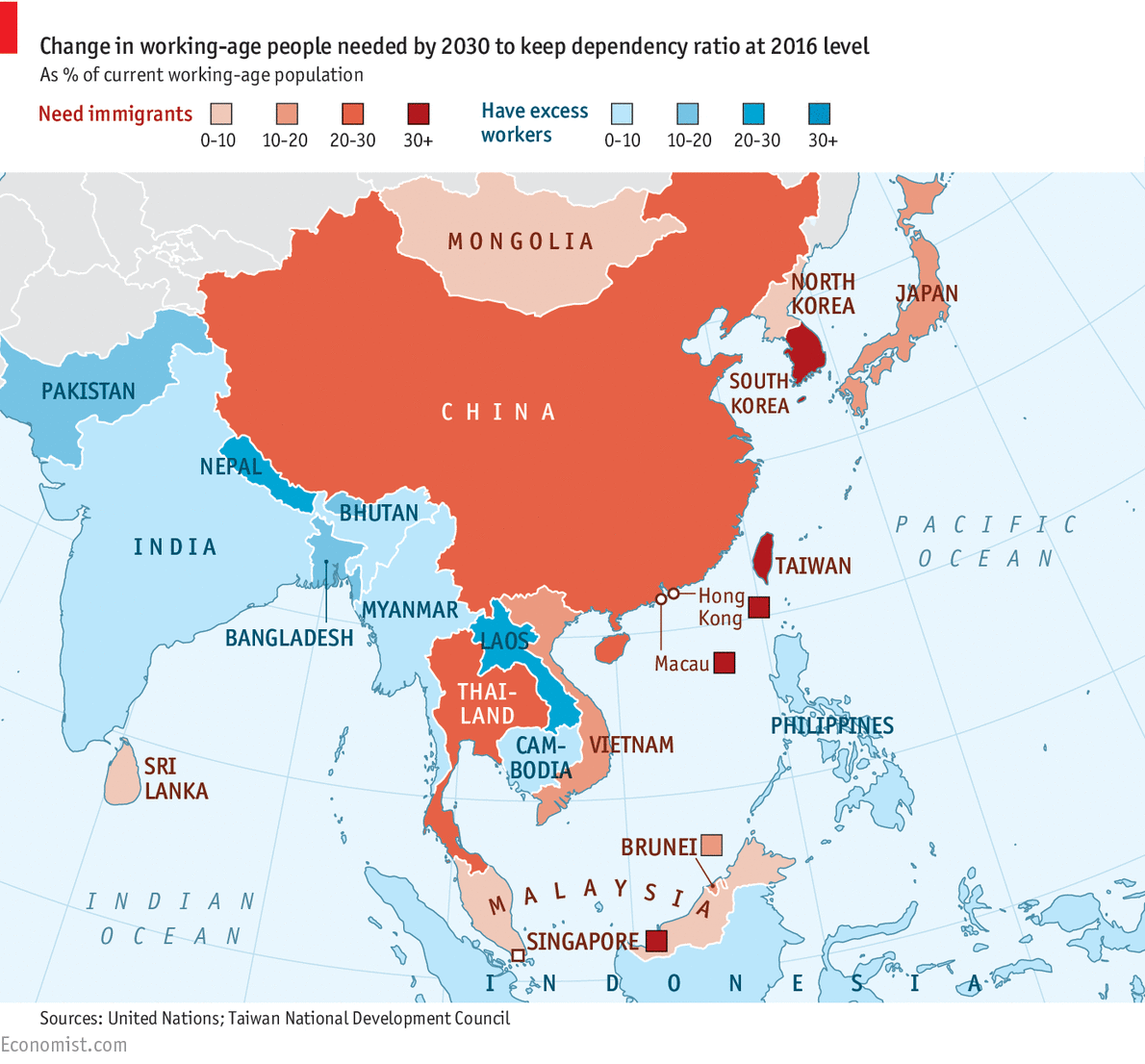
Migration and labour shortages in Asian countries


Where workers will be needed in the region, and where they could come from

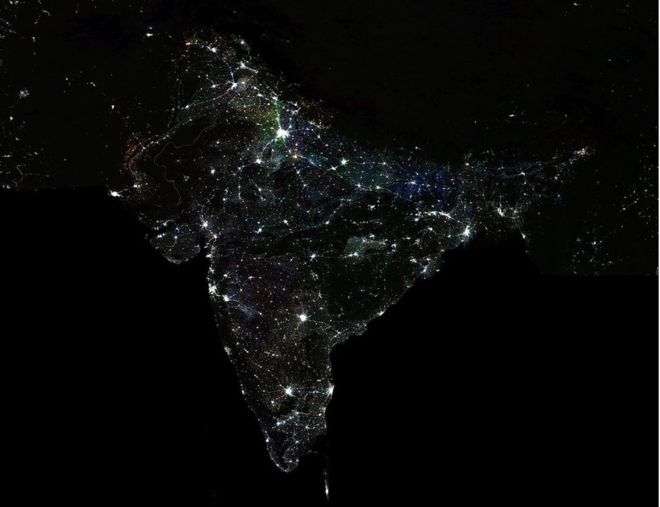
Inequality in India can be seen from outer space


Economists Praveen Chakravarty and Vivek Dehejia certainly believe so. They acquired images grabbed by satellites from the US Air Force Defence Meteorological Satellite Programme. These satellites circle the earth 14 times a day and record lights from the earth's surface at night with sensors. They superimposed a map depicting India's districts on their images, allowing them to develop a unique data set of luminosity values, by district and over time. Using data generated by the night lights, they studied of 387 of 640 districts in 12 states. These districts account for 85% of India's population and 80% of its GDP. Some 87% of parliamentary seats are in these districts. Using the novel methodology, the economists documented income divergence in India.

The Quad, Vietnam, and the Role of Democratic Values

By Tom Corben

Since its revival of the sidelines of APEC last November, scholarship regarding the Quadrilateral Security Dialogue has addressed the various obstacles to the realization of its greater potential. Several contributions in the May issue of The Diplomat magazine underscored how the Quad’s incapacity to dispel perceptions of its “China containment” endgame have cast doubt in the minds of potential regional partners as to the merits of associating with the so-called “Democratic Security Diamond.” For example, one article noted that ASEAN’s agnostic outlook on the Quad is motivated in large part by the underdevelopment of the “Indo-Pacific” concept espoused by the dialogue’s members.

China Will Need American Shale

Anthony Fensom

China’s shale gas production is picking up speed as it seeks to capitalise on the world’s highest estimated shale reserves. However, the communist-ruled nation is far from following in the footsteps of America’s shale boom, with analysts predicting China will miss its 2020 output targets by a wide margin. Nevertheless, China’s progress toward unlocking its shale gas reserves was highlighted by an April 17 report by the consultancy Wood Mackenzie. The report said China’s shale industry reached nearly 600 wells and nine billion cubic meters (bcm) of production in 2017, with output expected to nearly double to seventeen bcm by 2020. In addition, almost 700 new wells are expected to come onstream by the end of the decade from three new projects in the southwestern Sichuan Basin, with total capital investment of $5.5 billion.

Little Laos risks losing it all to China

By BERTIL LINTNER

A new city is fast emerging on the China-Laos border, a manifestation of China’s Belt and Road Initiative (BRI) that if fully actualized will serve as Beijing’s new gateway to Southeast Asia. Once known for car smuggling and glitzy casinos catering to Chinese punters, the remote Lao town of Boten is gearing up for the arrival of the Beijing-backed Lao-China high-speed railway. Land-locked and mountainous Laos has long served as a geographical buffer between China and the rest of mainland Southeast Asia, a region where Beijing is now rapidly expanding its political and economic influence. If all the grand infrastructure plans that have been drawn up actually materialize, the US$6 billion railway will merge with Thailand’s existing rail network, which, in turn, will connect through Malaysia down to Singapore.

TPP’s Regulatory Capitalism and China’s Belt and Road Challenges

By Richard B. Stewart

The Trans-Pacific Partnership (TPP) — now back from the dead — is more than a trade agreement. While its geopolitical significance and security undertones have been severely affected by the U.S. withdrawal, TPP’s project to establish U.S.-style regulatory capitalism as the dominant mode of international economic ordering in the Asia-Pacific lives on. TPP will operate a significant alternative to China’s state-centered approach, exemplified in the hugely ambitious Belt and Road Initiative (BRI).

What Does China Really Think of North Korea?

By Kerry Brown

It is one of the most oft-repeated pieces of wisdom in modern diplomacy: The one power with true influence over the isolated North Korean regime is its neighbor, China. This is supported by a raft of seemingly irrefutable facts. China supplies the vast bulk of North Korea’s energy, accounts for almost all its foreign trade, and shares, in name at least, a similar political system (despite in practice being vastly different) and a deeply interlinked modern history. The two are so close that they are like “lips and teeth,” as the phrase — repeated during Kim Jong-un’s two visits to China earlier in 2018 — goes.

Intelligence: China And The Shadow Wars


May 26, 2018: In April 2018 two Chinese born men (Shan Shi and Gang Liu) were indicted for conspiring to commit economic espionage in the United States. It was also revealed that the two men (one of them an American citizen and the other a permanent resident) and four others were also indicted in July 2017 for conspiring to steal trade secrets. The theft involved obtaining, from 2014 onward, information necessary to create and mass produce syntactic foam, a substance used to keep objects afloat in deep water. Syntactic foam is used in offshore oil exploration and production as well as for several military systems. The two accused spies were provided with technical and financial support by CBMF, a state-owned Chinese firm that had been established to develop new maritime technologies and put the technology into production. The Chinese spies were provided with several million dollars to establish a CBMF subsidiary in Texas where key technical people were hired away from an unnamed multinational firm that had developed syntactic foam production technology. Using bribes and other financial inducements the Chinese spies provided the necessary information for CBMF to build a factory in 2016 for the production of syntactic foam. The main customer for this syntactic foam was a Chinese shipyard building warships and other naval equipment. CBMF also began offering their syntactic foam to foreign customers.