21 December 2018

Read Secretary Mattis’ Letter Of Resignation

By JEFF SCHOGOL

Defense Secretary James Mattis has resigned amid President Donald Trump’s decision to withdraw all U.S. troops from Syria and media reports the president is considering a massive drawdown in Afghanistan as well.

His last day leading the Defense Department will be on Feb. 28.
Here is his Dec. 20 resignation letter:

Dear Mr. President,

I have been privileged to serve as our country’s 26th Secretary of Defense which has allowed me to serve alongside our men and women of the Department in defense of our citizens and our ideals.

I am proud of the progress that has been made over the past two years on some of the key goals articulated in our National Defense Strategy: putting the Department on a more sound budgetary footing, improving readiness and lethality in our forces, and reforming the Department’s business practices for greater performance. Our troops continue to provide the capabilities needed to prevail in conflict and sustain strong U.S. global influence.
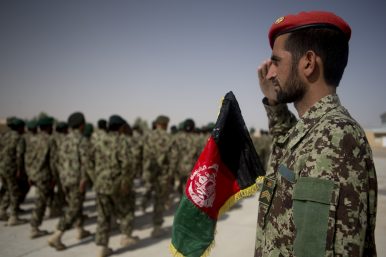
Talking With the Enemy: Why India Needs to Engage the Taliban

By Pratyush Dubey

As the United States weighs its exit options in Afghanistan, the only thing certain for now is the return of the Taliban to Kabul – either as part of a weakly enforced coalition supporting an elected government or as the sole administrators of the country. In October the recently appointed U.S. Special Representative to Afghanistan, Zalmay Khalilzad, met with delegates of the “Islamic Emirate of Afghanistan” in Doha, signaling Washington’s willingness to talk with the Taliban. The recent U.S. overtures appear urgent, but Khalilzad is not the only one reaching out to them. The international community has also been known to keep contacts with the Taliban in the expectation that it would be a legitimate party in any eventual political settlement. Given this reality, New Delhi’s reticent in directly engaging with the group is not only perplexing, but also imperils the long-term security balance in the region.

The lack of unity in Afghanistan will be felt near and afar

By T.C.A. Raghavan

Describing 17th-century Mughal military frustration west of the Indus and in present-day Afghanistan, Jadunath Sarkar had referred to a blessing and a curse left for the Afghans by a saint: “They shall always be free, but they shall never be united”. The United States of America certainly encounters dilemmas arising out of this conjoined curse-cum-boon as it contemplates its longest-every military conflict. Three decades ago, the Soviet Union encountered a similar set of issues as it began its withdrawal, ending what was then also its longest-ever military engagement.

The Soviets saw, as the Americans see now, intra-Afghan conflict in large part related to Pakistan-Afghanistan relations as being at the core of their problems. Between the Soviet withdrawal and the US entry following 9/11, an Afghan civil war among different mujahideen factions destroyed the capital and other parts of the country. This ended only with the imposition of a different kind of order by the Taliban, supported by Pakistan. This led to another conflict and to Islamic radicals making Afghanistan the cockpit of international and regional terrorism, transforming a local conflict into one with international dimensions.

China’s ‘Belt and Road’ Plan in Pakistan Takes a Military Turn

By Maria Abi-Habib

ISLAMABAD, Pakistan — When President Trump started the new year by suspending billions of dollars of security aid to Pakistan, one theory was that it would scare the Pakistani military into cooperating better with its American allies.

The reality was that Pakistan already had a replacement sponsor lined up.

Just two weeks later, the Pakistani Air Force and Chinese officials were putting the final touches on a secret proposal to expand Pakistan’s building of Chinese military jets, weaponry and other hardware. The confidential plan, reviewed by The New York Times, would also deepen the cooperation between China and Pakistan in space, a frontier the Pentagon recently said Beijing was trying to militarize after decades of playing catch-up.

All those military projects were designated as part of China’s Belt and Road Initiative, a $1 trillion chain of infrastructure development programs stretching across some 70 countries, built and financed by Beijing.

U.S.-Taliban talks focus on Afghan ceasefire

Jibran Ahmad, Abdul Qadir Sediqi

U.S. and Taliban officials have discussed proposals for a six-month ceasefire in Afghanistan and a future withdrawal of foreign troops as talks aimed at setting up peace negotiations went into a second day, Taliban sources said.

The meeting in Abu Dhabi is at least the third time that U.S. special peace envoy Zalmay Khalilzad has met Taliban representatives as diplomatic efforts to end the 17-year war have intensified this year.

Taliban officials, speaking on condition of anonymity, said the U.S. delegation was pressing for a six-month truce as well as an agreement to name Taliban representatives to a future caretaker government.

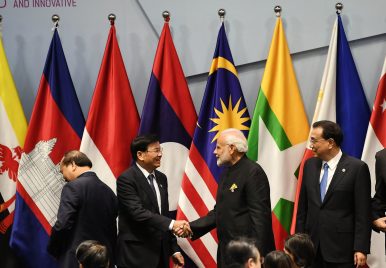
ASEAN Must Choose: America or China?

by John Lee

THE 2017 National Security Strategy (NSS) describes China as a revisionist power seeking to displace the United States in the Indo-Pacific region. It is an accurate characterization which was resisted by previous American administrations despite there being little evidence that China is content to be a “responsible stakeholder” under a U.S.-led order.

The Chinese desire to gradually exclude the United States and reduce the latter’s role in strategic affairs in the region preceded the current regime of Xi Jinping. However, Xi has intensified China’s use of all the instruments of national power to further its goal of regaining the preponderant position in East Asia. Given explicit U.S. security guarantees offered to Japan, South Korea and Taiwan—themselves formidable military powers—Beijing has identified Southeast Asia as a region of immense strategic importance and opportunity. It is in this sub-region consisting of eleven countries and home to over six hundred million people that China has been the most proactive and assertive.

Sri Lanka: What Does Post-Crisis Situation Mean For India? – Analysis

By N Sathiya Moorthy

As a “close neighbour and true friend”, India has welcomed the “resolution of the political situation in Sri Lanka”, External Affairs Ministry (MEA) spokesperson Raveesh Kumar said in a statement in New Delhi, a day after Ranil Wickremesinghe returned as the Prime Minister in Colombo. The statement commented that the Sri Lankan developments were a “reflection of the maturity demonstrated by all political forces, and also of the resilience of Sri Lankan democracy and its institutions”.

As the MEA spokesman said, “India remains committed to taking forward its people-oriented development projects in Sri Lanka. We are confident that India-Sri Lanka relations will continue to move on an upward trajectory,” the statement added. As is self-evident, the statement kept the focus on development projects. Otherwise, it worded bilateral issues in general and generalised terms, without seeming to take sides.

Challenges to South Asian security


Colombo, December 17: Historically, South Asia had been an integrated region with cultures, languages, religions and values crossing natural geographical barriers and creating seamless symbiotic relations between diverse peoples. 

But today, thanks to the birth of nationalisms and the emergence of nation states, South Asia is one of the least integrated and one of the most conflict-ridden areas in Asia. 

Terrorism, religious fanaticism and class wars are endemic in South Asian states. There is continuous cross-border terrorism which is but a proxy war between States. There are external economic and military threats from new and old hegemonic forces. There are threats from non-State actors like terrorists, pirates , human smugglers and illegal fishers. Add to this, money laundering , cyber crime and misuse of an uncontrolled social media to spread religious hate and ethnic and civil strife, the situation is as grim as it is mind boggling.

New Report Warns That The U.S. Is Currently Unable To Defend Against Chinese And Russian Hypersonic Weapons


A newly released report (see attachment/link) by the U.S. Government Accountability Office (GAO) concludes that the United States “lacks the defenses needed to protect against a new breed of highly sophisticated hypersonic weapons from China and Russia. China and Russia are pursuing hypersonic weapons because their speed, altitude, and maneuverability, may defeat most defense systems; and, they may be used to improve long-range conventional and nuclear-strike capabilities.” “There are no existing countermeasures,” though the U.S. Defense Department is currently in the research, development and testing phase of an interceptor capability. But, point taken.

Russia publicly claimed earlier this year to have successfully tested a nuclear-capable, hypersonic missile that could evade adversary defenses. Russian President Vladimir Putin publicly stated that their Kinzhal flies ten times faster than the speed of sound, has a range of more than 1,250 miles, and can carry a nuclear, or conventional warhead – -capable of hitting ground and seaborne targets.”

Taking Great Power Competition Seriously

By Robert Farley

The idea of disengaging from the Middle East (and Europe) to refocus attention on the Asia Pacific is not new. The Obama administration sought to do just this with its “Asian Pivot,” although events in Syria and the need to negotiate and maintain the Joint Comprehensive Plan of Action (JCPOA) prevented the policy from reaching culmination. Similarly, the decision to leave the INF Treaty indicates a strong desire to reorient security policy away from the Atlantic and towards the Pacific. That decision has almost nothing to do with Russia, and everything to do with the growing military threat posed by China.

From Silicon Valley to Shenzhen: Dollar Exposures in Chinese Fintech

Author: Michael B. Greenwald

In the post-9/11 era, Washington has waged innovative campaigns against terrorism finance, sanctions evasion, and money laundering. Leveraging America’s heavyweight status in the international financial system, the United States Treasury has isolated and bankrupted rogue regimes, global terrorists, and their enablers. As financial technology transforms global business, the traditional financial system faces new competition across a suite of offerings, ranging from brokerage services to peer to peer lending. In no area is this clearer than in mobile payments, where a global hegemon lies ready to exercise its weight, and it is not the United States. 

Chinese Fintech Landscape

U.S. Confrontations With Iran and China Among Top Potential Conflicts in 2019, According to CFR Survey

James M. Lindsay

The possibility of conflict between the United States and Iran as well as between the United States and China constitute two of the greatest threats to peace in 2019 and warrant heightened focus from policymakers, according to the Council on Foreign Relations’ (CFR) eleventh annual Preventive Priorities Survey, which identifies nine top conflict prevention priorities for the United States in the year ahead. The worsening humanitarian situations in Venezuela and Yemen are also major concerns that call for greater effort so that they do not deteriorate further.

The survey, conducted by CFR’s Center for Preventive Action (CPA), asked foreign policy experts to rank thirty ongoing or potential conflicts based on their likelihood of occurring or escalating in the next year and their potential impact on U.S. national interests.

Iran, cyber warfare cited as leading threats to U.S. for 2019

By Carlo MuΓ±oz

High-profile cyber attacks on U.S. military and civilian infrastructure networks and a possible proxy war with Iran top the list of possible national security threats facing the U.S. in the coming year, according to a new survey of foreign policy and national security analysts.

The assessment, released by the Council on Foreign Relations on Monday, said there was a “moderate” chance of one of the two threats occurring in the coming year, but noted that either would have a severe impact on U.S. interests across the globe.

“The threat of a highly disruptive cyberattack on U.S. critical infrastructure and networks was the top-ranked homeland security–related contingency for 2019,” the Council wrote of its survey.

Reading Fiction Leads to Good Strategic Thinking

by James Holmes

Sometimes academics say the darndest things. To wit: I recently got in an exchange with a colleague about the upsides and downsides of applying fiction as a catalyst for strategic thought. My interlocutor dismissed the idea out of hand, insisting this represents an unserious endeavor for any serious scholar or think tank analyst.

I say you take your insight where you find it. You may find it in a tome about history, political science or economics. Oftentimes you do. But it could also burst forth from a novel, short story or even poem. Homer has more to say about war, strategy and the human condition than most of us do. Which is why new editions of the Iliad and Odysseydebut at a regular clip three millennia later.

How Trump Made War on Angela Merkel and Europe

By Susan B. Glasser

This past July, on the final day of the nato summit in Brussels, Angela Merkel, the German Chancellor, proposed a closed-door emergency meeting. The emergency was Donald Trump. Minutes earlier, the President had arrived late to a session where the Presidents of Ukraine and Georgia were making their case to join nato. Trump interrupted their presentation and unleashed a verbal assault on the members of the alliance, calling them deadbeats and free riders on American power. Trump threatened to go his “own way” if they didn’t immediately pay more for their own defense. His barrage centered on Merkel, Europe’s longest-serving democratic leader.

“You, Angela,” Trump chided Merkel. Most of nato’s members had failed to fulfill the goal of spending two per cent of G.D.P. for defense, but Trump focussed on Germany’s military spending of just over one per cent of G.D.P. In front of television cameras the previous day, he had accused Germany of being “totally controlled by Russia,” because of a proposed new gas pipeline. His tweets that day sounded like blackmail. “What good is NATO if Germany is paying Russia billions of dollars for gas and energy? The U.S. is paying for Europe’s protection, then loses billions on Trade. Must pay 2% of GDP IMMEDIATELY, not by 2025.”

The View From Olympus: Our Failing Strategy

Author: William S. Lind 

“How many more years and trillions of dollars will we waste doing more of what does not work?” 

An article in the November 21 New York Times revealed two aspects of our ongoing strategic failure in Fourth Generation war. First, it quoted a new study by CSIS that found the number of Sunni 4GW fighters has grown, not shrunk, since we began the “war on terror” on 9/11:

Nearly four times as many Sunni Islamic militants are operating around the world today as on Sept. 11, 2001, despite nearly two decades of American-led campaigns to combat Al Qaeda and the Islamic state, a new independent study concludes.

‘Five Eyes’ Spy Chiefs Agreed To Contain Huawei’s Global Reach At Meeting In July: Report

by Tom McKay

At a meeting in Canada in July 2018, espionage chiefs from Australia, Canada, New Zealand, the U.K. and the U.S.—all signatories to a treaty on signals intelligence, and often referred to as the “Five Eyes”—agreed to do their best to contain the global growth of Chinese telecom Huawei, the Wall Street Journal reported on Friday, citing a prior report from the Australian Financial Review.

According to the Journal’s report, while the various member countries of the Five Eyes view Huwaei with varying amounts of alarm—the UK is a major buyer of its telecommunications gear—they nonetheless all agreed that the tech giant posed a security risk on the grounds that it could be spying on behalf of the Chinese government:

What Stanley McChrystal Learned From Al Qaeda’s Leader In Iraq Before Leading The Operation To Kill Him

by Christopher Woody, Richard Feloni 

As head of Joint Special Operations Command in Iraq, now-retired Gen. Stanley McChrystal led the effort to take out Abu Musab al-Zarqawi.
Al-Zarqawi, as the leader of Al Qaeda in Iraq, sought to ignite a sectarian conflict in the country after the US invasion. 

In tracking down and killing al-Zarqawi, however, McChrystal came to respect his ability to lead the militants he commanded. 

Before Abu Musab al-Zarqawi was blotted out by a US airstrike on June 7, 2006, he made an impression, especially on Stanley McChrystal, who, as a lieutenant general in charge of US Joint Special Operations Command, led the effort to take out the leader of Al Qaeda in Iraq.

Report: Russia still using social media to roil US politics

By MARY CLARE JALONICK

Some of the Facebook and Instagram ads linked to a Russian effort to disrupt the American political process and stir up tensions around divisive social issues, released by members of the U.S. House Intelligence committee, are photographed in Washington, on Wednesday, Nov. 1, 2017. A report compiled by private researchers and released by the Senate intelligence committee Monday says that "active and ongoing" Russian interference operations still exist on social media platforms, and that the Russian operation discovered after the 2016 presidential election was much broader than once thought. (AP Photo/Jon Elswick)

WASHINGTON (AP) — Russia’s sweeping political disinformation campaign on U.S. social media was more far-reaching than originally thought, with troll farms working to discourage black voters and “blur the lines between reality and fiction” to help elect Donald Trump in 2016, according to reports released Monday by the Senate intelligence committee.

Russia Is the Biggest Backer of Cybercrime. The US Must Get Serious About Deterrence

BY JOHN P. CARLIN

Convincing Putin that further attacks will trigger automatic, severe responses is the best way to start.

A series of explosive Department of Justice filings—outside the special counsel’s probe—makes clear that Russia is a rogue state in cyberspace. Now the United States needs a credible system to take action, and to sanction Russia for its misdeeds.

Consider what we learned from last month’s criminal charges filed by the Department of Justice against the “chief accountant” for Russia’s so-called troll factory, the online-information influence operations conducted by the Internet Research Agency in St. Petersburg. The indictment showed how Russia, rather than being chastened by Special Counsel Robert Mueller’s detailed February indictment laying out its criminal activities, continued to spread online propaganda about that very indictment, tweeting and posting about Mueller’s charges both positively and negatively—to spread and exacerbate America’s political discord. Defense Secretary James Mattis later told the Reagan National Defense Forum in Simi Valley, California, that Vladimir Putin “tried again to muck around in our elections this last month, and we are seeing a continued effort along those lines.”

The Fourth Founding

By Gideon Rose

The United States began as a radical experiment with grandiose ambitions. Its founders believed in Locke’s idea that free individuals could escape the perils of anarchy by joining together and cooperating for mutual benefit—and they created a country to show it wasn’t just talk. The signers of the Declaration of Independence bound themselves in a common political project, establishing a limited government to secure their rights and advance their interests. That act, noted Secretary of State John Quincy Adams in 1821, “was the first solemn declaration by a nation of the only legitimate foundation of civil government. It was the corner stone of a new fabric, destined to cover the surface of the globe.”

From the start, the United States was understood to be both country and cause, a distinct national community and the standard-bearer of a global political revolution. Destiny would take a long time to play out. Until it did, until the surface of the globe was covered with a fabric of democratic republics, the good new country would have to survive in the bad old international system. “Probably for centuries to come,” Adams guessed. So how should the nation behave during the lengthy transition? 

After U.S. Tariffs On China, a Tenuous Trade War Truce


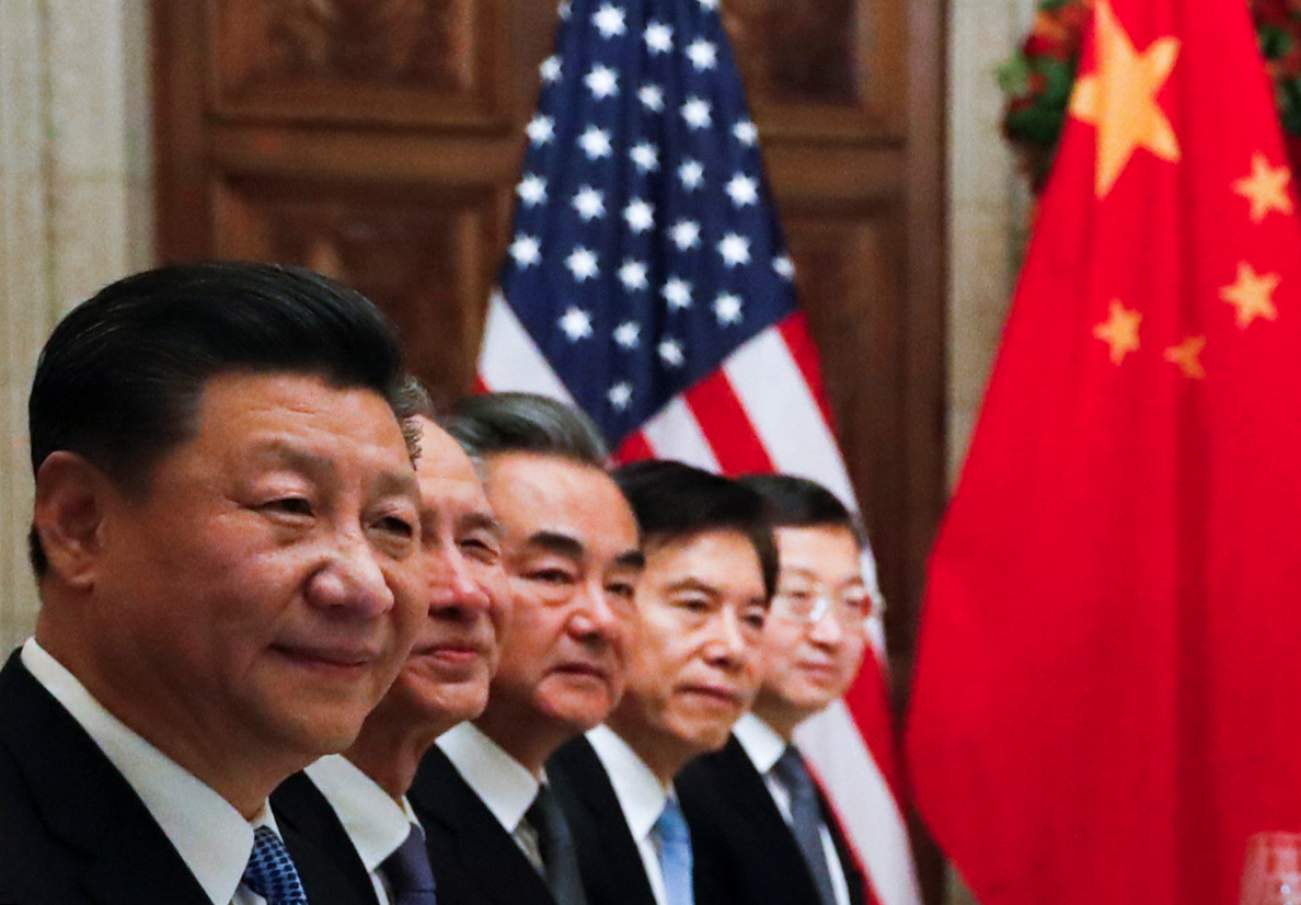
As widely expected, U.S. President Donald Trump and his Chinese counterpart Xi Jinping declared a truce in their trade war in early December. According to the White House statement after their meeting at the G-20 summit in Buenos Aires, Xi committed to increase imports of American agricultural and energy products to reduce the bilateral trade deficit and to immediately begin negotiations over China’s unfair trade policies. In exchange, Trump agreed that he would not increase tariffs from 10 percent to 25 percent on $200 billion in Chinese exports as scheduled on Jan. 1, but that he could do so later if there is no broader agreement within 90 days. The Chinese statement was not so specific, saying only that it would import more from the U.S. and that the two countries would “work together to reach a consensus on trade issues,” with no mention of a deadline. Vagueness plus a tight U.S. deadline virtually guarantee that this is only a temporary truce. 

This should all sound very familiar. On three prior occasions, Trump administration officials announced similar deals to increase American exports and address trade barriers in China. Chinese officials, however, denied that there had been specific commitments made. The trade war has already hit American farmers hard and rattled stock markets.

How Hackers Can Use A 3-D Printed Head/Face, To Defeat Facial Recognition Authentication & Successfully Break Into Your Mobile Device


Fake fingerprints, fake DNA, fake digital persona, and fake facial recognition. Demand two-step authentication, and the darker digital angels of our nature will find a way to defeat our digital moats. Victoria Bell posted a December 17, 2018 article on the website of the DailyMail.com, about a new technique that cyber thieves and others are using to breach our mobile devices. Not surprisingly, Ms. Bell notes that ” a 3-D printed head can trick your smartphone’s facial recognition technology into unlocking your phone.”

Google’s Android phones “were the least secure, with some devices opening by simply showing a photograph of the owner,” Ms. Bell wrote. Apple iPhones were determined to be the most secure, even though the company switched from fingerprint authentication to facial recognition last year. 

Foreign-Influence Operation

ALEXIS C. MADRIGAL

In their efforts to influence the 2016 election, Russian operatives targeted every major social platform, but one demographic group, black Americans, got special treatment, according to two reports made public by the Senate Intelligence Committee yesterday. 

The reports—one published by New Knowledge, a new disinformation-monitoring group, and the other by the Computational Propaganda Project at the University of Oxford—both tally large numbers of posts across social media that generated millions of interactions with unsuspecting Americans. New Knowledge counted up 77 million engagements on Facebook, 187 million on Instagram, and 73 million on Twitter. The think tank divvied up the activity into three buckets: content that targeted the left, the right, and … African Americans. 

Inspectors Find Big Cyber Vulnerabilities in US Missile Defense System

BY PATRICK TUCKER

The managers of the nation’s missile defense system aren’t implementing basic cybersecurity practices, according to a new inspector report.

Critical cyber vulnerabilities could allow adversaries to undermine the system of interceptors and sensors that protect U.S. territory from enemy missiles, the Pentagon’s inspector general said in a new report.

Much of the Dec. 10 report is redacted to hide the names of the five facilities and components that were under scrutiny. But the readable portions paint a picture of failures to take even the sort of basic cyber security precautions that are standard in business, such as enabling two-factor authentication, encrypting files that are removable, physically locking up server racks, and using cybersecurity software to detect intrusions.

Before the Engagement: Mapping Social Media for Civil Military Operations

David L. Harrell

This article was originally published by the Civil Affairs Association. SWJ thanks the association’s president, COL (Ret.) Joe Kirlin, for his kind permission to republish it here.

Today’s United States Army operates in a networked asymmetric world undreamed of in the early years of combating insurgency groups. According to Twitter, 500 million tweets are posted each day. YouTube reports that over one billion hours of videos are watched daily. In this rapidly evolving, saturated social media environment, a revolutionary with little more than an easily available internet connection can tap communications intertwined with billions of people and cause cultural upheaval and change centuries-old dogma. Through extensive social media use, groups revolt, leadership falls, and countries change. Civil Affairs as a branch needs to continue to evolve within the civil environment by formally adding a social media analysis function to its extensive repertoire, critical to maintaining a more complete understanding of current culture. This can be accomplished by examining historical examples of social media influence, exploring CIM expansion within future civil environments, and making updates and changes to Civil Affairs doctrine utilizing a DOTMLPF-P review.

20 December 2018

How India Is Navigating Global Trade Agreement Trends

By Divesh Kaul

The advancement of the global trading system, as proponents of multilateralism stress, rests on fair competition, increased transparency, improved technical assistance to developing countries, and gradual reduction of trade barriers. Yet around the world, national policies seemingly fueled on populism are contesting multilateralism and engendering protectionism. The concerns of unemployment, growing inequality, and economic stagnation have contributed in creating a disillusion about economic globalization. This is not just a recent trend; the Financial Crisis of 2008 stirred the “deglobalization” narrative a decade ago, accompanied by inward-looking tactics and shrinking economic interdependence.

The recent advent of the so-called U.S.-China “trade war” and the bizarre display of nationalist economics comes across as yet another manifestation of protectionism in disguise. The U.S.-led trade war started with the unilateral impositions of increased tariffs (which China retaliating in kind). Trade commentators argue that such acts may lead the world back to mercantilism, even comparing the move to the Hawley and Smoot Tariff Act of 1930 that helped trigger the Global Depression during the 1930s.

The Future of Global Stability: The World of Work in Developing Countries India Case Study

Romina Bandura, Casey Sword

The CSIS Project on Prosperity and Development (PPD) would like to share four country case studies as part of a recent CSIS project on The Future of Global Stability: The World of Work in Developing Countries. This project also launched a microsite containing a short video, and a two-volume report.

CSIS prepared four country case studies in Brazil, India, Kazakhstan, and Nigeria, conducting a deep dive analysis of their labor markets. The case studies analyze the current world of work in each country and the trends looming on the horizon.

In less than five years, India will be the most populous nation in the world; in addition, while many Asian countries are aging, India is projected to be the youngest country in the world by 2020. There is concern that the Indian economy is not creating enough “good jobs” to satisfy the appetites of its aspiring youth. The largest part of the labor force in India is informal, young, and underemployed, with low wages and unmet aspirations.

The Taliban’s Battle Plan

By Michael Semple

Zalmay Khalilzad, the United States’ envoy for Afghan reconciliation, has breathed new life into attempts to conduct peace talks between the Afghan government and the Taliban. Having met with Taliban representatives in Qatar and lobbied leaders in Afghanistan and Pakistan, Khalilzad now says he is “cautiously optimistic” about reaching a peace deal by April of next year.

Yet as far as Taliban leaders are concerned, the group has little reason to commit to a peace process: it is on a winning streak. The Taliban control key Afghan highways and are conducting targeted assassinations across the country. They have made important territorial gains and now have complete or partial control over some 250 of about 400 districts.

The Afghan government should not be sidelined in peace talks

by Safiullah Taye

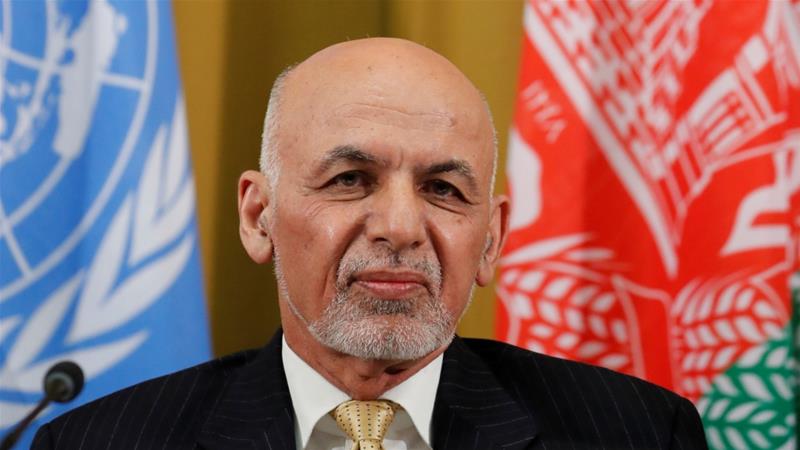
At last month's Geneva Ministerial Conference on Afghanistan, it was clear that the presidential elections were less than five months away. Afghan President Ashraf Ghani put a lot of effort into making sure he appeared to be the right man for his job.

He took the opportunity to read out a list of achievements in the areas of security, women's rights, justice and the anti-corruption effort. As usual, international donors applauded the achievements, re-affirmed their support for the Afghan government, and pledged more military and humanitarian aid.

But President Ghani did not stop there. He alsoannounced a "roadmap to peace" his administration had prepared in order to launch peace talks with the Taliban. As part of that plan, he announced the formation of a 12-members team, headed by presidential chief of staff Salam Rahimi, to engage in directnegotiations with the Taliban. Ghani made it clear that the peace process has to be "Afghan-owned and Afghan-led", implying his administration cannot be excluded from the process.

Taliban Appear Ready to Discuss Peace Talks, Except With Afghan Officials

By Mujib Mashal

KABUL, Afghanistan — Representatives from the Taliban, the United States and several Asian countries gathered in the United Arab Emirates on Monday for what officials cautiously described as important meetings that could lead to formal talks to end the 17-year war in Afghanistan.

The optimism fostered by months of urgent American diplomacy was dampened by the Taliban’s apparent refusal to meet with a delegation of the Afghan government, although Afghan officials said late Monday that they had not given up hope that the two sides would talk.

The Taliban said in a statement on Sunday that they would meet representatives of the United States as well as Pakistan, Saudi Arabia, the United Arab Emirates. Those countries, American allies that have varying levels of influence over the Taliban, have been at the center of a Trump administration push to help shape the peace process.

The Amazing Ways Facial Recognition AIs Are Used In China


“The country on the cutting edge of facial recognition technology and the amazing ways it can be put to use is definitely China. While the Chinese government and many of the country’s current systems, large population (more than 1.3 billion citizens) and centralized identity data bases might make adopting facial recognition technology easier than in Europe or the United States, Chinese-based technology companies are also leaders in investing and building useful innovations to find new ways to profit from the use of computer vision. Unlike your fingerprint, your faceprint can be scanned at a distance. Your individual faceprint is a unique code that is applicable to you. It’s created by measuring distances between points on your face such as the width of your nose or the distance between your eyes. These various points are called ‘nodal points’ and about 80 of them are used to create your faceprint. Once a faceprint is made, it is run through identity databases to connect the face to a name in the database. The Chinese Ministry of Public Security began its quest to build the world’s most extensive facial recognition database in 2015. The error rates of the technology can be as low as 0.8 percent; eight out of 1,000 scans could be misidentified.”

Would the US Really Lose a War With China and Russia?

By Franz-Stefan Gady

One of the first things one learns as an infantry platoon leader is that he who tries to secure everything with his soldiers on the battlefield usually ends up securing nothing. Unfortunately for U.S. national security, this old maxim appears to have been forgotten at the strategic and political level by some of America’s brightest minds in the defense community as evidenced in a recent report.

The November 2018 study Providing for the Common Defense, issued by the National Defense Strategy Commission, a congressionally-mandated blue-ribbon panel led by former U.S. Undersecretary of Defense Eric Edelman and retired U.S. Navy Admiral Gary Roughead, recommends that the United States should spend more on its armed forces and reinforce its global military presence lest Washington be confronted by a national security emergency at a period when the nation is at a “greater risk than at any time in decades.”

China’s Crisis of Overconfidence

By David Bandurski

Exactly 40 years ago, on December 18, 1978, the Third Plenum of the 11th Central Committee of the Chinese Communist Party (CCP) opened in Beijing. The event marked the formal kick-off of the country’s “reform and opening” policy, and the beginning of its extraordinary rise as a global economic power. The changes set in motion by the meeting would prove dramatic, and as China sought to chart a new course and escape the cycle of violence and hardship that had prevailed through the Mao Zedong era, one of the most revolutionary changes was the embrace of new ideas.

Forty years on, China is an economic juggernaut aspiring to become a world leader in technological innovation. But China’s leaders seem in danger of forgetting one of the most crucial lessons emerging from the pre-reform period and the calamity of the Cultural Revolution  —  that the country can only move forward if it rejects the fatuous and self-aggrandizing language of power, and embraces the open exchange of ideas and information.

How America’s Foreign Policy Establishment Got China Wrong

by James Curran

CHINA HAS begun to assert a grand vision of its own for a new world. Speaking at the Communist Party’s nineteenth Congress last October, President Xi Jinping presented his country’s authoritarian system as a “new option for other countries,” representing “Chinese wisdom and a Chinese approach to solving the problems of mankind.”

When President Donald Trump took the oath of office, the People’s Daily editorialized that “Western-style democracy used to be a recognized power in history to drive social development. But now it has reached its limits.” That kind of rhetoric, though bombastic, is increasingly a hallmark of what some call a pragmatic form of Chinese authoritarianism.