23 April 2019

Honours bestowed upon Modi by countries signal success of his foreign policy initiatives

by Vijay Chauthaiwale 

The writer, a molecular biologist, is in-charge of the foreign affairs department of the BJP.
When Modi took over as PM, everyone expected that he would strengthen relations with Israel but no one thought that he will take relations with Islamic countries to new heights.

There are several “firsts” in the foreign policy initiatives of Prime Minister Narendra Modi. It began with an invitation to all SAARC country leaders for the NDA government’s swearing-in ceremony. There are at least seven countries which no Indian head of government or state ever visited before 2014.

Modi also addressed the British Parliament and World Economic Forum. His multilateral initiatives like the Forum for India-Pacific Islands Cooperation (FIPIC) Summit in Jaipur, India-Africa Forum Summit-III (IAFS-III, where participation by African countries was increased from 17 to 54), participation of all the 10 ASEANcountries in India’s Republic Day celebrations, the first India-Nordic Summit in Stockholm deserve special mention. There were more than 20 countries where no high-level visit from India had taken place for more than a decade; the gap was bridged by the Modi government.

The India opportunity for Taiwan

Tanvi Madan

A few months ago, a Taiwanese business weekly’s cover story was all about the India opportunity. It included an anecdote about one businessman telling another that India might initially be a tougher place to do business than China, but it was nonetheless worthwhile and, crucially, would not be fatal over time. The idea of the India opportunity (and option) is also present in Taiwan’s New Southbound Policy (NSP), which seeks to expand links with countries across South and Southeast Asia.[1] There have been previous Taiwanese efforts to look beyond this region. However, this time, there’s an emphasis on building economic and people-to-people ties, as well as a greater focus on India.

As Taipei looks to the south, there is opportunity for broader and deeper engagement, especially as India “acts east”—an approach that includes economic, technological, and cultural engagement with Taiwan (as well as quieter security cooperation). But any interactions will have to take place in the context of India’s relations with China. That country looms even larger for Delhi than it has in the past. India’s China relationship has elements of cooperation, competition, and, potentially, conflict, and, like many countries, India has attempted to engage, as well as compete with Beijing. It has stressed the need for the two countries to respect each other’s sensitivities. In India’s case, this has meant taking cognizance of Beijing’s Taiwan sensitivities, while declining for the last decade to reaffirm its earlier support for a One China policy explicitly—implicitly and occasionally explicitly linking it to a Chinese affirmation of a One India Policy, which is unlikely to be forthcoming.[2] This delicate dance was evident in state-owned Air India’s decision to switch to using “Chinese Taipei,” but not go as far as Beijing’s demand to use “Taiwan, China.” Overall, though, India’s relationship with China imposes certain constraints on the way India-Taiwan relations can develop (particularly officially).[3]

India And Pakistan: Making the Stability/Instability Paradox Go One Way

By Kevin R. James

Exploiting Kashmiri disaffection and the transnational jihadist movement, Pakistan is waging a deadly guerrilla war against India in Kashmir. Usually, of course, sponsoring an insurgency in a more powerful neighbouring country would provoke a very costly response (eliminating the incentive to sponsor the insurgency in the first place).

In the case of Kashmir, however, Pakistan has cleverly combined its conventional and nuclear capabilities in a way that makes it impossible for India to impose such a penalty at a price that India is willing to pay. That’s because Pakistan’s conventional strength is sufficient to eliminate India’s ability to impose significant costs with a low-intensity conventional response, and Pakistan has drawn its nuclear use red lines such that any high-intensity conventional response will lead to the risk of a nuclear war. In short, Pakistan has found a way to make the stability/instability paradox go one way.

Pakistan’s Kashmir strategy leaves India with two unpalatable options: live with the insurgency and terrorism that Pakistan promotes; or retaliate in a manner that crosses Pakistan’s nuclear red lines (as currently defined). Given the state of India’s military forces, India now has no choice but to live with the insurgency. But it’s no surprise to find that India is making a considerable effort to develop the counterforce and anti-ballistic-missile capabilitiesrequired to put option 2 on the table. It follows that the next crisis could play out very differently from the current one.

Doha Talks Postponed After Taliban Objects to Presence of Afghan Officials

By Bill Roggio

A three day conference between the Taliban and a delegation of Afghan that was to be held in Doha, Qatar has been postponed after the Taliban objected to the presence of Afghan government officials. The Taliban has consistently refused to negotiate with the Afghan government and said the composition of the delegation to Doha indicates that it represents the Afghan government.

Afghan officials and Western diplomats told Reuters the Doha conference has been delayed until the composition of the Afghan delegation is reworked to the Taliban’s liking

“The government will have to change the composition of the delegation to make this meeting happen,” an anonymous Western diplomat told the news service.

Taliban spokesman Zabihullah Mujahid told Reuters that the “presence of some participants was completely against the list of what was agreed upon,” and indicated that the inclusion of Afghan government officials was unacceptable.

In an official statement on its website, Voice of Jihad, the Taliban signaled that the presence of government officials in the Afghan delegation was unacceptable, and that the size of the delegation was also unwieldy.

The U.S. Should Base Its China Strategy on Competitive Cooperation, Not Containment

Judah Grunstein

U.S. foreign policy has often been likened to an oil tanker. It can shift course, but major changes in direction happen slowly, if ever. This is understandable, after all. America’s global partnerships have in most cases developed over generations, representing institutional investments and deep-rooted national interests.

One prominent exception to this rule, however, is now taking place before our very eyes: the U.S. foreign policy consensus on China, which has shifted rapidly over the course of the past few years and continues to move. This change reflects the degree to which the assumptions that long guided Washington’s approach to China were both overly pessimistic and overly optimistic in ways that now seem obvious, especially since President Xi Jinping came to power in Beijing. Overly pessimistic, because China’s restrictions on speech and dissent have neither stifled innovation nor constrained the aspirations of an expanded middle class. Overly optimistic, because instead of China’s integration with the global economy leading to liberalization at home and moderation abroad, China under Xi has grown more repressive and assertive. .

How China weaponizes overseas arms sale

By RICHARD A. BITZINGER

China has long been perceived as a “problem arms exporter,” meaning that it has historically supplied weapons to countrieess that are on the United Nation’s “naughty” list. These include such pariah or rogue states as North Korea and Iran. In particular, it sold weapons to both sides in the 1980-88 Iran-Iraq War, and it continued to do business with Pakistan after it was sanctioned by the UN for carrying out nuclear weapons tests. It has also provided arms to such unsavory actors as Robert Mugabe’s Zimbabwe and Hugo Chรกvez’s Venezuela.

Now, as a paper I co-authored with Michael Raska (a colleague at the S Rajaratnam School of International Studies in Singapore) points out, Chinese arms exports are increasingly being employed as an explicit tool of international relations. In particular, overseas arms sales are being weaponized in the growing strategic competition with the United States.
Arms export motivations

Strength in Numbers

by Wendy Cutler

Tensions in U.S.-China economic and trade relations have steadily increased over the past year, leading to the imposition of tariffs and counter-tariffs impacting nearly USD $400 billion in two-way trade. At the heart of the conflict are challenges posed by China’s state-led economic model, including excessive and under-reported industrial subsidies, operation of state-owned enterprises (SOEs), forced technology transfer, and state-driven strategic guidance as embodied in the “Made in China 2025” initiative.

While the U.S. has been at the forefront of calling out many of China’s problematic trade practices, these policies also impact many of China’s other trading partners, and the U.S. has not been alone in voicing its concerns. The Trump administration, however, has mostly relied on unilateral measures and bilateral negotiations to address them. While there have been some efforts recently to work with other countries, much more could be done to coordinate with like-minded countries to more effectively address the broader structural issues posed by state-led economic policies.

The World China Wants

BY FREDERICK KEMPE

European Union leaders sat down this week in Brussels for a summit with a China it recently branded a “systemic rival,” and the United States is nearing the end game of trade talks with a China that national security documents refer to as a “strategic adversary.”

So, it’s surprising that transatlantic leaders are neither working at common cause nor asking the most crucial geopolitical questions of our age.

What sort of world does China want to create? 

With what means would it achieve its aims? 

And, what should the United States and Europe do to influence the outcome? 

The US Is Pushing Back Against China. What Happens If We Succeed?

By Chi Wang

This October will mark the 70th anniversary of the founding of the People’s Republic of China. This is an anniversary many Western observers doubted the PRC would ever reach – or, at least not in its present form with unchallenged authoritarian one-party rule.

It was the hope of American policymakers that by engaging with China and encouraging China to participate in the international system, the country would not just open up economically but would also liberalize and, eventually, democratize. There was also a belief among some scholars that economic growth and prosperity was not sustainable under China’s current political system and that China would ultimately be forced to change or face collapse.

China’s collapse, while often predicted, did not come to fruition. The Chinese Communist Party retained control and now arguably one of its strongest individual leaders has come to power – Xi Jinping.

A Risk Analysis of Huawei 5G

By Nicholas Weaver 

Telecommunications networks are special—they are designed to enable wiretapping. Mandates such as the Communications Assistance for Law Enforcement Act (CALEA) in the U.S. and similar requirements elsewhere effectively require that the network operator use equipment that contains surveillance hooks to answer government requests. The Greek government personally experienced the drawbacks inherent in this design when unknown parties compromised the Athens cellular network to spy on government officials.

Because of this, telecommunications companies and countries that upgrade their networks must consider the risk of wiretapping when deploying new cellular equipment. Right now, this calculation is playing out in the debate around whether the U.S. and others should use Huawei 5G equipment. There are effectively three options: use Huawei equipment, ban Huawei equipment or simply not upgrade to 5G.

Recently, the U.K.’s Huawei Cyber Security Evaluation Centre Oversight Board released a new report—its fifth—which makes clear that it is impossible to mitigate these risks technically. According to the board, the code that Huawei uses, like so much of the rest of the code running the world, is simply a nightmare: It is complex, written in an “unsafe” manner, using “unsafe” languages. The scale and complexity make it impossible to analyze the code to look for new bugs, let alone efforts at sabotage. Sabotage can be particularly sneaky and very hard to detect even when one does have source code, and even if discovered it can also be almost indistinguishable from a “mistake.”

CHINA’S NEXT NAVAL TARGET IS THE INTERNET’S UNDERWATER CABLES; AND, WHAT WE SHOULD DO TO ADDRESS THE ISSUE


The title above comes from ADM. (Ret.) James Stavridis’s April 8, 2019 article he posted on the financial news website of Bloomberg News. ADM Stavridis is the former Supreme Allied Commander of NATO. I refer you to Bloomberg News and ADM. Stavridis’s article to read his observations and recommendations.

ADM. Stavridis begins: “As the West considers the threat posed by China’s naval ambitions, there is a natural tendency to place overarching attention in the South China Sea. This is understandable,” ADM Stavridis observes: ” Consolidating it would provide Beijing with a huge windfall of oil, and natural gas, and a potential chokehold over up to 40 percent of the world’s shipping.”

“But, this is only the most obvious manifestation of Chinese maritime strategy,” ADM. Stavridis notes. “Another key element, one that is far harder to discern, is Beijing’s increasing influence in constructing and repairing the undersea cables that moves virtually all the information on the Internet. To understand the totality of China’s “Great Game” at sea, you have to look down to the ocean floor.”

ISIS Isn’t Defeated, and Trump Doesn’t Have a Plan for What’s to Come

Steven Metz 

During his presidential bid, Donald Trump hammered on about the threat posed to America by the self-styled Islamic State, and how he would defeat it. As an issue, it was perfect for him, since the Islamic State’s sociopathic brutality fueled fear and anger among his core supporters—emotions that candidate Trump was able to harness and use to his benefit. Although the Islamic State emerged from the insurgency in Iraq that was unleashed by the American invasion in 2003, the extremist group grew more powerful during President Barack Obama’s administration, so Trump could wield it as a political weapon against Obama and Hillary Clinton. Trump went so far as to label Obama “the founder of ISIS” and Clinton “the co-founder.” However absurd the claim, it drew cheers.

Trump talked about the Islamic State constantly on the campaign trail, asserting that he would “knock the hell out of it.” As president, he has done just that, easing the rules of engagement and expanding the U.S. bombing campaigns in Iraq, Syria and Afghanistan. By February, Trump was able to announce that “the ISIS caliphate has been decimated.” But the key word is “caliphate.” ...

Deterring Russian Aggression in the Baltic States Through Resilience and Resistance

by Stephen J. Flanagan

Research Questions

Which unconventional methods are the Baltic states considering to deter and defend against potential Russian attacks? Which are they already using? What are some of the differences between the existing strategies of the three Baltic states? What are promising options for total and comprehensive defense and unconventional warfare in the Baltics? What are some of the possible scenarios for Russian aggression and NATO response? Which technologies would be most useful for resistance organizations? How can the United States, other NATO allies and partners, and the European Union assist in developing and funding these unconventional efforts?

The authors of this report assess how unconventional defense plans and capabilities — to include total and comprehensive defense, societal resilience, and resistance strategies — being pursued by the governments of Estonia, Latvia, and Lithuania (referred to as the Baltic states) can deter and counteract Russian hybrid aggression and military attacks in the Baltic region. They advance a framework for evaluating the utility of unconventional and total defense efforts at various phases of conflict for strengthening deterrence and defense. They identify military and civilian technologies that could enhance the effectiveness of these efforts, the cost of procuring those technologies, and possible tradeoffs with the development of conventional defense capabilities.

Trump's Latest Proposal to Deter Migrants Risks Doing the Opposite


In an effort to curb rising illegal immigration from Central America, U.S. President Donald Trump is considering limiting transfers of money from migrants working in the United States to Honduras, Guatemala and El Salvador. But even relatively mild measures — such as denying or delaying more transfers through increased scrutiny by the U.S. Treasury Department — threaten the already tenuous economic and political situations in these Central American countries. Reducing remittances would also likely accelerate Central American efforts to seek additional foreign aid and trade links with China, though the United States wields significant economic influence to hamper this trend. In the end, the Trump administration's efforts could actually drive more migrants to the border by exacerbating the factors they often seek to escape, such as high crime, poverty and food shortages.

The U.S.-Mexico border has seen an influx of asylum seekers from Central America in recent years. The number of migrants apprehended or turned away at the border increased from about 17,000 in March 2017 to 100,000 this March. And while this figure is still well below where illegal immigration on the southern U.S. border was nearly two decades ago, it nonetheless presents a challenge to U.S. President Donald Trump by undermining the staunch immigration enforcement message that helped fuel his electoral victory in 2016.

The Big Picture

EU proposes tariffs on £15bn of US products in Boeing row


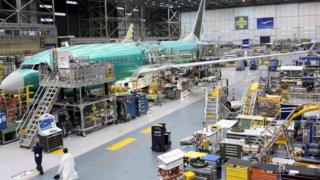
The EU has proposed tariffs on $20bn (£15bn) of US goods in a long-running dispute over Boeing aircraft subsidies.

The proposal comes after the WTO said earlier this month that the US had failed to remove some Boeing subsidies.

The EU move comes after the US said it was considering tariffs on about $11bn (£8.4bn) worth of EU goods in response to Airbus subsidies.

And it comes after the EU approved plans in April for trade talks with the USdesigned to reduce trade barriers.

EU Trade Commissioner Cecilia Malmstrรถm said: "European companies must be able to compete on fair and equal terms.

"The recent WTO ruling on US subsidies for Boeing is important in this respect. We must continue to defend a level-playing field for our industry."

Questioning the Reasons For U.S. Involvement in the Middle East

The reasons for U.S. involvement in the Middle East are becoming obsolete, but policy and strategy aren’t keeping pace. Find out more when you subscribe to World Politics Review (WPR). 

The security environment in the Middle East may be the most complex on earth, with an intricate, volatile and sometimes shifting mixture of destabilizing forces and hostilities. There are deadly power struggles within and between nations. And behind it all is the Middle East’s massive oil production, on which the global economy depends. 

A U.S. soldier sits on an armored vehicle on a road leading to the tense front line with Turkish-backed fighters in Manbij, northern Syria, April 4, 2018 (AP photo by Hussein Malla). 

US-Japan Trade Agreement Negotiations: Why Now?

By Yuma Osaki

In a two-day meeting that started on April 15, trade delegates from Japan and the United States held the first round of trade agreement negotiations. The meeting is expected to set the ground for a series of upcoming summits between Prime Minister Shinzo Abe and President Donald Trump. While the kick-off of the official trade talks could have started much earlier, as the Trump administration already gave Congress its 90-day advance notification on October 16, 2018, the timing of the initial negotiation between Japanese Economic Revitalization Minister Toshimitsu Motegi and United States Trade Representative (USTR) Robert Lighthizer seems to have been carefully arranged by the Japanese side. Given the wish on both sides for a quick deal, the outcome will be a “skinny” deal at best, yet the achievement could be a win-win for both leaders if it’s materialized efficiently.

However, one may wonder why Japan is now ready to give Trump a trade trophy, even though it is not necessary for the Japanese side to capitulate immediately to his trade demands.

A Long Path to Bilateral Trade Negotiations — or Just Dรฉjร  Vu?

Why Turkey Won’t Align With Russia

Xander Snyder 


Over the past year, many observers have suggested that Russia and Turkey appear to be setting their historical differences aside and building an unlikely but mutually beneficial alliance. As evidence, they would point to Russia’s tacit approval of Turkish operations against Kurdish militias in northern Syria, their cooperation in creating a demilitarized zone in Idlib, and Turkey’s continued defiance of the U.S. and NATO in pursuing its purchase of Russian-made S-400 missile defense systems.

But appearances can be deceptive. There are still myriad issues standing between the two countries, most recently their support of opposing sides in the Syrian war. Alliances require shared interests – not just opportunities for temporary cooperation but a long-term convergence on issues of vital importance. Forming new alliances, therefore, requires countries to adopt new interests or, at least, new strategies for pursuing their interests. In the case of Russia and Turkey, there’s little evidence this has happened.

A History of Conflict

Great Power Competition Feeds the Threat Posed by Anti-Satellite Technology

By Omar Lamrani


As demonstrated by India's latest anti-satellite (ASAT) test, the number of countries willing to pursue ASAT weapons and capabilities in space is growing. The rising great power competition among Russia, China and the United States is driving ASAT use and development. ASAT technology produces dangerous space debris that can disable important satellites and challenge the long-term sustainable use of space. Unfortunately, adequate norms and treaties do not exist to regulate the ASAT risk, and the tense dynamics among global powers suggest they are unlikely to be formed in the near future.


Another country, another test, yet more debris floating through the crowded realm of near-orbit space. On March 27, India became the latest country to carry out an anti-satellite (ASAT) test resulting in debris. India sought to frame the test as a sign of its prowess in space, but on a global level, the event serves as an important wake-up call about the risks of ASAT-related technology.


The Big Picture

When malware hits an F-16, call these new Air Force cyber teams

By: Mark Pomerleau  

The Air Force is creating a cadre of specialized defensive cyber teams that will protect critical Air Force missions and installations.

These teams, known as mission defense teams, “have got to be there on the flight team to support mission generation” and will be “no different than the weapons troop or avionics or crew chief,” Ted Uchida, deputy director of operations at Air Combat Command, said April 11 at an event at Langley Air Force Base.

The teams are an outgrowth of the service’s communications squadrons, which in the past performed much of the IT and cyber defense at the base or wing level. The new crews differ from the cyber protection teams that the Air Force, and other services, provide to U.S. Cyber Command. They are made possible, in part, because the Air Force is outsourcing the more mundane tasks of IT management on installation’s to industry, freeing these folks to focus on cyber defense.

Already, Air Force officials see a need for this skillset. For example, certain mission defense teams could be assigned to defend the avionics in a fighter jet from malware. Uchida said one Air Force staffer recently discovered malware on the memory loader verifier on an F-16 leading officials to ask how it got there and whether it penetrated the aircraft’s primary system.

Digital identification: A key to inclusive growthApril 2019 | Report

By Olivia White, Anu Madgavkar, James Manyika, Deepa Mahajan, Jacques Bughin, Mike McCarthy, and Owen Sperling

Digital identification, or “digital ID,” can be authenticated unambiguously through a digital channel, unlocking access to banking, government benefits, education, and many other critical services. The risks and potential for misuse of digital ID are real and deserve careful attention. When well-designed, digital ID not only enables civic and social empowerment, but also makes possible real and inclusive economic gains—a less well understood aspect of the technology. In this research, we develop a framework to understand the potential economic impact of digital ID, informed by an analysis of nearly 100 ways in which digital ID can be used in Brazil, China, Ethiopia, India, Nigeria, the United Kingdom, and the United States.

In our seven focus countries, extending full digital ID coverage could unlock economic value equivalent to 3 to 13 percent of GDP in 2030, with just over half of the potential economic value potentially accruing to individuals. Realizing this value is by no means certain or automatic—it necessitates multiple high-value use cases and high levels of usage—and not all of these potential sources of economic value may translate into GDP. Yet, with careful system design and policies to promote uptake and mitigate risks, digital ID could be a powerful key to inclusive growth, offering quantifiable economic value to individuals, beyond significant noneconomic benefits.

Read William Barr’s full remarks on the Robert Mueller report

By Heather Timmons

US attorney general William Barr held a press conference April 18 at the Department of Justice headquarters on special counsel Robert Mueller’s investigation into Russian meddling in the 2016 presidential election. A redacted copy of Mueller’s report will be available on the DOJ’s website shortly. Here are his full remarks:

Good Morning. Thank you all for being here today.

On March 22, 2019, Special Counsel Robert Mueller concluded his investigation of matters related to Russian attempts to interfere in the 2016 presidential election and submitted his confidential report to me pursuant to Department of Justice regulations.

As I said during my Senate confirmation hearing and since, I am committed to ensuring the greatest possible degree of transparency concerning the Special Counsel’s investigation, consistent with the law.

At 11:00 this morning, I will transmit copies of a public version of the Special Counsel’s report to the Chairmen and Ranking Members of the House and Senate Judiciary Committees. The Department of Justice will also make the report available to the American public by posting it on the Department’s website after it has been delivered to Congress.

How automation could affect employment for women and minorities April 2019 | Article


As automation technologies advance—from natural language processing and machine learning to self-driving vehicles—the number of jobs, as well as their very nature, will be affected. In the United Kingdom, our research suggests that, with the right actions, women could benefit from the effects of advanced technologies on skills and jobs. In the United States, without concerted effort—including retraining—the impact of automation could heighten existing disparities for African American workers. The two stories that follow look at the magnitude of potential change and steps that could mitigate the downside.
Automation and the future of women at work

Much has already been said about how automation and artificial intelligence will affect employment and wages. But what about the impact of these trends on women in the workplace?

Invisible, Essential: Open Architecture For Army Aircraft

By SYDNEY J. FREEDBERG JR

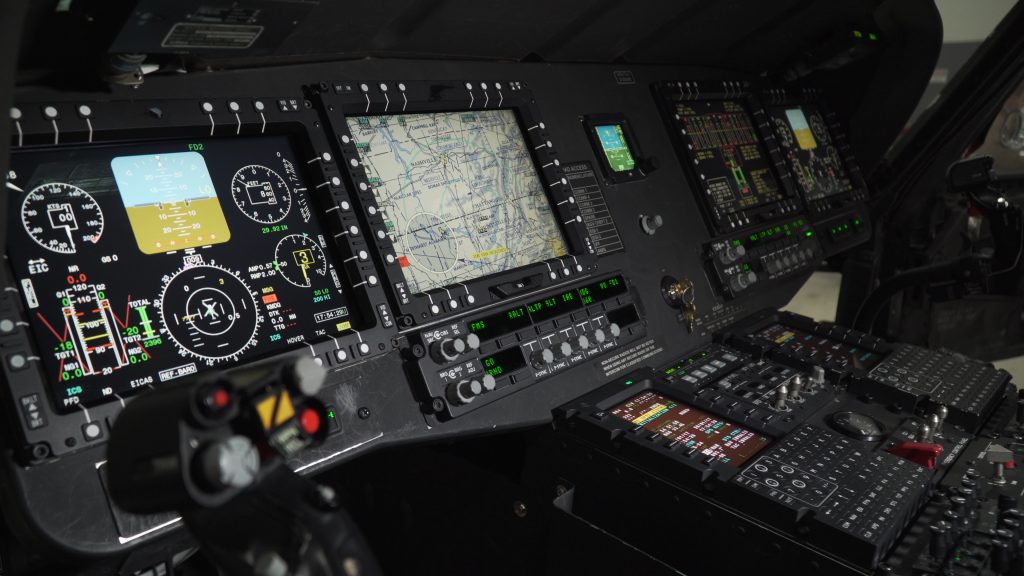
The digital, open-architecture cockpit of the upgraded UH-60V “Victor” Black Hawk

NASHVILLE: While sexy photos of revolutionary aircraft naturally get the most attention, one of the most important pieces of the Army’s Future Vertical Lift effort is actually invisible. Called the Modular Open Systems Architecture (MOSA), it’s a complex set of software and hardware protocols, to be used by all FVL aircraft, both manned — the FARA scout and the FLRAA transport — and unmanned — the FTUASand AUAS drones. It should allow the Army to upgrade its future aircraft easily — mixing and matching the best offerings from different vendors — as technologies, threats, and missions change.

This year, the Army’s conducting five demonstrations of, in effect, prototypes for MOSA. (The mind-numbing full name is Joint Multi-Role Mission Systems Architecture Demonstration, JMR MSAD). The service has awarded at least seven contracts, three of them for what it’s calling Mission Systems Integrators, although the only competitor to publicly announce its award is Collins Aerospace (a division of United Technologies that includes the former Rockwell Collins). The MOSA demos will wrap up late next year. A proto-prototype of sorts is being developed for the UH-60V “Victor” model of the Black Hawk helicopter.

An Escalation in Tripoli Pushes Libya to the Brink of Open War


By launching a military offensive on Tripoli, Khalifa Hifter has made it clear that he views himself as the sole solution to Libya's political crisis, and that any negotiations to weaken his control of the Libyan National Army (LNA) are unacceptable. Hifter's staunch commitment to these tenets will continue to prove problematic for outside efforts to unify Libya's competing governments, and will make it difficult for him to agree to a cease-fire.  France, the United Arab Emirates, Egypt and Russia will continue to support Hifter militarily and politically — not wanting to lose their investments in him as a leader over the past five years.  The offensive has also likely ended the possibility of any political negotiations between the LNA and the Government of National Accord for the time being by hardening Western opposition to Hifter. 

Libya is, once again, teetering on the edge of full-scale civil war. On April 4, Field Marshal Khalifa Hifter and his Libyan National Army (LNA) launched an offensive against Tripoli, likely as a ploy to gain an unassailable position before his rivals with the Government of National Accord (GNA) could respond. But it appears Hifter may have underestimated his enemy, as his attack was quickly met with a fierce and unified resistance. 

Since then, the commander of the GNA's southern forces has reportedly seized control of Sebha in the Fezzan region — taking advantage of the LNA's reduced presence there after the fighting in Tripoli broke out. Meanwhile, the Islamic State has already claimed two attacks, on April 9 and April 11, in central Libya. 

The Big Picture

22 April 2019

Strategic Chabahar port is win-win for India, Iran and Afghanistan

By J K Verma 

China, the world’s second largest economy, thinks that India may soon challenge its supremacy not only in Asia but also in the world arena. Hence it encircles India through a ‘string of pearls’, a term used for a network of Chinese military and commercial installations spread from China to Port Sudan in the Horn of Africa. Besides encircling India, China also assists and instigates Pakistan to carry out hostile activities against India.

In view of the Chinese-Pakistan axis, Indian policy planners in 2015 signed an agreement with Iran to develop Chabahar port. It is a trilateral contract between India, Iran and Afghanistan. China is also developing Gwadar Port in Pakistan which is just 400 km by road and 78 km by sea. Chabahar has two ports, namely Shahid Kalantari and Shahid Beheshti. Both ports have five berths each. Chabahar port is situated on the Gulf of Oman and at the mouth of the Strait of Hormuz, giving Iran direct access to Indian Ocean.

The Notre Dame Fire – Why it strikes a chord in many Indian hearts and minds

Jay Bhattacharjee

For the last few days, the world’s attention has been riveted on a terrible tragedy that has struck one country and one city. The fire that engulfed the Notre Dame Cathedral in Paris has saddened and grieved millions of people all over the world, even those who have little in common with France and Paris.

This is because the magnificent structure in the heart of Paris (and indeed the heart of the French Republic, because this building is the point from which all physical distances in France are measured) is an inseparable part of the world’s patrimony, in the same way as the ancient temples in our own country, the Parthenon in Greece, Machu Pichu in Peru, the shrines in China and the Pyramids of Egypt, just to give a few random examples.

Emmanuel Macron, the French President who, in my opinion (and that of most of his fellow citizens), ranks as one of the least distinguished holders of this office, salvaged some esteem when he came up with a very moving response to the tragedy that had struck his nation: “Notre Dame de Paris is our history, our literature, the place where we have lived all our great moments, epidemics, wars and liberation. It is the epicentre of our lives, it is the cathedral of all the French. This is history, it is ours and it is burning. A part of us burns”.

Pakistan’s Economic Woes: The Way Forward

By Shahroo Malik

Pakistan’s economic woes – dwindling foreign exchange reserves, low exports, high inflation, growing fiscal deficit, and current account deficit – are nothing new, and once again, the country finds itself knocking on the doors of the International Monetary Fund (IMF) for what will be its 22nd loan. While the exact amount of this package has not been determined, Pakistan already owes the IMF billions from previous programs. Indeed, 30.7 percent of Pakistan’s government expenditure is earmarked for debt servicing, which cannot be supported by its decreasing revenues. Already on the Financial Action Task Force’s (FATF) grey list, and with the current Pakistan Tehreek-e-Insaaf (PTI) government enjoying internal institutional consensus on the national agenda, Pakistan must focus its attention on resolving its economic woes before it finds itself on the shores of bankruptcy.

Current State of the Economy

Delivering Prosperity in the Indo-Pacific: An Agenda for Australia and the United States


The ongoing shift in global economic weight to the Indo-Pacific1 presents tremendous opportunities for the United States and Australia, along with risks and significant challenges. Both countries share a deep strategic interest in working together to keep Asian markets open, contestable, and rules-based. In doing so, Washington and Canberra can help maximize the prosperity and security of the American and Australian people, as well as those in the region. It is an opportunity too great to miss.

A major challenge for the United States and Australia in realizing these opportunities is to reinforce and extend the practices, rules, and institutions supporting open and well-functioning markets, particularly as emerging market economies become even more important in global growth. Both countries already work together on common interests in the Asia-Pacific Economic Cooperation (APEC) forum, the Group of 20 (G20), and other forums, but much more can be achieved with deeper and more purposeful cooperation.

As the regional and world order becomes more multipolar, seizing these economic opportunities is a necessary part of a portfolio approach to meet the security challenges of more assertive military and cyber activities. Economic engagement generates prosperity and influence for the United States and Australia, and it creates a much deeper and more resilient set of interests in the peaceful resolution of conflict.

Air Force to Begin Shifting Research Funds to These Kinds of Next-Gen Weapons

BY PATRICK TUCKER

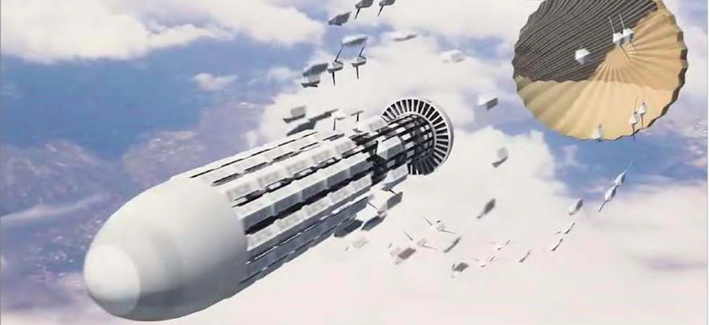
The Pentagon’s continues to shift focus toward Moscow and Beijing with a new push for tomorrow’s drone swarms and smart missiles.

Taking a page from Silicon Valley, the Air Force has set up a new way to fund science and technology in the areas it sees as most important to the race with China and Russia. To lead the effort the military service branch will create a new chief technology officer position to oversee the development of next-generation capabilities, the Air Force announced on Wednesday at the unveiling of the service’s new science and technology strategy for 2030.

The Air Force funds lots of research, much of it on a small scale: a bit of money here to develop a new antenna capability, a bit there to teach drones to do a new trick, or a bit more there to create a new type of space-age material. The research sometimes makes its way into a formal program of record or an actual new weapon, but at the beginning of the process there is no way to know.

232 Unmanned Ships May Be Key To Countering China, Russia

By PAUL MCLEARY

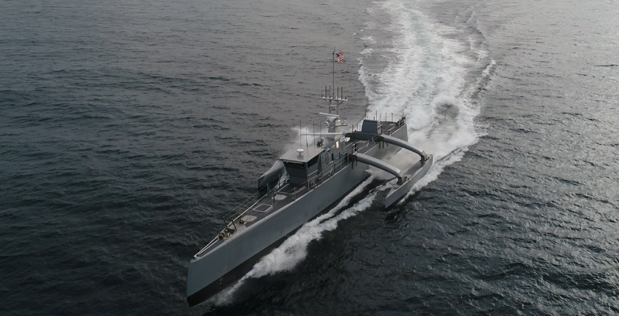
The Sea Hunter, an experimental unmanned submarine-hunter.

WASHINGTON: The Navy is scrambling to write its new acquisition and operational playbook on the fly, a decision based as much on what US rivals are doing as it is on what the service hasn’t done in recent decades.

The construction and innovation booms being undertaken by the Chinese — and to a lesser extent Russian — navies, are forcing the admirals at the Pentagon to push new, still mostly theoretical, unmanned technologies into the water as quickly as possible for urgent make-or-break tests.

The biggest gamble — with potentially the highest payoff — is the $3.7 billion worth of unmanned programs the service included in its 2020 budget submission. The spending includes $447 million to buy two large unmanned surface vehicles that can provide a variety of missions from long-range surveillance to offensive operations.

After the 2020 budget, the Navy plans to buy two LUSVs a year until 2024, for a total of about $2.7 billion. The Navy is making plans to buy 232 unmanned platforms of different sizes and configurations over the next several years.

The US-China economic relationship: A comprehensive approach

Joshua P. Meltzer and Neena Shenai

EXECUTIVE SUMMARY

The U.S.-China economic relationship has reached a critical juncture. Over the past year, the U.S. has imposed tariffs on $250 billion worth of Chinese imports and China has retaliated, raising tariffs on U.S. exports. At the G-20 leaders’ summit in November 2018, Presidents Trump and Xi agreed to resolve the trade dispute within 90 days—by March 1, 2019, though this deadline has been recently extended.

The U.S. concerns that underpin these bilateral trade tensions stem from specific practices endemic to China’s economic model that systematically tilt the playing field in favor of Chinese companies domestically and globally. Progress on specific trade issues will require China to comply with its World Trade Organization (WTO) commitments and to make certain reforms that will likely touch on areas of state control over the economy. In addition, new trade rules are needed to address China’s economic practices not covered by its WTO commitments, including in areas such as state-owned enterprises (SOEs), certain subsidies, and digital trade. These issues also come at a time of increasing U.S. concern over the national security risks China presents, particularly with respect to technology access.

A New Consensus Is Emerging On How to Handle The Risk from China’s 5G

BY PATRICK TUCKER

Much of the Western intelligence debate around Chinese high-speed 5G technology has focused on hardware and software. Once the hardware is already out in the wild — which most think is inevitable — the future of the fight is in managing risk. It’s doable, if not yet widely advertised, according to several experts speaking at a U.S. intelligence conference this week, by quarantining Chinese equipment and deploying smarter electromagnetic spectrum management tools to better handle threats.

Bottom line: Huawei leads the world in the ability to rapidly produce cheap telecom hardware (as well as the underlying software.) Recent reports, including one from NATO, state it plainly. It’s one reason why European countries, including U.S.allies like Germany and the U.K., have been reluctant to ban tech from Huawei outright, even in the face of heavy U.S. pressure.

But — quietly — many European countries like the U.K. and France actually are banning Huawei’s 5G tech in part by effectively quarantining it away from vital parts of infrastructure, or military and intelligence activities, according to James Lewis, senior vice president at the Center for Strategic and International Studies. “They don’t let Huawei near their sensitive intelligence facilities, their sensitive military facilities,” said Lewis.

Beyond Incirlik

The Turkish air base has become a point of contention in negotiations between Washington and Ankara.

U.S.-Turkish relations are strained. Turkey is frustrated over U.S. support for Kurdish groups in Syria. Turkish President Recep Tayyip Erdogan is still incensed that Fethullah Gulen, the cleric who Erdogan believes orchestrated the 2016 coup attempt, remains ensconced in the Poconos. The two countries are currently at an impasse over Turkey’s acquisition of Russian S-400 missile defense systems. None of these issues are likely to fundamentally alter the strategic alliance between Washington and Ankara, but there could be short-term ramifications if the two can’t compromise where it matters most.

Turkey has a key point of leverage over the United States: Incirlik Air Base. The U.S. has had a permanent military presence there since 1954 (it still has as many as 50 B61 gravity bombs, a tactical nuclear weapon, at Incirlik). The base has been critical for U.S. operations in the Middle East, though it has always been a point of contention. When Turkey invaded Cyprus in 1974, the U.S. put an arms embargo on Turkey, and Ankara retaliated by blocking U.S. access to Incirlik for five years (though it allowed NATO forces to continue using the base). Over the years, Turkey has tried to limit U.S. activity on the base in other ways. Most recently, in 2003, Turkey blocked the U.S. from using Incirlik to support its invasion of Iraq.