30 May 2019

India, Japan, Sri Lanka move to counter China


NEW DELHI: India has decided to join hands with Japan and Sri Lanka to expand the port in Colombo as part of efforts to balance Chinese inroads into the neighbourhood. This marks one of the government’s first foreign policy moves following its reelection. Sri Lankan President Maithripala Sirisena’s proposed trip to India for Narendra Modi’s inauguration this week is seen as a boost in this regard with the three countries planning to sign a memorandum of understanding (MoU) in the near future, ET has learnt. The trilateral project’s goals are to increase Colombo port’s container volume and increase transportation in and around South Asia, according to persons aware of the matter. 

The deal comes as China has been using its Belt and Road Initiative (BRI) projects to increase its influence in the region. India and Japan are also eyeing joint development of the Trincomalee port in eastern Sri Lanka. India along with Japan aspires to pursue a Free and Open Pacific Ocean and Indian Ocean strategy. Colombo port, through which 90% of Sri Lanka’s seaborne goods pass, connects Europe, the Middle East, Africa and Asia. It had traffic of 6.21 million twenty-foot equivalent units in 2017, making it Southwest Asia’s busiest port. 

Five Challenges Facing India's Reelected Government


The world's largest democratic contest has drawn to a close, and the verdict is clear: Narendra Modi has secured another five-year term as India's prime minister. The 68-year-old incumbent led his Bharatiya Janata Party to a victory on May 23, deftly maneuvering his way around the opposition's slings and arrows led by the Indian National Congress.

The Big Picture

As the dust settles following his landslide victory, Indian Prime Minister Narendra Modi will now have to reckon with resolving the myriad of internal and external challenges that continue to hinder India's progress. High unemployment and a cooling economy, as well as looming trade concerns and China's encroachment into South Asia, will be of chief concern for Modi's administration in the coming years, as he attempts to bring the country's burgeoning military and economic power in Asia to a head.

What Colombia Can Teach Us About Afghanistan

By Lionel Beehner and Liam Collins

Two wars, two peace deals. One has held for a few years, after decades of stalled negotiations. The other is still just a “framework” for peace. We’re referring to Colombia and Afghanistan – two countries riddled with longstanding rural insurgencies, drugs, militias, weak centers, cross-border sanctuaries, and poor governance. Are there lessons from Colombia that can be applied to Afghanistan?

In a new report published by West Point’s Modern War Institute, we argue that despite differences, there are commonalities. In Afghanistan, the push for a peace deal is admirable and arguably the correct course, yet the ability to reach a peace deal and a lasting peace will be particularly challenging given many of the conditions that made Colombia ripe for peace are not present in Afghanistan.

The “framework” in Afghanistan was hashed out between Zalmay Khalilzad, an American, and the Taliban. Yet the Afghan government – arguably the most important player in Afghanistan – has been largely cut out of the process. That is hardly a positive omen for Kabul’s future legitimacy. As President Ashraf Ghani noted recently, “The victims of the war are Afghans. So the initiative of peace should be in the hands of Afghans.”

US sees Pakistan-based LeT threat to it in Afghanistan: Pentagon report


WASHINGTON: The US considers Pakistan-based Lashkar-e-Taiba (LeT) as one of the greatest threats to it and allied forces in wartorn Afghanistan, where at least 300 fighters from the terror group are active, a Pentagon report has said. The LeT, designated a global terror organisation by the US and the UN, was responsible for the 2008 Mumbai terror attacks that killed 166 people. Among the 20 prominent terrorist organisations active in Afghanistan, LeT ranks fifth in terms of fighters along with al Qaeda and Islamic Movement of Uzbekistan, stated the Pentagon report, 'Lead Inspector General for Operation Freedom's Sentinel', for the quarter ending March 31. The report said the Department of Defence "identified the Haqqani Network, the Eastern Turkistan Islamic Movement (ETIM) and Lashkar-e-Taiba as groups that present the greatest threat to US and allied forces in Afghanistan". 

The report also stated that an estimated 300 LeT and 1,000 Islamic Emirate High Council operatives are active in the war-torn country. The ISIS-K, Tehrik-e-Taliban Pakistan and Haqqani network with an estimated 3,000-5,000 fighters each top the list of terrorist groups active in Afghanistan, it said. The LeT, formed in the 1980s, is one of the largest terror groups currently operating from Pakistani soil. In December 2001, the Department of State designated LeT as a Foreign Terrorist Organisation. In May 2005, the United Nations (UN) 1267 Sanctions Committee added LeT to the Consolidated UN Security Council Sanctions List. Pakistan banned LeT in 2002, but the group continued to operate through its front organisations - Jamaat-ud-Dawah (JuD) and Falah-e-Insaniyat Foundation (FIF). 

Deaths Rise on Mount Everest as Nepal Issues Additional Permits

By Upendra Man Singh, Binaj Gurubacharya, and Emily Schmall

Scaling Mount Everest was a dream few realized before Nepal opened its side of the mountain to commercial climbing a half-century ago. This year the government issued a record number of permits, leading to traffic jams on the world’s highest peak that likely contributed to the greatest death toll in four years.

As the allure of Everest grows, so have the crowds, with inexperienced climbers faltering on the narrow passageway to the peak and causing deadly delays, veteran climbers said.

After 11 people died this year, Nepal tourism officials have no intention of restricting the number of permits issued, instead encouraging even more tourists and climbers to come “for both pleasure and fame,” said Mohan Krishna Sapkota, secretary at the Ministry of Tourism and Civil Aviation.

Change and Continuity in Intellectual Property Enforcement: The Case of Huawei

By Robert Farley

Intellectual property violations form the basis of the U.S. complaints against Huawei. The United States has, with some considerable justification, argued that Huawei has systematically attacked the trade secrets of its partners, and that it created a substructure that facilitates the wider theft of protected Western technology. Moreover, Huawei stands accused of repeatedly infringing on patented technology. In consequence, the United States has undertaken public and widely discussed steps to cut Huawei out of global technology markets.

The steps have dire implications for Huawei, and immense implications for broader U.S. policy in the technology sector. Due to the complexity of the international technology supply chain, it will be exceedingly difficult for Huawei to source components completely from non-U.S. producers. Most non-U.S. producers themselves have considerable connections with U.S. technology firms. Moreover, the United States can lean on foreign technology firms (most of which have significant ties with the U.S. tech sector) to shy away from working with Huawei. In short, Huawei may soon lack the ability to acquire chips from the United States, and from any companies that work with the United States.

Is the U.S.-China Trade War Turning Into a New Cold War?

Kimberly Ann Elliott

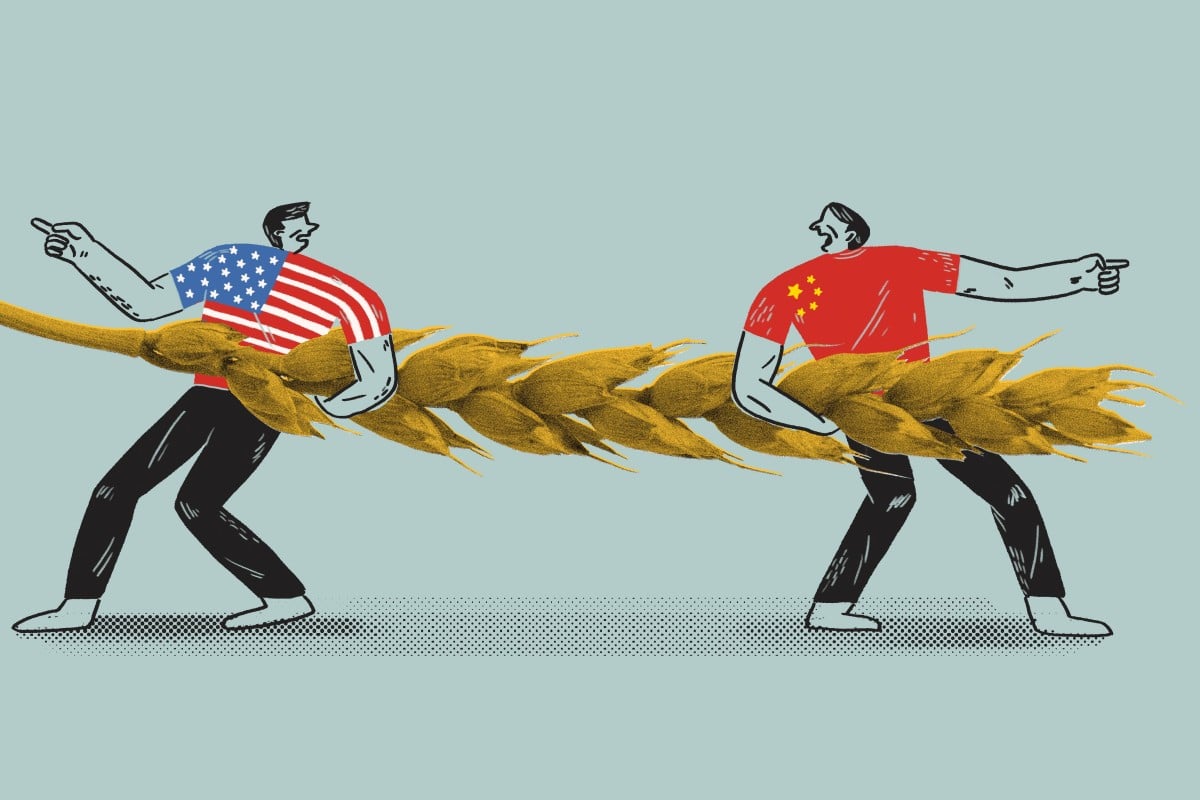
The tit-for-tat trade war between the United States and China is costly enough, but it could be morphing into something far more serious. A week after raising tariffs on $200 billion in imports from China, the Trump administration took aim at Huawei, the Chinese company leading the global race to create new, faster 5G telecommunications networks. The new regulations would, if fully implemented, restrict Huawei’s ability to access the U.S. market, either for exports of its products or for imports of key technologies. There are reasons to be concerned about Beijing using Huawei’s networks for nefarious purposes, as well as legitimate grievances regarding China’s trade and industrial policies. But the costs of President Donald Trump’s trade war are clearly rising, and with them the prospects of an unnecessary cold war with China that would be in no one’s interest.

Until now, Trump’s China policy seemed to be operating on two separate, but parallel, tracks. On the trade track, the investigation into China’s unfair trade practices that injure American firms focused on intellectual property theft and forced technology transfer. The real backdrop was Beijing’s “Made in China 2025” industrial policy, under which the country aims to be the global leader in a number of new and emerging technologies within the next few years. U.S. Trade Representative Robert Lighthizer, a skilled negotiator for whom tariffs are leverage in the negotiations with China, has been the architect of this trade track.

Why China’s dependence on farm subsidies is an obstacle to a trade war deal with the US

Keegan Elmer

In the first of a series on the trade war, Keegan Elmer looks at why China is resisting US demands to cut back on agricultural subsidies.

For Han Yahui in the farming town of Ulanhot in Inner Mongolia, the opening of China’s soybean market to imports in the late 1990s was a harbinger of things to come.

“I witnessed how our industry [almost] collapsed because of cheap imports,” Han said.

Han runs a rural cooperative specialising in organic farming of wheat, soybean and rice on about 133 hectares (328 acres) in northeast China.

She is one of up to 200 million farmers in China who rely on government subsidies and other aid to buy new farm equipment and to produce strategic crops.

Not RIP: How ISIS Is Going Virtual

by Bรผlent Aras

Abu Bakr Al-Baghdadi, the self-declared caliph of the Islamic State (ISIS) appeared recently in a short video to demonstrate he is alive, well and on duty. Gone are the days of his declaration of so-called Caliphate and control of territories in Iraq and Syria the size of Britain with a population of almost ten million. His modest attitude in the video was an attempt to revitalize his shattering organization with a message of thankfulness to those who lost their lives in defense of ISIS, his appreciation of the loyalties of Wilayahs (Provinces) and allegiance to their global cause. It is noteworthy that Baghdadi’s appeared right after the U.S.-supported Kurdish Syrian Democratic Forces captured the last territory of the ISIS in the Syrian town of Baghouz.

Baghdadi now has two options.

How European Politics Is Fracturing

BY ROBBIE GRAMER 

BREMEN, Germany—The middle-aged man in the bright pink sweatshirt held the microphone up to his mouth, looked over the mostly gray-haired audience, and began rapping about Europe. “Europa ist die Antwort! Europa ist die Antwort!” he shouted between rapid-fire verses. (Europe is the answer! Europe is the answer!)

It was the warm-up act for an all-star cast of Germany’s center-left Social Democratic Party (SPD), which was desperately trying to court the youth vote in Bremen ahead of contentious state elections. But the smattering of tepid applause he received from the crowd of several hundred mostly older onlookers, skilled as he was, foreshadowed what was to come.

The Bremen elections coincided with the separate European parliamentary elections that took place on Sunday. Both resulted in serious setbacks for the Social Democrats, but they weren’t alone in their sorrows. Beyond Bremen and across Europe, many top centrist parties lost big or barely clung to power, while smaller parties representing the far-right, environmentalists, and free market liberals made significant gains.

US Forces Korea Commander: US-South Korea Readiness Hasn’t ‘Slowed Down One Bit’

By Ankit Panda

Speaking last week in Hawaii, the top military officer in charge of U.S. military forces in South Korea said that recent adjustments to allied exercises had not adversely affected readiness for allied forces.

General Robert Abrams, the commander of U.S. Forces Korea and United Nations Command, said that the militaries of the United States and South Korea had conducted more than 100 exercises, adding that recent modifications to exercises were “prudent action in support of diplomacy.”

Earlier this year, Seoul and Washington announced that the usual springtime Foal Eagle-Key Resolve series of major military exercises would be cancelled and a new allied exercise, named Dong Maeng (Korean for “alliance”) would replace it.

“I want to be crystal clear about it: combined training and readiness haven’t slowed down one bit,” Abrams said. “We are continuing to conduct very rigorous combined training at echelon,” he added.

The Russian Nuclear Threat

By Mark B. Schneider

Introduction

The U.S. mainstream view of Russia has changed quite a bit in the last twenty years, particularly in the last five. We have moved from the fantasy that there was no threat from Russia after the demise of the Soviet Union to a recognition of a serious Russian threat to the U.S. and its allies, including a nuclear threat in the last two years of the Obama administration and the Trump administration. However, characterizing the relationship between the U.S. and Russia as “competition” as it now appears in U.S. Government documents[1], does not go far enough. Lockheed and Boeing compete; Russia threatens preemptive nuclear attack. It is unilaterally trying to create a sphere of influence in Eastern Europe and the former Soviet states in the classic 19th Century sense while building the largest nuclear arsenal in the world. There is no competition here but rather a serious threat from Russia.

Russia and Nuclear Weapons

How Russia Found a Disinformation Haven in America

by Rawi Abdelal Galit Goldstein

Americans continue to discuss Russia’s information operations efforts in the wrong way. We have wasted time debating whether “Russia” or “Russians”—the government or government-connected individuals—meddled in the 2016 U.S. presidential election. The Mueller Report definitively established that the Russians, both through the Main Intelligence Directorate (GRU) and the Internet Research Agency (IRA), undertook information operations campaigns. This has been reasonably clear for a long time—even when excluding evidence put forward by government sources, for the benefit of the paranoid. Some on America’s Left and in the Center have been unable to drop the idea that President Donald Trump could not have won without foreign help. Likewise, the American Right has been unable to drop the idea that there is a “deep state” Leftist media conspiracy bent on undermining a democratically elected president. And for now, we will leave aside critiquing the collective shock that foreign “meddling” could influence elections in the United States, a nation that has worked to promote its interests, in small or large ways, in many elections around the world—including every election conducted in post–Soviet Russia.

The US falls behind international efforts to rein in technology platforms

Clara Hendrickson

The International Grand Committee on Big Data, Privacy, and Democracy, a unique collaboration between lawmakers determined to bring greater accountability to large online platforms, convenes in Ottawa this week. The members of parliament that make up the grand committee hail from a number of countries concerned about the effects of information technology on their nations’ social and political life, including Argentina, Canada, Chile, France, Germany, Ireland, Latvia, Singapore, Ukraine, and the United Kingdom. With many of these countries confronting upcoming elections, their lawmakers gather to question representatives from Facebook, Google, and Twitter on data security, user privacy, and foreign influence campaigns.

This grand committee meeting is the latest sign that the international mood toward large technology companies has permanently shifted from its early enthusiasm toward profound concern. When activists used social media to organize the Arab Spring protests, information technology was heralded as a tool for democratic progress. In the intervening years, events from Russia’s online influence campaign ahead of the 2016 U.S. presidential election to the livestreamed massacre at two mosques in Christchurch, have spawned a global “techlash.” Calling out the ways in which information technology poses a serious threat to democratic societies, an international chorus has declared the end to an era of self-regulation.

The Meaning of Memorial Day

By George Friedman

I’m writing this on Memorial Day, a day dedicated to remembering those who died fighting for the United States and to enjoying the first outdoor gatherings of the summer. For some, marking the day by enjoying the pleasures of a barbecue seems a betrayal of the dead. For me, it is a celebration of life. The dead put themselves in harm’s way, some out of choice and some out of obligation. The deaths of the latter are no less noble for that. The deaths of the former no less tragic. Having a party and giving the meaning of the occasion little thought is not, in my view, a betrayal of the dead but the acceptance of their gift.

War is not far from my family. My son was in the Air Force, and our daughter and her husband were in the Army. The latter both served multiple tours in Iraq, and my son helped design the tools of war. The service of all three caused us anxiety, but we were especially uneasy about our daughter. I had encouraged her to choose the route that ultimately led her to serve with the First Cavalry in Iraq. Men have gone off to war for millennia, but seeing your daughter place her body in harm’s way is particularly agonizing. I understand that it is impolite to imply that women are different from men, but it is undeniable that fathers view their daughters differently than they view their sons. We are enormously proud of her, yet we are challenging the history of human practice in sending women to war. My generation brought forth this change, and it is the generation the least at peace with what we wrought.

How the Return of Iranian-Backed Militias From Syria Complicates U.S. Strategy

Candace Rondeaux 

In the high-stakes game between Tehran and Washington, it is often hard to tell who is really bluffing. This week, President Donald Trump threatened that a war would be “the official end of Iran,” responding in part to reports that Qassem Soleimani, the head of the Islamic Revolutionary Guard Corps’ elite Quds Force, had urged leaders of Iranian-backed militias across the Middle East to “prepare for proxy war.” For those counting cards, however, Iran may already have tipped its hand. 

The recent return to Iran of a wave of fighters from Liwa Fatemiyoun, an Iranian-backed militia made up of ethnic Afghan Hazaras that has been fighting in Syria since the civil war’s early days, suggests Tehran may be anticipating a different kind of proxy war altogether. With deep roots in Afghanistan’s small minority Shiite community, the Afghan Hazaras that make up the bulk of Liwa Fatemiyoun’s forces have historically punched well above their weight. While much of the focus on the fallout from Syria’s war has been on the risks posed by fighters from the Islamic State returning home, the implications of thousands of Iranian proxies leaving the Syrian front for their home turf has been overlooked.

The Dangerous Misperceptions That Could Push America to Disaster

Steven Metz 

As a late entrant to the game of high-stakes statecraft, having expanded in size and influence in relative isolation, the United States has always had a peculiar approach to the world. It has been characterized most of all by a pervasive tendency to assume that other nations and other peoples see politics and security the same way that Americans do. But not surprisingly, that leads to a lot of misperceptions. Today, those misperceptions, propelled by the Trump administration’s eccentric approach to statecraft, are becoming increasingly dangerous as America’s margin for error in its foreign policy decreases. If left unchecked, these chronic misunderstandings may push the United States into an unintended crisis or conflict. 

U.S. Security Policy in the Trump Era Has Been Marked by Change—and Continuity


When President Donald Trump entered office under an “America First” banner, it seemed to herald a new era of U.S. isolationism. More than two years into his term, though, and the shifts in military strategy are minimal. Though their numbers are down, U.S. troops are still stationed in Afghanistan, and the Trump administration left unchanged the strategy against the Islamic State that it inherited from its predecessor. 

Nevertheless, Trump’s isolationist instincts have come into regular tension with his closest advisers, many of whom espouse a more traditional view of American power projection. This was never clearer than in December 2018, when Trump ignored his aides and announced his decision to pull all U.S. troops out of Syria, prompting then-Defense Secretary Jim Mattis to resign in protest. Trump subsequently softened his rhetoric, without definitively articulating a final policy, contributing to the sense of uncertainty over America’s security policymaking. 

The Pentagon is Trying to Secure Its Networks Against Quantum Codebreakers

BY JACK CORRIGAN


The Defense Information Systems Agency is exploring new encryption strategies that could withstand an attack from quantum computers.

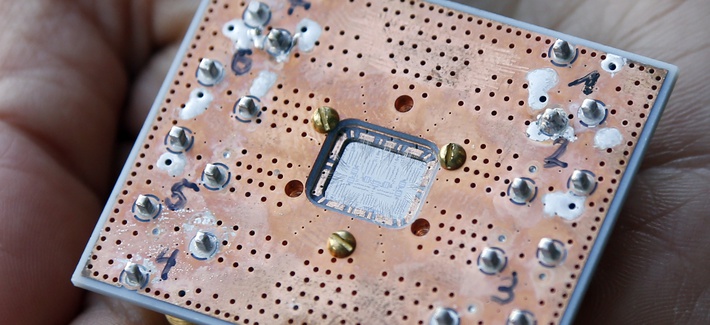
Advances in quantum computing could render the government’s strongest encryption systems obsolete, and the Defense Department is trying to get ahead of the curve.

The Defense Information Systems Agency is asking security researchers to share ideas for protecting the Pentagon’s ITinfrastructure against quantum computers. Though today’s quantum systems are still in their infancy, military officials worry their more powerful successors will be able to easily crack the codes used to secure military networks today.

“The exact time of the arrival of the quantum-computing era is unknown,” DISA officials wrote in the solicitation. “However, [the Defense Department] must begin now to prepare its information security systems to be able to resist attacks from large-scale quantum computers.”

NATO Getting More Aggressive on Offensive Cyber

BY PATRICK TUCKER

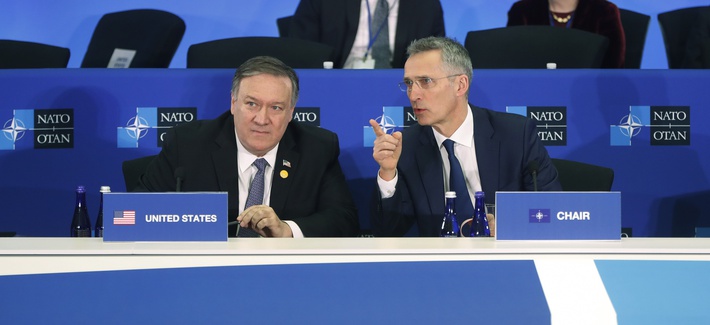
In the latest signal NATO is adopting a tougher posture against cyber and electronic attacks, Secretary General Jens Stoltenberg this week said that the defensive alliance will not remain purely defensive.

Stoltenberg told attendees at the Cyber Defence Pledge conference in London, “We are not limited to respond in cyberspace when we are attacked in cyberspace.” 

NATO members have already “agreed to integrate national cyber capabilities or offensive cyber into Alliance operations and missions,” he said. But the parameters of a NATO response to cyber attacks remains undefined. In 2015, Stoltenberg said that a cyber attack against one member nation could trigger an Article 5 collective response by all members. Yet only once has a collective response ever been invoked, at the request of the United States following the attacks of September 11, 2001. NATO is a defensive organization, so what an offensive cyber posture looks like remains something of a mystery. An Article 5 response can take many different forms.

ALL THE WAYS GOOGLE TRACKS YOU—AND HOW TO STOP IT


YOU'RE PROBABLY AWARE that Google keeps tabs on what you're up to on its devices, apps, and services—but you might not realize just how far its tracking reach extends, into the places you go, the purchases you make, and much more. It's an extensive set of data, but you can take more control over what Google collects about you and how long the company keeps it. Here's how.

It's worth emphasizing first that we're really dealing with two topics: The amount of data Google collects on you, which is a lot, and what Google then does with it. Google would say its data collection policies improve its services—helping you find a restaurant similar ones you've liked previously, say—whereas users might disagree.

A lot of the data we're going to talk about here is only visible to you, or used in a limited way to make ads more relevant to you. Ultimately, your choice is either to trust Google to use all this data responsibly (you can view the privacy policy here), not use Google services at all, or limit the information it can gather about you. Since the first two are basically binary, we're going to focus on that third option.

Empowering the Analyst with AI Technologies


In an age where anything that can be sensed is recorded, it’s becoming increasingly untenable for government and military organizations to rely solely on human processing power alone. Defense analysts are expected to keep their eyes on more people and places than ever before, and our nation’s security posture is growing increasingly complex – so much so that there is simply too much data for them to bring together and analyze in the short time frames required for mission success. Agencies rely on the wisdom and expertise of their analysts and that will never change, but without the computing capabilities of machines, our nation’s readiness will degrade as analysis fails to keep pace with incoming data and the expanding needs of the military.

The benefits of artificial intelligence (AI) technologies are becoming more universally evident and accepted. Not only can these solutions save analysts time and allow them to devote more of their energy to higher-level analysis, they also make it easier for those in charge to make informed decisions. The potential value of these solutions is driving leaders in the defense community to push for AI’s widespread adoption. The Department of Defense, for example, recently ordered the creation of the Joint Artificial Intelligence Center (JAIC), with the goal of quickly launching a series of AI projects, and accelerating the implementation of these new technologies across all department missions. While this is an encouraging step, successfully integrating AI and other analytic tools into current analyst workflows remains an uphill battle. 

Cristina Fernandez’s Gambit Shocks Argentina, Adding Even More Election Drama

Frida Ghitis 

Three days before she was scheduled to go on trial for corruption, and nevertheless still leading in the polls to become the next president of Argentina, former President Cristina Fernandez de Kirchner dropped a bombshell last Saturday. As everyone expected, she was throwing her hat in the ring, but to just about everyone’s surprise, she announced she had decided to run for vice president, not president. Was it madness, desperation—or brilliance? Turns out, there’s method behind Fernandez’s seemingly strange move.

The announcement on May 18 came in a tweet to her more than 5 million followers that included a 12-minute-long campaign video in which she revealed that she had asked Alberto Fernandez—no relation—to run at the head of the ticket, with her as the No. 2. Argentines collectively gasped.

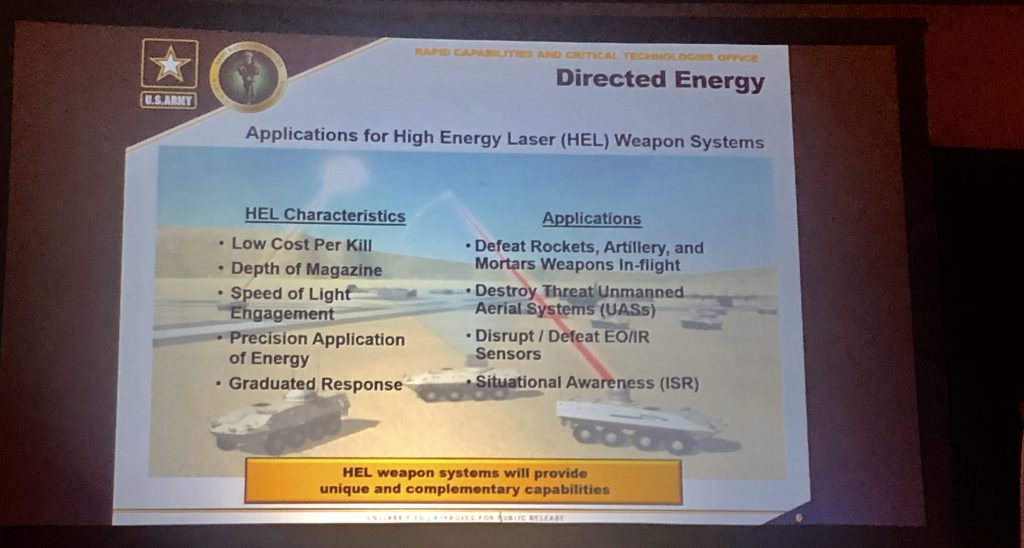
Army Moves Out On Lasers, Hypersonics: Lt. Gen. Thurgood

By COLIN CLARK

“Clearly, we can accelerate directed energy into our formations,” said Thurgood, who as head of the service’s recently reorganized and beefed-up Rapid Capabilities and Critical Technologies Office (RCCTO, manages the service’s most high-tech, high-priority programs: directed energy, space, and hypersonics. (More on hypersonics below). The Army’s especially interested in taking out incoming rockets, artillery, mortar rounds, and small drones with electrically-powered weapons that cost pennies per shot instead of expensive one-use interceptors. But lasers and microwaves have real limits.

For example, they don’t work well against swarms, where lots of small targets are converging on you at once. ”You want to kill a swarm of things — whatever that thing is — lasers are not really a swarm-killing tool. They can kill things fast but they can’t kill a swarm of things fast enough.”

Ransomware attacks in US cities are using a stolen NSA tool

Jon Fingas

The ransomware attacks in Baltimore and other US cities appear to have a common thread: they're using NSA tools on the agency's home soil. In-the-know security experts talking to the New York Times said the malware in the cyberattacks is using the NSA's stolen EternalBlue as a "key component," much like WannaCry and NotPetya. While the full list of affected cities isn't available, San Antonio and the Pennsylvania city of Allentown have reportedly been victims of EternalBlue-based campaigns.

Microsoft has issued fixes for affected Windows version after the NSA disclosed the long-secret vulnerabilities. However, these attacks frequently succeed due to fragmented local governments that tend to be cautious about upgrades. In addition to using a mishmash of software and configurations that complicates updates, cities may be hesitant to patch or upgrade their software due to compatibility concerns and tight budgets.

And unfortunately, the NSA isn't likely to help. While it helped Microsoft patch the security hole after EternalBlue became public in 2017, it has so far turned down discussion of the flaw and hasn't even acknowledged that the code loss took place. The NSA and FBI have declined to comment on the new revelations.

The U.S. Army's 'New' M-1A2C Abrams Tanks Will Enter Service Soon. Check Them Out.

by David Axe 

The U.S. Army’s newest tank in the summer of 2019 should enter service with the first large unit to use the type.

The Army in late 2017 accepted the very first M-1A2C Abrams tanks. Nearly two years later the service has enough of the new vehicles to equip an entire brigade.

“We’re in the throes of getting that together,” Hank Kennedy, a manager at General Dynamics’ tank plant in Lima Ohio, told Lima News.

Volkswagen (VW), the German automobile manufacturer is founded.

The discovery of Flame, a complex malware program targeting computers in Middle Eastern countries, is announced.

29 May 2019

What should be India’s Pakistan Policy in PM Modi’s Second Term?

Commodore Somen Banerjee

William Shakespeare had said, “Uneasy lies the head that wears the crown”. Amidst jubilations, Prime Minister Narendra Modi will be sworn to bear his onerous responsibility for another five years. Since he has returned with full majority, a feat repeated after a gap of 48 years, India and the world looks up to him for decisive leadership. The first 100 days would be critical when the tentative tracks of his policies will be drawn. India’s Pakistan policy will be one such course that would have to be laid with great caution.

Despite the long saga of over 70 years several endeavours to harmonise India-Pakistan relations have eventually landed up in blind alleys. Prime Minister Modi’s first term was no different. So, is there any hope for ringing the curtains down on the prevailing acrimony between India and Pakistan? Nobel laureate Niels Bohr had remarked that ‘every great and deep difficulty bears in itself its solutions. It forces us to change our thinking in order to find it’. With a strong Prime Minister back at the helm, this may be the fitting moment to change the tack of India’s Pakistan policy.

How digital innovation is transforming agriculture: Lessons from India

By Sara Boettiger and Sunil Sanghvi

This publication is drawn from an event jointly organized by the Center for the Advanced Study of India at the University of Pennsylvania, Chicago Council on Global Affairs, World Food Prize Foundation, and McKinsey Center for Agricultural Transformation.

In agriculture, India is a land of contradictions. The country produces 11 percent1 of total global agriculture and, at the same time, is host to the world’s largest number of malnourished people.2 Agriculture provides livelihoods for about half of the Indian population, most of whom are smallholder farmers, yet a majority of government agricultural subsidies are used by medium- and large-scale farmers.3 Parallel to India’s tremendous successes in the modernization of agriculture, smallholder farmers have been marginalized. The average debt of a farming household has risen fivefold in a decade, while increases in farm incomes have not kept up, and more than 300,000 Indian farmers have committed suicide since 1995.4

Given the complexity of Indian agriculture, no single policy change or technology shift will move the country toward its dual goals of raising income for smallholder farmers and continuing to strengthen the competitiveness of Indian agriculture, but the digital transformation of agriculture occurring worldwide holds some promise for progress. This article presents reflections on the topic from four leaders in Indian agriculture. They offer insights illustrating fundamental changes in the structure of the sector and raise questions about whether smallholder farmers will benefit from digital innovation in the same way that larger farmers will.

How India can capitalise on US-China trade war

By Jayant Dasgupta & Harsha Vardhana Singh 

In the major trade standoff between China and the US, US President Donald Trump is steadfast in his approach of raising tariffs and using other policies for pressurising China. On his part, China’s President Xi Jinping has indicated that China will not give in to pressure from the US. “We are now embarking on a new Long March, and we must start all over again,” Xi stated recently. Even if solutions emerge, the problem will keep festering. Thus major international firms that invest in China are examining options to spread their risks and shift some of their existing and new investments to other countries. 

Several persons have written about the possibility of India benefiting through increasing exports to the US and a shift of foreign direct investment (FDI) to India. However, to substantively benefit from this situation, India requires a strategic approach to convert this opportunity into a major gain. India needs to focus on becoming a new powerhouse as a global hub for exports, with a major positive impact on competitiveness and job creation. China’s merchandise exports are almost the same as India’s GDP. Even a 10% shift from Chinese exports to Indian exports would imply over 75% increase in Indian exports. 

India’s lead over China as world’s fastest-growing economy will widen in coming years: Report

Nupur Anand

India’s perch on top as the world’s fastest growing major economy is unlikely to be challenged soon.

Even as the Chinese economy cools due to global trade tensions, India’s GDP growth will hover near 7.5% by 2020, compared with 7.25% in 2019, says a recent report by the Organisation for Economic Cooperation and Development.

The Paris-headquartered think tank expects China’s economy to clock 6% growth in 2020. As a result of the escalating US-China trade war, the economic output in both countries is estimated to be 0.2%-0.3% lower in the current financial year than it would otherwise have been.

Hence, the Indian economy’s lead over China, in terms of growth, is widening.Data: OECD | 2019-20 forecasts

Beware The Decline of U.S. Influence in South Asia

by Minaam Shah

South Asia, for the most part of Donald Trump's presidency, had been quiet up until earlier this year when the region's two main protagonists, India and Pakistan, nearly entered a nuclear face-off. A suicide attack on a paramilitary convoy in Indian controlled Kashmir triggered an aerial dogfight culminating in the capture of an Indian pilot who was later released by Pakistan. The episode marked a major shift in how India responds to terrorist attacks sponsored from across the border: It was the first instance since the Indo-Pak war in 1971 that Indian warplanes had crossed the border and bombed the Pakistani mainland. Naturally, it was expected that the United States, the region's traditional arbitrator, would help diffuse tensions. But for the first time since the early '90s, the United States did not play a significant role in stemming the crisis.

Previously, in 1990 when the insurgency in Kashmir had just begun and a crisis emanated, President George H.W. Bush sent his CIA director to South Asia to calm heads in the region. Later President Bill Clinton was the single greatest influence in bringing an end to the Kargil War of 1999, a year after both India and Pakistan had tested nuclear weapons. Similarly, during the 2001–2002 India-Pakistan standoff, when both countries mobilized troops after an attack on the Indian Parliament, the George W. Bush administration mediated to end the ten-month-long impasse.

China’s Long Game

ANDREW A. MICHTA

The West can have an unbeatable hand against Beijing, if it plays its cards right.

After decades of placing a heavy bet that the People’s Republic of China would peacefully rise to take its rightful place in the global system, the Washington policy community has finally awakened to the dangers of that brash wager. This inversion of the consensus on Beijing’s strategic objectives has been tectonic in scope. Barely a decade ago China’s steady gains against the West in the economic and military realms were seen as signs of a relatively benign transitional phase, after which the country’s export-driven modernization strategy would yield a democratic transformation. If only…

In reality, over the past four decades the Chinese party-state has leveraged its access to open democratic market economies, as well as our knowledge base and educational systems, to drive its own grand strategic project aimed at regrowing the sinews of global economic, military, and political power. The immediate impact of Chinese mercantilism has been felt across the West, reflected in the progressive deindustrialization of the United States, inroads by Chinese capital into European markets, and the narrowing of the technological gap between China and the U.S. in both civilian and military sectors. Most recently, Beijing’s heavy investment into the Belt and Road Initiative—a land-cum-maritime trade infrastructure that, once completed and in combination with Beijing’s effort to build a world-class blue-water navy—reflects China’s strategy to achieve a “grand disconnect”—that is, to finalize the current phase of globalization by ending its dependence on Western technology. China’s goals include establishing an alternative supply chain that is insulated from the current global maritime routes and has the potential of reversing core assumptions about what constitutes the core and the periphery in relations between Eurasia, Europe, and the United States.

When Will the Unipolar World End?

by Peter Harris 

The American Century is fading. At least, that is the consensus among most analysts of international politics. Whether they attribute U.S. decline to domestic dysfunction or to the rise of China and other emerging powers, observers tend to agree that, sooner or later, the “unipolar moment” will give way to an international system populated by more than one superpower.

Even so, it is unclear how we will know when the unipolar world has finally slipped away. What will it take for another global power to equal or surpass the United States? What is the threshold for declaring unipolarity a thing of the past? Most attempts to answer these questions involve fine-tuning existing measures of aggregate national power. From this view, understanding U.S. decline is a question of predicting the moment at which a peer competitor might outstrip America in aggregate material (economic and military) terms.

New START Must Be Extended, Without or Without China

by Daryl Kimball

On May 14, Secretary of State Mike Pompeo traveled to Sochi, Russia to discuss what the State Department called a “new era” in “arms control to address new and emerging threats” with Russian foreign minister Sergey Lavrov and President Vladimir Putin.

The trip follows reports that Donald Trump has directed his administration to seek a new arms control agreement with Russia and China that should include: “all the weapons, all the warheads, and all the missiles.”

U.S. officials, including National Security Advisor John Bolton, have criticized the 2010 New Strategic Arms Reduction Treaty (New START) because it only limits U.S. and Russian deployed strategic nuclear weapons and does not cover Russia’s stockpile of sub-strategic warheads in central storage inside Russia.

The women of Greece are granted the right to vote.

Why Xi's China Is In Jeopardy

by John West

In the eyes of some, after four decades of rapid economic growth, the Chinese economy is unstoppable, and even when it encounters problems, the wisdom and power of the Chinese Communist Party will pull it through.

But not so writes long-time China watcher, George Magnus, who argues persuasively that China faces four critical traps -- a debt trap, a Renminbi trap, a demographic (ageing) trap, and a middle-income trap.

For all the Chinese Communist Party’s reputed brilliance, it has got China mired in enormous debt, like the much-maligned West did over a decade ago writes Magnus. China has seen a rapid tripling in total domestic debt to about 300 per cent of GDP -- notably for debt of state-owned enterprises, local governments, and more recently for citizens. The Chinese government is keen to deleverage its debt. But this is difficult because it is also very keen to maintain economic growth, which it is fuelling with credit expansion.
China [is] mired in enormous debt, like the much-maligned West did over a decade ago