3 June 2019

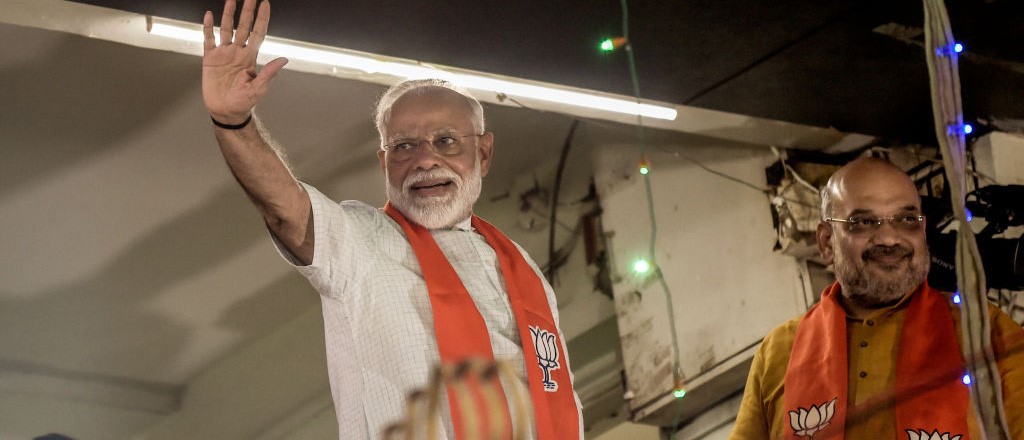
Under Modi 2.0, Will India Embrace Tough Economic Reforms?


After securing a powerful electoral mandate last week for a second five-year term, India’s Prime Minister Narendra Modi has a unique opportunity to embrace economic reforms without populist hues. This is also an imperative because economic factors will decide India’s power in its subcontinent and elsewhere, according to experts at the University of Pennsylvania and elsewhere.

The results of the latest election show that India’s voters are willing to shrug off the lackluster economic performance of the Modi government’s first term that began in 2014 and give him a second chance, the experts noted. Modi 2.0 has its task cut out: Unemployment is at a 45-year high; acute agrarian distress has caused farmer suicides; the banking system is weak and undercapitalized with poor credit disbursements; and the economy continues to suffer painful effects of the November 2016 demonetization of high-value currencies and the introduction of a unified indirect tax regime in mid-2017.
Don’t politicise Indian armed forces. Just look at what it did to our police

NITIN PAI 

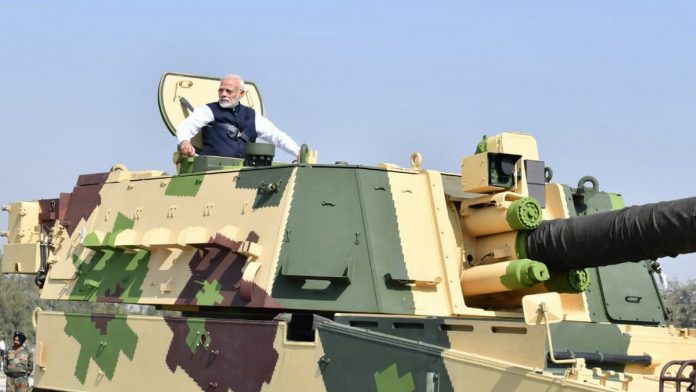
Among the many disturbing issues that came up in the long, bitter election campaign over the past few months was one concerning the politicisation of the armed forces. It demands a dispassionate conversation, and now that the campaign is behind us, it is time to have one.

It is in India’s national interest that our armed forces — as an institution — be non-partisan, professional, and both keep out and be kept out of electoral politics, policy-making and administration. This is the formula that has allowed liberal democracies to protect individual rights, secure prosperity and wield formidable military power without being consumed by it. It is also a formula that served the Indian republic well when it was but an incipient democracy, and generations of our political and military leaders have played their part to keep the civil and military spheres in a state of connected separateness through the ups and downs of our post-Independence history. So, it’s important that we protect and preserve this relationship.

If It’s ‘The Economy, Stupid,’ Why Did Modi Win?

MILAN VAISHNAV

On Thursday, the ruling Bharatiya Janata Party of Prime Minister Narendra Modi cruised to a decisive reelection in India’s gargantuan national election. Political analysts had tipped the BJP-led National Democratic Alliance (NDA) to do well, but few predicted that it would win in a walkover. The alliance clinched a whopping 352 seats, out of 543, in the lower house of parliament, besting its 2014 tally of 336 seats.

One reason many thought the BJP would struggle to replicate its 2014 benchmark is the uncertain state of the Indian economy. Why didn’t a sputtering economy sink — or at the very least shrink — the BJP’s electoral prospects? An initial parsing of available data suggests that the issue of leadership trumped economic grievances. And, paradoxically, despite their economic anxieties, voters viewed Modi as the best placed to redress their complaints.

Five years ago, Modi campaigned on the promise of ushering in “acche din” (good days) for the Indian economy by generating millions of jobs, stimulating rapid growth and revitalizing India’s sluggish investment cycle. While Modi enacted several economic reforms — such as a nationwide sales tax and a new bankruptcy code to wind up failing businesses — large parts of his promised economic narrative never materialized.

Misguided Talks With the Taliban Won’t Bring Peace to Afghanistan

Anand Arni and Pranay Kotasthane

Dark, bizarre, surreal: we are short of adjectives to accurately capture the current political situation in Afghanistan. On May 8, even as they were in talks with the US, the Taliban attacked the Kabul office of a US aid NGO, killing nine. On May 5, the Taliban mounted attacks on armed forces outposts in northern Afghanistan, killing more than a dozen servicemen.

Earlier in March, the Taliban’s shadow police subjected women to public lashings evoking comparisons to their brutal medieval-era style rule between 1996 and 2001. This is to say nothing of the 75,000 plus Afghan civilians who have been killed in heinous acts of terrorism since 2001.

And despite all this, the US seems determined to strike a deal with the Taliban through negotiations which erode the authority of the Afghan national unity government, a government midwifed by them and one that couldn’t have survived this long without them. On May 9, the US Special Representative Zalmay Khalilzad tweeted that slow but steady progress was made on the framework to end the Afghan war and the Doha round of talks were now getting into the ‘nitty-gritty’.

Outlasting the Taliban to Achieve Victory in Afghanistan

By Malcolm E. Whittaker

The Thirty Years War? The Hundred Years War? The Forever War? More than 17 years after the United States invaded Afghanistan to depose the Taliban regime, the United States has failed to crush the resulting Taliban insurgency and cannot withdraw without allowing them to return to power. Political frustration is building. The United States is questioning an ongoing presence. United States Senator Rand Paul recently said, “[W]e’re in an impossible situation. I see no hope for it.” Among the many depressing aspects of the situation is the $13 billion being spent each year in maintaining approximately 16,000 American service members in Afghanistan. The lower estimate for maintaining one service member in Afghanistan is $500,000 per year. More realistic estimates put the number at $1 million per year. (In 2018, to maintain the current force of 16,000, the United States spent $13 billion on U.S. forces and $5 billion on Afghan forces. This provides a cost of approximately $812,000 per U.S. service member per year). The 175,000 strong Afghan National Army (ANA) costs about $5 billion per year or $28,000 per member.

Presently, the United States and NATO maintain discrete military units in Afghanistan. These units operate against the Taliban and train ANA troops. Each year, significant numbers of ANA troops desert. A bigger problem is tens of thousands of ANA “ghost soldiers.” According to a report by the Special Inspector General for Afghan Reconstruction, these “soldiers” are just names on the ANA’s rolls enabling corrupt high-ranking Afghanis to steal their salaries. The present system of giving money to the Afghan government is not creating an ANA that can ever achieve victory.

Eye on China: Trump’s Cards – Xi’s Long March – Sino-Indian Bonhomie – Surveillance in Sri Lanka

BY MANOJ KEWALRAMANI

Over the weekend, report after report told us that a new tech Cold War is upon us as US actions against Huawei constitute the beginning of a new digital iron curtain. This week, there was an adjustment in the steps taken by the US government. First, the Commerce Department granted Huawei a license to buy US goods until August 19 to maintain existing telecoms networks and provide software updates to its smartphones. This 90-day reprieve opens up a window for negotiation. Soon after, Google confirmed that it will be working with Huawei during this period. And then on Thursday, Donald Trump described Huawei as “very dangerous,” but added that “If we made a deal, I could imagine Huawei being possibly included in some form or some part of it.” That’s the kind of rhetoric that undermines Washington’s argument of taking action pursuant to the rule of law rather than for political ends, which is basically what Beijing saysTrump is doing.

Exclusive: Huawei reviewing FedEx relationship, says packages 'diverted'

Sijia Jiang

HONG KONG (Reuters) - Chinese telecoms equipment maker Huawei is reviewing its relationship with FedEx Corp after it claimed the U.S. package delivery company, without detailed explanation, diverted two parcels destined for Huawei addresses in Asia to the United States and attempted to reroute two others.

Huawei told Reuters on Friday that FedEx diverted two packages sent from Japan and addressed to Huawei in China to the United States, and attempted to divert two more packages sent from Vietnam to Huawei offices elsewhere in Asia, all without authorization, providing images of FedEx tracking records.

Reuters could not verify the authenticity of the records. Shown the images of the tracking records, FedEx declined to make any comment, saying company policy prevented it from disclosing customer information. 

Huawei said the four packages only contained documents and “no technology,” which Reuters was unable to independently confirm.

Huawei declined to elaborate on why it thought the packages were diverted.

Huawei: Beijing Retaliates, New Cyber Law Could Block U.S. Technology From China

Zak Doffman

China hit back against Washington on Friday, with the country's Cyberspace Administration issuing a draft set of beefed-up cybersecurity regulations for "public" consultation. The draft stated that "in order to improve the security and controllability of key information infrastructure and maintain national security," companies purchasing "network products and services that affect or may affect national security" will now need to evaluate the national security risk before doing so.

"We don't want to see another wall and we don't want to go through another painful experience," Hu Houkun, the rotating chairman of Huawei, said during a speech near the site of the Berlin Wall, also on Friday. "We don't want to build a new wall in terms of trade, and we don't want to build a new wall in terms of technology either. We need an integrated global ecosystem which can help us to promote faster technological innovation and stronger economic growth."

As Huawei Loses Google, the U.S.-China Tech Cold War Gets Its Iron Curtai

By Li Yuan

China has spent nearly two decades building a digital wall between itself and the rest of the world, a one-way barrier designed to keep out foreign companies like Facebook and Google while allowing Chinese rivals to leave home and expand across the world.

Now President Trump is sealing up that wall from the other side.

Google said on Monday that it would limit the software services it provides to Huawei, the telecommunications giant, after a White House order last week restricted the Chinese company’s access to American technology. Google’s software powers Huawei’s smartphones, and its apps come preloaded on the devices Huawei sells around the world. Depending on how the White House’s order is carried out, that could come to a stop.

For Huawei, the big impact will be abroad, since Chinese customers already have limited access to Google’s services. Google’s move will have its biggest effect in places like Europe, where it has emerged as a big smartphone seller. Other companies will inevitably follow. In effect, the move puts pressure on Huawei’s international expansion dreams.

Trump’s feud with Huawei and China could lead to the balkanization of tech


by Will Knight

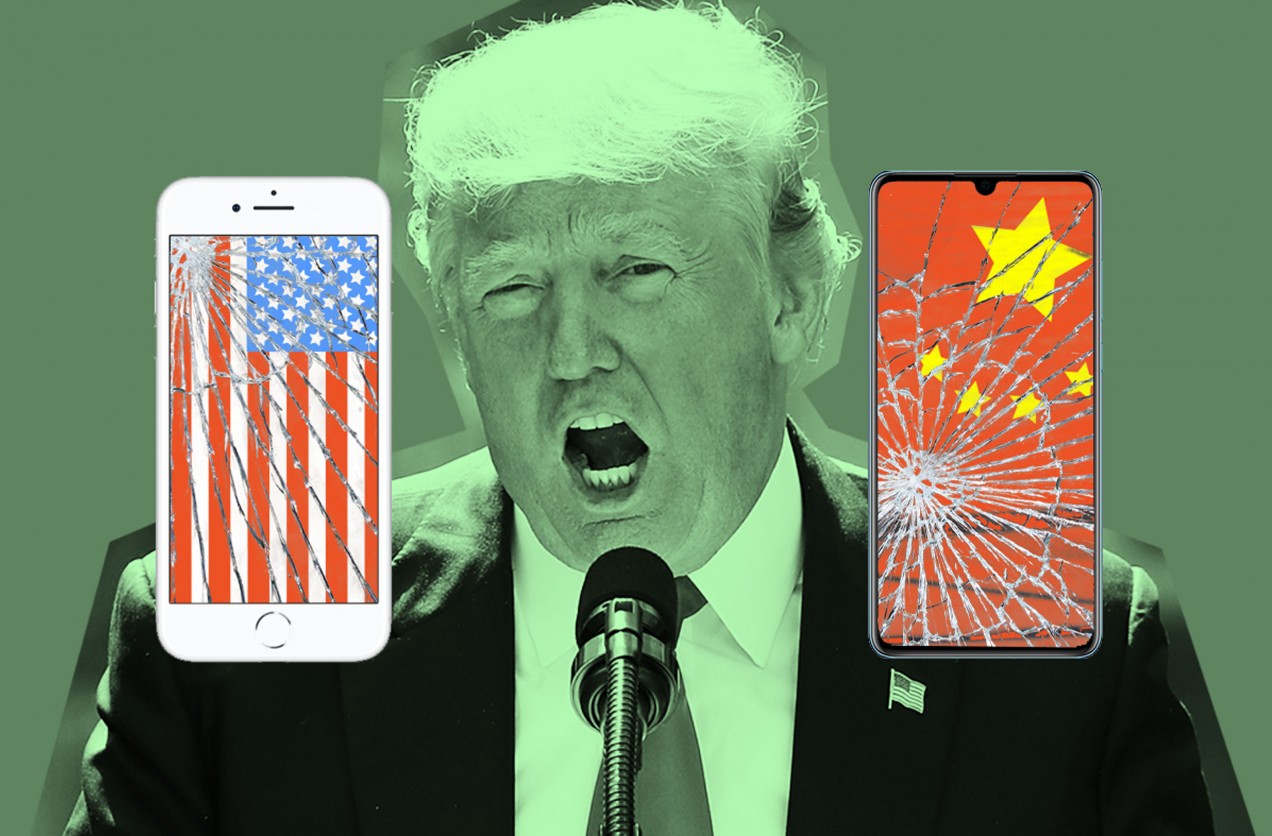
One effect of Donald Trump’s sanctions on China’s tech giant Huawei seems to be a growing nationalistic sentiment among some Chinese consumers: sales of iPhones have fallen in recent months, while Huawei products have seen an uptick. It isn’t hard to find patriotic slogans backing the embattled company on social-media platforms such as Weibo.

It’s not surprising, but it is part of a worrying trend. It’s the latest sign of how America’s foreign policy, and tensions with China especially, are threatening to carve up the tech world along national boundaries.

“We are already seeing the balkanization of technology in many domains,” says Zvika Krieger, head of technology policy at the World Economic Forum. “If this trend continues, companies will have to create different products for different markets, leading to even further divergence.”

Aircraft Carriers vs. China's Missiles: The Military Contest of Our Time


As someone from Capitol Hill recently pointed out to me, much of the discussion about UCAVs is purely theoretical because realistically, in 2030, the only stealth aircraft on the flight deck will be the Lockheed Martin F-35C—there simply isn’t enough time or money to field anything else.

The U.S. Navy’s carrier fleet is increasingly challenged in the Western Pacific as China continues its efforts develop anti-access/area denial (A2/AD) capabilities. Some of those systems include the infamous DF-21D anti-ship ballistic missile and Xian H-6K bomber armed with advanced air launched cruise missiles.

The creation of the Union of South Africa.

Emperor Petronius Maximus is stoned to death by an angry mob while fleeing Rome.

US and Huawei wage battle of self-righteousness

ATSUSHI NAKAYAM


TOKYO -- Huawei Technologies CEO Ren Zhengfei held up a ragged picture during a press conference with Japanese media at the company's Shenzhen headquarters on May 18. The photo was of a badly battered Soviet Ilyushin aircraft from World War II.

"Even if we are beat up, we will make it out [of this fight with the U.S.] alive," he said while holding up the image.

Perhaps Ren was suggesting that he is fighting a righteous battle.

The U.S. has begun to restrict exports of 5G wireless communications components to Huawei, citing the company's devices as a potential backdoor for the Chinese government to obtain information. The ban on Huawei, the U.S. insists, is a justified move on national security grounds.

Ren has denied all of these accusations. He feels that his company is caught up in U.S.-China trade tensions.

The social and geopolitical origins of China’s rise

Branko Milanovic

I read with pleasure the recent book The China Boom: Why China Will Not Rule the World by Ho-fung Hung. You should not be put off by the silly subtitle (probably added by the publisher to contrast Hung’s book to Martin Jacques’s). The book is much better than its subtitle implies. It gives a historical overview of how China’s economy functioned under Ming and Qing, goes over the well-known themes of how and why capitalists failed to create a coherent class in China (unlike in Europe), and how the paternalistic Qing slowed down that process by often supporting workers in disputes with owners, the very opposite of what capitalist-controlled European states did at the time. I wrote about these themes in my reviews of Arrighi, Jacques, and Pomeranz, so I will not go back to them.

There two other interesting things that I find in Hung’s book.

This Is Not a Great-Power Competition

By Michael J. Mazarr

A new era of great-power competition is upon us. That, at least, is the emerging conventional wisdom among foreign policy analysts in Washington. Both the 2017 National Security Strategy (NSS) and the 2018 National Defense Strategy (NDS) signaled a shift in thinking:the unclassified summary of the latter declared that “inter-state strategic competition, not terrorism, is now the primary concern in U.S. national security,” and many have turned to the classic concept of great-power rivals to describe the new reality. “After being dismissed as a phenomenon of an earlier century,” the NSS concluded, “great power competition returned.” Former U.S. Secretary of Defense James Mattis used the term in a speech outlining the NDS. Outside government, references to great-power competition have proliferated over the last several months, the term having become a sort of shorthand for the situation the United States now faces. But does the phrase really capture today’s reality?

Great-power competition describes a specific pattern of relations between states—the sort practiced by the great empires and nation-states from the seventeenth through the early twentieth centuries. China’s rise as an economic and political power and Russia’s increasing assertiveness on the world stage have understandably fueled analogies to that time. But the emerging era does not match the patterns of the past. Treating it as though it does risks misunderstanding both the character of today’s threats and the source of the United States’ competitive advantages.

A CLASSIC PATTERN

Research Fellow for Chinese Defence Policy and Military Modernisation

Meia Nouwens

China’s defence spending: a question of perspective?

Despite the emphasis placed on China’s defence spending, Beijing’s ambitions for defence modernisation and reform may have to jostle for resources in the future. As China faces domestic challenges to achieving the ‘China Dream’, broader national strategic ambitions will have a significant bearing on the country’s spending priorities, writes Meia Nouwens.

Beijing’s second Belt and Road Initiative (BRI) forum, held at the end of April 2019, hinted at some changes of approach to deal with the challenges that the BRI is facing. It also helped add significant context to other recent announcements on defence-spending plans, and how ambitions for defence modernisation and reform may have to jostle for resources in the future with the country’s other broader national strategic ambitions.

On 5 March 2019, at the Two Sessions meeting of the National People’s Congress in Beijing, Premier Li Keqiang announced that China’s defence budget for the coming year would total 1.19 trillion yuan (US$175.4 billion), although that figure is still to be officially confirmed by the Ministry of Finance.

China could unleash a secret weapon in the tech Cold War

Arjun Reddy 

A new tweet highlights how the country may seek to use its position as a leading supplier of rare-earth materials if the trade war escalates. As recently as Tuesday, President Donald Trump reiterated the US was not prepared to strike a deal.

"Based on what I know, China is seriously considering restricting rare earth exports to the US," tweeted Hu Xijin, the editor-in-chief of the state-aligned Global Times. "China may also take other countermeasures in the future."

The importance of China's supply of rare-earth elements has come into focus as a resolution to the trade hostilities between the US and China remains elusive. Rare earths represent a critical component for the manufacturing and development of high-tech products such as smartphones and electric vehicles.

China is the leading supplier of rare earths and accounts for 78% of global production, according to a report from Bank of America Merrill Lynch. Should tensions surrounding the trade war escalate, China's control of the elements could represent a key source of leverage in negotiations, the bank said.

How US-Iran tensions could disrupt Iraq’s fragile peace

Ranj Alaaldin

A momentum toward conflict could intensify if U.S. personnel are attacked or if the U.S. were to preemptively strike Shiite militias in Iraq or elsewhere in the region. Iraq could end up falling victim to a potential conflict. The war-fatigued country is an important arena for pushing back against Iranian influence. Some of the region’s most powerful Iranian proxy groups are Iraqi groups that honed their battlefield superiority against U.S. forces after the 2003 invasion of Iraq, and during sectarian conflicts between Iraq’s Arab Sunnis and Shiites.

Conflict—were it to break out—between the U.S. and Iran on Iraqi soil would disrupt a delicate political equilibrium that has emerged since last year’s elections and the territorial defeat of ISIS. America’s timing could not be worse. The power-sharing consensus is still fragile and vulnerable, to the extent that a major disruption could lead to a political implosion in Baghdad.

Such an implosion would almost certainly trigger deadly clashes in a political environment that is still defined by zero-sum, battle-for-survival politics, arguably even a civil war. The tone is already being set: Powerful cleric Muqtada al-Sadr, who commands a militia that has fought deadly battles with Iran’s proxies, has already delivered a stark warning that any attempt to draw Iraq into a U.S.-Iran conflict would be akin to declaring war on all Iraqis.

Fire As a Weapon of Terrorism

By Scott Stewart

Terrorists have employed arson in several recent incidents, and it is likely to be used even more in the future. Arson attacks are far easier to conduct than bombing attacks, and the materials required to start a fire are cheap and readily available. Given the increasing global trend of right-wing violence, a surge in environmental activism and the persistent jihadist threat, an increase in the use of arson as a terrorist tool is anticipated.

Palestinian militants launched a barrage of balloons carrying incendiary devices that set alight crop fields and grasslands in southern Israel on May 22. Just one of the devices destroyed 12 acres of wheat in Kibbutz Alumim, about 2 miles southeast of the Gaza Strip. The attack followed reports that Hamas and the Israeli government had reached a six-month cease-fire agreement, in which Hamas had pledged to halt airborne arson attacks using kites and balloons.

Special report - Hobbling Huawei: Inside the U.S. war on China's tech giant

Cassell Bryan-Low, Colin Packham, David Lague, Steve Stecklow, Jack Stubbs

The operatives – agents of the Australian Signals Directorate, the nation’s top-secret eavesdropping agency – had been given a challenge. With all the offensive cyber tools at their disposal, what harm could they inflict if they had access to equipment installed in the 5G network, the next-generation mobile communications technology, of a target nation?

What the team found, say current and former government officials, was sobering for Australian security and political leaders: The offensive potential of 5G was so great that if Australia were on the receiving end of such attacks, the country could be seriously exposed. The understanding of how 5G could be exploited for spying and to sabotage critical infrastructure changed everything for the Australians, according to people familiar with the deliberations.

Mike Burgess, the head of the signals directorate, recently explained why the security of fifth generation, or 5G, technology was so important: It will be integral to the communications at the heart of a country’s critical infrastructure - everything from electric power to water supplies to sewage, he said in a March speech at a Sydney research institute.

How European Politics Is Fracturing

BY ROBBIE GRAMER 

BREMEN, Germany—The middle-aged man in the bright pink sweatshirt held the microphone up to his mouth, looked over the mostly gray-haired audience, and began rapping about Europe. “Europa ist die Antwort! Europa ist die Antwort!” he shouted between rapid-fire verses. (Europe is the answer! Europe is the answer!)

It was the warm-up act for an all-star cast of Germany’s center-left Social Democratic Party (SPD), which was desperately trying to court the youth vote in Bremen ahead of contentious state elections. But the smattering of tepid applause he received from the crowd of several hundred mostly older onlookers, skilled as he was, foreshadowed what was to come.

The Bremen elections coincided with the separate European parliamentary elections that took place on Sunday. Both resulted in serious setbacks for the Social Democrats, but they weren’t alone in their sorrows. Beyond Bremen and across Europe, many top centrist parties lost big or barely clung to power, while smaller parties representing the far-right, environmentalists, and free market liberals made significant gains.

How Trump’s approach to the Middle East ignores the past, the future, and the human

Shibley Telhami

While the specific details of the Trump plan remain unknown, we already know the troubling principles on which the plan is based.

Details aside, Trump’s approach not only breaks with international law and long-held U.S. policies, it also enshrines historic U.S. responsibility in an unjust process that will ultimately backfire against Israel, the Palestinians, and American interests.

Let’s start with the principles of the approach as revealed by Kushner and other members of Trump’s team. While ignoring prior peace agreements, U.N. resolutions, and international law, Trump’s approach is anchored on three flawed principles: “realities” on the ground as they are, appeal to ethnic/religious justifications of Israeli control of occupied territories, and economic incentives to appease Palestinian political aspirations. The first ignores the history of the U.S. role in creating these realities; the second ignores the future consequences of framing the Palestinian-Israeli conflict as an ethnic/religious conflict, instead of a nationalist conflict; the third misses not only the nature of the Palestinian struggle, but of the human condition.

Donald Trump should know, the world cannot afford another Thirty Years’ War

niall fergusonSource Link

Regular readers of this column will not have been surprised by the outbreak of the Second Cold War. Ever since Donald Trump imposed the first tariffs on Chinese imports last year, I have argued that the trade war between the United States and China would last longer than most people expected and that it would escalate into other forms of warfare.

The tech war — exemplified by last week’s US measures against the Chinese telecoms company Huawei — is now in full swing. The passage of the destroyer USS Preble through the Taiwan Strait was a reminder that shows of military force are also part and parcel of a cold war. And the propaganda war is now well under way, too, with Chinese state television digging out…


Russia's Migrant Shortage Is Bigger Than Anyone Could Have Imagined


The drop in Russia's net migration is compounding the country's poor demographic trends and could seriously threaten Russia's economic viability. In addition to the emigration of young and educated Russians, current migration trends indicate that Russia will continue to face trouble in attracting workers from target countries to plug its demographic gaps at home. Growing competition with emerging regional destinations for migration in Central Asia, as well as geopolitical disputes in Eastern Europe could scuttle Russia's efforts to reverse negative demographic trends.

That Russia is facing a significant demographic challenge is a surprise to no one — but the extent of the problem might be. According to Russia's state statistical service, Rosstat, migration in and out of Russia added only 124,900 people to the country's population last year. The drop stems both from a decline in the number of arrivals (which fell 4 percent in 2018 over the previous year's figure) and an increase in departures (which rose 16.9 percent last year compared with 2017). The figure is the smallest rise in net migration since 2005 — and because of recent changes in reporting methodology that occurred in 2011, the population numbers may be even more dire now than they were 14 years ago. Whatever the case, the figures are disconcerting for Russia, whose demographic downturn is just one factor clouding the country's economic future. Citizens might already be leaving the country in greater numbers than reported, but Rosstat's latest numbers suggest the country faces an even starker challenge in its effort to hit a net migration target of 300,000 a year — the figure that is necessary to sustain a zero-growth population. But if Moscow fails to achieve this base target, not only will it have to wrestle with the reality of a shrinking labor force, but its population decline could turn out to be much steeper than anyone expected.

Information Warfare: Vendetta


In March 2019 a hacker group calling itself Lab Dookhtegan (“sealed lips” in Farsi, the Iranian language) began releasing details of an Iranian APT (Advanced Persistent Threat) hacker group called OilRig. The details not only included the source code for the tools OilRig used but also details of who they attacked and, worst of all, personal details about members of OilRig. The Lab Dookhtegan never revealed details about who they were although there were indications that Lab Dookhtegan personnel were themselves hackers who may have worked for OilRig. Whatever the case, the OilRig disclosures did not cause OilRig to cease operations and even if efforts continue to track down OilRig personnel and shut down their current operations, OilRig will survive and possibly take a new name and carry on. This has happened before with veteran APTs. OilRig is also known as APT34.

What If cyberwar is unwinnable? | Opinion

By Dr. James Norrie

Recent disclosures by Symantec and the New York Times suggest a recent Chinese cybersecurity hack against U.S. interests involved re-purposing and then attacking us with a cyberweapon using previously deployed, NSA-manufactured hacking code. They had intercepted after it was used against them.

The age of unwinnable cyberwar is upon us.

Think of this situation as analogous to neighbors throwing rocks at each other. Obviously, the first thrown rock is easily retrieved and re-launched at the opposing side. And subsequently so. This can go on forever until one side either gains strength in additional attackers, or escalates by deploying a new weapon.

At that point, one side prevails, “winning” the war. For nations, the advantages of war have always been justified as securing a strategic, economic or cultural/religious gain. We typically fight wars to support ambitions of dominance.

PwC focuses on cyber attacks


PwC is seeing an escalation in the sophistication and impact of cyber attacks across the globe. This, coupled with the fact that organisations need to protect themselves against a plethora of attacks while attackers only require a single vulnerability in an organisation's defences to be successful, is a scary prospect for business leaders charged with the security and sustainability of large organisations.

In PwC's 22nd Annual Global CEO Survey, released in January 2019, cyber threats were identified as the fifth largest threat to global growth, following over-regulation, policy uncertainty, the availability of skills and trade conflicts.1 As companies increasingly embrace digitisation, automation and artificial intelligence, the risk of cyber crime continues to grow.2

The sixth South African edition of PwC's Global Economic Crime and Fraud Survey3, released in 2018, highlighted that 26% of South African organisations expect cyber crime to be the most disruptive type of economic crime over the next two years.

Look Beyond Quotas for Equality

BY PRANAY KOTASTHANE AND NITIN PAI

Affirmative action aimed at ending discrimination has a long and complex history in India. A new chapter was added to this story on May 10 when the Supreme Court upheld a Karnataka law, saying quotas for promotion of scheduled caste and scheduled tribe candidates in public employment was constitutional and did not require demonstrating ‘backwardness’ of the community.

In January, the Union cabinet approved a Constitution Amendment Bill to provide 10% reservation to economically backward sections. And a month later, the Karnataka government amended rules to give priority to Kannadigas in C&D group jobs in private companies.

In short, even groups opposed to quotas want the same benefit extended to them. For long, this has been the only solution to address inequity in India. So these recent developments provide a good opportunity to reflect on the question: can we imagine better ways to achieve social equity goals?

The World Economic Forum wants to develop global rules for AI

by Will Knight

This week, AI experts, politicians, and CEOs will gather to ask an important question: Can the United States, China, or anyone else agree on how artificial intelligence should be used and controlled?

The World Economic Forum, the international organization that brings together the world’s rich and powerful to discuss global issues at Davos each year, will host the event in San Francisco.

The WEF will also announce the creation of an “AI Council” designed to find common ground on policy between nations that increasingly seem at odds over the power and the potential of AI and other emerging technologies (see “Trump’s feud with Huawei and China could lead to the Balkanization of tech”).

The issue is of paramount importance given the current geopolitical winds. AI is widely viewed as critical to national competitiveness and geopolitical advantage. The effort to find common ground is also important considering the way technology is driving a wedge between countries, especially the United States and its big economic rival, China.

Cyber Is the Perfect Weapon

By Julianne Simpson

Cyber is fundamentally changing the national security landscape. David Sanger, national security correspondent for The New York Times and author of The Perfect Weapon, used his keynote address on day two of the AFCEA-GMU C4I and Cyber Center Symposium not to explain what is happening, but why this is happening.

To illustrate the new age of weaponizing information, Sanger described the differences between Watergate and the hack of the DNC in December 2016. The Russians didn’t have to do anything the Watergate hackers did.

“They didn’t have to break into the building, jimmy the lock or tape the door. In fact they never left Red Square,” said Sanger. “We know this because Dutch intelligence had cameras on them. This technology has enabled a kind-of long distance approach into the U.S. that we are only starting to get our heads around,” Sanger stressed. 

Document of the Week: How JFK Tried to Stop Nuclear Proliferation

BY COLUM LYNCH 

For U.S. President Donald Trump, nuclear weapons are the future.

The president is seeking to expand the U.S. nuclear arsenal, pressing for the development of tactical nuclear weapons that can be used in a conventional war. The White House has announced plans to withdraw from the 1987 Intermediate-Range Nuclear Forces Treaty, citing Russia’s violation of the Cold War pact. In anticipation, Trump has requested almost $100 million in fiscal 2020 to produce three new missile systems that would have been prohibited. The United States has also reversed decades of nuclear nonproliferation policy in the Middle East by developing plans to support a nuclear energy program in Saudi Arabia.

2 June 2019

AI AND ITS FUTURE IN INDIA


Even though it’s been around in some form or other for over sixty years, the last decade has seen the rapid growth of Artificial Intelligence (AI) globally thanks to massive technological advancements in the field. The result is that AI – which refers to computer systems that are able to perform tasks which normally require human intelligence – has become part and parcel of everyday life. 

But as personal digital assistants like Siri and Bixby become the norm for consumers, technological revolutions are brewing across the world with companies and economies looking to leverage AI-related advancements to boost growth. In India, businesses like Swiggy and Zomato, which have invested heavily in AI over the past couple of years, have witnessed the power of technology to both sustain and increase growth -- and this has steered the discussion towards AI’s potential. 

According to a recent Accenture study, AI can add US$957 billion (15% of current gross value added) to India’s economy by 2035. It’s no surprise then, that the government has introduced bold, multi-pronged initiatives to augment labor productivity and innovation with an eye to driving growth.

Will Balochistan Blow Up China’s Belt and Road?

BY MUHAMMAD AKBAR NOTEZAI 

In 2015, when Chinese President Xi Jinping’s plane entered Pakistani airspace, eight Pakistan Air Force jets scrambled to escort it. The country’s leadership warmly welcomed the Chinese leader—and his money. On his two-day state visit, he announced a multibillion-dollar project called the China-Pakistan Economic Corridor (CPEC), which would form part of China’s Belt and Road Initiative and would revolve around the development of a huge port in the city of Gwadar.

Gwadar, a formerly isolated city in Pakistan’s southwestern Balochistan province, boomed. As soon as the CPEC was announced, tourists, including journalists, started visiting Gwadar. The Pearl Continental, the only five-star hotel in the area, had been on the brink of closure. Now guests thronged. But not everyone was happy about that. Baloch nationalists and underground organizations opposed the CPEC from the beginning, on the grounds that it would turn the Baloch people into a minority in their own province. They threatened attacks on any CPEC project anywhere in Balochistan.

Now or Never: America Is on the Clock to Remove Troops from Afghanistan

JARRETT BLANC

Afghanistan has entered a period of intense political uncertainty. In December, President Donald Trump reportedly ordered the Pentagon to draw up plans for drawdown options including a complete troop withdrawal from the country. By March, bilateral talks between the United States, led by Ambassador Zalmay Khalilzad, and the Taliban had “agreed in draft” on counterterrorism assurances the Taliban will provide to the United States and on U.S. troop withdrawal, addressing Washington’s key objectives. Kabul is not at the table, and its needs (an intra-Afghan dialogue and comprehensive ceasefire) were much more loosely “agreed in principle.” An informal intra-Afghan dialogue planned for Doha in April was canceled, and a Loya Jirga to demonstrate non-Taliban unity in Kabul instead laid bare deep divisions, with most opposition leaders refusing to attend.

With Afghanistan’s bedrock security relationship with the U.S. apparently in flux, now they must manage a set of constitutional political transitions with institutions that have never managed previous transitions without severe crises. Afghan parliamentary electionsoriginally due in 2016 finally took place in October 2018. Results were only finalized in May for large parts of the country, including Kabul, amid claims of fraud and mismanagement. Presidential elections have already been postponed from April until September, meaning that President Ashraf Ghani’s term will end in May without a successor in place.

Beware The Decline of U.S. Influence in South Asia

by Minaam Shah

South Asia, for the most part of Donald Trump's presidency, had been quiet up until earlier this year when the region's two main protagonists, India and Pakistan, nearly entered a nuclear face-off. A suicide attack on a paramilitary convoy in Indian controlled Kashmir triggered an aerial dogfight culminating in the capture of an Indian pilot who was later released by Pakistan. The episode marked a major shift in how India responds to terrorist attacks sponsored from across the border: It was the first instance since the Indo-Pak war in 1971 that Indian warplanes had crossed the border and bombed the Pakistani mainland. Naturally, it was expected that the United States, the region's traditional arbitrator, would help diffuse tensions. But for the first time since the early '90s, the United States did not play a significant role in stemming the crisis.

The 5G Fight Is Bigger Than Huawei

BY ELSA B. KANIA 

The latest salvos in the Trump administration’s campaign against Huawei may prove, at best, to be a Pyrrhic victory—or, at worst, directly undermine U.S. interests and objectives. At the moment, it remains unclear how the recent executive order, which creates sweeping authorities to bar and exclude companies or technologies linked to a “foreign adversary” from the United States, and the additionof Huawei to the government blacklist known as the Entity List will be implemented in practice.

It is not too late for U.S. President Donald Trump to recalibrate toward the smarter approach needed for such a complex challenge. In the process, the U.S. government should also pursue more proactive policies that concentrate on ensuring future American competitiveness in 5G, the fifth generation of mobile networks.

The U.S. government is justified in a forceful response to mitigate real, urgent threats to U.S. critical infrastructure, and it is reasonable to constrain high-risk vendors and carriers from U.S. critical infrastructure. However, the framing of this measure in terms of “foreign adversaries” also represents a missed opportunity for the U.S. government to present stronger arguments that reflect the systemic concerns involved, which go far beyond Huawei.