9 October 2019

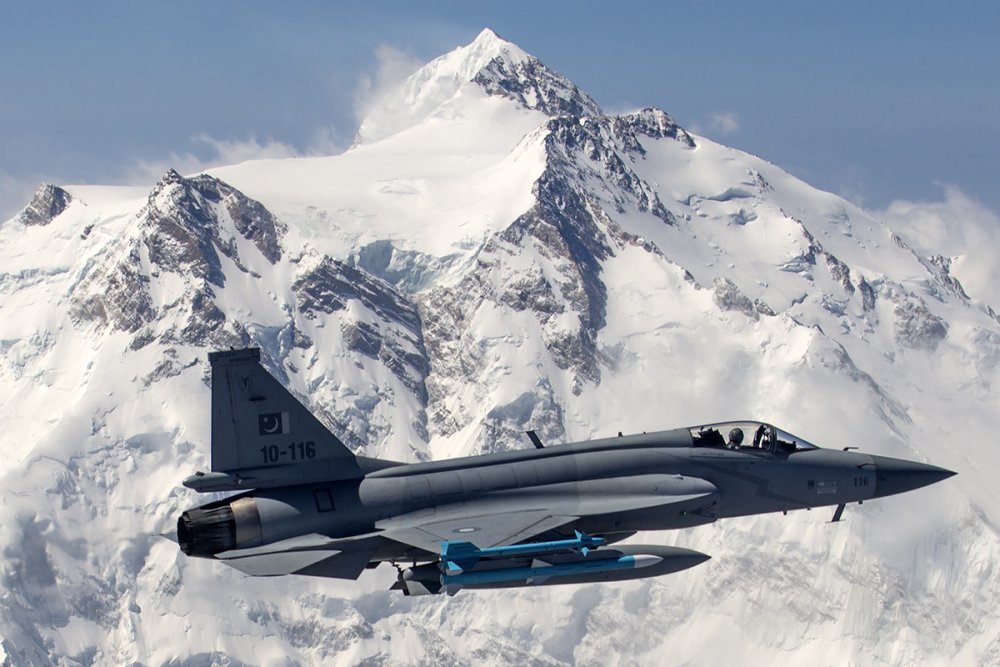
Meet the JF-17 Block III Fighter: The Jet China is Helping Pakistan Build to Fight India

by Sebastien Roblin

Just a few months earlier, Pakistan dispatched what it claimed to be twenty-five JF-17s to launch a lightning strike across the Line of Control on targets in Kashmir, in retaliation for an Indian air raid on a JeM terrorist training camp.

The PAF claimed its JF-17s had shot down two Indian fighters pursuing strike planes into Pakistani airspace. However, while the loss of one upgraded Indian MiG-21 Bison was confirmed and its pilot captured, India subsequently displayed fragments of American-made AIM-120 missiles only compatible with Pakistan’s F-16s, casting some doubt on whether the PAF’s Thunders were responsible for the kill.

Pakistan currently operate around 100 Thunders in five operational squadrons, plus a testing and training unit. The first Thunders entered squadron service in 2010 and saw action bombing insurgents in Waziristan. Islamabad also confirmed in 2018 a $184 million deal to sell three JF-17s to the Nigerian Air Force in 2018 (which currently operates J-7s and Alpha Jets), and has delivered at least six out of an order of eighteen JF-17Ms to Myanmar.
Pakistan’s Long, Controversial Love Affair with the F-16 Fighting Falcon

by Sebastien Roblin

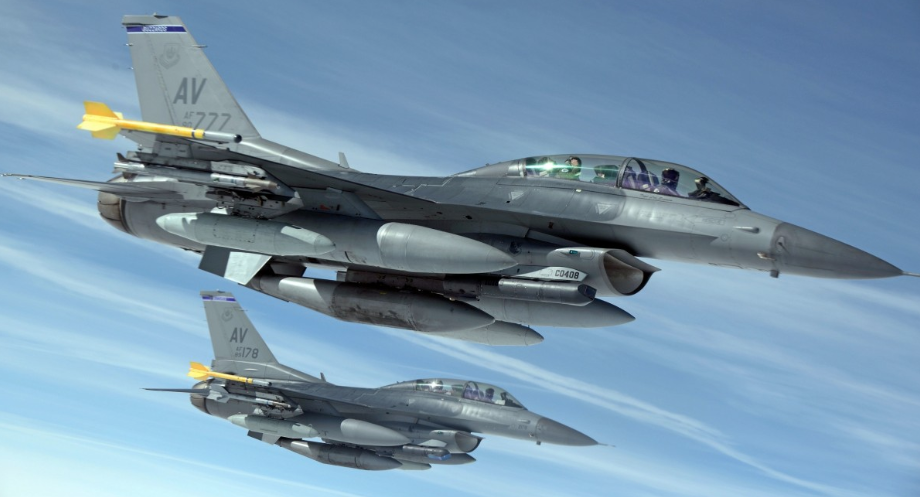
During an aerial skirmish on February 27, 2019, an Indian Air Force MiG-21 Bison was shot down by a radar-guided missile. The Pakistani Air Force (PAF) claims the kill was scored by a JF-17 Thunder, a domestically-built fighter built with Chinese assistance.

However, India subsequently revealed fragments of an AIM-120C-5 missile—a U.S.-built weapon only compatible with the American-built F-16s in PAF service. Pakistan has incentives to deny the use of F-16s, as secret end-user agreements may restrict the aircraft’s use against India—despite that being an obvious application of the venerable fourth-generation jet. India, meanwhile, claims the MiG-21’s pilot managed to shoot down an F-16.

Air Cover for the Mujahideen

Pakistan’s F-16s have been no stranger to controversy for nearly four decades.

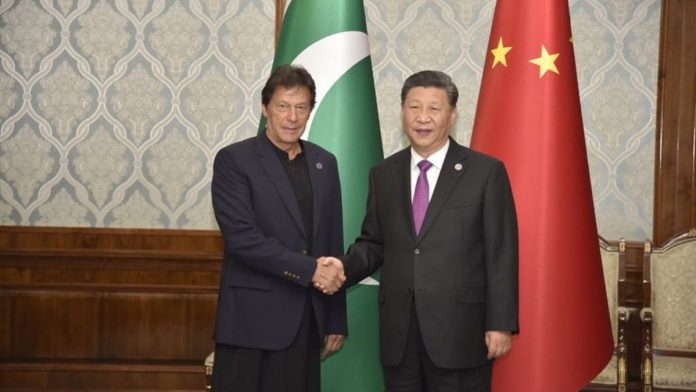
Why Pakistan doesn’t have to choose between traditional ally US and newer friend China

SHUJA NAWAZ

Pakistan can play an important security and development role in the region and as a partner of the US, even as it maintains its separate relationships with its immediate neighbours, China, Afghanistan, India and Iran. Imran Khan’s apparent efforts to work with the military on national economic and strategic issues will stand him in good stead but they may also delay the establishment of civilian supremacy in a democratic Pakistan. The country and its surrounds have changed dramatically in the past two decades.

If current trends bear out, populations in the greater South Asia region will continue to become more politically and economically active. If its leaders can provide responsive governance and a clear and consistent economic direction, South Asia may be able to surmount over time its persistent security challenges, both within countries and from hostile neighbours. And they may be able to lay the basis for connectivity of their economies. The challenge for Pakistan will be to balance its internal battles with the need to create a more congenial regional atmosphere that fosters stability and economic growth.

Afghanistan, Iraq, Syria, Libya, and Yemen

By Anthony H. Cordesman

The current crisis in Iraq is partly the result of the failures by its current leadership and political figures, the legacy of the fighting against ISIS, and the result of short-term policy decisions. It is also driven, however, by a range of civil forces that are the result of long-term structural problems that have led to major political upheavals and conflicts throughout the region, that lead to the rise of extremism and terrorism, and that affect every aspect of Iraq’s present and future.

Iraq is scarcely the only case in point. The same long-term civil challenges have limited U.S. success in its other “long wars” in Afghanistan, Iraq, and Syria — as well as in more limited involvements in nations like Libya and Yemen.

The Burke Chair at CSIS is issuing an analysis that focuses on the fact that all five states have deep structural problems that make them “failed states” in many similar areas of governance, major social changes, and development. It shows that these failures are so serious that they make the “host country” or national government a key cause of civil unrest and conflict and – in many ways – as much of a threat as the extremist and terrorist movements the U.S. is seeking to defeat.

THE UNTOLD STORY OF HOW GEORGE W. BUSH LOST CHINA

BY PAUL BLUSTEIN

By the time he became treasury secretary in July 2006, Henry Paulson had traveled to China about 70 times in his capacity as a top Goldman Sachs executive. Blessed with an imposing stature—he starred as an offensive lineman for the Dartmouth College football team—Paulson became a familiar presence in the inner sanctums of Chinese power as he represented Goldman on deals such as the sale of shares in state-owned enterprises. Although not a speaker of Chinese, he gleaned a keen sense of how the country’s system worked, having met its top leaders on many occasions in their Beijing compound.

When he was summoned to the White House to be offered the Treasury post, therefore, Paulson sought approval from President George W. Bush to take command of the administration’s economic policy toward China. It seemed only logical for him to make the most of the deal-making skills and relationships he had developed with Chinese leaders, and Bush readily agreed to bestow his new Treasury chief with authority to oversee a coordinated strategy among the various U.S. agencies dealing with Chinese-American economic issues. This was understood to be a daunting challenge at the time. Myriad problems were plaguing trade, investment, and financial ties between the two countries.

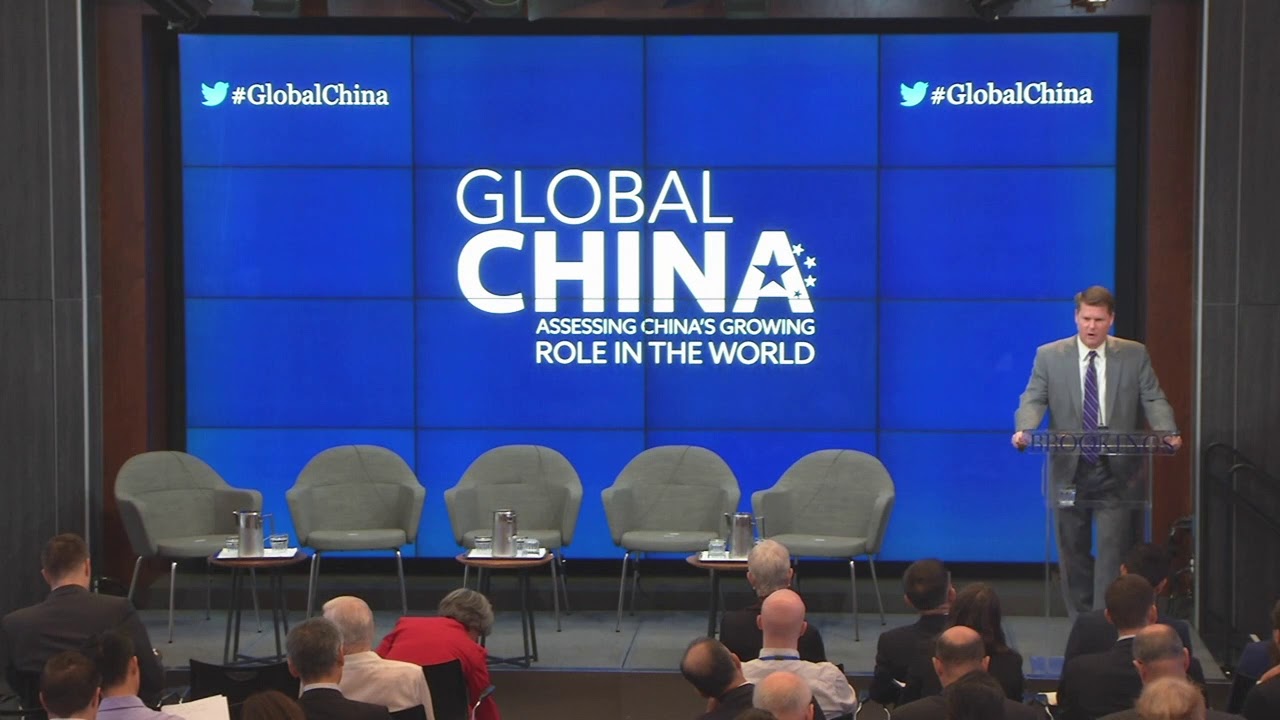
Global China: Assessing China’s growing role in the world and implications for U.S.-China strategic competition


China has emerged as a truly global actor, with its influence extending across virtually all key strategic and geographic domains. To help make sense of the implications of China’s growing role in the world and America’s response, on Tuesday, October 1, Brookings hosted Assistant Secretary of Defense for Indo-Pacific Security Affairs Randall Schriver for a keynote address and moderated discussion. At the Pentagon, Assistant Secretary Schriver serves at the forefront of shaping U.S. policy toward China.

The event launched the next tranche of papers released as part of the Brookings series on “Global China: Assessing China’s Growing Role in the World.” The analysis in this release focused on new domains of U.S.-China strategic competition as well as changes in China’s domestic institutions. This research will support the goal of the Global China initiative – to furnish policymakers and the public with a new empirical baseline for understanding China’s regional and global ambitions.

GLOBAL CHINA


From a potential “responsible stakeholder” to a “strategic competitor,” the U.S. government’s assessment of China has changed dramatically in recent years. China has emerged as a truly global actor, impacting every region and every major issue area. To better address the implications for American policy and the multilateral order, Brookings scholars are undertaking a two-year project—“Global China: Assessing China’s Growing Role in the World”—intended to furnish policymakers and the public with a new empirical baseline for understanding China’s regional and global ambitions.

Convened by Brookings Vice President and Director of Foreign Policy Bruce Jones, the initiative will draw not only on Brookings’s deep bench of China and East Asia experts, but also the tremendous breadth of the institution’s security, strategy, regional studies, technological, and economic development experts. By tapping a range of resident and non-resident Brookings scholars, the project will assess the trajectory of China’s influence in Asia and other regions, as well as its growing influence on key issue domains and institutions.

Russia and China: The Potential of Their Partnership


Russia and China are celebrating their “strategic partnership”, and have been vastly expanding their cooperation since 2014. This publication argues that their close alliance is based on economic and geopolitical considerations, and that the relationship – though mutually beneficial – also has its limitations. However, the text’s authors contend that in the mid-term, both China and Russia appear to be willing to overlook potential fields of tension, for instance in Central Asia.


Author Jeronim Peroviฤ‡, Benno Zogg, (Editors: Fabien Merz, Lisa Watanabe)

Break-through or Break-up? U.S.-China Negotiations and the Financial Account


The latest twist in U.S.-China trade negotiations came last Friday when multiple news outlets reported the Trump administration is considering delisting Chinese companies from U.S. stock exchanges as “part of a broader effort to limit U.S. investment in Chinese companies.” While a subsequent report quoted a U.S. Treasury spokeswoman as saying, “the administration is not contemplating blocking Chinese companies from listing on U.S. exchanges at this time,” it also acknowledged weeks of interagency meetings on the topic (making clear the option is not entirely off the table). With the next round of trade talks between the United States and China scheduled to begin next week, the possible inclusion of expanded financial account issues (e.g., policies impacting foreign direct investment (FDI) and investment in debt and equity securities), raises the stakes for both sides. It also adds a new element to possible “decoupling” scenarios, which previously had focused on supply chains and access to sensitive technologies.

Until now, financial account issues have played a limited role in the 18-month trade war. They have mainly been discussed in the context of China’s foreign ownership restrictions, such as joint venture requirements and foreign equity limitations, which require technology transfer and therefore “burden or restrict U.S. commerce.” Removing limits on FDI has long been a goal of U.S. engagement with China, as years of “fact sheets” from U.S.-China dialogues will attest. Importantly, these efforts have consistently aimed at opening the Chinese economy to greater foreign investment, which in turn would more deeply integrate China into the global economy.

The Slow US Withdrawal From Afghanistan

Austin Bodetti
Source Link

RABAT: Negotiations for a political settlement between the Taliban and the United States to end the war in Afghanistan, a once-promising process, all but collapsed in early September. Many analysts have mulled over what the conclusion of the longest foreign military engagement in American history might have meant for the War on Terror. A question of equal importance: How would these developments affect the War on Drugs?

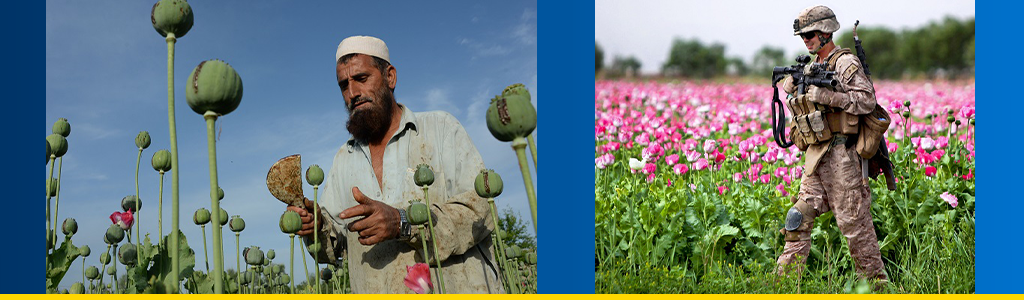
Afghanistan supplies 90 percent of the world’s opium and 95 percent of Europe’s. The Taliban earns as much as $400 million every year from its own role in the illegal drug trade. Though the United States dedicated an impressive array of resources to combating narco-trafficking at the height of the War in Afghanistan, an American withdrawal from the Central Asian country could mark the end of any American role in the Afghan arena of the War on Drugs. For their part, the Taliban and other Afghan militants, earning millions, have little incentive to fight the illegal drug trade. If the United States wants to keep narco-trafficking from ballooning as soon as its soldiers leave Afghanistan, its diplomats must address this problem with the Taliban.

Turning 70: Xi Jinping’s People’s Republic Of China – OpEd

By Binoy Kampmark

During the era of Sovietology, experts would pour over images of the gathered politburo in Red Square, gazing with grey monolithic interest upon the military hardware moving across the forum. An absent figure might suggest a potential coup; a new face, a sinister reshuffle. A wink, a smile, a glare, a compendium of bodily moves that might shed light on the destiny of the Soviet Union. In the end, no level of expertise, nor heights of psycho-babble, prepared the Sovietologist for the end of their subject.

Seventy years on, and the People’s Republic of China sees no sign of going the way of the Soviet model. Market Leninism, or Socialism with Chinese Characteristics, has done its trick, and its magic – the billionaires, the luxury goods, the feverish manufacturing, the Belt and Road Initiative – troubles the modern gaggle of China watchers. That, and much more besides.

The parade itself was decidedly dramatic, ostentatiously baroque in scope and flourish. Supersonic un-manned drones made their stage debut; nuclear missiles were given a showing. In the crowded mix were 15,000 personnel, 160 aircraft and 580 pieces of weaponry. But the scale of such performances often belies loss: the immense self-harm of the Cultural Revolution, the murderous Great Leap Forward which seemed all too often to be a Great Retarding Moment. The China of the 1950s was characterised by rigid central planning marked by “agricultural producer cooperatives” and their successor Rural People’s Communes. The market was the enemy, and had, not so much to be tamed but eliminated. The results, at various points, were staggeringly costly: the famine of 1959-1961 gathered the lives of some 30 million. Sinologists were convinced they were seeing a creature on its deathbed.

China and the United States: Cooperation, Competition, and/or Conflict

By Anthony H. Cordesman
Source Link

This report is an experimental net assessment that addresses China's emergence as a global superpower, and its competition with the United States. The report is entitled China and the U.S.: Cooperation, Competition and/or Conflict.

The report has been extensively updated and expanded since its original publication. Besides incorporating various new reports on Chinese economic and military developments, the report also includes key quotes from the recently released Chinese White Paper commemorating the CCP’s 70 th anniversary. These quotes are now the best example of China’s indirect criticism of recent U.S. policy towards China, and strategy and actions towards other states, as well as its economic progress and plans to take lead on global development.

The entire report, and the report is available on the CSIS web site in several forms:

• Key sections are available on the CSIS web site in PDF form by clicking on each section title. The size of some of these PowerPoints may present problems for some IT systems, but quick comparisons of different Chinese and U.S. policy statements and assessments, and of the graphics and data that summarize the trends and issues involved are only possible if PowerPoint is used. The PDF versions are smaller but make it far more difficult to quickly compare a broad range of different trends.

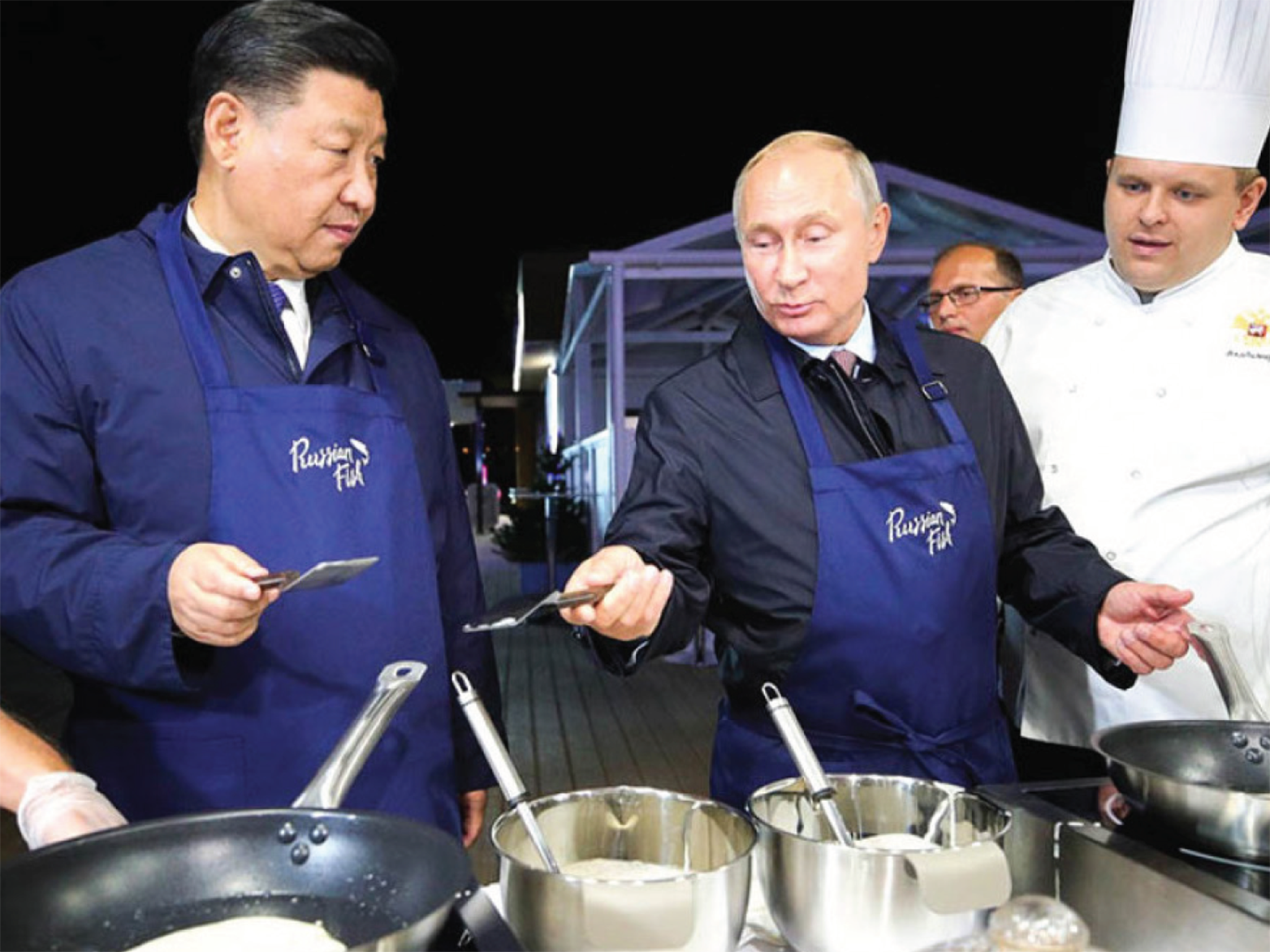
Xi Jinping Has Embraced Vladimir Putin—for Now

BY MELINDA LI
Source Link

There was a back-to-the-future vibe to China’s 70th birthday extravaganza this week. The elaborate festivities were all about Xi Jinping, China’s most powerful leader since Mao Zedong, who died in 1976. At home, Xi has called for China’s glorious “rejuvenation,” a theme drummed home in dozens of kitschy parade floats and precision choreography. Abroad, U.S. President Donald Trump’s trade war has chilled Chinese-U.S. ties and revived fears of a Cold War. 

Most strikingly, Moscow is back in the picture, once again officially deemed to be Beijing’s best comrade-in-arms, in a throwback to the earliest years of the People’s Republic of China. Despite the cutting-edge new military hardware on display in Beijing on Oct. 1—from stealth drones to DF-41 nuclear missiles capable of hitting U.S. cities—Xi has turned to a familiar old neighbor to help watch his back. 

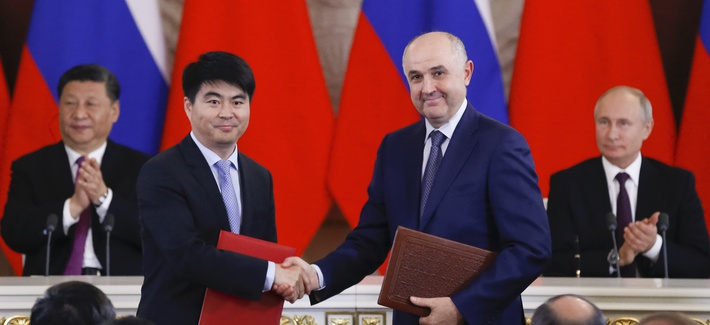
China, Russia Deepen Technological Ties

BY SAMUEL BENDETTRE
Source Link

With joint dialogues, incubators, and technology parks, Beijing and Moscow are seeking to overcome deficiencies and compete with the United States.

China and Russia are deepening and expanding their ties — economic, military, technological — as external pressures limit their access to overseas markets and technology. Both countries hope the collaboration will help to compensate for domestic deficiencies and to compete successfully with the United States in today’s critical technologies. 

This bilateral relationship, currently celebrating its 70th anniversary, has ebbed and flowed in the decades since the Soviet Union and the People’s Republic of China opened diplomatic relations. This relationship, now upgraded to and characterized as a “comprehensive strategic partnership of coordination for a new era,” is continuing to evolve amid today’s great power rivalry. 

For Moscow, certain Chinese products, services and experience may be the lifeline for its industry, government, and military need to wean themselves from high-tech Western imports. 

Saudi Arabia and Iran Make Quiet Openings to Head Off War

By Farnaz Fassihi and Ben Hubbard

After years of growing hostility and competition for influence, Saudi Arabia and Iran have taken steps toward indirect talks to try to reduce the tensions that have brought the Middle East to the brink of war, according to officials from several countries involved in the efforts.

Even the prospect of such talks represents a remarkable turnaround, coming only a few weeks after a coordinated attack on Saudi oil installations led to bellicose threats in the Persian Gulf. Any reconciliation between Saudi Arabia and Iran could have far-reaching consequences for conflicts across the region.

It was President Trump’s refusal to retaliate against Iran for the Sept. 14 attack, analysts say, that prompted Saudi Arabia to seek its own solution to the conflict. That solution, in turn, could subvert Mr. Trump’s effort to build an Arab alliance to isolate Iran.

In recent weeks, officials of Iraq and Pakistan said, the Saudi crown prince, Mohammed bin Salman, asked the leaders of those two countries to speak with their Iranian counterparts about de-escalation.

The Syrian Civil War Might Be Ending, but the Crisis Will Live On


The Syrian civil war that has decimated the country for eight years now, provoking a regional humanitarian crisis and drawing in actors ranging from the United States to Russia, appears to be drawing inexorably to a conclusion. President Bashar al-Assad, with the backing of Iran and Russia, seems to have emerged militarily victorious from the conflict, which began after his government violently repressed civilian protests in 2011. The armed insurgency that followed soon morphed into a regional and global proxy war that, at the height of the fighting, saw radical Islamist groups seize control over vast swathes of the country, only to lose it in the face of sustained counteroffensives by pro-government forces as well as a U.S.-led coalition of Western militaries.

Assad now faces the challenge of rebuilding the country, including areas where he allegedly deployed chemical weapons against his own citizens. The question of who will foot the bill is still an open one. U.S. President Donald Trump’s administration has been eager to distance itself from the situation in Syria, and Assad’s allies in Moscow are unlikely to take on the costs of reconstruction, which the United Nations has estimated at $250 billion.

Far From the Front Lines, Javelin Missiles Go Unused in Ukraine

BY AMY MACKINNON, LARA SELIGMAN
Source Link

During a press conference with Ukrainian President Volodymyr Zelensky last week, U.S. President Donald Trump took a shot at his predecessor, claiming that Barack Obama had supplied “pillows and sheets” to Ukraine while his own administration had delivered “anti-tank busters” to help Kyiv in its fight against Russia and its proxies in eastern Ukraine.

Trump was referring to FGM-148 Javelin anti-tank missiles, which played a central role in the infamous July 25 phone call between Trump and Zelensky that is at the heart of the current impeachment inquiry. After Zelensky suggested he wanted to buy more Javelins, Trump asked him for a “favor” and then later urged him to investigate Hunter Biden, the son of Trump’s Democratic challenger Joe Biden, and his business dealings in the Eastern European country. 

But while there is evidence that the Javelin sale has been a powerful gesture of support for Kyiv, the missiles’ military application has been far more limited. Under the conditions of the foreign military sale, the Trump administration stipulates that the Javelins must be stored in western Ukraine—hundreds of miles from the battlefield. 

The Issue Behind Our Issues

JIM O'NEILL

Many commentators nowadays rely on a narrative in which weak productivity growth, populism, and a rising China are threatening the very survival of Western liberal democracy. Yet most of the commonly identified causes of Western discontent are in fact symptoms of a deeper intellectual breakdown.

LONDON – As the chair of the Royal Institute of International Affairs (Chatham House), I recently hosted an offsite event with some of the organization’s strongest supporters, research staff, and other leaders. I left with a clearer view of three of the biggest issues of our time: slowing productivity growth, anti-establishment politics, and the rise of China.

Generally speaking, the reason that we have so many “issues” is that the international capitalist model has stopped functioning as it should, particularly in the years since the 2008 financial crisis. This has become increasingly apparent to many Western voters, even as experts have struggled to understand the precise nature of the economic and political shifts underway.

Russia Is a Strategist, Not a Spoiler

ANA PALACIO

MADRID – On October 1, Ukrainian President Volodymyr Zelensky announced his government’s support for an agreement that would lead to elections in the eastern provinces of Luhansk and Donetsk – large parts of which were seized by Russian-backed separatists in 2014 – with the ultimate goal of granting them special self-governing status. It was an important development, not only because it signaled Ukrainian acquiescence to a process that could end hostilities in the country, but also because of its implications for a world order in turmoil.

From Iran’s audacious attack on major oil facilities in Saudi Arabia to the launch of an impeachment inquiry against US President Donald Trump, the last month has underscored the volatility gripping the international order. As Saudi Arabia and Iran vie for dominance in the Middle East, and as China’s position in the international order continues to evolve, three other major players – Europe, Russia, and the United States – are transforming their global roles.

The United States Is Done Caring About Syria

BY STEVEN A. COOK
Source Link

If a congressionally mandated report on a vexing foreign-policy issue is published in Washington in 2019, will anybody pay attention? Probably not, especially these days. So it is with the Syria Study Group (SSG), a bipartisan commission charged by Congress with “examining and making recommendations on the military and diplomatic strategy of the United States with respect to the conflict in Syria.”

Perhaps it is the SSG’s bad timing—its final report dropped on Sept. 24, the same day House Speaker Nancy Pelosi announced an impeachment inquiry into President Donald Trump’s alleged abuse of power. The news avalanche that followed buried everything in its path. Still, had the SSG’s final report been published a week or a month earlier, the chances are it would have been met with the same indifference and obliviousness. In a town of people obsessed with the 24-hour news cycle, only a small number of people in Washington were even aware that the SSG existed. Everyone else would prefer not to care.

France’s new cyber defense ‘conductor’ talks retaliation, protecting industry

By: Christina Mackenzie 


PARIS — Maj. Gen. Didier Tisseyre is France’s new cyber defense force commander — the “conductor” of an orchestra made up of military officials and the domestic defense industry, as he puts it.

Cyber Defence Command was created in 2017 and was expanded in January when Armed Forces Minister Florence Parly announced France will develop and deploy offensive cyber weapons. Tisseyre took on the lead role Sept. 1 from his predecessor and most recently served as the deputy to that former commander. He spoke to Defense News earlier this month in a meeting room at the Armed Forces Ministry.

What is your role as the head of Cyber Defence Command?

I am a conductor, and my orchestra is made up of the Army, Navy and Air Force chiefs of staff, ANSSI [France’s National Agency for the Security of Information Systems], and defense industry leaders.

Are you ready for 5G?

By Mark Collins, Arnab Das, Alexandre Mรฉnard, and Dev Patel

Smart operators will consider seven no-regrets moves to position themselves for advantage amid radically changing industry dynamics.

DOWNLOADABLE RESOURCESOpen interactive popup

The fifth generation of wireless technology promises lightning-fast speed, incredibly low latency, and the capacity to carry massive numbers of connections simultaneously. Not surprisingly, the imminent arrival of 5G is creating a buzz in both the industry and the wider world.

Although standards will not be fully defined until the 2019 World Radiocommunications Conference, early progress indicates that two distinct “flavors” will emerge: low- and mid-band 5G focused on spectrum below 6 gigahertz and high-band 5G on spectrum above 6 gigahertz, particularly in the millimeter wave bands. Both these flavors will be used to augment and enhance existing LTE networks rather than replace them.
The paradox of the 5G use cases

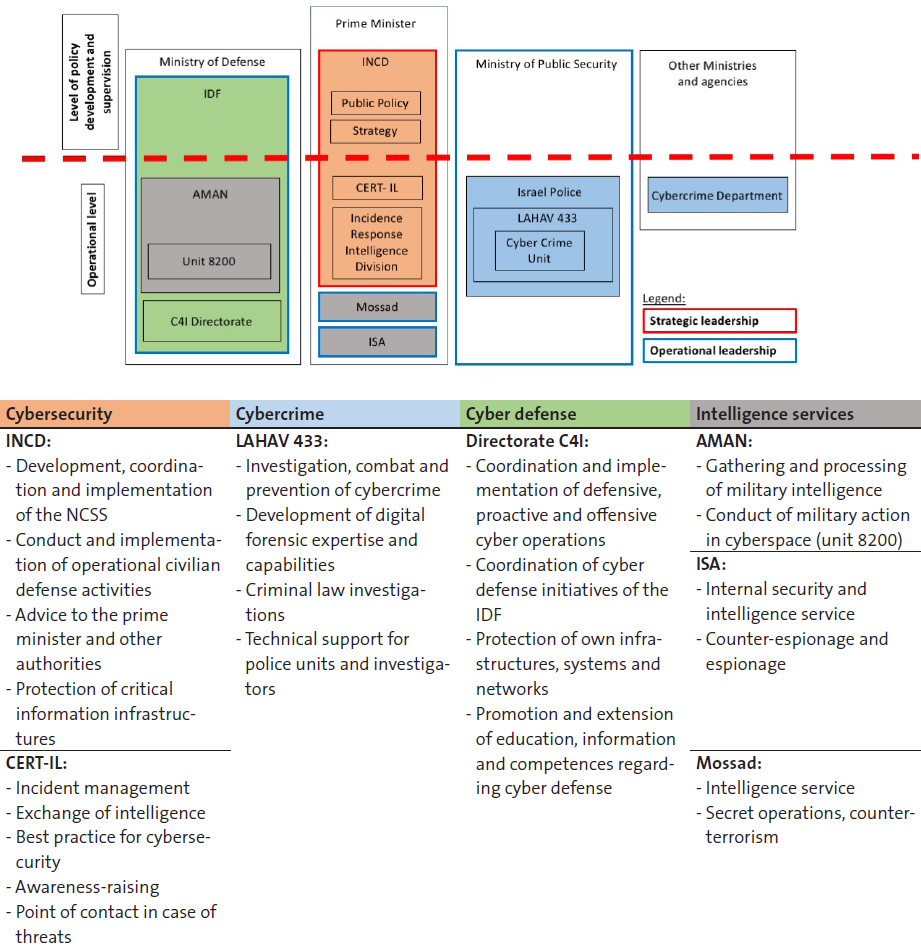
National Cybersecurity Organizations, Main Bodies and Responsibilities: Israel

The dark side of our drone future

By James Rogers

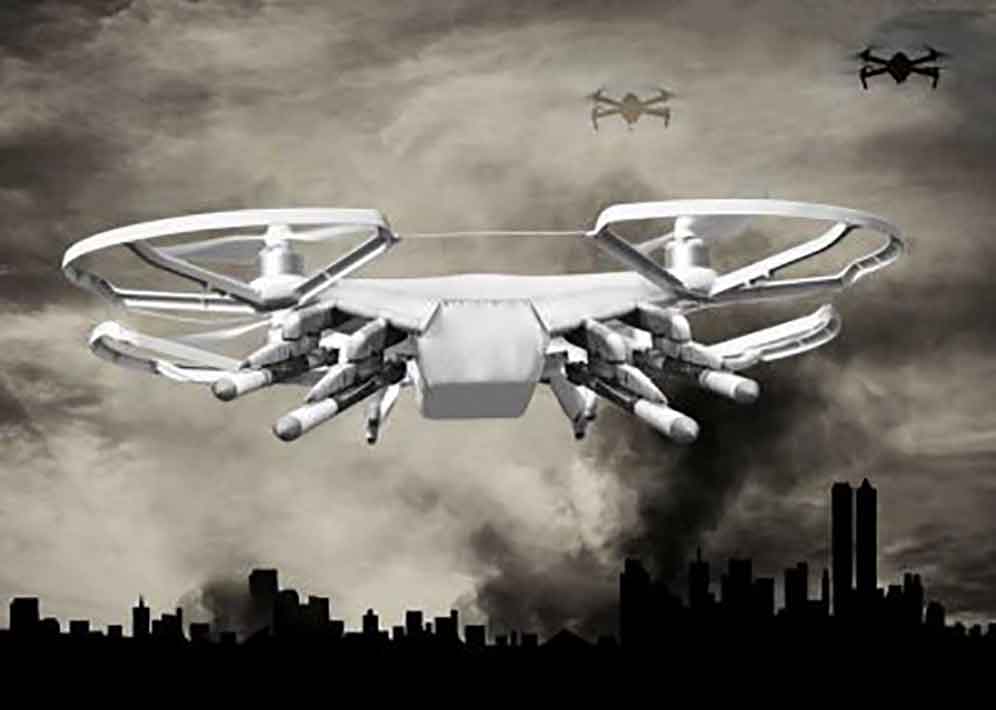
Let me paint a picture of the near future. Drones, some weighing a few pounds and others a few tons, will flow endlessly back and forth from rural distribution centers to inner-city delivery hubs. Day in and day out, they will drop off our weekly shopping, last-minute presents, and important medicines. Drones might even pick us up from work (or the bar) and take us home in automated airborne Ubers. They will transform our lives. Hundreds, if not thousands, of drones will fly high above towns and cities, bypassing the congested highways and streets currently plagued by traffic.

Put simply, the drone revolution will change the way in which we conceive and comprehend logistics and transportation. Yet not all the changes we see from the global spread of drones will be positive. Drones bring with them a novel set of risks and challenges—and these need to be confronted.

How Closing the Digital Literacy Gap Helps Workers — and Employers


There is a digital skills gap in many companies, and closing it could bring new opportunities and rewards, according to this opinion piece by Hjalmar Gislason, CEO and founder of GRID. He is also a partner at Investa, an early-stage investment fund, and previously was vice president of Product Management at Qlik.

As the role of data in business expands beyond anything the world has seen, the workforce is not keeping up.

For four years in a row, one survey has found that “big data and analytics are top of the skills shortage critical list.” But amid the focus on high-level data skills, there’s another gap in workforce preparation: Brookings reports by the time they enter the workforce, students haven’t had enough exposure even to simpler data tools such as spreadsheets and enterprise management platforms. It’s time to “expand digital literacy across the board,” CityLab declares.

8 October 2019

Afghans Want U.S.-Taliban Talks to Resume, But with New Approach

BY: Belquis Ahmadi

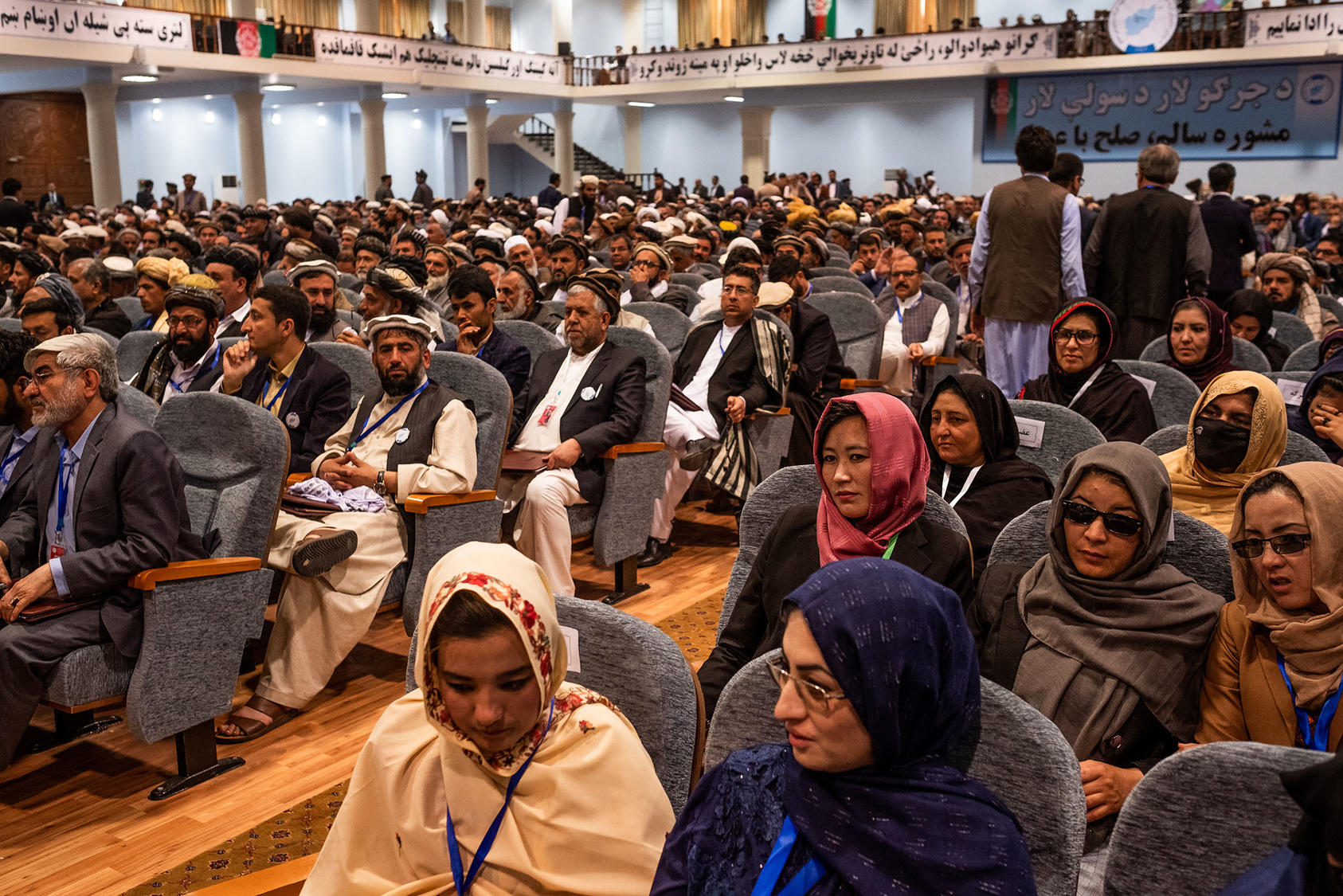
Just days before U.S.-Taliban talks were put on freeze earlier in September, I was in Istanbul for a negotiations workshop with 25 Afghan women leaders. These women were expected to play an integral role in intra-Afghan talks that would follow a U.S.-Taliban deal. Even though a deal seemed imminent that week, the Taliban intensified their attacks on Afghan civilians and security forces. Meanwhile, these women were hard at work strategizing for peace. But they, and other Afghans I spoke with in a subsequent trip to Kabul, revealed deep trepidation over what a U.S.-Taliban deal would mean for them, their hard-won rights, and the impact a begrudging peace could have on Afghan society.The opening session of the loya jirga, a yearly tribal assembly where some 30 percent of participants are now women, in Kabul, Afghanistan, April 29, 2019. (Jim Huylebroek/The New York Times)
Istanbul: Working for Peace as War Rages on at Home

The Unwanted Wars

By Robert Malley 

The war that now looms largest is a war nobody apparently wants. During his presidential campaign, Donald Trump railed against the United States’ entanglement in Middle Eastern wars, and since assuming office, he has not changed his tune. Iran has no interest in a wide-ranging conflict that it knows it could not win. Israel is satisfied with calibrated operations in Iraq, Lebanon, Syria, and Gaza but fears a larger confrontation that could expose it to thousands of rockets. Saudi Arabia is determined to push back against Iran, but without confronting it militarily. Yet the conditions for an all-out war in the Middle East are riper than at any time in recent memory. 

A conflict could break out in any one of a number of places for any one of a number of reasons. Consider the September 14 attack on Saudi oil facilities: it could theoretically have been perpetrated by the Houthis, a Yemeni rebel group, as part of their war with the kingdom; by Iran, as a response to debilitating U.S. sanctions; or by an Iranian-backed Shiite militia in Iraq. If Washington decided to take military action against Tehran, this could in turn prompt Iranian retaliation against the United States’ Gulf allies, an attack by Hezbollah on Israel, or a Shiite militia operation against U.S. personnel in Iraq. Likewise, Israeli operations against Iranian allies anywhere in the Middle East could trigger a regionwide chain reaction. Because any development anywhere in the region can have ripple effects everywhere, narrowly containing a crisis is fast becoming an exercise in futility. 

Overcoming Inertia: Why It’s Time to End the War in Afghanistan

By John Glaser, John Mueller 

Bottom Line: The war in Afghanistan has gone on so long not because of necessity, but inertia. Despite what some military and political leaders have said, there is no reason for the United States to remain in Afghanistan, nor is there a clear path to victory over the Taliban. Withdrawal and negotiations are the best thing for U.S. interests.

The war in Afghanistan has persisted in spite of decades of setbacks thanks in part to the framing of military officials.

After a successful invasion, the Taliban retreated to Pakistan and regrouped. By 2006, they were able to ignite a civil war in the region, and currently hold more territory than at any point in 2001. But the United States has remained in the region largely because military leaders want to, both to avoid real or perceived failure, and to prevent what they imagine would be a dangerous Taliban resurgence.

Military officials’ desire to maintain the conflict is rooted in the flawed assumption that a Taliban victory would pose a threat to the United States.

Afghanistan security adviser says hard-line Taliban members defecting to ISIS, merging with Al Qaeda

By Hollie McKay
Source Link

Trump cancels secret peace talks at Camp David after the Taliban admitted to a deadly car bombing that killed an American soldier in Kabul; chief White House correspondent John Roberts reports.

More than 18 years after U.S. forces entered Afghanistan and usurped the Taliban government from power, the country remains a patchwork of progress, pain, and bloodletting.

While the territorial dominance and perpetual attacks orchestrated by the Taliban remains at the forefront of the fragile nation’s woes, the presence of other insurgent groups and blatant threats to U.S. interests also lurk in the periphery.

“Many Taliban commanders, hardliners that did not want to join the peace process. We had intelligence that showed they are going to join ISIS. That threat may increase over a period of time,” Afghan National Security Adviser, Hamdullah Mohib, told Fox News on Tuesday. “For the time being, ISIS is not a strategic threat to us. We have been able to get rid of them in places they have taken hold. But if the peace process goes wrong and doesn’t really integrate all of the Taliban, the hardliners may join ISIS, which is when it will become a strategic threat to us and our international partners.”

Jihad, history link Taliban to al-Qaida in Afghanistan

By: Kathy Gannon
Source Link

ISLAMABAD — The Taliban promised Washington during months of negotiations that the United States would never again be attacked from Afghan soil. Such a pledge would have included al-Qaida, which planned the 9/11 attacks from inside Afghanistan.

Yet jihad, or holy war, and a shared history continue to bind the two militant groups, and there’s no evidence of a break in relations between the long-time allies. U.S. Secretary of State Mike Pompeo had said the Taliban agreed to cut ties with al-Qaida as part of peace negotiations, which President Donald Trump abruptly called off last week.

The al-Qaida leadership still vows allegiance to Taliban chief Maulvi Hibatullah Akhunzada, and al-Qaida has been growing stronger in recent years, according to analysts and experts. The group has overcome setbacks from the establishment of a rival Islamic State affiliate in eastern Afghanistan and from U.S. drone strikes that had reduced its numbers.

Afghanistan’s Taliban leaders agreed they wanted a deal with the United States, but some were in more of a hurry than others.

China Lifts the Veil on Its Advanced Weaponry


A formation of Dongfeng-17 (DF-17) hypersonic missiles rolls through the streets of Beijing during the military parade as part of the celebrations marking the 70th anniversary of the founding of the People's Republic of China.

A military parade through Tiananmen Square, part of the Oct. 1 celebration of the 70th anniversary of the founding of the People's Republic of China, showcased some of the People's Liberation Army's never-before-seen weapons systems. With the display, China sent a clear message about how far along the development path its yearslong military modernization drive had taken it.

Among the equipment that was rolled through the streets of Beijing included public debuts of a number of strategic and tactical weapons and systems, from a new assault rifle on the lower end all the way to strategic nuclear weapons. The parade revealed the areas of focus for China in the military sphere.

How the Communist 1949 Victory in China's Civil War Changed America and the World

by Lyle J. Goldstein

On the occasion of the seventieth anniversary of the founding of the People’s Republic of China, there is much head-scratching going on Washington, DC. Why hasn’t Beijing’s economy imploded yet? Why hasn’t China crushed the Hong Kong protests? How did China get ahold of 5G technology before us? How do they build quality warships so fast?

Yet, the biggest questions seem to revolve around the policy of engagement that the U.S. adopted since the early 1970s. Why and how have we enabled China’s rise? How is it that China did not become pro-Western like Japan and South Korea once Chinese had finally tasted the fruits of capitalism? Why didn’t the same mechanisms that facilitated massive foreign investment into China also cause it to embrace the “rule-based order” on the world stage? Put in a somewhat less polite form, these China questions could be boiled down to: how were America’s China experts [ไธญๅ›ฝ้€š] duped so badly?

China's High-Speed Drone Is Rocket-Powered And All About Doing What Satellites Can't

BY TYLER ROGOWAY
Source Link

China's big 70th-anniversary parade marking the founding of the PRC has come and gone. There were a number of revelations, some of which we are still analyzing, but the biggest ones were in the unmanned space. In the days leading up to the parade, we had covered both of the most impressive unmanned vehicles that were to be displayed. It's time to follow up with our analysis now that we have seen them in far greater detail. We posted our analysis on the GJ-11 Sharp Sword UCAV earlier today, now here are my takeaways from the official unveiling of the WZ-8—also referred to as the DR-8—high-speed reconnaissance drone.

Before we get started, it's important to note that the two WZ-8s put on display for the parade appear to be real aircraft, not mockups. It is unclear how representative they are of the current maturity of the program, but they are indeed real aircraft. Considering that the WZ-8 has been around for some time, these could be early demonstrators or an early production configuration, we just don't know.

Xi’s embrace of false history and fearsome weapons is worrying


The most revealing moment of the national day parade through Tiananmen Square on October 1st lasted just a few seconds. It came as China’s fearsome new df-41 nuclear missiles, capable of striking any city in America, neared Chaguan’s press seat on the Avenue of Eternal Peace. Loudspeakers came to life as their camouflaged, many-wheeled carriers growled towards the grand gateway of the Forbidden City where President Xi Jinping and other Chinese leaders waited on a rostrum. Unseen voices explained how the weapons would ensure that China always retains a deterrent capability, thus safeguarding peace. Turning lyrical, the voices compared the missiles to large dragons that can hide in massive mountains or boundless seas before delivering earth-shaking blows. The hand-picked crowd erupted in spontaneous cheers.

Those cheers reflect two messages conveyed by the parade, which marked 70 years of Communist rule. The first is that China wields such firepower that no country may safely defy it. The second is that China is great again thanks to the Communist Party which is, and has always been, a force for good.

China is ready to play a bigger role in world affairs


A freight train leaves the Qingbaijiang Railway Port in Chengdu for Europe: China's Belt and Road Initiative will knit Eurasia together with transport and logistics. © Imaginechina/AP

The 70th anniversary of the founding of the People's Republic of China on October 1 is an occasion to look back on the nation's momentous progress and consider what role it will play in the world over the next seven decades.

China has benefited greatly from embracing globalization and its institutions such as the World Trade Organization, the International Monetary Fund and the World Bank. As China's economy continues to expand, Beijing's role in the future will be to safeguard and enhance the international liberal order.

This commitment can already be seen in its contributions to U.N. peacekeeping and its establishment of new multilateral bodies such as the Asian Infrastructure Investment Bank.