16 January 2021

After the foundational agreements: An agenda for US-India defense and security cooperation

Joshua T. White

The U.S.-India defense and security relationship has continued to deepen, aided by robust political commitments in both countries and converging concern about growing Chinese assertiveness across the Indo-Pacific. The United States and India have expanded their defense activities and consultations, and recently concluded two additional so-called “foundational defense agreements,” capping off a nearly two-decade effort by U.S. policymakers to formalize the legal sinews of operational defense cooperation. This positive trajectory is, however, by no means guaranteed to continue apace. There are rising concerns in the United States about India’s fiscal limitations, its ties with Russia, its ponderous response to a pattern of Chinese provocations on its border, and its drift toward illiberal majoritarian politics. In addition, the Biden administration will likely seek, for good reason, to rebalance the bilateral relationship away from a disproportionate focus on security issues in order to address a wider array of topics including global health, energy and climate change, and technology cooperation.

In light of these dynamics, this paper presents a practical agenda for the next phase of the U.S.-India defense and security relationship — one that builds incrementally on the progress that has been made, responds to the changing regional security environment, and accounts for both governments’ political and capacity constraints. It begins by arguing that the United States can do more to articulate its key priorities in engaging India on security issues: first, supporting India’s rise as a constructive global leader and counterweight to Chinese influence; second, limiting China’s ability to coerce India and other states in South Asia; and third, mitigating the risks, and enabling de-escalation, of inevitable India-Pakistan and India-China crises. It also makes a case for charting reasonably ambitious defense and security goals and avoiding crude conditionalities that would likely prove counterproductive.
Pakistan Continues to Sacrifice Shia Hazaras to Safeguard Jihadist ‘Assets’

By Kunwar Khuldune Shahid

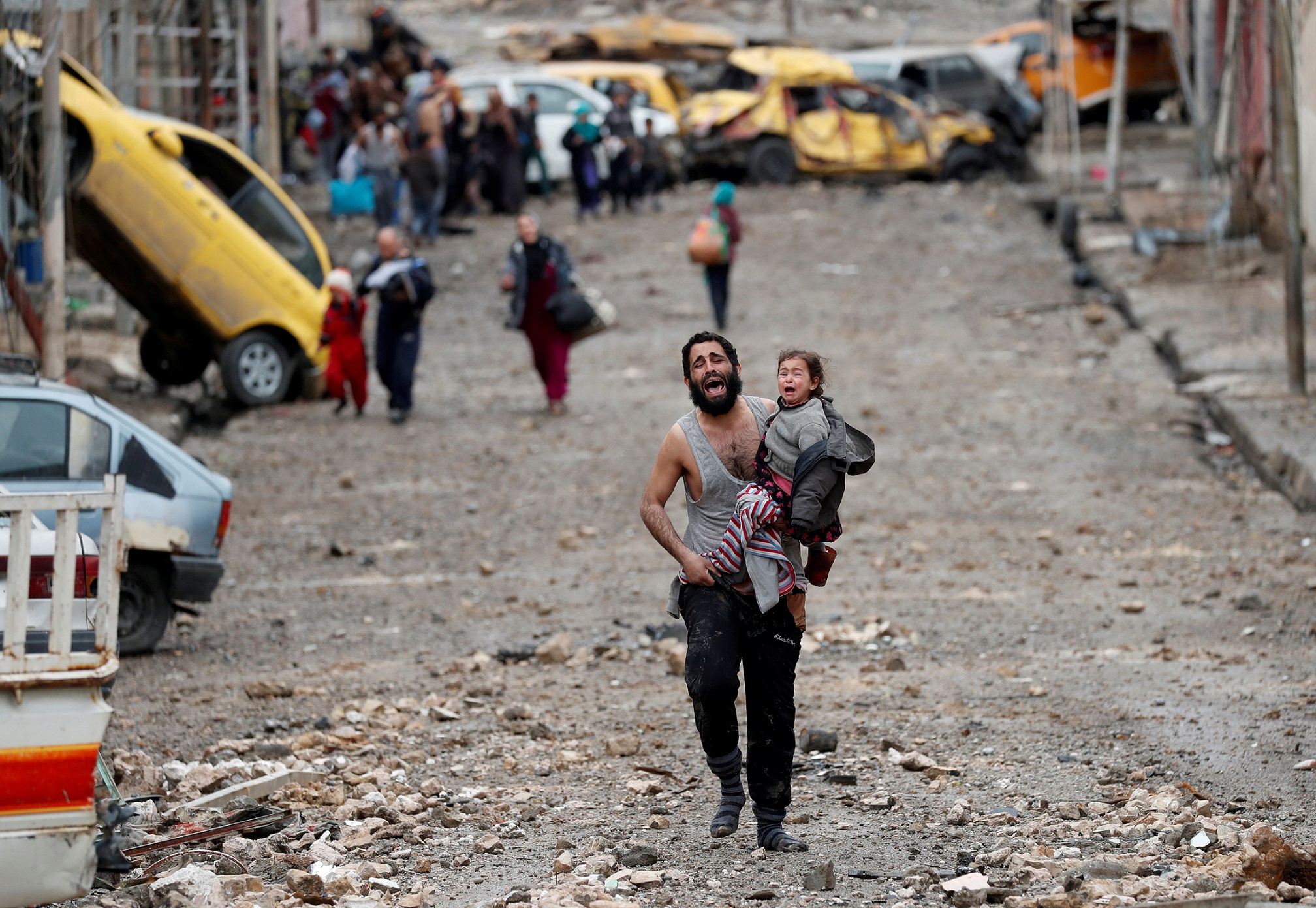
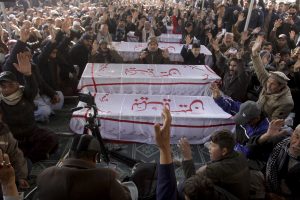
Pakistan’s Prime Minister Imran Khan on January 10 claimed that India is backing the Islamic State (IS) and facilitating attacks in the country. Khan’s statement came a week after 11 Shia Hazara coal miners were brutally massacred by IS affiliated militants. In the interim, the Pakistani premier labeled the mourning families as “blackmailers” for refusing to bury their dead until Khan visits them to hear their demands for justice and security.

Protesting with unburied coffins has become a means of expressing outrage against the state for the Shia Hazaras, thousands of whom have been targeted and killed since the turn of the century. The Hazaras, rooted in Uzbek-Turkic ancestry with a vast majority adhering to the Twelver Shia sect of Islam, have been victims of ethnic cleansing and pogroms in the region for almost two centuries, since they were recruited in the First Anglo-Afghan War (1839-1842).

From being shunned by Mughals to being expelled at the turn of the 20th century by Afghan Emir Shah Abdur Rehman Khan from Hazarajat and the former Kafiristan, many Hazaras found refuge in the Balochistan province along the western front of what eventually became the state of Pakistan.

Afghan Shiite Leader in Pakistan After Killings of Miners

By Kathy Gannon

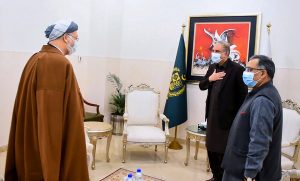
An influential Afghan Shiite leader is visiting Pakistan where members of the minority sect are still reeling from the brutal killing of 11 Shiite coal miners, nine of whom were Afghan immigrants, earlier this month.

The miners, who were abducted and killed by militants from the Islamic State group in southwestern Balochistan province, were members of the minority Hazara group. They were buried on Saturday, following a week of protests in Pakistan that sought to highlight the community’s plight.

The visiting Afghan leader, Karim Khalili, is also an ethnic Hazara. Members of the mostly Shiite community live in both Pakistan and Afghanistan and have suffered persecution from the majority Sunni Muslims in both countries.

The Sunni militant Islamic State group, which is headquartered in Afghanistan’s eastern Nangarhar province bordering Pakistan, as well as Pakistani Sunni militant groups have repeatedly targeted Shiites. 

How Asia can boost growth through technological leapfrogging

By Oliver Tonby, Jonathan Woetzel, Noshir Kaka, Wonsik Choi, Anand Swaminathan

Asia’s initial response to the COVID-19 pandemic in 2020 was partly enabled by technological foundations developed long before the crisis. Over the past decade, the region has developed and deepened its technological capabilities and infrastructure rapidly, accounting for a large share of global growth in technology company revenue start-up funding, spending on R&D, and patents filed.

There is more to come, given the potential to leapfrog in the region’s technological development based on the scale of markets and investment and the speed of adoption and intellectual property (IP) creation. However, tariff and data flow barriers, standards, export controls, and research barriers pose new risks. Moreover, Asia still needs to overcome gaps in core capabilities.

This paper is part of a series focused on the Future of Asia. This research focuses on Asian economies, describing growth in major technological indicators, exploring characteristics of growth in technological capabilities, and homing in on four major sector opportunities—with challenges in each—where Asia has significant scope for technological leapfrogging.

Winter Energy Woes Bedevil Central Asia

By Catherine Putz

As the new year was just beginning, the lights went dark in Kabul. Afghan media reported last week that in one 24 hour period late in the week, the Afghan capital had just 20 minutes of electricity after a technical problem stopped incoming supplies from Uzbekistan.

Afghanistan’s government-owned electric utility company Da Afghanistan Breshna Sherkat (DABS) reportedly pays $100 million annually to Uzbekistan for electricity. Early last fall, the two countries signed a new 10-year electricity supply contract.

Per TOLO News’ reporting on January 6, “Afghanistan presently imports 450 megawatts of power from Uzbekistan. With the cut from Uzbekistan, now the government has only the capacity to provide 160 megawatt from domestic sources.”

Supplies from Uzbekistan were partially restored to 300 MW by January 10 and 400 MW by January 12 but criticism lingers that the country, which spends an estimated $300 million annually for imported electricity, has neglected to invest in building its own domestic capacities.

Reskilling China: Transforming the world’s largest workforce into lifelong learners

By Jonathan Woetzel, Jeongmin Seong, Nick Leung, Joe Ngai, Li-Kai Chen, Vera Tang

After decades of reform, China today has an education system that serves the industrial economy well although gaps in access, quality, and relevance in education still need to be plugged. However, there is now an even larger challenge to meet: delivering the skills needed for a modern, digital, postindustrial economy, while instilling a new national ethos of lifelong learning, and ensuring that the system is equitable. Nothing less than a transformation of China’s education and skills-development system appears necessary. China has undertaken transformative reform before; it now needs to do so again.

Around the world, work is changing as digitization and automation spread, and many millions of people will need to raise and refresh their skills, and some to change occupations. Because of China’s sheer scale, an estimated up to one-third of the global occupational transitions needed for the future of work may be in China. If China gets this right, best practices and models could offer a helpful reference point to other economies.

In this report, the McKinsey Global Institute (MGI) assesses China’s education and training system today with an economic lens and a particular focus on the development of skills. Based on an extensive survey of best practice in China and around the world, the research finds that various pilot programs that use four levers could kick-start a systemic transformation.

What Does a New White Paper Tell Us About China’s International Aid?

By Zhang Chao and Tang Yuxuan

China’s new white paper on international development cooperation has spurred a renewed debate around the Chinese government’s aid. It’s the third such white paper that China has published on its development efforts, and the first since 2014. At around 26,000 Chinese characters, it is even longer than the previous two papers combined.

The white paper reflects some new developments in China’s aid program. For example, it echoes the new initiatives Chinese leaders proposed in the past years, including “a global community of shared future” and the Belt and Road Initiative. Beyond that, three points deserve special attention.

First, China’s aid spending remains modest and its pattern has been evolving. The paper reveals that China invested 270.2 billion renminbi (RMB) in aid programs from 2013 to 2018. Although no detailed spending data is provided, a simple calculation suggests that China’s aid averaged around $7 billion per year (6.5 RMB roughly equals 1 U.S. dollar) during that period. That number would make China the seventh-largest sovereign donor after the United States, Germany, United Kingdom, Japan, France, and Turkey – but it equates to only around one-fifth of U.S. aid, which totaled $346 billion in 2019.

Does China Need More Gas From Russia and Central Asia?

By Sergei Kapitonov and Temur Umarov

Chinese President Xi Jinping announced to the UN General Assembly in September 2020 that in 40 years, China would achieve carbon neutrality. According to the road map prepared by China’s climate scientists, by 2060 the country will reduce oil consumption by 65% and natural gas consumption by 75%. Such plans jeopardize the future of large-scale gas pipeline projects to bring natural gas from Russia (Power of Siberia 2) and Central Asia (Line D) to China. Is there any sense in building pipelines if China will reduce gas consumption in 40 years?

The Chinese government is seeking to limit consumption of coal — the most polluting energy source — in line with the plan to reach peak carbon emissions by 2030. Natural gas will become a key transitional energy source in China for the next two decades, since it is considered the most ecologically friendly fossil fuel.

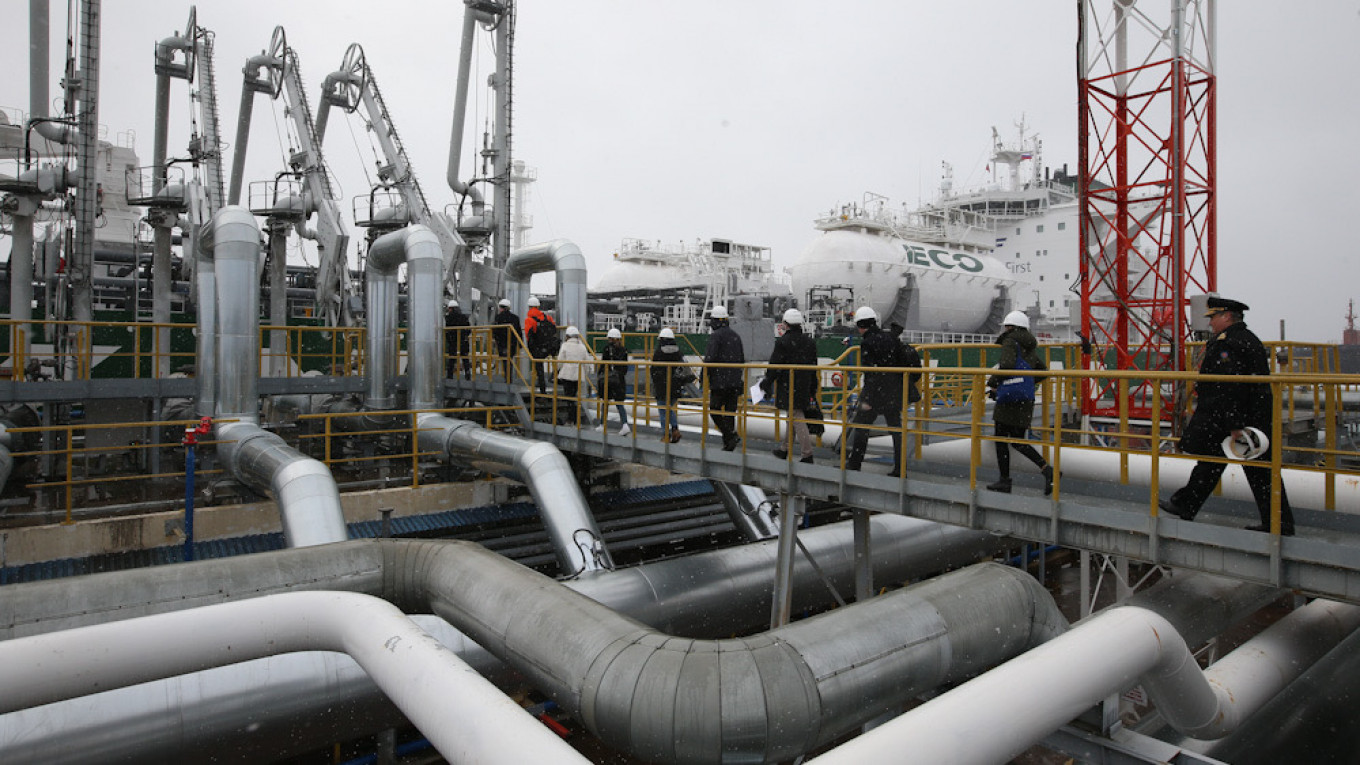
China is currently the world’s biggest importer of natural gas. In 2019, 68% of natural gas was delivered to China in the form of LNG, while the rest was supplied by pipelines from Central Asia, Myanmar, and Russia. Forecasts for a rise in demand for natural gas in China give Russia, Central Asian nations, and other suppliers a chance to win a larger slice of the Chinese gas pie in the medium term. Russia and Central Asia have long had their own large-scale projects in mind for this: Power of Siberia and the fourth link (Line D) of the Central Asia-China gas pipeline.

Satellite imagery shows China creating new military logistics hub in Tibet

By Rezaul H Laskar

China is working on what appears to be a major military logistics hub at Xigatse in Tibet, according to new satellite imagery. Experts believe the move is in line with Beijing’s efforts to ramp up connectivity and infrastructure for operations all along the Line of Actual Control (LAC).

The imagery, shared on Monday by the open-source intelligence analyst who uses the name @detresfa on Twitter, shows infrastructure upgrades south of Xigatse airport that link the facility to a rail terminal. The imagery suggests the infrastructure will be part of a logistics hub for China’s People’s Liberation Army (PLA).

Among the under-construction structures captured by the imagery are a surface-to-air missile site, a suspected military support building, a new railway terminal and new railway line, and a possible fuel dump. The imagery also shows what appears to be a newly developed underground facility.

Earlier, the imagery of this same suspected underground facility had captured what appeared to be two tunnel entrances.

China and India’s Stakes in the Qatar Conflict

By Guy Burton

Both India and China welcomed the outcome of last week’s Gulf Cooperation Council (GCC) summit, where Saudi Arabia, the UAE, and Bahrain promised to end their diplomatic and economic blockade of Qatar and Qatar agreed to drop pending lawsuits against them.

The reopening of borders in the Gulf may result in a resurgence in intra-regional trade, investment, and connectivity. Indian and Chinese business may similarly benefit from that development and prompt political leaders to congratulate themselves for not having taken sides in public when the conflict first erupted back in June 2017.

China’s government may also see the dispute’s resolution as vindication for its approach toward conflict management, in particular that of “peace through development.” For the Chinese this entails political mediation that is linked to economic development and connectivity through infrastructure projects associated with its Belt and Road Initiative.

What Does the EU-China Investment Deal Mean for US-EU Relations?

By Mercy A. Kuo

Diplomat author Mercy Kuo regularly engages subject-matter experts, policy practitioners and strategic thinkers across the globe for their diverse insights into U.S. Asia policy. This conversation with Dr. Alexander Vuving – professor at the College of Security Studies at the Daniel K. Inouye Asia Pacific Center for Security Studies and editor of “Hindsight, Insight and Foresight: Thinking about Security in the Indo-Pacific “(APCSS 2020) – is the 254th in “The Trans-Pacific View Insight Series.”

Explain the key outcomes of the EU-China investment deal.

On the penultimate day of 2020, to fulfill a pledge they made in 2019, the top leaders of China and the European Union struck the deal, which is officially called the “Comprehensive Agreement on Investment” (CAI). It was seven years in the making with 35 rounds of negotiations, and will replace the 25 bilateral investment treaties that individual EU members signed with China before 2009. These 25 pacts secured some market access and reduced some legal uncertainty for European investors in China, but they largely accommodated China’s restrictive and highly discriminatory investment regime. Now the CAI makes a step further to broaden the access and tighten the legal framework for European investors in the Chinese market, but it falls far short of achieving a “genuine level playing field” for European businesses and workers and ensuring reciprocity in market access, a major objective set out by the European Parliament in its 2018 resolution. The CAI goes beyond market access and investment protection to include provisions on environment and labor rights protection, but with regard to forced labor and labor rights, what it has secured is just China’s promises.

How America Can Shore Up Asian Order

By Kurt M. Campbell and Rush Doshi

Throughout the half century of Asia’s unprecedented rise, Henry Kissinger has been a pivotal figure, orchestrating the United States’ opening to China in the early 1970s and then going on to author tomes on Chinese strategy and world order. But at this transitional moment in Asia, Kissinger’s most relevant observations may be found in a more surprising place: a doctoral dissertation on nineteenth-century Europe that struggled to find a publisher when Kissinger wrote it, years before his rise to prominence.

That book, A World Restored: Metternich, Castlereagh and the Problems of Peace, 1812–22, explored how two European statesmen—one British, the other Austrian—worked to bolster fraying relations among leading continental states at the end of the Napoleonic Wars. Their efforts laid the groundwork for the continent’s so-called long peace—100 years of calm and prosperity between 1815 and World War I. The book’s insights have special resonance for today’s Indo-Pacific, with its intensifying great-power politics and strained regional order.

The key implication today of A World Restored is not that the Indo-Pacific requires its own version of Europe’s great-power condominium or a modern U.S.-Chinese concert. It is instead that regional orders work best when they sustain both balance and legitimacy and that Washington should work to advance both in Asia. Kissinger argues that it was Lord Castlereagh’s focus on balance combined with Klemens von Metternich’s focus on the order’s legitimacy in the eyes of member states that established a stable system.

The US must now repair democracy at home and abroad

Thomas Wright

Wednesday’s insurrection laid bare the fragility of democracy in the United States. It is unsurprising that many Americans feel their confidence in the country’s democratic ideals deeply shaken. The expressions of concern from American allies, and the schadenfreude from autocrats, including Turkey’s Recep Tayyip ErdoฤŸan, are sobering.

Writing in Foreign Policy, Emma Ashford, a senior fellow at the Atlantic Council, argued, “Ambitious foreign-policy goals are completely out of step with the realities of the country’s domestic political and economic dysfunction … How can the United States spread democracy or act as an example for others if it barely has a functioning democracy at home?” In Foreign Affairs, James Goldgeier, a professor at American University, and Bruce Jentleson, a professor at Duke University, called on President-elect Joe Biden to abandon his proposed international summit for democracy and hold a domestic one instead. Richard Haass, the president of the Council on Foreign Relations, lamented on Twitter that “it will be a long time before we can credibly advocate for the rule of law” overseas.

However, it would be wrong to conclude that our current humiliation means that the United States has somehow lost its standing to speak up for democracy and human rights globally, or that these ideals are less pressing because of our domestic troubles. Quite the opposite. Our situation shows that the United States has a real stake in the struggle.

Exclusive: Longtime US Diplomat Weighs America’s Legacy in Syria

BY KATIE BO WILLIAMS

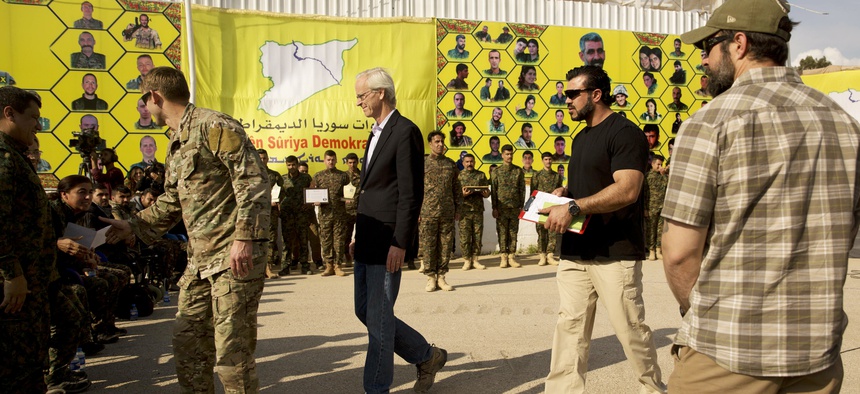
When the explosions started, Ambassador Bill Roebuck recalls, it wasn’t at all clear who was causing them. It was Oct. 15, 2019, and Turkish-backed militias were advancing on a makeshift military base in Syria, a former cement factory about 40 miles from Kobani. President Donald Trump had effectively cleared the path for the invasion into territory previously controlled by the United States and its Kurdish partners. 

“There was shooting going on, and our guys weren’t quite sure what was going on,” Roebuck recalled. “At first, we thought we were under attack.” 

It turned out that the U.S.-backed Syrian Democratic Forces were setting fire to their armory and destroying other equipment to prevent Turkish-backed forces from seizing any of it if the base were to be overrun. But the detonations ended up setting large parts of the compound on fire, and that night, Roebuck — the last diplomat remaining — was evacuated alongside the remaining U.S. special forces and contractors still on base. 

What Are Biden’s Actual Prospects for Reviving Trans-Atlantic Relations?

Stewart M. Patrick

International expectations are high for Joe Biden’s presidency, but perhaps nowhere more than in Europe, where political leaders and observers see an opportunity to revitalize the trans-Atlantic relationship after years of drift and then downright antagonism under Donald Trump. They have reason to be optimistic. Biden and his pick for secretary of state, Antony Blinken, are confirmed Atlanticists. They recognize that, despite Asia’s rise, the United States and Europe are still the load-bearing pillars of any open and stable international system. The president-elect has pleased Europeans so far by pledging to return to the Paris Agreement on climate change, remain in the World Health Organization despite Trump’s attempt to leave it, reengage in diplomacy with Iran, deescalate trade conflicts and generally follow the path of multilateralism.

But this can’t be just a “back to the future” moment. Renewing the trans-Atlantic partnership will require adapting existing security, political and economic arrangements to new transnational threats, geopolitical rivalries and domestic realities. Reforming NATO and deepening the relationship between the U.S. and the European Union will be central to this agenda. ...

Joint Chiefs Issue Extraordinary Condemnation Of Capitol Attack

By COLIN CLARK

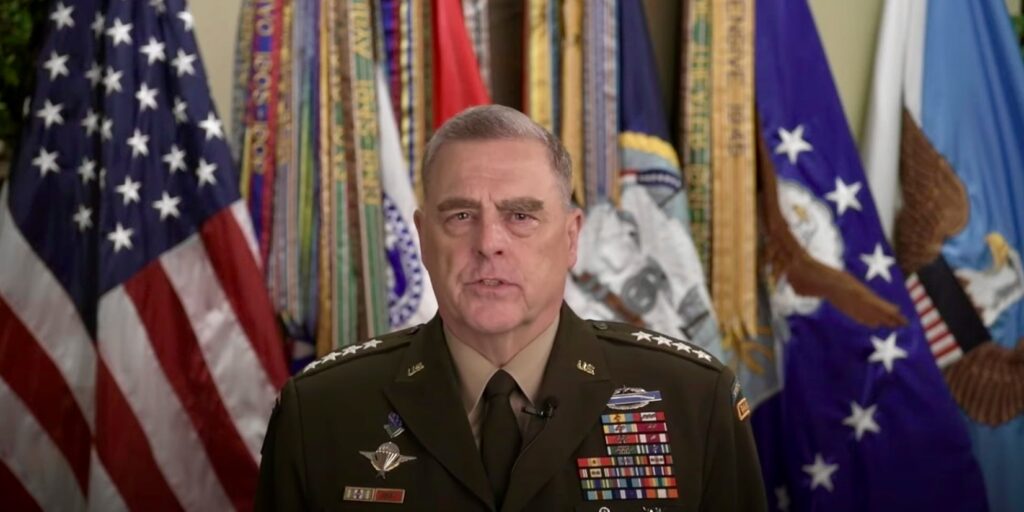
WASHINGTON: The Joint Chiefs of Staff, in a public message unlike any ever issued by the nation’s top military leaders, today condemned last week’s attack on the US Capitol.

Calling the riotous insurrection “a direct assault on the U.S. Congress, the Capitol building, and our Constitutional process,” the chairman, Gen. Mark Milley, Vice Chairman Gen. John Hyten and the other six members of the Joint Chiefs all signed a memo to the Joint Force saying:

“As service members, we must embody the values and ideals of the nation. We support and defend the Constitution. Any act to disrupt the constitutional process is not only against our traditions, values, and oath; it is against the law.”

They also note that the US military remains fully committed to “protecting and defending the Constitution of the United States against all enemies, foreign and domestic.” I don’t think we need to belabor their inclusion of the word domestic.

The Age of Global Protest


Popular protests are on the rise, and they are increasingly going global. Over the past two years, popular movements demonstrating against fiscal austerity and corruption have brought down governments—in democracies and authoritarian regimes alike—from Europe and Latin America to Africa and Asia. And with the advent of new communication technologies and media platforms, what happens anywhere can be seen everywhere. The messages and actions of pro-democracy protesters in Hong Kong, for instance, have inspired and guided demonstrators in other continents.

The Black Lives Matter protests in the United States have been particularly resonant. Building on centuries of international abolitionist and anti-colonialist protest, the latest round of demonstrations, sparked by the May 2020 death of George Floyd after a white police officer kneeled on his neck for nearly eight minutes, spread rapidly around the world. In addition to standing in solidarity with U.S. protesters, demonstrators in Europe, South America and Asia connected the movement to their own experiences of colonialism, racism and state violence that have been perpetrated by their governments.

Global Energy Perspective 2021


After a decade of rapid technological and policy shifts in energy sectors, 2020 has brought unprecedented disruption across the energy landscape. In our Reference Case, a rebound to pre-COVID-19 demand levels takes one to four years for power and oil and gas, whereas coal demand does not return to 2019 levels.

As a result of COVID-19, government policies are more important in the energy transition. Given the unparalleled size of many economic-recovery packages, the focus of the stimulus measures plays a key role in shaping energy systems in the decades to come. In the longer term, fundamental shifts in the energy system continue, and the coming decades will see a rapidly changing landscape. 

In our Reference Case, demand for fossil fuels peaks in 2027, as electrification increases and the role of renewables in power systems grows rapidly. These shifts accelerate in the coming years, as decarbonization and climate change are increasingly important on the agendas of global policy makers and business leaders, and as the consequences of climate change play out and prompt greater action. As the speed and magnitude of these shifts remain uncertain, this report covers four long-term scenarios for the decades to come: the Reference Case, the Accelerated and Delayed Transition cases, and the McKinsey 1.5°C Pathway

The Top 50 Most Valuable Global Brands

By Katie Jones

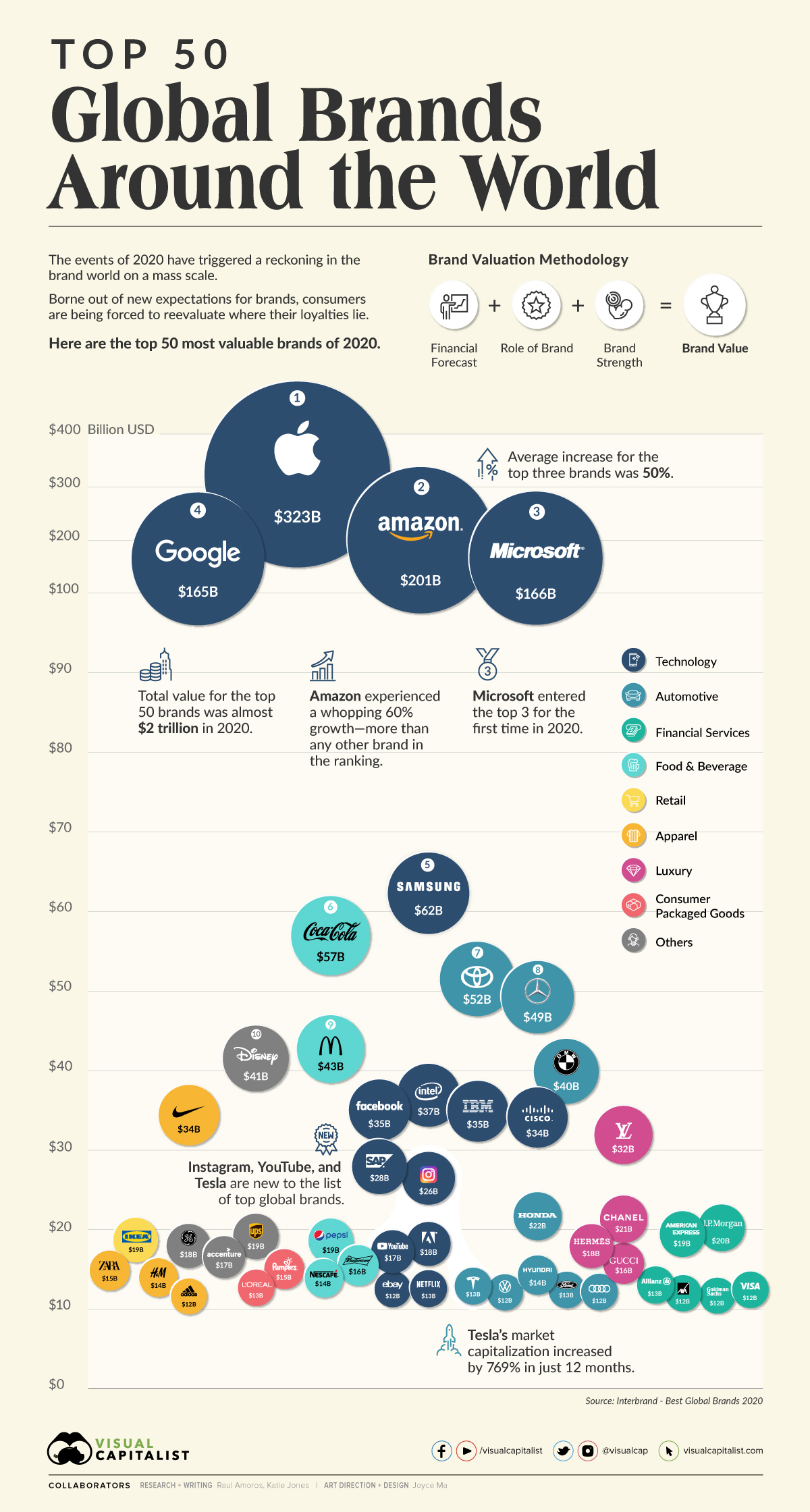
Visualizing the Top 50 Most Valuable Global Brands

For many brands, it has been a devastating year to say the least.

Over half of the most valuable global brands have experienced a decline in brand value, a measure that takes financial projections, brand roles in purchase decisions, and strengths against competitors into consideration. But where some have faltered, others have asserted their dominance and stepped up for their customers like never before.

The visualization above showcases the top 50 most valuable global brands from a study conducted by Interbrand, which calculates brand value across hundreds of companies.

As consumers move cautiously into 2021, which brands have they chosen to keep by their side?
The Heavy Hitters

With an eye-watering brand value of $323 billion, Apple is the most valuable global brand in the world, followed closely by Amazon in second place, and Microsoft in third. Average growth in brand value across all three of these tech brands in 2020 was roughly 50%.

A pragmatic view on Yemen’s Houthis

Bruce Riedel

Thanks to Saudi Arabia’s reckless decision to intervene in Yemen six years ago, Iran has acquired a non-state ally in the Arabian Peninsula along with a base to threaten the Bab el-Mandeb, the strategic waterway that links Europe to the Indian Ocean. Tehran has gained an unprecedented strategic advantage with very little expenditure of human and financial resources. The Biden-Harris administration should make ending the war an urgent priority.

THE HOUTHIS: A PRIMER

Iran’s allies are the Houthis. The Houthis are Zaydi Shiites, or Zaydiyyah. Shiite Muslims are the minority community in the Islamic world, and Zaydis are a minority of Shiites, significantly different in doctrine and beliefs from the Shiites who dominate in Iran, Iraq, and elsewhere (who are often called “Twelvers,” for their belief in 12 Imams).

The Zaydis take their name from Zayd bin Ali, the great grandson of Ali — the prophet Muhammad’s cousin and son-in-law — whom all Shiites revere. Zayd bin Ali led an uprising against the Umayyad Empire in the year 740, the first dynastic empire in Islamic history, which ruled from Damascus. Zayd was martyred in his revolt, and his head is believed to be buried in a shrine to him in Kerak, Jordan. Zaydis believe he was a model of a pure caliph, who should have ruled instead of the Umayyads. Zaydis have ruled Yemen for generations, but the modern political movement emerged as opposition to the rule of dictator Ali Abdullah Saleh in the 1990s.

Will Europe Part Ways With Populism in 2021?

Shane Markowitz

Despite prevailing early sentiment that the coronavirus pandemic and the anxieties associated with it could further fracture the European Union as a tumultuous Brexit process wound to a close, the bloc now finds itself more integrated and united than it has been in years.

As COVID-19 spread across the continent last year, mainstream EU leaders overcame their differences and found compromises on politically sensitive issues, ranging from pandemic recovery to climate change to the rule of law—and even a last-minute post-Brexit trade agreement with the United Kingdom. The many populist and euroskeptic parties that enjoyed surging support in the aftermath of the financial and migration crises of the past decade now find themselves increasingly marginalized.

For more traditional and mainstream parties, caution still remains warranted in light of continued economic tumult forecast for the years ahead. But if EU leaders use their political leverage prudently, pursuing further economic cohesion and integration while enhancing social well-being, the bloc could see a return to a more staid and conventional politics.

Cyber Valhalla: Air Force trains offensive warriors with unclassified exercise

Mark Pomerleau

WASHINGTON — The Air Force is using an unclassified training exercise to ready some personnel for offensive missions that protect the nation in cyberspace.

The 341st Cyberspace Operations Squadron — which falls beneath the 867th Cyberspace Operations Group and 67th Cyberspace Wing — designed Cyber Valhalla to better prepare the airmen they provide to U.S. Cyber Command’s elite Cyber National Mission Force, responsible for tracking and disrupting specific nation state actors in cyber space in defense of the nation.

Officials told C4ISRNET that nothing like this training exists. The unit identified a gap and took steps to create this training for its Cyber Command airmen.

Through the cyber training pipeline — joint standards set by Cyber Command that each service trains its cyber warriors to — students don’t learn certain practical skills. Much of it is academic.

Following the academics learned at the schoolhouse, the 341st wanted to provide cyber personnel with greater operational context they would need to know on an actual mission, such as the processes involved in working within the team.

Valhalla seeks to provide an unclassified, yet realistic operational scenario.

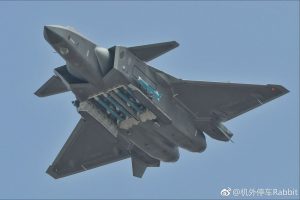
J-20: The Stealth Fighter That Changed PLA Watching Forever

By Rick Joe

The weeks leading up to January 11, 2011, marked a watershed episode for PLA watching. After years of cross-referencing enthusiast Chinese language defense chatter, monitoring the People’s Liberation Army’s operational security (OPSEC), carefully tracking rare semi-official and official statements, and debates about realism and ambition, the elusive fifth generation fighter project known since the mid-2000s variously as J-XX, J-13, J-14, XXJ, finally emerged in blurry poor-quality pictures at Chengdu Aircraft Corporation’s (CAC) factory from late December 2010. It arrived right on schedule.

As clearer pictures percolated from Chinese-language defense boards to the English language PLA watching forums, and then onto aerospace and defense blogs and mainstream alphabet soup media outlets, the finalized designation – J-20 – became accepted and widely used. Finally, on the aforementioned date, the first J-20 technology demonstrator conducted a successful maiden flight, accompanied by a J-10AS twin-seater chase plane.

Suicide Bombings Worldwide in 2020

Yoram Schweitzer, Aviad Mendelboim, Arella Hendler-Bloom

The gradual decline in the number of suicide bombings in 2018 and 2019 continued in 2020, with a 14.5 percent drop from the previous year. Most of the suicide bombings were concentrated in three countries: Afghanistan, Somalia, and Syria. There was also a steep drop in the number of victims. Salafi-jihadist organizations again accounted for a decisive majority of the world's suicide bombings, and were directly or indirectly responsible for 95 percent of all such attacks. Whether the decline in suicide bombings in recent years results from the diminishing returns from this activity, or from a combination of the circumstances of the organizations involved and improved counteraction capabilities on the part of the countries attacked will become clear in the following decade.

Suicide bombings tallied and analyzed by the Terrorism and Low Intensity Conflict Program at the Institute for National Security Studies (INSS) are based on at least two independent sources. Combined attacks on a number of proximate targets, or as part of a deliberate advance plan, are counted as a single assault.

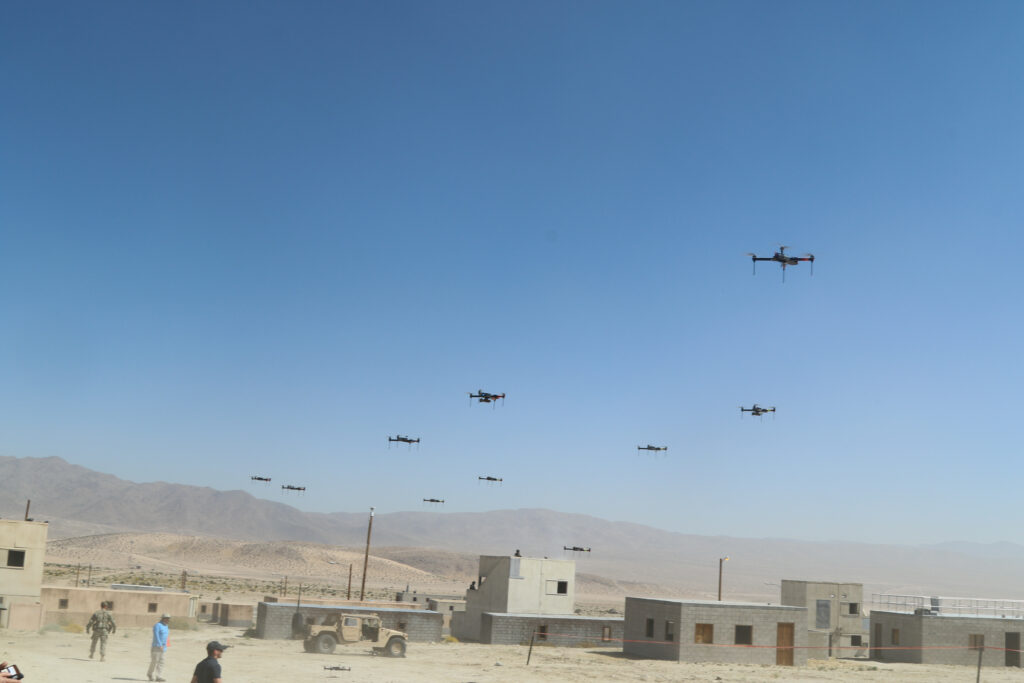
DoD Drone Strategy Focuses On Low-End Threats – Not Nation-States

By SYDNEY J. FREEDBERG JR.

WASHINGTON: Got lasers? Jammers? Wireless hacking tools? Then check out the competition the Pentagon will formally kick off Friday, with an open invitation to industry to bring their “low collateral damage effectors” to Yuma Proving Ground this April. The objective: pick the best system or systems for all the armed services to buy to defeat small drones when physically shooting them out of the sky is too dangerous to civilians or friendly troops.

“Bring all your low-collateral effectors to the range first week of April, and we’ll select the best ones and move forward with that as the joint solution,” Maj. Gen. Sean Gainey said in a CSIS webcast Friday.

Gainey, an Army two-star, helms the all-service Joint Counter-UAS (Unmanned Air Systems) Office (JCO), which last week formally rolled out the Defense Department’s strategy to stop small drones.

15 January 2021

Bengaluru Is the New Shenzhen as Apps Displace Devices

BY SALVATORE BABONES 

High tech has always meant cool stuff. Pathbreaking devices have repeatedly expanded the frontiers of consumer electronics, from the early game consoles of the 1970s to the rise of the smartphone in the 2010s. But now that it’s literally possible to shoot a feature film on a mass-market phone, future device development is likely to see diminishing returns. Instead, the 2020s will probably herald a shift from devices to apps. The smartphone isn’t going to disappear, but it is becoming more valuable for the apps that run on it than for the electronics that run in it.

The shift from devices to apps means much more than just a new business model for the likes of Apple and Samsung. It also has serious economic and even geopolitical implications. Unlike devices, which are tied to physical production networks, apps can be developed anywhere. As a result, the Indian economy, long hobbled by its relative isolation from tight-knit East Asian subcontracting networks, may finally be freed from the tyranny of geography.

India’s landlocked southern city of Bengaluru has emerged as the country’s technology capital. It consistently garners nearly half of India’s technology startup funding and is home to a plethora of technology incubators and accelerators. Its big names include Flipkart (India’s leading online marketplace), Swiggy (food delivery), Udaan (B2B marketplace), and BigBasket (online groceries). India’s dominant ride-hailing firm, Ola, moved its headquarters from Mumbai to Bengaluru as it grew and needed to access a larger pool of developer talent.
Potentially much more important for India’s efforts to climb up the value chain is Bengaluru’s emerging role as a global app development center.

Statism in Pakistan

Umair Javed

MOST journalistic and drawing room analysis of Pakistan’s political parties focuses on two aspects — the self-interest of top political leaders, and the local, often transactional, mechanisms required to win electoral constituencies. For the first, political elites can be motivated by a range of things, including the desire for personal enrichment, higher status, protection of their family legacies, and (perhaps rarely) some moral ideal. This motivation plays into the actions they take in government or as members of the opposition.

Similarly, as much as some individuals and institutions would want, there is no politics possible without voters under the existing rules. This necessarily mandates some focus on how voters are compelled to vote for particular parties and candidates — be it because of patronage ties, ethnic, kinship and tribal affinity, or charisma-induced obligation.

Increasingly, however, there are indications that other factors need to be paid attention to as well. Since the resumption of some form of democracy since 2007, the opening up of the private media sphere, and the partial disruption to cultural production and consumption caused by social media, factors beyond elite machinations and constituency-based wrangling may have entered the mix. Broadly put, these factors can be classified as ‘cultural’ or ‘ideological’ issues and how they help voters relate to particular mainstream political parties.

In 2018, Rahul Verma and Pradeep Chhibber wrote Ideology and Identity: The Changing Party Systems of India, in a bid to evaluate (and rectify) long-standing notions of how Indian politics remained immune to ‘ideology’ and was largely determined by localised vote-banks and often patronage-based coalitions. Their primary argument against these notions was that instead of applying the left-right socioeconomic model of ideology found in Western states, political contexts like India are instead shaped by ideological debates on the role of the state in shaping people’s lives and the politics of minorities and the extent to which their rights should be protected.

The next wave of globalization: Asia in the cockpit

PARAG KHANNA

Four years ago, the Trump administration came into office promising to bring back industrial jobs from Asia and revitalize America's manufacturing foundation. He pledged to slash the country's trade deficit with China by forcing it to buy more oil, food and industrial goods from the U.S.

But things haven't worked out as planned. November 2020 was the busiest month in the history of the port of Los Angeles, with up to 20 container vessels being unloaded every day -- mostly from China, which sent a record $52 billion of goods across the Pacific Ocean that month.

Trump trumpeted his anti-globalization credentials from the beginning of his administration to the end, promising to protect American industries from Chinese competition and defeat the "ideology of globalism." But ultimately -- and not surprisingly -- it got the better of him.

Orwell's world?

Today's world is beset by contradictory megatrends of the type just illustrated. High-stakes tensions between the U.S. and China over trade, technology, and Taiwan, but also massive investments in new connective infrastructure from freight railways to internet cables. Protectionism and industrial policy to nearshore manufacturing and boost self-sufficiency, but also intense competition to export digital technologies and lure investment into capital markets. Nationalism and xenophobia restricting migration, but also a war for talent to capture students, nurses, and tech workers.

Xi Jinping says ‘time and momentum on China’s side’ as he sets out Communist Party vision

Kinling Lo and Kristin Huang

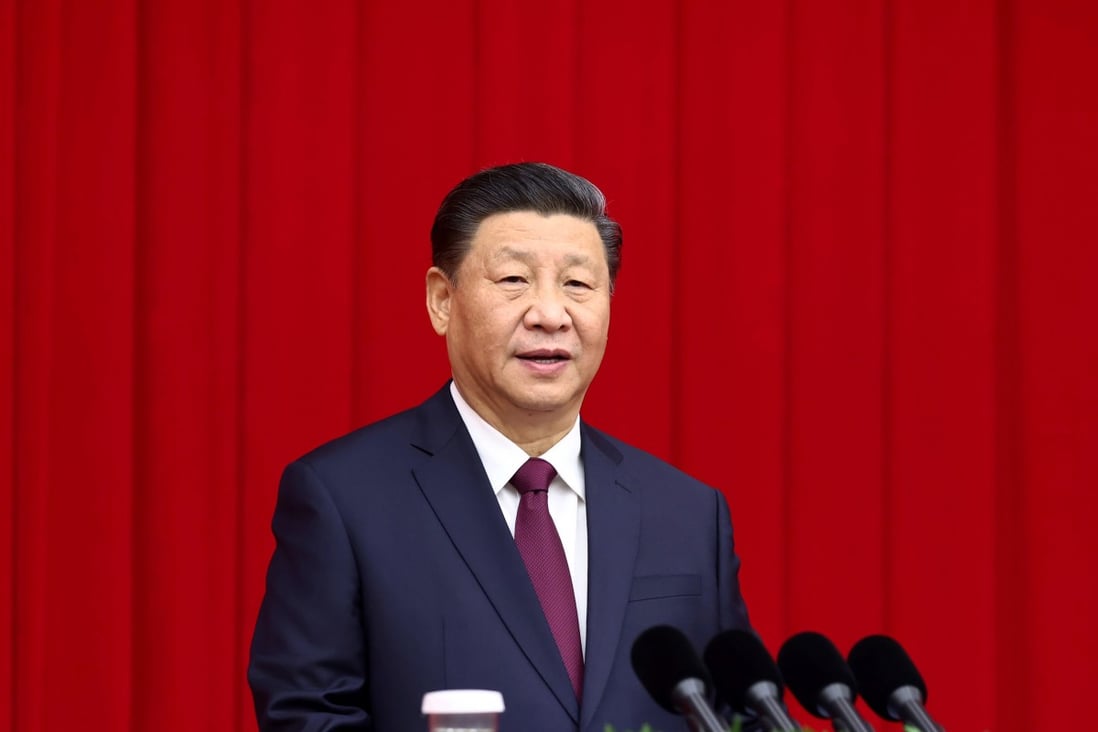
“The world is in a turbulent time that is unprecedented in the past century,” Xi said in the speech, according to party mouthpiece People’s Daily. “But time and momentum are on our side. This is where we show our conviction and resilience, as well as our determination and confidence.”

He was addressing leading cadres at a meeting on the fifth plenum –  an important closed-door gathering in October on China’s medium- and long-term plans for social and economic development to 2025.

“At the same time, we must see clearly that, for now and until this upcoming period of time, while our country is at an important period of strategic opportunity for development, there will always be changes to our opportunities and challenges,” Xi was quoted as saying.

“The extensiveness of these opportunities and challenges is unprecedented but, all in all, the opportunities we face outweigh our challenges,” he added, calling for unity, diligence and flexibility to achieve the party’s goals.

All members of Beijing’s highest decision-making body, the Politburo Standing Committee, and Vice-President Wang Qishan, known as Xi’s right-hand man, were also at the meeting.

What happened at the Chinese Communist Party’s major policy meeting, the fifth plenum?

Why the West Isn’t Confronting China Over Coronavirus

by Andrew A. Michta

We are a year into the worst crisis to hit the globe since the Great Depression. Borrowing has skyrocketed, sending budget deficits and national debts to unheard-of levels, while repeated lockdowns and mounting public health concerns have fueled social unrest, strained political institutions, and left a trail of failed businesses in their wake. The “2020 Great Suppression” of the global economy is unprecedented. We simply have no idea at this point of the extent of the damage to our economic and social fabric that will likely continue to manifest itself long after this pandemic has run its course. And yet, quite remarkably, one rarely hears government officials, think-tankers and the media mention the name of the state that brought this devastation to us all.

In part, Western restraint in criticizing Beijing can be explained by our unprecedented and continued economic dependence on China for key manufactured goods and supplies that the offshoring of manufacturing has wrought onto the most advanced Western economies. The pandemic has exposed the extent to which the radical centralization of key supply chains owing to Chinese mercantilism (and Western greed) has made China the sole provider of key medicines, Personal Protective Equipment and other equipment needed to manage the global health emergency. The Western reticence to criticize China is also due in part to the extent to which the People’s Republic of China (PRC) has been able to influence and shape the direction of our internal policy debate, not just in the United States but also in Europe and elsewhere, with Beijing leveraging its access to every layer of Western societies. The PRC has been able to exploit the fissures in our domestic politics, benefitting from the hardening ideological divisions that have fractured the national consensus across the West such that we are incapable of facing up squarely to the existential threat that China poses to the United States and democracies worldwide. Lastly, the sheer scale of Western investment in China by an ever-larger number of U.S. and European transnational companies has made the task of confronting Beijing over the pandemic that much more difficult, for the near-term economic pain of decoupling from Chinese supply chains would be sharp and felt in short order.

Who is Jack Ma? Where the Alibaba co-founder came from and disappeared to

By Dana Kennedy

For years, nobody flew higher in China than Jack Ma, the pixie-faced founder of the $500 billion powerhouse e-commerce conglomerate Alibaba, the Amazon of Asia.

Now he’s vanished and no one knows where he is.

Ma, a member of the Communist Party who famously started out as an English teacher, symbolized the high-tech “China Dream” until he ran afoul of the political leaders who once lionized him. He hasn’t been seen in public for two months.

“China used Jack Ma and Alibaba as well as some of the other big fintech companies to show the world what great leaders they were,” Craig Singleton, a China expert at the Foundation for the Defense of Democracies, told The Post.

“But these private sector companies were operating without government controls and Jack got a little too far out ahead of his skis. You only have to step out of line once and they’ll get you. He’s probably been smacked pretty hard.”

Insiders told The Post it’s highly unlikely that Ma, 56, has been permanently disappeared to one of China’s feared “black sites” reserved for the country’s dissidents. Nor is he in Singapore, per some rumors.

Instead he’s probably cooling his heels either at home or in a “very cushy location” where one expert said he may be reviewing “Marxist lessons” with party officials, a process called “embracing supervision.”

China's rise as a global security actor: implications for NATO


NATO's relationship with China is changing. This IISS–MERICS report assesses the various strategic challenges a rising China poses to the NATO Alliance, and offers recommendations on how NATO could most effectively address them.

In December 2019, for the first time, NATO leaders recognised China as a new strategic point of focus for the Alliance. This reflects growing concern among NATO members surrounding China’s geopolitical rise and its growing power-projection capabilities, as well as the impact that these may have on the global balance of power. Today, China is not only taking a central role in Indo-Pacific security affairs but is also becoming an increasingly visible security actor in Europe’s periphery. As such, the question of how to deal with an increasingly global China has been an important part of Secretary-General Jens Stoltenberg’s NATO 2030 reflection process. 

China poses a wide range of challenges to NATO. Beijing sees the Alliance as a United States-centric outfit that may be used by Washington to contain China, and has therefore tried to influence individual NATO members’ decisions in order to weaken the Alliance’s unity. Close ties between China and Russia, especially in the security and military spheres, have also been a source of concern for NATO allies. Besides the Chinese and Russian navies’ joint exercises in the Baltic and Mediterranean seas, there is also the potential for the two sides to further coordinate – or at least align their behaviour – on issues of relevance to the Alliance, including hybrid warfare and cyber espionage, arms-control issues, and their approach to Arctic governance, among others. 

China threatens ‘counterstrike’ over US contact with Taiwan


China has threatened a 'resolute counterstrike' after US Secretary of State Mike Pompeo lifted restrictions on official contacts with Taiwan© AFP/File Brendan Smialowski

China on Monday threatened a "counterstrike" against a move by the United States to lift restrictions on official contacts with Taiwan as military tensions grow between Beijing and the self-ruled island.

US Secretary of State Mike Pompeo said Saturday Washington would lift “complex internal restrictions” on contacts with Taipei by diplomats, after a year of mounting US-Chinese friction on topics including human rights, trade and the origins of the Covid-19 pandemic.

Beijing says Taiwan is an inviolable part of China to be reclaimed, by force if necessary, and opposes any diplomatic recognition of the democratic island.

Chinese foreign ministry spokesman Zhao Lijian said Beijing “strongly condemns” the move and accused the United States of violating the terms of Washington’s diplomatic relations with Beijing.

“Any action that harms China’s core interests will receive a resolute counterstrike from China,” Zhao warned, urging Pompeo to retract the decision or face “severe punishment”.

It was not clear what the change means in practice, with Pompeo saying executive branch communications with Taiwan will be handled by the American Institute in Taiwan (AIT), which is owned by the US government and serves as the de facto embassy.

From the Arab Spring to the American Winter: Cyberspace and Democracy After the Insurrection

by David P. Fidler

It only took one decade. Ten years ago this month, democratic movements, facilitated by social media, began to surge across the Arab world. These movements challenged authoritarian rule, buoyed democratic nations, and appeared to forge a bond between democracy and cyberspace that promised to shape the world’s political fortunes for years to come. On January 6, 2021, a mob—incited by the president of the United States and addicted to lies and conspiracy theories spread through social media—attempted to prevent the peaceful transfer of power in the world’s oldest democracy from taking place.

This obscene moment in American history is forcing a reckoning in our country about many things, including how the democratic project at home and abroad copes with the antidemocratic weaponization of digital technologies. January 6th is a day that will live in cyber infamy. On this day, an American social media company, Twitter, bans the president of the United States from using its platform to continue to incite his beloved and very special red guards from further desecrating the Capitol and violently intervening against the democratic process. The nation watches this rabble pervasively use mobile devices to record and share online their insurrection. Then—even after the lawlessness, violence, and bloodshed—the world watches over 100 lawmakers oppose certification of Electoral College votes and the legitimacy of the 2020 election by repeating falsehoods about the election that the president, his apparatchiks, and his cultists have spread online. Cyberspace, it appears, is the place American exceptionalism went to die.

Armenia’s 44-Day War: A Self-Inflicted Trauma (Part Two)

By: Vladimir Socor

The Armenian government has yet to unveil the number of military casualties sustained during the Second Karabakh War (September 27–November 9, 2020). Almost two months after the ceasefire, the search for bodies is still ongoing across the theater; while in parallel, Azerbaijan is repatriating prisoners of war and the remains of fallen soldiers to Armenia. Nikol Pashinian’s government in Yerevan seems reluctant for political reasons to disclose the real numbers of soldiers killed and handicapped in this war.

Nor has any systematic or credible opinion polling been attempted in the two months since the ceasefire. Impressionistic estimates in circulation suggest that Pashinian’s current popularity rating is down to about half of the erstwhile 70 percent level. Mitigating the fallout on the government, however, is public skepticism about the opposition parties.

A wide array of opposition groups from both the current and the former political establishment are calling for the resignation of Pashinian’s government and for new parliamentary elections. President Armen Sarkisian, both parliamentary opposition parties, an alliance of extra-parliamentary parties, as well as former presidents Levon Ter-Petrosian, Robert Kocharian and Serge Sarkisian, and both Catholicoses (of Etchmiadzin and of Cilicia) have all urged Pashinian to make way for an interim government of experts and pre-term parliamentary elections to be held within some months (NewsAm, Arminfo, Armenpress, November–December 2020, passim).

Parliamentary opposition leaders Gagik Tsarukian (“oligarchic” Prosperous Armenia party, associated with the old establishment) and Edmond Marukian (Enlightened Armenia party, opposing both Pashinian and the old establishment) advocate for those changes to be implemented in an orderly manner through parliamentary processes. Marukian, hitherto a pro-Western liberal, has switched to strident pro-Russia positions, as a political lesson of the lost war.