15 May 2021

China’s Nuclear and Missile Capabilities: An Overview

   Maj Gen PK Mallick, VSM (Retd)  

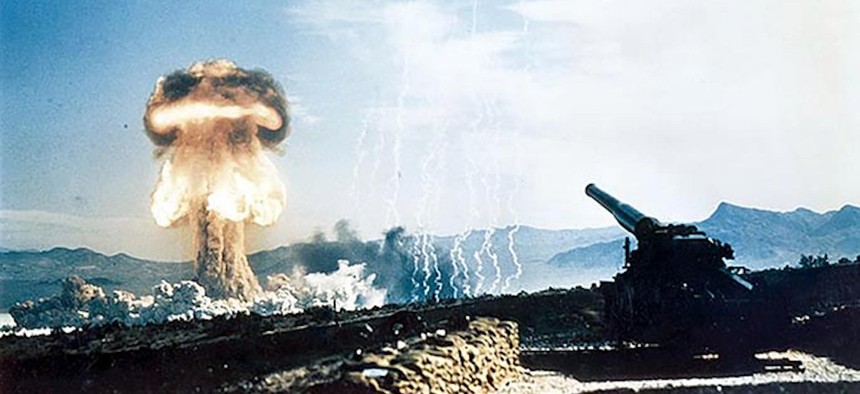
Since China first conducted a nuclear weapon test in 1964, its nuclear doctrine has remained unchanged and is underpinned by two principles: a minimum deterrent doctrine and a No First Use (NFU) policy. China’s 2019 defence white paper states, “China is always committed to a nuclear policy of NFU of nuclear weapons at any time and under any circumstances, and not using or threatening to use nuclear weapons against non-nuclear-weapon states or nuclear-weapon-free zones unconditionally.”

However, a recent U.S. Department of Defence (DoD) report claims that the scope of China’s nuclear modernisation and its lack of transparency “raise concern that China is not only shifting its requirements for what constitutes a minimal deterrence but that it could shift away from its longstanding minimalist force posture.” The data available show that China is modernising and expanding virtually every element of its nuclear forces, including each aspect of its nuclear weapons and missile, sea, and air delivery systems. What is not clear are China’s current and planned holdings of nuclear weapons, China’s future plans for deploying additional delivery systems, its commitment to some form of NFU, first preemption, or launch on warning, and the extent to which it will accept what might be called a form of ‘minimum assured destruction.


The End of Modi’s Global Dreams


By Sushant Singh

In December 2004, when an earthquake and tsunami struck Asia, then-Indian Prime Minister Manmohan Singh decided it was high time for India to stop accepting aid from other countries to deal with disasters and rely on itself instead. “We feel that we can cope with the situation on our own,” he said, “and we will take their help if needed.” It was a pointed political statement about India’s growing economic heft, and it wasn’t the last. Singh’s government offered aid to the United States in the wake of Hurricane Katrina in 2005 and to China after the 2008 Sichuan earthquake. Seen as a matter of national pride, an indicator of self-sufficiency, and a snub to nosy aid givers, the practice continued under Indian Prime Minister Narendra Modi despite pressure to change course during floods in the southern state of Kerala in 2018.

Modi, who has consistently campaigned on virulent nationalism captured by the slogan “Atmanirbhar Bharat” (or self-reliant India), has been forced to abruptly change policy. Last week, with images of people dying on roads without oxygen and crematoriums for pet dogs being used for humans’ last rites as the second wave of the COVID-19 pandemic overwhelmed the country, his government accepted offers of help from nearly 40 other nations. Its diplomats have lobbied with foreign governments for oxygen plants and tankers, the arrival of medicines, and other supplies hailed on social media. “We have given assistance; we are getting assistance,” said Harsh Vardhan Shringla, the country’s top diplomat, to justify the embarrassing U-turn. “It shows an interdependent world. It shows a world that is working with each other.”

Why Afghanistan is critical to the struggle against China, Russia and Iran

Rep. Michael Waltz

Last month, President Biden shocked the world by announcing all U.S. forces will withdraw from Afghanistan by Sept. 11 this year.

As a veteran of the war in Afghanistan, I found this news heartbreaking knowing the American bloodshed that had been spilled in combating terrorism and for the millions who are likely to return to life under Taliban rule.

Set aside for a moment that most observers correctly point out an Afghanistan withdrawal will set the stage for similar events that unfolded following then-President Obama’s withdrawal from Iraq in 2011 that provided a path for the Islamic State Group to launch its reign of terror across the Middle East, Europe, and inspire attacks in America.

What gives me even more concern is the strategic foothold we are giving up in the back yard of America’s greatest rivals.

By abandoning Bagram Airfield in Afghanistan, we will no longer have a U.S. airfield in a country that borders China. Many analysts believe that should the United States and China come to blows in the Pacific, a second front will be critical given China’s ability to concentrate its naval and missile assets around Taiwan. Further, the thing the Chinese Communist Party fears the most is an uprising amongst its own people.

How American Politics Got Troops Stuck—and Killed—in Afghanistan

By ERIK EDSTROM

Erik Edstrom graduated from West Point and deployed to combat in Afghanistan as an infantry officer. He is the author of Un-American: A Soldier’s Reckoning of our Longest War and a senior fellow at the Eisenhower Media Network, an organization of independent military and national security veteran experts. He holds an MBA and MSc from the University of Oxford where he studied finance and climate change.

Maybe it was the ketamine talking. Or maybe A.J. Nelson, an 18-year-old private, possessed a type of bravery that I did not. Whatever it was, lying on his back, bones broken, blood rivering from his lacerated lips, he said something that I can’t forget.

“I want to come back.” Flecks of blood sprayed in the air with each word, speckling his uniform. “I want to come back to the platoon, sir.”

Two years earlier, in the spring of 2007, I had commissioned from West Point as an infantry officer. Now I was leading roughly 30 men in Maywand and Zhari—poverty-stricken, hard-scrabble districts within Kandahar Province. These districts had developed a sort of infamy, called the “Heart of Darkness.” This was our first week in Afghanistan, and a roadside bomb had just obliterated one of my platoon’s hulking armored vehicles.

The desert around us was a yard sale of twisted metal and vehicle parts. The wreck of their vehicle—it’s engine block sheered completely off—looked like poachers had gotten it. As the Blackhawk helicopter hovered to land, we attempted to shield the four wounded men from the sandblasting rotor wash. At that moment, I knelt, looked at A.J., and proceeded to lie directly to his face.

“You’re going to be OK.”

China Is a Paper Dragon

David Frum

China was mentioned only four times in Joe Biden’s first address to a joint session of Congress, but it shadowed almost every line of the speech. “We’re in a competition with China and other countries to win the 21st Century,” Biden said. His aides describe the president as preoccupied with the challenge from China. “It informs his approach to most major topics and the president regularly raises it in meetings, whether he is discussing foreign policy or electric bus batteries,” CNN’s Jeremy Diamond reported. “And aides say Biden believes it is a key test by which historians will judge his presidency.”

As Biden said to the nation from the well of the House of Representatives, the authoritarian President Xi Jinping is “deadly earnest” about China “becoming the most significant, consequential nation in the world. He and others—autocrats—think that democracy can’t compete in the 21st century with autocracies.”

So this might be a useful moment to hear a contrary voice. In 2018, the Tufts University professor Michael Beckley published a richly detailed study of Chinese military and economic weaknesses. The book is titled Unrivaled: Why America Will Remain the World’s Sole Superpower.

ODNI quiet on '36-star' info war memo

By Bill Gertz 

Sixteen months after nine combatant commanders asked the director of national intelligence to help them counter Chinese and Russian disinformation, intelligence agencies have done little to respond.

The request was made in an unprecedented “36-star letter” signed by the commanders of the Indo-Pacific Command, European Command, Strategic Command, Special Operations Command, Africa Command, Space Command, Transportation Command, and Northern and Southern Commands on Jan. 15, 2020.

The six generals and three admirals, all wearing four stars on their shoulders, said China and Russia are using all instruments of power to wage political warfare and manipulate information to violate national sovereignty, coopt world bodies, weaken international institutions and splinter U.S. alliances.

“Their efforts to reshape the world in their image, proliferate authoritarianism and advance their ambitions are provocative, dangerous and destabilizing,” the commanders said in the letter to then-acting Director of National Intelligence Joseph Maguire. A copy of the unclassified letter was obtained by Inside the Ring.

The letter urged the DNI to use intelligence to counter enemy coercion and subversion and help the American military “win without fighting” by engaging in similar gray zone warfare against China and Russia.

Opinion: China's New Silk Road is full of potholes


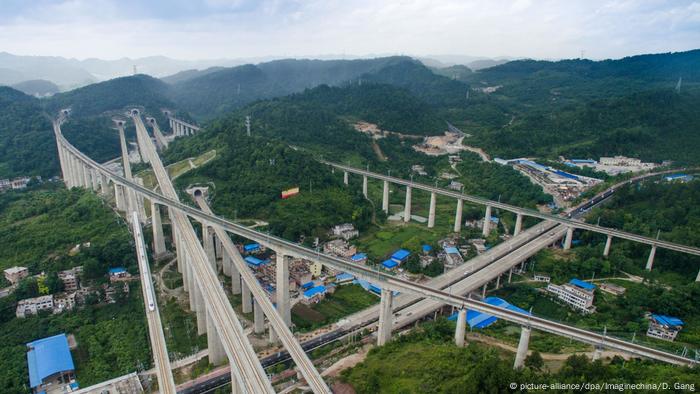
There are cracks appearing in the New Silk Road, otherwise known as the Belt and Road Initiative. Launched in 2015 as Chinese President Xi Jinping's signature foreign policy project, it received a warm welcome from countries keen to benefit from Chinese globalization.

Since then, the attitude to China has hardened, especially in many democratic countries. Revelations about 1 million Uyghurs held in reeducation camps and reports of forced labor in Xinjiang, serious questions about China's handling of the coronavirus and its origins, and Beijing's dismantling of democracy in Hong Kong have cooled international enthusiasm for Xi's pet project.

Western countries have been emboldened by a reset of relations under US President Joe Biden, following the chaos and division of the Donald Trump era. The Biden administration is pointing to growing Chinese aggression and looking to forge an alliance with Europe and its other traditional allies.

Leading the way on pushback is Australia, whose prime minister, Scott Morrison, said he did not think the New Silk Road was "consistent with Australia's national interest."

Relations between Canberra and its largest trading partner have nosedived since Morrison's calls for Beijing to allow independent investigators into Wuhan to probe the origins of the coronavirus. Despite a free trade agreement and a slew of other free trade deals, China piled trade sanctions on Australian goods like coal, wine and barley.

China–Iran deal: much ado about nothing?


The establishment of a new Comprehensive Strategic Partnership between China and Iran has made headlines, but as Camille Lons and Meia Nouwens explain, Middle Eastern leaders are by no means naรฏve. While they shake hands with the East, all eyes remain on the West.

The signing of the long-awaited China–Iran 25-year cooperation programme was the crowning achievement of a tour of the Middle East by Chinese Foreign Minister Wang Yi, which included visits to Saudi Arabia, Turkey, Iran, the UAE, Bahrain and Oman, and saw Wang lay out a five-point initiative for the Middle East and propose to host an Israel–Palestine dialogue, as well as a multilateral Gulf security dialogue.

Under discussion since it was first proposed in 2016, the deal had already made headlines in 2020 when the New York Times reported on a draft version of the agreement. This deal would reportedly expand China’s presence across a wide range of sectors, spanning from energy, banking, to telecommunications and infrastructure. It would also offer military cooperation, including joint training, as well as research and cooperation in their defence industries. In return, China would reportedly receive a heavy discount on its supply of Iranian oil for the next 25 years.

China in Lebanon: A Mirage of Help

By Sakshi Jain

Chinese aid in Lebanon should be conditional or else it will fragment the society even more.

China accounts for 40% of Lebanon’s imports, amounting to $2 billion per year. The economy, which once grew at 9%, has now reached a standstill. The country’s elites are indifferent, and political parties are self-centred that focus on short-term gains. Lebanon used to be a friendly Gulf country that enjoyed political and economic autonomy from the United States.

However, with time, the remittances were cut off, and the Gulf Cooperation Council placed travel bans on Lebanon. Saudi Arabia also cancelled a $4 billion investment programme aimed at bolstering Lebanese national security.

The management of the Beirut port by Hezbollah is another factor impeding tax collection and duty charges. It neither pays any taxes nor gives the government access to them. Hezbollah leader Hassan Nasrallah was seen threatening the United States over its continued political pressure on IMF loans. He went on to say that Lebanon is happy to have China as a new investor who is not looking for a return on their investment.

Crash In Iraq Helps Unmask Secretive Ultra-Quiet Special Operations Drone Program

BY JOSEPH TREVITHICK 

The U.S. military has confirmed that the secretive Joint Special Operations Command, or other U.S. government entities operating in cooperation with it, has been flying a new type of drone in the Middle East that is designed to be extremely quiet and have an innocuous outward appearance. The new details about the Long Endurance Aircraft Program have come to light after one of these unmanned planes, derived from the Pipistrel Sinus powered glider, crashed at Erbil International Airport in Iraq last year.

The Long Endurance Aircraft Program (LEAP) drone in question, identified only as AV009, crashed at Erbil on July 24, 2020, according to a heavily redacted copy of the official accident report that The War Zone obtained via the Freedom of Information Act. The unmanned aircraft suddenly and unexpectedly pitched nose down while coming in to land at the airport after a sortie. The drone hit the ground, bounced back up into the air, and then came back down, eventually coming to rest alongside the runway. The mishap resulted in the front-mounted propeller striking ground and the landing gear collapsing. It also caused significant enough damage to the right wing that fuel leaked onto the ground.

France’s Double Standard on Democracy in Africa


Judah Grunstein 

It all started in late April with an open letter written by a group of 20 retired French generals and published in a right-wing weekly news magazine, Valeurs Actuelles, known for its inflammatory provocations. Describing France as teetering on the edge of civil war, the letter called on France’s civilian leadership to take action so the military wouldn’t have to.

With its reference to the threats posed by “Islamism and the hordes from the banlieues”—France’s peri-urban ghettos—and a form of anti-racism that “despises our country, its traditions, its culture,” the letter was more foghorn than dog whistle when it comes to the culture wars that have wracked France over the past year. And though the retired generals did not explicitly call for a military coup, the significance of the date their letter was published was lost on no one: April 21, the 60th anniversary of the failed 1961 putsch against then-President Charles de Gaulle in response to his decision to end the war, and with it French colonial rule, in Algeria.

Saudi-Iranian Dialogue: Toward a Strategic Change?


Yoel Guzansky, Sima Shine

Five years after Riyadh broke off relations with Tehran, there are increasing reports of direct political contacts between the two states. What are the respective interests of the sides in easing the tension, and should Israel be concerned about this?

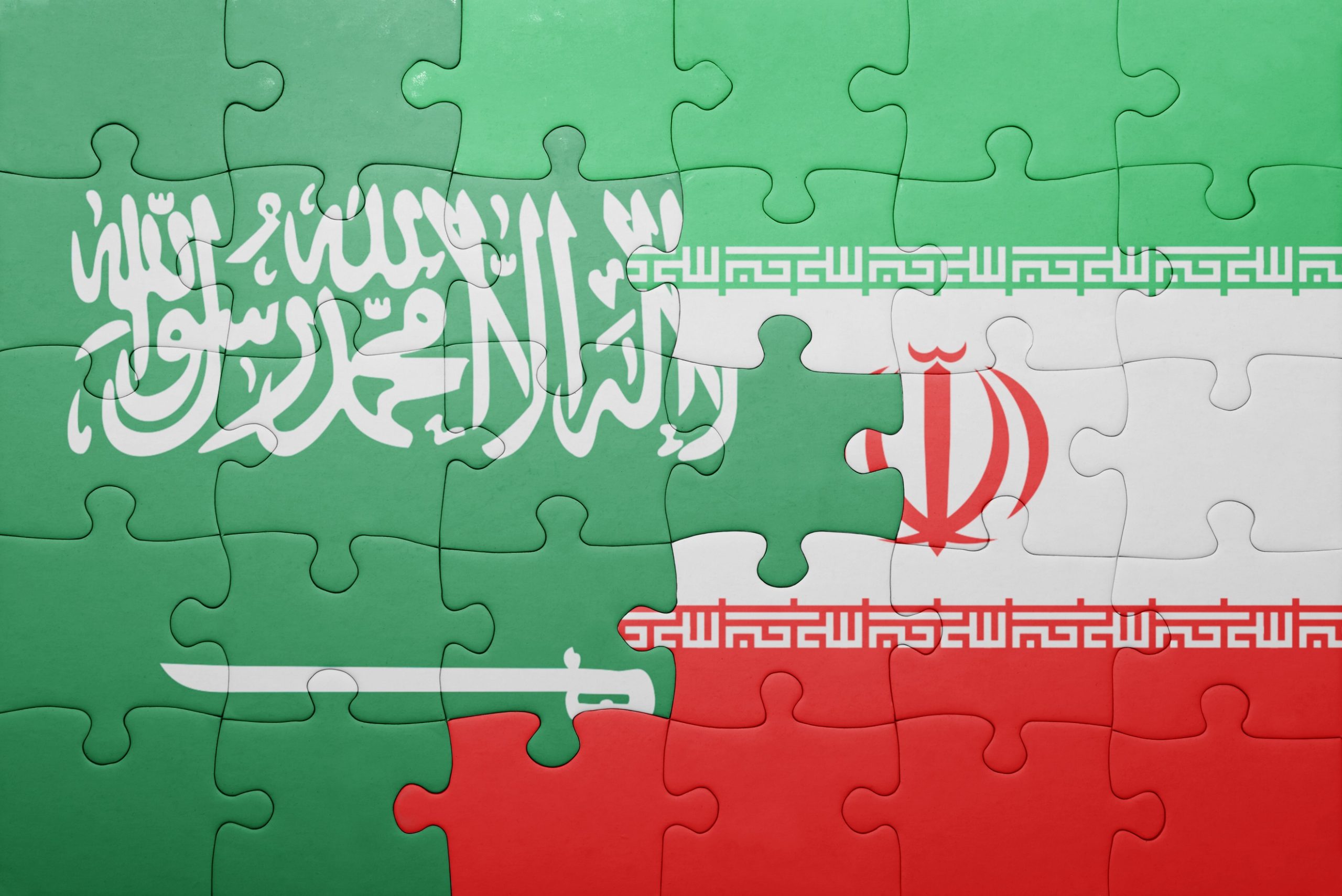
The meetings reported in recent weeks between Iran and Saudi Arabia are a new development in the relations between the two countries, which were severed in 2016. The immediate context is the change of administration in the United States. The Biden administration has begun a dialogue with Tehran about a return to the nuclear agreement, and has also severely criticized Saudi Arabia. The changed stance in the White House has led to adjustments in Saudi foreign policy, including a reconciliation with Qatar in January 2021, the offer of a ceasefire agreement to the Houthis in Yemen in March, and most recently, the beginning of a dialogue with Iran. The direct talks with Riyadh serve Iran's stated policy of excluding the regional issue from the current dialogue with Washington. This is also the background to the round of talks with Qatar, Kuwait, and Oman conducted by the Iranian foreign minister. For its part, Saudi Arabia seeks a solution that will end the war in Yemen, and is aware of the regional changes that are likely to occur if Washington and Tehran return to the nuclear agreement. For Israel, the existence of a Saudi-Iranian dialogue should not constitute a change in principle toward improved relations with the Gulf states, some of which have official and unofficial relations with Israel along with their ties with Iran. At the same time, a concrete Iranian-Saudi rapprochement will be a significant crack in the anti-Iran front that Israel has tried to present. More importantly, it will eliminate a key element in the opposition to the US return to the nuclear agreement.

Globalization’s Coming Golden Age

By Harold James

The thought that trade and globalization might make a comeback in the 2020s, picking up renewed vigor after the pandemic, may seem far-fetched. After all, COVID-19 is fragmenting the world, destroying multilateralism, and disrupting complex cross-border supply chains. The virus looks like it is completing the work of the 2008 financial crisis: the Great Recession produced more trade protectionism, forced governments to question globalization, increased hostility to migration, and, for the first time in over four decades, ushered in a sustained period in which global trade grew more slowly than global production. Even then, however, there was no complete reversal or deglobalization; rather, there was an uncertain, sputtering “slobalization.” In contrast, today’s vaccine nationalism is rapidly driving China, Russia, the United Kingdom, and the United States into open confrontation and sowing bitter conflict within the EU. It is all too easy to extrapolate and see a future of “nobalization”—globalization vanishing in a viral haze.

Over the past two centuries, the course of trade and globalization has been shaped by how governments and people have responded to such crises. Globalization comes in cycles: periods of increasing integration are followed by shocks, crises, and destructive backlashes. After the Great Depression, the world slid into autarky, nationalism, authoritarianism, zero-sum thinking, and, ultimately, war—a series of events often presented as a grim parable of the consequences of globalization’s reversal. Yet history shows that many crises produce more, rather than less, globalization. Challenges can generate new creative energy, better communication, and a greater willingness to learn from effective solutions adopted elsewhere. Governments often realize that their ability to competently deliver the services their populations demand requires answers found abroad.

Congressional testimony: How the Pentagon can fight information warfare

By Matt Field 

 
Bulletin of the Atomic Scientists Science and Security Board member Herb Lin testifies at a Congressional hearing on information warfare.

Herb Lin, a cybersecurity expert and a member of the Bulletin of the Atomic Scientists’ Science and Security Board, told a subcommittee of the House Armed Services Committee last week that foreign disinformation campaigns are one form of what he characterized as an existential threat to US society and democracy: cyber-enabled information warfare. The Pentagon, however, is, Lin suggested, poorly positioned to protect the public from the threat.

“Our information warfare adversaries have weaponized our constitutional protections, our minds, and our technologies against us,” Lin told the subcommittee. “Cyber-enabled information warfare has the potential to destroy reason and reality as the basis for societal discourse and to replace them with rage and fantasy.”

At a broad level, Lin said, the Pentagon isn’t set up to implement a necessary whole-of-government or whole-of-society response to information warfare. For a host of legal and regulatory reasons, Lin said, the Pentagon couldn’t effectively take on campaigns like the Kremlin-backed effort to promote disinformation about the 2020 presidential election on social media and on US television. The distinction between foreign and domestic information is less clear now, he said, and “effective efforts against the Russian activities will inevitably have collateral effects against American activities.”

#Reviewing Power on the Precipice: The Six Choices America Faces in a Turbulent World

Frank Hoffman

“Growltiger’s Last Stand” is one of T.S. Eliot’s best poems, ripe with allusions. It is also a possible allegory for today’s strategists.[1] Growltiger was a large and fearsome cat who became complacent and shabby, ultimately losing his edge and his friends. Eventually, the once feared predator was overwhelmed on his barge by a swarm of foreign rivals while his allies were gone. Growltiger’s opponents ganged up on him and dispatched him. Eliot wrote the poem in the 1930s while Great Britain faced serious overstretch, and the poem’s central character could be interpreted as an aging Imperial Lion or, in modern terms, a declining America.

Power on the Precipice offers a less poetic, but equally vivid, evaluation of a United States in decline.[2] The theme of the rise and fall of great powers goes back to Edward Gibbon’s classic study of the Roman Empire, and Paul Kennedy broadened our understanding in The Rise and Fall of the Great Powers, with an emphasis on finance and economics.[3] More recently Michael Beckley explored the interaction between a rising China and the United States and found more cause for optimism in his Unrivaled: Why America Will Remain the World's Sole Superpower.[4]

FAILING TO TRAIN: CONVENTIONAL FORCES IN IRREGULAR WARFARE

James W. Derleth 

A recent election saw a nationalist Estonian party take control of the government. Frustrated by the election outcome and lack of citizenship, the ethnic Russian minority, 20 percent of the population, demonstrated against the outcome. The Russian government released statements of support and launched a covert campaign to shape perceptions with more than two hundred thousand Twitter accounts sending 3.6 million tweets using #protectRussiansinEstonia. It also initiated snap exercises by ground, naval, and air forces in the region.

A week later, a group of demonstrators gathered in the town square of Narva, a town in eastern Estonia on the border with Russia. Protesting that their human rights had been violated, the demonstrators demanded autonomy for Narva, official status for the Russian language, and Estonian citizenship. When Estonian police moved in to break up the demonstration, they were confronted by an armed group of Russian-speaking, military-age men. Fearing the loss of innocent lives, the police left the area. At the same time, a group of armed demonstrators attacked the Estonian border post, forcing it to be abandoned. A third group of demonstrators took over the local telecommunications center, cutting internet, radio, and telephone links to and from Narva. They then stormed the town hall, forcing the mayor to resign. A spokesman for the demonstrators declared the establishment of the Narva People’s Republic. He asked Russia for assistance “to ensure peace and public order against nationalists and fascists.” These actions were supported by cyberattacks that took Estonian government, media, telecommunication, and military networks offline throughout the country.

Opinion: The Pentagon must prepare for a much bigger theater of war

by Lloyd J. Austin III

Lloyd J. Austin III is the secretary of defense. This essay is adapted from his April 30 speech at the U.S. Indo-Pacific Command in Hawaii.

The cornerstone of America’s defense is deterrence, ensuring that our adversaries understand the folly of outright conflict. “Only when our arms are sufficient beyond doubt,” said President John F. Kennedy in 1961, “can we be certain beyond doubt that they will never be employed.”

The COVID-19 Pandemic Puts the Spotlight on Global Health Governance


The novel coronavirus caught many world leaders unprepared, despite consistent warnings that a global pandemic was inevitable. And it has revealed the flaws in a global health architecture headed by the World Health Organization, which had already been faulted for its response to the 2014 Ebola pandemic in West Africa. Will there be an overhaul of the WHO when the pandemic is over?

After the novel coronavirus first emerged in late 2019 in Wuhan, China, its combination of transmissibility and lethality brought the world to a virtual standstill. Governments restricted movement, closed borders and froze economic activity in a desperate attempt to curb the spread of the virus. At best, they partially succeeded at slowing down the first wave, with the second and in some cases third waves that experts warned about now upon us. According to official records so far, more than 152 million people worldwide have been infected, and more than 3.2 million have died from COVID-19, the disease caused by the coronavirus. The actual toll of the virus is far worse and will continue to climb.

Tough Conditions and Contested Communication Are Forcing the US Military To Reinvent AI

BY PATRICK TUCKER

The era of artificial intelligence presents new opportunities for elite troops like the Army Rangers or Navy SEALs, but those opportunities are conscribed by some hard limits: for example, the power and connectivity of computers behind enemy lines, or the span of human attention in dangerous, stressful environments.

U.S. Special Operations Command, or SOCOM, is working with the Defense Advanced Research Projects Agency, or DARPA, on new projects and experiments to bring artificial intelligence to operators working in the sorts of environments where the computing power and data to run commercial AI applications aren’t present. Lisa Sanders, SOCOM’s director of science and technology for special operations forces, acquisition, technology, and logistics, told Defense One that in many cases that means re-inventing artificial intelligence from the ground up and developing completely new insights into how humans use it.

Much of the artificial intelligence that regular consumers use every day work by connecting the device to large cloud computing capabilities elsewhere. Perhaps the most prominent are digital assistants such as Siri and Alexa that derive their power from natural language processing, a fast-growing subset of AI that applies machine learning to spoken language. But there are hundreds of other AI tools that consumers use without even realizing it. When the map on your phone suggests re-routing to avoid a traffic jam, that’s AI at work. Most of the recommendation engines you come across on streaming video or music services can be considered artificial intelligence with narrow application. But most developers in this burgeoning field rely on being able to reach back through a network to huge databases and powerful cloud computing centers.

“The commercial world is used to being able to walk into a restaurant anywhere in the world, take a picture of the menu and hit ‘translate.’ But that presumes that you have access to a common set of readily available information about that language and ready access back to the cloud, because that’s not really processed in your handheld phone,” said Sanders.

Any reduction in Energy Department's cybersecurity resources a mistake

BY RETIRED REAR ADM. MARK MONTGOMERY

In March, a bipartisan group of senators led by Jim Risch (R-Idaho) and Angus King (I-Maine) sent a letter to Energy Secretary Jennifer Granholm expressing support for the department’s Office of Cybersecurity, Energy Security, and Emergency Response (CESER). Joined by the chair and ranking member of the Senate Committee on Energy and Natural Resources, the letter highlighted the vital role CESER plays “in protecting the nation’s critical energy infrastructure from cyber threats, physical attacks, and other disruptive events.” More than a month later, the Biden administration has still not nominated an assistant secretary to lead the office.

The letter reflects the senators’ concerns that the Biden administration is considering downgrading the CESER billet from the assistant secretary level to make space for new assistant secretary assignments for justice and jobs. Coming on the heels of a Government Accountability Office (GAO) report highlighting the Department of Energy’s (DOE) unfinished work to secure the nation’s electric grid and supply chains, Secretary Granholm would be making a mistake if she were to reduce the seniority of cybersecurity leadership at the department.

Cyber Command shifts counterterrorism task force to focus on higher-priority threats

Mark Pomerleau

WASHINGTON — U.S. Cyber Command is shifting the majority of its special task force aimed at targeting the Islamic State group to focus more on nation-state actors, particularly in the Indo-Pacific region, which the command and the Department of Defense are prioritizing.

Joint Task Force-Ares was created in 2016 to combat the militant organization online as a compliment to the global coalition fighting against the group’s grip on power in Iraq and Syria. The task force has since undergone several changes. The Army’s cyber component was originally tasked to lead the joint cyber effort, but in 2018, responsibility shifted to Marine Corps Forces Cyberspace Command, which allowed the team to focus not just on the Islamic State group, but more broadly on counterterrorism efforts globally.

“Counterterrorism operations in cyberspace are continuous, helping to protect the force and prosecute targets in Afghanistan and other regions on behalf of USCENTCOM [Central Command] and USSOCOM [Special Operations Command],” Gen. Paul Nakasone, commander of Cyber Command, said in written testimony to Congress in March. “We are also shifting JTF-Ares’ focus (though not all of its missions) from counterterrorism toward heightened support to great power competition, particularly in USINDOPACOM’s [Indo-Pacific Command’s] area of responsibility.”

Broadly speaking, Cyber Command does not plan to change command-and-control relationships or organizational cyber mission force elements as Joint Task Force-Ares transitions to focus more on nation-state actors, according to a command spokesperson.

DARPA’s plan to use drones to find drones

Nathan Strout

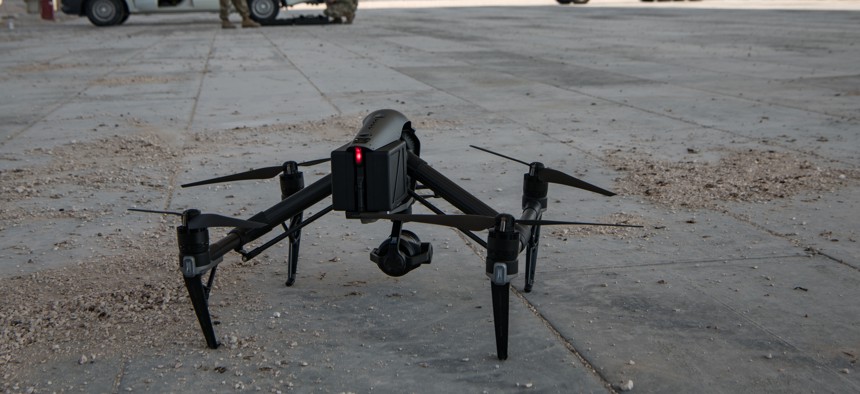
WASHINGTON — The U.S. military is developing a number of counter-drone systems, using technologies such as directed energy and microwaves, to defeat small unmanned aircraft systems. But to hit the drones, the military first needs to be able to see them. That’s difficult enough in the desert or in open areas, and it’s even harder to do in cities.

That’s where the Aerial Dragnet program comes in. The wide-area surveillance capability from the Defense Advanced Research Projects Agency uses sensors mounted on drones to detect, classify and track small drones in dense, urban environments.

“We’re using drones to find drones, essentially,” Paul Zablocky, a program manager with the DARPA Strategic Technology Office, said Wednesday during the annual C4ISRNET Conference.

The government is concerned about the various dangers posed by small UAS, which can be armed with explosives or used to collect sensitive information.

“A small drone certainly poses a threat, and we’ve seen that at airports. We’ve seen on the news where they’ve been equipped with explosives. We’ve seen them used for ISR [intelligence, surveillance and reconnaissance] capabilities. And these can be used against our soldiers as well as civilian populations, so there’s certainly a threat there, and they are widely available,” Zablocky explained.

Tough Conditions and Contested Communication Are Forcing the US Military To Reinvent AI

BY PATRICK TUCKER

The era of artificial intelligence presents new opportunities for elite troops like the Army Rangers or Navy SEALs, but those opportunities are conscribed by some hard limits: for example, the power and connectivity of computers behind enemy lines, or the span of human attention in dangerous, stressful environments.

U.S. Special Operations Command, or SOCOM, is working with the Defense Advanced Research Projects Agency, or DARPA, on new projects and experiments to bring artificial intelligence to operators working in the sorts of environments where the computing power and data to run commercial AI applications aren’t present. Lisa Sanders, SOCOM’s director of science and technology for special operations forces, acquisition, technology, and logistics, told Defense One that in many cases that means re-inventing artificial intelligence from the ground up and developing completely new insights into how humans use it.

Much of the artificial intelligence that regular consumers use every day work by connecting the device to large cloud computing capabilities elsewhere. Perhaps the most prominent are digital assistants such as Siri and Alexa that derive their power from natural language processing, a fast-growing subset of AI that applies machine learning to spoken language. But there are hundreds of other AI tools that consumers use without even realizing it. When the map on your phone suggests re-routing to avoid a traffic jam, that’s AI at work. Most of the recommendation engines you come across on streaming video or music services can be considered artificial intelligence with narrow application. But most developers in this burgeoning field rely on being able to reach back through a network to huge databases and powerful cloud computing centers.

Future Tank: Beyond The M1 Abrams

By SYDNEY J. FREEDBERG JR.

WASHINGTON: What comes after the M1 Abrams, the Army’s massive Reagan-era main battle tank? “Everything is on the table at this point,” the service’s armor modernization director, Maj. Gen. Richard Ross Coffman, says. He didn’t give many details so I asked experts to speculate.

To my surprise, everyone we talked to, from retired Army tankers and industry experts to drone-loving futurists, agreed that manned armored vehicles of some kind will still have a place in future wars. Why? Human soldiers will still need a way to move about the battlefield under armor protection, and they’ll need it even – or especially – when killer drones swarm the skies. After all, it’s far easier for the enemy to build a drone that can kill an exposed human than one that can penetrate an armored vehicle.

Textron M5 Ripsaw unmanned mini-tank

The Army is optimizing electronic warfare equipment for Indo-Pacific


Mark Pomerleau

WASHINGTON — The Army, primarily a land force, is looking to optimize its forthcoming electronic warfare equipment to operate in the Indo-Pacific theater against maritime targets, according to an Army official.

China is considered the “pacing” threat by the Department of Defense, and thus the Indo-Pacific region is a high priority. Other recent Army efforts to prioritize the heavily maritime region include the creation of a multidomain task force working on exercises in the region and plans to base long-range precision fires there.

Now, as the Army is building new electronic warfare gear to regrow its prowess after years of divestment following the Cold War, it wants to ensure it will be able to support operations across the vast distances of the Pacific maritime region.

Much of the Army’s work in the last few years within the electromagnetic spectrum has been to address perceived capability gaps for forces in Europe against Russia. However, prototypes have also begun to make their way to the Pacific theater.

14 May 2021

China’s Nuclear and Missile Capabilities: An Overview

  Maj Gen PK Mallick, VSM (Retd)

Since China first conducted a nuclear weapon test in 1964, its nuclear doctrine has remained unchanged and is underpinned by two principles: a minimum deterrent doctrine and a No First Use (NFU) policy. China’s 2019 defence white paper states, “China is always committed to a nuclear policy of NFU of nuclear weapons at any time and under any circumstances, and not using or threatening to use nuclear weapons against non-nuclear-weapon states or nuclear-weapon-free zones unconditionally.”

However, a recent U.S. Department of Defence (DoD) report claims that the scope of China’s nuclear modernisation and its lack of transparency “raise concern that China is not only shifting its requirements for what constitutes a minimal deterrence but that it could shift away from its longstanding minimalist force posture.” The data available show that China is modernising and expanding virtually every element of its nuclear forces, including each aspect of its nuclear weapons and missile, sea, and air delivery systems. What is not clear are China’s current and planned holdings of nuclear weapons, China’s future plans for deploying additional delivery systems, its commitment to some form of NFU, first preemption, or launch on warning, and the extent to which it will accept what might be called a form of ‘minimum assured destruction.


Experts criticise India's complacency over COVID-19

Anoo Bhuyan

Mass gatherings have been permitted as cases soar and patients die, while experts criticise a lack of planning and flexibility in the COVID-19 response. Anoo Bhuyan reports from New Delhi.

India is battling a second wave of COVID-19, which has rapidly surpassed its first wave in 2020 in terms of the number of new cases and deaths per day. Currently, India has the second highest number of COVID-19 cases in the world after the USA. “The country is working day and night for hospitals, ventilators, and medicines”, said India's Prime Minister in his monthly national broadcast on April 25, 2021.

India has been recording more than 300 000 cases of COVID-19 per day since April 21, up from 100 000 per day on April 4. These numbers eclipse India's previous highest number of new cases reported in a single day, at 97 860 cases on Sept 16, 2020.

Health infrastructure has collapsed in several cities, with several state governments imposing curfews and lockdowns on movement, such as in the national capital New Delhi and in Maharashtra. State governments are scrambling to build up new infrastructure, making announcements this month about suddenly commencing the construction of new health facilities or oxygen plants. However, this frenetic activity comes in the middle of an ongoing and exponential rise in cases, whereas it should have come before, say experts.

The Once and Future Afghanistan

RYAN CROCKER

Afghanistan has been a presence in my life for decades. As a high school student at a Department of Defense school in Turkey, I read James A. Michener’s Caravans. I was enchanted. It seemed the ultimate in distant, exotic, hard-to-reach places. Just a few years later, I was there, as a college student joining the wave of world travelers wandering through Asia. Afghanistan did not disappoint, from the first night in a 25-cent hotel room in Herat to the last day traversing the storied Khyber Pass via Kandahar, Bamyan, and Kabul. I promised myself that I would be back.

That opportunity came just one year later when, freshly graduated, I was invited to be a prospective English teacher for the Peace Corps in Afghanistan. But then I was offered an appointment as a foreign service officer. It paid slightly better than the Peace Corps, so Afghanistan would have to be deferred, though not forgotten. Eighteen months later, as American vice consul in Khorramshahr, Iran, I traveled to Zahedan in Iranian Balochistan to visit a prisoner. I took the opportunity to drive north to the provincial capital of Zabul and look across the border at Afghanistan.

AMERICA’S LONG HISTORY WITH AFGHANISTAN

To Lose a War

by James Dobbins

President Biden made the case for withdrawing U.S. forces from Afghanistan on the grounds that the country is no longer as important as it once was, while the United States faces new and graver threats elsewhere. That is true. He reassured the public that it would be possible to deal with any residual terrorist threat that might emerge from Afghanistan without maintaining an in-country U.S. military presence. That may also prove true, although the president's military and intelligence advisers are clearly dubious.

There are two further reasons for staying that the president did not address. One is the reputational damage that could be incurred by abandoning a partner in the midst of a fight. And not for the first time. The United States is developing a reputation for withdrawal under fire—first from Vietnam in 1973; then from Beirut following the U.S. Marine barracks bombing in 1983; then from Somalia in 1995 following the “Blackhawk Down” firefight; then from Iraq in what turned out to be a lull in the insurgency in 2011; and now from Afghanistan. It seems likely that the Taliban found encouragement from some of these earlier experiences, and that others will draw the lesson from Afghanistan that the United States doesn't have to be outfought, just outlasted.

Another consideration unaddressed by the president is the moral obligation Americans may feel toward the millions of Afghans who have, with U.S. encouragement, set about building a freer and more modern society. Their prospects are grim. In 2019 several of us at the nonprofit, nonpartisan RAND Corporation published a look at the consequences of an American withdrawal from Afghanistan.

Afghanistan’s Moment of Risk and Opportunity

By Ashraf Ghani

President Joe Biden’s decision to withdraw the remaining 2,500 U.S. troops from Afghanistan by September represents a turning point for the country and our neighbors. The Afghan government respects the decision and views it as a moment of both opportunity and risk for itself, for Afghans, for the Taliban, and for the region.

For me, as the elected leader of the Islamic Republic of Afghanistan, it is another opportunity to reiterate and further my commitment to peace. In February 2018, I made an unconditional offer of peace to the Taliban. That was followed by a three-day cease-fire in June of that year. In 2019, a loya jirga (grand council) that I convened mandated negotiations with the Taliban, and since then, my government has worked to build a national consensus on the need for a political settlement that would comport with the values of the Afghan constitution and the UN’s Universal Declaration of Human Rights. My government remains ready to continue talks with the Taliban. And, if it meant peace would be secured, I am willing to end my term early.

For the Afghan nation, the announcement of the U.S. withdrawal is another phase in our long-term partnership with the United States. Afghanistan has been through consequential withdrawals before. In 2014, the year I first took office, 130,000 U.S. and NATO forces withdrew, allowing Afghans full leadership of the security sector and of the institutions that our international partners had helped us build. Since then, the Afghan National Defense and Security Forces (ANDSF) have protected and upheld the republic and made it possible for the country to carry out two national elections. Today, our government and our security forces are on a much stronger footing than we were seven years ago, and we are fully prepared to continue serving and defending our people after American troops depart.

How Cyber Ops Increase the Risk of Accidental Nuclear War

By GEORGE PERKOVICH and ARIEL LEVITE

The risk of the United States and China going to war, leading to a nuclear exchange, is growing by the day. Cyber operations by either or both countries increase the risk significantly, as each side is tempted to use cyber tools to gain warning and an early edge in a crisis.

China’s arms buildup and assertiveness in the South and East China seas and its intimidation of Taiwan are animating calls in Washington to reinforce U.S. commitments and military power, including shifting from long-standing “strategic ambiguity” regarding the defense of Taiwan. The risk of “accidental” war is even higher, with collisions in the air or at sea leading to skirmishes that could escalate as leaders feel they must show their resolve and strength. China could use cyber operations to help neutralize the United States’ projection of conventional forces into China’s vicinity and in the process could become entangled with U.S. command and control systems that also are important for nuclear forces.

The U.S. has thousands more nuclear weapons than China does and an array of precise conventional strike weapons and missile defenses that threaten Beijing’s ability to strike back. Unlike with Russia, the United States has never agreed to base its strategic relationship with China on mutual vulnerability – the Reagan-Gorbachev idea that a nuclear war between them could not be won and so must never be fought.

New Concept Weapons: China Explores New Mechanisms to Win War

By: Marcus Clay

Introduction

The idea of “New Concept Weapons” (NCW, ๆ–ฐๆฆ‚ๅฟตๆญฆๅ™จ, xin gainian wuqi) is not new. In the parlance of the People’s Liberation Army (PLA), NCW was once almost a synonym for directed energy weapons (DEW) programs, with roots dating back to the 1960s.[1] In recent years, NCW has been increasingly associated with the PLA’s discourse on “new mechanism (ๆ–ฐๆœบ็†, xin jili) weapon systems.” (81.cn January 20, 2017; PLA Daily, September 28, 2017) It is often discussed in the context of broader military applications of disruptive technologies to create enduring asymmetric advantages. The majority of NCW operate in the information domain and overlap with the mission of the PLA Strategic Support Force (PLASSF). Because of this, NCW thinking may provide useful insights into the “new technology testing” (ๆ–ฐๆŠ€ๆœฏ่ฏ•้ชŒ, xin jishu shiyan) responsibilities of the PLASSF (Xinhua, October 1, 2019).

While this article does not delve into significant details of China’s NCW development, it provides an overview of the field and seeks to understand what factors shape Chinese views on NCW. It first summarizes the evolution of the PLA thinking on NCW over the past two decades. It then categorizes the main focus areas and analyzes the PLA’s key considerations for NCW development. Finally, it calls for better understanding China’s NCW programs as an integral component of the PLA’s deterrence strategy.

Something Old, Something New

The Abraham Accords effect: more armed drones in the Middle East

By Ali Arfa 

 
Israel, the United Arab Emirates (UAE), and Bahrain signed a historic agreement to normalize relations in August 2020. Then-president Trump hailed the Abraham Accords, as the agreement is called, as a harbinger of peace in the volatile Middle East. Trump later tried to sweeten the deal with a $23 billion arms sale to the UAE.

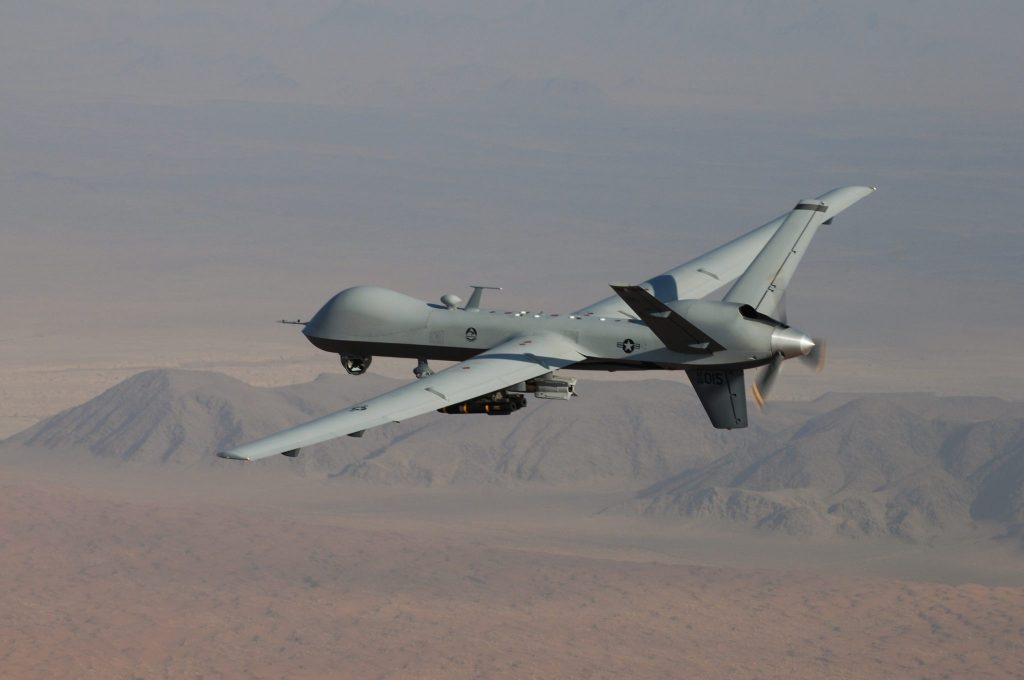
After Biden was elected president, the deal’s future remained uncertain until mid-April, when a US State Department spokesman said the administration will approve the weapons sale. That means the UAE will soon have American-made armed Reaper drones in its arsenal.

Predictably enough, with or without Washington, security cooperation between Israel and the Arab signatories of the Abraham Accords waxes as hostilities and mutual distrust gradually wanes. This means an inevitable export of Israeli military technology to the Iranian neighborhood, with Tehran responding in kind, which will lead to the proliferation of unmanned combat aerial vehicles—and more specifically, armed drones, a pivotal military technology suitable for the light-footprint operations of today’s remote warfare. But if too many armed drones land at the Middle East’s door, peace may fly out its window.

Why more Israeli drones are coming. Armed drones are valuable assets for any military. They eliminate the risk of losing a pilot or special operator to the enemy. They reduce the time between target acquisition and strike, because they carry both sensor and weapon on the same platform. They can loiter for hours and attack with pinpoint precision. Perhaps most important, they make it difficult for international organizations to identify the perpetrators of an attack.

What Deters and Why

by Michael J. Mazarr, Joe Cheravitch, Jeffrey W. Hornung, Stephanie Pezard

Research Questions

What are the distinctive characteristics of gray zone aggression?

What is the status of the current U.S. and allied deterrent postures against gray zone aggression by China, Russia, and North Korea?

What are the implications of these findings for the U.S. Army?

In an era of rising global competition, U.S. challengers and rivals are increasingly looking to achieve competitive advantage through gray zone activities — that is, acts of aggression that remain below the threshold of outright warfare. In this report, RAND researchers identify eight common characteristics of such aggression (e.g., unfolds gradually, is not attributable) and develop a framework for assessing the health of U.S. and partner deterrence in the gray zone. They apply the framework to three cases: China's aggression against the Senkaku Islands, Russia's aggression against the Baltic states, and North Korea's aggression against South Korea. The authors conclude that U.S. and partner deterrence of gray zone activities is in a reasonably strong, though mixed, condition in each of these three contexts. Finally, the authors outline the implications of their findings for the U.S. Army. Among these implications are that maintaining a local presence and posture plays an important role in conveying likely responses to aggression, and clear statements of shared intent to respond to specific actions are critical.

Key Findings

Digital Authoritarianism With Russian Characteristics?

LEONID KOVACHICH, ANDREI KOLESNIKOV

Is the Russian government seeking to emulate China’s strategic use of technology for social management and political control as part of an intensifying crackdown on the country’s political opposition? To be sure, Chinese authorities’ widespread use of high-tech tools for such purposes has more than piqued the curiosity of the Russian security establishment. Yet there are vast gaps between the Russian government’s aspirations and its actual ability to harness digital tools such as facial recognition software using artificial intelligence, or China’s nascent social credit system.

Russia’s approach is colored by wider geopolitical considerations. The unmistakable convergence of Russian and Chinese leaders’ political outlooks is a by-product of their increasingly adversarial relationships with the United States. Yet this alignment falls far short of a proper alliance or security partnership. Indeed, Sino-Russian relations are more complicated than they appear at first glance due to vast asymmetries between the two powers’ economic and political clout. Nor have Moscow and Beijing fully overcome lingering sources of mutual mistrust.

Contrary to commonly held perceptions and the rhetoric of Russian politicians, the Kremlin has big hurdles to overcome as it tries to decouple from Western technology in critically important areas. What’s more, Russia’s own use of digital repression is considerably less prevalent than such repression in China, where technology is deployed on a mass scale to surveil, control, and censor citizens said to be challenging political and social stability.

MYTH #1: RUSSIA IS DISCARDING ITS RELIANCE ON WESTERN TECHNOLOGY