22 June 2021

Water Security as Part of Non-Traditional Security: Threat - Implications for India

Maj Gen P K Mallick, VSM (Retd)
Like oil or data, water is an integral part of the world’s economy. Although about 71 per cent of the earth’s surface is water-covered, the oceans hold about 96.5 percent of all Earth’s water which is salt water. Freshwater, most of it is frozen in glaciers, accounts for the rest. That leaves less than 1 per cent of the world’s water available to support human and ecological processes. We withdraw 4.3 trillion cubic meters of freshwater every year from the earth’s water basins. We use it in agriculture, which accounts for 70 per cent of the withdrawals. Industry and households consume 19 per cent and 11 per cent, respectively. However, these percentages fluctuate widely across the globe. In the United States, industrial and agricultural usage is almost the same around 40 per cent. In India, agriculture uses 90 per cent of water withdrawals, while only 2 per cent is consumed by industry. Over the past century, rate of withdrawal of available freshwater resources have risen almost six times, outpacing global population growth.

China’s Nuclear and Missile Capabilities: An Overview

 Maj Gen PK Mallick, VSM (Retd)

Since China first conducted a nuclear weapon test in 1964, its nuclear doctrine has remained unchanged and is underpinned by two principles: a minimum deterrent doctrine and a No First Use (NFU) policy. China’s 2019 defence white paper states, “China is always committed to a nuclear policy of NFU of nuclear weapons at any time and under any circumstances, and not using or threatening to use nuclear weapons against non-nuclear-weapon states or nuclear-weapon-free zones unconditionally.”

However, a recent U.S. Department of Defence (DoD) report claims that the scope of China’s nuclear modernisation and its lack of transparency “raise concern that China is not only shifting its requirements for what constitutes a minimal deterrence but that it could shift away from its longstanding minimalist force posture.” The data available show that China is modernising and expanding virtually every element of its nuclear forces, including each aspect of its nuclear weapons and missile, sea, and air delivery systems. What is not clear are China’s current and planned holdings of nuclear weapons, China’s future plans for deploying additional delivery systems, its commitment to some form of NFU, first preemption, or launch on warning, and the extent to which it will accept what might be called a form of ‘minimum assured destruction.

Afghanistan after American withdrawal: Part 1 — Internal factors shaping developments

Vanda Felbab-Brown

What are the possible developments in Afghanistan over the next three to five years after the withdrawal of U.S. forces? In this three-part blog series, I discuss possible scenarios, some of the factors that influence the likelihood of each scenario, and how external actors can shape developments. In this first piece, I focus on the internal factors shaping Afghanistan after American withdrawal — specifically, the cohesion and capacity of Afghan security forces, the Taliban’s military tactics and cohesiveness, and rifts within the Afghan political elite.

In the second piece, I discuss the scenarios in detail. In the third piece, I analyze the capacity of external actors to shape dynamics within Afghanistan.

FOUR SCENARIOS (IN BRIEF)

At least four broad scenarios for Afghanistan in the next three to five years are conceivable. They include:

a substantial preservation of the existing political dispensation;

An Olympic-Size COVID Risk

TAKATOSHI ITO

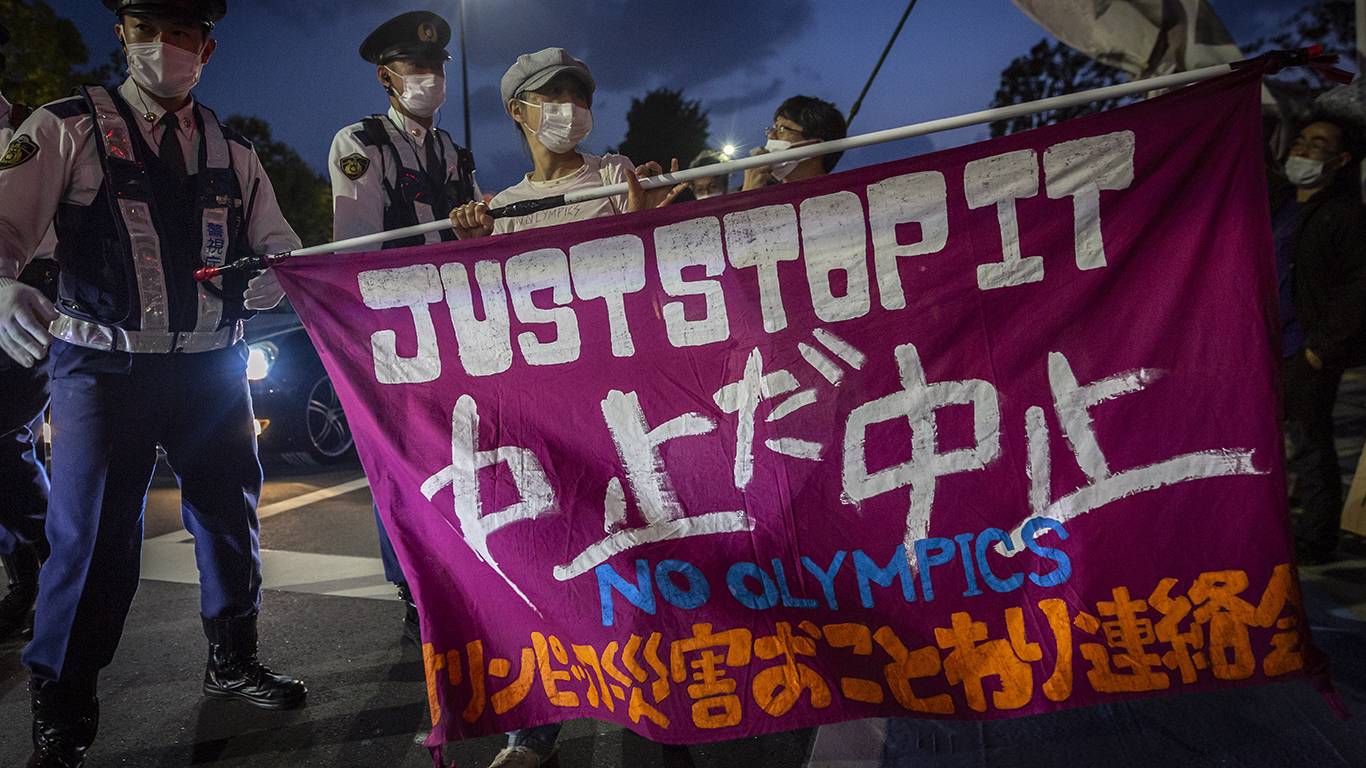
TOKYO – In 2020, Asia – especially East Asia – was often touted as a model of effective pandemic response. While Western countries endured harsh lockdowns and soaring infection and death rates, Asian countries largely kept the coronavirus under control. But the tables have turned, with East Asia now lagging far behind the United States and Europe on vaccinations. This does not bode well for this summer’s Olympic and Paralympic Games in Tokyo.

As of June 15, Japan had the second worst vaccination record among the 38 OECD countries, with 20.9 doses per 100 people. Contrast that with the United Kingdom’s 106.1 doses per 100 people, and the US rate of 93.3 doses per 100.

Why is Japan lagging so far behind the rest of the OECD? For starters, the government was late in securing purchase agreements with vaccine producers, not least because the Ministry of Health, Labour, and Welfare was reluctant to provide rapid emergency approval to the new vaccines.

Is a South China Sea Code of Conduct Viable?

Raul (Pete) Pedrozo

Abstract

For over twenty years, the People’s Republic of China (PRC) has stonewalled efforts by the Association of Southeast Asian Nations (ASEAN) to negotiate a binding Code of Conduct that would form the basis for a peaceful and durable solution to the territorial and maritime disputes in the South China Sea (SCS). At the same time, the PRC engaged in a series of malign activities, to include the militarization of several reclaimed artificial islands, that have forever changed the landscape and status quo of the SCS. In 2020, the PRC unexpectedly called on ASEAN to resume the negotiations as soon as possible. The PRC’s sudden urgency to conclude a code at the earliest opportunity begs the question—is it still in ASEAN’s interests to conclude a binding Code of Conduct? This article concludes that, given that the status quo in the SCS has been significantly changed in favor of the PRC, Beijing has nothing to lose and everything to gain by concluding a Code of Conduct that solidifies its claims and advances its national security and economic interests, all at the expense of ASEAN.

China's Quest for Global Primacy

by Timothy R. Heath, Derek Grossman, Asha Clark

Focusing on the international and defense dimensions of U.S.-China competition, the authors of this report make three contributions. First, they intend this report to serve as a planning tool by positing international and defense strategies that could allow China to outcompete the United States. Second, they mean to educate readers on Chinese strategy and policy processes. Third, the authors seek to encourage greater public debate about the nature and stakes of the competition.

As presented by the authors, China's international strategy aims to establish the country's primacy in the Asia-Pacific region and leadership of the international order. The international strategy presented seeks to achieve this end state through peaceful methods, although it does not rule out the possibilities of militarized crises or even conflicts of a limited scope, such as proxy wars. The core of the proposed international strategy is a reliance on China's economic prowess and diplomatic maneuver to put Beijing into a position of advantage from which it cannot be dislodged by the United States. A complementary defense strategy would aim to constrain Washington's ability to forestall or prevent its own eclipse by building a superior Chinese military that renders the risks of military conflict intolerably high. A major Chinese military responsibility would be to support diplomatic efforts to shape a favorable international environment by building strong security ties with client states and discrediting or weakening the appeal of the United States as an alternative.

Iran’s Election Is Unfree, Unfair, and Preordained

Ravi Agrawal

Millions of Iranian voters headed to the polls on Friday, June 18, to elect a new president. Incumbent Hassan Rouhani is not eligible to run since he has completed two full terms in office, and election authorities have barred other reform candidates from entering the race.

So who’s running? There were seven candidates at the start of this week. Three dropped out on Wednesday, increasing the chances that one of the four remaining candidates crosses the 50 percent electoral threshold that would make a second round of voting unnecessary.

The front-runner is Ebrahim Raisi, a hard-line cleric seen as the preferred candidate of Supreme Leader Ali Khamenei. Raisi lost the 2017 election to Rouhani and has since led the country’s judiciary. The other three remaining candidates are Abdolnaser Hemmati, the head of Iran’s Central Bank; Amir Hossein Ghazizadeh, a surgeon who is also a conservative politician; and Mohsen Rezaee, a former member of Iran’s Islamic Revolutionary Guard Corps.

Post-war Prospects for Nagorno-Karabakh


What’s new? A Russian-brokered ceasefire between Armenia and Azerbaijan ended a six-week war in and around Nagorno-Karabakh, but skirmishes on the border point to unresolved tensions. On the post-war front lines, a scramble to dig new positions, mass displacement and a humanitarian crisis make for a fragile situation.

Why does it matter? Already frictions along the new front line, which lies close to civilian settlements, threaten renewed violence. The longer it takes for Nagorno-Karabakh residents to return home and resume some semblance of normal life, the harder it will be to jump-start future peace efforts.

What should be done? Russian peacekeepers need a clear mandate for their long-term deployment. The parties should build upon ad hoc contacts to create a regular channel for addressing urgent problems. They must stop holding international humanitarian aid hostage to the issue of Nagorno-Karabakh’s status that lies at the conflict’s core.

Israeli Attack on Iraq's Osirak 1981: Setback or Impetus for Nuclear Weapons?

Joyce Battle and William Burr

Washington, D.C., June 7, 2021 – On June 7, 1981, 40 years ago today, Israel attacked and partially destroyed Iraq’s Osirak nuclear research reactor at Tuwaitha, using U.S. supplied F-15 and F-16 aircraft to carry out the attack. Ten Iraqi soldiers and one French engineer were killed during the airstrike. Apparently, the Israeli raid took President Ronald Reagan and his advisers completely by surprise, yet their predecessors, including President Jimmy Carter, were aware of the strong possibility of an attack.

As early as July 1980, U.S. Ambassador Sam Lewis warned Secretary of State Edmund Muskie and President Carter in an eyes-only telegram that his meeting with Israeli Prime Minister Begin had led him to conclude that the Israelis might undertake “preemptive strikes with conventional weapons… regardless of the awesome consequences of such action.” Later, Lewis suggested that information on this and other discussions with Begin did not reach the Reagan administration, though more needs to be learned about the sources for this gap in “institutional memory.”

Bernie Sanders Urges Cooperation Over Confrontation With China

JACK DUTTON 

Vermont Senator Bernie Sanders (I-VT) has called for increased cooperation between the United States and China to avoid "a new Cold War."

Tensions between the two countries have risen in recent years, with a bitter trade dispute and former President Donald Trump blaming China for not doing more to suppress the coronavirus outbreak at the end of 2019.

In a communique on Sunday, U.S. President Joe Biden and other G7 leaders accused China of engaging in human rights abuses. China also led the agenda at the subsequent NATO summit and Beijing was called out in the alliance's closing statement.

But in an opinion piece for Foreign Affairs published on Thursday, Sanders called for cooperation between the world's two major superpowers.

"The unprecedented global challenges that the United States faces today—climate change, pandemics, nuclear proliferation, massive economic inequality, terrorism, corruption, authoritarianism—are shared global challenges. They cannot be solved by any one country acting alone. They require increased international cooperation—including with China, the most populous country on earth," the senator wrote.

Chinese Nuke Modernization Prompts Shift In DoD Strategy

COLIN CLARK

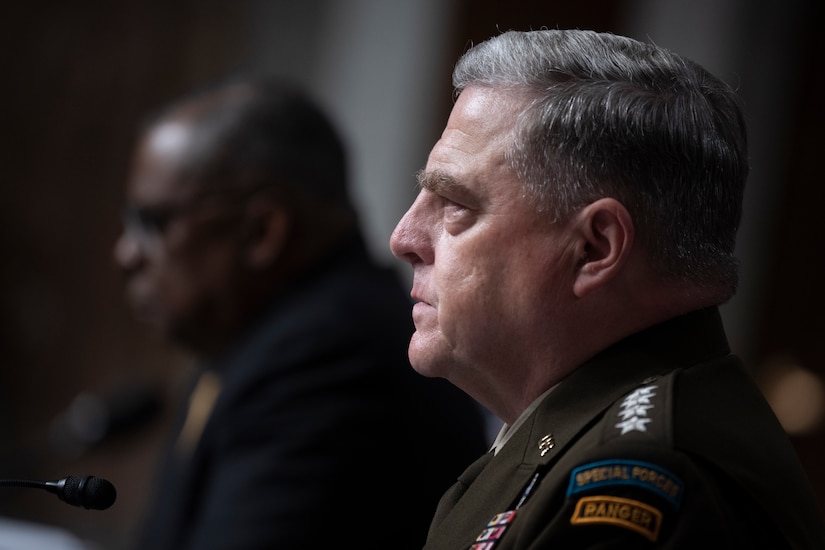
WASHINGTON: A short exchange during a Senate hearing on the 2022 budget appears to have revealed what experts say is an important shift in how the Pentagon views the Chinese military and its nuclear forces.

“This is a new framing of the nuclear modernization and deterrence challenge,” says Bryan Clark, a strategic expert at the Hudson Institute. “The size and capability of our arsenal has not been driven in the past by the PRC’s nuclear forces, but clearly the DoD is beginning to use China as a pacing threat alongside Russia.”

It began with a question by Sen. John Hoeven, from the state where Minot Air Force Base houses a substantial portion of the nation’s ICBM nuclear force. The North Dakota lawmaker asked Defense Secretary Lloyd Austin and Gen. Mark Milley, chairman of the Joint Chiefs of Staff, if the existing US strategic deterrent would remain “credible” if China doubled the size of its nuclear forces.

James Mattis Is an Ancient Roman Action Hero

Robert Zaretsky

Since the 2016 election, comparisons between the United States and ancient Rome abound, motivated as much by President Donald Trump-Emperor Nero analogies as anything. Commentators have dwelled on the traits of theatricality, brutality, solipsism, narcissism, cruelty, and cowardice these men seem to share.

There’s a problem, however, with these comparisons: their source material. Most have turned to the work of Suetonius as their Nero-knowledge arsenal. Author of The Lives of the Twelve Caesars, Suetonius was antiquity’s Michael Wolff: a gossipy and glib chronicler of fear and loathing in imperial Rome. His account of Caligula planning to make a horse one of his consuls and Nero singing while Rome burned makes for sensational and spellbinding reading, just as does Wolff’s portrait of Trump eating cheeseburgers in bed and warning the maid not to touch his toothbrush in his book Fire and Fury. Whether they are actually true is another, less promising, matter.

Anyone who wants to understand the complexities, ethical and practical, posed by the unstable and unserious rule of Nero — and, by extension, Trump — would be far better off consulting the writing of Suetonius’s slightly older contemporary, Tacitus, whose Annals and Histories deeply influenced writers ranging from Machiavelli and Montaigne to Edward Gibbon and David Hume. Judging from his pattern of behavior in Trump’s cabinet – and his well-established reading habits — Secretary of Defense James Mattis may have done just that.

Did Biden succeed with Putin? Check back in six months

Steven Pifer

U.S. President Joe Biden and Russian President Vladimir Putin held a short summit yesterday in Switzerland that both sides described as substantive, efficient, and without rancor. Did the meeting advance Biden’s objective of building a stable and predictable U.S.-Russia relationship? The short answer: too early to tell.

The meeting took place at a time when U.S.-Russia relations are at their lowest point in 30 years. Unlike his four predecessors, Biden did not enter office with the goal of building a positive relationship with Russia. Stable and predictable are his administration’s watchwords. The White House accordingly sought to keep summit expectations modest.

In the event, the atmospherics at the Geneva lakeside villa appeared encouraging. When meeting with foreign leaders, Putin has a bad habit of arriving late — sometimes hours late — but he showed up on time for this U.S. president. That provided a good start. In his post-summit press conference, the Russian president seemed to go out of his way to express respect for Biden.

MacCallum's expert panel warns of biological and cyberattacks as 'future of warfare'

Charles Creitz

A panel of warfare experts, including two retired generals and a prominent cybersecurity expert and analyst, joined "The Story" to discuss how global warfare is essentially moving away from rifles and bombs, and being carried out through more clandestine avenues like cyberattacks and bioweapons.

Gen. Keith Kellogg, former national security adviser to ex-Vice President Mike Pence, reacted to President Joe Biden's remarks announcing an agreement at the G-7 to "launch a bilateral strategic stability dialogue to work on a mechanism that can lead to control of new and dangerous and sophisticated weapons."

Kellogg said it will be difficult for the U.S. to truly work in concert with other countries because of the fact American defenses and capabilities are "unique" and at a higher level than other allies.

"It's like a 51-49 split. cyber- and bio-warfare. They're attacks from the unknown," he said.

It's well past time for strategic defenses and counterpunches on cybersecurity

GLENN NYE AND JAMES KITFIELD

No future American president should ever be placed in Joe Biden’s unenviable position in Geneva this past week, meeting with an adversary capable of exploiting critical U.S. vulnerabilities in cyberspace for all the world to see. During the past year, the United States has shown itself largely impotent in trying to deter a Russian cyber offensive of escalating brazenness and sophistication, to include interference in elections, the largest-ever cyber infiltration of U.S. government computer systems with the SolarWinds hack, and recent ransomware attacks on critical U.S. infrastructure by Russian criminal groups that enjoy sanctuary courtesy of the Kremlin. Without an effective defense in place, our president is left with only threats of retaliation as leverage. We need a strategic defense initiative for cyber to change that equation.

The United States must treat this as a true “Sputnik” moment, recalling the Soviet Union’s launch of the first satellite in 1957 that heralded the Cold War race for space superiority. Vladimir Putin’s Russia will continue to press an asymmetric advantage in this equally critical national security domain until successfully deterred by stronger and more layered U.S. cyber defenses, combined with more potent and persuasive U.S. cyber counterpunches. As with the original Sputnik moment, the response requires a whole-of-nation effort to be successful, including government, the private sector, and an educated public ready for the challenge.

How the Coronavirus Pandemic Upended Life as We Know It


The coronavirus pandemic has upended life as we know it with its devastating effects not only on health, but on domestic economies and multilateral trade, cooperation and aid. It has reframed domestic politics by crowding out other issues, with political performances measured against how successfully leaders have navigated their countries through the pandemic. Failure to do so has already toppled seemingly entrenched rulers, while upending politics in electoral democracies. Afraid of facing similar consequences, some governments have used the pandemic as a pretext for restricting free speech and stripping away the rule of law.

The pandemic has stalled economies and wiped out millions of jobs, leaving governments everywhere struggling to map out possible paths to recovery. There have already been calls for debt relief across the Global South. Now the second wave of the pandemic, and in some regions the third, has caused further economic damage, requiring sustained government interventions to head off catastrophe.

After the Attack: Lessons for Governments and Journalists in Reporting Terrorist Incidents

Andrew Glazzard, Alastair Reed

This report synthesises the findings of three research reports, which explored media responses to three terrorist incidents – the Chibok kidnapping in Nigeria in 2014, al-Shabaab attacks in Nairobi in 2013 and 2019, and the Easter Sunday bombings in Sri Lanka in 2019. These papers – part of an ongoing project led by International Centre for Counter-Terrorism – The Hague (ICCT), and by the European Union – examine how terrorism is reported in non-Western countries, and aim to increase the capacity of journalists, governments and civil society to respond to terrorist threats accurately, responsibly and proportionately. The paper discusses the findings and recommendations of the three studies, and develops some overarching recommendations on how to improve the media’s response to terrorist incidents.

The Lithium Mine Versus the Wildflower

GREGORY BARBER, BACKCHANNEL
Source Link

WHATEVER ACT OF violence occurred in the midsummer heat on that lonely white hill in Nevada, there was no one around to see it. By the time Naomi Fraga arrived there in mid-September, the air had cooled but the evidence of a selective massacre remained: Where there had once been plants, there were now hundreds of empty holes. A few mangled stems, severed from their roots, lay half buried in the chalky dirt. What alarmed Fraga more than the dead or missing were the survivors. The white hill, located on a high desert ridge about halfway between Reno and Las Vegas that was once part of an ancient caldera, was home to a wide variety of Great Basin flora. There were various species, including saltbushes and sagebrush. But only one appeared to have fallen victim to the unseen attack—a buckwheat. As she walked around the scene, Fraga’s first reaction was disbelief. What, or who, had it out for this particular plant?

The stricken species was named Eriogonum tiehmii, or Tiehm’s wild buckwheat. (Tiehm is pronounced like “team.”) Fraga had first met the plant in late spring, when the rains coax out a single pale yellow puffball of a blossom. Fraga thought it was adorable. It would make a splendid addition to a garden in Whoville. But the bloom lasts only a month. Most of the year the plant lies dormant; its plump leaves dry out and fade to a charmless gray.

A New Great Game?

Nadรจge Rolland

EXECUTIVE SUMMARY
MAIN ARGUMENT

Absent from the abundant available scholarship dedicated to China’s growing role and presence on the African continent is a study of whether and how Africa fits into Beijing’s grand strategy, as seen by Chinese strategic thinkers. This report fills this gap. Serious strategic discussions about Africa only began in China after the Chinese leadership adopted a global outlook. Beyond economic engagement and development assistance, Chinese strategists evidently envisage the continent as an essential piece in an escalating geostrategic contest for global influence between China and the U.S.-led West. Beijing’s emerging strategy aims at making the continent fit into a new subsystem comprising much of the “global South” that China aspires to dominate. China’s “new great game” seeks to outflank the U.S. by mobilizing African endorsement of China’s distinctive institutions and governing ideology. To that end, China aims to persuade African countries to adopt aspects of its political and economic system. Contrary to Beijing’s protestations, and despite the skepticism of many Western observers, China is in fact preparing to export its model to Africa and perhaps to other parts of the developing world as well.

US Will Try Using Lasers to Send Data From Space to Drones

PATRICK TUCKER

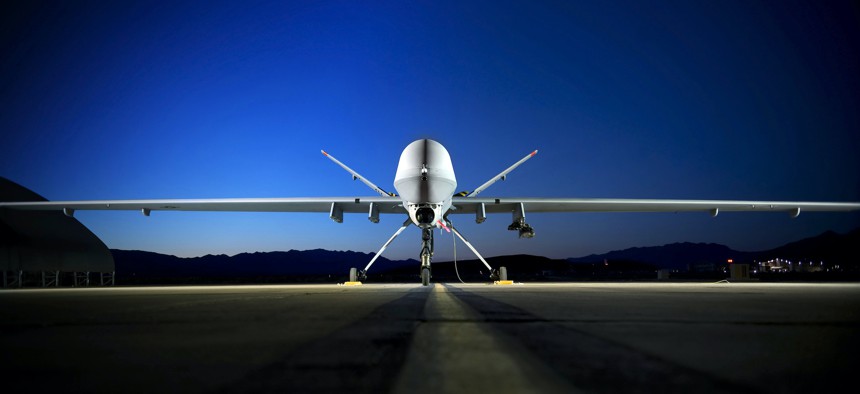
Early next year, the U.S. military’s Space Development Agency will test whether low-earth orbit satellites can communicate with an MQ-9 Reaper drone via optical links, or lasers.

If the experiment is successful, it will pave the way for a new, less hackable means of communication between drones, jets, and other weapons and commanders and operators from afar.

“In just a few short days, we'll be launching several satellites. Two of those are [MQ-9 maker] General Atomics satellites to be able to do the laser conductivity in space,” Derek Tournear, the head of the Space Development Agency, told Defense One during a taping of a segment to air next week during the Defense One Tech Summit. “Then those satellites will also be able to do the laser conductivity down directly to an MQ-9 platform.”

Satellite communication to drones, ships, and other assets via radio frequency is decades old. It served the military well in places like Iraq and Afghanistan, where the United States did not face adversaries with complex air defenses or the ability to jam radio signals on drones.

How Google Tracks Your Personal Information

Patrick Berlinquette

When lazy journalists are pessimistic about Amazon’s Alexa or Google Home, they say stuff like: “Even Orwell couldn’t have predicted that we’d willingly bring Big Brother into our own homes.”

What they fail to mention is our willingness to exchange privacy for convenience didn’t start with the advent of virtual assistants. It started in the early 2000s, when people—in return for having access to Google products and seeing more relevant ads—allowed Google to have all their data.

Today, Google provides marketers like me with so much of your personal data that we can infer more about you from it than from any camera or microphone.

There have never been more opportunities for marketers like me to exploit your data. Today, 40,000 Google search queries are conducted every second. That’s 3.5 billion searches per day, 1.2 trillion searches per year.

Russia's Strategy in Cyberspace

Janne Hakala, Jazlyn Melnychuk

INTRODUCTION
Headlines connecting Russia to the vague notion of ‘cyber’ have become daily bread for Western publics and decision makers alike. From the damage done by NotPetya or attacks against Ukraine and Georgia, to Russia’s hacking and leaking operations in US and European elections, Russia’s offensive operations are consistent threat. An increasingly important tool in what Russia views as the ongoing “information confrontation,” Russia utilizes cyber operations alongside other military and non-military means to pursue strategic objectives.

On the other hand, recent years have seen Russia’s attempts to close and secure its own digital information space. By using a combination of legal and technical means, the Kremlin tries to impose control both over digital infrastructure and content, efforts which are aimed at ensuring independence from the global Internet network and thus enhancing their information security.

SecDef OKs Joint Warfighting Concept; Joint Requirements Due Soon

THERESA HITCHENS

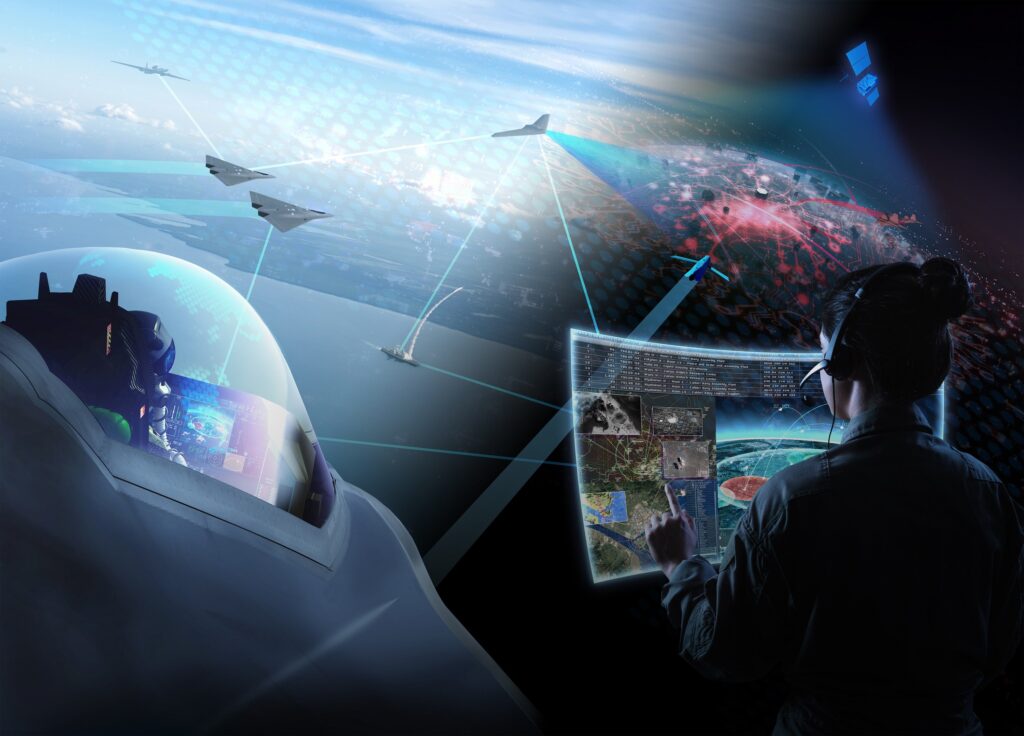
WASHINGTON: Defense Secretary Lloyd Austin has signed the crucial Joint Warfighting Concept (JWC) outlining the new American way of war — All Domain Operations.

A Pentagon spokesperson confirmed that the JWC was signed by Chairman of the Joint Chiefs of Staff Gen. Mark Milley March 31, and Austin signed off shortly thereafter. There will not be an unclassified version of the document released, however.

In a background briefing for reporters, a senior defense official said that Austin himself will be overseeing its implementation “accelerate the Joint Warfighting Concept through the experimentation and prototyping phases.”

The Joint Requirements Oversight Council (JROC) will issue a series of “strategic directives “over the next few months,” said Brig. Gen. Rob Parker, Joint Staff J6 Deputy Director. The J6 is the Joint Staff’s Command, Control, Communications, & Computers/Cyber directorate.

Assessing the Value of Intelligence Collected by U.S. Air Force Airborne Intelligence, Surveillance, and Reconnaissance Platforms

Abbie Tingstad, 

The changes in intelligence, surveillance, and reconnaissance (ISR) and processing, exploitation, and dissemination (PED) capabilities over the past two decades have led to ever-increasing demand from warfighters. Commanders, planners, and operators across the U.S. Air Force (USAF) ISR enterprise face difficult decisions about how to best meet ISR needs at the strategic, operational, and tactical levels. Yet USAF currently lacks a consistent, quantitative, empirically grounded method of assessing the value that the service's airborne ISR provides — which is essential to good resourcing decisions. This report presents an approach to ISR assessments that seeks to articulate the costs and benefits of USAF airborne ISR in specific operational contexts. Though aspects of this may be applicable across different USAF ISR organizations, this work focused primarily on the Distributed Common Ground System and the operational theaters it does or could support. The assessment methodology is designed to be flexible enough to support ISR resourcing decisions at different echelons, yet consistent enough to foster feedback, standardize data collections, and make use of empirical analysis methodologies.

Key Findings

USAF has no way to consistently measure ISR

The Thucydides Trap

Graham Allison

In April, chocolate cake had just been served at the Mar-a-Lago summit when President Donald Trump leaned over to tell Chinese President Xi Jinping that American missiles had been launched at Syrian air bases, according to Trump’s account of the evening. What the attack on Syria signaled about Trump’s readiness to attack North Korea was left to Xi’s imagination.

Welcome to dinner with the leaders who are now attempting to manage the world’s most dangerous geopolitical relationship.

The story is a small one. But as China challenges America’s predominance, misunderstandings about each other’s actions and intentions could lead them into a deadly trap first identified by the ancient Greek historian Thucydides. As he explained, “It was the rise of Athens and the fear that this instilled in Sparta that made war inevitable.” The past 500 years have seen 16 cases in which a rising power threatened to displace a ruling one. Twelve of these ended in war.

21 June 2021

Water Security as Part of Non-Traditional Security: Threat - Implications for India

Maj Gen P K Mallick, VSM (Retd)

Like oil or data, water is an integral part of the world’s economy. Although about 71 per cent of the earth’s surface is water-covered, the oceans hold about 96.5 percent of all Earth’s water which is salt water. Freshwater, most of it is frozen in glaciers, accounts for the rest. That leaves less than 1 per cent of the world’s water available to support human and ecological processes. We withdraw 4.3 trillion cubic meters of freshwater every year from the earth’s water basins. We use it in agriculture, which accounts for 70 per cent of the withdrawals. Industry and households consume 19 per cent and 11 per cent, respectively. However, these percentages fluctuate widely across the globe. In the United States, industrial and agricultural usage is almost the same around 40 per cent. In India, agriculture uses 90 per cent of water withdrawals, while only 2 per cent is consumed by industry. Over the past century, rate of withdrawal of available freshwater resources have risen almost six times, outpacing global population growth.

China’s Nuclear and Missile Capabilities: An Overview

Maj Gen PK Mallick, VSM (Retd)

Since China first conducted a nuclear weapon test in 1964, its nuclear doctrine has remained unchanged and is underpinned by two principles: a minimum deterrent doctrine and a No First Use (NFU) policy. China’s 2019 defence white paper states, “China is always committed to a nuclear policy of NFU of nuclear weapons at any time and under any circumstances, and not using or threatening to use nuclear weapons against non-nuclear-weapon states or nuclear-weapon-free zones unconditionally.”

However, a recent U.S. Department of Defence (DoD) report claims that the scope of China’s nuclear modernisation and its lack of transparency “raise concern that China is not only shifting its requirements for what constitutes a minimal deterrence but that it could shift away from its longstanding minimalist force posture.” The data available show that China is modernising and expanding virtually every element of its nuclear forces, including each aspect of its nuclear weapons and missile, sea, and air delivery systems. What is not clear are China’s current and planned holdings of nuclear weapons, China’s future plans for deploying additional delivery systems, its commitment to some form of NFU, first preemption, or launch on warning, and the extent to which it will accept what might be called a form of ‘minimum assured destruction.

India’s Industrial Raw Material and Food Exports: Emergence of China as Important and Distinct Market

Amitendu Palit

Summary
China became India’s second largest export market in financial year 2021. Absorbing large amounts of industrial raw material and food exports, it is distinct from India’s other major export markets in the West and Middle East.

A year’s export performance, and that too in a most unusual year characterised by disruptions from the COVID-19 pandemic, is insufficient to draw conclusions on long-term trends. Nevertheless, China’s striking importance as an export market for India in a year marked by unprecedented deterioration in bilateral ties is noteworthy.

India’s overall exports declined by 7.1 per cent in Financial Year (FY) 2021. Among its top 20 export markets, exports declined for all, except four. These are China, Bangladesh, Indonesia and Brazil. Annual export data provided by the Indian Ministry of Commerce and Industry shows that Indian exports to these four countries have increased by 27.5 per cent, 10.8 per cent, 21.7 per cent and 7 per cent respectively in FY2021.

Big Tech confronts India’s Internet Governance Framework

Karthik Nachiappan, Nishant Rajeev

Summary
Social media giants, Twitter and WhatsApp, and the Indian government find themselves at odds over the recently enacted IT (Intermediary Guidelines and Digital Ethics Code) Rules, 2021. While the Indian government contends that the rules are required to ensure national security and maintain public order, the companies argue that the rules can erode the fundamental rights of citizens. This battle will, in all likelihood, determine the extent of state power over the internet.

The Indian government released the IT (Intermediary Guidelines and Digital Ethics Code) Rules, 2021 on 25 February 2021 to better manage the effects big technology companies are having on society. Private enterprises like Facebook, Twitter and Whatsapp were given three months (until 25 May 2021) to comply. Now, shortly after the deadline has passed, foreign big technology companies find themselves increasingly at odds with these new regulations and the Indian government.

Climate change is remaking South Asia’s monsoon


Since arriving two days late at its usual landing point at Thiruvananthapuram in Kerala near India’s southern tip, South Asia’s annual summer monsoon has made up for lost time. Tearing north, the south-westerly, rain-bearing winds covered four-fifths of the country in the first two weeks of June, reaching even India’s north-easternmost states. The monsoon’s western arm has yet to reach the states of Gujarat, Haryana and Rajasthan. But Yogesh Patil, head of Skymet, a private weather-forecasting service, predicts that the monsoon will cover the whole country by July 8th, pretty much bang on its average date.

Bangladesh, Bhutan, Nepal and Pakistan are also recipients of the South Asian monsoon. It touches over 1.8bn people, or nearly a quarter of the world’s population. Though its circulation is complex, at its heart the summer monsoon is a sea breeze that operates on a season-long, continental scale. A rapidly heating Indian subcontinent causes hot air over it to rise. That draws in wetter maritime air from the Indian Ocean. As this air in turn rises, it cools and falls as rain. The northern wall of the Himalayas amplifies the effect.

The monsoon’s arrival is cause for rejoicing. Over 70% of the year’s rain falls in just four months. It cools the fierce summer heat and slakes a thirsty earth. The Ganges and other rivers fill and spread rich silt over flood plains. Sown crops put on growth at last. Agriculture supplies nearly half of all India’s jobs and accounts for nearly 20% of gdp (most farmers rely on rain-fed crops rather than irrigation). A bad monsoon can cut economic growth by a third, drive farmers into penury and create knock-on effects for government revenues when they are needed most. The remark by a British imperial administrator that the Indian budget is “a gamble in rain” remains true today.

Aerial manoeuvres in the South China Sea

Euan Graham

A recent aerial encounter over the South China Sea between military aircraft from China and Malaysia is potentially significant on a number of fronts, explains Euan Graham. Could it serve as a portent of a more assertive Chinese military air posture over the South China Sea?

According to a 1 June statement by the Royal Malaysian Air Force (RMAF), on 31 May, a formation of 16 transport aircraft from the People’s Liberation Army Air Force (PLAAF) was monitored as it approached the coastline of Sarawak, in east Malaysia, first passing through the Flight Information Region (FIR) administered by Singapore, then that of Malaysia. After radio communications failed to elicit a response, a pair of RMAF Hawk light combat aircraft were sent to identify and intercept the Chinese aircraft. After making visual contact, the PLAAF formation turned back north, passing within 60 nautical miles (nm) of Malaysia.

The RMAF statement protested the formation flight as a ‘serious matter that threatens national security and aviation safety’. Foreign Minister Hishammuddin Hussein, who hitherto held the defence portfolio and has attracted occasional criticism for his deferential behaviour towards Beijing went a step further, describing China’s actions as a ‘breach of the Malaysian airspace and sovereignty’.

ASEAN’s Search for a Third Way: Southeast Asia’s Relations with China and the United States

Felix K. Chang
Source Link

Stung by Southeast Asian criticism of Chinese behavior in the South China Sea at the 2010 ASEAN Regional Forum, China’s then-Foreign Minister Yang Jiechi curtly remarked to his Singaporean counterpart: “China is a big country and other countries are small countries, and that is just a fact.” As Yang saw things, smaller countries would have to accept China’s actions, however frustrating. While Yang’s remark may have been unusually brusque (given China’s diplomatic “charm offensive” at the time), it was not far off the mark. Bigger countries with greater economic and military power have typically carried more sway than smaller ones with lesser power.

That, however, does not mean that Southeast Asian countries have to like it. Indeed, it has grated on many of them since they became independent nation-states in the mid-twentieth century, an era when external great powers—notably China, the Soviet Union, and the United States—pressured them to join their respective Cold War camps. Eventually, the prospect of being dominated by such great powers, in part, motivated five of Southeast Asia’s largest countries to create the Association of Southeast Asian Nations (ASEAN) in 1967. They hoped to find a “third way” based on regional consensus and cooperation, aspects of an approach to international relations they termed the “ASEAN Way.” That hope still resonates today. As tensions between China and the United States have risen over the 2010s, Southeast Asian leaders are often heard expressing their desire to avoid choosing sides. No doubt, a “third way” holds great appeal, but as a foreign-policy tool to deal with great powers, it has not been very effective, especially when those powers, in particular China, have used their leverage over individual ASEAN countries to undermine consensus-building.

Joe Biden’s Transatlantic Bridge to the Indo-Pacific Region

Patrick M. Cronin

President Joe Biden’s first foreign trip navigated European geography but negotiated Asian strategy.

Carbis Bay, Brussels, and Geneva may sound more like vacation destinations than gateways to the future. Yet those European venues restored US leadership at a time of global hardship and great-power disharmony.

Critics dismiss the value of trusted American leadership in the world and decry the shortfalls of collective action. But Biden didn’t miss the opportunity to shake up international relations. Instead, he rallied the wealthiest and most powerful states around an alternative vision to China’s and Russia’s authoritarian dreams.

Uniting allies around an affirmative agenda is at the core of the Biden administration’s grand strategy of democratic solidarity. After four years of igniting dumpster fires with “America first” chest-thumping, U.S. diplomacy arose from the ashes. Truth beats fibs, hope topples fear, and Joe Biden knows the difference between an ally and a rival.

China & South Africa: Comrades in Arms

Eva Nolle, Talya Parker 

Abstract 

China and South Africa’s relationship has reached new heights since establishing ties in the 1990s, culminating in South Africa’s appointment as a Comprehensive Strategic Partner in 2010. South Africa is now China’s largest trading partner in the Africa, the greatest recipient of Chinese investment and arguably China’s greatest ally on the continent. Through all this, China has managed to cultivate a substantial influence over South Africa, it’s politics and economy. This influence can be seen through the ANC’s relationship with the Chinese Communist Party, the South African economy’s overreliance China and South Africa’s defence of China’s strategies on a regional level. Despite the skewed relationship, South Africa is heavily reliant on China’s investment and ongoing commitment to assist them, creating incentive to not slow down this growing influence of China in South Africa.

Iran’s Engineered Election Leaves Reformists With No Good Options

Razieh Armin

Iranians will go to the polls this Friday to choose the successor to centrist President Hassan Rouhani, who is winding down his second four-year term and cannot run for reelection. The polls will take place in an atmosphere of widespread public apathy, as voters choose from a list of presidential candidates that has been heavily vetted beforehand. Of the seven contenders approved last month by the Guardian Council—an oversight body of 12 clerics who are closely aligned with Supreme Leader Ali Khamenei—five are regarded as hard-liners, while the other two are uncharismatic moderates with relatively low profiles. Ebrahim Raisi, a hard-line jurist, is widely seen as the front-runner.

The reformists, one of the main political blocs in the country’s fluid factional landscape, saw all of their preferred candidates excluded, raising the very real prospect that they could be shut out from the key participatory instrument in Iran’s government for at least the next four years. ...