15 October 2021

Deterrence Theory– Is it Applicable in Cyber Domain?

Maj Gen PK Mallick, VSM (Retd)

Introduction 
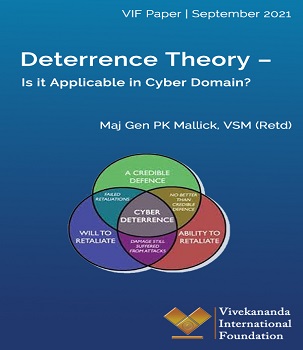
The Deterrence Theory was developed in the 1950s, mainly to address new strategic challenges posed by nuclear weapons from the Cold War nuclear scenario. During the Cold War, the U.S. and the Soviet Union adopted a survivable nuclear force to present a ‘credible’ deterrent that maintained the ‘uncertainty’ inherent in a strategic balance as understood through the accepted theories of major theorists like Bernard Brodie, Herman Kahn, and Thomas Schelling.1 Nuclear deterrence was the art of convincing the enemy not to take a specific action by threatening it with an extreme punishment or an unacceptable failure.
Cyber Weapons – A Weapon of War?

Maj Gen PK Mallick, VSM (Retd)

Introduction 
The character of warfare has changed fundamentally over the last decade. In the past, it was essential for an adversary nation or insurgent to physically bring weapons to bear during combat. That requirement is no longer a necessity. In cyber operations, the only weapons that need to be used are bits and bytes. In this new era of warfare, logistics issues that often restrict and limit conventional warfare and weaponry are not impediments. This new weaponry moves at the speed of light, is available to every human on the planet and can be as surgical as a scalpel or as devastating as a nuclear bomb.

Cyber attacks in various forms have become a global problem. Cyber weapons are low-cost, low-risk, highly effective and easily deployable globally. This new class of weapons is within reach of many countries, extremist or terrorist groups, non-state actors, and even individuals. Cyber crime organisations are developing cyber weapons effectively. The use of offensive Cyber operations by nation-states directly against another or by co-opting cyber criminals has blurred the line between spies and non-state malicious hackers. New entrants, both nation-states and non-state actors have unmatched espionage and surveillance capabilities with significant capabilities. They are often the forerunners for criminal financial gain, destruction and disruption operations. Progressively, we see non-state actors including commercial entities, developing capabilities that were solely held by a handful of state actors.

Has the Pandemic Burned Itself Out in India’s Capital?

Avtar Singh

What a difference a few months make.

I returned to Germany in September after a few weeks in India. It was my first visit to the country of my birth since the pandemic began. In April and May of this year, Armageddon seemed at hand there. Sirens ringing through the night, crematoriums stretched beyond capacity, dead bodies dumped in rivers because there wasn’t enough space to burn them or wood to burn them with.

I watched in horror as the deaths mounted in India. My phone lit up with frantic pleas for plasma, remdesivir, ivermectin—all those discredited magic bullets people at the ends of their tethers turned to when they saw their loved ones slipping away.

As in India, so in its capital. New Delhi seemed the epicenter of the surge in the press. Among other reasons, this was because so much of India’s reporting happens there. The numbers couldn’t be hidden. The dying was happening in plain view. The situation in the city had a personal urgency for me. My father, my sisters, and their families live there. I couldn’t look away.

A Tale of 2 Navies: India and China’s Carrier Airwing Development

Rick Joe

This is the third and final part of a three-part series reviewing Indian and Chinese carrier procurement. Part one reviewed the history of China’s and India’s aircraft carrier procurement and part two outlined the future trajectory for the two countries’ carrier and escort fleets. Part three below explores the development of carrier airwings in both China and India.

Indian Navy Carrier Airwing Development

The Indian Navy (IN)’s carrier procurement plan of the late 1990s and early 2000s dovetailed with a plan to develop a carrier-based naval variant of the single engine LCA Tejas aircraft that was being pursued by the Indian Air Force at the time. This variant was aptly named the LCA Navy. Two flying prototypes of the LCA Navy were ultimately developed, with the lead prototype making its first flight in early 2012. The LCA Navy was a STOBAR configured aircraft with reinforced landing gear, tailhook, and additional LEVCON surfaces to enable the aircraft to operate from a carrier.

It’s Not Too Late to Save America’s Afghan Allies

Kelley Currie

Over the past two months, U.S. President Joe Biden’s administration has been rightly criticized for its poorly planned and executed Afghanistan withdrawal. Although much of the damage may be unrecoverable, there are several known, proven, and relatively low-risk policy options the Biden administration can still adopt to fulfill its promises to rescue at-risk Afghan allies. For the most part, these options have broad bipartisan support, do not require additional funding or staff, and are within the existing legal authority possessed by executive branch agencies. It is not too late for them to change course and adopt these more effective policy and programmatic responses to the ongoing evacuation crisis, but every week delayed puts already vulnerable Afghans at greater risk.

During the initial evacuation, the U.S. State Department’s performance prompted particularly harsh criticism from members of Congress on both sides of the aisle, other administration colleagues, and even career State Department personnel. More than a month after the end of the noncombatant evacuation operation (NEO), the State Department still does not know how many U.S. citizens remain in Taliban-controlled Afghanistan. Likewise, an unknown number of U.S. legal permanent residents and Afghans eligible for special immigrant visas (SIVs) remain stuck in Afghanistan with little support and diminishing hope.

To Counter China, U.S. Policy toward Taiwan Must Change

THERESE SHAHEEN

The ignominious U.S. withdrawal from Afghanistan punctuated a feckless policy based on a false premise of opposition to “forever wars” promoted by the Trump and Biden administrations. The implications of that doctrine — that a commitment of U.S. troops overseas without a specified duration constitutes an endless war and “nation-building” — will ripple across U.S. relationships around the world for some time. The Biden administration has been explicit that the U.S. will not support extended military commitments for partners unwilling or unable to fight for themselves.

The lesson of the U.S. withdrawal was not lost on Taiwan, with which the U.S. has an important, long-standing relationship. President Tsai Ing-wen took to social media to acknowledge that the situation shows “that Taiwan’s only option is to make ourselves stronger, more united and more resolute in our determination to protect ourselves.”

Deterrence Implications of the U.S. Withdrawal from Afghanistan

David J. Trachtenberg

Twenty years ago, I was sitting in my Capitol Hill office when a colleague rushed in. “Turn on your TV,” he said. “You have to see this.” The attack on America had begun.

Over the next few hours, we were evacuated from the Capitol grounds as confusion reigned over which target might be the terrorists’ next. Weeks earlier, I had been offered a job as the Principal Deputy Assistant Secretary of Defense for International Security Policy, but my transition from a House staffer to a Pentagon official was delayed. In retrospect, the delay was propitious, as the Pentagon absorbed the next terrorist blow. Three days after I arrived at the Pentagon for my new assignment in October 2001, Operation Enduring Freedom—the U.S. invasion of Afghanistan—began.

The events of twenty years ago left an indelible mark on me and many of my generation. Twenty years later, the return to power of the Taliban in Afghanistan and the ignominious U.S. withdrawal are bitter pills to swallow. Not simply because they reflect a failure of American leadership but because the U.S. withdrawal will likely have negative and long-lasting repercussions for U.S. credibility and deterrence well into the future.

Everything you think you know about the CIA is wrong

David McCloskey

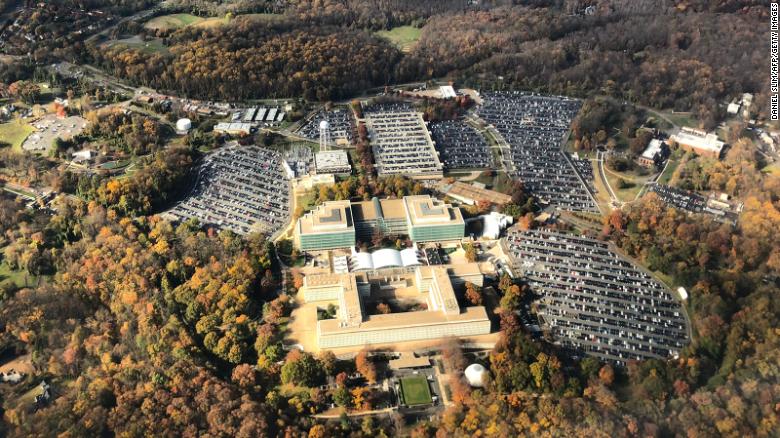
(CNN)We are awash in spy stories. "No Time to Die," the latest James Bond film, landed last week as the 25th installment in the franchise -- one of the highest-grossing film franchises of all time.

Two long-running spy thriller series, Brad Thor's Scot Harvath and Daniel Silva's Gabriel Allon, topped the New York Times Bestseller list during back-to-back weeks in August. The second season of the "Jack Ryan" series, tracking the adventures of the eponymous CIA analyst, was reportedly one of Amazon's most popular shows ever.

I am an avid consumer of these stories. I have even written a spy novel. I am also a former CIA analyst. And if Hollywood or spy thrillers are your primary source on the agency's Langley headquarters, then chances are that everything you think you know about the CIA is wrong.
In most Hollywood treatments, the CIA's superhero spies kill a lot of people, blow things up, and often operate without official sanction, perhaps on American soil. A random sample of spy thrillers on Amazon reveals CIA protagonists with job descriptions that would puzzle the Langley Human Resource mavens: "black ops officer," "assassin" and "covert operative" are all common. In other depictions, the CIA is morally bankrupt and ineffectual, its officers cynical liars and bunglers.

JPMorgan’s Deal With Alipay Will Put the PLA in Your Pocket

Elisabeth Braw

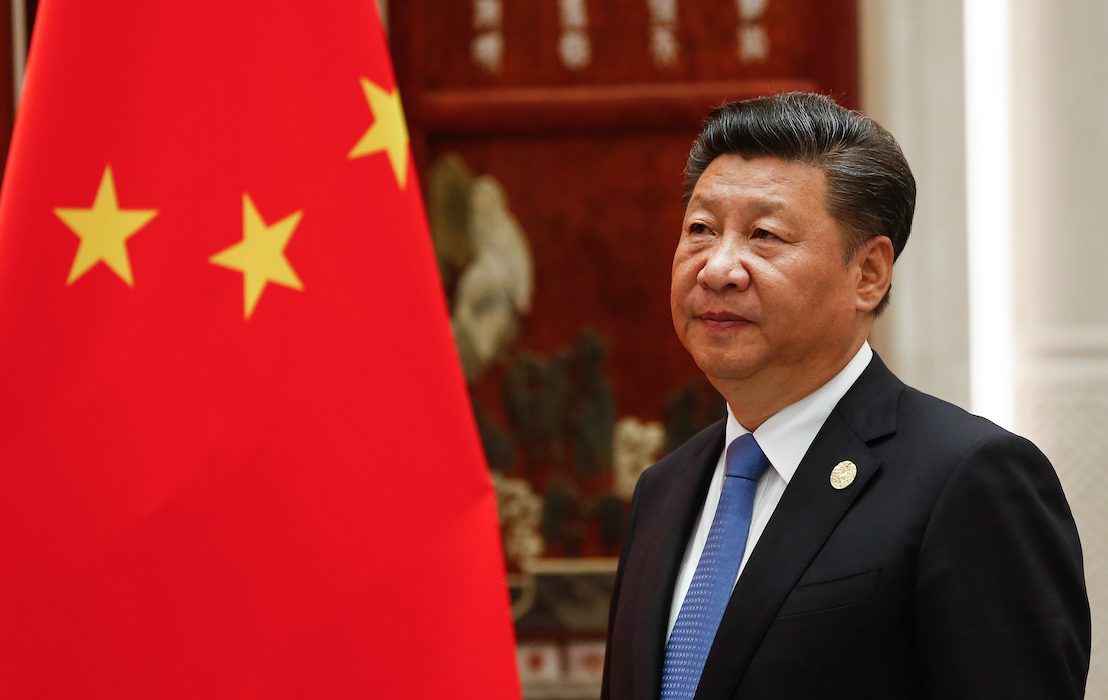
Paying with plastic is easy, but for merchants, credit cards come with pesky fees. Imagine if consumers instead used mobile payment apps that charged much lower fees. Such apps are conquering the world—led by Chinese giants Alipay and WeChat Pay. Last month, JPMorgan announced it will be partnering with Alipay. All this creates a lot of data the Chinese government will want access to. Convenient payment for coffee, groceries, and other daily items could become a national security risk.

Two years ago, U.K.-based Barclaycard issued a press release that didn’t get much attention. “Barclaycard partners with Alipay to help U.K. merchants increase sales from booming Chinese tourism,” announced the credit card firm, which processes nearly half of all credit card transactions in the United Kingdom.

The reason the announcement flew under the radar is not many Europeans were using Alipay (which is owned by tech conglomerate Ant Group) or its fellow Chinese archrival, Tencent-owned WeChat Pay. Instead, Barclaycard’s announcement concerned the U.K.’s around 1 million Chinese residents and tourists. The pandemic meant Alipay got off to a rocky start in the U.K., but in filings last month, the company said its growth opportunities in the United Kingdom and other European countries were “significantly heightened.”

SECURITY COOPERATION IN THE GRAY ZONE: HOW TO BEAT CHINA WITHOUT A WAR

Phil Reynolds

Can the U.S. Department of Defense do two things at once: Operate in the gray zone of small wars and excel in great power competition? The rise of China has some analysts worried that the U.S. “is focused on the wrong countries and being used to build the wrong capabilities.” Small wars are out, big wars are in, and are increasingly used for justifying increased budgets for expensive ships and aircraft. The general idea is that competition with China and Russia – great power competition (GPC) – is the priority and all instruments of national power must be bent to that end, at the expense of all other needs. At best, this view is myopic; at worst, it is a false narrative. The U.S. can succeed in the gray zone in which would outflank China and Russia in the next (perhaps the last) strategic zone: Africa.

Building partner capacity in Africa through security assistance (SA) and cooperation (SC) activities provides the capability to maneuver in that space. SA and SC around the world cost about $19 billion dollars in 2019. Learning from the long counter-terrorism wars since 9/11, Congress created specific categories of activities in for BPC which lie in the gray zone like counter terrorism operations, countering illicit drug trafficking, countering organized crime, supporting intelligence operations and supporting multi-national operations- like AMISOM in Somalia and the G5 Sahel. These funds are critical in providing equipment and training support against various insurgent, transnational terrorists, and smuggling threats in twenty-one countries. Moving those funds from these conflicts to support great-power competition would result in the abandonment of those partners who are now decisively engaged on the United States’ behalf. There is real danger in a U.S. withdrawal of support to these fragile partners.

China Is Not Yesterday’s Enemies

PETER VAN BUREN

China was artificially reimagined as an enemy-in-a-box as the wars of terror sputtered out and America needed a new villain. Biden envisions China as an autocratic foil for democracy to wage a global
struggle against. “On my watch,” Joe said, “China will not achieve its goal to become the leading country in the world, the wealthiest country in the world, and the most powerful country in the world.” Biden went on to claim the world was at an inflection point to determine “whether or not democracy can function in the 21st century.” In Biden’s neo-Churchillian view, the U.S. and, what the hell, the whole free world he believes he is president of, are in a death match with China.

But there is unbelievable hypocrisy in America’s claimed role. Biden seems oblivious as the U.S. mowed down Muslims by drone even while self-righteously tsk tsk-ing China for abusing its Uighur minority. After our two-decade hissy fit of invasions and nation building brought kleptocracies to lead countries, we dare bark that China is not democratic. We seem not to notice our imperial lack of clothing when we stand shoulder-to-shoulder with tyrants and dictators strewn around Africa and the Middle East. We see no issues demanding democracy in Hong Kong while not having had much to say about it when the place was a British colony stolen by war from Chinese sovereignty.

How Pakistan’s A.Q. Khan Helped North Korea Get the Bomb

Mike Chinoy

In light of A.Q. Khan’s death on Sunday, the following is an adaptation from the 2008 book Meltdown: The Inside Story of the North Korean Nuclear Crisis.

A.Q. Khan, who died on Oct. 10 of COVID-19 at age 85, is celebrated in Pakistan as a national hero who built the country’s nuclear bomb program. Internationally, though, he became infamous not as a nuclear scientist but as a nuclear smuggler—including playing a key role in boosting North Korea’s weapons program.

As the head of Khan Research Laboratories, A.Q. Khan presided over his own nuclear fiefdom, which in the late 1980s and early ’90s spearheaded Pakistan’s development of highly enriched uranium. In 1998, Pakistan carried out a successful test of a nuclear bomb. Yet, confronted with the nuclear prowess of its neighbor and rival India, Pakistan still urgently needed a missile to deliver its bomb, and it was looking for a shortcut to avoid having to develop one on its own.

The Benefits of Butting Out

FRED KAPLAN

Iran and Saudi Arabia—the bitterest rivals in the Middle East, which have supported and armed opposite sides in several of the region’s proxy wars—have held four rounds of diplomatic talks in recent months, and officials say the talks are on “a good path” and have gone a “good distance” toward calming tensions.

One lesson of this development: In certain parts of the world, America’s disengagement from political and military clashes may be a positive force for peace and stability.

This runs contrary to the conventional wisdom, which holds that a U.S. presence is necessary to keep unstable regions together and that a U.S. withdrawal would leave a “power vacuum,” which will only heighten tensions and lead to war.

Steven Lambakis, Space as a Warfighting Domain: Reshaping Defense Space Policy

Dr. Steven Lambakis

Over the past decade, there has been a shift in opinion in the nation’s governing and defense-planning circles about inter-state relations in space and the duties incumbent on those in positions of leadership to adapt and respond to the reality that space is a warfighting domain. Despite arguments put forth over the past several decades by sanctuary-policy proponents that space should remain free of Earth’s conflicts, reality has dictated otherwise as other powerful nations have acquired the capabilities to execute offensive and defensive operations within the space domain. There is today, in other words, an overriding assumption that the country no longer has the luxury of believing it can operate in a benign space domain. Not all countries have the same respect for the space domain as countries that rely heavily on space systems for their economy and security do. Lesser powers, such as North Korea, do not leverage space to the same extent and hence can afford not to respect it. The United States has responded with recognition of the changed dynamic in its security policies and strategies by promoting greater awareness of the threat and reorganizing the Joint Force and command structure to protect U.S. space assets and mature U.S. spacepower.

Cyber Threats And Vulnerabilities To Conventional And Strategic Deterrence – Analysis

Mark Montgomery and Erica Borghard*

Scholars and practitioners in the area of cyber strategy and conflict focus on two key strategic imperatives for the United States: first, to maintain and strengthen the current deterrence of cyberattacks of significant consequence; and second, to reverse the tide of malicious behavior that may not rise to a level of armed attack but nevertheless has cumulative strategic implications as part of adversary campaigns. The Department of Defense (DOD) strategic concept of defend forward and U.S. Cyber Command’s concept of persistent engagement are largely directed toward this latter challenge. While the United States has ostensibly deterred strategic cyberattacks above the threshold of armed conflict, it has failed to create sufficient costs for adversaries below that threshold in a way that would shape adversary behavior in a desired direction.1 Effectively, this tide of malicious behavior represents a deterrence failure for strategic cyber campaigns below the use-of-force threshold; threat actors have not been dissuaded from these types of campaigns because they have not perceived that the costs or risks of conducting them outweigh the benefits.2 This breakdown has led to systemic and pervasive efforts by adversaries to leverage U.S. vulnerabilities and its large attack surface in cyberspace to conduct intellectual property theft—including critical national security intellectual property—at scale, use cyberspace in support of information operations that undermine America’s democratic institutions, and hold at risk the critical infrastructure that sustains the U.S. economy, national security, and way of life.

US Army Is Scrutinizing Itself, Must Change Swiftly to Face China, Secretary Says

CAITLIN M. KENNEY

The U.S. Army is analyzing its force structure, infrastructure, modernization programs, and readiness in a bid to figure out how it can best focus its limited resources to deter or if necessary fight China, its toughest near-peer challenger since the Cold War, the service secretary said Monday.

“We're going to have to look hard at everything we do and everything about how we do,” Army Secretary Christine Wormuth said during the opening ceremony of the Association of the United States Army’s 2021 annual meeting and exposition. “This work will not be easy, but it is needed. And given the challenges ahead, we may have to accept some risk now to avoid greater risk in the future.”

The data gathered during the analysis will help the Army figure out how it will fight and in what theatres, what capabilities to focus on, and also the performance of the new modernization programs, Wormuth said during a news conference Monday.

Pratt & Whitney’s GatorWorks to 3D print entire jet engine

Garrett Reim

“We learned a lot from it”, Stagney says. “We need to create the opportunities for our engineers to learn, and not put ourselves in a situation where the stakes are so high that we have to be so conservative that we can’t take calculated risks.”

Lessons learned, the West Palm Beach, Florida-based outfit is now taking additive manufacturing one step further: attempting to produce a TJ-150 turbine entirely out of 3D-printed parts.

GatorWorks can afford to take risks because it is not designing or manufacturing ultra-reliable turbofan engines used on fighter jets or airliners. Instead, it is focused on low-cost military engines such as the TJ-150, which is used to power small cruise missiles.

The rapid prototyping arm is trying to capitalise on the US Air Force’s (USAF’s) growing demand for low-cost cruise missiles, powered glide bombs and “attritable” unmanned air vehicles (UAVs), a type of limited-use drone that can be lost to combat attrition and then quickly and cheaply replaced.

Europe’s Strategic Autonomy Fallacy

Stefano Graziosi & James Jay Carafano

Growing concerns about American leadership have triggered renewed calls for an autonomous, pan-European military dedicated and able to serve a European agenda. The prospects for European strategic autonomy are no more realistic. Yet, the persistence of this proposal strains the transatlantic relationship, which has not improved under the Biden presidency despite all expectations.

European leaders were angered that Biden rejected their request to extend the deadline for the U.S. troop withdrawal from Afghanistan and then directed an uncoordinated retreat that put their in-country forces and citizens at risk. Relationships further deteriorated when, in an effort to recover from the criticism of not engaging allies, the U.S. abruptly announced a new security pact (AUKUS) with the United Kingdom and Australia without either consulting or informing Brussels (let alone Paris).

Quicker than a returning boomerang, European leaders were back to arguing, as they had when Trump was around, that America isn’t dependable.

Why Russia Never Became An Aircraft Carrier Superpower

Kyle Mizokami

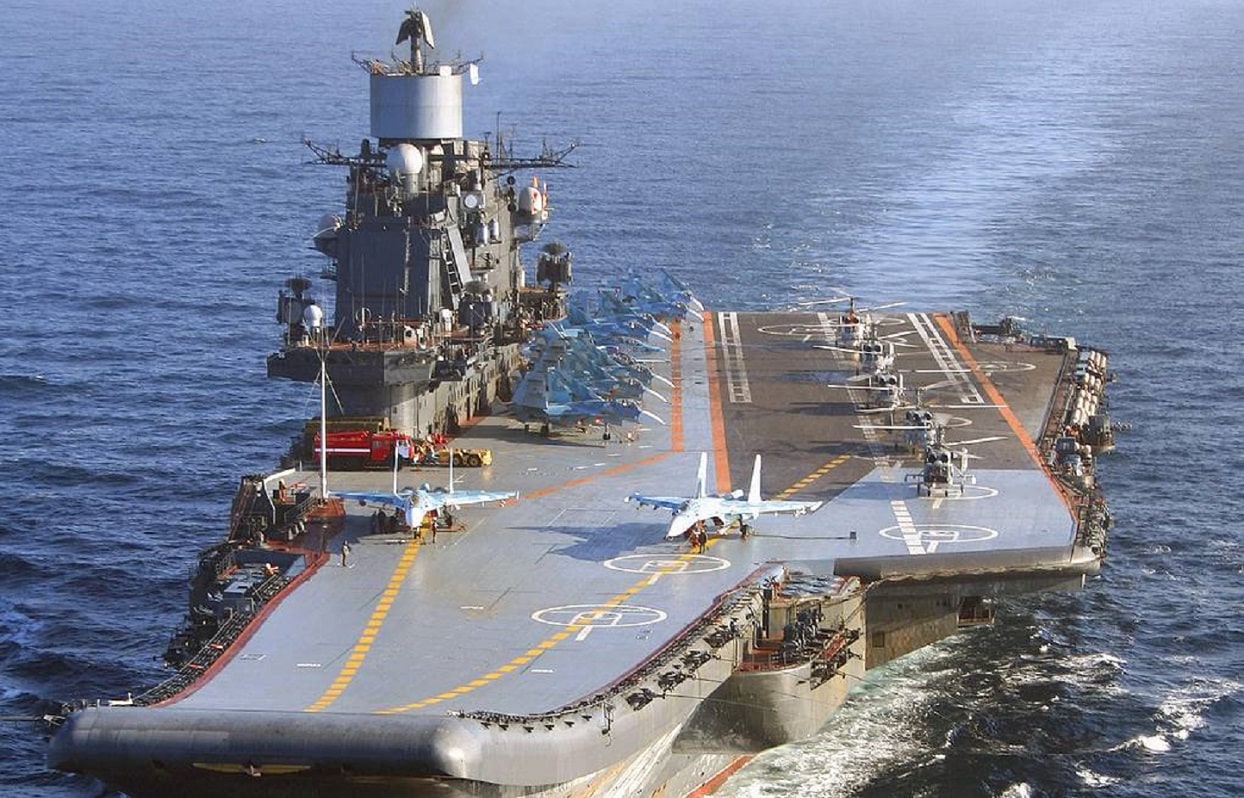
The Soviet Union was one of the largest, most industrial proficient countries the world has ever seen. Yet for all of its engineering talent and manufacturing capacity, during the seventy-four years the USSR existed it never fielded a true real aircraft carrier. The country had several plans to build them, however, and was working on a true carrier, the Ulyanovsk, at the end of the Cold War.

After the Communists’ victory in 1917, science and engineering were pushed to the forefront in an attempt to modernize Russia and the other Soviet republics. The military was no exception, and poured resources into then-advanced technologies such as tanks, airborne forces, and ground and aerial rockets. Soviet leader Joseph Stalin was linked to several carrier projects, including the first effort, Izmail.

In 1927, the Soviet leadership approved plans to build a carrier by converting the unfinished Imperial Russian Navy battlecruiser Izmail, under construction since 1913, to a full-length aircraft carrier. Completed as a battlecruiser, Izmail was to displace thirty-five thousand tons, making it similar in displacement to (and of the same decade as) the U.S. Navy’s Lexington-class interwar carriers that carried up to seventy-eight aircraft.

Why Climate Policy Has Failed

William Nordhaus

The world is witnessing an alarming outbreak of weather disasters—giant wildfires, deadly heat waves, powerful hurricanes, and 1,000-year floods. There can be little doubt that this is only the beginning of the grim toll that climate change will take in the years ahead. Today, the central question is whether our political systems can catch up with the geophysical realities that threaten our lives and livelihoods. As world leaders struggle to design and adopt policies that can slow the pace of warming and mitigate its consequences, the United Nations Climate Change Conference in Glasgow, Scotland, this November will be an important test.

How do we evaluate the success of past climate policies? The best indicator is carbon intensity, which is a measure of carbon dioxide emissions divided by global real GDP. Figure 1 displays the levels of carbon intensity between 1990 and 2019. There are small fluctuations in the annual changes, but the trend is basically a straight line showing a decline of 1.8 percent per year.

Trained for Deception: How Artificial Intelligence Fuels Online Disinformation


Social media platforms are increasingly relying on artificial intelligence (AI) and machine learning (ML)-based tools to moderate and curate organic content online, and target and deliver advertisements. Many of these tools are designed to maximize engagement, which means they also have the potential to amplify sensationalist and harmful content such as misinformation and disinformation. This memo explores how AI and ML-based tools used for ad-targeting and delivery, content moderation, and content ranking and recommendation systems are spreading and amplifying misinformation and disinformation online.

It also outlines existing legislative proposals in the United States and in the European Union that aim to tackle these issues. It concludes with recommendations for how internet platforms and policymakers can better address the algorithmic amplification of misleading information online. These include: encouraging platforms to provide greater transparency around their policies, processes, and impact; direct more resources towards improving fact-checking, moderation efforts, and the development of effective AI and ML-based tools; provide users with access to more robust controls; and provide researchers with access to meaningful data and robust tools. Although platforms have made some progress in implementing such measures, we as a coalition believe that platforms can do more to meaningfully and effectively combat the spread of misinformation and disinformation online. However, recognizing the financial incentives underlying platforms’ advertising-driven business models—and their influence on platform approaches to misinformation and disinformation—we encourage lawmakers to pursue appropriate legislation and policies in order to promote greater transparency and accountability around online efforts to combat misleading information.

OP #52: Scientific Risk Assessment of Genetic Weapons Systems

Richard Pilch, Jill Luster, Miles Pomper, Robert Shaw
Source Link

For any emerging technology, defense and homeland security analysts strive to understand (1) its dual-use potential, meaning whether the same research and technology applied for peaceful purposes may be diverted to illicit ends, for example to develop a weapon; (2) the State and sub-State actors with access to that dual-use potential, whether peacefully or illicitly directed; and (3) motivational factors and indicators of intent that might suggest these actors would divert the emerging technology to illicit ends. Precision medicine represents one such emerging technical space. Precision medicine is defined as medical care designed to optimize benefit for particular groups, especially based on genetic (or molecular) profiling. A long-speculated but incompletely understood dual-use consideration of precision medicine is the possible development of a genetic weapon system, defined as a weapon system designed to optimize effect on particular groups based on genetic profiling.

This Occasional Paper assesses the potential for precision medicine to be diverted to develop a population-specific genetic weapon system, examines relevant state capabilities and motivations to pursue such an effort, and offers policy recommendations to manage the dual-use implications of this emerging biomedical field while still preserving its potential benefit for human welfare.

The Air Force’s First Software Chief Stepped Down—But He Won’t Be Quiet

Brandi Vincent

As he settles into post-government life, Nicolas Chaillan still expects to call out the foreign competitors and domestic roadblocks that he says increasingly endanger U.S. security and informed his decision to publicly resign as the Air Force’s first chief software officer.

“Right now, the urgency is spending time with my kids first, and waking up America before it is too late. Because otherwise, there's just no point,” Chaillan told Nextgov in an interview Tuesday. “Otherwise I need to invest in a bunker.”

A computer coder by the age of seven, Chaillan started his own companies in France at 15. He was part of a team that created a common programming language and went on to be a serial technology entrepreneur, funding businesses across multiple nations. In 2015, the Paris terrorist attacks inspired Chaillan to do something more “than another stupid mobile application.” Months later, he became a naturalized U.S. citizen and joined the Homeland Security Department, where he architected Cyber.gov and designed what he said was the first federal zero trust implementation “at any kind of scale” years before the department mandated it as a standard. Chaillan moved on to be Air Force chief software officer and steer Defense Department DevSecOps initiatives. The 37-year-old candidly announced his exit last month on LinkedIn, citing an inability to move forward without appropriate backing from leadership.

‘Starting a fire’: U.S. and China enter dangerous territory over Taiwan

CHRIS BUCKLEY AND STEVEN LEE MYERS

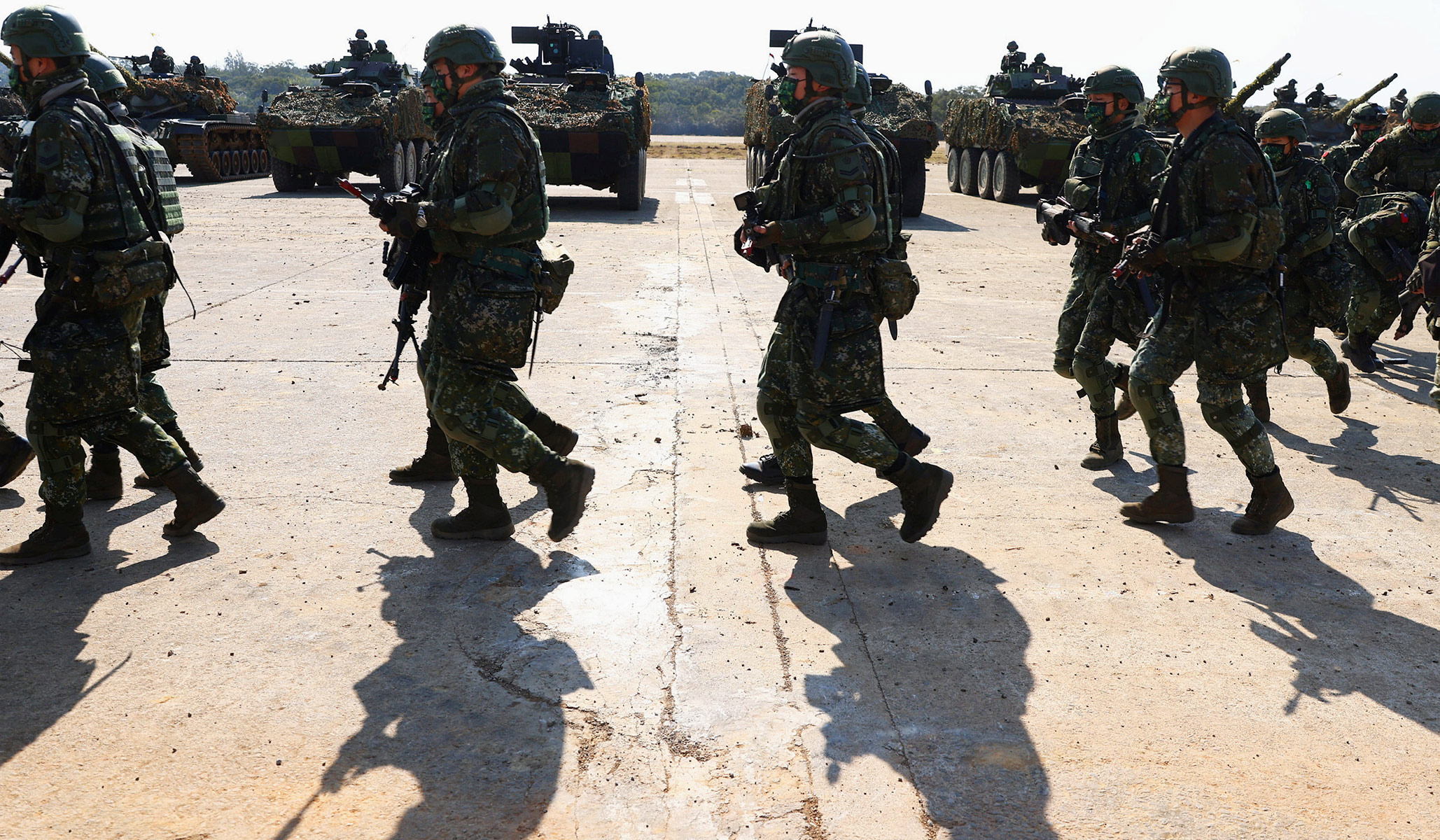
The 25 Chinese fighter jets, bombers and other warplanes flew in menacing formations off the southern end of Taiwan, a show of military might on China’s National Day, Oct. 1. The incursions, dozens upon dozens, continued into the night and the days that followed and surged to the highest numbers ever on Oct. 4, when 56 warplanes tested Taiwan’s beleaguered air defenses.

Taiwan’s jets scrambled to keep up, while the United States warned China that its “provocative military activity” undermined “regional peace and stability.” China did not cower. When a Taiwanese combat air traffic controller radioed one Chinese aircraft, the pilot dismissed the challenge with an obscenity involving the officer’s mother.

As such confrontations intensify, the balance of power around Taiwan is fundamentally shifting, pushing a decadeslong impasse over its future into a dangerous new phase.

It’s Not Misinformation. It’s Amplified Propaganda.

RenΓ©e DiResta

One Sunday morning in July of last year, a message from an anonymous account appeared on “Bernie or Vest,” a Discord chat server for fans of Senator Bernie Sanders. It contained an image of Shahid Buttar, the San Francisco activist challenging House Speaker Nancy Pelosi in the 2020 congressional runoff, and offered explicit instructions for how to elevate the hashtag #PelosiMustGo to the nationwide Trending list on Twitter. “Shahid Says…,” read the large print, “Draft some tweets with #PelosiMustGo—don’t forget to capitalize #EachWord. Don’t use more than two hashtags—otherwise you’ll be marked as spam.” The call to action urged people to start posting at noon Pacific time, attach their favorite graphics, and like and retweet other Buttar supporters’ contributions.

I was living in San Francisco then and had been following Buttar’s efforts to get attention, as traditional outlets largely ignored the democratic socialist’s underdog campaign. The day before, incensed at Pelosi’s refusal to debate him, he had sparred with an unoccupied chair outdoors on a public street. But on Twitter that Sunday morning, the challenger had a more promising strategy: If the ploy worked, his slogan would show up on millions of screens across the entire country without costing him a dime. Team Buttar’s message was sent at 10:30 a.m. I wondered whether the online armies would turn out for him. “Did you see this?” I asked a colleague at the Stanford Internet Observatory over Slack, dropping the anonymous call to action into the channel. Then I made a pot of coffee and waited to see whether Buttar’s supporters could pull it off.

14 October 2021

Deterrence Theory– Is it Applicable in Cyber Domain?

 Maj Gen PK Mallick, VSM (Retd)

Introduction 

The Deterrence Theory was developed in the 1950s, mainly to address new strategic challenges posed by nuclear weapons from the Cold War nuclear scenario. During the Cold War, the U.S. and the Soviet Union adopted a survivable nuclear force to present a ‘credible’ deterrent that maintained the ‘uncertainty’ inherent in a strategic balance as understood through the accepted theories of major theorists like Bernard Brodie, Herman Kahn, and Thomas Schelling.1 Nuclear deterrence was the art of convincing the enemy not to take a specific action by threatening it with an extreme punishment or an unacceptable failure.

Social Media in Violent Conflicts – Recent Examples

Maj Gen PK Mallick, VSM (Retd)


Introduction
Alan Rusbridger, the then editor-in-chief of the Guardian in his 2010 Andrew Olle Media Lecture, stated, “News organisations still break lots of news. But, increasingly, news happens first on Twitter. If you’re a regular Twitter user, even if you’re in the news business and have access to wires, the chances are that you’ll check out many rumours of breaking news on Twitter first. There are millions of human monitors out there who will pick up on the smallest things and who have the same instincts as the agencies—to be the first with the news. As more people join, the better it will get. ”

The most important and unique feature of social media and its role in future conflicts is the speed at which it can disseminate information to audiences and the audiences to provide feedback.

India-China Border Row: Beijing Won’t Budge, Even at the Cost of War

SRIKANTH KONDAPALLI

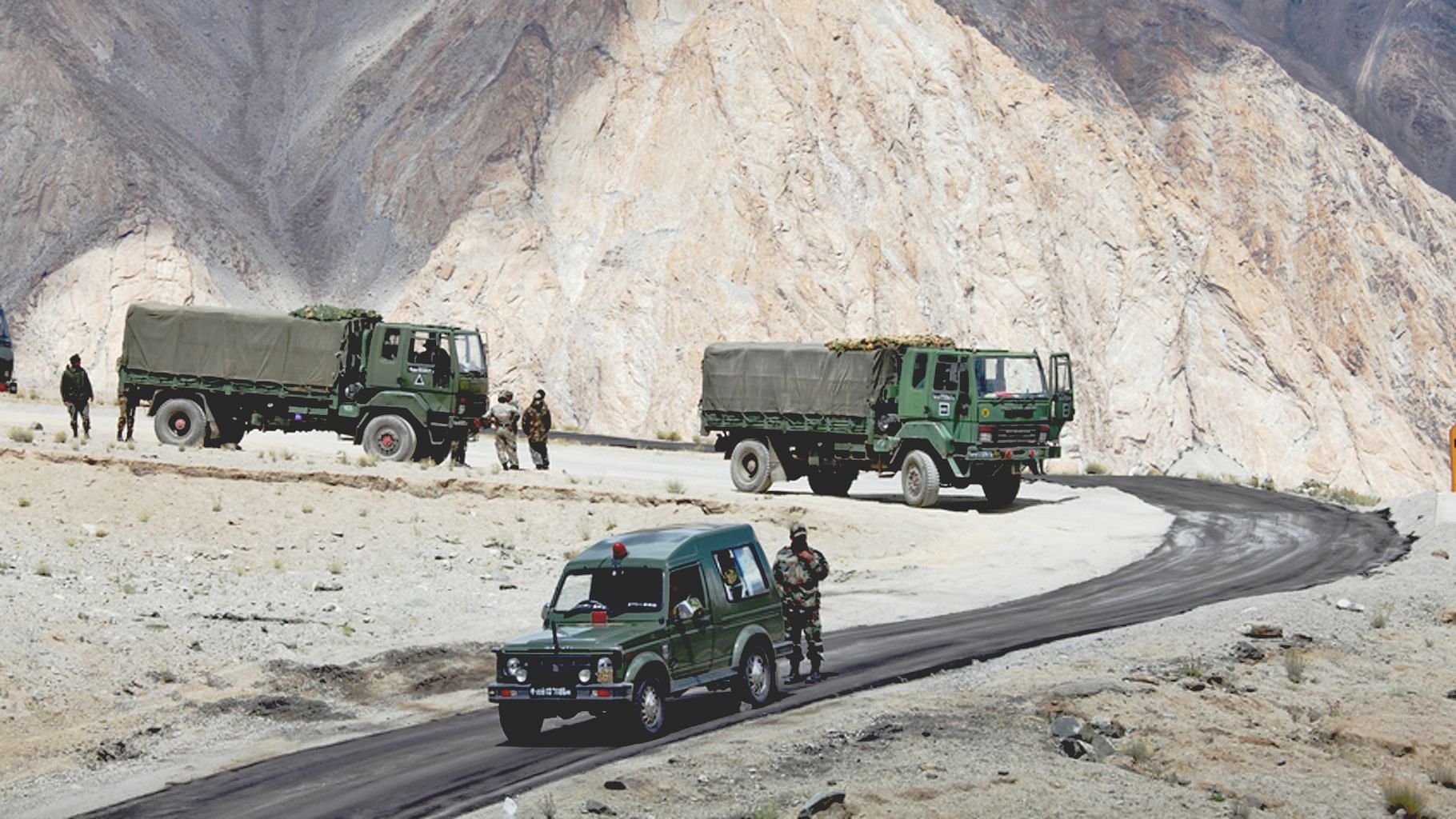
Both India and China accused each other for the failure to move forward during the 13th round of the commanders meeting on 10 October at Moldo in the western sector of the border. India stated that the “unilateral attempts of the Chinese side to alter the status quo and in violation of the bilateral agreements” have created a problem in the border areas and that the Chinese side did not propose any “forward-looking proposals” to resolve the problem.

On the other hand, the Chinese side accused India of making “unreasonable and unrealistic demands” and hoped India “will not misjudge the situation” in the border areas.

In other words, going away from what it agreed to, China is arguing that India must accept the current status quo on the borders after its troops marched into Indian-claimed regions since March last year. It is also sending a signal that it is unwilling to vacate such lands even at the cost of going to war or changing the format of bilateral relations.

The Public Relations of the Taliban: Then and Now

Prof. William Maley


On 20 February 2020, a remarkable article by Sirajuddin Haqqani appeared in The New York Times. Coming just days before the signing by the United States and the Taliban movement of a bilateral ‘Agreement for Bringing Peace to Afghanistan’, the essay was full of beautiful thoughts:

‘Everyone has lost somebody they loved. Everyone is tired of war. I am convinced that the killing and the maiming must stop … We are committed to working with other parties in a consultative manner of genuine respect to agree on a new, inclusive political system in which the voice of every Afghan is reflected and where no Afghan feels excluded’.

Two things, however, made the article particularly striking. One was its language, which seemed far more like that of a western think-tanker than a Talib – even though the author was identified as being deputy leader of the Taliban. But the other was the specific background of the author. Haqqani, at the time the article appeared, was also identified on the website of the US Federal Bureau of Investigation (FBI) as a ‘specially designated global terrorist’, with a US$10 million reward on offer for information leading directly to his arrest. That the Taliban movement succeeded in placing a propaganda article by a wanted terrorist on the opinion page of one of the most reputable news outlets in the US pointed to an approach to public relations that in its sophistication and guile far exceeded anything that the movement had been capable of achieving when it occupied Kabul from 1996-2001. The following remarks seek to trace some of the key contours of this shift, noting that the principal achievement of the Taliban’s public relations activity was to promote a spurious image of Taliban ‘moderation’ in some Western policy circles, with PR to mobilise elements of the Afghan population proving less demonstrably effective.

Paratroopers sent to Kabul this summer had a 3-D simulation of the airport

Todd South

WASHINGTON – The Army’s plans for simulation training are not confined to the lab — or even to training.

The service’s Cross Functional Team-Synthetic Training Environment applied their One World Terrain project to Afghanistan during the withdrawal this summer, according to team commander, Brig. Gen. William Glaser.

One World Terrain can build virtual maps of territory all over the globe. When soldiers know they’re going to a particular hotspot, the idea is that One World Terrain can simulate the area.

The One World Terrain team delivered to the 82nd Airborne Division a 3-D representation of Hamid Karzai International Airport, in Kabul, Afghanistan.

The capability allowed analysts and commanders to gain a more accurate and detailed perspective into the area in and around the airport, including areas of concern where crowds were massing, and vulnerabilities associated with airfield operations.

The Afghan Air Force: A Harsh Lesson in the Expensive Game of Airpower Reconstruction

Alexander Smith

Introduction

“Not to have an adequate air force in the present state of the world is to compromise the foundations of national freedom and independence.”[1] British Prime Minister, Winston Churchill, recognized the value of airpower as early as 1933 during the rise of Adolf Hitler, and his words hold to this day. The United States spent sixteen of the last twenty years and precious resources attempting to rebuild the Afghan Air Force (AAF) into a viable, self-sustaining military aviation component capable of supporting the democratically-elected Afghan government. The withdrawal of U.S. and Coalition forces in August of 2021, and the embarrassingly swift takeover by the Taliban, have left the AAF in shambles. Many pilots fled with their aircraft to neighboring countries, where their fate remains uncertain, while the rest are now in Taliban hands.

Much will be made in future case studies of the inability of the Afghan military to maintain a coherent force structure upon U.S. withdrawal. However, the effort to build up the air component was doomed from the beginning due to disjointed planning and poorly understood cultural differences.

Leaving Afghanistan Doesn’t Mean a Total Middle East Withdrawal

F. Gregory Gause III

Here's What You Need To Remember: As of now, there is no indication that the Biden administration wants to withdraw completely from Iraq, nor is there any indication that it intends to change substantially the basing structure in the smaller Gulf monarchies.

We need to be clear that the U.S. military presence in the Middle East is being reduced, but not to zero. When the word “withdrawal” is used to describe this process, as it frequently is, that is an exaggeration. The core of the American military presence established in the region after the Gulf War of 1990-1991 is the basing system established in the smaller monarchies of the Persian Gulf. Those bases and facilities are still operating. Some of the equipment stored in some of those bases is being transferred to Jordan, but that is hardly a sign of withdrawal from the region.

After the 9/11 attacks, the U.S. military presence in the region vastly increased with the invasions of Afghanistan and Iraq. If one takes as a baseline for comparison the late 2000s, when the American military presence in both of those places was at its height, it might look like the United States is leaving the area completely. However, that is the wrong baseline to use given America’s extraordinary and unwise commitment following the shock of 9/11. We can secure our interests in the Persian Gulf region with the kind of military presence we had in the 1990s.

After AUKUS: The Next Steps Toward a Confrontation with China

Lianchao Han Bradley A. Thayer

During the United States’ agony in its war in Vietnam, the Argentine-born Cuban revolutionary leader Ernesto “Che” Guevara said that he sought to create “two, three, many Vietnams” for the United States. Che’s spirit should animate the growing cooperation against China.

The Australian-United Kingdom-United States (AUKUS) submarine cooperative agreement announced in September was a good start. The agreement will allow the countries to share, develop, and base in Australia submarines powered by nuclear propulsion (SSNs). Building on this, there should be two or three more AUKUS-type agreements in the confrontation with China. Having allied states work together in the military, economic, diplomatic, and ideological realms will be the key to defeating the Chinese Communist Party (CCP).

The September AUKUS agreement is an important milestone on the path, and cooperation between the countries should broaden and deepen beyond AUKUS and the Quadrilateral Security Dialogue, also known as the Quad, to develop further in the military domain as well as encourage diplomacy and ideology. In the military arena, this cooperation must expand to include collective defense, so that an attack against one member state is considered as an attack against all member states. It must accelerate the process of rearming U.S. allies. The United States may not have twenty years for those nuclear submarines to be commissioned and U.S. allies need a rapid transfer of military technologies and equipment in the interim.

Taiwan Not Concerned About War With China, Despite Sky-high Tensions

JOHN FENG 

Tensions across the Taiwan Strait are said to be approaching boiling point, but recent polls show the Taiwanese population remains sanguine, not expecting a war with China and feeling confident that American assistance would come if needed.

In its first public opinion survey, released on September 29, Taiwan's opposition-run Intelligentsia Taipei found that 50.2 percent of respondents weren't concerned about the possibility of war, compared to 42.5 percent who said they were. A majority 58.8 percent thought conflict with China was unlikely to happen in the next 10 years, but 17.6 percent said it was probable. Only 2.2 percent of those polled were certain of war this decade.

The think tank, which collected 1,074 telephone surveys from Taipei City residents above the age of 20 between September 15 and 17, asked respondents what they would do if war were to break out across the Taiwan Strait. Some 40.2 percent of those polled said they would resist and cooperate with the government—the most popular answer—while 36 percent said they wouldn't resist a Chinese attack.

Saving Taiwan

BRAHMA CHELLANEY

NEW DELHI – China’s coercive expansionism may be taking its most dangerous turn yet. Recently, record-breaking numbers of Chinese military planes have entered Taiwan’s “air defense identification zone,” where the island’s authorities assert the right to demand that aircraft identify themselves. China’s muscle-flexing sends a clear message: it is serious about incorporating the island – and “reunifying” China – potentially by force.

Though the international community has been reluctant to challenge the Chinese claim that Taiwan has “always been” part of China, the claim is dubious, at best, and based on revisionist history. For most of its history, Taiwan was inhabited by non-Chinese peoples – Malayo-Polynesian tribes – and had no relationship with China. Geographically, Taiwan is closer to the Philippines than to the Chinese mainland.