29 November 2022

How Do We Beat China In The Gray Zone?

James Holmes

Habits of Highly Effective Gray-Zone Competitors: How do we compete to good effect in the gray zone? We do so by developing strategic and operational habits fit for this murky seascape. As human beings, we are our habits. Or as the psychologist William James put it a century ago, we are “bundles of habits.” And we can shape our repertoires, and thus our professional and personal selves, by undertaking conscious and diligent effort. That’s because our character is “plastic,“ especially early in life.

By plastic James means “a structure weak enough to yield to an influence, but strong enough not to yield all at once.”

He likens the process to water eroding ruts in soil, a medium that’s pliant yet firm: “water, in flowing, hollows out for itself a channel, which grows broader and deeper; and, after having ceased to flow, it resumes, when it flows again, the path traced by itself before.” Thought and action follow their accustomed course. Youth are not—yet—set in their ways. They can choose where to dig their own ruts so that water traces the same pathways in the future.
How To Make Sure NATO Doesn’t Get Sucked Into The Ukraine War

Andrew A. Michta

Ukraine: The Next Phase of this War Will Unfold in the West – The recent incident in which a Ukrainian anti-missile rocket aimed at an incoming Russian rocket volley fell into the rural eastern Polish village of Przewodów, killing two farmers, brought home with renewed urgency the fact that the war in Ukraine can at any time escalate into a wider conflict, especially if Putin decides to target NATO territory along the flank.

The Ukraine War Touches Poland

The response from the alliance was swift, with Polish President Andrzej Duda reaching out to President Joe Biden and other critical leaders for consultation as the crisis unfolded. The very nature of the incident, which for a brief period of time until it was determined not to be a Russian attack on Poland, raised the prospect that NATO’s Article V could be invoked.

Ron Paul: Separate Tech And State

Ron Paul

Senator Ed Markey (D-MA) recently got in touch with his inner mobster and threatened Elon Musk — the new owner of Twitter and the CEO of electric car company Tesla and space ventures company SpaceX. He told Musk, “Fix your companies” or “Congress will.” As part of this threat, Markey referred to an ongoing National Highway Traffic Safety Administration (NHTSA) investigation into Tesla’s autopilot driving system and Twitter’s 2011 consent decree with the Federal Trade Commission (FTC).

Markey has done more than make threats: He is one of a group of Democratic senators who wrote to the FTC urging an investigation into whether Musk’s actions as the new owner of Twitter violated the consent decree or consumer protection laws. Since FTC Chair Lina Khan wants to investigate as many businesses as possible, it is likely she will respond favorably to the senators’ letter.

President Biden has also endorsed an investigation into the role foreign investors played in financing Musk’s Twitter purchase. Biden may be concerned that Musk is not likely to ban tweets regarding Hunter Biden’s business deals.

The Case For Defense: How Russia’s War On Ukraine Has Proved France Right

Pawel Zerka

The war in Ukraine has confirmed the validity of some European countries’ approach to Russia and their own defence. Poland can now feel vindicated in its longstanding distrust of Russia, as well as its insistence on the crucial role of the United States for European security. Meanwhile, Germany’s pre-2022 hope to convert Russia into a reliable partner through economic interdependence has turned out to be a pipe dream – pushing Chancellor Olaf Scholz to announce a German U-turn that includes a major rise in military spending and diversification of energy imports. For other member states, however, things are not as clear cut.

France is an especially striking and important example. The war just outside the European Union’s borders demonstrates the need to beef up the continent’s military capabilities – something which President Emmanuel Macron has advocated since 2017. Indeed, nuclear-capable France – with the most powerful military in the EU, a thriving defence industry, a security partnership with the United Kingdom, and a seat at the UN Security Council – has the best credentials to lead such a project. On other major questions of European security, one may note that France imported little gas from Russia, having taken the decision to expand generation of nuclear energy following the ‘oil shock’ of the 1970s. So, the war has likely helped Paris feel doubly justified: in its calls for Europe’s strategic autonomy over the years and in the value it has long placed on energy security .

Pakistan’s troubled ties with the Taliban

Ahmed Waqas Waheed

Even the Taliban government has been unable to diminish Pakistan’s foreign policy concerns. Since the Taliban came to power, the number of terrorist attacks in Pakistan has increased by a record 56 per cent. Key terrorist outfits with an active presence in Afghanistan, including al-Qaeda, Tehreek-e-Taliban Pakistan and the Islamic State in Khorasan, continue to increase their presence.

Pleas for international support for Afghanistan have now been replaced by considered caution. Jubilation over the Taliban victory is now giving way to a rude awakening that the evolving security situation under Taliban rule means that Pakistan’s bouts of terrorism are not over. In an address to the United Nations General Assembly in September, Pakistan’s Prime Minister Shehbaz Sharif said that he shared the international community’s concerns about terrorist groups operating in Afghanistan.

Apple has relied on China’s efficient manufacturing for years. Then came zero-covid.

Matthew Zeitlin

China’s zero-covid policies threw a wrench in the entire supply chain just in time for the holidays.

Citing China’s covid-19 restrictions, Apple announced earlier this month that its facility in Zhengzhou, China, was “operating at significantly reduced capacity,” resulting in fewer and delayed shipments of the iPhone 14 Pro and iPhone 14 Pro Max.

Meanwhile, Apple had already pulled back on manufacturing less expensive models of the iPhone 14 due to “softer demand,” according to Bloomberg. And, in another blow to the American business community’s relationship with China, the U.S. Department of Commerce had recently announced new restrictions on China’s semiconductor industry that may end Apple’s plans to use Chinese memory chips.

Deterrence and Ambiguity: Motivations behind Israel’s Nuclear Strategy

Pieter Zhao

Ever since Bernard Brodie’s influential work The Absolute Weapon (1946), theories around nuclear strategy have been centered around the concept of nuclear deterrence. This concept was reiterated in an article in NATO Review by Jessica Cox, Director of NATO’s Nuclear Policy Directorate, in which she emphasized that nuclear deterrence is still relevant and should be the main philosophy behind all nuclear weapon policies (Cox, 2020). Thus, deterrence—the threat to carry out a devastating attack—still dominates over defense as the main way to protect the state in nuclear strategy (Tannenwald, 2020). Major nuclear powers, like China, the United States, and Russia, are therefore happy to emphasize this deterrent effect by showing off their latest nuclear technologies. Yet, this dominant theory surrounding nuclear strategy often seems to be centered around the great nuclear powers and the balance between them. But are these principles actually applicable to all nuclear powers, including the regional ones? Following this question, this paper considers the case of Israel with its policy of ‘nuclear ambiguity’ based on a declassified memorandum retrieved from the Wilson Center Digital Archive. The article starts by introducing the source and evaluating its usefulness and reliability. Afterward, attention is shifted toward the necessary historical context before analyzing the source to address Israel’s nuclear policy and the dominant International Relations (IR) theories that underpin it.

How Iranian Women Are Charting the Course for Freedom

Ahou Koutchesfahani

More than two months have passed since Mahsa Jina Amini’s death in police custody on 16 September. She was charged for not wearing her headscarf ‘properly’. Amini’s tragic death sparked nationwide protests that demand freedom and an end to the tyranny of the Islamic Republic of Iran. The Islamic Republic has responded with an iron fist, as it has many times before during civil unrest. Latest statistics reveal that the death toll has reached 344, of which 52 are children. 15,820 people have been arrested. The real numbers are likely higher. This time, however, the Islamic Republic’s brutal crackdown has failed in its attempt to quash the protests.

The current movement is an amalgamation of all the grievances protested against the Islamic Republic. These include decades of grave infringements on basic human and women’s rights, corruption, mismanagement and isolation from the world at the hands of the Islamic Republic. To be sure, uprisings have occurred before: in 1999 demanding justice and accountability for student murders, in 2009 for election rigging, and more recently and more frequently in 2017 and 2019 for the rising costs of fuel and food prices.

A Peaceful Resolution: Analysing Sustained Peace and Order in Mizoram

 
Priavi Joshi

With its extraordinary number of self-determination movements, Northeast India’s troubled post-colonial history does not fit easily into the standard narrative of democracy in India. On one count, there are over a hundred militias currently operating in the region — most have been formed with the agenda of liberating territories and can be classified as ethnic concerning their goals, compositions, and support bases (Baruah 19, 20). The state has adopted a series of military and political measures to quell such insurgencies. However, the sustained violence demonstrates that such measures have only managed to keep a lid on the politically volatile situation. Order and security, for both the State and its citizens, continue to remain elusive. Mizoram provides a stark exception to this. Since the signing of the Mizoram Peace Accord in 1986, organised violence has been largely absent from the state (Sharma 3). This is a definite achievement for a territory that was embroiled in conflict for nearly two decades. The central aim of this paper is to study this exception — given the context of ethnic turmoil and breakdown in other Northeastern states, why has Mizoram been able to sustain peace and order since the signing of the Mizo Accord?

The U.S. Should Follow the UK’s Lead on Countering Disinformation

William Coffin

When Elon Musk bought Twitter and set up the subscription service Twitter Blue, some enterprising Twitter users soon started to imitate politicians, businesses, and even Elon Musk. They used Twitter’s blue verification checkmark to spread disinformation, disrupting the stock market and public discourse. This episode alone demonstrates the continued power of disinformation, which has already impacted American elections and perceptions of the pandemic. Our adversaries, no doubt can find additional ways to influence Americans and do our country harm.

So, what should we do? The crisis in Ukraine showed us a way to counter and preempt these lies by utilizing the intelligence community’s ability to inform and provide intelligence to the public. The United Kingdom’s Ministry of Defence has been a leader in this technique, regularly tweeting out battlefield updates of the Ukrainian conflict. This information helps counter Russian false narratives and uses the Ministry of Defence’s credibility to offer a genuine alternative for the public.

Xi Jinping is taking advantage of Biden’s soft touch


The new export curbs U.S. President Joe Biden recently imposed on the Chinese chip industry to help slow Beijing’s technological and military advances have obscured his administration’s relatively conciliatory stance since taking office.

Even the export curbs have been undercut by exemptions granted to major Taiwanese and South Korean companies for their chipmaking facilities in China.

Chinese President Xi Jinping, meanwhile, wants Biden to live up to “Five Nos” which Beijing claims the U.S. president has committed to: No to changing China’s authoritarian system; no to containing China; no to seeking U.S. economic decoupling from China; no to a policy of “one China, one Taiwan;” and no to conflict or a new Cold War with China.

According to the official Chinese readout of the two leaders’ recent meeting in Bali, “President Xi said he takes very seriously President Biden’s ‘Five Nos’ statement.”

What next for higher education? Here's an alternate learning model for the future

Sanjay E. Sarma

Higher education finds itself trapped in a distressing quandary. On the one hand, employers have voiced increasing concerns about the disconnect between education and employability. On the other, the cost of higher education is growing rapidly. In the US, for example, tuition fees have outpaced inflation significantly, and total debt has surpassed $1.75 trillion.

It should come as no surprise that public opinion of higher education in the US has plummeted in recent years and academic institutions find themselves embroiled in an increasingly polarized debate. And for all that, the health of many academic institutions in the US is precarious – indicating that the structural issues are deep-rooted.

The problems are global too: many nations subsidize higher education significantly, and government expenditures are high as 2.5% of GDP, while the employability gap is often even more pronounced than in the US.

A Leak Details Apple’s Secret Dirt on a Trusted Security Startup

LORENZO FRANCESCHI-BICCHIERAI

CORELLIUM, A CYBERSECURITY startup that sells phone-virtualization software for catching security bugs, offered or sold its tools to controversial government spyware and hacking-tool makers in Israel, the United Arab Emirates, and Russia, and to a cybersecurity firm with potential ties to the Chinese government, according to a leaked document reviewed by WIRED that contains internal company communications.

The 507-page document, apparently prepared by Apple with the goal of using it in the company’s 2019 copyright lawsuit against Corellium, shows that the security firm, whose software lets users perform security analysis using virtual versions of Apple’s iOS and Google’s Android, has dealt with companies that have a track record of selling their tools to repressive regimes and countries with poor human rights records.

According to the leaked document, Corellium in 2019 offered a trial of its product to NSO Group, whose customers have for years been caught using its Pegasus spyware against dissidents, journalists, and human rights defenders. Similarly, Corellium’s sales staff offered to provide a quote to purchase its software to DarkMatter, a now-shuttered cybersecurity company with ties with the UAE government that hired several former US intelligence members who reportedly helped it spy on human rights activists and journalists.

There is no panacea, competition with China occurs in peace and war

BENJAMIN MAINARDI

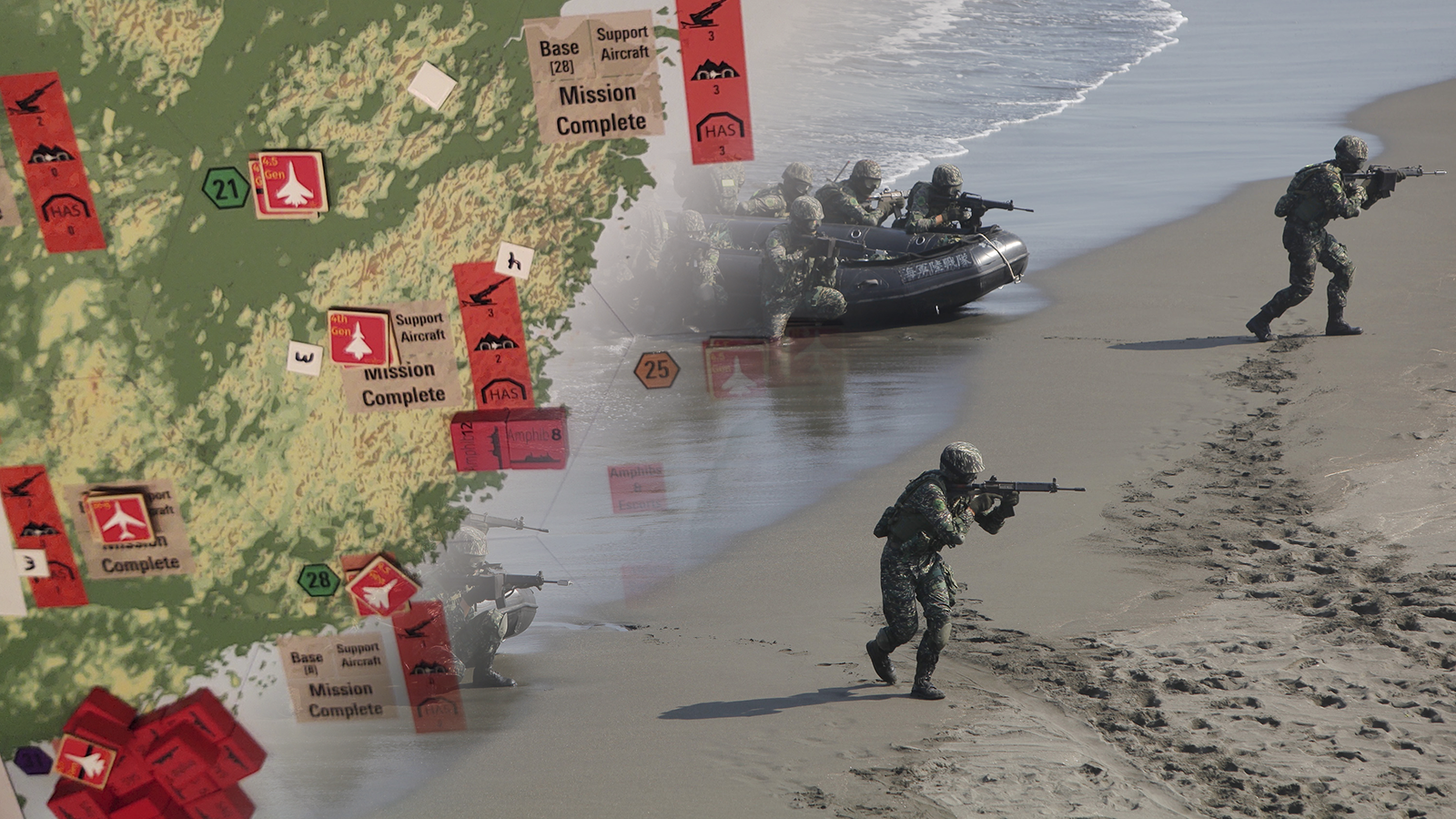
In August, Breaking Defense observed a wargame in which China invaded Taiwan and the US intervened — with bloody results. Such simulations abound, as Benjamin Mainardi of the Center for Maritime Strategy notes below, but in this op-ed he argues the US should be preparing for a much more complicated stand-off with Beijing.

No geopolitical prospect looms as large in Washington as war with the People’s Republic of China (PRC). Accordingly, the interservice race to take the lead in the Indo-Pacific continues to grow. Yet while wargames and articles abound on this or that aspect of what a conflict would entail, making eye-catching headlines and seemingly favoring one service over another, their provocative implications must be tempered with sober reflection upon the realities of the challenge at hand.

Perhaps most fundamentally, the outbreak of war as a conventional territorial conquest is taken for granted. But the framing of competition with China as hinging on a one-time engagement is at best a flawed approach and at worst a dangerous miscarriage of strategic foresight.

Ukraine held off Russia for nine months. Here’s what it needs to keep going.

REUBEN JOHNSON

WARSAW — “The Ukrainians are fighting for their and for our freedom,” said Polish Minister of National Defence Mariusz BÅ‚aszczak in the opening session of the annual Warsaw Security Forum (WSF) on Oct. 4. “We are committed to their [Ukraine’s] position being as strong as possible and to finish the conflict as soon as possible.”

BÅ‚aszczak’s position of steadfast and unqualified support for Ukraine was echoed throughout the event, the largest gathering of high-profile defense and foreign policy specialists to take place since the beginning of Russian leader Vladimir Putin’s so-called “Special Military Operation.” The consensus among European defense chiefs at the event was that Putin has no sincere interest in a brokered settlement; He will, they project, continue to try to prosecute hostilities until he understands that Russia has no prospects for prevailing in this conflict.

Which, attendees at Warsaw event seemed to agree, means the way forward is simple: continue to arm Ukraine until the local forces are able to throw the Russians out. In the weeks since the Forum ended, Russia has continued to suffer heavy losses, including the stunning public announcement by its defense leadership that it would be withdrawing from the Kherson region of Ukraine entirely.

Czech army leader calls for ‘biggest rearmament of the army in the country’s history’

TIM MARTIN

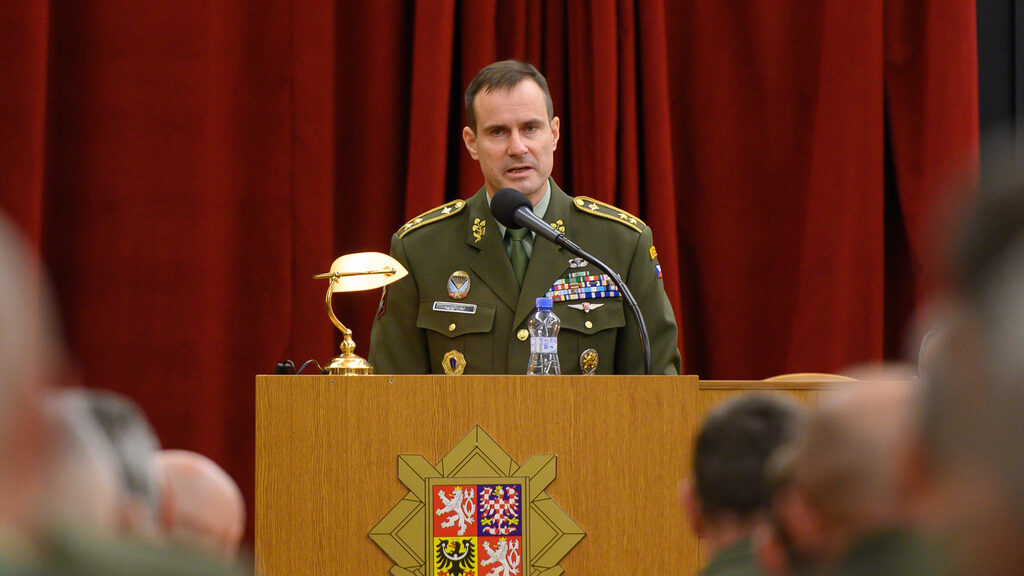
DUBLIN — In a remarkable speech in Prague today, the Czech Republic’s most senior army leader demanded, as an “absolute necessity.” that the service embarks on its “biggest rearmament” ever.

Major General Karel Řehka, chief of the General Staff of the Czech Republic Army, told delegates at the Command Assembly convened to announce the army’s strategic and procurement plans for 2023 that “serious challenges await us,” as he reflected on the “crisis” in Ukraine.

“The biggest rearmament of the army in the country’s history is no longer just a wish, but an absolute necessity,” Řehka said.

General Dynamics, Amazon and more form 5G accelerator coalition


Megan Crouse

A new coalition of organizations with expertise in defense technology will push for more 5G adoption. General Dynamics Information Technology, a business unit of General Dynamics, has partnered with other industry giants to create an edge and 5G accelerator coalition.

Amazon Web Services, Cisco, Dell Technologies, Splunk and T-Mobile will make up the coalition, with which they intend to promote 5G, advanced wireless and edge technologies for government agencies.

The coalition is focused around GDIT’s Advanced Wireless Emerge Lab, which will be used for developing new 5G and edge use cases and developing prototypes and solutions. The goal will be to make these solutions customizable.

Sharper: Chips Analysis from CNAS experts on the most critical challenges for U.S. foreign policy.

Anna Pederson

The reliance on semiconductor chips, from accomplishing everyday tasks to fighting wars, has placed them at the center of geopolitical decisions by leaders around the world. Recent export controls by the U.S. Department of Commerce Bureau of Industry and Security was the latest move to limit Chinese production. CNAS experts are sharpening the conversation around control of the chips market, and how they influence foreign policy decisions. Continue reading this edition of Sharper to explore their analysis, commentary, and recommendations.

The U.S. government has played a major role in the semiconductor industry since the invention of the first integrated circuit, via funding scientific research and via military procurement, which has driven the commercialization of new technology. However, though government—and specifically, the Defense Department—has had deep connections with the chip industry, it has played only a supportive role in building America’s semiconductor industry, with the key innovations and firms emerging from private-sector expertise. Chris Miller explores lessons the U.S. could learn as it considers industrial policy for the first time in decades.

DoD releases zero-trust strategy to thwart hackers who ‘often’ breach network ‘perimeter’

JASPREET GILL

WASHINGTON — After months of teasing its zero-trust strategy, the Defense Department today released its plan outlining what it’ll take to achieve “targeted zero trust” by fiscal 2027 to address current threats, including those posed by adversaries like China — starting with a zero-trust cloud pilot this fiscal year.

“With zero trust we are assuming that a network is already compromised and through recurring user authentication and authentic authorization, we will thwart and frustrate an adversary from moving through a network and also quickly identify them and mitigate damage and the vulnerability they may have exploited,” Randy Resnick, DoD zero trust portfolio management office chief, told reporters ahead of the strategy’s release.

The 29-page strategy paints a concerning picture for DoD’s information enterprise, which is “under wide-scale and persistent attack from known and unknown malicious actors,” from individuals to state-sponsored adversaries, specifically China, who “often” breach the Pentagon’s “defensive perimeter.”

DoD must ‘think very differently’ about armed conflict, cyber in light of Ukraine war: Official

JASPREET GILL

WASHINGTON — After watching Ukraine take on Russia in both the real world and in cyberspace, a top American cyber official said the Defense Department must “think very differently” about how it will fight in both realms in the future.

Mieke Eoyang, deputy assistant secretary of defense for cyber policy, told the Aspen Institute Cyber Summit today that the war “is a really important conflict” for DoD to understand, and one of the things she’s seeing “is the context of the armed conflict dwarfs the cyber impacts” of the war.

“When you think about the physical destruction relative to the cyber disruption of what happens here, things that Russians tried to disrupt via cyber… did not have the strategic impact that they wanted, and they sought to destroy those things physically,” she continued.

28 November 2022

Ukraine is attempting to retake a crucial spit of land that could disrupt Russia's missile barrages

SINÉAD BAKER

Ukraine has confirmed that is trying to regain control of the Kinburn Spit — a thin stretch of land across much of the mouth of the Dnipro river that it lost to Russia in June.

Ukrainian officials have said that it would release no details on the operation until it had concluded. Forbes reported on Thursday that Ukrainian commandos landed in small boats on the spit in an amphibious attack.

It did not say how big or well-armed a landing party was. It was also not clear how much of a defense Russia was making.

But if Ukraine were to retake the Kinburn Spit, it would get a significant new advantage.

Russia has been using the strip for its missile and artillery strikes nearby Ukrainian cities, according to a recent update from The Institute for the Study of War.

GROUND ZERO The Evacuation of the CIA’s Afghan Proxies Has Opened One of the War’s Blackest Boxes

Fahim Abed

ON A RAINY Saturday morning in May, Hayanuddin Afghan, a former member of a CIA-backed militia that was once his country’s most brutal and effective anti-Taliban force, welcomed me to his new home in a hilly neighborhood of Pittsburgh.

He invited me in through the kitchen, where his wife, who was pregnant with their fourth child, was baking traditional Afghan bread with flour from Aldi’s. The trip downtown to buy groceries was among the greatest challenges of Hayanuddin’s new life in Pittsburgh. It involved hauling heavy bags back home on foot and in multiple city buses, whose schedules were unknowable since he didn’t speak English and had not downloaded the relevant app.

“It is difficult to descend from a very strong position to a very weak position,” Hayanuddin told me. In Afghanistan, “we had value. It was our country, and we were making sense for that country. But now, even our generals and commanders, everyone is in the same position.”

In Afghanistan, it was impossible to talk at any length to members of the secretive commando forces known as the Zero Units. They hunted the Taliban in night raids and were widely accused of killing civilians, including children. But last September, Hayanuddin and his Zero Unit comrades were the beneficiaries of the most successful aspect of the Biden administration’s chaotic withdrawal from Afghanistan: the CIA’s rescue of its allied militias. Their arrival in the U.S. over the last year has cracked open one of the war’s blackest boxes.

Why China’s efforts to help world’s largest iPhone factory descended into violent protests, further disrupting Apple’s supply chain

Ben Jiang Shenzhen and Tracy Qu

Protests over Covid-19 measures and employee benefits that descended into violent clashes between hundreds of workers and security forces at the world’s largest iPhone factory in Zhengzhou, capital of central Henan province, are expected to further derail manufacturing and global shipment schedules of Apple’s flagship product.

That turn of events also showed how the efforts by Henan authorities to help resume full production at the Foxconn Technology Group-operated facility have backfired, which could accelerate the pace of shifting more electronics production outside mainland China to countries like Vietnam and India.

Videos that circulated online on Tuesday and Wednesday, which were verified by several former Foxconn employees in Zhengzhou, showed fights breaking out between workers and security forces at the factory. These videos also showed angry workers kicking down barriers and dismantling polymerase chain reaction testing kiosks.

The red line: Biden and Xi’s secret Ukraine talks revealed

Owen Matthews

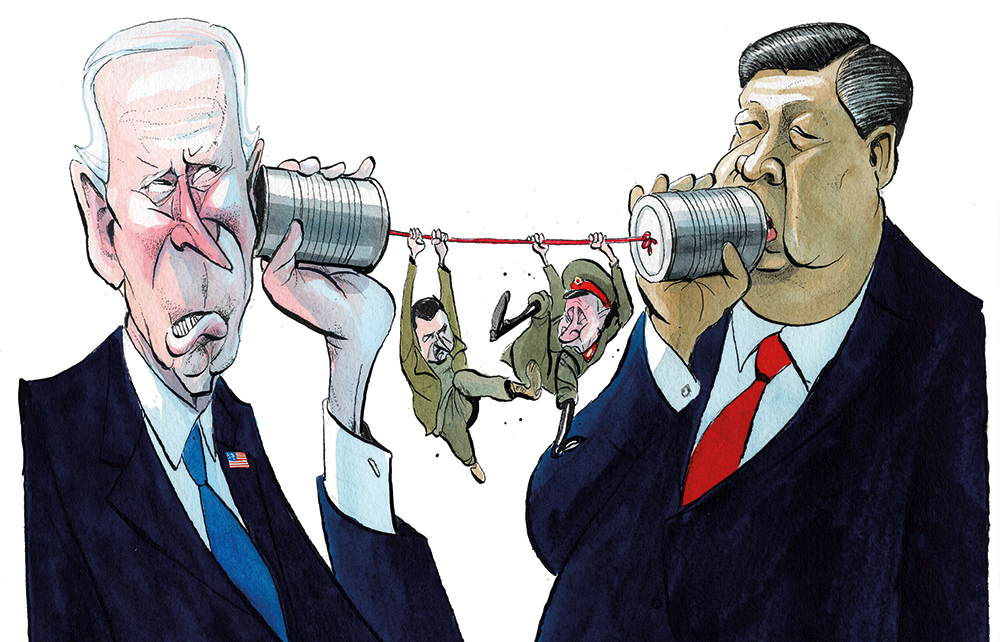
Since the beginning of Russia’s invasion of Ukraine, China has played a decisive – though publicly low-profile – role in strategic decision-making in both Washington and Moscow. As I report for the first time in my new book Overreach, it was a back-channel intervention approved by Beijing that caused the US to scupper a deal for the Poles to provide Soviet-made MiG-29 jets to the Ukrainian Air Force back in March. And since September a flurry of personal diplomacy by Chinese foreign minister Wang Yi with Nato and the US has led to a rare moment of public agreement over Russia, when Xi Jinping said that the world ‘needs to prevent a nuclear crisis on the Eurasian continent’ in a meeting with Joe Biden at the G20 summit in Bali.

Throughout the war, China’s true position on the Russia-Ukraine conflict has been hard to pin down – not least because Beijing has been telling both sides what they want to hear. In March, Wang implicitly appeared to be blaming the US for ‘stoking tensions’ and ‘sowing discord’ with Russia. Last month he told his Russian counterpart, Sergei Lavrov, that ‘China will also firmly support the Russian side, under the leadership of President Putin, to unite and lead the Russian people’, according to state broadcaster CCTV. Wang also promised that ‘China is willing to deepen contacts with the Russian side at all levels’. Yet in September, on the sidelines of the UN General Assembly, Wang had told Nato Secretary-General Jens Stoltenberg that China ‘stays open-minded to dialogues and exchanges with Nato and is willing to jointly promote the sound and steady development of bilateral relations … in the spirit of honesty and mutual respect’.

How HIMARS Rocket Launchers Helped Ukraine ‘Get Back in the Fight’ Against Russia

THOMAS MUTCH

KHERSON CITY, UKRAINE—It seemed like every inch of the town square was draped in blue and yellow flags. An old woman wept as she spoke to a family member on the phone for the first time in weeks. A group of young people sang the Ukrainian national anthem at the top of their lungs on a raised plinth. To cap it all off, the man of the moment, President Volodymr Zelensky, confidently strode through the middle of the city, which about six weeks ago, Russia had presumed to annex. He made a point to thank the United States for its delivery of HIMARS, which he said made a “huge difference” in the Ukrainian Army’s efforts to liberate its territory, while speaking at a recent press conference attended by Popular Mechanics.

Before the recent counter offensives in Kharkiv and Kherson began, nighttime explosions could be heard anywhere in Russian-occupied Ukraine. Ammunition depots, command posts, bridges, and railways are just a few of the dozens of targets that the Ukrainian army had been pulverizing for weeks with Western-supplied weapons ahead of its bid to liberate territory in southern and eastern Ukraine.

Cloud Empires How Digital Platforms Are Overtaking the State and How We Can Regain Control

Vili Lehdonvirta

The early Internet was a lawless place, populated by scam artists who made buying or selling anything online risky business. Then Amazon, eBay, Upwork, and Apple established secure digital platforms for selling physical goods, crowdsourcing labor, and downloading apps. These tech giants have gone on to rule the Internet like autocrats. How did this happen? How did users and workers become the hapless subjects of online economic empires? The Internet was supposed to liberate us from powerful institutions. In Cloud Empires, digital economy expert Vili Lehdonvirta explores the rise of the platform economy into statelike dominance over our lives and proposes a new way forward.

Digital platforms create new marketplaces and prosperity on the Internet, Lehdonvirta explains, but they are ruled by Silicon Valley despots with little or no accountability. Neither workers nor users can “vote with their feet” and find another platform because in most cases there isn't one. And yet using antitrust law and decentralization to rein in the big tech companies has proven difficult. Lehdonvirta tells the stories of pioneers who helped create—or resist—the new social order established by digital platform companies. The protagonists include the usual suspects—Amazon founder Jeff Bezos, Travis Kalanick of Uber, and Bitcoin's inventor Satoshi Nakamoto—as well as Kristy Milland, labor organizer of Amazon's Mechanical Turk, and GoFundMe, a crowdfunding platform that has emerged as an ersatz stand-in for the welfare state. Only if we understand digital platforms for what they are—institutions as powerful as the state—can we begin the work of democratizing them.

Industry Perspective: JADC2 Could Introduce Cyber Risks At Unprecedented Scale

Jason Atwell

Technology has always played a major role in military competition, and military competition has always leaned heavily on industry. The two spheres, the military and industry, overlap so much that “military-industrial complex” is common parlance.

However, the dynamic has historically been mostly one way in the sense that once technology is turned over by industry to the military, industry moves on to developing more technology while the military operates whatever is already on the shelf.

Post 9/11, most people are familiar with the growing role of contractors in supplementing the military, but joint all-domain command and control, better known as JADC2, has the potential to close this loop once and for all by creating a dynamic wherein industry will be both the progenitor and operator of the technology, with the military mostly serving in the role of providing guidance and legal authorization for use cases.

The Ukraine War in data: After 9 months of war, what the data tells us

Alex Leeds Matthews,Matt Stiles, Tom Nagorski

It’s nine months ago that Russian troops went into Ukraine. Nine months ago that Russian President Vladimir Putin told his people and the world that a “special military operation” was required to purge Ukraine of its “Nazi” and “genocidal” regime. These were the first salvos of lies and misinformation that would become a regular feature of a Putin’s war on Ukraine.

Western governments and military experts — and by all accounts Putin and his top advisers themselves — thought the “operation” would be brief. It’s now nine months old, with no negotiations underway and no other endgames in view.

In this week’s edition of the war in data, we use the available data to step back and take stock of where things stand in the war, from a range of perspectives.

First, the battlefield. For all the surprise gains made by the Ukrainian resistance, one-fifth of Ukraine’s territory remains in Russian hands. The good news for the Ukrainians is that recent momentum is with their side; Ukraine’s armed forces have now reclaimed about 55 percent of the territory Russia had occupied earlier in the war.

Putin's only alliance could crumble after special summit shows Russian despot isolated

ALESSANDRA SCOTTO DI SANTOLO

The Moscow-led group of ex-Soviet states met in Armenia's capital Yerevan on Wednesday. Vladimir Putin was expecting to project Russia's power at the meeting but it looked as if Moscow's recent lack of interest in his partners is starting to form some cracks in the alliance.

At the end of the summit, Armenia's Prime Minister Nikol Pashinyan clashed with the Russian leader over Putin's reluctance to come to his aid in a conflict against Azerbaijan.

Tensions rose in September between Armenia and Azerbaijan and two sides say more than 200 soldiers died in the conflict.

Mr Pashinyan told his counterparts at the summit: “It is depressing that Armenia’s membership in the CSTO did not deter Azerbaijan from aggressive actions.

“Right up to today we have not managed to reach a decision on a CSTO response to Azerbaijan’s aggression against Armenia. These facts do grave harm to the image of the CSTO both inside our country and outside its borders, and I consider this the main failure of Armenia’s chairmanship of the CSTO.”

SAB: change of power in Russia due to Putin’s failing health or coup is unlikely


Since February 2022 different mass media outlets have been reporting more and more claims and assumptions regarding possible political changes within Russia’s power system, predicting, for example, Russian President Vladimir Putin losing power or Russia collapsing economically or regionally, notes Latvian Constitution Protection Bureau (SAB).

On Thursday, 24 November, SAB published the third article from its series of analytical articles about different important societal issues. This time SAB offers comments about the stability of Vladimir Putin’s regime and analyses the possibility of different political changes.

According to SAB, Russia’s political system has been relatively stable for a long time, but the war in Ukraine, its length, as well as Ukraine’s and the west’s resistance have only increased tension in society and among the political elite. The regime employs various tactics to preserve the status quo, but this also causes long-term risks.

The war in Ukraine is exposing the limits of cyber warfare — and Russian hackers

Thomas Macaulay

It’s safe to say that Putin’s invasion of Ukraine hasn’t gone to plan. Russian forces are suffering mounting setbacks, after underestimating the resistance of his adversaries — and that’s just in cyberspace.

The Kremlin’s hacker army – like its conventional military – hasn’t lived up to its fearsome reputation. At least, not yet.

Analysts have offered an array of explanations for Russia’s cyber limitations. They range from upgrades to Ukraine’s defenses to changes in the Kremlin’s tactics.

The early signs were ominous. Ever since armed conflict in the Donbas erupted in 2014, Russia-linked hackers have bombarded Ukrainian IT systems. Their exploits have set several alarming milestones, from the first known power outage caused by a digital weapon to the costliest cyberattack in history.

Hamas’ cyber terror is a test case for other non-state players, report says

Ruth Marks Eglash

JERUSALEM, Israel — Iranian-backed Palestinian terror group Hamas, the de facto rulers of the impoverished Gaza Strip, is stepping up its cyber activities against Israel. And it's time for Western nations, including the U.S., to take such threats more seriously, a report published recently by Washington-based think tank the Atlantic Council has found.

According to the report authored by non-resident fellow Simon Handler, while the U.S. overwhelmingly focuses its cybersecurity concerns on the "big four" nation-state adversaries — China, Russia, Iran and North Korea — non-state actors are becoming increasingly organized and efficient in cyber warfare.

Hamas, a designated terror organization according to the U.S., is a clear test case for what such groups are capable of and, writes Handler, "is an emerging and capable cyber actor."

Handler highlights how Hamas, which has fought numerous wars with Israel and carried out countless terror attacks against its civilians, has not necessarily shifted its overall goals – to terminate what it views as the illegitimate state of Israel and establish an Islamic, Palestinian state in its place – but rather has now harnessed advanced high-tech terror options in its fight.

Cyber Operations During Russia’s Invasion of Ukraine in 2022

Nurlan Aliyev

Russia has been known as a capable actor in conducting a wide range of cyber espionage and sabotage operations since the 1990s. Russia also conducted several cyber-attacks on Ukraine before the invasion in 2022. One of the most sophisticated operations was blacking out Kyiv in 2016. At midnight, a week before Christmas, hackers struck an electric transmission station north of the city of Kyiv, blacking out a portion of the Ukrainian capital equivalent to a fifth of its total power capacity. According to experts, it was the first real-world malware that attacked physical infrastructure since Stuxnet.

However, although Russia has conducted several cyber-attacks on Ukraine since the start of the invasion in 2022, it has not flagged up any strikingly successful Russian CW operations up to now. In this respect, a question is whether Russia has not used its sophisticated cyber capabilities in the war yet, or the cyber defence quality of Ukraine and its allies has helped blunt them. This commentary aims to explore these problems.

Why Imran Khan Can’t Outplay Pakistan’s Military

Abbas Nasir

After surviving an assassination attempt on Nov. 3 while leading a protest march, Mr. Khan accused Shehbaz Sharif, who succeeded him as prime minister of Pakistan, Rana Sanaullah, the interior minister, and a third man of conspiring to assassinate him. In a significant breach in civil-military relations, Mr. Khan claimed that the third man was a major general in the Inter-Services Intelligence, the dreaded spy agency of Pakistan’s military, which supported his own rise to power.

The saga of Mr. Khan’s embrace of the military and his fallout and confrontation with the generals is a reminder of the limits of power exercised by civilian politicians in Pakistan, where the military has ruled directly for 33 years and always been the power behind the throne.

Mr. Khan took office as prime minister in August 2018 and was deposed by a no-confidence vote in Parliament in April of this year. Rakishly handsome, utterly vain and stubborn at 70, Mr. Khan hasn’t reconciled with his loss of power.

Inside the US: Muslim Brotherhood Member Calls for Jihadist Terrorism Worldwide

Cynthia Farahat

A Muslim Brotherhood propagandist based in New York City has called for jihad both in the United States and internationally.

Bahgat Saber, a member of the Muslim Brotherhood, operates from his New York apartment and often streams live videos from Times Square. During his multi-hour videos, Saber routinely incites terrorism, assassinations, kidnapping and torture in an extremely graphic manner. The calls for violence in his videos are viewed by millions of people across the world.

In October, when Saber called for bloodshed, he used a code-phrase employed by al-Qaeda to activate their terrorist cells for open warfare. In a video titled, "Ride, O horses of Allah." Saber started his video with, "We are working in the upcoming phase on Ride, O horses of Allah" — which is al-Qaeda's call for activating terrorism.