29 November 2023

Momentum in the India-Australia Relationship on Display With 2+2 Strategic Dialogue

Rajeswari Pillai Rajagopalan

India has had a busy couple of weeks. Following the India-U.S. 2+2 strategic dialogue in early November, India had another 2+2 with Australia last week. New Delhi hosted the second edition of the India-Australia Foreign and Defense Ministerial Dialogue on November 20. Australian Deputy Prime Minister and Defense Minister Richard Marles and Foreign Minister Penny Wong were in New Delhi for extensive discussions with their Indian counterparts, Defense Minister Rajnath Singh and External Affairs Minister S. Jaishankar. The ministers also held separate bilateral talks with their counterparts.

The Australia-India relationship has grown tremendously in the last three years, especially considering that the two countries elevated their relationship to a comprehensive strategic partnership only in June 2020. The inaugural round of 2+2 ministerial dialogues between the two countries took place in September 2021. That India engages in 2+2 ministerial level strategic dialogues only with a handful of countries (the U.S. and Japan being two of them; not coincidentally they are also Quad partners) reflects the significance of Australia in India’s strategic calculations.

In the inaugural dialogue in 2021, India and Australia signed a military logistics agreement that would provide the two militaries reciprocal access to each other’s military bases for repair and replenishment, in addition to such agreements strengthening familiarity between forces that facilitates strengthened defense cooperation.

Prior to his trip, Marles noted the significance of the India relationship by saying that “Our cooperation with India is at the heart of Australia’s approach to ensuring the Indo-Pacific remains open, inclusive and resilient.” He also pointed to other advances in the relationship including an Indian submarine visit to Perth and Australia’s hosting of the Malabar exercise.


India’s Quest for Advanced Technology in the Era of Export Controls

KONARK BHANDARI

The United States has recently embarked on a tightening of its export control laws when it comes to cutting-edge technological items such as advanced semiconductors and AI chips. These export control measures have been labelled as necessary to “protect U.S. security and advantage.” These measures have also largely been aimed at Chinese entities, which are suspected of using these technologies—that are largely dual-use—for military applications as well. In targeting these Chinese entities, other like-minded nations that also sell these advanced technological items have been co-opted by the United States. These countries, namely Japan and the Netherlands, however, have not named any specific country as the target of their export control measures. Instead, they have given wide discretion to their export control authorities to block such high-tech exports to any country. This means that tech imports from these countries will likely require an export license for all destinations, including India. How can India navigate these across-the-board export control measures at a time when it is also entering into technology-centric partnerships with other nations to secure enhanced access to advanced technology?

The rationale behind the recent U.S. export control measures, which were announced in October 2022, was to target the military-civil fusion program (MCF) of China. As per the MCF, China allegedly uses civilian technologies for military applications. The U.S. Department of Commerce, while announcing its October 2022 measures, even announced that the subject matter of the export control measures was used by China to “produce advanced military systems including weapons of mass destruction; improve the speed and accuracy of its military decision making, planning, and logistics, as well as of its autonomous military systems; and commit human rights abuses.”

Another knock-on effect of these export control measures has been the seemingly retaliatory measures announced by China. While the recent U.S. export control measures have targeted advanced semiconductors, certain areas like batteries and photovoltaic cells—essentially green technology—are dominated by China. It is in these areas that China has implemented strict export control measures. This too may impact the ability of India to secure access to green technologies in the near future. For instance, in July 2023, China introduced a new requirement for exporters to seek special licenses when exporting minerals such as germanium and gallium – critical minerals needed to make microchips. Most recently, a few days after the United States announced a new series of follow-up export control measures in October 2023, China announced that when exporting synthetic graphite (used heavily in the battery industry), exporters must submit exhaustive documentation that details the end users as well.

AI for All, Beyond the Global North: India’s Opportunity?

UPASANA SHARMA, SHREYA RAMANN

The world today is witnessing a new technological revolution with the advent of accessible artificial intelligence (AI) tools. While AI has been developing consistently over the past few years, it has now exploded into the everyday life of the global citizen. Stemming from an increased focus on building AI for the public and the development of easily accessible AI tools and their widespread use, this new technology is being increasingly viewed as a critical means to achieve societal outcomes. Various AI technologies are deployed across sectors like healthcare, agriculture, and education to predict outcomes, monitor progress, optimize processes, and streamline service delivery, significantly benefiting the global economy. Recent estimates suggest that generative AI alone could create value between $2.6 trillion and $4.4 trillion annually.

The expansion of AI comes with a push for its governance, which primarily arises from the need to ensure continuous innovation while mitigating existing and potential risks stemming from unchecked AI usage. These include risks from monopolization and dominance, security risks arising from the spread of disinformation and the misuse of generative AI, and even risks to individuals and communities through AI datasets and systems that are unsafe, biased, or discriminatory.

In this context, a stable regulatory environment for AI development and governance becomes a priority. A range of different approaches to AI governance are in consideration across jurisdictions. Three broad approaches to AI development and governance seem to be emerging, one led by the United States, another by the EU, and a third by China. While nations like the United States, the United Kingdom, and Japan are looking to govern AI through industry self-regulation and guiding principles, the EU, along with countries like Canada and Brazil, appears to be leaning toward issuing formal legislation for the strict regulation of AI. China is also adopting a prescriptive approach but through the deployment of precise regulations to govern specific AI technologies. Each approach is tailored to meet the interests of the governing jurisdiction, resulting in a fragmented global approach to AI regulation.

Completing the U.S.-India Civil Nuclear Agreement: Fulfilling the Promises of a Summer Long Past

ASHLEY J. TELLIS

Within a few years, it will be two decades since the United States and India signed their epochal agreement on civil nuclear cooperation. When finalized on July 18, 2005, this controversial accord evoked deep fears that the international nonproliferation regime would be irrevocably gutted because Washington proposed to resuscitate nuclear trade with New Delhi despite the latter’s refusal to forego possession of its nuclear weapons—a privilege not extended to any other non-signatory to the Nuclear Non-Proliferation Treaty (NPT). With the passage of time, however, it has become clear that the global nonproliferation regime has survived the U.S.-India agreement, while the bilateral relationship has been dramatically transformed across myriad dimensions, especially in regard to diplomatic engagement, defense cooperation, and high-technology collaboration.

Despite these remarkable gains, the full potential and promise of the 2005 nuclear agreement—and the larger U.S.-India partnership—has yet to be realized on at least two counts. Where India is concerned, New Delhi is long overdue in removing the obstacles that prevent its purchase of nuclear reactors from the United States, consistent with the written commitments it made during the implementation of the nuclear deal. Where the United States is concerned, a different challenge persists that is no less urgent: matching policy with vision. Given President Joe Biden’s commitment to strengthening India’s power in the ongoing competition with China, Washington’s desire to treat New Delhi’s nuclear weapons program as unique—the fundamental premise that underlay the 2005 accord—must now be consciously fructified in ways that affect his administration’s decisionmaking on how to build a more ambitious partnership with India.

IN INDIA, A LIABILITY LAW CONSTRAINS CIVIL NUCLEAR COOPERATION

While the U.S.-India civil nuclear agreement was broadly driven by the intention of revamping the previously troubled U.S. relationship with India, it concretely expressed U.S. president George W. Bush’s strong desire to change the way that the United States would relate to India on nuclear issues. Both Bush and his Indian counterpart, prime minister Manmohan Singh, envisaged the agreement as creating opportunities for the U.S. nuclear industry to return to India in a significant way and thereby contribute to accelerating India’s economic growth by expanding its baseload energy supply from low-carbon sources.

New beginning or dismal end for the Belt and Road?

JEAN-MARC F BLANCHARD

Not so long ago, countries were ecstatic about the potential of China’s Belt and Road Initiative (BRI), a mega-infrastructure scheme launched in 2013 that would connect the world through ports, power grids, railways, roads and telecommunications networks.

Western pundits worried that BRI projects were pulling countries into China’s orbit, empowering Chinese companies and birthing a Sinocentric global order.

For many, it was obvious the road was speeding along as “evidenced” by China’s investments, loans or grants ranging from hundreds of billions to, supposedly, the low trillions of dollars.

Commentators often mixed distinct kinds of monies, classifying loans to countries like Venezuela as BRI loans, equating money invested in or lent to BRI participant countries as BRI money, or labeling projects with no connectivity features as BRI projects. China facilitated these misjudgments by not producing an authoritative BRI project list.

The BRI, initially consisting of the land-based Silk Road Economic Belt and the Maritime Silk Road Initiative, only raised more concern as it repeatedly broke geographic boundaries, reaching into the Pacific Islands, the Arctic and even outer space.

But one current refrain is that the BRI is falling short of its goals. In fact, before the Third BRI Forum held in Beijing in October 2023, some analysts proclaimed the BRI’s downfall. One only need look at Kenya, Pakistan, Sri Lanka, Zambia and perhaps Malaysia to see the dismal state of the BRI.

Bhutan Takes Another Step Forward on Democratic Path

Mimrah Abdul Ghafoor

The eastern Himalayan kingdom of Bhutan is gearing up for elections to its National Assembly, the 47-seat lower house of the country’s bicameral legislature.

Elections will be in two phases: a primary round on November 30, with all registered parties competing across Bhutan’s 20 Dzongkhags (administrative and judicial districts), and a runoff round on January 9, 2024, where the two parties with the highest votes in the primaries will field candidates across all 47 Demkhongs (electoral constituencies).

Bhutan’s King Jigme Khesar Namgyel Wangchuck will then invite the winner in the final face-off to form the new government.

Five parties are contesting these elections: Druk Nyamrup Tshogpa (DNT), People’s Democratic Party (PDP), Bhutan Tendrel Party (BTP), Druk Phuensum Tshogpa (DPT), and Druk Thundrel Tshogpa (DTTP). With the term of the incumbent DNT, led by Prime Minister Lotay Tshering, ending on November 1, the king appointed an interim government headed by Chief Justice Chogyal Dago Rigdzin to oversee the election period.

Economic issues will be uppermost on voters’ minds as they head off to vote on November 30. Bhutan is still struggling with the economic aftershocks of the COVID-19 pandemic, notably through lost tourism revenue. Despite its cautious approach to external cultural influences (for instance, television was introduced only in 1999), and its policy of limiting tourist numbers by charging them daily fees for visiting the country (under its “high value, low impact” approach, meant to maximize revenue while minimizing cultural and environmental impact), tourism has become increasingly vital to Bhutan’s economy.

Unforgettable Episodes From a 21-Day Covert Assignment in Myanmar

Rajeev Bhattacharyya

Reporting from Myanmar has always been challenging, even a dangerous endeavor. For decades, Myanmar under military rule was hard for journalists to access. When the country was under quasi-civilian governments (2011-2021), democratic reforms were initiated, including the restoration of the freedom of the press. This facilitated reporting from regions that had been reeling under instability and unrest for decades.

Then on February 1, 2021, Myanmar’s military staged a coup. Leaders of the elected National League for Democracy government were arrested and pro-democracy activists were detained. A massive crackdown on the media followed. It became hazardous again for local and foreign journalists to report from the country.

It was in these circumstances that I decided to visit Myanmar. My objective was to report on the resistance to junta rule. Since the chances of reaching a rebel camp from Yangon through regular routes and legitimate channels, and returning home unscathed from the assignment, were near impossible, I decided to sneak into the country through the India-Myanmar border.

Between April and May of last year, I met some leaders and functionaries of the resistance groups at various points along the India-Myanmar border in the Indian states of Mizoram and Manipur. The success of my visit, I realized hinged on establishing contacts ahead and in availing the services of a translator. During the planning phase, I zeroed in on five places in Chin State and Sagaing Region to visit: Tamu, Kalay, Haimual, Camp Victoria, and Thantlang. Kalay was the farthest from the border with India while Tamu was the nearest.

Can troops with 3D printers save the Pentagon’s mass-drone vision?

PATRICK TUCKER

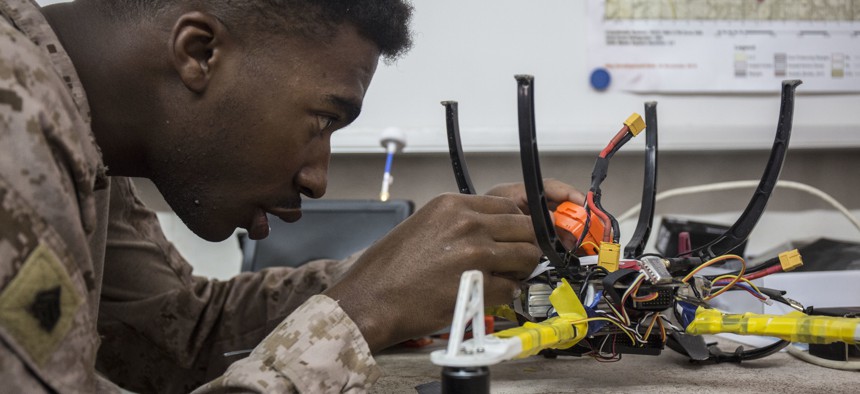
There's a major obstacle to the Pentagon’s new effort to manufacture thousands of small drones: China dominates the market for consumer-drone parts, which is awkward since the point is to deter China. One potential solution could be rapid manufacturing in the field, according to one of the military’s top young tech minds.

The two-month-old Replicator effort seeks to apply a Ukrainian success—modifying lots and lots of consumer drones for military purposes—to the U.S. campaign to keep the peace in the Pacific. But the Pentagon can’t simply clone the Ukrainian program for the INDOPACOM mission set.

“The fact of the matter is: we don't have an industrial base to do this,” Michael MacKay, national security advisor to Sen. Jodi Ernst, R-Iowa, said last week at a Pallas Advisors event. “If China shut off the hose tomorrow, we don't have the carbon fibers; we don't have the micro-electronics; we don't have the chips; we don't have the motors to be able at this point to provide thousands [of small drones] at scale.

“We ran into this in the beginning of Ukraine,” MacKay said, referring to Russia’s expanded invasion in 2022. “We've had a lot of laws and we have a lot of presidential executive orders that say you can't buy Chinese, down to some of the component level...America needs to get back into manufacturing on some of these components.”

The Pentagon hasn’t said much about where the program is going or how it will achieve its objectives. But major defense contractors are cautioning that Replicator drones could cost far more than Pentagon officials imagine. They pointed to microelectronics and other supply-chain issues—but also argued that the Pentagon might well want the higher performance of more expensive parts.

In a League of Its Own: The Cyberspace Administration of China

Mercy A. Kuo

The Diplomat author Mercy Kuo regularly engages subject-matter experts, policy practitioners, and strategic thinkers across the globe for their diverse insights into U.S. Asia policy. This conversation with Dr. Rogier Creemers – assistant professor in modern Chinese studies at Leiden University and co-editor of “The Emergence of China’s Smart State” (Rowman and Littlefield 2023) – is the 393rd in “The Trans-Pacific View Insight Series.”

Why is the Cyberspace Administration of China (CAC) considered the world’s most powerful digital institution?

The CAC has several different roles, both political and regulatory. First, it houses the secretariat of the Central Cybersecurity and Informatization Commission. This top-level decision-making body, chaired by Xi Jinping personally, groups the heads of all important party and state bodies, as well as the People’s Bank of China and the military, that are involved in digital policymaking. Running the secretariat means the CAC has a direct line to the top leadership, and plays a very important role in both supplying the Commission with information, and in implementing their policy decisions.

Second, it has regulatory power over online content in China, which it has taken to include AI content recommendation and generation in recent years. As such, it is the prime rule-setter for the world’s largest online population and second-largest digital economy.

Third, it is responsible for the protection of personal information under the Personal Information Protection Law and has some tasks concerning data security under the Data Security Law as well. Next to content, this is the most impactful area of digital regulation now. This is not to say the CAC has done everything right. It is currently working on revisions to data export rules that have proved to be excessively onerous to both Chinese and international businesses, for instance, and significant lack of implementation and enforcement clarity remains around the Data Security Law.

US CHIPS Act Threatens To Hollow Out Asian Semiconductor Industry

Mary E Lovely

Even as they share similar concerns about economic security and resilience, the United States’ trading partners in Asia wonder what Washington’s new embrace of industrial policy means for their own development.

With deep government pockets, a large domestic market and potent research and development capabilities, the United States has the economic power to capture a significant share of global investment in targeted industrial sectors. The US turn towards protectionism and its desire to shift trade to ‘like-minded’ friends raise fears that the US market will be closed to Asian exports unless US demands for common standards and supply chain configurations are met.

The CHIPS and Science Act, passed by the US Congress in 2022, illustrates Washington’s ‘reshoring’ intentions and their implications for trading partners. The act is designed to ‘bring back’ domestic semiconductor manufacturing that is presently concentrated in Asia by offering a menu of subsidies, tax credits and domestic content rules that promote onshore research, development and manufacturing. Bipartisan support for the funding comes from the centrality of semiconductors to civilian and military technology and concerns over the geopolitical vulnerability caused by fabrication that has moved to mainland China and Taiwan.

The CHIPS Act subsidises onshore investment in semiconductor fabrication, promising US$39 billion of manufacturing incentives on top of 25 per cent investment tax credits. These incentives seem to already be attracting the major semiconductor fabricators and their suppliers to invest in the United States.

China’s Path to Power Runs Through the World’s Cities

Simon Curtis and Ian Klaus

In October 2023, world leaders gathered in Beijing to mark the tenth anniversary of China’s Belt and Road Initiative, the centerpiece of recent Chinese grand strategy. The BRI has received enormous attention for its eye-popping price tag and its huge and protean ambitions. Having already invested around $1 trillion, China intends to link more than 150 countries by new roads, railways, seaports, energy systems, and technological and cyberspace innovations, encouraging commerce and connectivity and drawing two-thirds of the world’s population yet closer to Chinese markets and political influence.

For all the scrutiny the BRI has received, however, a key aspect is often overlooked: that it is, among other things, a sweeping urbanization project, one that may define the future of many cities around the world—especially if other great powers do not contest it. The development of cities is often, wrongly, neglected in the analysis of international relations. But there is an intrinsic connection between infrastructure, urban form, and the shape of the international orders that great powers build. Throughout history, great powers have used cities not only as nodes of commercial and religious connection but as sites for the real and symbolic projection of power. The U.S. unipolar moment that took shape in the aftermath of the Cold War was undergirded by the creation of a distinctive urban form: the global city. Cities such as London, New York, Seoul, Sydney, and Tokyo were, over decades, reshaped by the expansion of the liberal free market. In turn, their rise strengthened the United States’ world-spanning influence.

China, however, is now beginning to generate its own distinctive infrastructural and urban forms: during its era of economic opening, experimentation, and explosive growth that began in 1979, it transformed locales inside its borders, extending them up and out into space by building skyscrapers and urbanizing rural areas while also connecting them to regional and far-flung economies. Urban spaces have for four decades been central to China’s economic and strategic vision, predating the BRI. But the attention and resources Beijing is now turning to them through the BRI, at home and abroad, portends a transformation in the lives of billions of city dwellers.

What Was in the Now-Scrapped Inter-Korea Military Agreement?

Soyoung Kim

North Korea launched a military reconnaissance satellite into orbit late on November 21, violating United Nations Security Council (UNSC) resolutions banning its use of ballistic missile technology. In response, the South Korean government partially suspended the Comprehensive Military Agreement (CMA), with Prime Minister Han Duck-soo stating in the National Security Council meeting that North Korea’s launch was a direct provocation against the security of the South, and that continued adherence to the CMA may put the lives and safety of the Korean public in danger.

The CMA was signed on September 19, 2018, in Pyongyang, as the product of a series of historic meetings between then-South Korean President Moon Jae-in and North Korean leader Kim Jong Un. Under the agreement, Seoul and Pyongyang agreed to “completely cease all hostile acts against each other” by implementing measures that included ending military drills near the border, limiting live-fire exercises, imposing no-fly zones, and maintaining hotlines. It was intended to alleviate military tensions on the peninsula and build mutual confidence. To clarify, North Korea’s latest satellite launch violates UNSC resolutions but not the CMA.

Specifically, the South Korean government suspended article 1, clause 3 of the agreement, which established a no-fly zone for all aircraft types over the Military Demarcation Line (MDL) from November 1, 2018. This clause prohibited fixed-wing aircraft from flying within 40 kilometers of the MDL in the eastern area and 20 kilometers from the western area. Rotary aircraft were prohibited from flying within 10 kilometers of the MDL; unmanned aerial vehicles (UAV) were prohibited within 10 kilometers of the eastern area and 25 kilometers of the western region; balloons were prohibited within 25 kilometers of the MDL.

Why Do New Recruits Love the U.S. Marine Corps?

Travis Pike

Military recruiting is facing a crisis with most branches failing to make their recruiting goals in 2022 or having to tap into their pools of delayed-entry applicants to do so.

Yet, somehow for the 2023 fiscal year that ends in October, whereas most services still struggle, the Marine Corps seems to have attracted enough recruits.

RECRUITMENT WOES

Many reasons are to blame for declining recruit numbers in the military. First, alternative career paths have become more enticing for young men and women due to significant pay increases across the economy and the ability to work remotely. To attract recruits, some services have returned to offering bonuses to potential recruits – although the bonuses are nothing like they were during the GWOT.

Second, perceptions of the military are becoming worse, with young people increasingly believing that serving in the military will cause them physical or emotional damage.

Third, fewer applicants can meet the military’s standards nowadays. Physical standards have become tougher to meet with reportedly more applicants being disqualified due to obesity and other factors.

Additionally, recruits must have a clean mental health slate, which sounds great, but we are way more aware of mental illnesses these days, so we do have more diagnoses but the military still acts like it’s the 1970s in terms of dealing with mental illness. Make no mistake, certain mental health conditions should disqualify recruits, but many applicants are disqualified for fairly mundane conditions.

Will Military Drones Kill Off Human Pilots Once and For All?

Alex Hollings

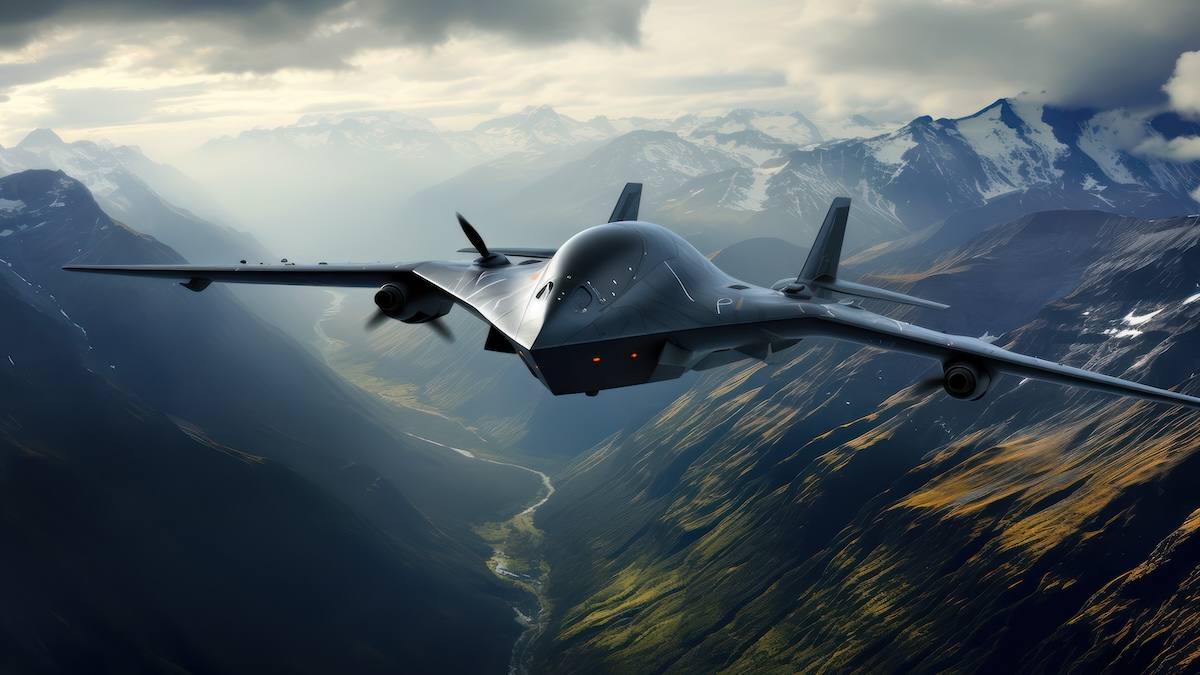
In the not-too-distant future, the face of American airpower will dramatically shift away from a relatively few highly capable and crewed platforms and toward an overwhelming avalanche of unmanned systems, ranging from single-use munitions all the way to multi-million dollar multi-role UCAVs (Unmanned Combat Aerial Vehicles).

With new initiatives underway within the Pentagon to rapidly field thousands of drones the United States is now looking to return to the World War II methodology of peace through superior numbers. In order to do so, American Defense officials are aiming to push the boundaries of what we’ve commonly seen as science fiction, turning over vast portions of the warfighting enterprise to rapidly advancing, and often AI-enabled, robots.

A little while back, Deputy Secretary of Defense Kathleen Hicks announced the Pentagon’s Replicator Initiative, which aims to field “multiple thousands” of low-cost drones operating in air, land, and sea within the next two years, but remarkably, without requesting any additional funding. Instead of seeing this as a new program, Replicator might be better thought of as a new philosophy – steering the priorities of new acquisition efforts toward what the U.S. Air Force has long called, “affordable mass.”

“Replicator is not a new program of record,” Hicks explained. “We’re not creating a new bureaucracy and we will not be asking for new money in [fiscal 2024]. Not all problems need new money.”

Pentagon’s AI Initiatives Accelerate Hard Decisions on Lethal Autonomous Weapons


Artificial intelligence employed by the U.S. military has piloted pint-sized surveillance drones in special operations forces’ missions and helped Ukraine in its war against Russia. It tracks soldiers’ fitness, predicts when Air Force planes need maintenance and helps keep tabs on rivals in space.

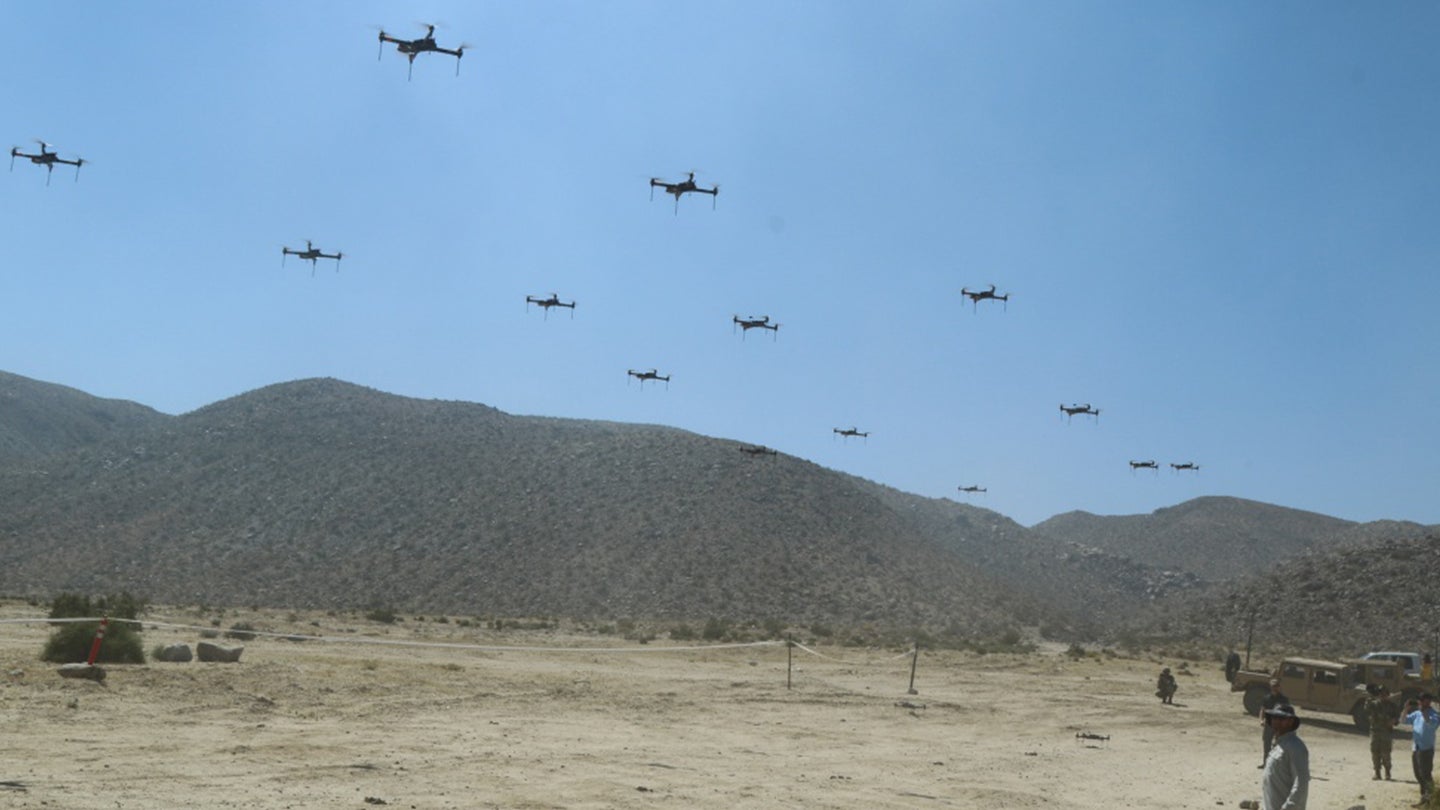
Now, the Pentagon is intent on fielding multiple thousands of relatively inexpensive, expendable AI-enabled autonomous vehicles by 2026 to keep pace with China. The ambitious initiative — dubbed Replicator — seeks to “galvanize progress in the too-slow shift of U.S. military innovation to leverage platforms that are small, smart, cheap, and many,” Deputy Secretary of Defense Kathleen Hicks said in August.

While its funding is uncertain and details vague, Replicator is expected to accelerate hard decisions on what AI tech is mature and trustworthy enough to deploy – including on weaponized systems.

There is little dispute among scientists, industry experts and Pentagon officials that the U.S. will within the next few years have fully autonomous lethal weapons. And though officials insist humans will always be in control, experts say advances in data-processing speed and machine-to-machine communications will inevitably relegate people to supervisory roles.

That’s especially true if, as expected, lethal weapons are deployed en masse in drone swarms. Many countries are working on them — and neither China, Russia, Iran, India or Pakistan have signed a U.S.-initiated pledge to use military AI responsibly.

It’s unclear if the Pentagon is currently formally assessing any fully autonomous lethal weapons system for deployment, as required by a 2012 directive. A Pentagon spokeswoman would not say.

Why directed-energy weapons are the next big bet for the US military

JUSTIN KLAWANS

As warfare becomes continually dictated by emerging technologies, the United States military has increasingly been developing new tools to use on the battlefield. One such category is directed-energy weaponry, often described as the beginning of war's next generation.

According to various reports throughout 2023, the Pentagon is working on directed-energy weapons as one of its top priorities. While reports indicate that the military is facing hitches in development, billions of dollars are still being poured into directed-energy technology. What do these weapons do, and why is the Pentagon working so diligently to develop them?

What are directed-energy weapons?

These are electromagnetic weapons "capable of converting chemical or electrical energy to radiated energy and focusing it on a target," according to the U.S. Office of Naval Research (ONR). These weapons can cause physical damage that "degrades, neutralizes, defeats or destroys an adversarial capability," the ONR reported.

Directed-energy devices include weapons that can fire laser beams, microwaves or other types of light particles. Unlike standard weapons, directed-energy technology doesn't use traditional projectiles, but rather energy itself. Experts say this can provide opportunities on the battlefield that were previously unattainable.

While a standard weapon is limited by the number of rounds it can fire, a directed-energy weapon "gives you essentially an infinite magazine of interception opportunities," Bryan Clark, a senior fellow at the Hudson Institute, told CNBC. This is because "the laser — as long as you've got electricity — will continue to recharge, [and] continue to shoot down incoming weapons."

U.S. Intelligence Gap on Potential Hamas, Hezbollah Threats to U.S.

JONATHAN BRODER AND JEFF STEIN

U.S. INTELLIGENCE AGENCIES let their attention wander away from Iran-backed terror groups in their pursuit of al Qaeda in Afghanistan and ISIS in Iraq over the past two decades, leaving them vulnerable to plots by Hamas and Hezbollah for attacks here as passions rage over U.S. backing for Israel’s onslaught in Gaza, former FBI and CIA officials tell SpyTalk.

Ismail Haniya, Hamas’s leader, at a rare news conference in Gaza City on Thursday, per New York Times. Photo credit Mohammed Salem/Reuters.

After the Sept. 11, 2001 terrorist attacks on New York and the Pentagon in 2001, the CIA effectively subcontracted surveillance and intelligence-gathering on Hamas to the Israelis, says former CIA operations officer Marc Polymeropoulos. So when Israeli intelligence failed to prevent the Oct. 7 Hamas attack that killed at least 1,200 people and took 240 hostages, Israel’s intelligence blunder also exposed a U.S. intelligence failure—one that could now cost American lives, Polymeropoulos, as well as present and former FBI officials say.

Pretty much ceding collection on Hamas to the Israelis was “understandable, considering the threats to us from Al Qaeda, and later ISIS, but it was still a mistake,” says Polymeropoulos, who retired in 2019 after several postings in the Middle East, among other assignments. “The massive intelligence failure on Oct. 7 was mainly Israel’s, but we share in that, too,” he told SpyTalk.

Evolution of autonomous robots: Past, present and future roles


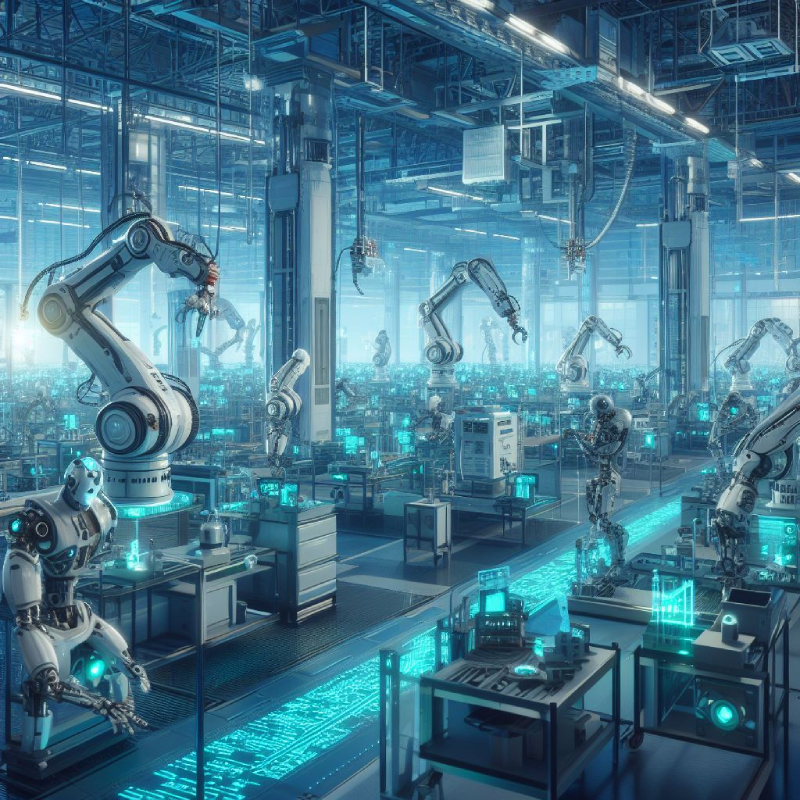
Technological advancements, including software, electronics, and robotics, drive modern society. We see technology developing daily, changing how we work and do business. Arguably, at the forefront of current technological progress are AI technology and autonomous robots. There is little doubt that mobile, self-governing robots will play key roles in the future.

In just 50 years, the market for industrial robots has evolved significantly. Today, that evolution has garnered the term “cobots,” or collaborative robots that work alongside humans. Whether autonomous robots will continue to work side-by-side with humans or take over roles completely is a debate that continues.

Artificial intelligence technology has accelerated at an astounding pace over the last two years (something called ChatGPT is one year old at the time of writing), affecting many sectors across the globe. AI has become a part of everyday life for so many, with intelligent assistants supporting us as we work. They are now at our beck and call, answering queries and performing repetitive tasks in various industries.


Hasn’t that always been the point of technological advancements, though? To help us complete physical tasks quicker or even in our place? If recent decades are anything to go by, we rely on automation more than ever. Autonomous robots may soon be irreplaceable parts of society’s fabric.

The Pentagon is facing hard decisions about letting AI weapons kill

NICHOLAS SLAYTON 

Militaries around the world are pursuing autonomous weapons. Alongside humans, robotic swarms in the skies or on the ground could attack enemy positions from angles regular troops can’t. And now those arms might be closer to reality than ever before.

That is according to a new report from the Associated Press on the Pentagon’s “Replicator” program. The program is meant to accelerate the Department of Defense’s use of cheap, small and easy to field drones run by artificial intelligence. The goal? To have thousands of these weapons platforms by 2026. The report notes that officials and scientists agree that the U.S. military will soon have fully autonomous weapons, but want to keep a human in charge overseeing their use. Now the question the military faces is how to decide if or when it should allow AI to use lethal force.

So yes, the Pentagon is one step closer to letting AI weapons kill people. But this does not mean Skynet has gone active and Arnold Schwarzenegger-looking robots are out to wipe out humanity. At least not yet.

28 November 2023

Hamas Still Holding 15 Thai Nationals in Gaza, Bangkok Says

Sebastian Strangio

The Palestinian militant group Hamas is still holding 15 Thai nationals hostage, Thailand’s Ministry of Foreign Affairs says, after 17 were freed over several days during a truce between Hamas and Israel.

In a statement today, the Ministry said that it “warmly congratulates the recently released hostages and their families and thanks all parties involved in the efforts towards this latest release.”

“For the remaining 15 Thai hostages, the Royal Thai Government continues to exert all efforts towards their safe release at the earliest opportunity,” it added, “while preparing to bring back the now 17 Thais who have already been released, back to Thailand after their preliminary checks as soon as possible.”

The Ministry said that the Thai nationals were released in three groups beginning on Friday with the release of 10 people. It later issued two updates as news of further releases, of four and three Thai hostages, became clear. These releases were accompanied by photographs of those released meeting doctors at a medical center in Israel.

The released Thais were among the 240 people taken hostage on October 7, when Hamas launched brutal incursions into southern Israel, killing more than 1,200 people, according to the Israeli government’s figures, and sparking the current war. Thai nationals were the largest foreign contingent to fall victim to the attacks, with the Foreign Ministry initially claiming that 39 were killed in the raids and another 25 captured.

Is Hamas buying time with hostage releases?

NICK ROBERTSON

The hostage deal reached late Wednesday in the Israel-Hamas war is set to halt fighting in the conflict for at least four days, but its open-ended nature raises concerns about whether the pause may assist Hamas strategically, as the U.S. and Israel both hope to wipe out the terrorist organization.

The Israel-Hamas war began early last month when Hamas militants killed 1,200 Israelis in a brutal surprise attack on border settlements and took about another 250 people hostage.

The deal reached this week is set to free 50 Israeli hostages in exchange for a temporary cessation of hostilities and the release of 150 Palestinian prisoners to the West Bank.

But critics of the agreement note that any pause in fighting may only play into Hamas’ hands and allow the group to extend its fight against Israel.

That criticism marks a division within Israel and among its allies, University of New Haven national security senior lecturer Ken Gray told The Hill.

“For the IDF, this pause causes problems because it gets time for Hamas to realign their forces, to try to shore up some areas that they may not have had people in at that time,” Gray said. “It gives [Hamas] a chance to retrench themselves.”

“In many ways, there is a conflict as to what the primary mission is,” he continued. “The IDF’s primary mission is to be able to remove Hamas as a threat, while others in Israel want to try to resolve this peacefully and as quickly as possible in order to get the hostages back.”

Assessing the Legality of Ousting Hamas

Nguyen Quoc Tan Trung

In the last few weeks, there have been many authoritative articles discussing the legality of the Israel–Hamas incursion that has now escalated into a full-scale war. However, most of these articles refer almost exclusively to the jus in bello aspects of the war, which are the area of the law of armed conflict and international humanitarian law. For example, an informative article by David J. Scheffer of the United States Council on Foreign Relations briefly concluded that “International law does not explicitly prohibit the use of force to eliminate an organisation such as Hamas…” before moving on to the discussion of the Geneva Convention and the possibility that there have been war crimes in this conflict. Similarly, the threat posed by Hamas to Israel might, presumably, render Israel’s new war aims proportionate under jus ad bellum, according to Amichai Cohen and Yuval Shany’s detailed work on Just Security. Again, the authors focus more on jus in bello legality, insisting that even if the objective is legitimate, the conduct of war needs to conform to the principles of humanitarian law.

While agreeing with the above analysis, the author of this article wishes to reverse the direction of the argument. That is to say, it discusses whether the complete removal of Hamas is an acceptable war objective in international law, and this assessment should, in return, contribute to the way in which we consider the test of proportionality and ceasefire demands.

The debates on the “occupied status” of Gaza will not be revisited here. Resolution A/ES-10/L.25, (October 2023), makes it clear that the majority of the international community continues to follow the existing UNGA/UNSC resolutions, asserting that Israel is the “occupying power” in Gaza and the rest of the “Occupied Palestinian Territories”. Indeed, as the story unfolds, the capacity of the Hamas administration to prepare for a full air/ground invasion into Israeli territory challenges the argument that Israel can effectively make its superior authority felt inside Gaza. Nevertheless, if we accept the proposition that Israel is the occupying power of Gaza, Hamas would be seen as the de facto “local government”, “local authorities”, “local institutions”, or “public officials” of Gaza, to use the language of the US DoD Law of War Manual (Rule 11.8) and the Fourth Geneva Convention of 1949 (Article 50, 54, and 56). Such a description seems to fit with the reality that governments and news media often communicate.

The tunnels: How Hamas buried Gaza's future

SHLOMO MAITAL

Consider the New York City subway system. Launched in 1904, it carried 1.8 billion passengers last year, over 248 route miles beneath the sprawling city, covering Manhattan, Brooklyn, Queens, and the Bronx. Amazing. It is hard to imagine life in the city without its metro.

There is another “metro.” It is the web of tunnels beneath Gaza. Its goal is not to facilitate life but to bring death. And it is at long last seen by Israel as an existential strategic threat that must be destroyed. To do so will take creative thinking and a massive ground invasion, facing huge difficulties.
How large is the Gaza ‘metro’?

Truly staggering. The tunnels stretch for miles beneath the length and breadth of Gaza. An IDF website notes that since January 2014, some 4,680 trucks carrying 181,000 tons of gravel, iron, cement, wood, and other materials passed through the Kerem Shalom crossing into Gaza – from Israel. Yes, we Israelis were fully complicit in this.

The Hamas-CNN axis is from China’s ‘Go to War’ playbook

Kerry K. Gershaneck

Early on the morning of Oct. 7, when Hamas terrorists savagely massacred roughly 1,400 Israelis and took hostage about 400 more, the press was in place, ready — and seemingly eager — to record the action. News media collaboration with Hamas is not unprecedented, but this time, America must pay attention. In the not-too-distant future, we will see such media collaboration with China’s forces attacking American troops and installations as part of its much broader political warfare playbook. We are not prepared.

According to Reporters Without Borders, photojournalists affiliated with CNN, Associated Press, The New York Times, and Reuters knew where to be when the Hamas butchery began. Some were apparently embedded with the terrorists as they infiltrated Israel on their mission of sadistic mass murder and abduction. International news organizations published the reporters’ images and reports, in effect assisting Hamas’ psychological warfare and propaganda campaign.

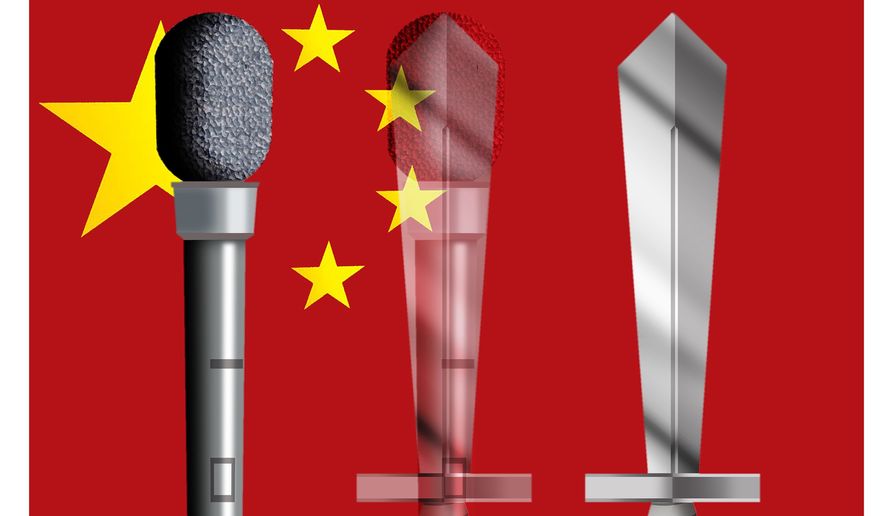
Like these news organizations, China is also supporting Hamas’ psychological warfare and propaganda. While news media collaboration with Hamas is not without precedent, Beijing’s increasingly sophisticated political warfare support for Hamas is unprecedented. Beijing has not condemned Hamas’ mass murder and hostage-taking, and its propaganda platforms block all reports about Hamas’s savage attack while sensationalizing Israel’s military response. Further, anti-Israeli propaganda on Chinese Communist Party (CCP)-affiliated TikTok is having a global impact. Finally, China is coordinating its propaganda campaign with Russia and Iran, complicating efforts to detect and defeat it.

In fact, Hamas’ co-option of the news media is straight out of China’s political warfare playbook. George Kennan defined political warfare as all means a nation uses to achieve its strategic objectives short of kinetic war. China‘s political warfare includes media warfare, legal warfare, psychological warfare, United Front operations, active measures like assassination, and a seemingly endless array of unrestricted warfare. As China’s playbook unfolds in the Hamas-Israel conflict, we see what will unfold when Beijing initiates kinetic war. Like Hamas’ Oct. 7 massacre, that war may come faster than expected.

Tagore’s Early Twentieth Century International Thought

Liane Hartnett

Endeavours to deprovincialize the discipline of International Relations (IR) including the embrace of global IR (Acharya and Buzan 2019), the recovery of neglected and erased political figures’ international thought (e.g., Owens, Rietzler, Hutchings and Dunstan 2022; Kapila 2021; Vitalis 2015), and the turn to literature as a site of international theorising (e.g. Hunt 2022; Mrovlje 2017) have collectively served to create space for a renewed focus on Rabindranath Tagore’s contribution to IR. Rabindranath Tagore was a Bengali polymath who described himself as a confluence of many cultures. After becoming the Nobel Laureate in Literature in 1913, he acquired the status of an international celebrity and traversed multiple political circles. In many ways, then, he was no marginal figure. Scholarship on Tagore’s life and works have long flourished in South Asia (e.g., Chakravarty and Chaudhuri 2017; Tuteja and Chakraborty 2017; Puri 2015; Haque 2010). A few prominent political theorists offer close and compelling engagements with his work (Berlin 2019; Nussbaum 2015; Sen 2006). Yet, but for some notable exceptions (e.g., Shani 2022; Devare 2018; Rao 2010), Tagore remains largely understudied in IR. This article seeks to redress this by offering a brief introduction to Tagore and contextualising and situating his early twentieth century international thought in the IR lexicon.

A Myriad Minded Man

Rabindranath Tagore was born on 7 May 1861 to Sharada Devi and Debendranath Tagore in Calcutta (present day Kolkata). At the heart of the Bengal Renaissance, the Tagores were the first family of Bengal (Vajpeyi 2012). Rabindranath’s grandfather ‘Prince’ Dwarkanath Tagore was a trader, banker and philanthropist who was a guest of Queen Victoria and King Louis Phillipe. His father, ‘Maharshi’ (Great Sage) Debendranath Tagore co-founded the religious reform movement, Brahmoism (Dutta and Robinson 1997; Collins 2012). Among Tagore’s many accomplished family members were the mathematician, philosopher, and poet, Dwijendranath Tagore, the first Bengali woman novelist, Swarnakumari Tagore, the artist and founder of the Bengal School of Art, Abanindranath Tagore, and the woman of letters, Kadambari Devi (Dutta and Robinson 1997).

Growing up in this immensely creative environment profoundly shaped Tagore’s development. It more than compensated for his unconventional formal education which included brief and often unsuccessful stints at four schools, and later, University College London. Indeed, in 1913, Tagore became the first non-European to win the Nobel Prize in Literature. In 1915, in recognition of his services to Literature, he was awarded a knighthood. In 1940, the University of Oxford conferred him with an honorary doctorate. Upon gaining independence, India and Bangladesh adopted his compositions as national anthems. Less celebrated – but no less significant – were his ecological or ‘rural reconstruction’ initiatives at Sriniketan, and the founding of his global university, Visva Bharati. The former influenced both the government of India’s development practices and inspired the formation of Dartington Trusts (Dutta and Robinson 1997), while the latter was dedicated to the study of humanity and had among its many visitors, the International Relations scholar, Merze Tate (Vitalis 2015). Tagore, then, was a myriad minded man: he was a poet, author, artist, composer, ecologist, educator, and a political figure.

Pentagon’s AI initiatives accelerate hard decisions on lethal autonomous weapons

FRANK BAJAK

Artificial intelligence employed by the U.S. military has piloted pint-sized surveillance drones in special operations forces’ missions and helped Ukraine in its war against Russia. It tracks soldiers’ fitness, predicts when Air Force planes need maintenance and helps keep tabs on rivals in space.

Now, the Pentagon is intent on fielding multiple thousands of relatively inexpensive, expendable AI-enabled autonomous vehicles by 2026 to keep pace with China. The ambitious initiative — dubbed Replicator — seeks to “galvanize progress in the too-slow shift of U.S. military innovation to leverage platforms that are small, smart, cheap, and many,” Deputy Secretary of Defense Kathleen Hicks said in August.

While its funding is uncertain and details vague, Replicator is expected to accelerate hard decisions on what AI tech is mature and trustworthy enough to deploy - including on weaponized systems.

There is little dispute among scientists, industry experts and Pentagon officials that the U.S. will within the next few years have fully autonomous lethal weapons. And though officials insist humans will always be in control, experts say advances in data-processing speed and machine-to-machine communications will inevitably relegate people to supervisory roles.

That’s especially true if, as expected, lethal weapons are deployed en masse in drone swarms. Many countries are working on them — and neither China, Russia, Iran, India or Pakistan have signed a U.S.-initiated pledge to use military AI responsibly.

Ex-Philippine President Rodrigo Duterte Hints at Return to Politics

Mong Palatino

Former Philippine President Rodrigo Duterte said that he would come out of retirement if his daughter, Vice President Sara Duterte, is impeached by Congress.

“You know what, if you do that, I shall be returning to politics, I will be forced, either I run for senator or vice president even if I am old already,” Duterte said on his TV show on November 20.

“I do not lose anything. I am retired. If that (impeachment) happens and I am still alive and do not have dementia yet, I will run.”

The former president is reacting to reports that some lawmakers are planning to file an impeachment complaint against the younger Duterte over the use of confidential funds.

After the end of his term as president in June 2022, Duterte announced his retirement from politics, but his three children continue to hold elected positions. Under the 1987 Constitution, he is barred from seeking another term as president but can run for other positions.

Meanwhile, Vice President Duterte is accused of improperly spending her confidential funds in just 11 days in December 2022. Confidential funds are not subject to normal auditing procedures because they are assumed to involve sensitive national security matters.

During this year’s budget debate, opposition lawmakers questioned the use of confidential funds by civilian agencies. Duterte initially rebuffed the criticisms and accused critics of being enemies of the state. After Congress realigned the confidential funds, Duterte relented and withdrew the funding request as she acknowledged that the issue had become divisive.

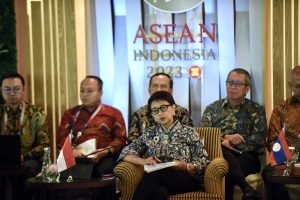
Indonesian Government Claims ‘Positive’ Progress in Myanmar Talks

Sebastian Strangio

Indonesia’s government says that it has hosted a meeting of some of the “major stakeholders” in Myanmar’s civil war, at which each gave a “positive indication” about holding an inclusive dialogue soon.

In a statement Friday, the Ministry of Foreign Affairs said that the November 20-22 meetings in Jakarta were attended by “multi-stakeholders representing the Spring Revolution,” including representatives of ethnic resistance forces and the opposition National Unity Government (NUG). The military administration was represented by “interlocutors,” the statement said, though it did not elaborate on their identity.

The aim of the meeting, which involved parallel meetings, was to “push forward the implementation” of the Association of Southeast Asian Nations (ASEAN)’s Five-Point Consensus peace plan, which calls for “the convening of inclusive dialogues for a comprehensive and durable political solution to the crisis in Myanmar.”

The meetings were also attended by a representative of the government of Laos, which will chair ASEAN next year.

According to the Ministry, the Office of the Special Envoy “also facilitated the exchanges of ‘messages’ from each group that were expected to pave the way for a possible preliminary dialogue, leading towards inclusive national dialogues in order to find a durable and comprehensive solution to the crisis.”

Taiwan Draws Clear US-Versus-China Battle Lines in Key Election

Jennifer Creery

Taiwan’s voters in January will have the chance to reset the island’s fraught relationship with China, and cool down one of the world’s key geopolitical flashpoints.

With less than seven weeks to go until polling day, that prospect now hangs in the balance after opposition parties that seek better relations with Beijing failed to unite behind a single candidate, despite weeks of chaotic and often acrimonious negotiations that played out in public.

The collapse of the opposition alliance makes Chinese President Xi Jinping’s stated goal of voluntary unification with Taiwan more remote, with pro-Beijing votes scattered among the challengers to the incumbent Democratic Progressive Party. That would benefit the ruling party’s candidate, Vice President Lai Ching-te, who wants to further strengthen Taiwan’s ties with Washington.

Standing in Lai’s way are the Kuomintang’s Hou Yu-ih and the Taiwan People’s Party’s Ko Wen-je, both of whom have said they plan to restart direct talks with Beijing. Foxconn Technology Group founder Terry Gou withdrew from the presidential race just hours before Friday’s registration deadline, saying he did so for the “greater good” to give the two remaining opposition candidates a better chance of unseating the DPP.
Taiwan Presidential Preference

Polls numbers in percent

Despite the fractured opposition, an unprecedented third straight term in power for the DPP is by no means a foregone conclusion. After almost eight years in power, there’s growing unhappiness with the party and a desire for change, especially among younger voters. Support for Lai dipped to 31.4%, leaving him just a fraction ahead of the KMT’s Hou on 31.1%, according to a survey by the Taiwan Public Opinion Foundation released Friday. Ko trails in third place on 25.2%.

Can Taiwan Continue to Fight Off Chinese Disinformation?

Tiffany Hsu, Amy Chang Chien and Steven Lee Myers

Suspicious videos that began circulating in Taiwan this month seemed to show the country’s leader advertising cryptocurrency investments.

President Tsai Ing-wen, who has repeatedly risked Beijing’s ire by asserting her island’s autonomy, appeared to claim in the clips that the government helped develop investment software for digital currencies, using a term that is common in China but rarely used in Taiwan. Her mouth appeared blurry and her voice unfamiliar, leading Taiwan’s Criminal Investigation Bureau to deem the video to be almost certainly a deepfake — an artificially generated spoof — and potentially one created by Chinese agents.

For years, China has pummeled the Taiwanese information ecosystem with inaccurate narratives and conspiracy theories, seeking to undermine its democracy and divide its people in an effort to assert control over its neighbor. Now, as fears over Beijing’s growing aggression mount, a new wave of disinformation is heading across the strait separating Taiwan from the mainland before the pivotal election in January.

Perhaps as much as any other place, however, the tiny island is ready for the disinformation onslaught.

Taiwan has built a resilience to foreign meddling that could serve as a model to the dozens of other democracies holding votes in 2024. Its defenses include one of the world’s most mature communities of fact checkers, government investments, international media literacy partnerships and, after years of warnings about Chinese intrusion, a public sense of skepticism.