James M. Dorsey
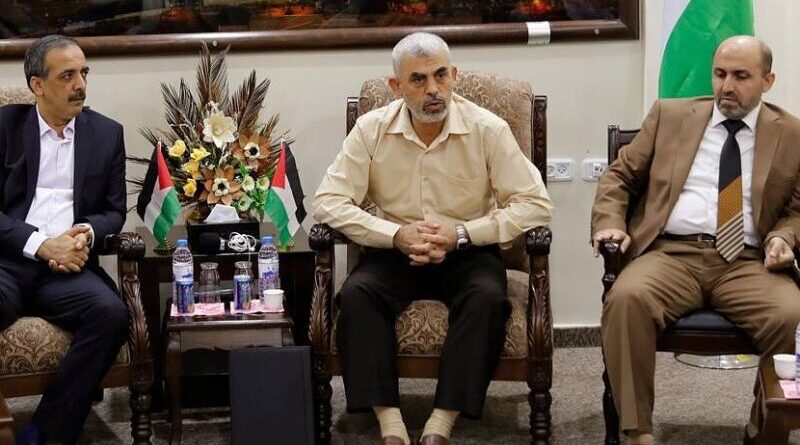
A proposed temporary Gaza ceasefire and prisoner exchange appears designed to buy war-battered Gazans relief while enabling Israel and Hamas to claim a success.
However, whether Israel or Hamas emerges as the ultimate victor will be determined by whether the truce becomes permanent and the war ends.
Negotiated by Qatar, Egypt, the United States, Israel, and Hamas, the deal would be whittled down to the first stage of an earlier three-phase proposal that envisioned three 45-day periods during which a permanent ceasefire would be negotiated.
The whittled-down plan suggests that the parties, except for Israel, who is determined to continue the war, hope the truce will create space for a negotiated permanent ceasefire.
Hamas has yet to formally respond to the latest proposal but a senior official, told Al Jazeera, “The atmosphere of optimism does not reflect reality.”
For his part, Israeli Prime Minister Binyamin Netanyahu asserted that “if Hamas goes down from its delusional claims and brings them down to Earth, we’ll have the progress that we all want.”
This weekend, Israel’s war cabinet decided to send a delegation to Qatar for further talks.
In a nod to Hamas demands, Israel would under the plan redeploy but not withdraw its troops from Gaza and allow the return to the northern part of the Strip of internally displaced Palestinian women and children.
Hamas has insisted on a full Israeli withdrawal and the unrestricted return of Palestinians to their often-destroyed homes.
The plan constitutes an attempt to lower the temperature during Ramadan, Islam’s upcoming holy month of fasting that is likely to shine a spotlight on Jerusalem’s Al Aqsa Mosque, the faith’s third holiest site, as a renewed flashpoint fuelling emotions across the Muslim world. Ramadan begins on March 10.
Some analysts suggest Hamas’ possible willingness to discuss a temporary rather than a permanent ceasefire constitutes a victory for the group’s Gaza-based leader, Yahya Sinwar.
Mr. Sinwar, who tops Israel’s most wanted list, symbolises Israel’s failure to achieve its goals five months into its devastating military campaign. Israel has yet to capture or kill any of Hamas’ Gaza-based most senior leaders.
Israel’s recent controversial military focus on Refah, the densely overpopulated most southern part of Gaza, is driven in part by the belief that Mr. Sinwar and other senior figures shelter in underground tunnels in Refah surrounded by Hamas-held hostages as human shields.
“Once we begin the Rafah operation, the intense phase of the fighting is weeks away from completion. Not months… If we have a (hostage) deal, it will be delayed somewhat, but it will happen. It has to be done because total victory is our goal and total victory is within reach,” Mr. Netanyahu said.
Convinced that Israel will not end the war soon on terms that would allow for a credible process to resolve the Israeli-Palestinian conflict with the creation of an independent Palestinian state, Mr. Sinwar, widely viewed as a hardliner within Hamas, reportedly sees a temporary truce as an opportunity to regroup the group’s military wing.
Moreover, the truce would give Mr. Sinwar a tactical success with an exchange of 40 of the 136 Hamas-held hostages and bodies of captives killed during the war for an unspecified number of Palestinians held in Israeli prisons, particularly if they include inmates sentenced by Israeli courts to life imprisonment for killing Israelis.
Hamas took some 250 people hostage during its October 7 attack on Israel, more than 100 of whom were released for Palestinians incarcerated in Israel during a one-week, Qatar-mediated truce in November.
The exchange ensured that more Israeli hostages have been killed than have so far been freed by Israeli troops.
Mr. Sinwar may also believe that widespread anti-government protests in Israel and demands that the government prioritise the release of the hostages rather than the war strengthen Hamas’ position.
In addition, he may be counting on his demand for the release of Palestinians sentenced to life in prison sparking the fall of Mr. Netanyahu’s government. Mr. Netanyahu’s far-right coalition partners have threatened to leave the government if the prime minister caves into Hamas’ demands.
The far-right initially opposed the November exchange but ultimately acquiesced.
Sharing with Mr. Netanyahu a callous disregard for innocent Palestinian lives, Mr. Sinwar has miscalculated if he expected international pressure to disrupt Israel’s apparent strategy of targeting Palestinian civil society to “create a shock” that would “lead civilians to put pressure on Hamas.”
Israel has ignored widespread international condemnation and mild public US criticism. Gazans, despite signs of opposition, have failed to rise up against Hamas, whose popularity on the West Bank and in the Palestinian Diaspora has risen.
Compounding Israel’s failure to achieve its war goals, the Biden administration has asked Israel to stop targeting Hamas’ police force that provides security for aid trucks entering Gaza and attempts to restore a semblance of law and order.
The administration warned Israel that attacking the police could exacerbate an already dire humanitarian crisis and warned that it could spark a “total breakdown of law and order.”
Police have cracked down on merchants hoarding badly needed goods to drive up prices but have also seized items in support of Hamas. Similarly, fuel siphoned off from aid trucks entering Gaza is sold on the black market at exorbitant prices.
It’s a problem that in Gaza’s dire circumstances would be prevalent regardless of who controls the police.
Complicating Mr. Sinwar’s calculations, and those of Mr. Netanyahu, is a Saudi-backed three-pronged US attempt to tie a broader Middle East deal.
The deal would involve the temporary ceasefire becoming permanent and ending the hostilities, the establishment of Saudi-Israeli diplomatic relations, and agreement on a credible pathway towards an independent Palestinian state.
The US and Saudi Arabia hope Mr. Netanyahu, an opportunist who prioritises his personal and political interests, may be sufficiently seduced by the ability to claim credit for formalising relations with the Middle East’s crown jewel Arab state to risk the break-up of his government and reverse his rejection of a Palestinian state.
It remains unclear whether differences between Mr. Sinwar and some of Hamas’ exile leaders involved in the negotiations to achieve a ceasefire are tactical or strategic when it comes to the group’s endgame in the war, its potential willingness to embrace a historic compromise, and its post-war posture.
Hamas negotiators have insisted that the group would only agree to a permanent ceasefire that would end the war. Even so, Mr. Sinwar, based in Gaza rather than cushy Doha, the Qatari capital, is the group’s ultimate decision maker.
The difference in what drives Messrs. Sinwar and Netanyahu and explains their callousness lies in an anecdote recently recalled by Aluf Benn, the editor-in-chief of Israel’s widely respected Haaretz newspaper.
Mr. Benn remembered former Israeli Defense Minister Moshe Dayan’s words at the 1956 funeral of an Israeli farmer, brutally murdered by Palestinian militants.
“Let us not cast blame on the murderers. For eight years, they have been sitting in the refugee camps in Gaza, and before their eyes we have been transforming the lands and the villages where they and their fathers dwelt into our estate,” Mr. Dayan said.
Mr. Dayan did not criticise Israeli policy or propose accommodation of the Palestinians. Instead, he acknowledged reality and expressed a willingness to accept the consequences of the Jewish state’s policy.
“Let us not be deterred from seeing the loathing that is inflaming and filling the lives of hundreds of thousands of Arabs living around us. This is our life’s choice—to be prepared and armed, strong, and determined, lest the sword be stricken from our fist and our lives cut down, Mr. Dayan said.
Mr. Benn concluded from that anecdote that “on October 7, 2023, Dayan’s age-old warning materialised in the bloodiest way possible… Israelis cannot expect stability if they continue to ignore the Palestinians and reject their aspirations, their story, and even their presence. This is the lesson the country should have learned from Dayan’s age-old warning.”
It’s a lesson Mr. Sinwar brutally embraced and Mr. Netanyahu and many Israelis, perhaps even a majority, have yet to grasp.
Optimists will argue that a temporary ceasefire will pause, if not halt the human carnage in Gaza and potentially open the door to an end to the war and a credible peace process.
Mr. Dayan’s cynical realism is probably more realistic. Little suggests that a post-Netanyahu Israel would fundamentally be more willing to accommodate Palestinian aspirations.
Worse still, the much-touted two-state solution may prove to be the best of bad options, particularly in the wake of a war that has traumatised Israelis and Palestinians in unprecedented ways.
Much like the 19th century experience of Russian Jews, the 1923 Turkish Greek ‘population exchange,’ this century’s plight of the Rohingya, and the potential depopulation of Gaza, a two-state solution could produce two hostile states rather than two countries seeking to cooperate.
Referring to the Indian subcontinent’s post- 1947 partition, political scientist Manilo Graziano noted that “for the three-quarters of a century since then, India and Pakistan have cultivated a hostility punctuated by periodic clashes, terror attacks, and at least four official wars, exploited and exacerbated by the great powers for their own games on the international chessboard.”
In the Middle East, Mr. Graziano argued that it “would be naive, to say the least,” to assume that Israeli Palestinians, who account for about 20 percent of the Israeli population, or the 20 percent of Israeli settlers on the West Bank who would fall under Palestinian rule if they chose to stay in a Palestinian state would be allowed to remain in place over time.
“The tragedy in which Israelis and Palestinians are imprisoned today is exacerbated by the fact that the only solution that external actors have proposed would simply make their situation worse, plunging them into what philosopher Thomas Hobbes called the ‘state of nature’—that is, a permanent ‘war of every man against every man,’” Mr. Gaziano said.
The spectre of civil strife raised its head during the 2021 Gaza war with scenes of Israeli Jews and Israeli Palestinians clashing violently and assaulting each other in Israeli cities considered models of coexistence.
Far-right members of Mr. Netanyahu’s cabinet have used the spectre of continued strife to justify their rejection of a Palestinian state.
Ultra-nationalist Israeli Heritage Minister Amichai Eliyahu, scion of a prominent Sephardic rabbi family, warned in recent days that such a state would demonstrate “terror pays and will get you what you want.”
Further clouding prospects for genuine Israeli-Palestinian peace is the fact that the risk of post-settlement hostility is pervasive regardless of whether the resolution involves a two-state solution, a confederation, or a one-state solution.
All of which suggests that even a temporary ceasefire that offers Gazans some respite, the warring parties an opportunity to breathe, and potentially enables winds of change to blow is better than the uninterrupted Gaza carnage for which innocent Palestinians pay the price.
No comments:
Post a Comment