By SYDNEY J. FREEDBERG JR
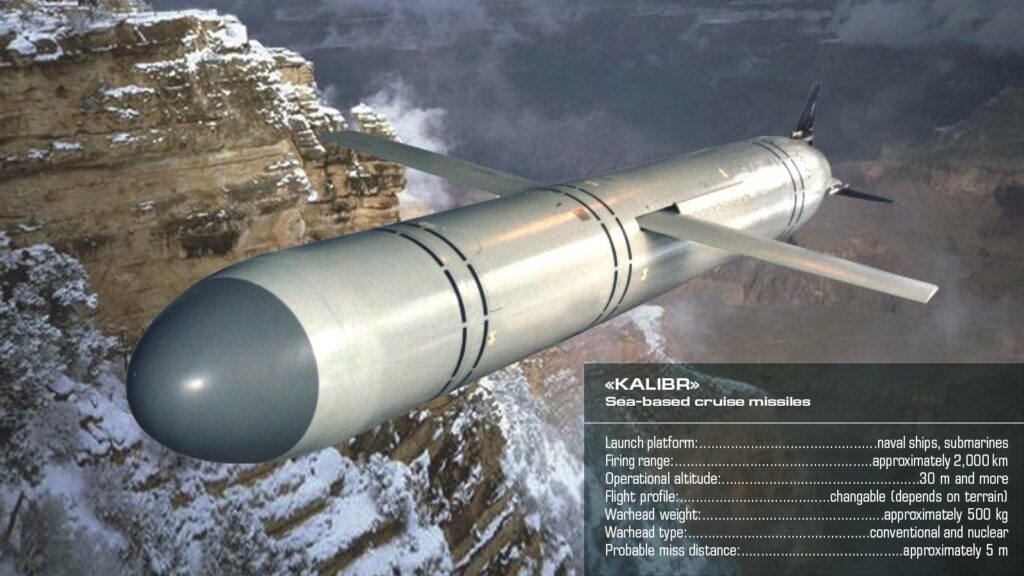 There are times and places in the history of war in which improvements in firepower force anyone in range to take cover instead of advancing, as machineguns and howitzers did a century ago on the infamous Western Front. The fundamental difference today is the width of the killing zone would be measured, not in hundreds or thousands of yards, but in hundreds or thousands of miles
WASHINGTON: Fifty-nine days from now, assuming no change of heart by Trump or Putin, the United States will formally kick off the six-month process to end the INF arms control accord, potentially eliminating the final obstacle to a new era of long-range smart missiles. The massive shift in post Cold War arms control would have the potential to turn future battlefields into the kind of bloody stalemate not seen since World War I. But that stalemate could be good news for the United States.
As US strategy shifts from striking rogue states that can’t fight back on even terms — Iraq, Afghanistan, Serbia, Libya, Syria — to stopping great powers who can — Russia and China — it might benefit from technology that favors the defense. There are times and places in the history of war in which improvements in firepower force anyone in range to take cover instead of advancing, as machineguns and howitzers did a century ago on the infamous Western Front. The fundamental difference today is the width of the killing zone would be measured, not in hundreds or thousands of yards, but in hundreds or thousands of miles.
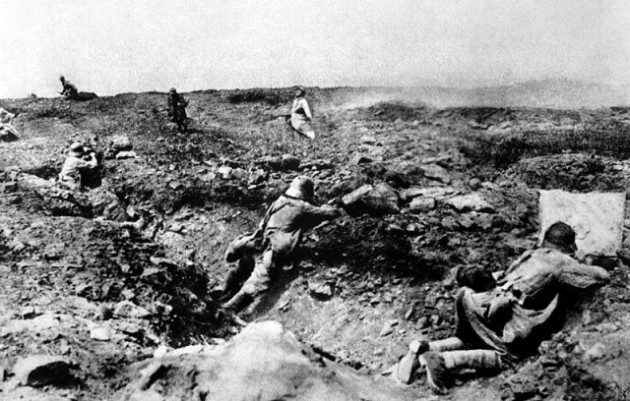 So while the Pentagon studies multi-domain operations combining land, sea, air, space, and cyberspace forces to break down defensive systems based on long-range missiles, some leading experts argue that the US and its allies should create such defenses of their own.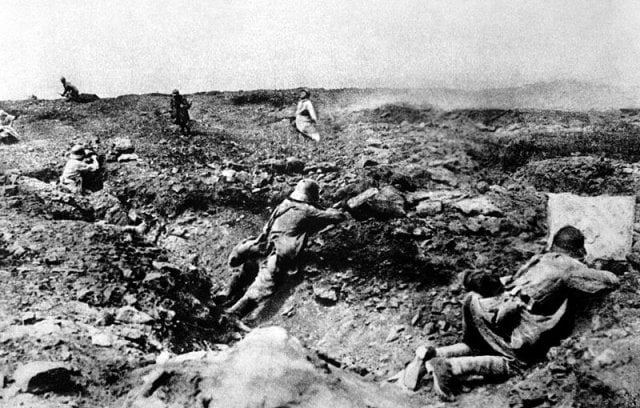
Trench warfare in World War I.
Back to the Trenches?
“On the future battlefield, if you stay in one place longer than two or three hours, you will be dead,” the Army Chief of Staff, Gen. Mark Milley, declared early in his term. Looking back a century to 1914, he concluded, “nations and empires marched off to their destruction, blind, blind to the changes in war. Let us commit to not march into that abyss.”

 Gen. Mark Milley
It’s become a foreign policy cliché to compare US-China tensions today to Britain and Germany before World War I:an established, democratic hegemon based on seaborne trade confronts a rising, authoritarian continental power with growing naval ambitions and a deep sense of grievance. But there are resemblances at a purely military level too. It’s been decades since the last great-power war, and in the meantime technology has been transformed to the point that time-honored tactics could be suicide. In particular, both eras saw impressive advances in firepower that great powers have tested against lesser enemies (British machineguns against the Sudanese Mahdi in 1898, US smart weapons against jihadis since 2001) but never against each other. The potential for statesmen and generals to miscalculate is high.
“Everybody’s weeping over the INF. I’m thinking to myself, what’s so amazing is that the INF restrictions lasted so long because they completely, completely, violate the tenets of warfare,” said retired Maj. Gen. Bob Scales, famously forward-thinking former commandant of the Army War College. By banning all US and Russian (but not Chinese) land-based missiles with ranges between 500 and 5,500 kilometers, he said, “the INF Treaty… would have cost the United States a huge advantage in this new approaching era of war.”
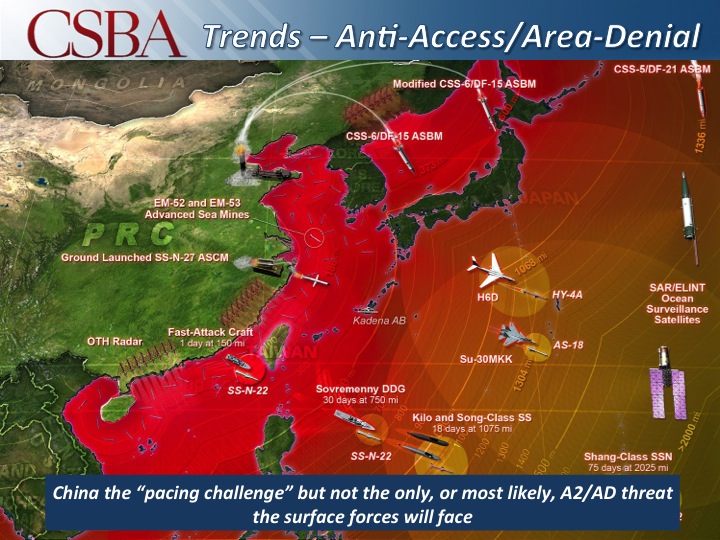
Chinese weapons ranges (CSBA graphic)
Warfare changes with the ever-shifting balance between firepower and maneuver, Scales and other military historians argue: The longbow against French knights at Crécy and Agincourt, the rifled musket against Pickett’s Charge at Gettysburg, the machinegun against British foot troops at the Somme.
“When the technological advantage goes to firepower, then the operational advantage goes to the defensive,” Scales said. “That’s an immutable law of warfare, like a law of physics.” That’s because maneuver may require moving through enemy fire, and the more potent that fire, the less likely you are to make it through. Now, Scales said, envision a near-future battlefield in which kamikaze mini-drones swarm the battlefield, hunt targets, and explode: “To maneuver under that becomes nearly impossible.”
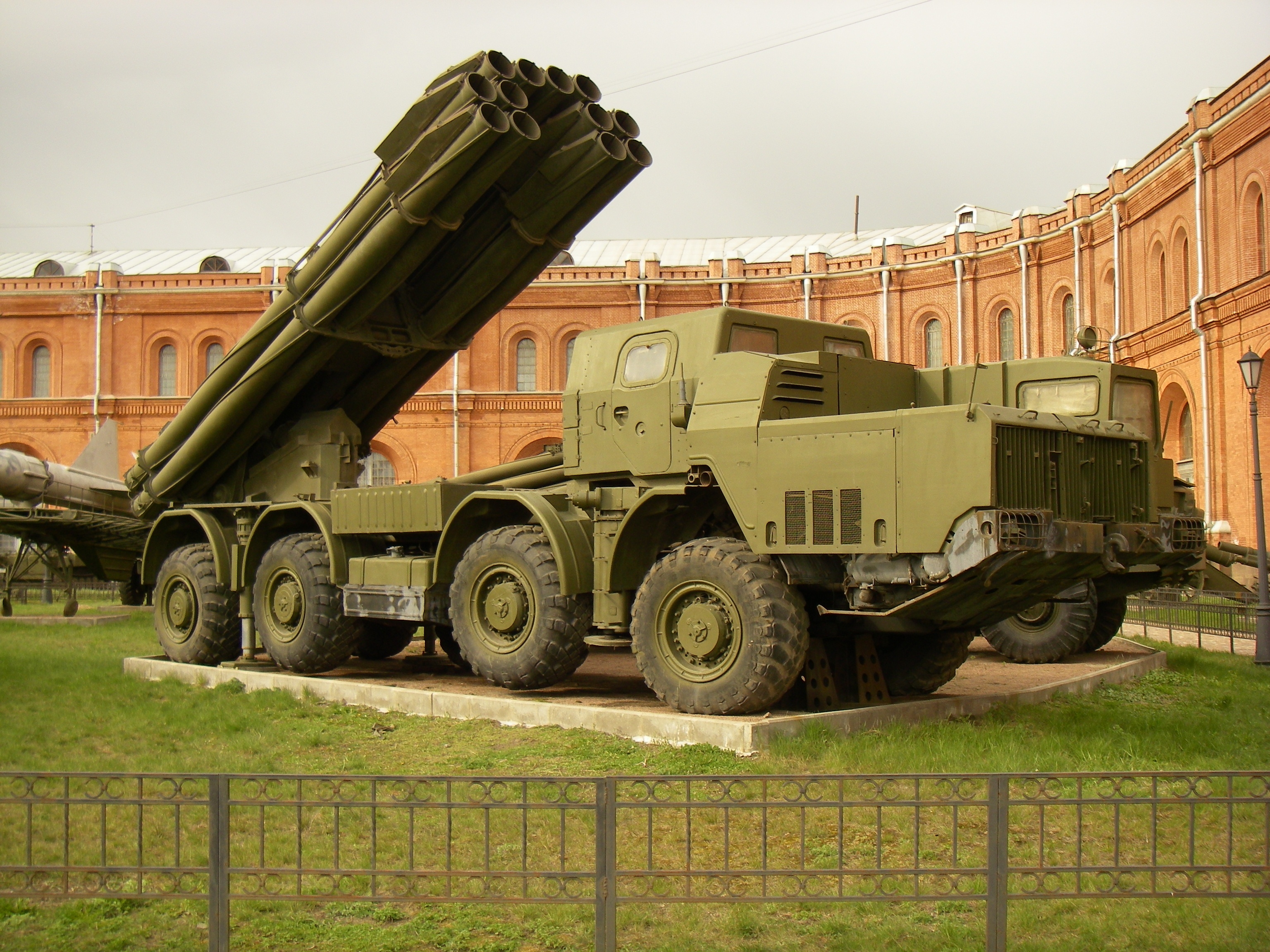
 Russian BM-30 Smerch (Whirlwind) multiple rocket launcher.
The Russian army, long famed for its artillery, has provided the world a proof of concept in Ukraine, albeit over shorter ranges using INF-compliant weapons. Land-based radars and anti-aircraft missiles have largely neutralized Ukrainian airpower, downing a Malaysian airliner along the way. Ground troops have been targeted by radio direction-finding and drones, then pounded by rocket launchers with cluster munitions — a lethal combination of information-age precision and industrial-age massed fire. In one notorious incident in 2014, Ukrainian troops, mustering for an offensive at what they thought was a safe distance behind the front lines, were caught in the open and devastated in minutes: 30 dead, hundreds wounded, two battalions’ worth of vehicles destroyed.
“What has it done to the Ukrainians? It’s driven them underground,” said retired Brig. Gen. Bill Hix, another noted innovator, at a conference earlier this year. “1,800 kilometers of trenchline in the Donbas. (It’s) World War I with technology.”
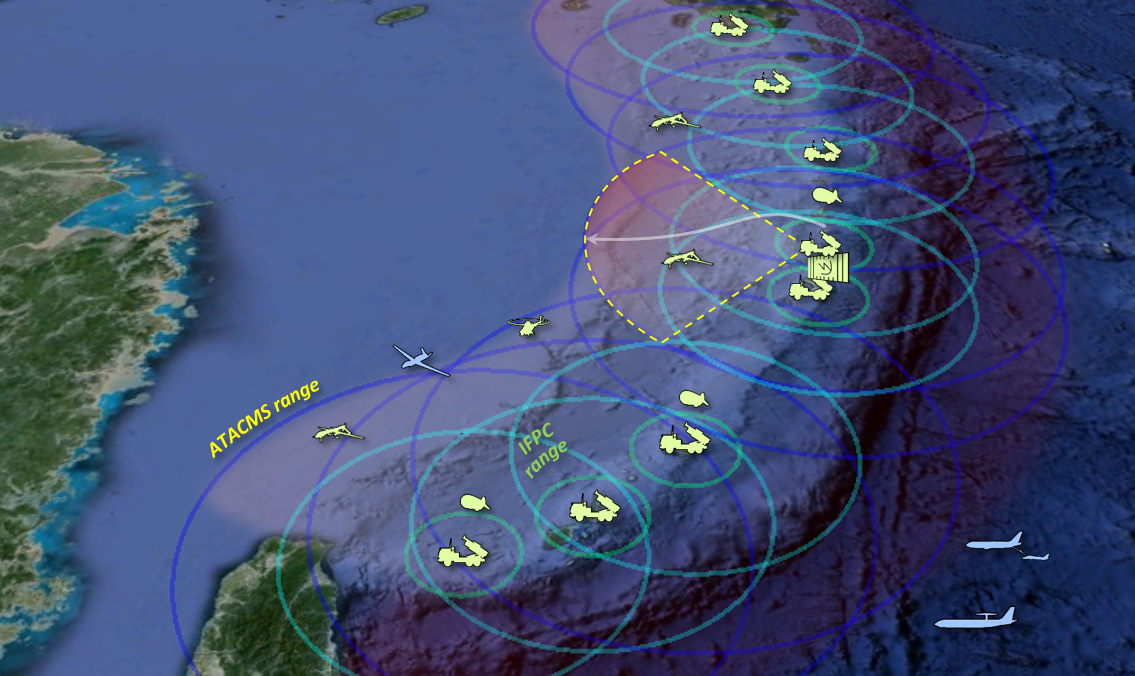
 Land-based missiles deployed at “Expeditionary Advance Bases” could form a virtual wall against Chinese aggression (CSBA graphic)
This is bad news for anyone within a couple hundred miles of Russian territory— like much of Poland and all of the Baltic States — but some in Washington see ways to turn the trend around. That’s been a recurrent theme of studies from the Center for Strategic & Budgetary Assessments, both under longtime director Andy Krepinevich and current chief Tom Mahnken. CSBA has warned for years of the rise of Russian and Chinese long-range precision firepower. But it’s also argued for years that the US could create such an anti-access/area denial system of its own, particularly in the wider spaces of the Western Pacific. Krepinevich called it “archipelagic defense,” a network of land-based radars and missiles based on Pacific islands.
Geography matters, Mahnken told me recently. “The so-called First Island Chain really hems in China’s approach to the broad open ocean,” he said. “A capable anti-access network in the First island chain anchored on Japan (and) the Philippines, or even anchored back on the 2nd island chain, on US territory (e.g. Guam), could do a lot.” And if your missiles can fire a thousand miles instead of a few hundred, you can deny a much wider area from fewer bases — or saturate the same area with more missiles.
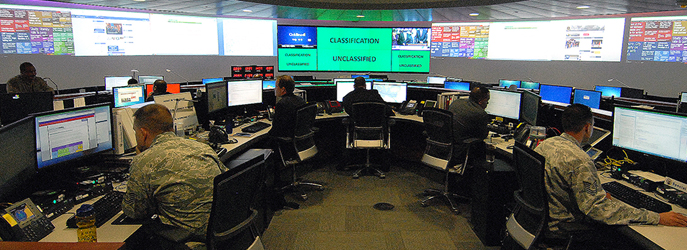 The Network
Will all this really work? Long-range, precision-guided, non-nuclear missiles are largely proven technology, although improvements such as hypersonics and superguns are still possible. But even the most precise and powerful weapon is impotent if you don’t know where to shoot.
So the crucial components of a long-range missile system are not the missiles themselves but the sensors which find the targets and, above all, the wireless networks that transmit the targeting data. The most efficient way to stop the missiles is to blind those sensors and disrupt those networks.
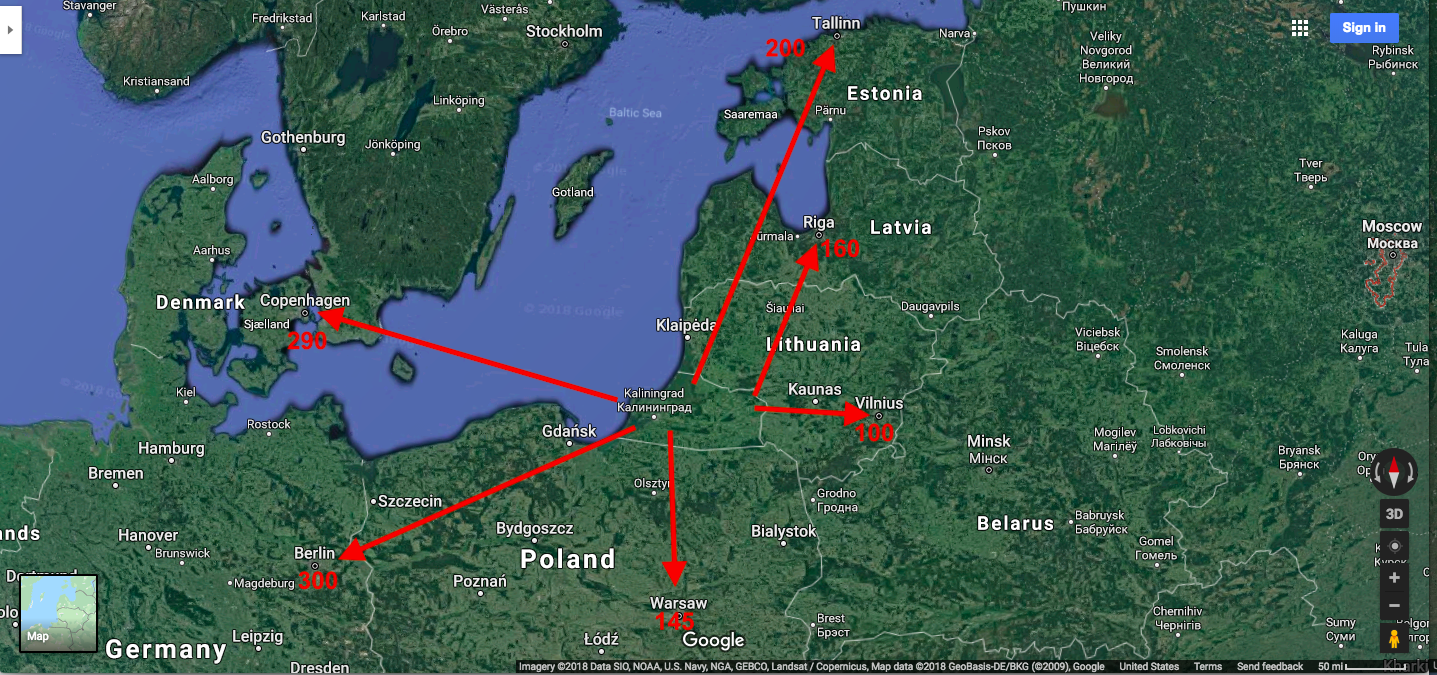
Approximate ranges in miles between the Russian enclave in Kaliningrad and select NATO capitals. SOURCE: Google Maps. (Click to expand)
The Clausewitzian “center of gravity” in modern warfare is the network itself, Scales told me. With it, a force can disperse and take cover to avoid precision fire, yet still coordinate its actions. It can bring targeting data from widely scattered sensors to equally scattered weapons, uniting their efforts across vast distances to focus on the decisive point.
“Those who control the network can disaggregate and still maintain cohesion,” Scales said. “They can strike and reach distant targets with impunity because they have the ability to link sensor to shooter. Those who don’t dominate the network will absolutely and almost inevitability be defeated in detail.”
In a missile war, ironically, the decisive battle is a duel of electrons, where the critical weapons are hacking, jamming, and artificial intelligence. If the US can get ahead in these technologies, we would be in an enviable position where our defense is impregnable but the enemy’s is not. But given China’s massive investments in AI, Russia’s expertise in electronic warfare, and both countries’ ruthless exploitation of cyberspace, American advantage is anything but assured.
That invisible battle will be the topic of the next story in this series.
No comments:
Post a Comment