Carter Malkasian
Given the length of the conflict in that country, there is no shortage of literature covering America’s longest war. Yet, many works on the war in Afghanistan cover the accounts of military members and their tactical engagements. Sharifullah Dorani has written a short history of high-level U.S. policy making in Afghanistan, entitled America in Afghanistan: Foreign Policy and Decision Making from Bush to Obama to Trump. The book reviews the major decisions of the Bush, Obama, and Trump administrations. Dorani covers this well-tilled ground in an interesting, locally informed way and, unlike other works, brings it together in a single volume.
Dorani grew up in Kabul, living through the Soviet-Afghan war and then the civil war that followed. He and his family finally fled the country in 1994 because of the violence wracking Kabul. After the fall of the Taliban, he returned to work for several years. He then earned his doctorate at Durham University, going back and forth to Afghanistan over ten years to complete his research. America in Afghanistan is based on his doctoral dissertation.
Dorani brings an Afghan perspective to the debates that have played out in Washington. The major question he explores is: How did U.S. policy fail in stabilizing Afghanistan? He examines the decisions of each administration, describing how personality, domestic politics, economic factors, regional power politics, and ideology shaped the outcome. If he has a common criticism, it is that U.S. presidential administrations suffered from a lack of understanding and a narrow point of view: “The policy assumptions made by the Bush and Obama Administrations were ill-informed, misjudged and derived from rigid ideologies rather than realities on the ground.”[1] The criticism is perhaps a tad harsh, but he performs a service in reminding outsiders to question how much they understand foreign lands.
For Dorani, Afghanistan could have been stabilized if the United States had done much more. Instead, the United States put in place a weak government that let Afghans fall prey to warlords and criminals. Dorani embraces the view that Afghanistan can only be peaceful if run by a “a strong Afghan state” with a strong army and police “equipped with the necessary air and artillery power to defend itself…deal effectively with the causes of the ‘evil forces’…and instead install peace and security in the minds of ordinary Afghans.”[2] His specific recommendations are that the United States should support the National Unity Government, strengthen the Afghan police and army capabilities, sustain support to civil society, and “provide concrete assistance and tangible backing to Ghani with his revolutionary reforms, especially his willingness to deal with corrupt elements in the Afghan state and his readiness to ensure the rule of law applies to everyone equally.”[3] This last point is the most important. Dorani stresses that by far the greatest mistake of three U.S. administrations is that they “did not and would not support Hamid Karzai and later Ashraf Ghani against the criminality” of warlords and power brokers “who fought the U.S. anti-terrorism war.”[4]
Dorani differs from various other Afghans in not laying blame squarely at the feet of Pakistan. Though Pakistan is not let off the hook, Dorani is sober in recognizing the limitations of what the United States could do. He writes that the Bush and Obama Administrations were simply unable to stop “Pakistan supporting a host of terrorist groups in Afghanistan, Pakistan, and India as an instrument of its foreign policy.”[5] His moderate recommendation is that the United States should “create conditions in which the risks of the Pakistani Army’s support of terrorism outweigh the benefits.”[6] He especially advises against punishing ordinary Pakistanis, whom he compliments as having always been generous toward Afghans.
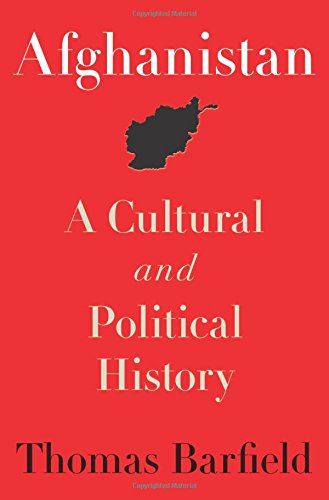 As Professor Thomas Barfield describes in his masterful Afghanistan: A Cultural and Political History, a strong Afghan state has long been the dream of Afghan modernizers and reformers. Dorani is a representative of that important viewpoint. That said, various Afghans disagree with this idea. It has been a feature of recent Afghan history, seen vividly in the differing opinions of President Ashraf Ghani and Chief Executive Officer Dr Abdullah. The Uzbeks and Tajiks in the north and west generally would prefer greater autonomy from the Pashtun-led state. Through their sacrifice in the wars against the Soviet Union and then the Taliban, the Uzbeks and Tajiks often say they have earned the right to rule themselves. They would prefer a state that grants authority to regions and gives more power to parliament, rather than centralizing it in the hands of a president. They want a decentralized form of government with less presidential power. A variety of Pashtuns would also prefer a state that allows the various Pashtun tribes, factions, and power-brokers to run their own affairs. In fact, Barfield argues it is overcentralization and lack of accountability of state leaders to the local people that gives the Taliban space to make inroads.
None of this is to detract from Dorani’s viewpoint, but it underlines the relevance of contrasting viewpoints in ongoing debates about what kind of state Afghanistan should become. Indeed, with peace efforts proceeding at an unprecedented tempo, discussion of the matter is timely.
One of the joys of the book is the explanations of Afghan dynamics from Dorani’s Afghan contacts. His conversations with scores of bureaucrats and officials, for example, render a splendid description of how patronage and bribery work in Afghan ministries and their pernicious effect on stability. “Members of Parliament,” he writes, “paid less attention to the needs of their constituents and remained focused on how to make themselves more wealthy.”[7] His Afghan contacts and sources relay a deep sense of frustration in how the United States has made such confusing decisions and how the investment of major resources has had such meager effect, at least from their point of view. But overall his tone is one of disappointment as much as frustration, a deep regret that America and the international community were befuddled by Afghanistan’s complexities and their own naiveté.
The fact that Dorani spoke to Afghans from “all walks of life” in researching the book is a strength that yields many of his most cutting insights.[8] Still, I would have liked to have learned more of their stories. Given Dorani’s language skills, I also would have liked to have seen reference to more Pashto and Dari books, magazines, news, and social media sources. He is widely read, but he keeps most of it in the background, informing his analysis, rather than in the text for all to see. Perhaps Dorani’s future work will reveal more.
AS MUCH AS HE VALUES WESTERNERS, DORANI RECOGNIZES THE BEST THING FOR AFGHANISTAN IS ULTIMATELY THAT AMERICANS AND THEIR COALITION LEAVE.
My favorite line of the entire book comes at the very end. In his conclusion, after going through the importance of Western intervention in building a strong state, Dorani writes that, when all is said and done, “the U.S. need not…keep any presence in Afghanistan” and then admits this is “a significant cause of fighting by the Taliban.”[9] For someone so pro-intervention to admit that presence causes violence highlights something Americans often miss, yet Afghans seem to know in their hearts. As much as he values Westerners, Dorani recognizes the best thing for Afghanistan is ultimately that Americans and their coalition leave. Afghanistan cannot enjoy peace as long as outsiders remain. This one line exemplifies how Dorani’s Afghan perspective is truly invaluable. Americans and Westerners should pay attention.
No comments:
Post a Comment