The Profession of Arms: A Guide for Young Army Officers
It takes courage, especially for a young officer, to check a man met on the road for not saluting properly or for slovenly appearance, but, every time he does, it adds to his stock of moral courage, and whatever the soldier may say, he has respect for the officer who does pull him up.
Read Document →The Dragon's Teeth: Assessing China's Military Modernization
PLA has focused on modernising its capabilities across all warfare domains to achieve these goals. This includes land, air, and maritime operations, nuclear, space, counter-space, electronic warfare and cyberspace operations, aiming to become a fully integrated joint force.
Read Document →Transforming the PLA: A Decade of reorganisation from SSF to ISF
PRC has engaged in a sustained and broad effort to transform the PLA from an infantry-heavy, low-technology, ground forces-centric military into a high-technology, networked force with an increasing emphasis on joint operations and naval and air power projection.
Read Document →Eyes without Borders: Exploring the World of Open Source Intelligence (OSINT) in the Digital Age
Open Source Intelligence (OSINT) is gaining prominence with the rise of social media, the digital society and the vast growth of publicly and commercially available information (PAI and CAI).
Read Document →
The PLA’s Developing Cyber Warfare Capabilities and India's Options
Informationised warfare blurs the lines between peacetime and wartime. A nation in the information age cannot wait for the hostilities to break out to collect intelligence, carryout influence operations, develop antisatellite systems or design computer software weapons.
Read Document →
Galwan and After
Why did China did this when he is under tremendous pressure in all fronts, is this China's salami slice tactics being progressed rigorously, what will be new Rules of Engagement, what will be escalatory control mechanism, who has taken this decision, will there be some pressure put by China in India's North-East through insurgency.
Read Document →
India’s Joint Doctrine for Cyberspace Operations: A Critical Review
Chief of Defence Staff (CDS) General Anil Chauhan and Secretary, Department of Military Affairs, formally released declassified versions of the Joint Doctrines for Cyberspace Operations during the Chiefs of Staff Committee meeting in New Delhi.
Read Document →
Know your Enemy General(now Field Marshal) Syed Aseem Munir
Gen SA Munir's position in the hierarchy of Pakistan was not very comfortable. The state of economy, insurgency in Pakhtoonistan and Balochistan, attack on the Jaffar Express, constant protests by supporters of Imran Khan's supporters inside and outside of parliament.
Read Document →
Decoding Operation SINDOOR: Key Aspects and Implications
Precision strikes were carried out on nine sites—four in Pakistan and five in PoK—linked to anti-India terrorist groups such as the LeT, JeM and the Hizbul Mujahideen. The targeted sites included Muridke (LeT headquarters) and Bahawalpur (JeM headquarters).
Read Document →
Chinese Cyber Exploitation in India's Power Grid - Is There a linkage to Mumbai Power Outage?
The New York Times (NYT), based on analysis by a U.S. based private intelligence firm Recorded Future, reported that a Chinese entity penetrated India’s power grid at multiple load dispatch points. Chinese malware intruded into the control systems that manage electric supply across India, along with a high-voltage transmission substation and a coal-fired power plant
Read Document →2 December 2018
Chabahar: Why US shielded India’s interests
26/11 anniversary: Why security remains a Mumbai state of mind
Mumbai: The magnificent and sprawling Chhatrapati Shivaji Maharaj Terminus (CST), a UNESCO world heritage site, was constructed with a blend of Victorian Gothic Revival and traditional Indian architecture in 1888. Its design did not account for the 21st century phenomenon of terrorism. After the concourse witnessed the bloodiest massacre on the night of 26 November ten years ago—60 of the 166 casualties happened here—tens of door frame metal detectors were installed at multiple entrances to the station and its platforms.Trump's envoy 'tests all channels' with Afghan Taliban in bid to launch peace talks
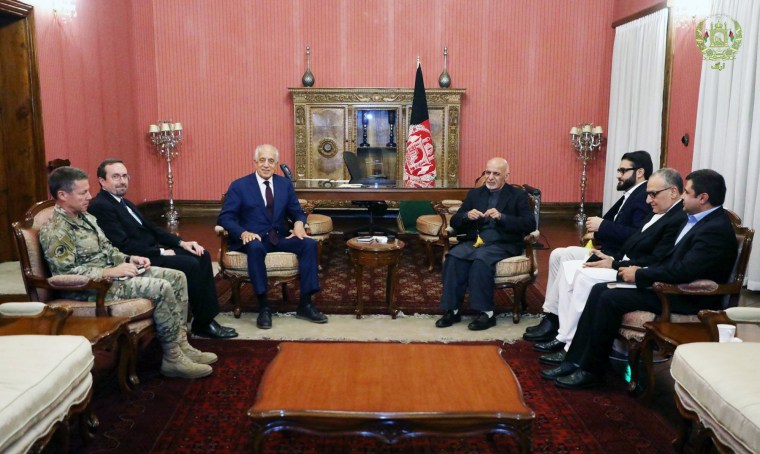
Aware Trump has expressed impatience with the U.S. mission in Afghanistan, Zalmay Khalilzad has moved quickly to get the Taliban to the negotiating table.From Pivot to Stumble in Asia
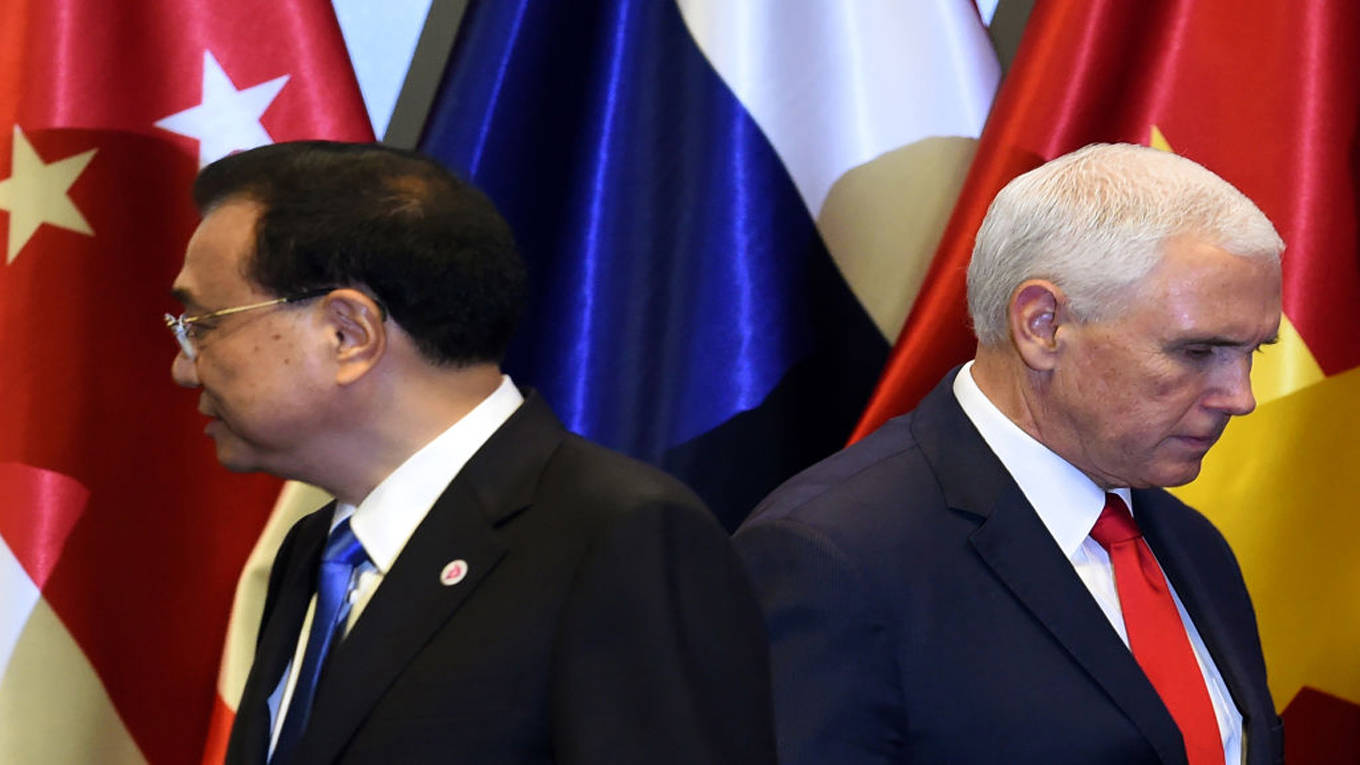
Among the Trump administration's many foreign-policy blunders, its mismanagement of Sino-American relations will be remembered as the most consequential. At a time when Chinese trade practices and territorial ambitions must be addressed at the international level, the US is botching the job.Trump and Xi to Share Meal, Trade Threats
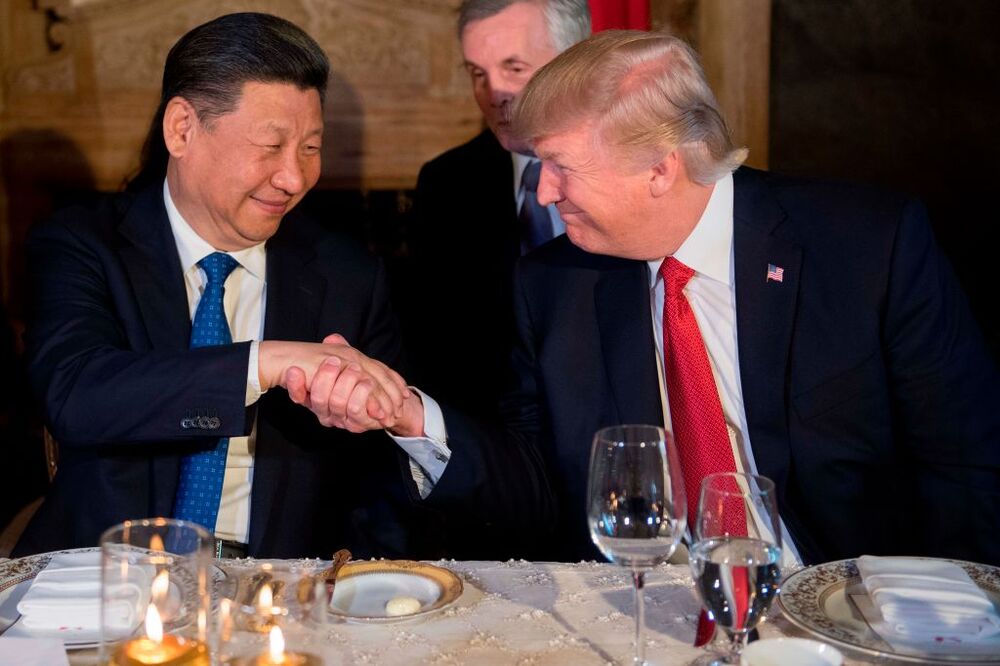
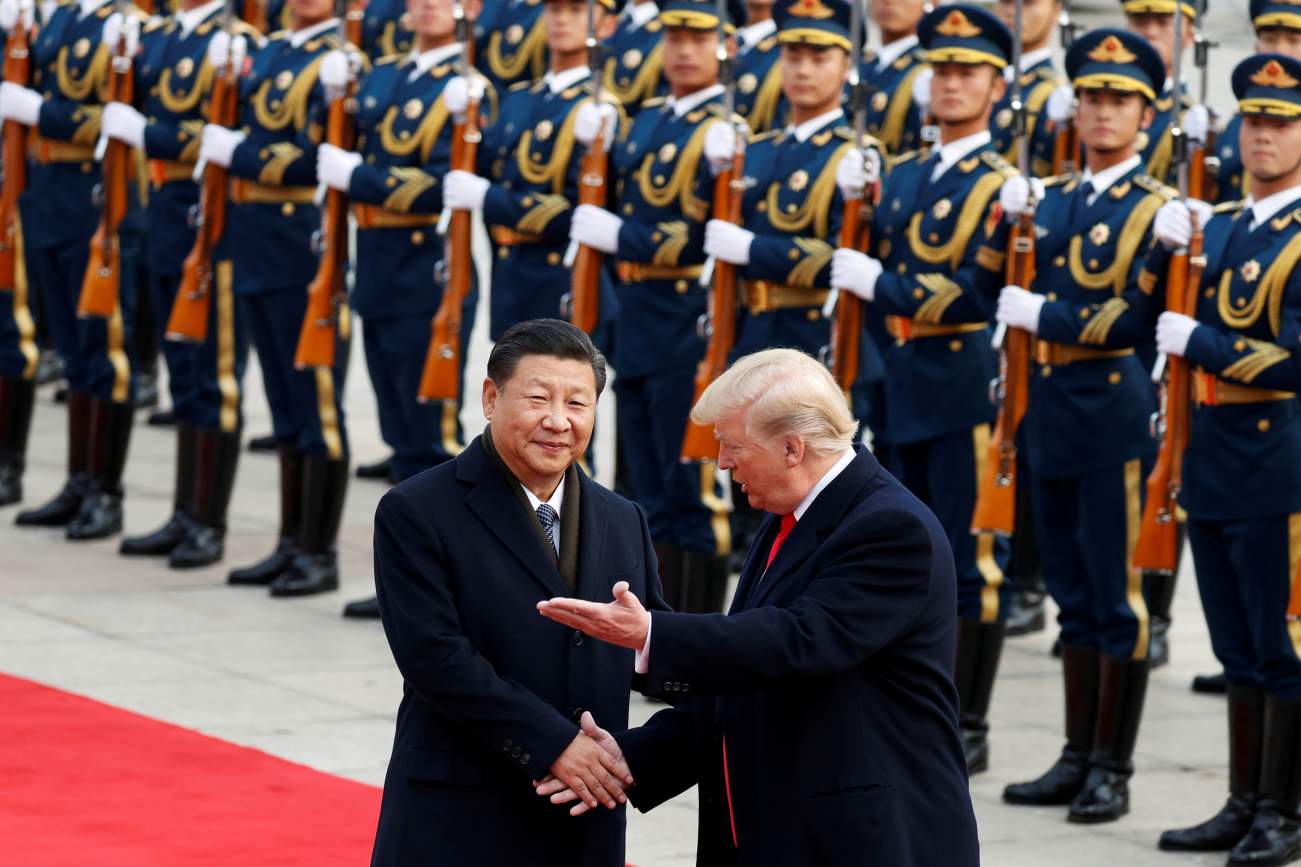
President Donald Trump and Chinese President Xi Jinping are due to dinethis weekend at the G-20 summit in Argentina, White House economic adviser Larry Kudlow said today. For all the many photo ops the G-20 will generate, this meal will be the summit’s only truly meaningful moment, writes Mohamed El-Erian. Trump and Xi have a chance to finally end the trade hostilities that have upset economies, corporate profits and financial markets all year. But to do so, both men will have to give something up, Mohamed writes. Xi, for example, will have to stop worrying about how a deal might hurt him domestically, while Trump will have one less controversy to rile up his base.Xi and Trump Should Swallow Their Pride and Join the TPP
Will Taiwan Be the First Domino to Fall to China?
Democratic countries that worry about the Chinese government’s attempts to influence their politics should study its success in this weekend’s elections in Taiwan.G-20: It’s ‘Now or Never’ in the ‘Fight of the Century’ Between Donald Trump and Xi Jinping
Lessons from Post-Conflict States: Peacebuilding Must Factor in Environment and Climate Change
The challenge of peacebuilding missions is not only to stop violence and prevent a rekindling of conflict, but also to help societies and governments reset their internal relations on a peaceful path towards sustaining peace. In the short run, it might be tempting to dismiss environmental issues when considering the insurmountable task of building peace after armed conflict. Yet, it is increasingly clear that the interaction between social, political, and ecological processes decisively shapes the post-conflict landscape.The Yemen War: A Proxy Sectarian War?
The diffusion of protests against authoritarian regimes across the Arab world in 2011 reinvigorated Yemen’s marginalized social movements and united different geographical and political factions in Yemen, such as the northern Houthi movement and the southern secessionist movement Hiraak.1 The Saudi Kingdom, along with other Gulf monarchies, swiftly designed a transitional plan for the country to ensure that President Ali Abdullah Saleh wass replaced with a friendly government led by President Abd Rabo Hadi. Disillusioned by the transition, the Houthis took military control of the capital Sana’a in September 2014, and Yemen descended into a civil war. On 26 March 2015, Saudi Arabia launched airstrikes on Yemen with the aim to restore the Saudi-backed Hadi government and destroy the Houthi movement. What was initially planned as a limited operation degenerated into a war of attrition without a conclusion insight. Scholars and policy analysts moved quickly to examine the Yemen war as a by-product of Saudi-Iranian rivalry and another manifestation of a region-wide war between Sunni and Shi’a Muslims. Yet, the crisis in Yemen is more complex; it is neither an international proxy war nor a sectarian confrontation.Our Man in Riyadh
The African Threat
Why Human Chess Survives
In Sea of Azov, Russia Again Tests Its Strength
On 25 November, the Russian coast guard denied access to two Ukrainian armoured artillery boats and a tugboat on their pre-planned transit through the Kerch Strait to Mariupol on the Sea of Azov. Russian forces reportedly assaulted the Ukrainian surface vessels, leaving the crew of 23 captive and 6 Ukrainian servicemen wounded. In the wake of the attack, Russia temporarily closed navigation to non-Russian traffic through the Strait, before reopening it on Monday.TRUMP IS LEADING AMERICA DOWN A CO2 HIGHWAY TO DISASTER | OPINION
RUSSIA VS. UKRAINE WAR: THIS IS HOW WEST WOULD RESPOND TO RUSSIAN INVASION
Elections Staged in Ukraine’s East Under Russian Control
Will Imperialist-Minded Putin Return the Kuriles to Japan?
Speaking on the sidelines of this year’s East Asia Summit (November 14–15), in Singapore, Russian President Vladimir Putin and Japanese Prime Minister Shinzล Abe agreed to step up negotiations on a bilateral peace treaty based on the 1956 Soviet-Japanese Declaration. At their previous meeting, just two months earlier, they also touched on this topic (RIA Novosti, November 14). The readout of the Putin-Abe talks in Singapore prompted many observers to speculate that Russia may be ready to return the disputed Kurile Islands (or at least two of them) back to Japan.Russian Caspian Flotilla’s Capacity to Project Force Threatens Littoral States and Ukraine
Moscow has been expanding the size and capabilities of its Caspian Flotilla. Most directly, this has implications for the Caspian littoral states and their development of oil and natural gas from the Caspian seabed. But it also impacts Ukraine and its coastline because the Russian authorities can and have transferred naval vessels from the Caspian to the Sea of Azov via the inland canals linking the two bodies of water. Russia began moving ships from the Caspian to the Azov Sea last spring; and over last several months, it has been deploying to the Caspian additional marines capable of attacking targets on land (see EDM, May 31; Vestnik Kavkaza, November 23).Despite US Sanctions on Iran, Green Light for the Southern Gas Corridor
The United States’ Federal Register published the “Iranian Transactions and Sanctions Regulations” on November 5, re-imposing US sanctions on Iran (Federalregister.gov, November 5). This expected action by Washington had raised concerns in Baku about the potential implications of renewed Iran sanctions on Azerbaijan’s Shah Deniz-II (SDII) natural gas field and the South Caucasus Pipeline (SCP), since the Naftiran Intertrade Company (NICO), a subsidiary of the National Iranian Oil Company, holds a 10 percent stake in each. These two segments are both key elements of the US and European–supported Southern Gas Corridor (SGC), which will deliver Caspian-basin gas to Southeastern Europe and help reduce Europe’s reliance on Russian Gazprom.In Serious Escalation, Russia Openly Attacks Ukrainian Vessels in Azov Sea
Change in the Air – Disruptive Developments in Armed UAV Technology
In this report, David Hambling highlights the military potential of small armed unmanned aerial vehicles (UAVs). Technological advances like the swarming technology and improved artificial intelligence are increasing the capabilities of small UAVs, making them more powerful and versatile. These new UAVs are more likely to be used in contested air space, rather than simply as counter-insurgency tools. In addition, they could be readily acquired and weaponized by malicious non-state actors. Given these trends, Hambling calls for States to develop forward-looking regulations to guide and control the further development of UAVs.Unmasking AI-assisted cyber attacks
The 'biggest loser' in the trade war is the US, says Hong Kong property tycoon
A Hong Kong property tycoon with close ties to the United States says Washington will ultimately regret waging a trade war against China.10 tech predictions for 2019
What Really Matters in ‘Defending Forward’?
Mattis’s Infantry Task Force: Righting ‘A Generational Wrong
Retired Maj. Gen. Bob Scales is the former commandant of the Army War College, a Vietnam veteran (and recipient of the Silver Star for valor) turned military historian and futurist. He’s also one of the fathers of Defense Secretary Jim Mattis’s Close Combat Lethality Task Force to reform the infantry. In this op-ed, Scales goes into the task force’s achievements, its rationale, and the decades of unnecessary bloodshed it seeks to end. — the editorsBritish Army soldiers during World War I
The forces needed to protect the Belt and Road
Last week’s attack on the Chinese consulate in Karachi by Baluchi separatists underlines China’s growing vulnerabilities in connection with its Belt and Road Initiative (BRI). These are likely to get worse and may ultimately lead to China assuming a new and quite different security role in the region.Major General equals Brigadier: How does that work?
Reorganizing, restructuring and generally getting the fighting forces fit for future wars is a good thing and the exercise undertaken by the army chief General Bipin Rawat to do just this needs to be commended. Some four sets of studies are underway, with some of them in a more advanced state wending their way up the army and MOD bureaucracy.