In the novel Midnight’s Children, Salman Rushdie interweaves his signature magical realism into the political geography of India surrounding the specific time, 12:00am 15 August 1947, that India came into existence as a nation state.[1] Rushdie identifies this moment of national political identity as inseparably linked to individual identity. In one of the many turns of the novel, the reader is presented with the sale of Methwold’s Estate. In the story, William Methwold sells his estate to an Indian family with the contractual stipulation that the family must continue to live exactly as the English inhabitants before them had until the moment of Indian independence, at which point the family could again live as Indians. The fictional contract imposes an English (read colonial/imperial/Western) geography over the estate being sold. The contract extends a political identity as well by defining the identity of the inhabitants concurrently with the state’s political borders. The family lacked the possibility to live as and be Indian until the stroke of midnight, because until that point there was no such place to bound such an identity. Borders are what Kamal Sadiq, borrowing Rushdie’s phrase, calls “midnight’s children.” Decolonization led to “[n]ew borders,” and “paths that were legal and customary became illegal overnight” forcing, through both inclusion and exclusion, new identities on the local inhabitants as the result of international geopolitical shifts.[2] In Rushdie’s tale law enforces political identity congruent with state geography. At midnight, though, everything changes.The Profession of Arms: A Guide for Young Army Officers
It takes courage, especially for a young officer, to check a man met on the road for not saluting properly or for slovenly appearance, but, every time he does, it adds to his stock of moral courage, and whatever the soldier may say, he has respect for the officer who does pull him up.
Read Document →The Dragon's Teeth: Assessing China's Military Modernization
PLA has focused on modernising its capabilities across all warfare domains to achieve these goals. This includes land, air, and maritime operations, nuclear, space, counter-space, electronic warfare and cyberspace operations, aiming to become a fully integrated joint force.
Read Document →Transforming the PLA: A Decade of reorganisation from SSF to ISF
PRC has engaged in a sustained and broad effort to transform the PLA from an infantry-heavy, low-technology, ground forces-centric military into a high-technology, networked force with an increasing emphasis on joint operations and naval and air power projection.
Read Document →Eyes without Borders: Exploring the World of Open Source Intelligence (OSINT) in the Digital Age
Open Source Intelligence (OSINT) is gaining prominence with the rise of social media, the digital society and the vast growth of publicly and commercially available information (PAI and CAI).
Read Document →
The PLA’s Developing Cyber Warfare Capabilities and India's Options
Informationised warfare blurs the lines between peacetime and wartime. A nation in the information age cannot wait for the hostilities to break out to collect intelligence, carryout influence operations, develop antisatellite systems or design computer software weapons.
Read Document →
Galwan and After
Why did China did this when he is under tremendous pressure in all fronts, is this China's salami slice tactics being progressed rigorously, what will be new Rules of Engagement, what will be escalatory control mechanism, who has taken this decision, will there be some pressure put by China in India's North-East through insurgency.
Read Document →
India’s Joint Doctrine for Cyberspace Operations: A Critical Review
Chief of Defence Staff (CDS) General Anil Chauhan and Secretary, Department of Military Affairs, formally released declassified versions of the Joint Doctrines for Cyberspace Operations during the Chiefs of Staff Committee meeting in New Delhi.
Read Document →
Know your Enemy General(now Field Marshal) Syed Aseem Munir
Gen SA Munir's position in the hierarchy of Pakistan was not very comfortable. The state of economy, insurgency in Pakhtoonistan and Balochistan, attack on the Jaffar Express, constant protests by supporters of Imran Khan's supporters inside and outside of parliament.
Read Document →
Decoding Operation SINDOOR: Key Aspects and Implications
Precision strikes were carried out on nine sites—four in Pakistan and five in PoK—linked to anti-India terrorist groups such as the LeT, JeM and the Hizbul Mujahideen. The targeted sites included Muridke (LeT headquarters) and Bahawalpur (JeM headquarters).
Read Document →
Chinese Cyber Exploitation in India's Power Grid - Is There a linkage to Mumbai Power Outage?
The New York Times (NYT), based on analysis by a U.S. based private intelligence firm Recorded Future, reported that a Chinese entity penetrated India’s power grid at multiple load dispatch points. Chinese malware intruded into the control systems that manage electric supply across India, along with a high-voltage transmission substation and a coal-fired power plant
Read Document →14 December 2019
Reprogramming the World: Political Places
In the novel Midnight’s Children, Salman Rushdie interweaves his signature magical realism into the political geography of India surrounding the specific time, 12:00am 15 August 1947, that India came into existence as a nation state.[1] Rushdie identifies this moment of national political identity as inseparably linked to individual identity. In one of the many turns of the novel, the reader is presented with the sale of Methwold’s Estate. In the story, William Methwold sells his estate to an Indian family with the contractual stipulation that the family must continue to live exactly as the English inhabitants before them had until the moment of Indian independence, at which point the family could again live as Indians. The fictional contract imposes an English (read colonial/imperial/Western) geography over the estate being sold. The contract extends a political identity as well by defining the identity of the inhabitants concurrently with the state’s political borders. The family lacked the possibility to live as and be Indian until the stroke of midnight, because until that point there was no such place to bound such an identity. Borders are what Kamal Sadiq, borrowing Rushdie’s phrase, calls “midnight’s children.” Decolonization led to “[n]ew borders,” and “paths that were legal and customary became illegal overnight” forcing, through both inclusion and exclusion, new identities on the local inhabitants as the result of international geopolitical shifts.[2] In Rushdie’s tale law enforces political identity congruent with state geography. At midnight, though, everything changes.How India and Japan Zoomed in on Northeast India
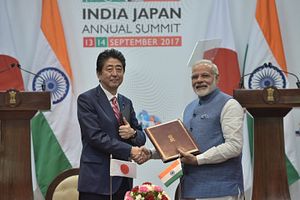
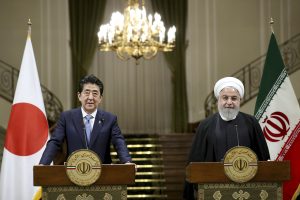
Over the past few years, northeast India has emerged as a new area of cooperation between Japan and India. In the wake of this trend, it is worth understanding the context for this as well as the underlying reasons for why this is occurring.India: Maoists’ Explosive Assertions – Analysis
Can Pakistan Comply With the FATF’s Demands on Convicting the Members of Banned Groups?
Last week, Pakistan submitted its progress report to the Financial Action Task Force’s (FATF) recommended action plan in a bid to escape the forum’s blacklist. The report submitted by Pakistan answers 22 questions that the FATF highlighted in its October meeting, when it asked for verifiable action from Islamabad in the next few months.Pakistan: Defenseless Elders – Analysis
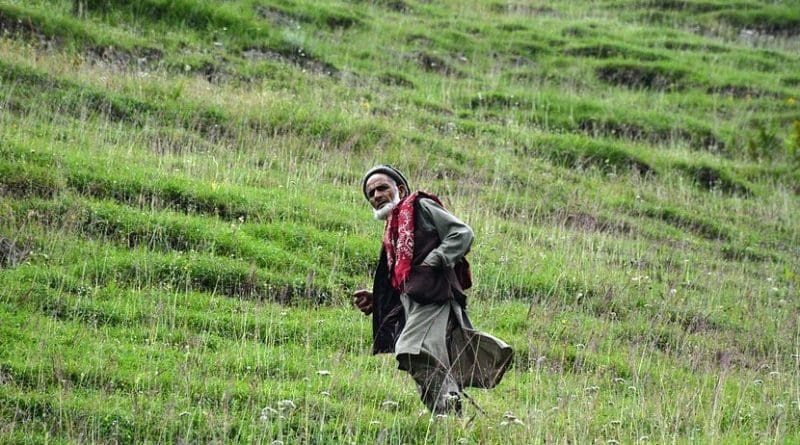
Tribal leader Malik Khan Gull and his son were killed in an explosion in the Tank area of Dera Ismail Khan District of Khyber Pakhtunkhwa (KP) on November 25, 2019. No group has claimed responsibility for the attack thus far.China’s successful repression in Tibet provides a model for Xinjiang
Japan’s Options in the South China Sea
The Chinese People’s Liberation Army (PLA) possesses overwhelming military capabilities in the South China Sea (SCS). And it is clear that no single nation in this region, Japan included, is able to match those capabilities.US-China Trade War: Impact on Capital Markets and Commodities
Trans-Pacific View author Mercy Kuo regularly engages subject-matter experts, policy practitioners, and strategic thinkers across the globe for their diverse insights into U.S. Asia policy. This conversation with Dimitri Zabelin – currency analyst specializing in international political economy and geopolitics with DailyFX.com – is the 216th in “The Trans-Pacific View Insight Series.”A Manufacturing Exodus in China—Fact or Fiction?
The U.S.-China trade war has now dragged on for more than a year, and a preliminary trade deal between the two sides appears to be on the brink of being reached soon. An initial trade deal could involve a rollback of tariffs that has been slapped on roughly $360 billion worth of Chinese goods and $160 billion worth of Chinese imports.Why Does China Say It Won't Use Nuclear Weapons First in War?
China has reaffirmed its policy of never being the first in a conflict to use nuclear weapons. Experts refer to this policy as “no first use,” or NFU.Missile Race: Does America or China Dominate the South China Sea?
This 1979 War Transformed the Chinese Military Forever
The Evolution of Chinese Corporate Social Responsibility
What Fox News Hasn't Told You about Qatar and Iran
Japan’s Iran Dilemma
Wake Up America: The Military-Industrial Complex Never Sleeps
Why Don't More Women Win Science Nobels?
How Trump May Finally Kill the WTO
GENEVA—In an ornate stone palace on the shores of Lake Geneva, just a stone’s throw from the Quai Wilson and the Palais des Nations, the Trump administration is waging its latest battle against the international order that the United States helped to build.The U.S. Dominates New Oil And Gas Production
Can the Paris Summit End Ukraine’s War?
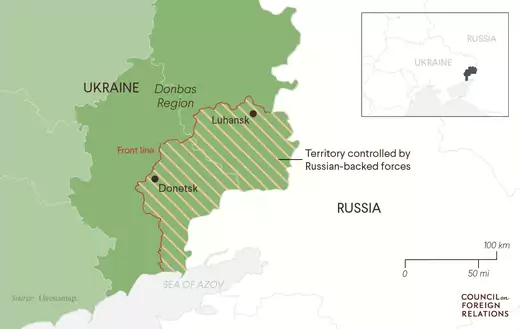
The summit will feature the highest-profile talks in years on the war between Ukraine and Russia-backed separatists, but the parties will have to bridge major divides to find a permanent end to the conflict.Pearl Harbor and the Strategy of Economic Sanctions
Opinion | Google’s Sundar Pichai could end up in an Alphabet soup
The cybersecurity battle of the future – AI vs. AI
Artificial intelligence and machine learning continue to gain a foothold in our everyday lives. Whether for complex tasks like computer vision and natural language processing, or something as basic as an online chatbot, their popularity shows no signs of slowing. Companies have also started to explore deep learning, which is an advanced subset of machine learning. By applying “deep neural networks” deep learning takes inspiration from how the human brain works. Unlike machine learning, deep learning can actually train its processes directly on raw data, requiring little to no human intervention.Cyberspace and the Struggle to Maintain and Manage It
Clash of Killer Robots? Japan’s Role in Preventing AI Apocalypse
Is Growth Passรฉ?
Are Facebook and Google State Actors? A Reply to Alan Rozenshtein
I argued previously that Section 230 of the Communications Decency Act, in combination with congressional pressure, has turned internet mega-platforms like YouTube and Facebook into state actors when they censor “objectionable” content. Alan Rozenshtein has replied, thoughtfully and critically. This is my response.