Pakistan shows there will be no clean victor in a war but finds an international community turned against it; for India, its air power deployment sounds alarm bells.The Profession of Arms: A Guide for Young Army Officers
It takes courage, especially for a young officer, to check a man met on the road for not saluting properly or for slovenly appearance, but, every time he does, it adds to his stock of moral courage, and whatever the soldier may say, he has respect for the officer who does pull him up.
Read Document →The Dragon's Teeth: Assessing China's Military Modernization
PLA has focused on modernising its capabilities across all warfare domains to achieve these goals. This includes land, air, and maritime operations, nuclear, space, counter-space, electronic warfare and cyberspace operations, aiming to become a fully integrated joint force.
Read Document →Transforming the PLA: A Decade of reorganisation from SSF to ISF
PRC has engaged in a sustained and broad effort to transform the PLA from an infantry-heavy, low-technology, ground forces-centric military into a high-technology, networked force with an increasing emphasis on joint operations and naval and air power projection.
Read Document →Eyes without Borders: Exploring the World of Open Source Intelligence (OSINT) in the Digital Age
Open Source Intelligence (OSINT) is gaining prominence with the rise of social media, the digital society and the vast growth of publicly and commercially available information (PAI and CAI).
Read Document →
The PLA’s Developing Cyber Warfare Capabilities and India's Options
Informationised warfare blurs the lines between peacetime and wartime. A nation in the information age cannot wait for the hostilities to break out to collect intelligence, carryout influence operations, develop antisatellite systems or design computer software weapons.
Read Document →
Galwan and After
Why did China did this when he is under tremendous pressure in all fronts, is this China's salami slice tactics being progressed rigorously, what will be new Rules of Engagement, what will be escalatory control mechanism, who has taken this decision, will there be some pressure put by China in India's North-East through insurgency.
Read Document →
India’s Joint Doctrine for Cyberspace Operations: A Critical Review
Chief of Defence Staff (CDS) General Anil Chauhan and Secretary, Department of Military Affairs, formally released declassified versions of the Joint Doctrines for Cyberspace Operations during the Chiefs of Staff Committee meeting in New Delhi.
Read Document →
Know your Enemy General(now Field Marshal) Syed Aseem Munir
Gen SA Munir's position in the hierarchy of Pakistan was not very comfortable. The state of economy, insurgency in Pakhtoonistan and Balochistan, attack on the Jaffar Express, constant protests by supporters of Imran Khan's supporters inside and outside of parliament.
Read Document →
Decoding Operation SINDOOR: Key Aspects and Implications
Precision strikes were carried out on nine sites—four in Pakistan and five in PoK—linked to anti-India terrorist groups such as the LeT, JeM and the Hizbul Mujahideen. The targeted sites included Muridke (LeT headquarters) and Bahawalpur (JeM headquarters).
Read Document →
Chinese Cyber Exploitation in India's Power Grid - Is There a linkage to Mumbai Power Outage?
The New York Times (NYT), based on analysis by a U.S. based private intelligence firm Recorded Future, reported that a Chinese entity penetrated India’s power grid at multiple load dispatch points. Chinese malware intruded into the control systems that manage electric supply across India, along with a high-voltage transmission substation and a coal-fired power plant
Read Document →9 March 2019
What Pulwama-Balakot proves: A ‘third’ actor can still push India and Pakistan into a war
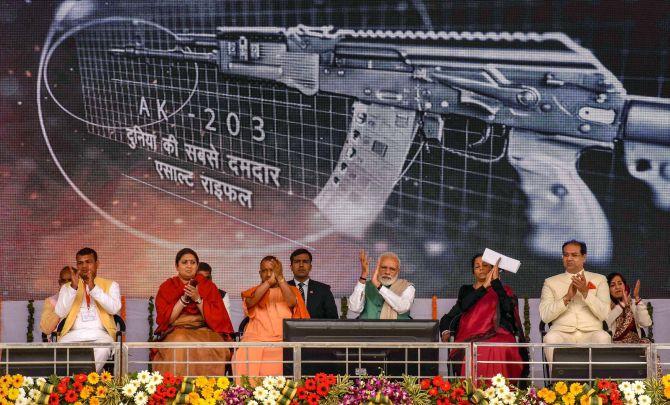
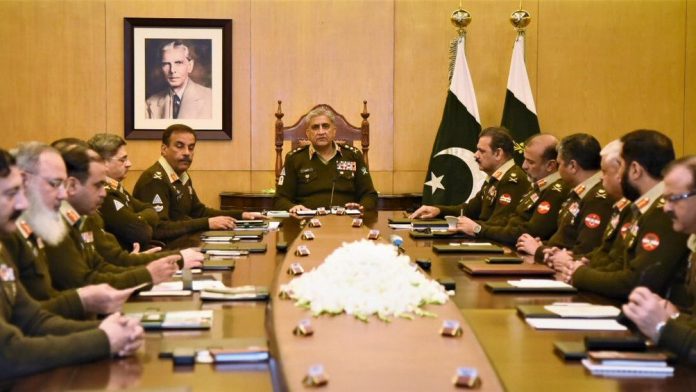
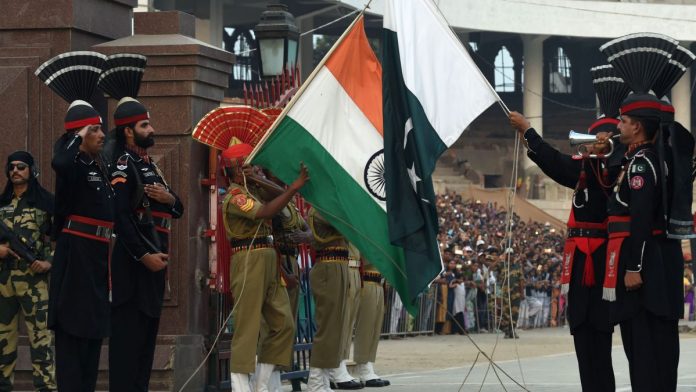
Pakistan shows there will be no clean victor in a war but finds an international community turned against it; for India, its air power deployment sounds alarm bells.The Military Balance Between India And Pakistan
Pakistan now claims to have shot down two Indian jets and captured one of their their pilots after a MIG-21 Bison fighter crashed in its territory. India made no comments on those claims but the country’s ANI news agency also reported on Wednesday that a Pakistani F-16 fighter jet was also shot down.Why the India-Pakistan Crisis Isn’t Likely to Turn Nuclear
'Unlikely Modi will take another swing at Pak'
Seven years ago, in the spring of 2012, Christopher Clary, then a PhD candidate in political science at MIT, forecast What an India-Pakistan war might look like(external link).Trump Announces Decision to Revoke India’s ‘Developing Country’ GSP Status
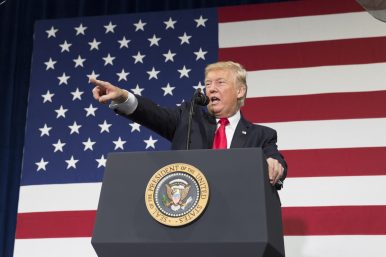
On Monday evening, U.S. President Donald J. Trump announced in a letter to the U.S. Congress that he had decided to end a favorable trade provision for India, along with Turkey. The decision refers to India’s status as a developing country under the Generalized System of Preferences (GSP) program. The U.S. decision is likely to affect as much as $5.6 billion in Indian goods.Pakistan won’t abandon its proxy war after Balakot, but will find new ways of waging it
If India’s political and public reaction is excessive, it might compel the Pakistani military leadership to escalate in an attempt to save face.Islamic Countries Engage with China Against the Background of Repression in Xinjiang
Throughout 2018, a steadily growing body of evidence revealed the existence of a vast network of detainment facilities in China’s western Xinjiang Province, in which hundreds of thousands of Uighurs—a Turkic-speaking and majority Muslim ethnic group—are or have been confined for extended periods of time (China Brief, May 15 2018; China Brief, November 5 2018). Many of these facilities function as “transformation through education” centers, in which detainees are made subject to abusive treatment and severe psychological pressure to proclaim loyalty to the Chinese Communist Party (CCP) (China Brief, February 1; Freedom House, February 13). Even outside such facilities, the Chinese authorities have created a pervasive surveillance regime in Xinjiang that is one of the most repressive in the world (Human Rights Watch, September 9 2018;Congressional Executive Commission on China, July 26 2018).Rivalries and Relics: Examining China’s Buddhist Public Diplomacy
China’s Not At All Autonomous Xinjiang Uyghur Autonomous Region – Analysis
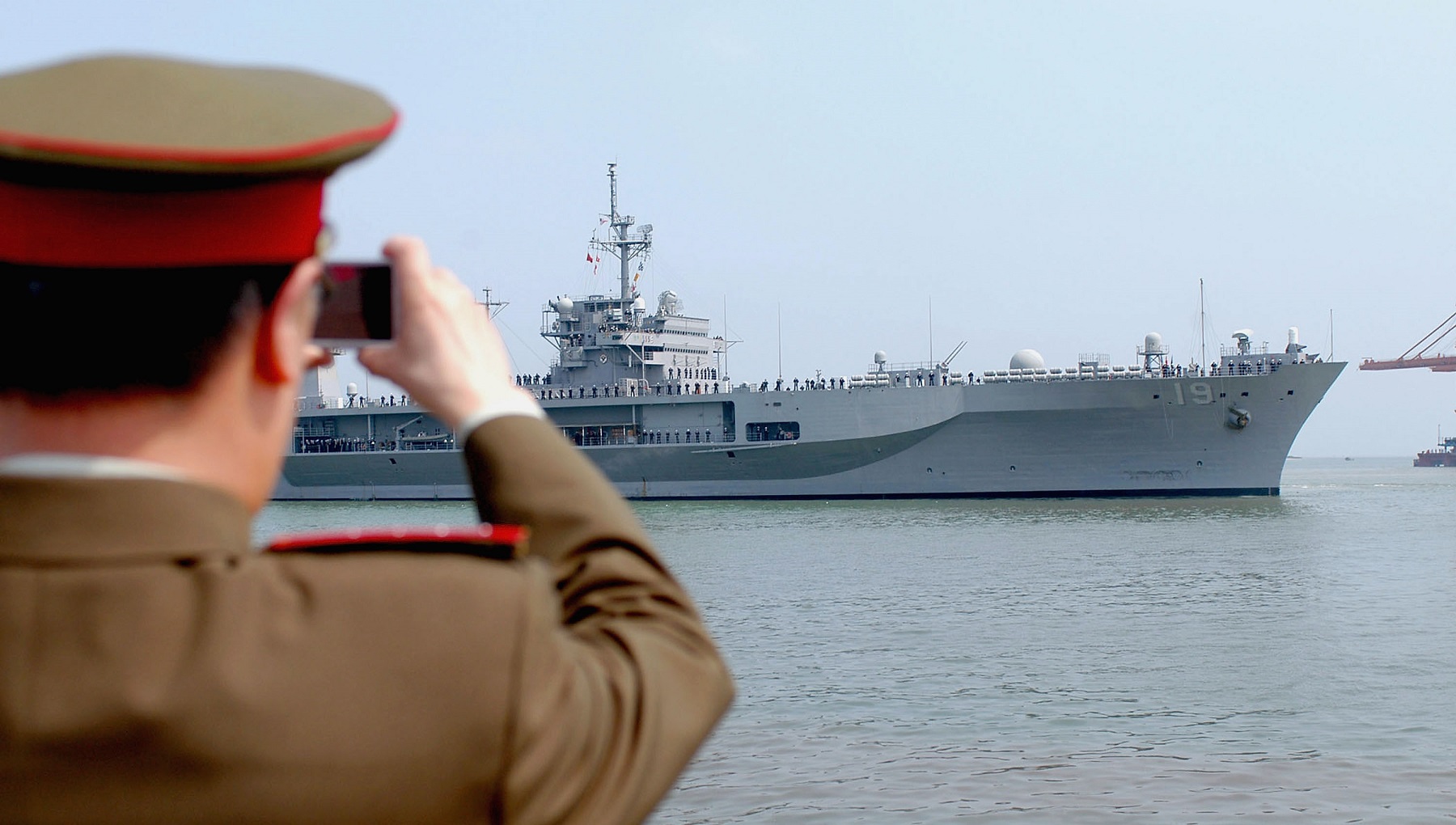
(FPRI) — The northwestern-most area of the People’s Republic of China has fit uneasily into the PRC since the day its leaders bowed to the inevitable and declared their allegiance to the Chinese Communist Party (CCP). Then mostly populated by Turkic Muslims who felt more kinship with Central Asia, the area had been incorporated into China as a province only in 1884, after the Manchu Qing dynasty feared that Czarist Russia had designs on it: the name itself means “New Territory.” The Soviet Union also coveted the area and, despite repeated affirmations of friendship with the PRC, maintained control of several districts in the north of Xinjiang until 1954. When Mao Zedong’s 1958 Great Leap Forward caused the death of millions, the U.S.S.R. was happy to give asylum to refugees, even providing them with a radio station to urge those who remained in China to join them, since life was so much better on the Soviet side of the border.The Future of China-U.S. Military Relations
The Problem With Xi’s China Model
Are We Seeing the Mekong River's 'Last Days'?
In the introduction to his new book, Brian Eyler cautions that “the reader should not get the impression from the book’s title that the Mekong River is in its death throes.” Yet 320 pages later, he signs off with a warning: “Unless we begin today to see the river and the landscape around it as a connected system and act jointly for its conservation, the Mighty Mekong’s last days are here and now.” Regardless of the impressions Eyler wishes to convey — of the river itself, of China, of the other five riparian nations, of the peoples and cultures within its basin — his final words are the far more convincing. To his credit, Eyler offers an unbiased, balanced, and nuanced sitrep of the challenges facing the Mekong, and one cannot begrudge him a hopeful, if not optimistic, perspective. But his facts, expertly marshaled and managed, ultimately betray him: at every level of elevation, latitude, organization, and politics, Eyler’s “connected system” is being pulled apart.The Erasure of the Islamic State's Caliphate Won't Ensure Its Defeat
Like It or Not in Iraq, U.S. Ties Are Here to Stay
Maximum Pressure Yields Minimum Results
A much-awaited summit between U.S. President Donald Trump and North Korean leader Kim Jong Un collapsed soon after it began last week when the two parties failed to reach an agreement that would satisfy them both. Both sides had hoped to get their interlocutor to give up a critical lever: Trump sought North Korean denuclearization, and Kim wanted sanctions relief. To get to the negotiating table, the Trump administration had imposed what it called “maximum pressure”—harsh sanctions and military threats designed to force an adversary to change its behavior—around which Trump’s foreign-policy doctrine increasingly seems to revolve.Why America is Losing the Plot in Asia
We’ll Soon Learn Whether You Can Post 3D-Gun Plans Online
A proposed export-rules change has snagged over the question: is publishing such designs a boon to U.S. business or foreign terrorists?Iran's Syria Strategy: The Evolution of Deterrence
National Counter-Information Operations Strategy
American democracy is under attack. From the daily news to our social media feeds, nation-state competitors target the United States and its citizens, seeking to fuel division and chaos at home while undermining our interests abroad and our will to defend them. It is critical that policymakers and citizens understand these threats and how to counter them. This playbook seeks to ensure that U.S. citizens, not foreign actors, determine the future of U.S. democracy.Russia Goes on a Global Search for Opportunity
Fears Rise in Nigeria as Opposition Leader Moves to Challenge Election Results
What Scares Russia’s Generals the Most? Russians
Modern weaponry plays a big role in these mutual threats. But Russian Chief of General Staff Valery Gerasimov is now fretting that the U.S. will deploy a “Trojan horse” strategy of fostering a fifth column within Russia and its allies. That the general should be looking so publicly over his shoulder at his own people should trouble citizens.Mourning the INF Treaty
An Overview Of French Colonialism In The Maghreb – Analysis
In the European race to divide the land of the world among themselves during the colonial era, Morocco, Tunisia, and Algeria were each separately colonized by the French. As a matter of fact, French colonialism was manifested differently within each country, particularly in Algeria, where the colonial impact was much more dramatic than in either Morocco or Tunisia.THE NSA MAKES GHIDRA, A POWERFUL CYBERSECURITY TOOL, OPEN SOURCE
THE NATIONAL SECURITY Agency develops advanced hacking tools in-house for both offense and defense—which you could probably guess even if some notable examples hadn't leaked in recent years. But on Tuesday at the RSA security conference in San Francisco, the agency demonstrated Ghidra, a refined internal tool that it has chosen to open source. And while NSA cybersecurity adviser Rob Joyce called the tool a "contribution to the nation’s cybersecurity community" in announcing it at RSA, it will no doubt be used far beyond the United States.