India and Russia are expected to hammer out a deal for four more Krivak/Talwar class stealth frigates for the navy in October when Prime Minister Narendra Modi and president Vlamidir Putin meet in New Delhi for an annual summit. India and Russia are expected to hammer out a deal for four more Krivak/Talwar class stealth frigates for the navy in October when Prime Minister Narendra Modi and president Vlamidir Putin meet in New Delhi for an annual summit between the two countries,two senior officials familiar with the matter, said on Tuesday. Two of the warships will be constructed at the Yantar Shipyard in Kaliningrad and the remaining two at the Goa Shipyard Limited (GSL).The Profession of Arms: A Guide for Young Army Officers
It takes courage, especially for a young officer, to check a man met on the road for not saluting properly or for slovenly appearance, but, every time he does, it adds to his stock of moral courage, and whatever the soldier may say, he has respect for the officer who does pull him up.
Read Document →The Dragon's Teeth: Assessing China's Military Modernization
PLA has focused on modernising its capabilities across all warfare domains to achieve these goals. This includes land, air, and maritime operations, nuclear, space, counter-space, electronic warfare and cyberspace operations, aiming to become a fully integrated joint force.
Read Document →Transforming the PLA: A Decade of reorganisation from SSF to ISF
PRC has engaged in a sustained and broad effort to transform the PLA from an infantry-heavy, low-technology, ground forces-centric military into a high-technology, networked force with an increasing emphasis on joint operations and naval and air power projection.
Read Document →Eyes without Borders: Exploring the World of Open Source Intelligence (OSINT) in the Digital Age
Open Source Intelligence (OSINT) is gaining prominence with the rise of social media, the digital society and the vast growth of publicly and commercially available information (PAI and CAI).
Read Document →
The PLA’s Developing Cyber Warfare Capabilities and India's Options
Informationised warfare blurs the lines between peacetime and wartime. A nation in the information age cannot wait for the hostilities to break out to collect intelligence, carryout influence operations, develop antisatellite systems or design computer software weapons.
Read Document →
Galwan and After
Why did China did this when he is under tremendous pressure in all fronts, is this China's salami slice tactics being progressed rigorously, what will be new Rules of Engagement, what will be escalatory control mechanism, who has taken this decision, will there be some pressure put by China in India's North-East through insurgency.
Read Document →
India’s Joint Doctrine for Cyberspace Operations: A Critical Review
Chief of Defence Staff (CDS) General Anil Chauhan and Secretary, Department of Military Affairs, formally released declassified versions of the Joint Doctrines for Cyberspace Operations during the Chiefs of Staff Committee meeting in New Delhi.
Read Document →
Know your Enemy General(now Field Marshal) Syed Aseem Munir
Gen SA Munir's position in the hierarchy of Pakistan was not very comfortable. The state of economy, insurgency in Pakhtoonistan and Balochistan, attack on the Jaffar Express, constant protests by supporters of Imran Khan's supporters inside and outside of parliament.
Read Document →
Decoding Operation SINDOOR: Key Aspects and Implications
Precision strikes were carried out on nine sites—four in Pakistan and five in PoK—linked to anti-India terrorist groups such as the LeT, JeM and the Hizbul Mujahideen. The targeted sites included Muridke (LeT headquarters) and Bahawalpur (JeM headquarters).
Read Document →
Chinese Cyber Exploitation in India's Power Grid - Is There a linkage to Mumbai Power Outage?
The New York Times (NYT), based on analysis by a U.S. based private intelligence firm Recorded Future, reported that a Chinese entity penetrated India’s power grid at multiple load dispatch points. Chinese malware intruded into the control systems that manage electric supply across India, along with a high-voltage transmission substation and a coal-fired power plant
Read Document →15 September 2018
India, Russia likely to sign warship deal at Modi-Putin meet next month
India and Russia are expected to hammer out a deal for four more Krivak/Talwar class stealth frigates for the navy in October when Prime Minister Narendra Modi and president Vlamidir Putin meet in New Delhi for an annual summit. India and Russia are expected to hammer out a deal for four more Krivak/Talwar class stealth frigates for the navy in October when Prime Minister Narendra Modi and president Vlamidir Putin meet in New Delhi for an annual summit between the two countries,two senior officials familiar with the matter, said on Tuesday. Two of the warships will be constructed at the Yantar Shipyard in Kaliningrad and the remaining two at the Goa Shipyard Limited (GSL).Vivekananda Is To Spirituality What Einstein Is To Modern Physics
When Sri Aurobindo Invoked The Strength Of India
A Cheer for Trump’s Outreach to the Taliban
In July, The Times reported that the Trump administration directed the State Department to open direct talks with the Afghan Taliban, to see whether formal talks between the Afghan government and the Taliban are possible. Taliban officials soon claimed to have met with American diplomats, an assertion that American officials have not publicly commented on. This week, Secretary of State Mike Pompeo announced while on his way to Pakistan that Zalmay Khalilzad, a former ambassador to Afghanistan, would become an adviser on achieving reconciliationthere.China’s partners should not turn a blind eye to fate of Uighurs
China Can’t Afford a Cashless Society
As payment by phone accelerates in China, the reach of the biggest digital corporations are making its banking regulators uneasy. In Chinese cities, paying via the ubiquitous WeChat platform is now so common that vendors often have trouble making change for cash, or sometimes refuse to take it altogether. That’s prompted pushback from the state-owned banks. Anhui province’s branch of the People’s Bank of China (PBOC), recently began a working group to tackle the problem. Wang Yazhou, a senior banking official in Hefei, the province’s capital, commented a thorough cleanup was needed because refusing cash payments would be likely to have a very negative impact.Trade War Update: China Trade Unfazed By Trump Tariffs
Why Idlib Matters
On the Anniversary of 9/11, We Reflect on the War Against Jihadism
Seventeen years after the 9/11 attacks — and 30 years after the founding of al Qaeda — there is no end in sight to the wars against jihadists. Like communist groups in the 20th century, jihadist groups are likely to split further in the 21st century due to differences in personality, theology and vision. Because military might can only go so far in defeating an ideology, governments such as the United States will use military force to limit the power and reach of the jihadists in an effort to defeat them ideologically.The U.S. Would Share in the Pain of Auto Tariffs
U.S. tariffs on imported vehicles and their components, possibly coming in the next six months, would drive up prices for cars and light trucks on the domestic market. Heavy tariffs would raise U.S. auto prices in general, but automakers that rely on imported vehicles would be hit hardest. The tariffs would erode sales of more affordable vehicles produced outside North America by companies such as Hyundai, Volkswagen and BMW and could stall these companies' plans to expand their U.S. market share until at least the mid-2020s. Considering domestic political factors, including the next presidential election in 2020, the current administration may choose less disruptive options, such as exempting NAFTA members from tariffs.Here's What the New U.S. Strategy in Syria Means For Russia
Balkan Futures: Three Scenarios for 2025
Brexit, Defence, and the EU’s Quest for ‘Strategic Autonomy’
There is more joy in heaven (or so we are told, on the best available authority) over one sinner who repents than over ninety-nine already-righteous folk. On that basis, fatted calves in the vicinity of Brussels should have been keeping a very low profile as the British, after long years decrying and obstructing European defence integration, have rediscovered an unconditional commitment to Europe’s security, and pressed for the closest possible post-Brexit partnership. Yet the European Union negotiators’ response to this change of heart has been less than rapturous – and, in the matter of the Galileo satellite project, frankly disobliging. They seem unmoved by the growing likelihood that Brexit will do major damage to cross-Channel defence research and industry cooperation, and thus to the EU’s own aspiration to build Europe’s strength in these areas. That aspiration is part of the wider ambition that Europe should increasingly strive to stand on its own feet when it comes to defence and security – ‘strategic autonomy’, in the jargon. So why the EU coolness towards the British overtures?Israel allocates 2.7 mln USD to protect essential factories from cyber attacks
Counterterror Costs Since 911: $2.8 TRILLION And Climbing
WASHINGTON: After a small group of forlorn men huddled in the middle of Afghanistan succeeded in their plan to strike the World Trade Center towers and the Pentagon, America declared a global war against them. That war has sucked almost $3 trillion dollars from the US, according to a study by the respected Stimson Center here. That figure includes expenditures for homeland security efforts, international programs, and the wars in Afghanistan, Iraq, and Syria — and it does not include fiscal 2018. (In their explanation of what they considered to be CT spending, the study group admits their estimate is “imprecise” in part because “it is subject to problematic definitions and accounting procedures.”)A 10-degree shift in Syria strategy
Policy Roundtable: 17 Years After September 11
Stratfor’s 2018 Fourth-Quarter Forecast
Taking Stock of a Shifting World Order
Distinguished members of the U.S. foreign policy establishment had been expressing concern about the erosion of the liberal world order well before Donald Trump's election in 2016. Emerging powers such as China and India had become increasingly vocal in citing the disconnect between the post-1945 balance that it reflected and the continuing shift of global weight to the Asia-Pacific. The downturn of 2008-09 had undermined confidence in both America's competence as a macroeconomic steward and its health as a democratic polity. And it had become axiomatic to note that a state-centric architecture aimed at preventing a third world war was increasingly incapable of incorporating nonstate actors into its deliberations and mobilizing collective action to tackle borderless challenges.Russia's Use of Media and Information Operations in Turkey
Russian media have sought to undermine Turkey's political and security cooperation with the United States and Europe by exacerbating mutual skepticism and highlighting policy differences. In Turkey, Russian media have also contributed to anti-American discourse and have reinforced and informed the Turkish government's own propaganda pursuits. This analysis assesses how Russia has used media and information operations to pursue its foreign policy goals related to Turkey. It examines Russian media responses to three significant events in Turkey: (1) Turkey's November 2015 shootdown of a Russian military aircraft, (2) the July 2016 Turkish coup attempt, and (3) the December 2016 assassination of the Russian ambassador. age Against The Machine: A Leading Google Critic On Why He Thinks The Era Of ‘Big Data’ Is Done; Why He Opposes POTUS Trump’s Talk Of Regulation; And, The Promise Of Blockchain
The Case for a National Cybersecurity Agency
Recent reports that Russia has been attempting to install malware in our electrical grid and that its hackers have infiltrated utility-control rooms across America should constitute a significant wakeup call. Our most critical infrastructure systems are vulnerable to malicious foreign cyberactivity and, despite considerable effort, the collective response has been inadequate. As Director of National Intelligence Dan Coats ominously warned, “The warning lights are blinking red.” U.S. Silently Enters New Age of Cyberwarfare
The Known Known
In 1999, when Scott McNealy, the founder and CEO of Sun Microsystems, declared, “You have zero privacy…get over it,” most of us, still new to the World Wide Web, had no idea what he meant. Eleven years later, when Mark Zuckerberg said that “the social norms” of privacy had “evolved” because “people [had] really gotten comfortable not only sharing more information and different kinds, but more openly and with more people,” his words expressed what was becoming a common Silicon Valley trope: privacy was obsolete. By then, Zuckerberg’s invention, Facebook, had 500 million users, was growing 4.5 percent a month, and had recently surpassed its rival, MySpace. Twitter had overcome skepticism that people would be interested in a zippy parade of 140-character posts; at the end of 2010 it had 54 million active users. (It now has 336 million.) YouTube was in its fifth year, the micro-blogging platform Tumblr was into its third, and Instagram had just been created. Social media, which encouraged and relied on people to share their thoughts, passions, interests, and images, making them the Web’s content providers, were ascendant. OODA Loops in Cyberspace: How Cyber Awareness Training Helps Threat Actors
Why Cyber Arms Control Is Not a Lost Cause
Sectarianism in the Middle East
Present unrest in the Middle East has many causes and takes on many forms. A collective sense of disenfranchisement, inadequate governance, geopolitical discord, and religious extremism all contribute to the conflicts in Iraq, Iran, Syria, Yemen, and Libya. Many Western observers and policymakers view unrest in the Middle East through the lens of binary religious sectarianism, focusing on the divisions between Sunni and Shi'a Muslims. This split is most clearly articulated in the geopolitical competition between Saudi Arabia and Iran, and it plays out through violence in Iraq and Syria. But the complexities of human identity and of regional culture and history do not lend themselves to this arguably too-simplistic interpretation of the situation. The authors analyze sectarianism in the region, evaluate other factors that fan the flames of violent conflict, and suggest a different interpretation of both identity and the nature of regional unrest.The commercial imagery that will benefit national security challenges
The National Geospatial-Intelligence Agency and National Reconnaissance Office announced Sept. 5 that the EnhancedView contract will be transferred from NGA to the NRO. Nearly a decade ago, the NGA awarded contracts worth over $7 billion to a pair of commercial satellite companies. The EnhancedView commercial imagery program built on existing government contracting for images from commercial satellites, and was designed to pay out over the next decade, ensuring government agencies got the intelligence they needed from cameras in orbit. When the contracts were first awarded in 2010, EnhancedView was offered as a mechanism to provide “greater access, priority tasking and improved capability and capacity to government customers from the next series of U.S. commercial imagery satellites.”Managing World War
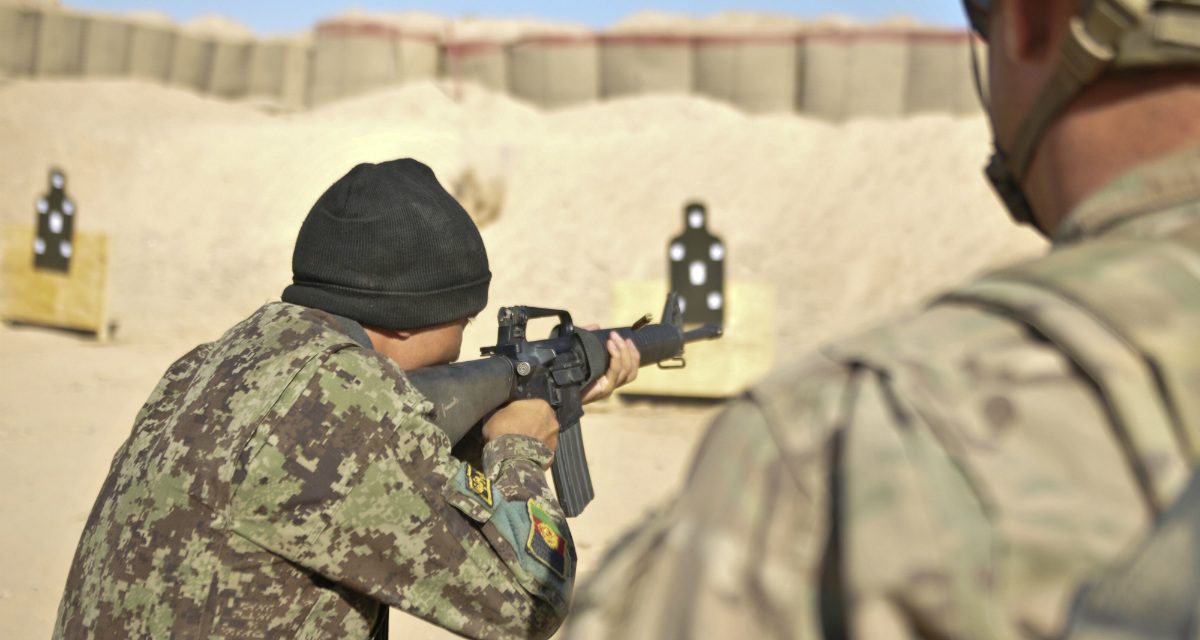
THE CRISIS OF AMERICAN MILITARY ASSISTANCE: STRATEGIC DITHERING AND “FABERGร EGG” ARMIES
Editor’s note: In this article in the journal Defense & Security Analysis, MWI Non-Resident Fellow Dr. Jahara Matisek considers the way in which the US government conducted military assistance during the Cold War and the way in which this “model” is difficult to implement in the contemporary era of weak states where US politicians engage in strategic dithering. Since coming to office, the Trump administration has been substantially cutting resources for the US State Department and other diplomatic “peacemaking” agencies in the US government. Reducing support for the State Department goes against the personal views of Secretary of Defense James Mattis. In 2013, when Gen. Mattis was serving as commander of US Central Command, he told the Senate Armed Services Committee, “If you don’t fund the State Department fully, then I need to buy more ammunition.”