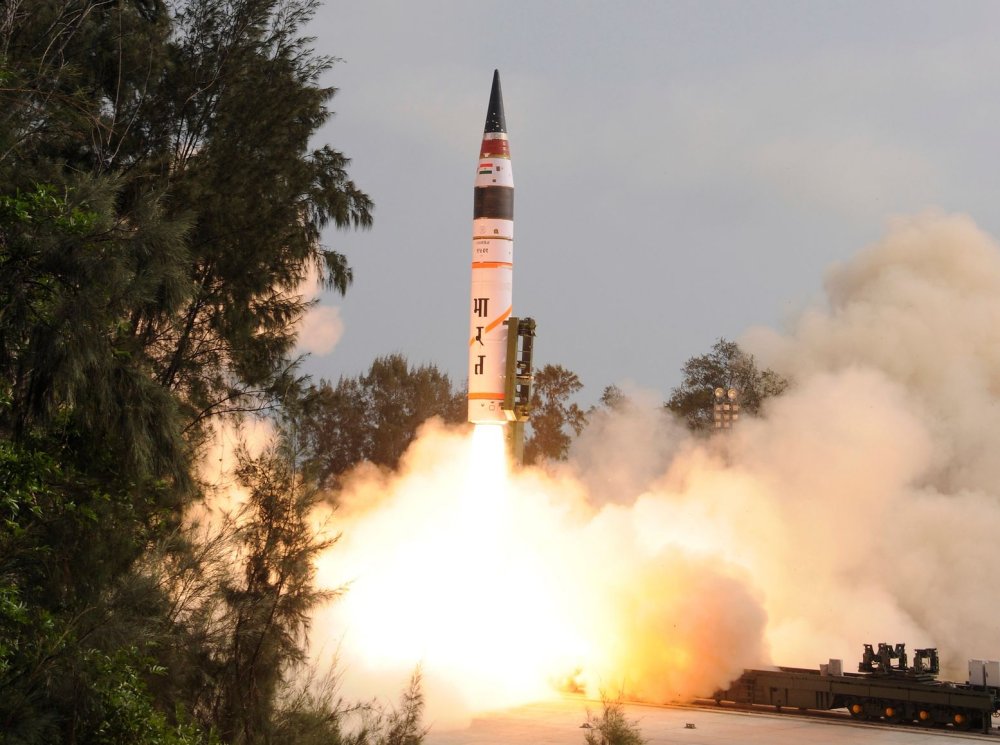
In what ways will India’s capabilities benefit the strategic interests of the United States and its allies and partners?The Profession of Arms: A Guide for Young Army Officers
It takes courage, especially for a young officer, to check a man met on the road for not saluting properly or for slovenly appearance, but, every time he does, it adds to his stock of moral courage, and whatever the soldier may say, he has respect for the officer who does pull him up.
Read Document →The Dragon's Teeth: Assessing China's Military Modernization
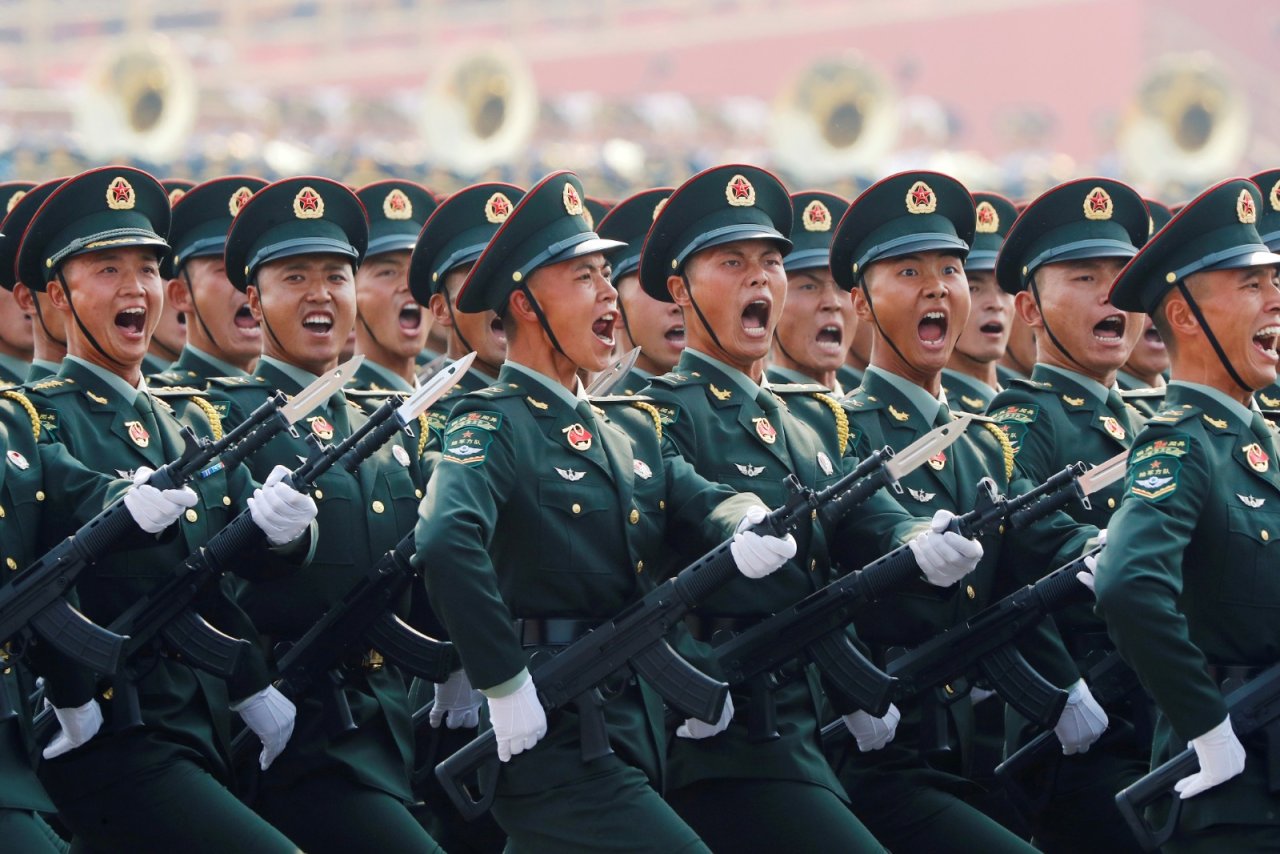
PLA has focused on modernising its capabilities across all warfare domains to achieve these goals. This includes land, air, and maritime operations, nuclear, space, counter-space, electronic warfare and cyberspace operations, aiming to become a fully integrated joint force.
Read Document →Transforming the PLA: A Decade of reorganisation from SSF to ISF
PRC has engaged in a sustained and broad effort to transform the PLA from an infantry-heavy, low-technology, ground forces-centric military into a high-technology, networked force with an increasing emphasis on joint operations and naval and air power projection.
Read Document →Eyes without Borders: Exploring the World of Open Source Intelligence (OSINT) in the Digital Age
Open Source Intelligence (OSINT) is gaining prominence with the rise of social media, the digital society and the vast growth of publicly and commercially available information (PAI and CAI).
Read Document →
The PLA’s Developing Cyber Warfare Capabilities and India's Options
Informationised warfare blurs the lines between peacetime and wartime. A nation in the information age cannot wait for the hostilities to break out to collect intelligence, carryout influence operations, develop antisatellite systems or design computer software weapons.
Read Document →
Galwan and After
Why did China did this when he is under tremendous pressure in all fronts, is this China's salami slice tactics being progressed rigorously, what will be new Rules of Engagement, what will be escalatory control mechanism, who has taken this decision, will there be some pressure put by China in India's North-East through insurgency.
Read Document →
India’s Joint Doctrine for Cyberspace Operations: A Critical Review
Chief of Defence Staff (CDS) General Anil Chauhan and Secretary, Department of Military Affairs, formally released declassified versions of the Joint Doctrines for Cyberspace Operations during the Chiefs of Staff Committee meeting in New Delhi.
Read Document →
Know your Enemy General(now Field Marshal) Syed Aseem Munir
Gen SA Munir's position in the hierarchy of Pakistan was not very comfortable. The state of economy, insurgency in Pakhtoonistan and Balochistan, attack on the Jaffar Express, constant protests by supporters of Imran Khan's supporters inside and outside of parliament.
Read Document →
Decoding Operation SINDOOR: Key Aspects and Implications
Precision strikes were carried out on nine sites—four in Pakistan and five in PoK—linked to anti-India terrorist groups such as the LeT, JeM and the Hizbul Mujahideen. The targeted sites included Muridke (LeT headquarters) and Bahawalpur (JeM headquarters).
Read Document →
Chinese Cyber Exploitation in India's Power Grid - Is There a linkage to Mumbai Power Outage?
The New York Times (NYT), based on analysis by a U.S. based private intelligence firm Recorded Future, reported that a Chinese entity penetrated India’s power grid at multiple load dispatch points. Chinese malware intruded into the control systems that manage electric supply across India, along with a high-voltage transmission substation and a coal-fired power plant
Read Document →14 November 2019
Is India Ready to the Play the Role in Asian Geopolitics That the US Has Long Sought?
In what ways will India’s capabilities benefit the strategic interests of the United States and its allies and partners?The Russo-Indian AK-203 Venture: A Case Study in Defense Pragmatism?
What does India’s decision to enter into a massive rifle production joint venture with Russia say about its priorities?The corridor is a trap that Pakistan has set for India | Opinion
Seventy years of betrayal, dissembling, and, of course, terrorism and wars imposed on India should have been enough to convince every Indian to not expect anything good from Pakistan. If anything, India by now should have internalised the maxim: If it is from Pakistan, look every gift horse in the mouth. And yet, India has willingly, nay eagerly, accepted the “offer” from Pakistan to open a “corridor” providing pilgrims easy access to the Gurdwara Darbar Sahib in Kartarpur.World War III Questions: Would Nuclear Weapons Be Used in a China-India War?
‘That mission is not yet complete’: Joint Chiefs of Staff chairman on 18 years in Afghanistan
Chairman of the Joint Chiefs of Staff General Mark Milley said the 18-year mission in Afghanistan is not over.China, US in battle for space supremacy
China: The Great Rebalancing
China's Type 99 Tank Is Here (And It Can Wage War Against Anyone)
This Is Why A Conflict Between China and America Could Quickly Spiral Out Of Control
US–China Strategic Competition: The Quest for Global Technological Leadership
The current dispute between the US and China goes far beyond trade tariffs and tit-for-tat reprisals: the underlying driver is a race for global technological supremacy. This paper examines the risks of greater strategic competition as well as potential solutions for mitigating the impacts of the US–China economic confrontation.Migration Governance: Between Skills Needs and Social Constraints
As communication and travel have become easier and faster, international migration has increased to meet the demand and supply of migrant labour. Consequently, while the global population doubled in the last 50 years, international migration tripled over the same period (UN, 2015). More specifically, as of 2015, the global migration stock, or people living in a country not of their birth, was approximately 247 million, which represents a 200 percent increase in the past 50 years (UN, 2015). This development makes the debate over a migration governance framework a key challenge for public policy, especially for Gulf Cooperation Council (GCC) states, and the UAE in particular.A Month After U.S. Withdrawal, What is the State of Play in Syria?
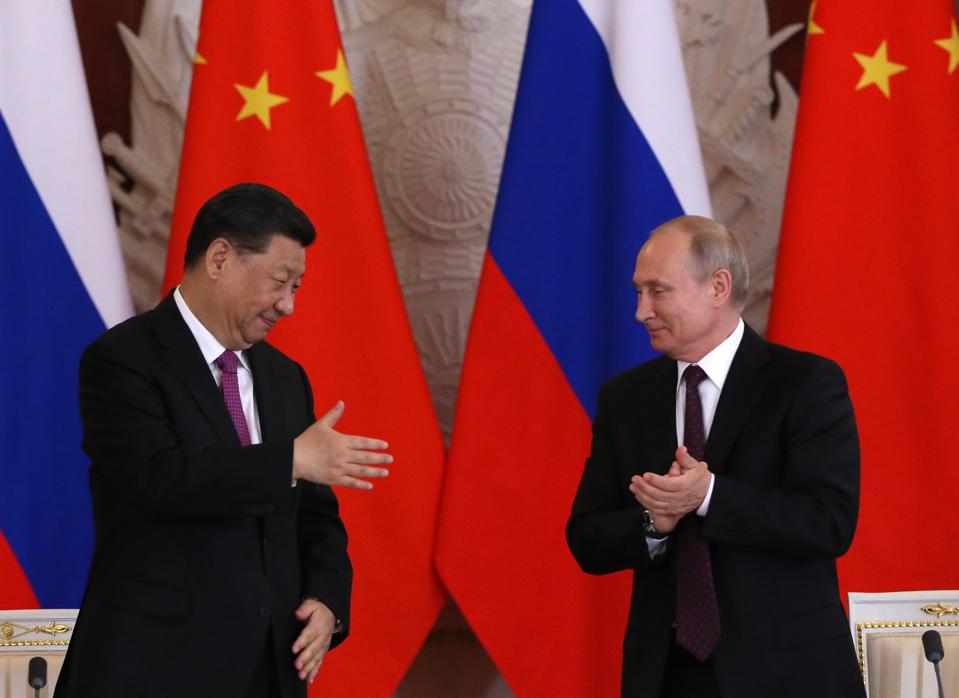
In the month since President Trump’s October 6 phone call with Turkish President Erdogan and the announced U.S. withdrawal from northeast Syria, the picture on the ground has changed immensely. Moscow has emerged as the key power broker in Syria. The Kurds, looking for protection from Turkish forces, are in Russian-brokered talks with the Assad government. These discussions could pave the way for an expanded Syrian government presence in the northeast for the first time in years. Successive agreements with Turkey negotiated first by the United States (October 17) and then by Russia (October 22) to halt Ankara’s fighting with the Kurds have been marred by violations.Putin Moves Closer To China As New ‘Technological War’ With U.S. Intensifies
In the world of authoritarian regimes, an alarming game of “keeping up with the Joneses,” or more accurately the Xis, is playing out as Russia’s President Vladimir Putin looks on with envy at China’s technological lockdown. Putin has described the standoff between China, Russia and the U.S. as a technological war—one that has inspired additional domestic controls as the tech world polarises. Changes have been made to the online infrastructure, and now we’re seeing proposals to restrict the content and applications running across the top. If there is a template Putin wants to follow for Russia’s digital future, it isn't difficult to figure out where it is coming from.America’s war on Chinese technology
The Secret Battle Of Wits Between The U.S. Army And Russia
The U.S. Army’s Asymmetric Warfare Group was formed in 2006 to identify gaps in U.S. military doctrine, equipment and field tactics, and to study how potential adversaries are developing tactics to exploit them. In 2017 the group released the 61-page Russian New Generation Warfare Handbook, based on observation of Russian tactics in Ukraine and to a lesser extent Syria, as well as published doctrine and public statements.‘The international system is somewhat dangerous and chaotic,’ Condoleezza Rice warns
Condoleezza Rice, the former United States Secretary of State, said on Monday the ‘global order’ was in a “somewhat dangerous and chaotic” state.A Tale of Two Paris Treaties
Almost a century after the U.S. Senate rejected the Covenant of the League of Nations, President Donald Trump last week formally announced that the United States would begin quitting the Paris climate agreement, the most important multilateral convention of the 21st century. Future historians may well look back on these twin abdications as bookends to the “American century,” underscoring enduring U.S. ambivalence toward globalism and defensiveness regarding national sovereignty. The tale of these two Paris treaties reveals both how much the global agenda has changed and how little the U.S. has learned since 1919.Imbalance of Power
The Real Immigration Crisis
Opponents of immigration are ascendant. From Poland to the United States, politicians are shutting borders and turning away refugees. “Our Country is FULL!” U.S. President Donald Trump tweeted in April. But misplaced fears over security, slow assimilation, and stolen jobs have distracted from the real demographic crisis looming over Europe and North America: not one of too many immigrants but one of too few.The World’s Worst Game of Risk Is Playing Out in Syria
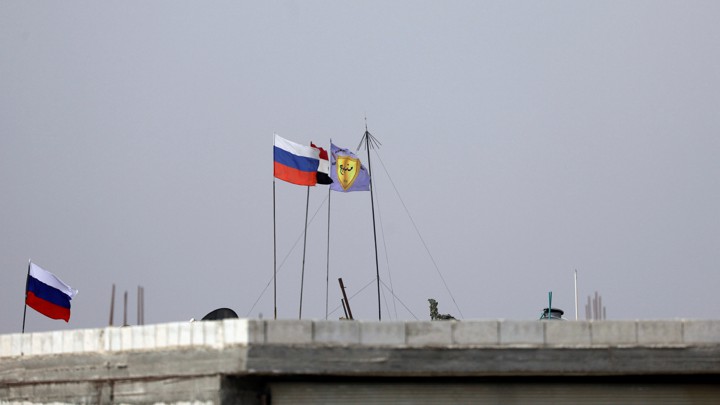
Russian, Syrian and Manbij military council flags flutter near Manbij, Syria.Omar Sanadiki / ReutersThe U.S. pulled back. Turkey moved in. Kurdish forces retreated. The Syrian government gloated. Russia struck a deal and sent in more troops. More than 100 people died and more than 100,000 fled.JUST IN: Department of Energy Not Studying Nuclear-Armed Hypersonic Weapons
Change of Players, Change of Game: How States Got Left Behind on Climate Change
In September 2019, Amazon, America’s third largest company by market value ($916B), announced plans to be carbon neutral by 2040. During the announcement, reflecting on scientists’ predictions about climate change from five years prior, CEO Jeff Bezos stated, ‘Those predictions were bad but what is actually happening is dire.’ The previous month, in an NPR interview, former Shell Oil President John Hofmeister was asked why oil majors like Shell, BP, and Exxon opposed the Trump Administration’s announced rollback of Obama-era methane emissions regulations. He explained that ‘regulations that protect the water, the land and the air…are essential for the [fossil fuel] industry to be successful down the road. That’s changed in the last 20 years. And so it’s necessary for the industry to recognize that this is the way it’s going to be, and it is the way it should be.’ Meanwhile, in 2017, Walmart, America’s largest company by revenue ($514B), announced the ‘Project Gigaton initiative that aims to reduce CO2 emissions globally by one billion metric tons before 2050,’ which would be ‘equivalent to taking over 211 million cars off of U.S. roads and highways for a year.’Germany’s Preliminary 5G Decision
Despite the security concerns of the US, EU, and Australia, Germany plans not to exclude any telecom equipment vendors, including Chinese companies such as Huawei, from its 5G network. This stance reflects a narrow view of the issue that prioritizes short-term economic interests and fails to uphold national security and democratic values. Widespread criticism, including from within the government, shows that political decision-makers in Germany need a more sophisticated, forward-looking approach to 5G.The Crisis of Social Media
Securing Our 5G Future
Society, technology, and future warfare
What is (not) asymmetric conflict? From conceptual stretching to conceptual structuring
IT’S TIME TO REVIEW THE CIVIL-MILITARY DIALOGUE
What It’s Really Like to Fight a War
While I was conducting research for a book on the United States 10th Mountain Division, which has fought in some of America’s most ferocious military campaigns over the last century, I came across a letter that stopped me cold. “Thanks to the failure of the press, and to the stupidity of Hollywood,” wrote Sgt. Denis Nunan, camped in a small town in Italy, to his mother on March 23, 1945, “the Home Front has no real conception of war, and only by letters home can the truth be made known.”Decoding the Wagner Group: Analyzing the Role of Private Military Security Contractors in Russian Proxy Warfare
Russian private military security contractors (PMSCs) are pivotal players in ongoing proxy wars in the Greater Middle East and its periphery. Their covert operations—real and imagined—are also critical in shaping Russia’s strategy for escalation management as well as relations with adversaries and allies. This report, the product of a joint New America and ASU Center on the Future of War initiative to study proxy warfare examines what social media and other digital traces combined with interviews and other research can tell us about Russian PMSCs and their role in Russian proxy warfare strategy. Download