The threat of the Islamic State (IS) in Asia has reached a new high after the fall of the physical Caliphate, with the loss of Baghouz, Syria on March 23 this year. Although IS lost its territorial control, its leadership—headed by Abu Bakr al Baghdadi—is alive. It is entering a new phase to spread its influence and operations worldwide.The Profession of Arms: A Guide for Young Army Officers
It takes courage, especially for a young officer, to check a man met on the road for not saluting properly or for slovenly appearance, but, every time he does, it adds to his stock of moral courage, and whatever the soldier may say, he has respect for the officer who does pull him up.
Read Document →The Dragon's Teeth: Assessing China's Military Modernization
PLA has focused on modernising its capabilities across all warfare domains to achieve these goals. This includes land, air, and maritime operations, nuclear, space, counter-space, electronic warfare and cyberspace operations, aiming to become a fully integrated joint force.
Read Document →Transforming the PLA: A Decade of reorganisation from SSF to ISF
PRC has engaged in a sustained and broad effort to transform the PLA from an infantry-heavy, low-technology, ground forces-centric military into a high-technology, networked force with an increasing emphasis on joint operations and naval and air power projection.
Read Document →Eyes without Borders: Exploring the World of Open Source Intelligence (OSINT) in the Digital Age
Open Source Intelligence (OSINT) is gaining prominence with the rise of social media, the digital society and the vast growth of publicly and commercially available information (PAI and CAI).
Read Document →
The PLA’s Developing Cyber Warfare Capabilities and India's Options
Informationised warfare blurs the lines between peacetime and wartime. A nation in the information age cannot wait for the hostilities to break out to collect intelligence, carryout influence operations, develop antisatellite systems or design computer software weapons.
Read Document →
Galwan and After
Why did China did this when he is under tremendous pressure in all fronts, is this China's salami slice tactics being progressed rigorously, what will be new Rules of Engagement, what will be escalatory control mechanism, who has taken this decision, will there be some pressure put by China in India's North-East through insurgency.
Read Document →
India’s Joint Doctrine for Cyberspace Operations: A Critical Review
Chief of Defence Staff (CDS) General Anil Chauhan and Secretary, Department of Military Affairs, formally released declassified versions of the Joint Doctrines for Cyberspace Operations during the Chiefs of Staff Committee meeting in New Delhi.
Read Document →
Know your Enemy General(now Field Marshal) Syed Aseem Munir
Gen SA Munir's position in the hierarchy of Pakistan was not very comfortable. The state of economy, insurgency in Pakhtoonistan and Balochistan, attack on the Jaffar Express, constant protests by supporters of Imran Khan's supporters inside and outside of parliament.
Read Document →
Decoding Operation SINDOOR: Key Aspects and Implications
Precision strikes were carried out on nine sites—four in Pakistan and five in PoK—linked to anti-India terrorist groups such as the LeT, JeM and the Hizbul Mujahideen. The targeted sites included Muridke (LeT headquarters) and Bahawalpur (JeM headquarters).
Read Document →
Chinese Cyber Exploitation in India's Power Grid - Is There a linkage to Mumbai Power Outage?
The New York Times (NYT), based on analysis by a U.S. based private intelligence firm Recorded Future, reported that a Chinese entity penetrated India’s power grid at multiple load dispatch points. Chinese malware intruded into the control systems that manage electric supply across India, along with a high-voltage transmission substation and a coal-fired power plant
Read Document →25 October 2019
ISIS Terror Plans for Asia are Scary: Is India Ready to Foil Them?
The threat of the Islamic State (IS) in Asia has reached a new high after the fall of the physical Caliphate, with the loss of Baghouz, Syria on March 23 this year. Although IS lost its territorial control, its leadership—headed by Abu Bakr al Baghdadi—is alive. It is entering a new phase to spread its influence and operations worldwide.The Logic of Staying in Afghanistan and the Logic of Getting Out
Editor’s Note: Afghanistan is America’s longest war, and recent attempts to negotiate an end with the Taliban appear to have failed, at least for now. Many Americans are asking whether it is worth staying in Afghanistan as the war drags on. Carter Malkasian, one of America’s premier Afghanistan experts, examines the most important argument for staying—that Afghanistan might again be a haven for anti-American terrorist groups—and from there raises questions that should guide policymakers considering a withdrawal.Islamic State Affiliate Seeks to Expand in Afghanistan
Afghan intelligence officials reportedly captured a deputy leader of the Islamic State-Khorasan (the Islamic State’s affiliate in Afghanistan, also referred to as ISK) near the city of Herat in September. Herat is more than 1,000 kilometers west of ISK’s stronghold in Nangarhar province, and much of Herat province and the surrounding region is contested by the Taliban. While details on the captured ISK leader remain vague, it is highly likely that his presence in Afghanistan’s west signals that the group is attempting to expand into Taliban-contested areas and draw defectors under the shadow of Taliban-U.S. negotiations.Taliban Say New Intra-Afghan Peace Talks to be Held in China
Compromise Is Still (Just About) Possible in Hong Kong
With the 70th anniversary of the founding of the People’s Republic of China now past, the period of greatest danger is upon Hong Kong.Why America must boldly win the technological race against China
China’s Economic Growth Slows to a 30-Year Low. But Is It the U.S. Trade War?
Restraint and the Rise of China
How a Chinese Invasion of Taiwan Could Destabilize Japan
Taiwan’s reclamation has been a cornerstone of Beijing’s mission for “national rejuvenation” since the Chinese Communist Party (CCP) successfully assumed power over mainland China in 1949. Chinese President Xi Jinping reiterated the point in his National Day Address on October 1, 2019. Due to both Taiwan’s highly-developed military defenses and preparedness, many analysts have indicated that successful reunification by the People’s Liberation Army (PLA) in a hypothetical invasion is far less certain than is commonly assumed – even without U.S. intervention to defend Taiwan. Yet while commentators have analyzed the likelihood of forced reunification, few have written about one consequence of such an attempted reunification: a Taiwanese refugee crisis. China’s Missile Might: Strategy Power Projection
What Trump Gets Wrong About War Against the Islamic State
Great Powers Invest in Infrastructure. The West Was the Prime Example.
Fragments Through a Straw, Darkly: #Reviewing Drone
A title, like a cover, is a book’s first impression. It sets the tone, orienting the reader in a particular conceptual frame. It evokes analogies and suggests expectations that authors may then subvert. Naming a work, a piece, or a child is essential to the vital act of creation.Turkey’s Crackdown on Kurdish Mayors Could Backfire
How a Weaponized Dollar Could Backfire
Assessing past and future strategies for reducing poverty in Africa
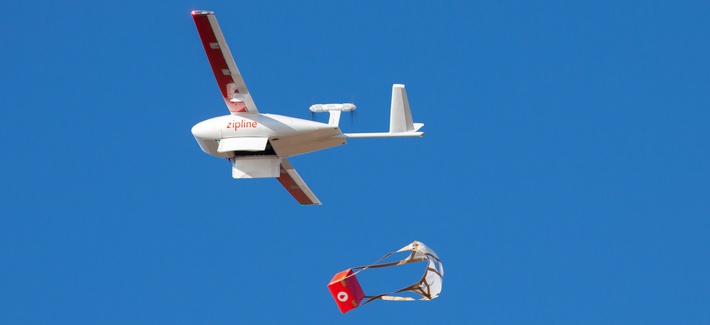
US Marines Try Using Drones to Bring Blood to Battle
The light unmanned aircraft made hundreds of supply drops during recent Australian live-fire wargames.Fighting Continues in Syria Despite Cease-Fire Agreement
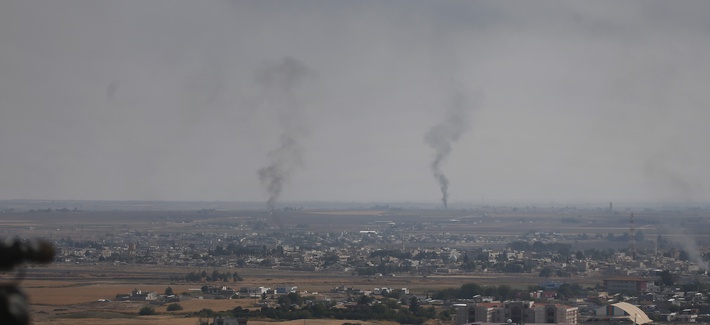
The United States and Turkey agreed Thursday to a temporary cease-fire in northern Syria that appeared to hand Ankara a major victory in its campaign to remove Kurdish fighters from its southern border. 10 Ways America’s Situation in the Middle East Will Get Worse
ECONOMISTS ON THE RUN
How to Protect America After the Syria Withdrawal
Japan in a New Northeast Asian Security Environment
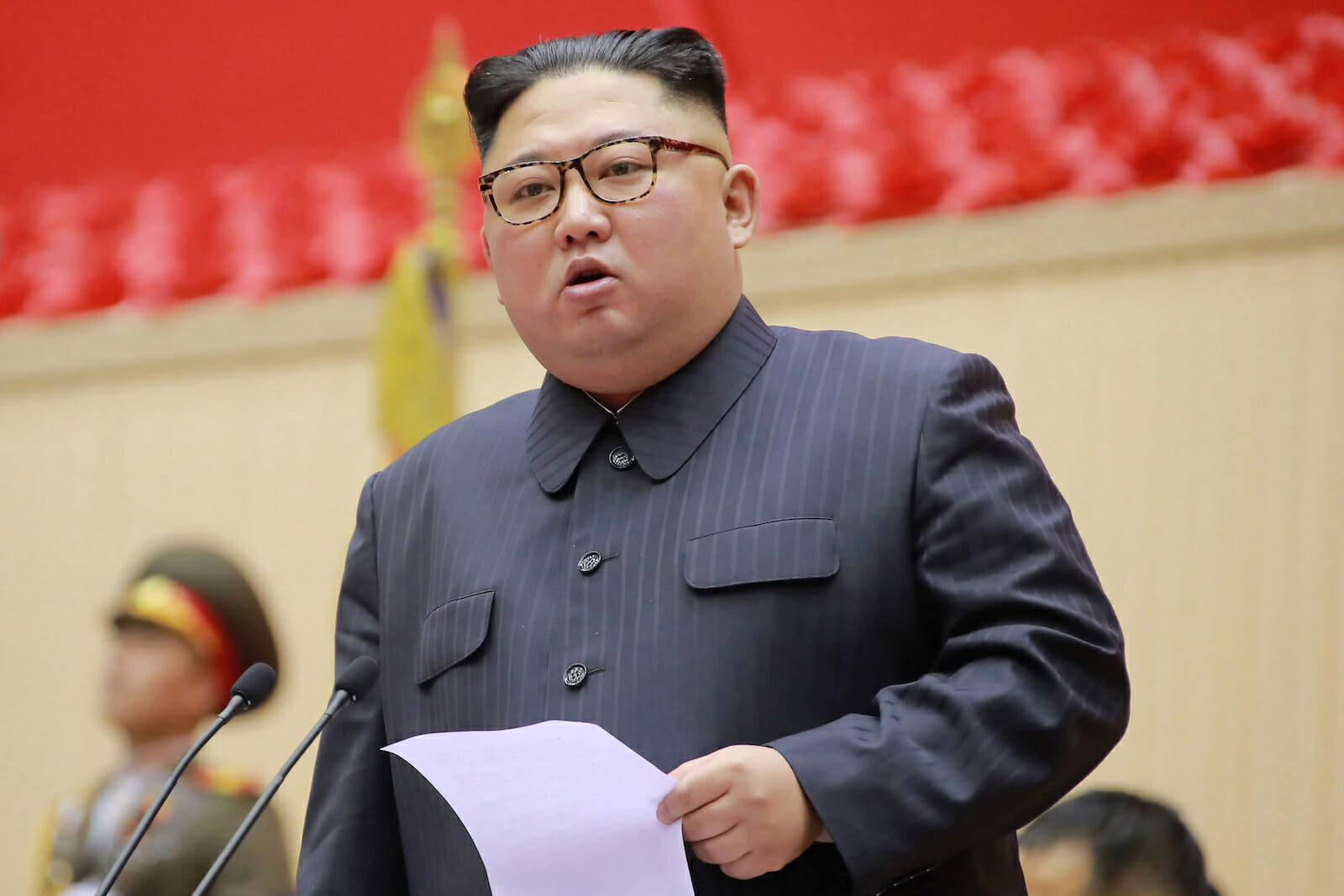
In September 27th, Japan’s Ministry of Defense published its annual defense white paper, which reflects Tokyo’s strategic views into the current security environment, developments and challenges to Japan’s geopolitical position and also indicates Tokyo’s strategic priorities. What made the headlines in the press was Japan’s decision to position China as a ‘strategic threat’ to Tokyo ahead of North Korea, which despite the ongoing, but unproductive U.S.-North Korea dialogue to achieve denuclearization continues, Pyongyang still continues to test short-range ballistic missiles that have the potential to threaten Japan’s homeland. But this was not a surprise. While North Korea remains an imminent threat to Japan, it is not a real surprise that Tokyo considers China a threat, due to Beijing’s military modernization, economic development for the last few decades, and the nature of the bilateral Sino-Japanese relationship. This piece will focus on Japan’s outlook in the security environment of Northeast Asia as the Defense White Paper states, with a particular focus on Japan’s relations with North and South Korea, as well as China and Russia.NEWT GINGRICH: THE EXPORT-IMPORT BANK IS CRUCIAL TO AMERICA'S ABILITY TO COMPETE WITH CHINA | OPINION
Assessing past and future strategies for reducing poverty in Africa
How Recent Protests Exposed the Authoritarian Fragility of Sisi’s Egypt
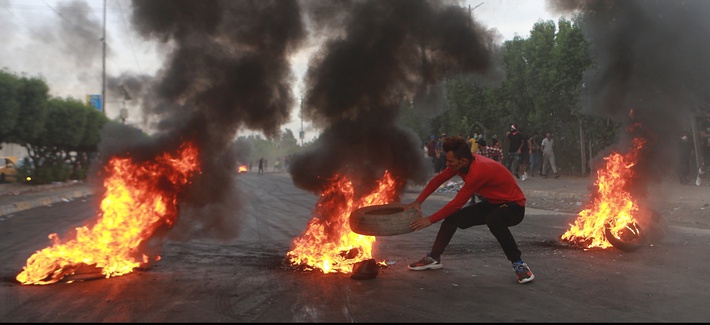
The protests may have ended, but the past few weeks in Egypt have indicated that, rather than a model of authoritarian stability, the regime that President Abdel Fattah el-Sisi has built is one of authoritarian fragility. And the regime’s actions make clear that it knows it.Rethinking Encryption
Rochester, NY, and the Rise and Fall of Technology
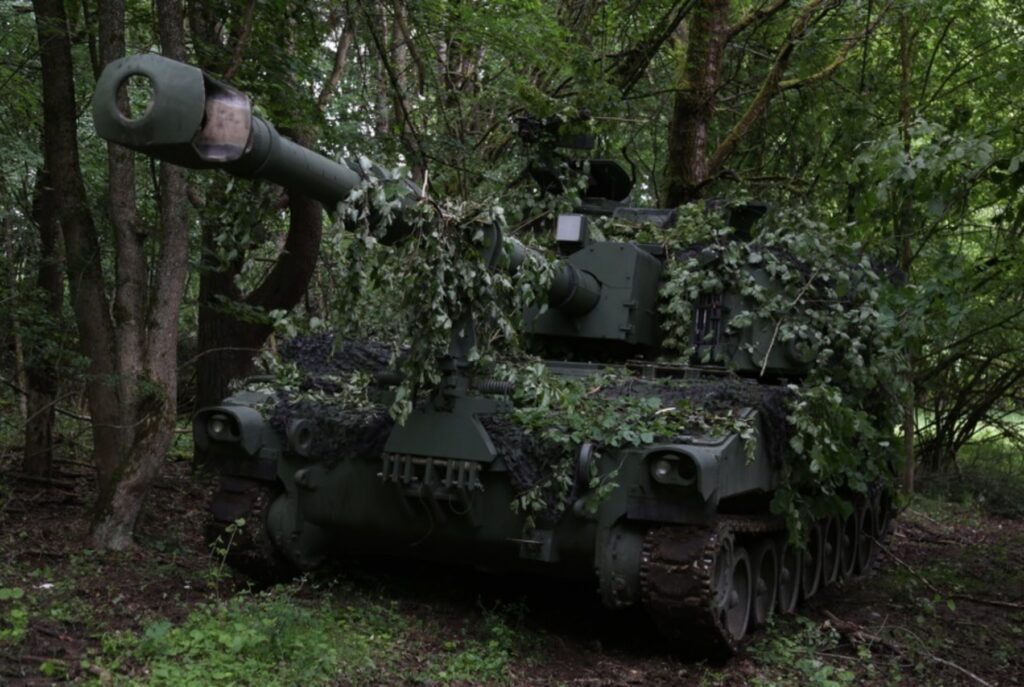
Artificial Intelligence Will Detect Hidden Targets In 2020 Wargame
The Army wants AI to detect hidden targets, like this M109A6 Paladin armored howitzer camouflaged during wargames in Germany.